



Annapurna vs Mardi Himal Base Camp Trek: Which One is Right for You?

-
 admin
admin -
14 February, 2025
-
12 mins read
-
1775 Views
-
0 Comments


When it comes to trekking in Nepal’s Annapurna region, the debate between Annapurna and Mardi Himal Base Camp is one of the most popular among travelers. The Annapurna region of Nepal is one of the most iconic trekking destinations in the Himalayas, offering a perfect blend of dramatic mountain scenery, diverse landscapes, and rich cultural experiences. From lush rhododendron forests and traditional Gurung villages to high alpine valleys surrounded by towering peaks, this region attracts thousands of trekkers every year from around the world.
Among the many trekking routes here, the Annapurna vs Mardi Himal Base Camp Trek is the two most frequently compared. Both treks lie in the same mountain range and offer stunning close-up views of the Annapurna massif and Machapuchare (Fishtail Mountain), yet they deliver very different trekking experiences. One is a classic, well-established route leading deep into a massive glacial amphitheater, while the other is a quieter, off-the-beaten-path ridge trek known for its peaceful trails and dramatic skyline views.
This guide is designed to help you clearly understand the differences between these two popular treks. We’ll break them down in terms of difficulty, cost, scenery, crowd level, and overall experience, so you can easily decide which trek best matches your fitness level, time, and travel style.
Comparison table of Annapurna Vs Mardi Himal Base Camp Trek
| Feature | Annapurna Base Camp Trek | Mardi Himal Base Camp Trek |
|---|---|---|
| Trek Distance | Approx. 110-130 km round trip | Approx. 40-60 km round trip |
| Maximum Altitude | 4,130 m (Annapurna Base Camp) | 4,500 m (Mardi Himal Base Camp/Viewpoint) |
| Duration | 7-12 days | 4-7 days |
| Difficulty Level | Moderate | Moderate with steep uphill sections |
| Accommodation Type | Well-developed teahouses with more facilities | Basic to standard teahouses |
| Average Cost Range | USD 700-1,200 depending on services | USD 450-900 depending on services |
| Best Seasons | Spring (March-May) & Autumn (Sept-Nov) | Annapurna Sanctuary, glacier views, cultural villages |
| Crowd Level | More crowded during peak seasons | Less crowded and quieter |
| Main Highlights | Annapurna Sanctuary, glacier views, cultural villages | Ridge trails, Machapuchare close-up views, peaceful trails |
| Best For | Classic Himalayan trekking experience | Shorter and less crowded adventure |
Overview of Annapurna Base Camp Trek
The Annapurna Base Camp Trek, widely known as the ABC Trek, is one of Nepal’s most famous Himalayan journeys. The trail leads trekkers deep into the stunning Annapurna Sanctuary, surrounded by snow-covered peaks, diverse landscapes, and traditional mountain villages. Starting from the lower hills near Pokhara, the route passes through terraced farmlands, rhododendron forests, bamboo trails, and scenic settlements such as Chhomrong, Bamboo, and Deurali before reaching Annapurna Base Camp at 4,130m/13,550ft.
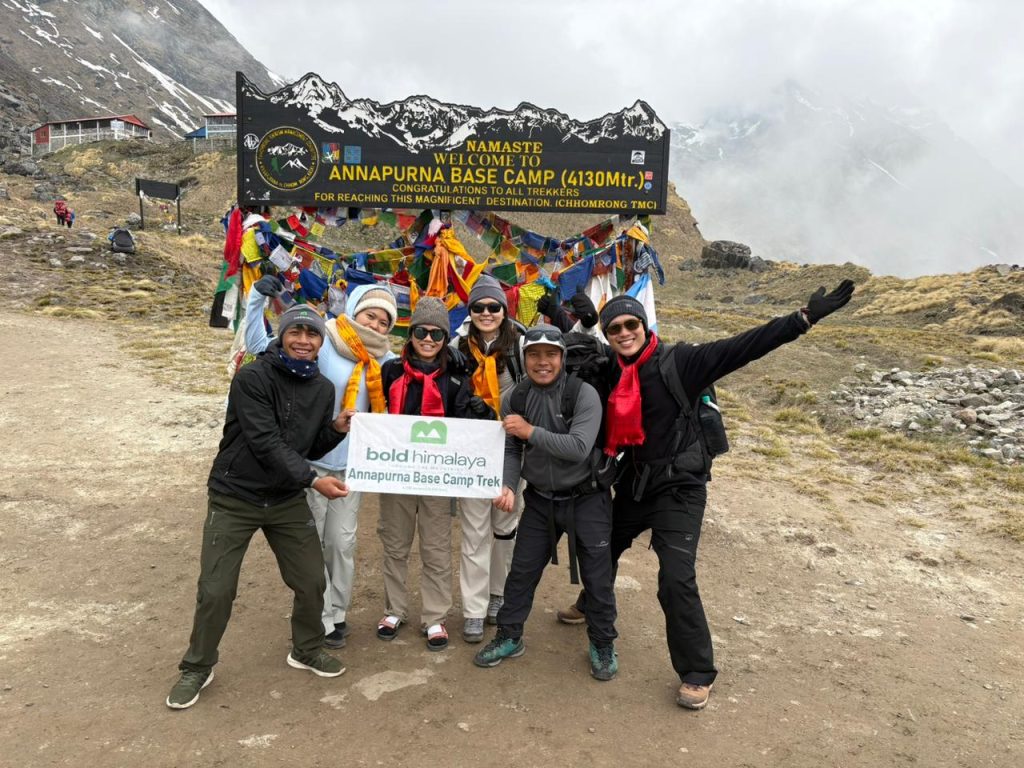
One of the greatest highlights of the trek is the breathtaking mountain panorama featuring Annapurna I (8,091 m), Machapuchare (Fishtail), Annapurna South, Hiunchuli, and Gangapurna. The trek also follows the beautiful Modi Khola valley, creating dramatic scenery throughout the journey. Sunrise and sunset views from the base camp offer an unforgettable Himalayan experience, with massive peaks rising from every direction around the natural amphitheater.
Beyond its mountain beauty, the trek also provides a rich cultural experience. Trekkers pass through traditional Gurung and Magar villages where local hospitality, unique traditions, and authentic teahouse stays add depth to the adventure. Combining cultural encounters, diverse landscapes, and iconic Himalayan scenery, the Annapurna Base Camp Trek remains one of the most rewarding trekking experiences in Nepal.
Overview of Mardi Himal Base Camp Trek
The Mardi Himal Base Camp Trek is a short and scenic Himalayan adventure in the Annapurna region of Nepal, which is perfect for trekkers seeking peaceful trails and stunning mountain views. Starting from Kande or Phedi near Pokhara, the route passes through rhododendron forests, traditional villages, and alpine landscapes before reaching Mardi Himal Base Camp at around 4,500 meters/14,763 feet.
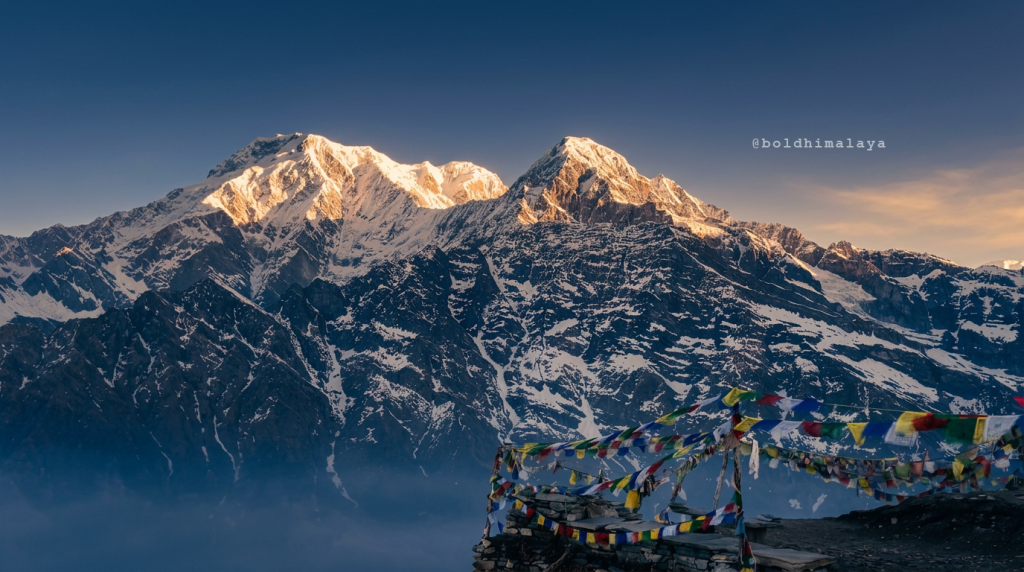
One of the main highlights of the trek is the dramatic ridge walking experience with breathtaking close-up views of Machapuchare (Fishtail), Annapurna South, Hiunchuli, and Mardi Himal. The sunrise views over the snow-covered peaks create an unforgettable Himalayan atmosphere.
Compared to the busier Annapurna Base Camp route, the Mardi Himal Trek is less crowded and offers a quieter, off-the-beaten-path experience. Its peaceful trails and natural beauty make it an excellent choice for trekkers looking for a shorter yet rewarding adventure in Nepal.
Difficulty Level Comparison
Both the Annapurna Base Camp Trek and the Mardi Himal Base Camp Trek are considered moderate treks, but they offer different physical challenges.
Annapurna Base Camp Trek:
The Annapurna Base Camp Trek involves longer trekking days with gradual ascents through valleys, forests, and stone staircases, making it physically demanding over multiple days.
Mardi Himal Base Camp Trek:
In contrast, the Mardi Himal Trek is shorter in duration but includes steeper uphill climbs and narrow ridge trails, especially near High Camp and the base camp area.
Altitude is another important factor. Annapurna Base Camp reaches around 4,130 meters, while Mardi Himal Base Camp climbs slightly higher to approximately 4,500 meters. Although both treks carry some risk of altitude sickness, proper acclimatization, hydration, and a steady pace help make the journey safer and more enjoyable.
For beginners, both treks are achievable with reasonable fitness and preparation. Annapurna Base Camp is often preferred by trekkers looking for a classic and gradual Himalayan experience, while Mardi Himal is better suited for those comfortable with steeper trails and shorter but more intense trekking days.
Best Time to Visit(Annapurna vs Mardi Himal Base Camp Trek)
Both the Annapurna Base Camp Trek and the Mardi Himal Base Camp Trek share similar seasonal patterns, but the experience can feel slightly different due to altitude and terrain.
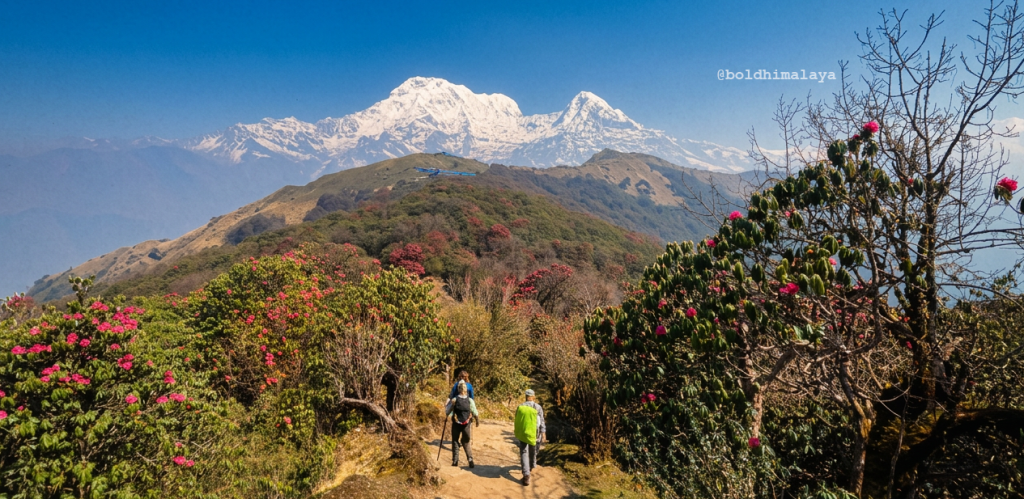
Autumn (September-November): Autumn is the most popular and best overall season for both treks. You get crystal-clear visibility, stable weather, and stunning panoramic views of Annapurna, Machapuchare, and surrounding peaks. This is peak trekking season in Nepal.
Spring (March-May): This is one of the best seasons for both treks. The trails are filled with blooming rhododendrons, especially on the Mardi Himal route, and the skies are generally clear. Mountain views are excellent, and temperatures are comfortable for trekking.
Winter (December-February): Winter brings cold temperatures and heavy snowfall at higher elevations. Annapurna Base Camp can become more challenging due to snow accumulation, while Mardi Himal may still be doable, but very cold at High Camp and Base Camp.
Monsoon (June-August): Monsoon is the least favorable season. Both treks experience rain, slippery trails, leeches in lower forests, and limited mountain views due to clouds. Mardi Himal’s forest section becomes especially humid, while ABC trails can be more affected by landslides in some areas.
Route Comparison of Annapurna Vs Mardi Himal Base Camp Trek
A clear look at how the trekking paths differ between the two most popular treks in the Annapurna region, the Annapurna Base Camp Trek and the Mardi Himal Base Camp Trek, helps trekkers understand the experience, difficulty, and scenery of each route.
Annapurna Base Camp Route:
Nayapul – Jhinu – Chhomrong – Bamboo – Deurali – Annapurna Base Camp
This route is a classic Himalayan trail that gradually climbs through river valleys, terraced fields, dense forests, and traditional Gurung villages. The trail becomes steeper after Chhomrong, with stone staircases and forest sections leading toward the high alpine zone. As you move closer to ABC, the landscape opens into a massive glacial amphitheater surrounded by towering peaks.
Mardi Himal Route:
Kande – Australian Camp – Forest Camp – High Camp – Mardi Himal Base Camp
The Mardi Himal route starts with a relatively easy ridge and forest walk before transitioning into narrow trails above the tree line. The higher you go, the more dramatic the ridge walking becomes, with continuous close-up views of Machapuchare (Fishtail). The final stretch from High Camp to Base Camp is steep but short, offering a direct approach into a wild and untouched Himalayan landscape.
What is the Scenery and landscape like?
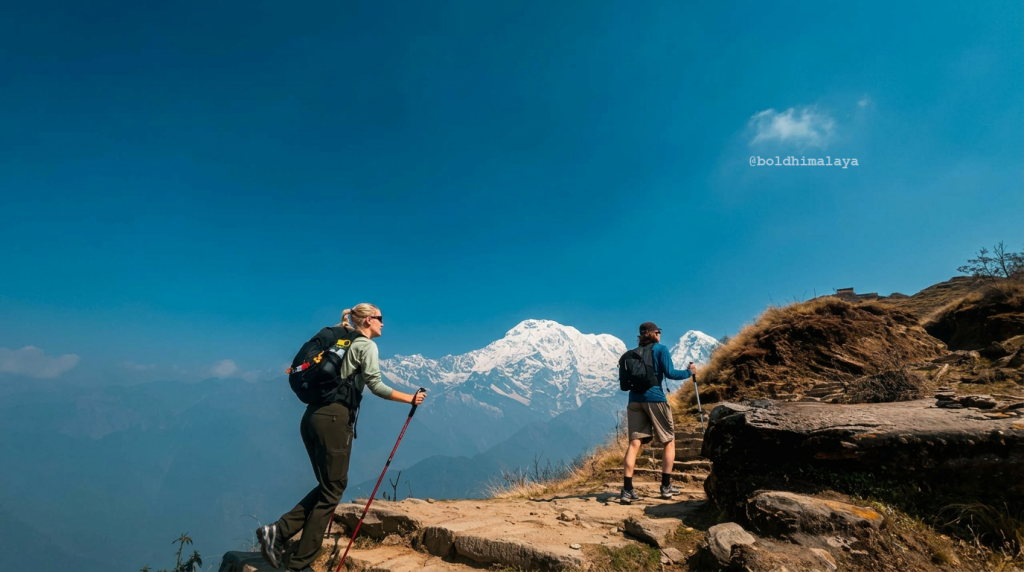
Annapurna Base Camp Trek
- Surrounded by a massive Himalayan amphitheater
- Close-up views of Annapurna I, Annapurna South, Hiunchuli, and Machapuchare
- Dramatic glacier basin setting at the base camp
- Wide, open 360° mountain panorama from all sides
- Best for grand landscape photography and wide-angle shots
- Sunrise view turns the entire snow bowl into a golden glow
- Strong sense of being inside the Himalayas due to the enclosed valley walls
Mardi Himal Base Camp Trek
- Stunning ridge-top viewpoint with open skyline
- Extremely close view of Machapuchare (Fishtail Mountain)
- Clear sights of Annapurna South and Hiunchuli from a distance
- Dramatic ridge walking experience above clouds and forests
- Ideal for portrait-style and dramatic mountain photography
- Sunrise highlights Machapuchare glowing in golden light
- Feels more intimate, wild, and less crowded than ABC
Comparison table of Accommodation and Food
| Feature | Annapurna Base Camp Trek | Mardi Himal Base Camp Trek |
|---|---|---|
| Teahouse Quality | Well-developed and more comfortable along most of the route | Basic and simple, especially at higher elevations |
| Room Type | Twin-sharing rooms with better facilities in lower areas | Very basic rooms, more rustic in the upper sections |
| Facilities | Hot showers, Wi-Fi, and charging available (extra cost) | Limited or no facilities at High Camp and Base Camp |
| Food Variety | Wide menu: dal bhat, noodles, fried rice, pasta, soups, pancakes, Western options | Limited menu: dal bhat, noodles, fried rice, simple soups |
| Luxury Options | Some semi-luxury lodges in the lower and mid sections | Very limited luxury options |
| Overall Experience | More comfortable and well-managed trekking route | More remote, simple, and authentic trekking feel |
Cultural Experience: Which trek offers more culture?
Annapurna Base Camp: A Dive into Culture
Ghandruk, predominantly inhabited by Gurungs, and Chhomrong, mainly by Magars, are villages through which you trek. You get glimpses of their local customs and festivals and enjoy their warm hospitality. Overnight stays in trailside tea houses give you opportunities to be better acquainted with the culture of this area.
Mardi Himal: Quiet and Uncomplicated
It hence becomes a lot quieter journey as well. This is not a culturally rich trek, as the number of villages on this trek is less compared to other treks. Places such as Sidhing and Lwang do reflect quiet, rustic lifestyles.
Permits and Regulations
Both the Annapurna Base Camp Trek and the Mardi Himal Base Camp Trek fall inside the Annapurna Conservation Area, so the permit system is largely the same for both treks.
ACAP Permit (Annapurna Conservation Area Permit)
- Mandatory for all trekkers entering the Annapurna region
- Used for conservation and trail maintenance
- Can be obtained in Kathmandu or Pokhara
- Required at multiple checkpoints along both ABC and Mardi routes
TIMS Card
- Required for trek registration and safety tracking
- Helps authorities monitor trekking activity in the region
- Usually arranged through trekking agencies or tourism offices
- Checked at entry points and during the trek
Entry Points & Checkpoints
Annapurna Base Camp Route
- Common entry points: Nayapul, Ghandruk, Jhinu Danda
- Main checkpoints: Chhomrong, Bamboo, Deurali
- Final checkpoint: Annapurna Base Camp entry control area
Mardi Himal Route
- Common entry points: Kande, Phedi, or Dhampus
- Main checkpoints: Forest Camp, Low Camp, High Camp
- Final checkpoint: Mardi Himal Base Camp area
Safety and Practical Considerations
| Issue | Annapurna Base Camp Trek | Mardi Himal Base Camp Trek |
|---|---|---|
| Altitude Sickness | Moderate due to gradual ascent | Higher risk due to faster altitude gain |
| Trail Conditions | Well-marked trails with stone steps and village paths | Narrow ridge paths can be slippery in bad weather |
| Weather Conditions | Snowfall in winter; possible avalanche risk near the base camp area | Strong winds and more unpredictable weather at higher ridges |
| Emergency Support | Better access to rescue, more villages, and communication points | Remote area with limited rescue options and weak connectivity |
What Kind of Trek Is Best for You?
Choosing between the Annapurna Base Camp Trek and the Mardi Himal Base Camp Trek depends mainly on the kind of experience you want from the Himalayas, whether it’s a classic, cultural journey or a shorter, quieter ridge adventure.
Choose Annapurna Base Camp if:
- You want a longer hike with a variety of landscapes.
- You want a well-established route with more facilities.
- You want a rich cultural journey through Gurung and Magar villages, and learning about their cultures and traditions.
Go for Mardi Himal if:
- You want a shorter and more time-efficient trek without missing the Himalayan scenery
- You have less time, but still want an incredible Himalayan trek.
- You want stunning close-up views of Machapuchare (Fishtail Mountain)
- You want a more raw, simple, and off-the-beaten-path trekking feel
Why Not Do Both Treks Together?
If you have plenty of time, you can combine the Annapurna Base Camp and Mardi Himal treks. You start with the ABC trek, hike from Jhinu to Landruk, and then up to Forest Camp to connect to the Mardi Himal trail. If you initiate the Mardi Himal trek, then you are supposed to go down from Forest Camp to Jhinu to connect to the ABC route. You will thus see deep valleys, high ridges, and all that comes between in one memorable journey.
Conclusion: Annapurna vs Mardi Himal Base Camp Trek
Both the Annapurna Base Camp Trek and the Mardi Himal Base Camp Trek offer unforgettable Himalayan experiences, but they appeal to different types of trekkers.
Annapurna Base Camp is a classic, well-rounded journey that takes you deep into a dramatic glacial amphitheater surrounded by some of the highest peaks in the world. It combines diverse landscapes, cultural village experiences, and a longer trekking adventure, making it ideal for those who want a complete and immersive Himalayan expedition.
On the other hand, Mardi Himal is a shorter, quieter, and more intimate trek. It focuses on ridge walking, peaceful trails, and close-up views of Machapuchare, offering a raw and less crowded mountain experience. It is perfect for trekkers who want stunning scenery in less time without the busy trails.
In the end, there is no “better” trek-only the one that fits your time, fitness level, and travel style. If you want a grand Himalayan classic, choose Annapurna Base Camp. If you prefer a short, peaceful, and scenic ridge adventure, Mardi Himal is the perfect choice.
Whichever route you take, both will give you lifelong memories of the Himalayas.
Comments (0)
Write a comment- Comparison table of Annapurna Vs Mardi Himal Base Camp Trek
- Overview of Annapurna Base Camp Trek
- Overview of Mardi Himal Base Camp Trek
- Difficulty Level Comparison
- Best Time to Visit(Annapurna vs Mardi Himal Base Camp Trek)
- Route Comparison of Annapurna Vs Mardi Himal Base Camp Trek
- What is the Scenery and landscape like?
- Comparison table of Accommodation and Food
- Cultural Experience: Which trek offers more culture?
- Permits and Regulations
- Safety and Practical Considerations
- What Kind of Trek Is Best for You?
- Why Not Do Both Treks Together?
- Conclusion: Annapurna vs Mardi Himal Base Camp Trek
Read the latest Blogs & Insights
Explore our collection of articles and insights to gain in-depth travel knowledge, expert advice, and stay updated on the latest trends and tips.
View All Articles
Broad Peak Avalanche: Nirmal Purja & the Team
10 Aug. 2026
Prayer Flags
10 Jul. 2026
Golf Tour in Nepal
24 Aug. 2026



No comments yet.