



Lukla Weather by Season for Everest Travel
-
 Bold Himalaya
 -
4 June, 2026
-
11 mins read
-
554 Views
-
0 Comments


Why does Lukla weather play such a big role in the Everest Base Camp trek? The answer lies in its direct impact on both air travel and mountain conditions.
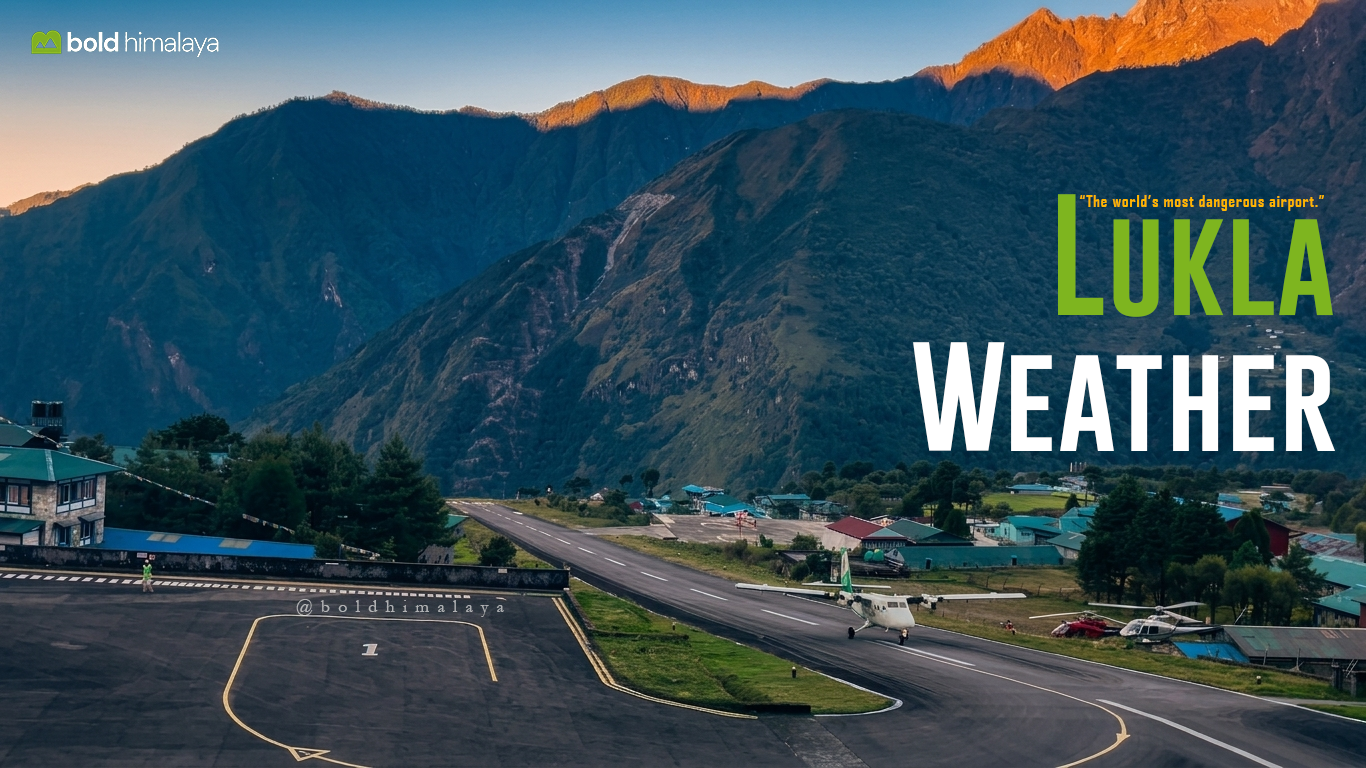
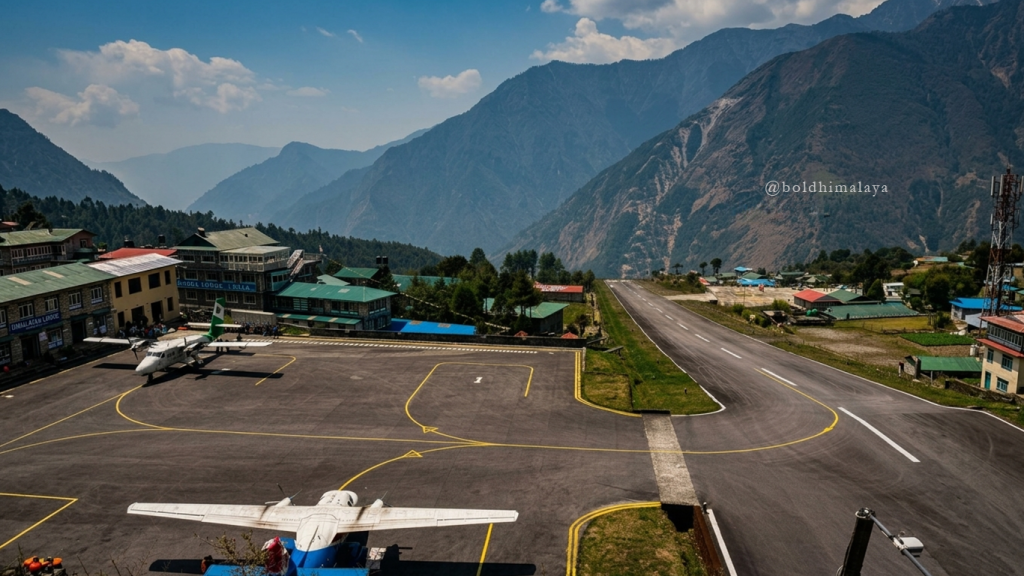
At an elevation of 2,860 meters (9,383feet), Lukla rests along the southern rim of Nepal’s Khumbu region. Lukla serves as the main gateway to the Everest Base Camp trek and other Himalayan adventures. High in the northeast Himalayas, this settlement often marks a trekker’s first encounter with rugged mountain terrain and unpredictable Himalayan weather conditions. Lukla Weather conditions directly affect flights to and from Tenzing-Hillary Airport, one of the world’s most challenging airports.
Flights arrive at Tenzing-Hillary Airport, which is known less for its short runway than for its sudden atmospheric changes. Due to its high elevation and mountainous terrain, the weather in Lukla can change rapidly within a few hours. Visibility can drop very quickly when clouds move in, often causing flight delays or cancellations without warning. Clear mornings may turn cloudy by midday as thick fog and mist cover the area. Even if the sky looks calm and clear early in the morning, the weather may become unstable suddenly. Flights to Lukla mainly operate during short periods of clear weather between strong winds, clouds, and fog.
The unpredictable Lukla weather is mainly caused by the surrounding Himalayan landscape and fast-changing mountain climate. Trekkers traveling to Everest Base Camp should always stay updated on the Lukla weather forecast and keep flexible travel plans, especially during peak trekking seasons.
Lukla Weather Overview
| Season | Temperature | Visibility | Flight Reliability | Trekking Conditions | Tourist Traffic |
|---|---|---|---|---|---|
| Spring | 5°C to 15°C | Good to Excellent | Moderate to High | Excellent | Very High |
| Monsoon | 8°C to 17°C | Poor to Moderate | Low | Difficult | Low |
| Autumn | 0°C to 14°C | Excellent | High | Excellent | Very High |
| Winter | -10°C to 5°C | Good | Moderate | Challenging | Low |
Lukla has weather patterns that are very different from the lower Terai plains and higher Himalayan regions. In summer, moist winds from the Bay of Bengal bring heavy rainfall, while in winter, cold air from the northern plateau flows into the region, making conditions much colder. Each season shapes the atmosphere here in unique ways, presenting different circumstances for visitors.
Due to its high elevation, Lukla stays colder than Kathmandu throughout the year. The thin air and rising moisture cause clouds to form quickly, which leads to frequent and sudden weather changes. Even if mornings are clear, conditions can become cloudy or unstable within a few hours. Because of this, flight operations are closely monitored using updated weather information. The surrounding mountains also affect local weather by trapping moisture and changing wind flow.
Lukla Weather Across Seasons
Autumn: September to November
After the monsoon ends, autumn brings clear skies and excellent visibility in Lukla, especially from September to November. It is widely considered the best season for Everest trekking because the air is stable, dry, and the mountain views are very clear. Weather conditions are consistent, with little moisture and strong visibility throughout the region.
Temperatures in autumn are mild at first, with September and early October averaging around 12°C to 14°C during the day. By November, nights become much colder and can drop below freezing as winter approaches.
Flights to Lukla are usually more reliable in autumn due to stable weather, making delays less common. Because of this, October is the busiest month for trekkers in the Everest region, and teahouses along the route often get fully booked in advance.
The main challenge in this season is crowding, as many trekkers come at the same time. For a quieter experience, early September or late November is better, though conditions may be slightly less stable compared to peak October.
Spring: March to May
During spring, Lukla’s trekking trails become easier as the weather warms up. Mornings are usually clear and stable, with bright skies over Lukla, which is also one of the best seasons for Everest trekking. Temperatures are moderate, with nights around 5°C and daytime highs near 15°C in lower areas, while higher regions stay colder.
Spring is also a good season for flights to Lukla, as weather conditions are generally stable. However, clouds can build up in the afternoon, so most flights are scheduled early in the morning. Trekkers who arrive by late morning can continue their journey toward Phakding or Namche Bazaar in clearer conditions. This season is very lively on the trails.
The main challenge in spring is the large number of trekkers on the route. In late May, the weather around Lukla can also become less stable as humidity increases before the monsoon, sometimes causing flight delays or interruptions.
Summer/Monsoon: June to August
The monsoon season in Nepal starts in late May or early June and lasts until mid-September. During this time, Lukla experiences heavy cloud cover, frequent rainfall, and very low visibility, making it one of the most difficult periods for travel. Frequent fog, continuous rain, and strong winds often cause long delays or full cancellations.
It is common for flights to be grounded for several days in a row, especially during heavy monsoon spells in July and August. Even if the weather is clear in Kathmandu, Lukla may still remain cloudy and unsuitable for landing.
Because of these unstable conditions, most flights operate only during short early-morning windows when visibility is slightly better. However, schedules are highly uncertain, and travelers are advised to keep flexible plans or consider alternative options such as helicopter flights during this season.
Winter: December to February
Lukla flights in winter are generally more stable compared to the monsoon season because the skies are often clear and visibility is better. This makes flight operations more consistent on many days, especially during the morning hours when conditions are calm.
However, winter still brings challenges such as cold temperatures, strong winds, and occasional snowfall. These can temporarily delay or cancel flights, especially if snow accumulates on the runway at Tenzing-Hillary Airport. Even short weather changes can affect schedules due to the airport’s high-altitude location.
Most flights in winter operate early in the morning when the weather is most stable. Daytime temperatures usually range between 3°C and 5°C, while nights can drop below -8°C or even lower. Travelers may still experience delays, but long cancellations are less common than in the rainy season. Overall, winter flights to Lukla are relatively reliable, but they always depend on real-time mountain weather conditions.
Why are Lukla flights often delayed or cancelled?
Weather is the main reason for flight disruptions at Lukla Airport, often more than any other factor. Delays usually happen due to a combination of changing weather conditions.
Tenzing-Hillary Airport has a very short runway of about 527 meters with a steep slope. Because of this, pilots must land carefully and cannot easily cancel or go around once they start landing. Flights also depend on clear visibility since the airport does not have advanced instrument landing systems, so pilots must rely on visual conditions.
Clouds, fog, and low visibility often move into the valley and can quickly stop flight operations. This is common during the monsoon and unstable spring weather. Strong mountain winds, especially in the afternoon, can also make flying unsafe, even if the sky looks clear.
For safety reasons, strict weather limits are followed, and flights are only allowed when conditions are fully suitable. Decisions are made based on real-time weather at the runway, not just conditions seen from Kathmandu.
Because of frequent changes in mountain weather, it is recommended to keep at least 1–2 buffer days when traveling to or from Lukla. This helps avoid problems caused by sudden delays, especially during rainy or unstable seasons.
Lukla Weather Impacts on the Everest Base Camp Trek
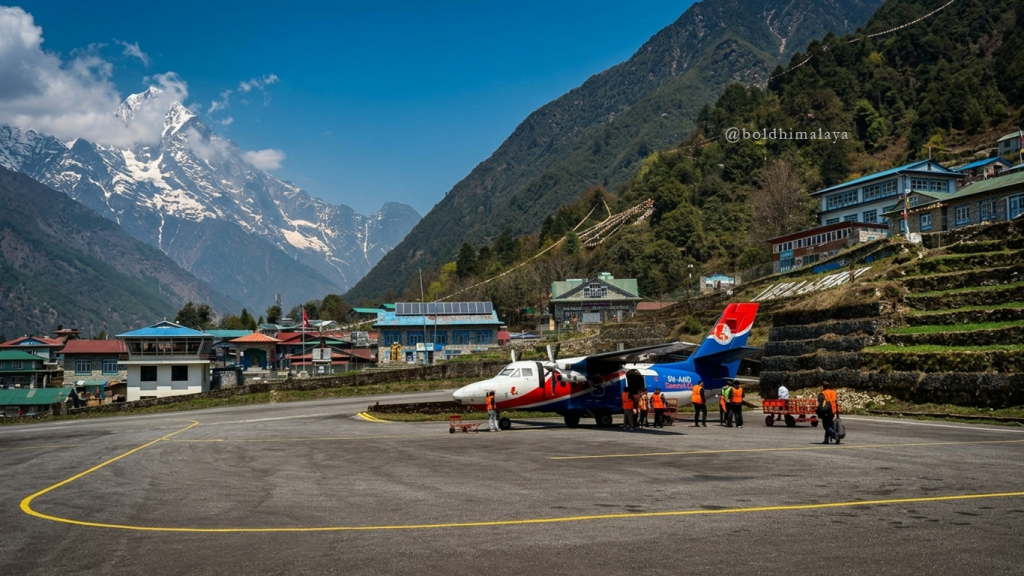
Lukla is the starting and ending point of the Everest Base Camp trek, but the weather here changes quickly and can affect the entire journey. As trekkers move higher from Lukla, temperatures drop by about 6°C for every 1,000 meters gained, making conditions much colder toward places like Gorak Shep.
Weather patterns in Lukla can also indicate conditions higher up in the Everest region. Changes in clouds, wind, or visibility often suggest similar shifts in places like Namche Bazaar and Dingboche. Because of this, the weather in Lukla is often used to understand possible conditions along the trekking route.
Flight cancellations in Lukla can directly impact trekking schedules. Delays in arrival or departure may cause changes in the itinerary and can also affect acclimatization plans. Sometimes, return flights to Kathmandu are also delayed due to poor weather conditions.
For this reason, flexibility is very important when planning the Everest Base Camp trek. Keeping buffer days in the itinerary and having weather-related travel insurance helps manage unexpected delays caused by Lukla’s changing weather.
Alternative to Lukla Flights: Helicopter Option
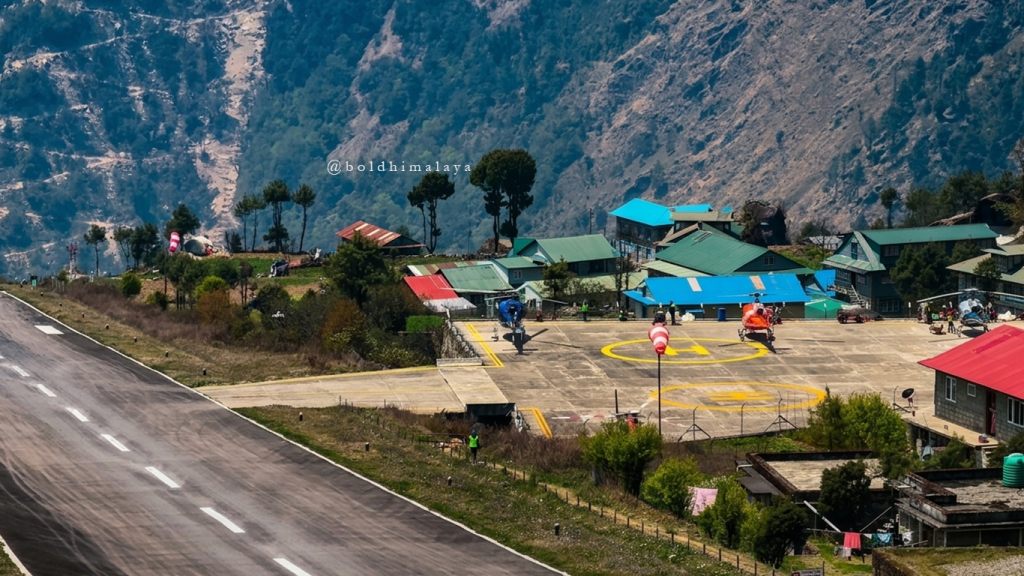
Helicopter flights are a popular alternative to regular Lukla flights, especially when weather conditions are unstable or when travelers need more flexibility in their itinerary. This option is widely used in the Everest region due to frequent flight delays and cancellations at Tenzing-Hillary Airport.
Helicopters are mainly used because flights to Lukla are often affected by sudden weather changes such as fog, wind, and low visibility. They provide a more reliable way to travel when fixed-wing aircraft cannot operate. It is especially helpful during the monsoon (June-August) and winter (December-February), when weather disruptions are more common. They are also used during emergencies or when regular flights are fully booked or delayed.
Route Options
Common helicopter routes include Kathmandu to Lukla and Kathmandu directly to higher trekking points like Phakding or nearby trail sections (depending on weather and permission). In some cases, helicopters can also support return trips from the Everest region back to Kathmandu.
Cost and flexibility
Helicopter travel is more expensive than regular flights, but it offers greater flexibility and faster travel. It is often shared among passengers to reduce cost, or booked privately for a more premium experience.
Who should choose it?
Helicopters are ideal for trekkers with tight schedules, luxury travelers, or those affected by repeated flight cancellations. They are also a practical option for anyone prioritizing reliability and time efficiency over cost. Travelers looking for an alternative to flying directly to Lukla can consider the Everest Base Camp Trek via Phaplu.
Conclusion
The weather at Lukla requires careful attention because it directly affects almost every part of the Everest Base Camp and Everest Three Pass trek. Understanding Lukla weather conditions throughout the year is important since it influences flight operations at Tenzing-Hillary Airport, trail accessibility, and even altitude acclimatization timing.
The Himalayas are highly unpredictable, so trekkers who follow Lukla weather forecasts and seasonal patterns are better prepared for changes like fog, strong winds, or sudden cloud cover. These conditions are the main reasons behind Lukla flight delays and cancellations, especially during the monsoon and unstable spring periods.
Knowing the best time to visit Lukla helps reduce uncertainty. For example, autumn usually offers the most stable weather, while monsoon brings frequent disruptions, and winter can introduce cold-related challenges. Spring also provides relatively good conditions, but may still have afternoon cloud build-up.
In short, understanding Lukla weather and flight conditions for the Everest trek helps travelers plan better, avoid unnecessary delays, and choose safer trekking windows. Proper awareness turns unpredictable mountain conditions into a more manageable and rewarding trekking experience with clear views of the Himalayas.
FAQs of Lukla Weather
Why is Lukla’s weather so unpredictable?
Lukla Airport is located in the Himalayan mountains, where the weather can change very quickly. Clouds, wind, fog, and sudden rain often develop within a short time.
Which season has the best weather in Lukla?
Spring (March to May) and Autumn (September to November) are considered the best seasons. During these months, skies are generally clearer, flights operate more smoothly, and trekking conditions are more stable.
Does Lukla’s weather affect flights?
Yes, the weather is one of the main reasons for flight delays or cancellations in Lukla. Poor visibility, strong winds, and fog can prevent aircraft from landing or taking off safely.
What time of day is the weather usually clearest in Lukla?
Mornings are usually more stable and clearer. That is why most Lukla flights operate early in the morning before clouds and wind build up later in the day.
Is Lukla very cold throughout the year?
Lukla remains cool year-round, but temperatures vary by season. Winters can be very cold, especially at night, while spring and autumn are milder and more comfortable for trekking.
How is the weather in Lukla during the monsoon season?
During monsoon (June to August), Lukla receives frequent rainfall, cloudy skies, and poor visibility. Flight disruptions are common, and trekking trails can become muddy and slippery.
Can flights to Lukla be delayed for several days?
Yes, during bad weather periods, flights can sometimes be delayed for multiple days. Trekkers are advised to keep extra buffer days in their itinerary.
Does Lukla weather affect the Everest Base Camp trek?
Yes, Lukla weather directly impacts the Everest region trekking experience because most treks begin with flights to and from Lukla. Weather conditions can influence transportation, trail conditions, and visibility during the trek.
Comments (0)
Write a comment- Lukla Weather Overview
- Lukla Weather Across Seasons
- Why are Lukla flights often delayed or cancelled?
- Lukla Weather Impacts on the Everest Base Camp Trek
- Alternative to Lukla Flights: Helicopter Option
- Conclusion
- FAQs of Lukla Weather
- Why is Lukla’s weather so unpredictable?
- Which season has the best weather in Lukla?
- Does Lukla’s weather affect flights?
- What time of day is the weather usually clearest in Lukla?
- Is Lukla very cold throughout the year?
- How is the weather in Lukla during the monsoon season?
- Can flights to Lukla be delayed for several days?
- Does Lukla weather affect the Everest Base Camp trek?
Read the latest Blogs & Insights
Explore our collection of articles and insights to gain in-depth travel knowledge, expert advice, and stay updated on the latest trends and tips.
View All Articles
Broad Peak Avalanche: Nirmal Purja & the Team
10 Aug. 2026
Prayer Flags
10 Jul. 2026
Golf Tour in Nepal
24 Aug. 2026



No comments yet.