
Kanchenjunga Circuit Trek Accommodation: Teahouses, Lodges & Camping
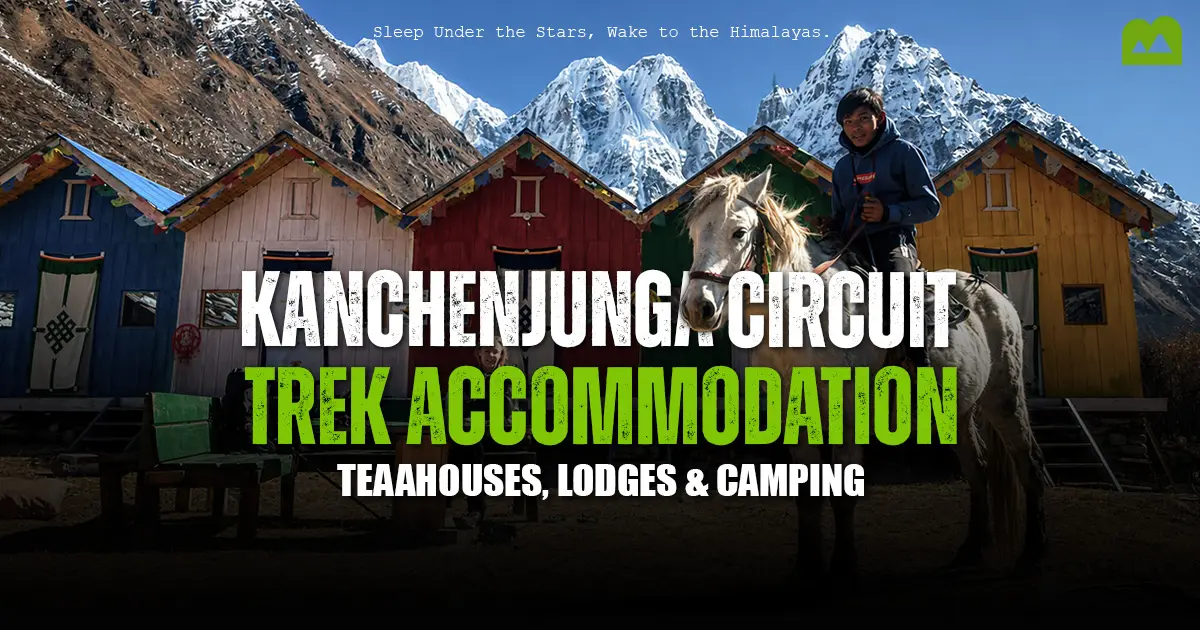
Accommodation on the Kanchenjunga Circuit Trek is mainly in small local teahouses and lodges, with basic rooms and shared facilities. In recent years, more lodges have opened along the route, so much of the standard circuit can now be completed without carrying a tent for the entire trek.
The experience changes as you gain altitude. Lower villages have more choices, Ghunsa is one of the better places to stay, and the lodges become much simpler around Kambachen and Lhonak. Some remote or high-pass sections can still depend on seasonal accommodation, so the exact setup depends on your itinerary and travel season.
What is Accommodation Like on the Kanchenjunga Circuit?
Most nights are spent in simple teahouses or local lodges with twin-sharing rooms, basic beds and shared bathrooms. These are small, family-run places rather than hotels, and comfort becomes more limited as you move higher.
A typical room has two beds with a mattress, pillow and blanket. Walls are often made from wood or stone, and insulation is limited, especially in the higher villages. A sleeping bag is therefore useful even when blankets are provided.
Most teahouses also have a dining area where trekkers can eat, warm up and spend the evening after a long day on the trail. Meals are usually simple, with options such as dal bhat, noodles, soup and local dishes.
Where Do You Stay on the Kanchenjunga Trek?
The main overnight stops have basic teahouses or lodges, but the number and standard of rooms vary from village to village.
| Location | Typical Accommodation | What to Expect |
| Taplejung | Hotel or guesthouse | More room choices and better facilities |
| Mitlung–Chirwa | Local teahouse/lodge | Simple rooms and shared facilities |
| Amjilosa | Basic teahouse | Small local lodges |
| Ghunsa | Several teahouses | One of the better-equipped stops |
| Kambachen | Basic teahouse | Few choices and colder rooms |
| Lhonak | Very basic lodge | Limited rooms and basic facilities |
| Pangpema | Mainly a day visit | Overnight setup depends on route |
| Sele La section | Seasonal lodge or camping | Very basic and route-dependent |
| Tseram | Basic teahouse | Simple rooms and shared facilities |
| Yamphudin | Local guesthouse/teahouse | More choices as you descend |
The exact overnight stops can change with the itinerary, weather and lodge availability.
What is Accommodation Like in Ghunsa?
Ghunsa has some of the best accommodation on the Kanchenjunga Circuit, although it is still basic compared with hotels in the lower towns.
Several teahouses operate here, giving trekkers more choice than in the higher villages. Twin-sharing rooms, a common dining area and shared bathrooms are typical, while some lodges may offer hot showers, charging and limited internet for an extra fee.
Ghunsa is also an important stopping point before Kambachen, so many trekkers spend an extra night here for acclimatization.
What is Accommodation Like in Kambachen?
Kambachen has a small number of basic teahouses with simple rooms and shared facilities.
The rooms are less comfortable than those in Ghunsa, and the colder conditions are more noticeable because of the higher elevation. Lodge choices are also limited, so there may not be much flexibility if one place is full.
A warm sleeping bag is important here because rooms are generally unheated.
What is Accommodation Like in Lhonak?
Lhonak has some of the most basic accommodation on the Kanchenjunga Circuit.
The settlement is at a high elevation and has very limited lodge capacity. Rooms are simple, facilities are shared and the cold can be severe at night.
For this reason, trekkers should not expect the same level of comfort they may find in Ghunsa. A warm sleeping bag, headlamp and extra warm layers are especially useful here.
Is There Accommodation at Pangpema?
Pangpema is usually visited as a day trip from Lhonak rather than used as a regular overnight stop.
Pangpema lies close to Kanchenjunga North Base Camp and is much higher than Lhonak. Current accommodation information differs by route, with some very basic seasonal shelters reported, but the standard arrangement on many itineraries is to visit Pangpema during the day and return to Lhonak to sleep.
This also avoids spending the night at the highest part of the route.
Can You Trek Kanchenjunga Without Camping?
Yes, much of the standard Kanchenjunga Circuit can now be done in teahouses, but camping may still be needed on some remote or seasonal sections.
Basic lodges have expanded along the route, including areas that historically relied much more on camping. However, the standard is still very basic, and accommodation around high passes can be seasonal.
So when booking your trek, ask whether your particular itinerary is fully teahouse-based or includes camping.
What Are Kanchenjunga Teahouse Rooms Like?
Most rooms are small twin-sharing rooms with basic beds, mattresses, pillows and blankets.
Private rooms may be available in some lower villages, but they are limited, especially in places such as Kambachen and Lhonak.
The walls do not provide much protection from the cold, and the rooms are usually not heated. Bringing your own sleeping bag is therefore one of the most useful things you can do for a comfortable night.
Are Bathrooms Private on the Kanchenjunga Trek?
No, shared bathrooms are the normal setup on most of the Kanchenjunga Circuit.
Better-equipped lodges in lower villages may have Western-style toilets, but squat toilets and shared facilities become more common farther along the trail.
You should not expect an attached bathroom in the higher villages.
Are Hot Showers Available?
Hot showers are available at some lodges, but they are not guaranteed and usually cost extra.
In lower villages and Ghunsa, you are more likely to find a proper hot shower. Higher up, a bucket of heated water may be the only option. The cost generally rises with elevation because heating water requires more fuel.
It is better to treat hot showers as an extra rather than something included with your room.
Is Electricity and Wi-Fi Available?
Electricity is available in parts of the route, but charging and internet become less reliable as you go higher.
Ghunsa generally has better access to charging and connectivity than the more remote settlements. Beyond that, power may depend on solar or small local systems, and charging can be limited or unavailable.
Wi-Fi may be available at some lodges, but you should not plan on having a strong connection throughout the trek.
A power bank is worth carrying.
How Much Does Accommodation Cost on the Kanchenjunga Trek?
Basic teahouse accommodation generally costs around NPR 300–1,000 per person per night, with prices tending to rise in the higher villages.
| Accommodation | Approximate Cost |
| Lower villages | NPR 300–600 |
| Ghunsa | NPR 300–800 |
| Kambachen | NPR 500–1,000 |
| Lhonak and higher stops | NPR 500–1,000+ |
These are approximate figures, not fixed rates. Prices can change by lodge, season and availability.
Some lodges may offer a lower room price when you eat your meals there, so it is worth asking about the total before checking in.
Is Accommodation Included in the Kanchenjunga Trek Package?
It depends on the trekking company and package you book.
Organized Kanchenjunga treks commonly include accommodation and meals, while independent trekkers normally pay the lodge directly.
Before booking, check whether your package includes:
- Teahouse accommodation
- Camping where needed
- Meals
- Sleeping equipment
- High-pass accommodation
- Extra nights for acclimatization
This is particularly important for remote sections where the accommodation arrangement may differ from the main trail.
Should You Book Kanchenjunga Accommodation in Advance?
Yes, booking ahead is a good idea, especially during spring and autumn.
The Kanchenjunga region has far fewer lodges than popular routes such as Everest and Annapurna, and some villages have only a small number of rooms.
This matters most at places such as Kambachen and Lhonak, where accommodation choices are limited.
On a guided trek, your operator normally handles the room arrangements before you arrive.
What Should You Bring for Teahouse Accommodation?
You do not need to carry bedding or cooking equipment, but a few personal items are worth having:
- Warm sleeping bag
- Headlamp
- Power bank
- Quick-dry towel
- Toiletries
- Toilet paper
- Hand sanitizer
- Warm layers
- Water bottle
- Personal medicines
- Earplugs
The sleeping bag is especially important for the colder nights at Kambachen and Lhonak.
What Is a Typical Evening Like in a Kanchenjunga Teahouse?
Most trekkers spend the evening in the dining room before heading to their rooms for the night.
The dining area is usually the place to eat, talk with other trekkers and warm up around a stove when one is available.
The rooms are mainly for sleeping, so the common area often becomes the social part of the evening.
This is one of the differences between Kanchenjunga and the more developed trekking routes. The lodges are not designed around comfort and entertainment; they provide a simple place to eat and rest before the next day’s walk.
Accommodation Around the Kanchenjunga High Passes
Accommodation around high-pass sections is more basic and can be seasonal, so the arrangement depends heavily on your route and the time of year.
The Sele La section has seen more basic seasonal lodge accommodation in recent years, but conditions can vary and some itineraries may still use camping.
These stops should not be compared with Ghunsa. The main purpose is to give trekkers a place to sleep before or after a demanding section of the route.
Ask your operator about the exact overnight arrangements before starting the trek.
Conclusion
Accommodation on the Kanchenjunga Circuit is simple, local and much more available than it used to be. Most of the standard route can now be covered by teahouses and small lodges, although some remote high-pass sections can still depend on seasonal facilities.
Ghunsa offers some of the better accommodation on the route, while Kambachen and Lhonak are much more basic. Shared bathrooms are common, hot showers and charging usually cost extra, and internet access becomes less reliable as you go higher.
You do not need hotel-level comfort to enjoy Kanchenjunga. A warm sleeping bag, realistic expectations and a good plan for the remote sections are enough to make the nights much easier.
Kanchenjunga Circuit Trek Accommodation FAQs
Can I get a private room on the Kanchenjunga Trek?
Private rooms may be available in some lower villages, but they are limited. In smaller and higher settlements, twin-sharing rooms are more common because there are fewer rooms available.
Do teahouses provide blankets on the Kanchenjunga Circuit?
Yes. Most teahouses provide basic blankets, but they may not be enough for the cold nights at higher elevations. A warm sleeping bag is still recommended.
Can I charge my phone at Kanchenjunga teahouses?
Charging is available at some lodges, especially in lower villages and Ghunsa, but it becomes less reliable in remote areas. Some places charge an additional fee, so carrying a power bank is useful.
Is there heating in Kanchenjunga teahouse rooms?
Usually no. Bedrooms are generally not heated, and trekkers normally stay warm with their sleeping bag and extra layers. Dining rooms may have a stove or fire in some lodges.
Can I book a teahouse after reaching the village?
You may be able to find a room on arrival, but this is less reliable in busy seasons and at smaller high-altitude settlements. Booking ahead is a safer choice when rooms are limited.
Are towels and toiletries provided in Kanchenjunga lodges?
Usually not. Bring your own towel, toilet paper, soap, shampoo and other personal items. Basic supplies may be available in some lower villages, but you should not depend on finding them along the entire route.
Related more Traveler Information
Some more related traveler information