



Everest Base Camp Trek: Food & Accommodation
-
 admin
admin -
6 May, 2025
-
14 mins read
-
1785 Views
-
0 Comments


Even though much of the focus falls on altitude and trekking experience, one aspect that truly shapes your daily journey is the Everest Base Camp Trek Food & Accommodation. These two elements play an important role in your overall comfort, energy levels, and success, especially in a high-altitude environment where proper rest and nutrition directly impact your health and performance. After long hours of trekking through rugged Himalayan terrain, having a warm place to sleep and access to nourishing meals is not just a luxury; it’s essential for recovery and acclimatisation.
One of the most unique aspects of trekking in the Everest region is the traditional tea house system. These are small, family-run lodges with basic rooms, home-cooked meals, and a friendly environment. Unlike remote expeditions in other parts of the world, you don’t need to camp every night on this route. This system has made the Everest Base Camp Trek one of the most popular trekking adventures globally.
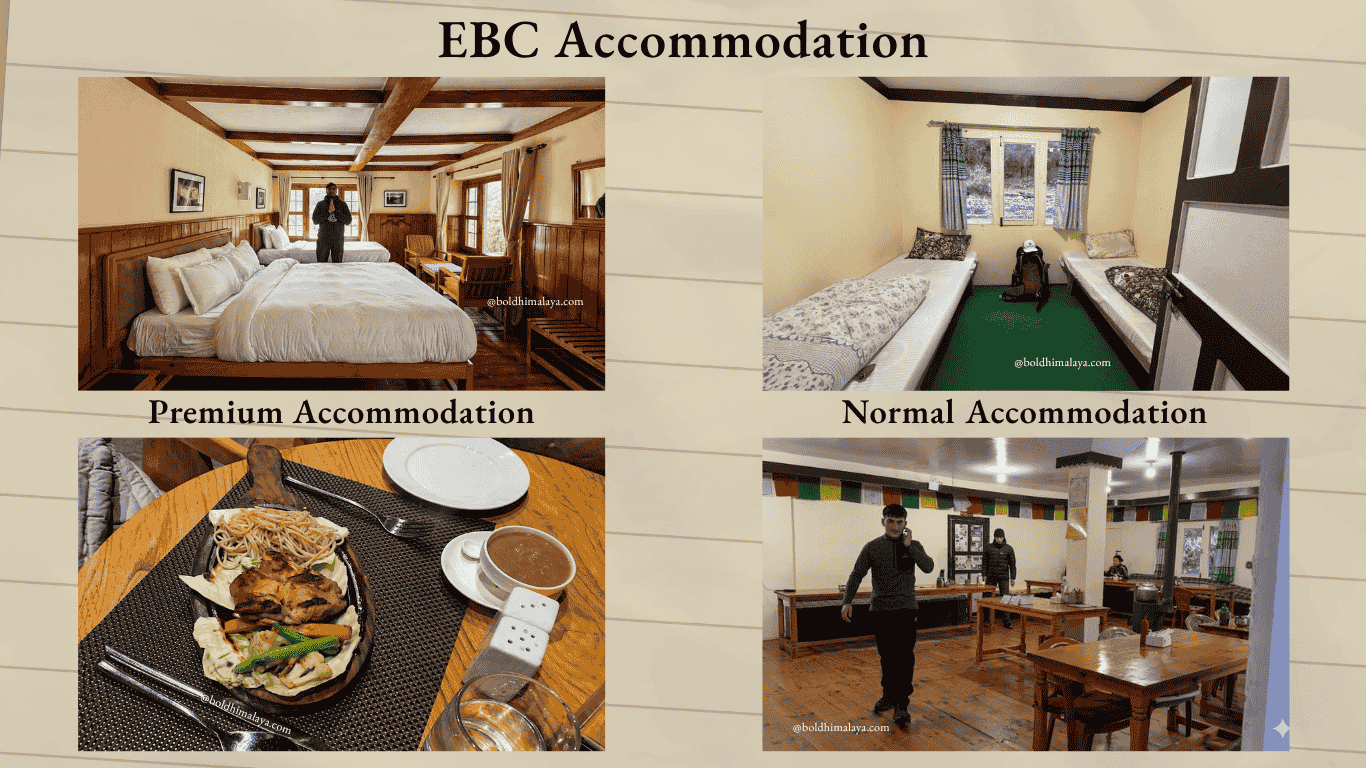
When it comes to variety, food and accommodation on Everest Base Camp Trek range from simple tea houses at higher elevations to more comfortable and even luxury lodges in places like Namche Bazaar. Tea houses typically provide twin-sharing rooms with shared facilities, along with staple meals such as dal bhat, noodles, soups, and tea.
In contrast, luxury lodges offer upgraded services including heated rooms, attached bathrooms, diverse menus, and higher standards of comfort. While camping remains an option, it is rarely necessary today except for specialised expeditions, as the well-developed tea house network ensures convenient access to both food and lodging throughout the trek.
Types of Accommodation on Everest Base Camp Trek
1. Traditional Tea Houses
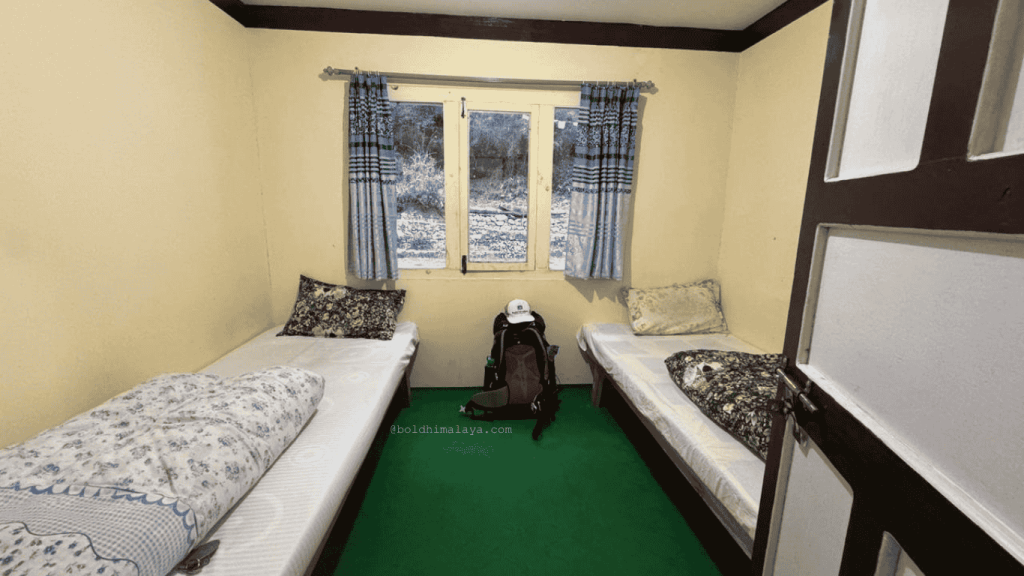
Tea houses are the most common form of accommodation on the Everest Base Camp Trek. These are simple, family-run lodges along the trail, mostly operated by Sherpa families, and give a warm and welcoming atmosphere. They provide trekkers with a chance to experience local culture while enjoying home-cooked meals and basic comfort after long days of trekking.
Tea houses are popular because they make the journey easier and more accessible; trekkers can move from one lodge to another without the need of camping. This system has made accommodation on the Everest Base Camp route affordable and convenient for most travellers.
Facilities are basic but practical. Rooms are usually twin-sharing with beds, blankets, and pillows. Bathrooms are shared, ranging from simple to semi-modern depending on altitude. The dining hall is the main social space, where trekkers gather for meals such as dal bhat, noodles, and soups, making it a key part of the overall experience.
2. Luxury Lodges/Hotels
Luxury lodges/Hotels are a premium level of accommodation on the Everest Base Camp Trek, designed for trekkers who want extra comfort while exploring the Himalayas. These lodges are mostly found at lower and mid-altitudes, particularly in places like Lukla and Namche Bazaar, where infrastructure allows for higher-end services.
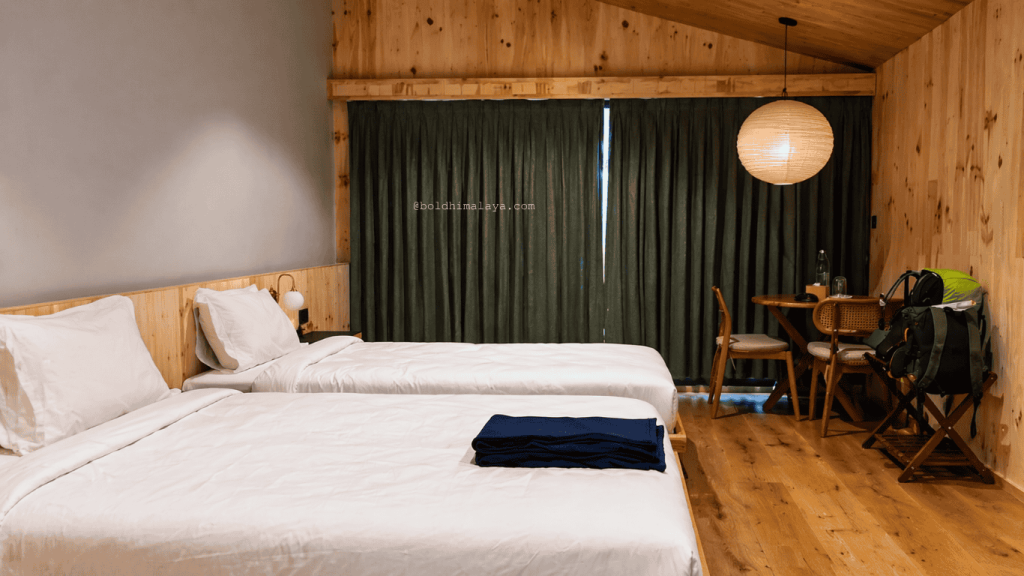
Unlike tea houses, luxury lodges provide heated rooms, helping trekkers stay warm in cold mountain conditions. Rooms are more spacious and often come with private attached bathrooms, offering greater privacy and convenience. Another highlight is the high-quality meals, with a wider menu that includes both local and international dishes, prepared with better hygiene and presentation by a professional chef.
However, luxury accommodation is limited at higher elevations due to harsh weather and logistical challenges. As trekkers move further up the trail, options become more basic, and even those staying in luxury lodges will eventually transition to standard tea houses. Still, for the first half of the trek, these lodges offer a comfortable and relaxing experience without compromising the adventure.
3. Camping
Camping on the Everest Base Camp trek is a rare but deeply rewarding option for trekkers who want a more adventurous and immersive Himalayan experience. Camping allows you to stay closer to nature, surrounded by towering peaks, quiet valleys, and untouched mountain landscapes.
This style of trekking is usually arranged as a fully supported expedition, with guides, porters, and a crew handling tents, meals, and logistics, which makes it more complex and costly. Even though it requires more planning, it offers a unique sense of freedom and exploration that many trekkers find unforgettable.
Food on the Everest Base Camp Trek
Food in the Tea House
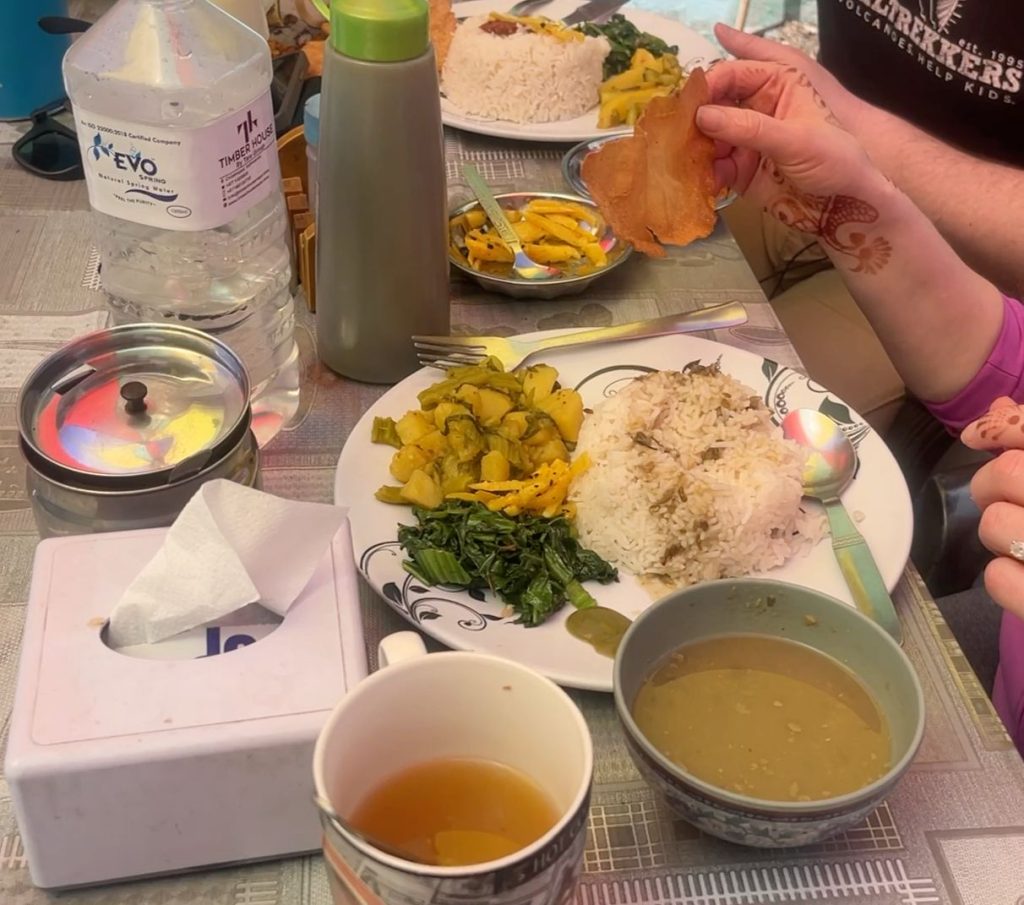
Food on the Everest Base Camp Trek is mainly provided through tea houses and lodges along the trail, which offer simple but energy-rich meals designed to support long trekking days at high altitude. Most meals are freshly prepared in small kitchens run by local families, especially Sherpa communities. The menu is surprisingly varied considering the remote location, and it usually includes both Nepali and basic international dishes. You can expect;
- Dal Bhat (lentils, rice, vegetables)
- Noodles, momo, pasta, and fried rice
- Soups (garlic, vegetable, noodle soup)
- Potatoes (fried, boiled, or mashed)
- Bread, eggs, and porridge
- Tea, coffee, and hot drinks
As you move higher along the trail, especially near Namche Bazaar, Dingboche, and up to Gorak Shep, food options become more limited and expensive. This is because all supplies are carried by porters or yaks, increasing the cost with altitude.
At higher elevations, menus are smaller but still focused on high-energy foods that help trekkers cope with cold weather and physical exhaustion.
Food in Luxury Hotels/Lodges
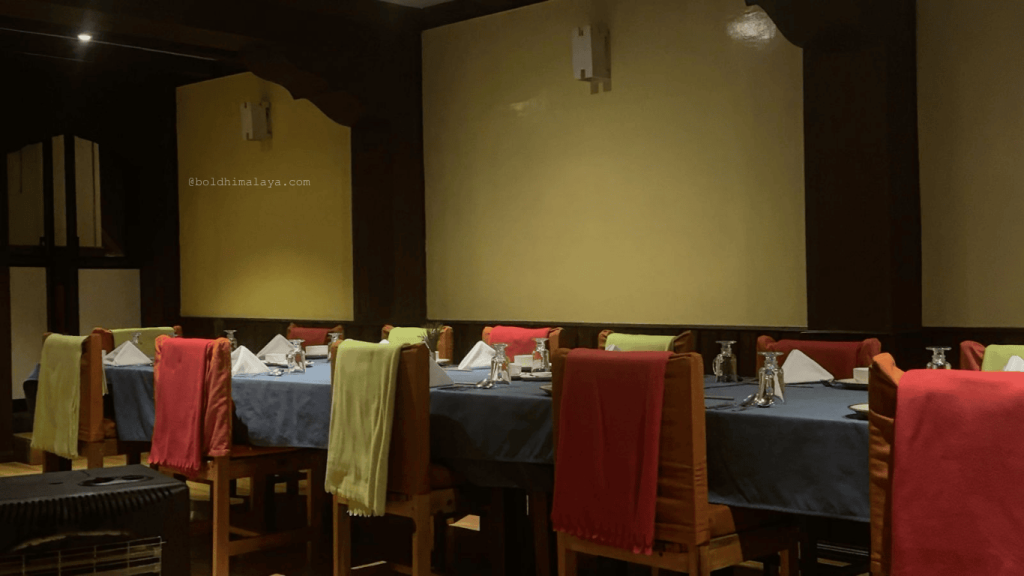
Luxury lodges on the Everest Base Camp Trek offer a much more comfortable and refined dining experience compared to standard tea houses. These lodges are mainly found in lower regions like Lukla and Namche Bazaar.
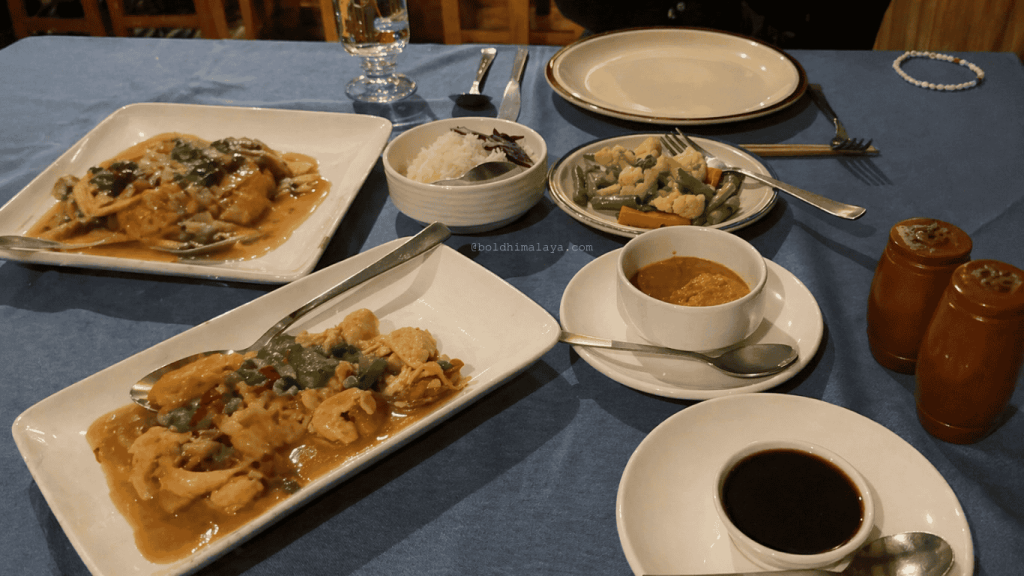
The food is varied and well-prepared by the professional chef, with options ranging from Nepali dishes to international cuisine like pasta, soups, grilled meals, salads, and desserts. Many lodges also serve quality coffee, baked goods, and multi-course meals that feel closer to a restaurant-style experience than typical trekking food.
Hygiene, presentation, and comfort are key priorities in luxury dining. Meals are served in clean, well-heated dining areas with comfortable seating, allowing trekkers to relax after a long day of walking. Overall, it gives a balance of good nutrition and upgraded comfort in the Himalayas.
Accommodation according to the villages
Accommodation on the Everest Base Camp Trek changes significantly as you gain altitude, with comfort levels gradually decreasing and simplicity increasing.
1. Lower Region (Lukla – Phakding)
In the lower part of the trek, villages like Lukla and Phakding present some of the most comfortable lodges on the route. Trekkers can enjoy relatively better facilities such as hot showers, Wi-Fi, and reliable electricity. Rooms are cleaner and more comfortable, making this section ideal for first-night acclimatisation and adjusting to the trekking rhythm.
2. Mid Region (Namche Bazaar – Tengboche – Dingboche)
The mid-region, including Namche Bazaar, Tengboche, and Dingboche, gives the best balance of comfort and altitude experience. Namche Bazaar, in particular, has the most developed facilities on the trail, including a wide range of lodges from budget to luxury options. Trekkers can also find bakeries, cafes, Wi-Fi, charging stations, and even ATMs, making it a key rest and acclimatisation stop.
3. Upper Region (Lobuche – Gorak Shep)
As you move higher to places like Lobuche and Gorak Shep, accommodation becomes very basic. Lodges are simple, often powered by solar energy, and provide only essential services. Bathrooms are shared, hot showers are rarely available, and comfort is minimal due to extreme cold and high altitude. Despite the basic conditions, these lodges are crucial resting points before reaching Everest Base Camp.
Everest Base Camp Trek Accommodation: Then vs Now
Accommodation along the Everest Base Camp Trek has evolved significantly over the years, transforming from a very basic survival setup into a more structured and comfortable trekking experience.
In the early days of trekking in the Khumbu region, accommodation was extremely simple and limited. Trekkers mostly relied on basic tea houses or even camping. These tea houses were small, locally built lodges with minimal facilities, often just wooden rooms, thin beds, and shared outdoor toilets. Heating was rare, and meals were very simple, usually consisting of local staples like dal bhat.
But Today, accommodation on the Everest Base Camp route has become far more developed and accessible. The tea house system has expanded across nearly every stop, offering trekkers consistent and reliable places to stay. Even in remote villages, you’ll find lodges with improved infrastructure, better insulation, and more organised services.
In popular hubs like Namche Bazaar and Lukla, accommodation has upgraded to include:
- Comfortable rooms with better bedding
- Attached bathrooms in some lodges
- Hot showers and charging facilities
- Wi-Fi and mobile connectivity
Additionally, luxury lodges have emerged in lower and mid-altitude areas, offering heated rooms, high-quality meals, and hotel-like services for trekkers seeking extra comfort. While higher-altitude locations like Gorak Shep still maintain basic facilities due to harsh conditions, even these areas have seen improvements in cleanliness and organisation.
Tea House Accommodation and Food Cost
| Altitude | Villages | Cost per Night (USD) | Meal Price (USD) | Type of Stay |
|---|---|---|---|---|
| 2,600–3,000m | Lukla, Phakding | $5 – $15 | $3 – $10 | Comfortable tea houses |
| 3,000–3,500m | Namche Bazaar | $5 – $8 / $10 – $30 | $5 – $12 | Wide range (basic to upgraded) |
| 3,500–4,000m | Tengboche, Pangboche | $5 – $20 / $5 – $25 | $5 – $15 | Basic but decent lodges |
| 4,000–4,500m | Dingboche, Pheriche | $5 – $15 / $10 – $15 | $7 – $18 | Cold, simple rooms |
| 4,500–5,000m | Lobuche | $5 – $20 | $10 – $20 | Very basic |
| 5,000m+ | Gorak Shep | $10 – $30 | $12 – $25 | Most basic, highest cost |
Note: Meal prices increase with altitude due to transportation difficulty, and items like meat, fresh vegetables, and imported snacks cost more. Prices also depend on what you order; simple meals cost less, while varied or non-local dishes can be more expensive.
Luxury/Premium Accommodation and Food Cost
| Location | Type of Lodge | Cost per Night (USD) | Meal Price (USD) | Features |
|---|---|---|---|---|
| Lukla / Phakding | Luxury lodges | $150 – $250 | $10 – $30 | Heated rooms, private bathrooms, quality meals |
| Namche Bazaar | Premium lodges | $200 – $260 | $15 – $40 | Best comfort, cafes, bakeries, strong Wi-Fi |
| Syangboche (near Namche) | Hotel Everest View | $300 – $350+ | $25 – $50 | Panoramic Everest views, luxury rooms, fine dining |
| Debuche | Luxury lodge | $150 – $250 | $18 – $35 | Scenic location, peaceful environment |
| High altitude (Lobuche / Gorak Shep) | Basic tea houses | $30 – $40 | $12 – $25 | No luxury, very limited facilities |
Facilities on the Everest Base Camp Trek Accommodation
Accommodation along the Everest Base Camp Trek offers basic but essential facilities that gradually change as altitude increases.
1. Bathrooms/Toilets
Most lodges provide shared toilet facilities, which may be either squat or Western-style depending on the village. In lower altitude areas, hygiene and maintenance are generally better, while facilities become more basic and limited as you go higher. And in luxury lodges, private bathrooms are provided.
2. Hot Showers
Hot showers are available in lower regions such as Lukla and Namche, usually for an extra charge(about $2-$5). However, at higher altitudes, they become rare, more expensive, or may not be available at all due to limited resources and cold conditions.
3. Electricity and Charging
Electricity is available in most villages, but it becomes limited and less reliable at higher elevations. Charging devices usually come with a small fee of $2-$5 per hour, especially in remote areas where power is generated through solar or backup systems.
4. Wi-Fi and Network
Wi-Fi is offered in many tea houses along the route, but the speed is generally slow, and the cost increases with altitude. Network coverage also becomes weaker as you move closer to Everest Base Camp, making connectivity less dependable.
5. Heating and Bedding
Most tea houses supply two to three blankets; electric or solar blankets are available in luxury lodges. Room heaters are extremely rare.
Tips for the Everest Base Camp Trek: Food & Accommodation
- Pack Light: Space is limited in tea houses on the Everest Base Camp Trek, so carry a backpack or duffel instead of large suitcases
- Eat local meals: Dal bhat is the most reliable, filling, and often refillable meal on the trek.
- Avoid meat at high altitude: In remote areas, meat may not be fresh due to transport challenges.
- Stay hydrated: Drink plenty of water, soups, and tea to help with acclimatisation.
- Carry snacks: Energy bars, nuts, and chocolates are useful between meals.
- Check prices before ordering: Costs increase with altitude, especially for imported or Western dishes.
- Stay Flexible: Rooms are basic, and availability can change, especially during peak season
- Padlock & Cash: Bring your lock; ATMs are available in Namche, but charge high fees.
- Dress Warm: Lodges are unheated at night, so keep warm layers handy
- Use Shared Spaces: Dining halls are the warmest and most social areas
- Charge Smart: Electricity is limited, charge devices when possible, and carry a power bank
- Footwear Etiquette: Leave trekking boots outside your room; many lodges provide slippers.
- Respect Local Customs: Remove shoes and hats in tea houses; a small tip for staff is appreciated.
- Keep expectations realistic: Comfort decreases at higher elevations, but essentials are always available.
- Support local businesses: Staying and eating in tea houses helps the local Sherpa community.
Conclusion
Food and accommodation on the Everest Base Camp Trek are simple yet thoughtfully adapted to the challenges of high-altitude trekking. From basic tea houses serving hearty local meals to more comfortable lodges and limited luxury options, both food and stay play a crucial role in supporting trekkers throughout the journey.
While facilities and menu variety become more limited as you gain altitude, they remain sufficient for proper rest, warmth, and nutrition. With the right expectations and preparation, food and accommodation become more than just daily necessities; they are an essential part of the Himalayan experience, offering comfort, cultural connection, and the energy needed to continue the adventure.
FAQs of the Everest Base Camp Trek Food & Accommodation
1. What type of accommodation is available on the Everest Base Camp Trek?
Accommodation mainly consists of traditional tea houses, which are simple lodges offering basic rooms and meals. In places like Namche Bazaar, you can also find upgraded and luxury lodges with better facilities.
2. Are rooms private or shared during the trek?
Most tea houses provide twin-sharing rooms with basic beds and blankets. Private rooms may be available at lower altitudes but are limited higher up.
3. Do tea houses provide blankets and heating?
Yes, most tea houses provide blankets, but they may not be very warm at higher altitudes. Heating is usually available only in the dining area, often using a stove.
4. What kind of food is available on the Everest Base Camp Trek?
Tea houses offer a variety of meals, including dal bhat (rice, lentils, vegetables), noodles, soups, fried rice, pancakes, eggs, and tea/coffee. Some places also serve limited Western dishes.
5. Is the food hygienic and safe to eat?
Yes, food is generally safe and freshly prepared. It is recommended to eat vegetarian meals at higher altitudes, as meat may not always be fresh.
6. How much does food cost on the trek?
Food prices increase with altitude. A typical meal can cost between $5–$25 depending on the location and what you order.
7. Can I get vegetarian or special diet meals?
Yes, vegetarian options are widely available. However, vegan, gluten-free, or other special diets may have limited choices, especially at higher elevations.
8. Is drinking water available in tea houses?
Yes, you can buy bottled water or refill boiled water for a fee. Many trekkers use water purification tablets or filters to save cost and reduce plastic use.
9. Do tea houses have attached bathrooms?
At lower altitudes, some lodges offer attached bathrooms. However, most tea houses have shared toilets, especially at higher elevations.
10. Is Wi-Fi and charging available in lodges?
Yes, Wi-Fi and charging are available in many tea houses, especially in Namche Bazaar, but they usually come with an extra charge and may be slow or unreliable.
11. Do I need to book accommodation in advance?
During peak seasons (spring and autumn), it’s recommended to book in advance or arrive early, especially in popular stops like Lukla and Namche Bazaar.
12. Is camping required on the Everest Base Camp Trek?
No, camping is not required as the tea house system is well-developed. Camping is usually only done for special or expedition-style treks.
Comments (0)
Write a comment- Types of Accommodation on Everest Base Camp Trek
- Food on the Everest Base Camp Trek
- Accommodation according to the villages
- Everest Base Camp Trek Accommodation: Then vs Now
- Tea House Accommodation and Food Cost
- Luxury/Premium Accommodation and Food Cost
- Facilities on the Everest Base Camp Trek Accommodation
- Tips for the Everest Base Camp Trek: Food & Accommodation
- Conclusion
- FAQs of the Everest Base Camp Trek Food & Accommodation
- 1. What type of accommodation is available on the Everest Base Camp Trek?
- 2. Are rooms private or shared during the trek?
- 3. Do tea houses provide blankets and heating?
- 4. What kind of food is available on the Everest Base Camp Trek?
- 5. Is the food hygienic and safe to eat?
- 6. How much does food cost on the trek?
- 7. Can I get vegetarian or special diet meals?
- 8. Is drinking water available in tea houses?
- 9. Do tea houses have attached bathrooms?
- 10. Is Wi-Fi and charging available in lodges?
- 11. Do I need to book accommodation in advance?
- 12. Is camping required on the Everest Base Camp Trek?
Read the latest Blogs & Insights
Explore our collection of articles and insights to gain in-depth travel knowledge, expert advice, and stay updated on the latest trends and tips.
View All Articles




No comments yet.