


Nepal Scraps 2-Person Trekking Rule: Solo Travelers Now Allowed in Restricted Zones
As of March 22, 2026, Nepal has taken a historic step in reshaping its trekking landscape. The Department of Immigration (DoI) has officially removed the long-standing “2-person rule” for restricted trekking areas, ending a decades-old requirement that required foreign trekkers to travel in pairs to obtain permits. This policy change marks a major shift for […]
-
 Bold Himalaya
-
24 March, 2026
-
7 mins read
-
2 Views
-
0 Comments


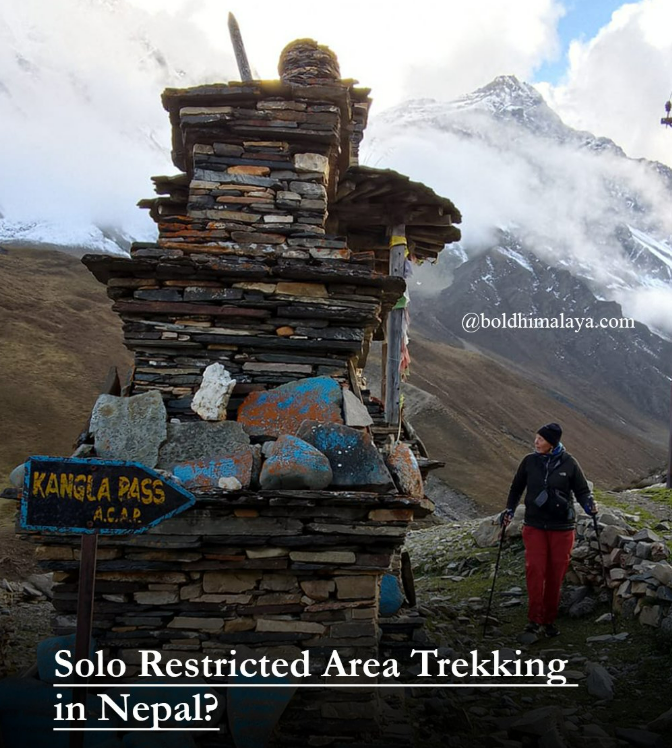
As of March 22, 2026, Nepal has taken a historic step in reshaping its trekking landscape. The Department of Immigration (DoI) has officially removed the long-standing “2-person rule” for restricted trekking areas, ending a decades-old requirement that required foreign trekkers to travel in pairs to obtain permits.
This policy change marks a major shift for independent travelers, opening the door for solo trekking in Nepal. In the past, solo trekkers often had to join groups or arrange “ghost partners” to meet administrative requirements. With the rule now scrapped, individuals can legally access Nepal’s most remote and culturally significant Himalayan regions without needing a second trekker.
The reform reflects Nepal’s effort to adapt to modern travel trends, where flexibility and solo exploration are increasingly in demand. At the same time, trekking in these regions remains regulated to ensure safety, cultural preservation, and proper management.
Understanding the Former 2-Person Rule
Nepal’s restricted trekking regions, including Upper Mustang, Upper Dolpo, Manaslu, Nar–Phu Valley, and Tsum Valley, are governed under a special permit system known as the Restricted Area Permit (RAP). These areas are located in remote, high-altitude zones, often near international borders, and are subject to stricter regulations than standard trekking routes.
Previous Requirements
Before 2026, trekkers had to meet the following conditions:
- A minimum of two foreign trekkers to apply for permits
- A licensed trekking guide was mandatory
- Permits had to be arranged through registered trekking agencies
These rules effectively prevented true solo trekking in restricted regions.
Purpose Behind the Rule
The policy was originally designed to address several concerns:
- Border Security: Many restricted areas lie close to Tibet (China), requiring controlled access
- Cultural Preservation: Protection of unique traditions and communities
- Tourist Safety: Remote terrain and limited infrastructure made group travel easier to monitor
The 2023 Guide Mandate
On April 1, 2023, Nepal introduced a nationwide requirement for foreign trekkers to hire licensed guides in most trekking regions. This further limited independent travel and reinforced the controlled nature of trekking across the country.
The 2026 Policy Shift: What Has Changed?
In 2026, Nepal introduced a landmark reform that fundamentally changed access to its most remote Himalayan regions. The Department of Immigration (DoI) officially removed the long-standing 2-person minimum requirement for Restricted Area Permits (RAPs), allowing solo trekkers to legally explore restricted areas for the first time. This reform marks a major step toward modernizing Nepal’s trekking policies and supporting independent adventure tourism.
Key Updates
According to the latest policy changes:
- The requirement of at least two foreign trekkers for restricted area permits has been eliminated
- Solo foreign trekkers are now permitted to access previously restricted routes
- Safety and group management measures have been introduced, including a maximum of seven trekkers per guide
- Permit applications now require a valid Nepal visa number at the time of application, allowing foreign trekkers to use their visa application number (submission ID) from their home country for planning
- To assist applicants with technical issues, the Department has provided a dedicated helpline: +977-9761423636
This policy directly impacts trekking regions such as Upper Mustang, Upper Dolpo, Manaslu, Nar–Phu Valley, and Tsum Valley, areas that were previously inaccessible to solo trekkers under the old regulations.
Note: While solo travelers can now legally apply for Restricted Area Permits, trekking in these regions remains regulated, with licensed guides, safety limits, and permit rules still in place.
This updated framework not only expands freedom for solo trekkers but also ensures that safety, cultural preservation, and proper monitoring are maintained across Nepal’s most sensitive Himalayan zones.
What Has NOT Changed?
While the 2026 update introduces greater flexibility, trekking in restricted areas remains carefully regulated, and several key requirements are still in place.
Licensed Guide Requirement
Trekkers are still required to be accompanied by a licensed guide. Fully independent, guide-free trekking in restricted regions is not permitted.
Permit System Remains Mandatory
Access to these areas continues to depend on official permits, including:
- Restricted Area Permit (RAP)
- Relevant Conservation or National Park permits, depending on the trekking region
Agency-Based Processing
All permits must be arranged through registered trekking agencies like Bold Himalaya, as individual applications are not accepted directly.
Note: this change allows solo entry without requiring a second trekker—but trekking remains structured, regulated, and guide-supported rather than fully independent.
Why Nepal Removed the 2-Person Rule for Restricted Area Trekking
The decision to remove the 2-person requirement is driven by a combination of tourism strategy, evolving traveler behavior, and economic priorities. This policy shift reflects Nepal’s effort to modernize its trekking regulations and make restricted area trekking more accessible to solo travelers.
1. Tourism Recovery and Growth
Nepal’s tourism industry has been actively working to increase international arrivals and diversify trekking experiences. The previous rule was widely seen as a barrier because it:
- Limited access for solo trekkers in Nepal’s restricted areas
- Reduced visitor numbers in remote regions like Upper Mustang and Upper Dolpo
- Forced travelers to join groups, discouraging independent exploration
By removing this restriction, Nepal aims to boost trekking tourism and attract a wider range of travelers.
2. Changing Global Travel Trends
The global travel landscape has shifted significantly in recent years. Today’s trekkers increasingly seek:
- Solo trekking experiences
- Greater flexibility in itinerary planning
- More personalized and immersive journeys
To stay competitive as a leading Himalayan destination, Nepal has adapted its policies to align with these preferences, making solo trekking in restricted areas of Nepal more feasible than ever before.
3. Economic Benefits for Remote Regions
Opening restricted areas to solo trekkers is expected to bring direct economic advantages to local communities:
- Increased spending on guides, permits, accommodation, and logistics
- More consistent tourism flow in less-visited regions
- Improved livelihood opportunities in remote Himalayan villages
Note: the policy supports a model of sustainable tourism growth, where increased accessibility leads to broader economic impact without compromising regulation.
How the 2026 Change Affects Trekkers
The removal of the 2-person rule opens new opportunities for solo adventurers, while still requiring careful planning:
- Greater Freedom & Flexibility: Trekkers no longer need a companion, making personalized itineraries easier.
- Access to Remote Regions: Areas like Upper Dolpo and Nar–Phu Valley are now legally open to solo travelers.
- Adventure Tourism Growth: Solo trekking encourages exploration of less-visited regions for those seeking solitude.
Challenges Remain:
- Guide Requirement: Trekking is not fully independent, adding cost and planning complexity.
- Permit Fees & Logistics: Restricted area permits can be expensive, and remote infrastructure requires careful preparation.
Key Takeaway: Solo trekking is now possible, but success depends on good planning, budgeting, and working with licensed guides.
Comparison: Before vs After
| Aspect | Before 2026 | After 2026 |
|---|---|---|
| Minimum Trekker Requirement | At least 2 foreign trekkers required | Solo foreign trekkers are allowed |
| Restricted Area Permits (RAP) | Only issued if group criteria are met | Issued for individual trekkers |
| Guide Requirement | A licensed guide is mandatory for all treks | Licensed guide still mandatory |
| Agency Processing | Permits must be arranged through registered trekking agencies | Permits still arranged through registered agencies |
| Independent Trek Access | Difficult; solo trekking is largely prohibited | Easier; solo trekking is legally permitted with a guide |
| Traveler Flexibility | Limited itineraries linked to group permits | Increased flexibility for planning solo trips |
| Regions Affected | Upper Mustang, Upper Dolpo, Manaslu, Nar–Phu Valley, Tsum Valley | Same regions, now accessible to solo trekkers |
Conclusion
The removal of Nepal’s 2-person rule in 2026 marks a historic milestone for solo trekking in Nepal. For the first time, independent travelers can legally explore restricted areas such as Upper Mustang, Upper Dolpo, and Nar–Phu Valley without needing a trekking partner.
While permits and licensed guides are still required, this policy change provides greater freedom, flexibility, and access for solo adventurers seeking to experience Nepal’s remote Himalayan regions. By balancing accessibility with safety and cultural preservation, Nepal has created a more modern and traveler-friendly trekking system.
For anyone planning solo trekking in Nepal’s restricted areas, this is the perfect opportunity to embark on an unforgettable adventure while following the proper regulations and supporting local communities.
Ready to be the first solo explorer of 2026? Contact Bold Himalaya to secure your pre-arrival permit today.
Comments (0)
Write a comment- Understanding the Former 2-Person Rule
- Previous Requirements
- Purpose Behind the Rule
- The 2023 Guide Mandate
- The 2026 Policy Shift: What Has Changed?
- Key Updates
- What Has NOT Changed?
- Licensed Guide Requirement
- Permit System Remains Mandatory
- Agency-Based Processing
- Why Nepal Removed the 2-Person Rule for Restricted Area Trekking
- 1. Tourism Recovery and Growth
- 2. Changing Global Travel Trends
- 3. Economic Benefits for Remote Regions
- How the 2026 Change Affects Trekkers
- Comparison: Before vs After
- Conclusion
Read the latest Blogs & Insights
Explore our collection of articles and insights to gain in-depth travel knowledge, expert advice, and stay updated on the latest trends and tips.
Everest vs K2 | How They Differ


No comments yet.