
Yala Peak Climbing | Yala Peak Expedition


5(49)


Itinerary
Your Journey, Step by Step
Day 1: Arrival in Kathmandu (1,350m)
3 star Hotel
Upon your arrival at Tribhuvan International Airport, you will see our representative waiting for you. Our representative will welcome you to Nepal. After greeting you, we will transfer you to your hotel by a private vehicle. You can rest at the hotel after check-in. Later, you can have a short tour around Thamel. Thamel is the main tourist hub in Kathmandu. Overnight in Kathmandu.
Day 2: Drive from Kathmandu to Syabru Besi (1,550m/5,100ft)
Lodge
Breakfast, Lunch, Dinner
6–7 hours
~122 km
After breakfast, we will leave Kathmandu in the morning for Syabru Besi. It will be a lengthy but scenic drive. We drive along the northwestern hills of Kathmandu. On the way, we witness the beautiful scenery of white snowcapped mountains. Like, Mt. Annapurna II, Manaslu, Ganesh Himal, with other minor peaks, go with the route. Moreover, you have an amazing vista of the green scenery of hillocks and rivers. It will be on a winding road through regular switchbacks. And the ridgeline scene goes through the Trishuli Bazaar, Betrawati, and Dhunche. Then today’s trail ends with a descent into the small village of Syabru Besi. Overnight at Syabru Besi.
Day 3: Trek from Syabru Besi to Lama Hotel (2,380m/7,830ft)
lama Hotel
Breakfast, Lunch, Dinner
6–7 hours
~11 km
Your journey into the heart of the Langtang Himal begins at Syabrubesi (1,550 m), the lively gateway to Langtang National Park. The trail starts by crossing the Bhote Koshi River, which flows down from Tibet before merging with the emerald-colored Langtang Khola—the river that will accompany you for much of the trek.
Before leaving the village, there is time to visit a small Guru Rinpoche Gompa, where locals traditionally offer prayers for a safe and successful journey.
After crossing a suspension bridge, the path climbs gradually toward Bamboo (1,970 m), passing through a stabilized landslide area that highlights the raw power of the Himalayan landscape. The trail then enters dense sub-tropical forest, where oak, maple, fir, spruce, and blue pine create a cool, shaded corridor. This region is rich in wildlife, and with a bit of luck, you may spot langur monkeys, yellow-throated martens, or even the elusive red panda.
Beyond Bamboo, the ascent becomes steeper as the trail climbs steadily toward Rimche (2,400 m). As the forest thins and the valley begins to open, the path eases slightly, leading you to Lama Hotel, a quiet settlement surrounded by trees. Here, you settle into a teahouse for the night, resting and acclimatizing after your first full day of trekking in the Langtang Valley.
Day 4: Lama Hotel to Langtang village (3,430m/11,253ft)
Tea House
Breakfast, Lunch, Dinner
~14.8 km (9.2 miles)
6 – 7 Hours
After a delicious breakfast at Lama Hotel, we continue our trek to Langtang village. Our trek starts with a gentle climb. You ascend, enjoying the view of the mountain landscape with abundant waterfalls.
After 3 hours, you reach the green meadows of Ghora Tabela. This is a key checkpoint where the army will verify your permits. The valley opens up here, and you get your first magnificent, unobstructed view of Langtang Lirung (7,227m).
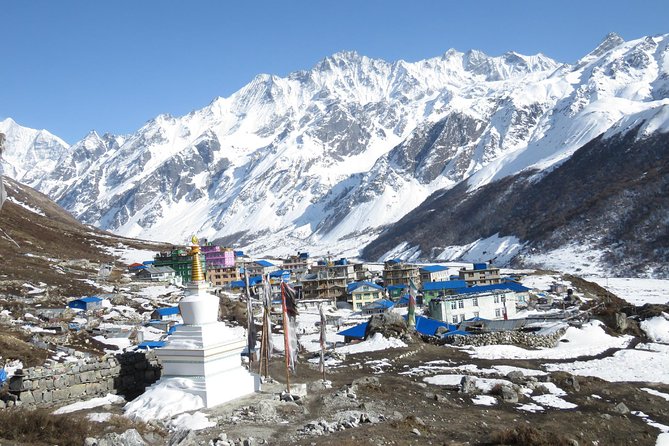
Now we walk on the trail that climbs up the widening valley. It passes through a few temporary settlements used by herders. They bring their livestock here in summer. Then we pass a Buddhist monastery and reach the Langtang village. Langtang valley is surrounded by stone walls enclosing fields. In the fields, buckwheat, turnips, wheat, potatoes, and barley are planted. These walls help to find yak and the wild goats wondering around you. You can see the flat-roofed Tibetan-style house here.
Day 5: Langtang Village to Kyanjin Gompa (3,870m/12,697ft)
Tea House
Breakfast, Lunch, Dinner
~8 km (5 miles)
5 – 6 Hours
Today’s trek is shorter but important. Leaving Langtang Village, the trail gradually climbs through small settlements like Mundu and Sindum, passing the region’s largest Mani Wall inscribed with Buddhist mantras.
As the valley opens, forests give way to alpine meadows and yak pastures. Majestic peaks dominate the skyline, including Langtang Lirung (7,227 m) and Ganchenpo (6,387 m). You cross glacier-fed streams and old moraines, earning the nickname “Valley of 70 Glaciers” for the surrounding icefalls.
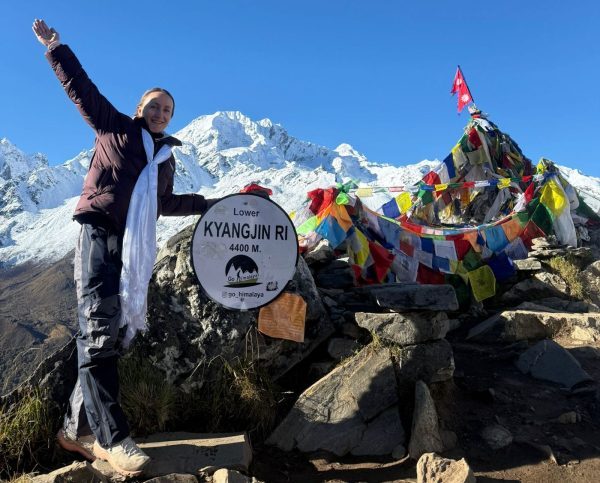
By lunchtime, you arrive at Kyanjin Gompa, the spiritual heart of the Langtang Valley trek, surrounded by snow-capped peaks such as Kyanjin Ri, Tserko Ri, and Yala Peak. This village offers the perfect spot to rest, explore the monastery, and prepare for the ascent toward Yala Kharka and the Yala Peak climbing route.
Day 6: Acclimatization at Kyanjin Gompa
Teahouse at Kyanjin Gompa
Full board
3,870 m / 12,700 ft
Spending an extra day at Kyanjin Gompa is key for acclimatization before attempting Yala Peak climbing. You can choose from three options depending on your energy and interests.
Option 1 – Explorer’s Route to Langshisha Kharka (4,285 m): This gentle 5–6 hour round trip takes you through the upper valley and yak pastures. Along the way, enjoy spectacular views of Dorje Lakpa (6,966 m) and Shishapangma (8,027 m), and visit semi-permanent stone huts (kharkas) used by nomadic herders during the summer.
Option 2 – Summit Warm-up on Kyanjin Ri or Tserko Ri: Test your stamina and prepare for the high altitude. Kyanjin Ri (4,773 m) is a 3–4 hour steep hike with a bird’s-eye view of the monastery and Langtang Lirung glacier. For a greater challenge, Tserko Ri (5,033 m) is a 7–8 hour trek above 5,000 m, ideal for those ready for the Yala Peak summit.
Option 3 – Cultural & Glacier Walk: Immerse yourself in local culture by visiting the Kyanjin Yak Cheese Factory, where traditional yak milk cheese is made. You can also walk to the edge of the Langtang Lirung Glacier, marvel at the icefalls, and hear the glacier’s dramatic cracks up close.
This acclimatization day balances rest, altitude preparation, and cultural exploration, ensuring you’re ready for the next stage of your Langtang Valley trek and beginner peak climbing in Nepal.
Day 7: Kyanjin Gompa to Yala Base Camp (4,600m)
Tented Camp
Breakfast, Lunch, Dinner
~6 Hours
4,800m
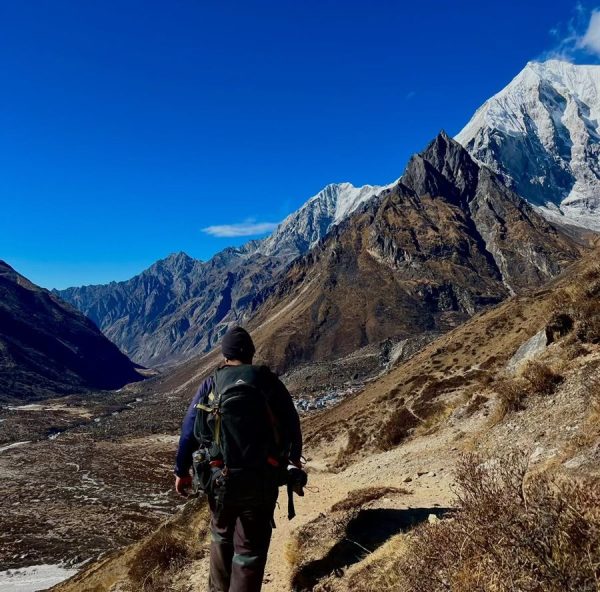
After a hearty breakfast at Kyanjin Gompa, the trek enters the high alpine zone. The path gradually ascends along rocky moraines and glacier-fed streams, offering your first close-up views of Yala Peak and surrounding giants like Gangchempo Peak and Naya Kang.
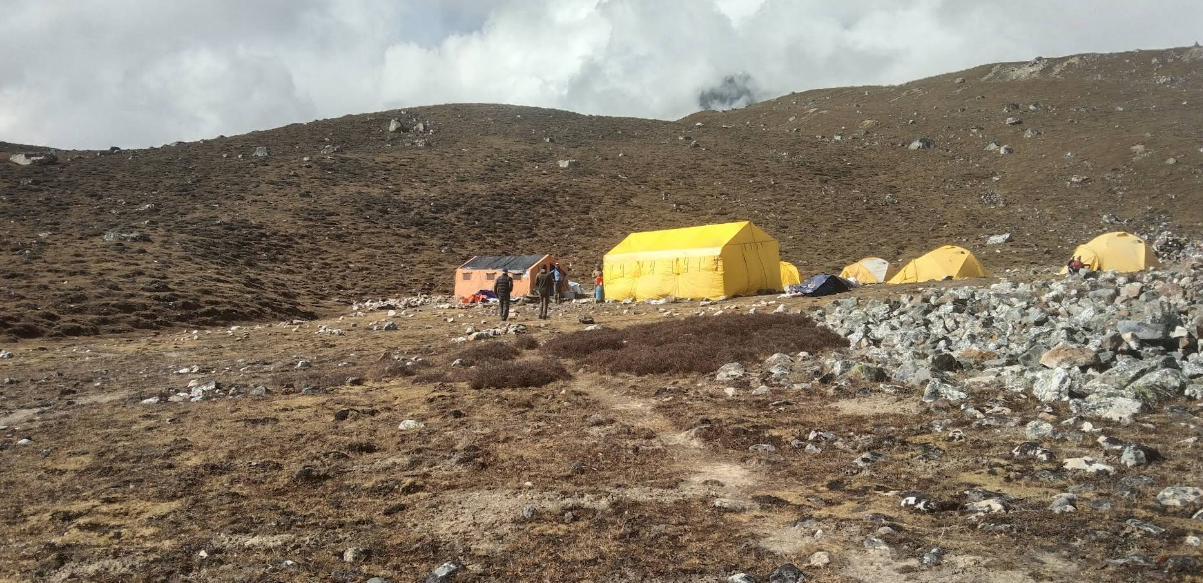
You will arrive at Yala Peak Base Camp (Yala Kharka), situated at 4,800m, a perfect launching point for the summit. Here, the expansive alpine meadows provide panoramic views of the Langtang Valley peaks and a sense of the high-altitude wilderness.
Before the climb, our guides lead a hands-on pre-climb session, covering essential skills for beginner peak climbing in Nepal: using crampons, handling an ice axe, and walking safely with ropes. This ensures everyone is confident and prepared for the non-technical peak climbing in Nepal challenge ahead.
The evening is spent at base camp, resting and acclimatizing, while soaking in the breathtaking scenery before the early summit push the next day.
Note:
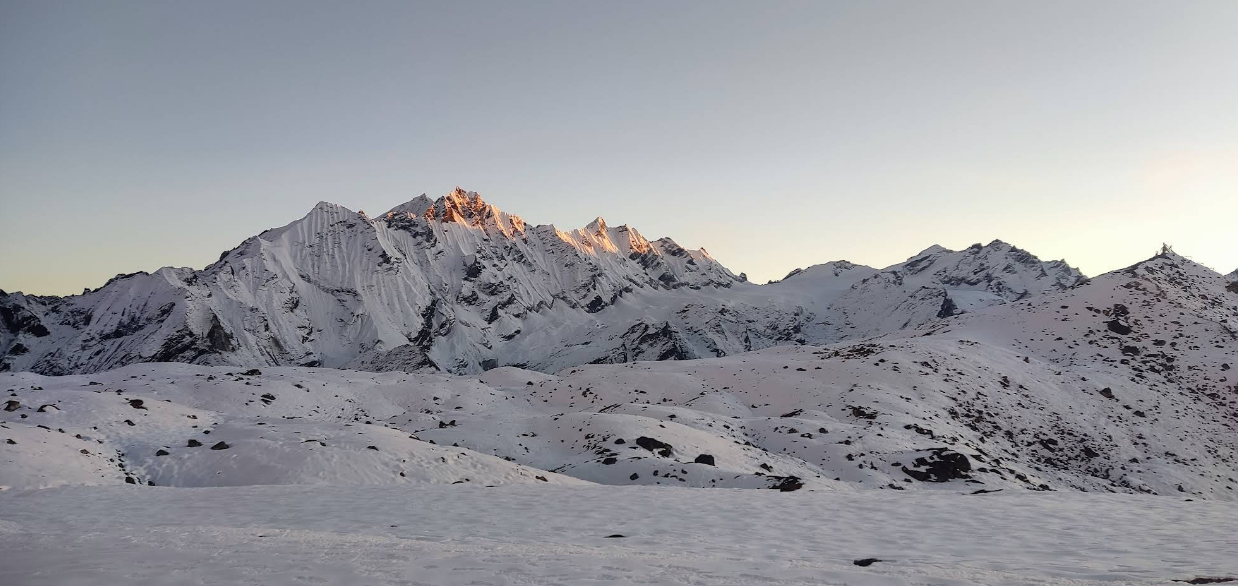
The sunset from Yala Base Camp is legendary. As the sun dips, Shishapangma often glows a deep orange across the Tibetan border. It’s the perfect moment to mentally prepare for the morning’s “Victory Push.”
Day 8: Climb to Yala summit (5,500m) and return to Kyanjin Gompa
Teahouse at Kyanjin Gompa
Full board
5,500m
~10–12 km round trip; 8–10 hours
Today is the pinnacle of your Langtang Yala Peak climbing adventure. After staying overnight at Yala Peak Base Camp, you begin the pre-dawn ascent at 3:00 AM, following a light climber’s breakfast. The first stage takes you across rocky ridges and moraines, gradually gaining altitude as the crisp alpine air prepares you for the summit push.
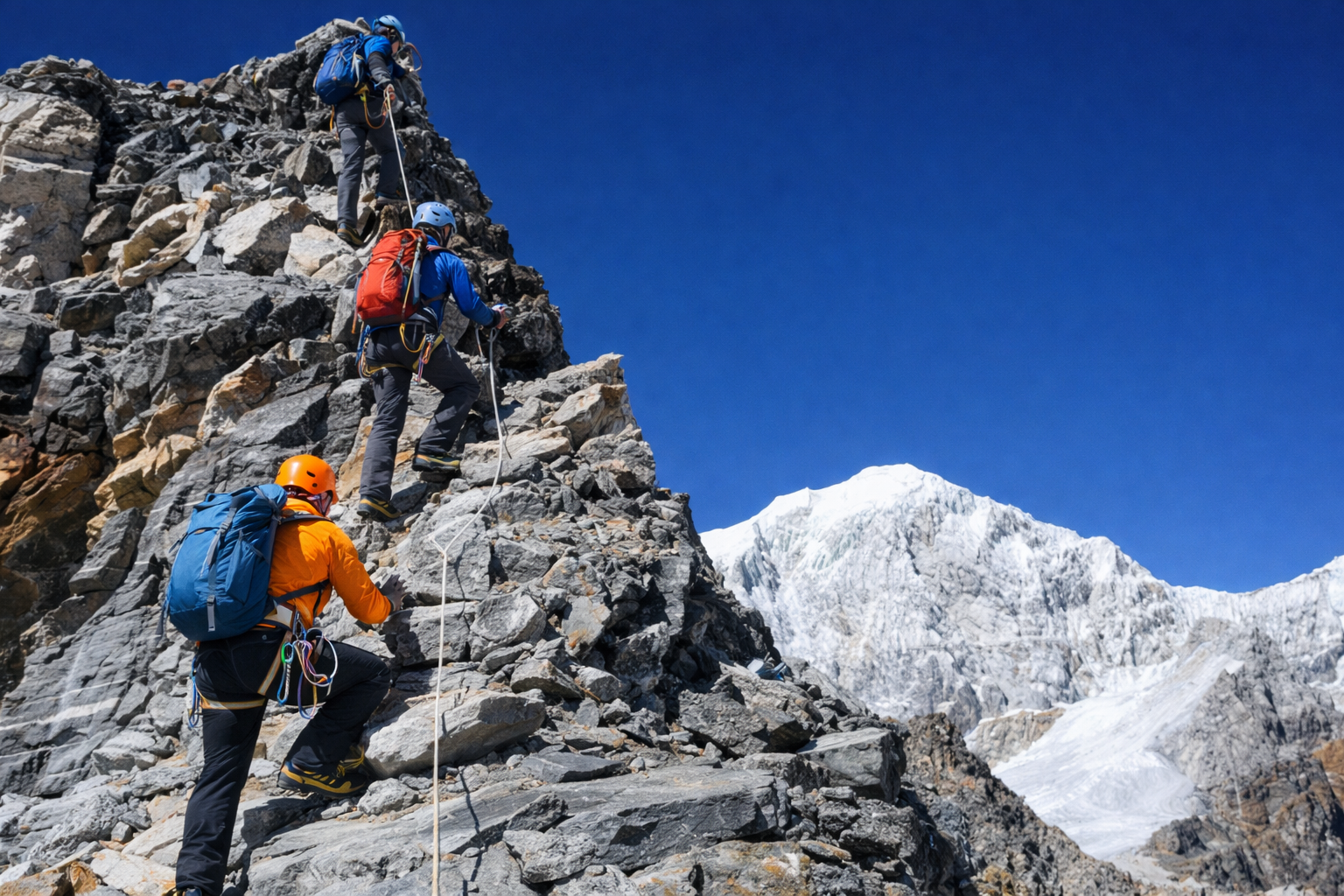
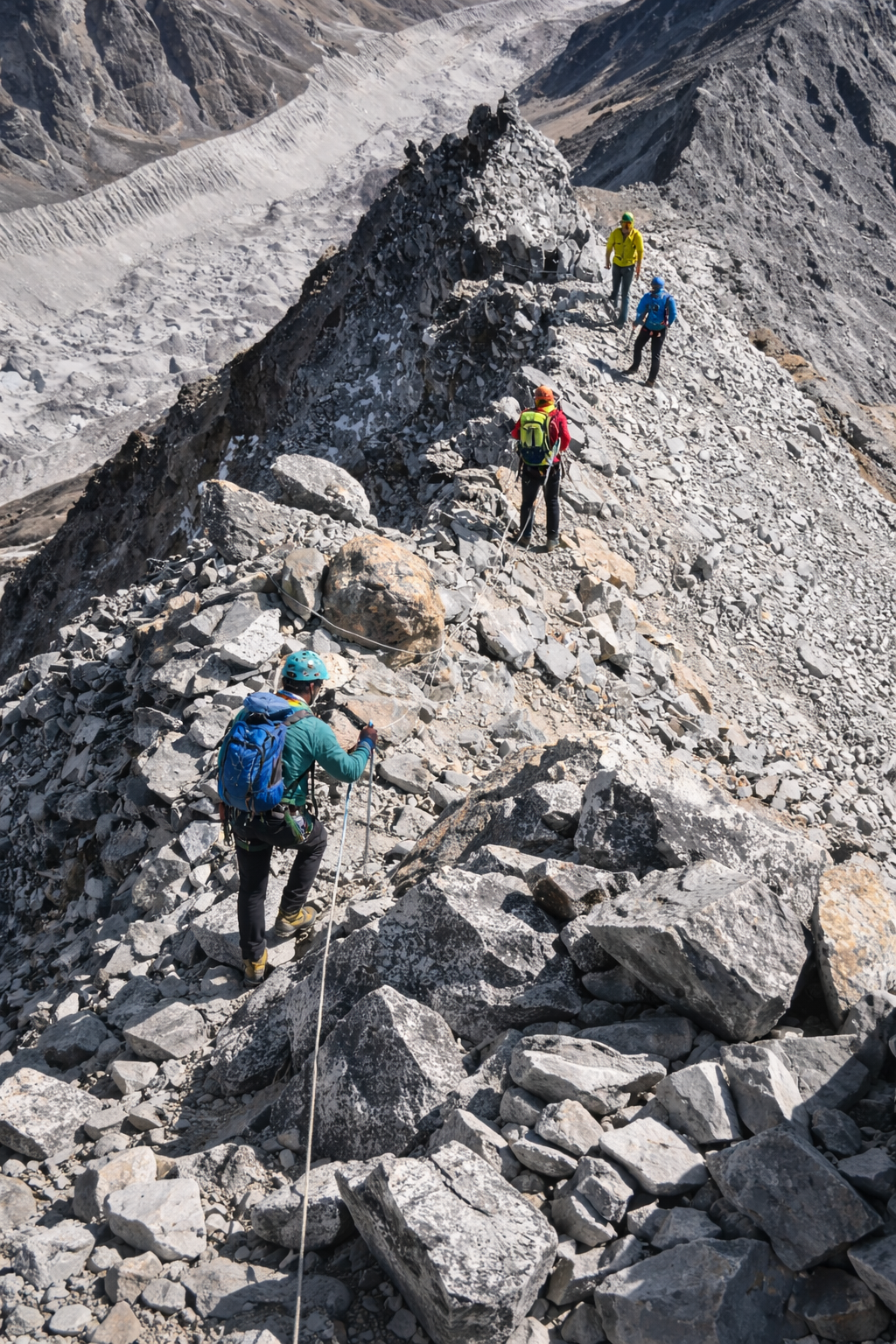
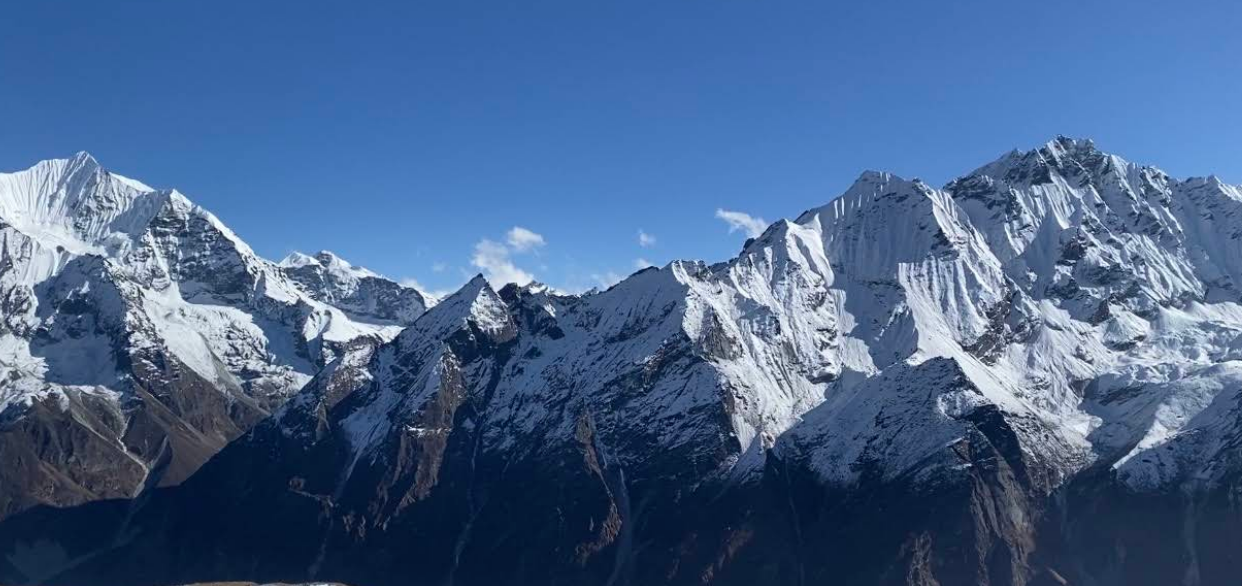
At the snowline, you strap on crampons and navigate the non-technical peak climbing Nepal slopes, roughly 30° in incline. The final ridge is narrow and rocky, sometimes secured with a fixed rope for safety, leading to the unforgettable moment of reaching the Yala Peak summit at 5,500m altitude. From here, the panoramic view stretches across the Langtang Himal, with Shishapangma (8,027m) in Tibet directly ahead, and Langtang Lirung, Dorje Lakpa, and Gangchempo Peak surrounding you in a dramatic wall of ice and rock.
After celebrating your achievement on Nepal’s premier beginner peak climbing, the descent begins. Following the “Summit by Noon, Down by Afternoon” rule, you carefully retrace your steps to Yala Peak Base Camp, rest, and enjoy a hot meal before continuing down to Kyanjin Gompa (3,870m). Returning to the teahouse marks the end of an incredible day, with a sense of triumph and memories of your first trekking peak Nepal summit etched forever.
Note:
Success on Yala Peak isn’t about speed; it’s about steady breathing and hydration. Our guides pace the climb so that you have plenty of energy to enjoy the view at the top.
Day 9: Trek from Kyanjin Gompa back to Lama Hotel (2,470m)
Teahouse
Breakfast, Lunch, Dinner
~18 km (11 miles)
5 – 6 Hours
After a celebratory breakfast in Kyanjin Gompa, with perhaps one last glimpse of Yala Peak, we begin our descent toward Lama Hotel (2,470m). Retracing the Yala Peak trek, the downhill journey offers a fresh perspective of the valley you climbed through.
The trail passes back through the wide alpine pastures of Mundu and the impressive Mani walls, making the landscape feel entirely new on the way down. We continue through Langtang Village (3,430m), where you can pause for a final tea and bid farewell to the welcoming Tamang community.
At Ghoda Tabela (3,030m), the high-altitude checkpoint, you’ll sign out before entering the denser forests below. The final stretch winds through lush rhododendron and pine trees, with the Langtang Khola roaring alongside the trail. Keep an eye out—you may spot wildlife like red pandas or langur monkeys that were elusive on the ascent.
By late afternoon, we arrive at Lama Hotel, greeted by warmer air, the scent of the forest, and the comfort of familiar lodges—a perfect end to a memorable trekking and climbing adventure in the Langtang Valley.
Day 10: Lama Hotel to Syabru Besi
Teahouse
Breakfast, Lunch, Dinner
4 – 5 Hours
~11.3 km (7 miles)
The final leg of the Langtang Yala Peak climbing trek brings you down nearly 1,000m to Syabru Besi. The trail winds through dense subtropical forests, passing Bamboo (1,970m) and offering a last chance to spot wildlife like Red Pandas and Yellow-throated Martens in Langtang National Park. You also get an opportunity to get a closer look at the customs and culture of the Tamang ethnic group.
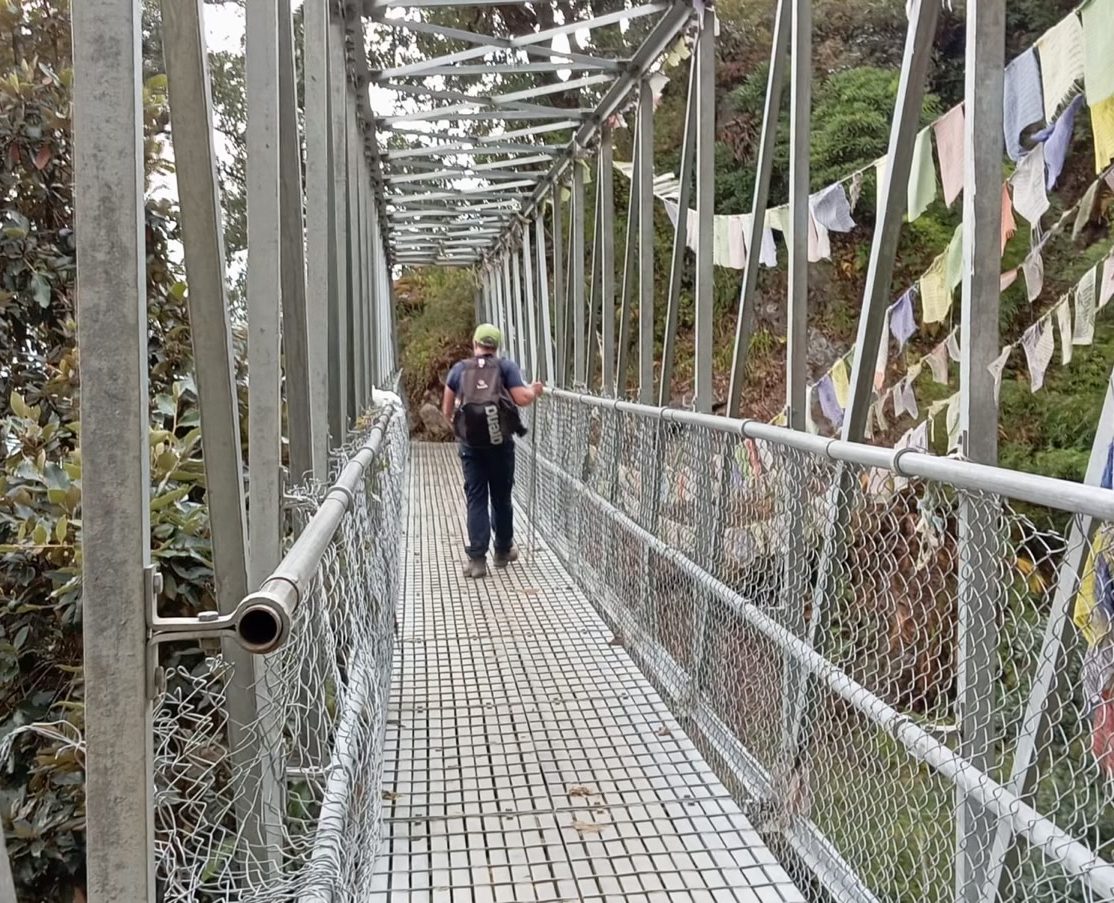
Cross the familiar suspension bridges over the Bhote Koshi River and follow the stone-paved main street back to the trailhead. This marks the completion of the Yala Peak trek, closing the adventure from Yala Peak Base Camp to the lower valley.
Overnight at Syabru Besi.
Day 12: Drive from Syabru Bensi to Kathmandu
3 star hotel
Breakfast, Lunch
15–30 6–7 hours
On the final day of your Langtang Yala Peak climbing adventure, you leave Syabru Besi and journey back to Kathmandu. The drive covers about 122 km along the scenic Pasang Lhamu Highway, winding past terraced hills, traditional villages, and the roaring Trishuli River.
The route includes the bumpy 3 km Ramche Landslide Zone near Dhunche, reaching a high point of 2,030m before descending to 1,400m in Kathmandu. By private jeep, the trip takes 6–7 hours, offering flexibility for scenic stops, while local buses take 8–10+ hours and provide a more budget-friendly, immersive experience.
This drive marks the end of your Yala Peak trek, returning you from the high alpine landscapes of the Langtang Valley to the vibrant energy of Kathmandu.
Day 12: Final departure or Join Next Program
Your incredible Langtang Yala Peak climbing journey comes to an end today. After breakfast, our representative will transfer you to Tribhuvan International Airport in Kathmandu, ensuring you arrive at least three hours before your flight.
If your schedule allows, you can extend your adventure with another exciting experience in Nepal, such as a Chitwan National Park Jungle Safari or a scenic Nagarkot hiking tour, giving you a final chance to explore the country’s diverse landscapes before departure.
Want to customize your trip?
We ensure every trip meets your expectations — customize your itinerary anytime to match your travel style and preferences.

Inclusions
What’s Covered in Your Adventure
- All ground transport including airport transfers as per the itinerary.
- Three hotel accommodations in Kathmandu on twin sharing basis on BB (Bed and Breakfast) plan.
- Three meals in a day (Breakfasts, Lunch, and Dinners with tea or coffee) during the trekking & climb period
- All Accommodation in trekking & climbing period (Trekking Lodge in trekking route Twin Sharing basis tented camp in Base Camp for before climbing)
- Necessary camping and climbing equipment for base camp and climbing
- All permits Langtang National Park Area, TIMS (Trekkers Information Management System), Peak Climbing permit
- All experienced necessary staff license holder Trekking Guide, Climbing Guide, Porter (1 porter for two guests), kitchen crew with their Food, Accommodation, Salary & Insurance
- Necessary fixed dynamic rope during climbing period
- Additional guide if more than 5 in the group
- Group medical supplies (First Aid medical kit will be available)
- One special cultural farewell dinner program
- Duffle Bag, T-shirt, and Trip certificate
- First Aid items
- Emergency evacuation and support
- All necessary paper works, local and Government Taxes. office Service charges
- International Airfare
- Travel Insurance
- All bar & desert bills
- Tips for the trekking crew

Yala Peak Climbing Gear Checklist
Your clothing needs will shift slightly depending on the 2026 season you choose. You don’t need to carry heavy mountaineering equipment from home. Most of the technical gear required for the Yala Peak summit can be rented in Kathmandu (Thamel) or even in Kyanjin Gompa for a fraction of the purchase price.

Essential Technical Climbing Gear
- Mountaineering Boots
- Crampons
- Ice Axe
- Climbing Harness & Helmet
- Carabiners
- Trekking Poles

Clothing
- Fleece jacket
- Down Jacket
- Gloves
- Buff or Balaclava
- Trousers
- Thermal tops and bottoms

Pack & Sleeping Gear
- Main Duffel Bag
- Daypack
- Sleeping Bag:

Accessories & Health
- Glacier Sunglasses
- Headlamp
- Water Purification
- Sunscreen & Lip Balm
- Personal First Aid
Good to Know
Your Journey, Step by Step
Yala Peak Climbing Permits & Fees
One of the biggest advantages of climbing Yala Peak is that the Nepal Mountaineering Association (NMA) has waived the climbing royalty fee for peaks below 5,800 meters, making it one of the most budget-friendly Himalayan summits. However, to legally reach the summit, trekkers still require specific permits, including trekking and national park documentation.
Since the Yala Peak route lies entirely within Langtang National Park, an entry permit is mandatory. This permit helps support local conservation efforts and trail maintenance. For foreign visitors, the cost is approximately NPR 3,000 plus 13% VAT (≈ $27 USD), while SAARC nationals pay around NPR 1,500 plus 13% VAT (≈ $13 USD).
In addition, all trekkers must carry a TIMS Card (Trekkers’ Information Management System), which ensures safety and allows authorities to track your location in emergencies. The fee for group trekkers is NPR 1,000 (≈ $8 USD). As of 2026, solo trekking in the Langtang region is no longer permitted, and all trekkers must be accompanied by a licensed guide.
While the NMA climbing permit for Yala Peak is royalty-free, a refundable garbage deposit of approximately $500 USD is required. This deposit, managed by your trekking agency, ensures the Base Camp remains pristine and promotes sustainable tourism.
To process all permits for your 2026 trek, Bold Himalaya handles all the paperwork for you. We will need a scanned copy of your passport (valid for at least 6 months), two passport-sized photographs, travel insurance details covering emergency helicopter evacuation up to 6,000 meters, and a copy of your Nepal entry visa. With these documents ready, we take care of the rest, giving you a hassle-free start to your Yala Peak adventure.
Yala Peak Technical Difficulty: How Hard is the Climb?
Many trekkers wonder, “Is Yala Peak hard to climb?” The answer is that Yala Peak is considered a non-technical trekking peak, making it an excellent choice for those seeking Yala Peak climbing for beginners.
You don’t need previous mountaineering experience or advanced climbing skills to reach the summit, though basic high-altitude gear like crampons and an ice axe is used for safety on snow slopes. The ascent is primarily a high-altitude scramble over rocky moraines and gentle snow inclines, with the final ridge offering breathtaking panoramic views.
The main challenge is the altitude rather than the technical difficulty, so good fitness for Yala Peak climbing is essential.
Summit day is a long 8–10-hour push starting early in the morning, and trekkers who have completed challenging routes like the Annapurna Circuit generally have the endurance needed to succeed.
With proper preparation, guidance from experienced local guides, and steady pacing, Yala Peak provides a rewarding first Himalayan peak experience with stunning views of Shishapangma, Langtang Lirung, and surrounding peaks.
Location
Yala Peak is situated in the heart of Langtang National Park in the Rasuwa District of Nepal. Located approximately 122 kilometers (76 miles) north of Kathmandu, it is the closest trekking peak to the capital city, making it an ideal choice for adventurers seeking a high-altitude summit without the need for domestic flights.
The Geography of the Climb
The peak stands just south of the Tibetan border, nestled within the Langtang Himal range. As a sub-6,000m mountain, it is officially recognized as a “trekking peak” by the Nepal Mountaineering Association (NMA), offering a high success rate for those transitioning from trekking to mountaineering.
Travel Insurance
For Yala peak climbing, travel insurance is mandatory as it provides safeguards to the climbers. When buying travel insurance, make sure the policy covers important situations such as helicopter evacuation, medical treatment and expenses, repatriation, trekking, and climbing. It is recommended to secure insurance that covers trekking or climbing activities up to an altitude of 6,000 meters. By getting travel insurance, you can climb or trek with peace of mind, without any worries as it offers protection and ensures a worry-free journey.
Physical Fitness and Training
Even though the Yala peak climbing is the easiest mountaineering trip, normal physical fitness is required concerning the safety of climbers or trekkers. It is recommended for climbers to involve in physical exercises like running, swimming, and short hiking at higher altitudes if possible to improve their physical strength. Climbing a peak at an altitude of 5,700 meters is a serious endeavor. To be successful, it is essential to be prepared and knowledgeable about the necessary mountaineering equipment, such as crampons, ropes, and jumar ascenders.
Guide and Porters
To climb Yala Peak, it is crucial to hire a guide and porters. At Bold Himalaya, we offer the services of a highly experienced guide who holds a license for climbing activities at Yala Peak.
Having a guide when climbing ensures your safety and keeps you on the right path. They will give you training at the base camp of Yala Peak about mountaineering and how to use the mountaineering equipment.
Hiring a porter is also important, as they can assist in carrying gear and equipment up to the peak. They can carry up to the maximum weight of 20 kg of luggage and equipment so that you can complete your climbing activities comfortably.
Packing List
The list of essential items to be packed for trekking and climbing at Yala Peak is mentioned below:
Clothing
- Sun hat and scarf
- sunglasses
- T-shirt
- Fleece jacket or sweater
- Waterproof and windproof jacket
- Hiking shorts or trekking trousers
- LightweightDuffel a cotton long pants
- Underwear
- Thick, warm, and woolen socks
- Hiking boots and camp shoes
Gears and Accessories
- sleeping bag
- Tent and necessary equipment for camping
- Duffel bags
- Trekking poles
- Water bottles
Toiletries
- Toothbrush and toothpaste
- small wash towel
Miscellaneous items
- Binoculars
- Cameras and extra batteries
- Head torch
- Playing cards
Equipment
- Climbing boots
- Crampons
- Ice axe
- Rope
- Snow gaiter
- Jumer ascender
- Harness
Responsible Tourism
We Bold Himalaya conducts trekking and traveling practicing the principles of Leave-No-Trace. The mountains are our home and the cultures, traditions, and beauty of nature are our ornament and it is our responsibility to protect local culture, customs, rules, and regulations. We focus on the preservation of nature and the well-being of the local community. Therefore, we kindly request all our clients to be responsible and leave nothing except the footprints in the Himalayas and the pristine remained untouched and unharmed.
Drinking Water
Drinking water can be available in two categories: one from natural water resources and the other from tea houses or lodges.
The tea houses offer mineral water, bottled water, or boiled water with some charges for the trekkers. Besides, spring water or tap water is also available for drinking in several places for refilling bottles. However, we recommend carrying a water purifier to ensure the water is safe for drinking.
Altitude Sickness and its Prevention
Yala peak climbing, while not at extremely high altitudes, reaches an elevation of 5,700m/18,7aft at a summit. Climbing in the Himalayas where atmospheric pressure is high and oxygen level is low, the possibility of altitude sickness is in existence but it is no big deal with acclimatization and a well-managed itinerary or to avoid altitude sickness, it is crucial to properly prepare before embarking on a trek. Staying hydrated, avoiding smoking and alcohol, maintaining a slow pace while trekking, and consuming a high-calorie diet can also help prevent altitude sickness.
Extension of Trips
After 12 days of a long trekking and climbing expedition, if you wish to extend your trip with a tour of relaxation, then we have flexible options according to your interests. You can tour around Kathmandu Valley after the completion of your climbing trip in Yala Peak. The options for the extension of adventurous trips to other region includes thrilling rafting adventures, Jungle Safari at Chitwan National Park, Paragliding, or Bungee jumping at Pokhara.
Food & Nutrition: Fueling Your Summit
Proper nutrition is essential when tackling Yala Peak, as eating well helps prevent altitude sickness and keeps energy levels high. Our full-board plan covers breakfast, lunch, and dinner throughout the trek and climb.
During the trekking phase in teahouses, menus offer a mix of local Himalayan dishes and international favorites. Staples like dal bhat—lentil soup with rice and vegetable curry—provide lasting energy, while pasta, noodles, fried rice, potatoes, and freshly baked Tibetan bread add variety.
Breakfast options include porridge, muesli, eggs, pancakes, and toast with local honey or jam. Don’t miss the famous yak cheese in Kyanjin Gompa, which is rich in protein and perfect for high-altitude trekking.
Once you reach Yala Peak Base Camp at an altitude of around 4,800 meters, our professional kitchen crew takes over, preparing hygienic and energy-rich meals suitable for the high altitude.
Dinner typically includes hot soups—garlic soup is especially good for altitude—followed by pasta or rice with vegetables. For the pre-dawn summit push, climbers receive go-bags filled with chocolates, nuts, and energy bars to keep energy levels high during the final climb to the Yala Peak altitude.
Other facilities
ATM and Money Exchange
You can easily find ATM and currency exchange facilities in the Kathmandu Valley, as well as in the nearby town of Syabru Besi before starting the trek. Climbers need to carry enough Nepalese currency with them for the trek.
Communication
Almost all of the teahouses and lodges available on the trekking trail offer Wi-Fi facilities. Additionally, you can make international calls from certain villages of the Langtang region.
Electricity and Internet
The Internet and electricity facilities, along the trekking trail, are available in the teahouses and lodges. You will also find access to mobile networks like Ntc and Ncell. Charging electronic appliances and getting internet access in the tea houses may require some additional cost but the journey with internal facilities will be blissful.
Accommodation: From Teahouses to Tents
Your Yala Peak climbing itinerary includes two types of accommodation to match the trekking and climbing phases. During the trek from Syabrubesi to Kyanjin Gompa, you will stay in local teahouses, which offer twin-sharing rooms with foam mattresses, pillows, and warm blankets.
The teahouse dining halls, usually heated by a central stove, provide a cozy place to dry gear, socialize, and enjoy hearty meals. Many lodges now offer Wi-Fi and device charging for a small fee, and hot showers are available via solar or gas heaters.
Once you move beyond Kyanjin Gompa toward the Yala Peak Base Camp at an altitude of around 4,800 meters, accommodation shifts to high-quality alpine camping. Weather-proof, 4-season mountain tents with insulated foam mattresses are provided for twin-sharing, ensuring comfort at high elevation.
A separate kitchen and dining tent is set up by the crew, allowing you to eat safely out of the wind. Spending a night at the Yala Peak Base Camp not only prepares you for the final summit push but also offers an incredible opportunity to acclimatize to the Yala Peak altitude, making your climb safer and more enjoyable.
Currency, Personal Expenses, and Tipping for Your Yala Peak Adventure
Currency and Cash Exchange
When planning your Yala Peak climbing package, it’s important to understand the local currency and daily expenses. The official currency is the Nepalese Rupee (NPR), and we highly recommend exchanging foreign currency in Kathmandu, especially in Thamel, before heading to the mountains.
Beyond the trailhead at Syabrubesi, ATMs are limited or often out of service, and most teahouses along the Yala Peak climbing itinerary do not accept credit or debit cards. Carrying sufficient cash in NPR is essential to cover your daily needs.
Estimated Personal Expenses
Even with an all-inclusive Yala Peak climbing package, you should budget for small personal expenses such as hot showers, device charging, Wi-Fi, bottled water, snacks, or soft drinks. Prices naturally increase as you ascend toward the Yala Peak Base Camp at an altitude of around 4,800 meters, due to the logistics of transporting goods. On average, $15–$20 USD per day in local currency is sufficient for these miscellaneous costs, helping you enjoy your trek comfortably without surprises.
Tipping Guidelines for 2026
Tipping is an important tradition in Nepal and a way to show gratitude to the local crew who ensure your safety and comfort. For a typical Yala Peak climbing itinerary, recommended tips include $10–$15 per day for trekking guides, $8–$12 per day for porters, and $15–$25 per day for climbing guides.
If you successfully reach the summit, it is customary to provide a summit bonus of $30–$50 to your climbing guide.
Planning Your Yala Peak Climbing Cost
Understanding currency, daily expenses, and tipping will help you plan your Yala Peak climbing cost and price more accurately. With proper preparation, you can focus entirely on the climb and the stunning Himalayan views while enjoying a smooth and worry-free adventure.
Yala Peak Climbing Cost & Package Pricing
Costs vary by service level, group size, and included amenities, but most guided packages that include permits, guide support, food, transport, and tented base camp meals are in a mid‑range adventure travel budget. Independent trekking without an agency can be cheaper but requires careful logistics.
Cultural & Natural Highlights
As you trek, you’ll immerse yourself in Tamang village culture, see prayer flags and monasteries, and traverse pristine forests and alpine meadows rich with Himalayan wildlife, all adding depth to your climbing journey.
FAQs
Your Questions, Answered
How long does it take to climb Yala Peak?
Climbing Yala Peak is the shortest and easiest climbing peak in Nepal. According to our standard itinerary, it takes 13 days to complete including one acclimatization day at Kyanjin Gompa.
How many nights do I spend in a camp during Yala Peak climbing?
During the trek, you will spend eight nights in clean and comfortable tea houses. However, please note that according to our standard itinerary, you will be spending one night in a camp. Please keep in mind that this may be subject to change based on various factors such as weather conditions and your physical well-being.
How difficult is Yala Peak climbing?
Yala Peak is considered to be the most accessible peak to be climbed in Nepal. Although weather and altitude present major challenges for mountaineers, those without mountaineering skills or experience can still successfully complete a climb with proper acclimatization and p
What type of permit is required for climbing in Yala Peak?
No permit is required for climbing Yala Peak however a permit for entering Langtang National Park is required since the trek goes through Langtang National Park before climbing the Yala Peak. TIMS card and Langtang National Park entry permit are required.
Do I need travel insurance for Yala Peak Climbing?
Travel insurance is required for climbing Yala Prak. It is recommended that you purchase insurance from a reputable agency in your home country. When buying travel insurance, it is important to select coverage that includes emergency and medical evacuation, trip cancellation or delay, medical treatment, injury, loss of baggage, and liabilities.
What is the highest altitude of Yala Peak?
When ascending Yala Peak, the highest point is the summit of Yala, which reaches an altitude of 5,700 meters (18,700 feet) above sea level.
Do I need to carry extra money for Yala Peak climbing?
Trekkers are advised to carry additional money for the expenses such as extra water, beverages, charging electronic devices, and showers. We recommend carrying approximately Nrs. 1,000 to 1,500 per day as extra money to cover additional costs.
Do I need a guide for Yala Peak climbing?
Yes, a licensed guide is required for Yala Peak climbing. They ensure safety, help with gear like crampons and ice axes, and provide support at high altitude, making it ideal for beginners.
Can beginners climb Yala Peak without prior experience?
Yes, Yala Peak is a non-technical trekking peak, making it suitable for beginners with basic fitness. No prior mountaineering experience is required.
How cold does it get on Yala Peak summit?
Temperatures at the summit can drop to -10°C to -15°C (14°F to 5°F), especially during early morning summit pushes. Proper high-altitude clothing is essential.
What is the daily itinerary for Yala Peak climbing?
The climb typically takes 10–14 days, including trekking from Kathmandu to Syabrubesi, ascent through Langtang Valley to Kyanjin Gompa, camping at Yala Peak Base Camp, and the summit push.
Are there medical facilities along the Yala Peak route?
Basic medical aid is available in larger villages like Syabrubesi and Kyanjin Gompa, but there are no full-scale hospitals on the trail. Guides carry first-aid kits, and evacuation is possible in emergencies.
What type of accommodation is provided on the trek and at base camp?
During the trek, you stay in local teahouses with basic twin-sharing rooms, meals, and heating. At Yala Peak Base Camp, you stay in 4-season tents with insulated mattresses and a dining tent.
What meals are included in a Yala Peak climbing package?
Most packages offer full-board meals, including breakfast, lunch, and dinner. Trekking meals feature local dishes like Dal Bhat and yak cheese, while base camp meals are freshly prepared by the climbing crew.
How should I prepare for altitude sickness on Yala Peak?
Acclimatization is key: follow the Yala Peak climbing itinerary, stay hydrated, avoid alcohol, and take rest days. Guides can provide oxygen and medication if needed.
What kind of fitness training is recommended before Yala Peak?
Prepare with cardio, hiking, and leg-strength exercises. Prior multi-day treks like the Annapurna Circuit or long uphill hikes help build endurance for summit day.
What is the weather like during monsoon season—can I climb then?
Monsoon season (June–August) brings heavy rain, slippery trails, and risk of landslides. Climbing Yala Peak is not recommended during this period; spring and autumn are the safest seasons.
How do I get from Kathmandu to the Yala Peak trailhead?
The trailhead at Syabrubesi is accessible by a 6–7 hour drive from Kathmandu via tourist vehicles. Roads can be bumpy, but they offer scenic views of the hills and valleys along the way.
Is it possible to combine Yala Peak climbing with other treks like Annapurna Circuit?
Yes, some trekkers do a trekking circuit including Yala Peak and other regions, but it requires careful planning due to logistics and altitude. Most commonly, Yala Peak is combined with the Langtang Valley trek.
Are there communication facilities (mobile/Wi-Fi) along the trail?
Basic mobile coverage and Wi-Fi are available at larger teahouses up to Kyanjin Gompa. At Yala Peak Base Camp, connectivity is limited, so plan accordingly.
Do I need special clothing or gear for the climb?
Yes, essential gear includes warm layered clothing, trekking boots, crampons, ice axe, harness, and gloves. Your guide provides a briefing at base camp to ensure proper use.
View OurSimilar Packages
Discover our top tours, loved by thousands of travelers annually. Choose the adventure that inspires you and embark on a journey tailored to your desires.
View All Packages

8 day Kilimanjaro Climb
 Tanzania
  8.0 Days

Save 33%
12 Days Everest Base Camp Trek
Nepal Tour Packages
12.0 Days
Chhukung Ri Peak Climbing
Nepal Tour Packages
13.0 Days