



Villages of Upper Mustang
-
 admin
admin -
21 May, 2025
-
32 mins read
-
1979 Views
-
0 Comments


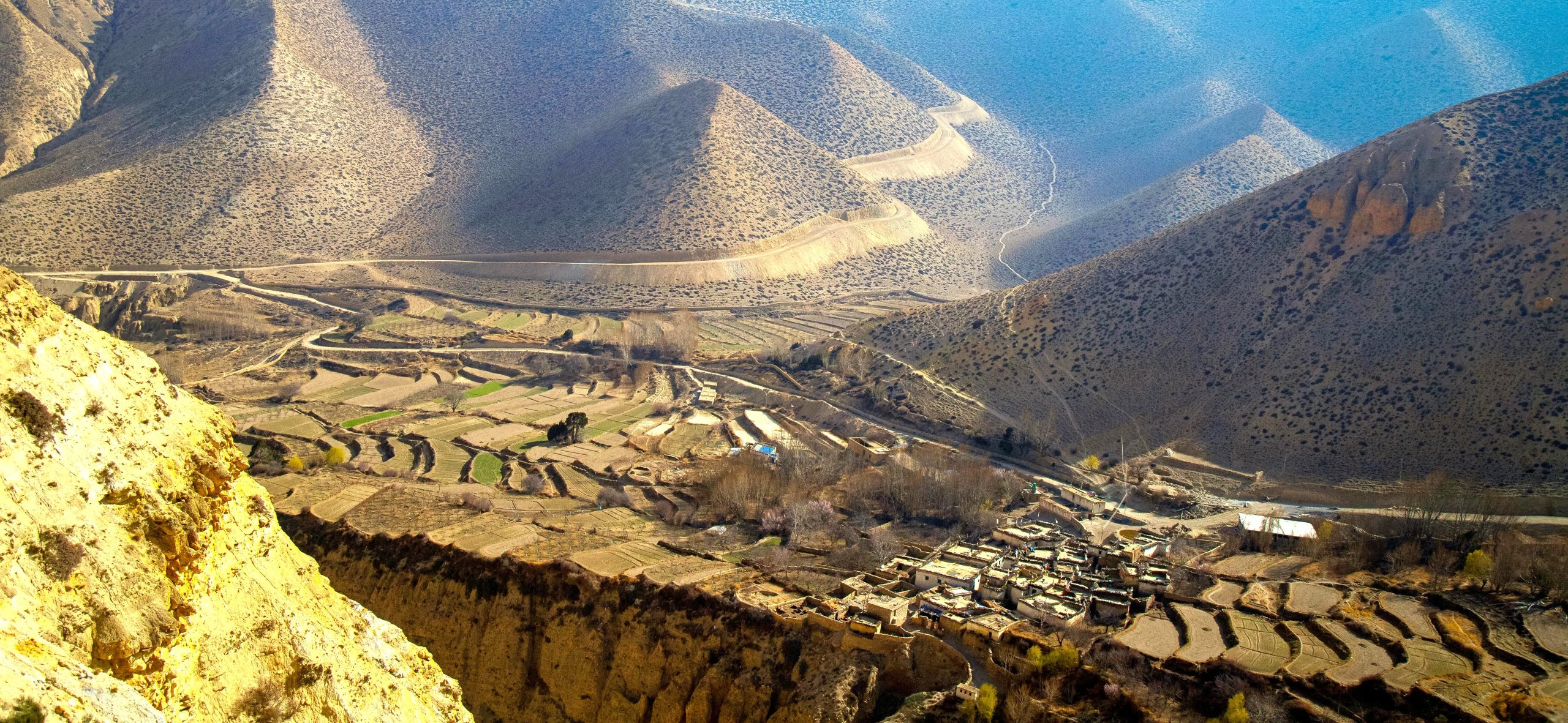
Hidden away beyond the windswept Kali Gandaki Valley, the villages of Upper Mustang represent one of Nepal’s last remaining strongholds of traditional Himalayan culture. Often called the Hidden Kingdom of Lo, Upper Mustang is located in the rain-shadow of the Annapurna and Dhaulagiri mountain ranges, creating an extraordinary landscape of high-altitude desert. This remote area is home to traditional villages such as Lo Manthang, Charang, Ghami, Ghiling, and Dhakmar, where centuries-old traditions continue to shape daily life.
What makes the Upper Mustang villages special is their rich and well-preserved Tibetan Buddhist heritage. From the walled city of Lo Manthang, via meditation caves perched on mountain ledges, old monasteries, long mani walls, and white-washed mud-brick homes, every village tells a story of spiritual devotion and mountain survival. Prayers are carried away on wind-swept ridges, monks chant in ancient gompas, and people engage in traditional farming and yak herding, living life as if time itself had stood still.
Upper Mustang is also a restricted area of Nepal, requiring special permits and guided travel. This controlled access has played a major role in protecting its fragile culture and landscapes from mass tourism. Unlike Everest or Annapurna, tourism here remains limited, allowing visitors to experience an authentic Himalayan way of life while helping safeguard sacred sites, monasteries, and historic villages.
Looking ahead, travelling to Upper Mustang in 2026 is gaining attention as improved road connectivity, more reliable flights to Jomsom, and interest in cultural tourism increase globally. Meanwhile, the local communities and conservation projects are placing even more emphasis on the preservation of the area’s culture and the responsible practice of trekking and tourism in general. For travellers, looking for a more authentic and significant travel experience away from the more popular trekking trails, travelling through the traditional villages of Upper Mustang in 2026 presents a unique opportunity to walk through history and explore traditional Tibetan settlements and one of the most preserved cultures in Nepal.
Where is Upper Mustang Located?

Upper Mustang is located in the northern part of Mustang District in Nepal, beyond the village of Kagbeni, which is considered the official entrance to this restricted part of the Himalayas. It falls inside the Annapurna Conservation Area. Located close to the border with Tibet, the villages of Upper Mustang lie in a spectacular landscape that is characterised by wind-swept cliffs, deep valleys, and vast plateaus. Because Upper Mustang is in the rain shadow of Annapurna and Dhaulagiri, it receives very little rainfall, which makes it a unique desert environment quite distinct from other trekking routes in Nepal.
The entire region of Upper Mustang is characterised by high elevation areas, which range from approximately 3,800 m to over 4,500 m above sea level. The climatic conditions and the vegetation that grow in this region have influenced human adaptation in this region over the years. The settlements are found along the valleys of rivers and irrigated agricultural terraces, where crops such as barley, buckwheat, and potatoes grow.
Geographical and Cultural Background of Upper Mustang
Historically, Upper Mustang was known as the Kingdom of Lo, an independent Buddhist kingdom centred around the famous walled capital of Lo Manthang. Evidence of its royal history can be seen in the ancient palaces, fortified villages, old monasteries, and sacred cave complexes located in areas like Charang, Ghami, Dhakmar, and Ghiling. The region has been in relative isolation, which has helped preserve its rich Tibetan Buddhist tradition, with prayer flags, mani walls, chortens, and gompas an integral part of its rural landscape.
The native inhabitants, called Lobas, still practice their traditional way of life, which is influenced by Tibetan culture. The people of Upper Mustang live in their villages, where they grow barley and buckwheat, raise yaks and sheep, and practice Buddhism. Their clay houses, colourful clothes, and welcoming nature are a testament to the strong mountain culture that has been thriving in this beautiful but difficult environment for centuries. For tourists visiting the villages of Upper Mustang, this unique combination of natural beauty and living culture presents a unique chance to discover one of the most preserved areas of Nepal.
However, life in these villages of Upper Mustang remains as usual, with people engaged in their religious practices, agricultural activities, animal husbandry, and cultural traditions. Festivals such as the Tiji Festival, an annual three-day event of spiritual myth and community bonding, are vibrant displays of this cultural heritage.
Since Upper Mustang was a restricted area of Nepal until 1992, with limited accessibility for foreigners, this region has been relatively untouched by the forces of modern tourism and urbanisation. Therefore, this region has maintained its ancient culture, languages, and traditions, making it one of the most culturally intact regions of the Himalayas.
Why Visit Upper Mustang Villages in 2026?
Authentic culture still intact
Upper Mustang remains one of Nepal’s most culturally preserved regions, where Tibetan Buddhist traditions, ancient monasteries, mani walls, prayer flags, and centuries-old village life are still practised daily. Communities like Lo Manthang, Tsarang, Ghami, Dhakmar, and Chhoser Valley continue to protect their heritage, language, festivals (such as the Tiji Festival), and traditional architecture, offering travellers a rare chance to experience living Himalayan culture rather than staged tourism.
Fewer crowds than Everest & Annapurna
Upper Mustang is a restricted region requiring special permits and guided travel; visitor numbers remain naturally limited. This means quiet trails, peaceful villages, and deeper cultural interaction compared to the busy Everest and Annapurna regions. In 2026, Upper Mustang Trek still offers a more exclusive, uncrowded experience for trekkers and cultural travellers.
Road and air access are improving
Access continues to improve with regular Pokhara-Jomsom flights and expanding road connectivity deeper into Mustang. This makes travel more flexible in 2026, allowing itineraries that combine driving and trekking, reducing overall travel time while still preserving the classic village-to-village walking experience for those who prefer it.
Growing interest in heritage tourism
Global travel trends increasingly favour heritage, spiritual, and community-based tourism, and Upper Mustang fits perfectly into this movement. Ancient sky caves, cliff monasteries, walled cities, and traditional villages attract travellers seeking meaningful experiences, photography, archaeology, and cultural immersion. Visiting in 2026 places you ahead of wider global attention as Mustang continues gaining recognition.
Perfect mix of adventure and culture
Upper Mustang uniquely blends high-altitude adventure with deep cultural discovery. You trek through dramatic trans-Himalayan desert landscapes, canyons, and plateaus while staying in traditional villages, visiting monasteries, exploring cave complexes, and interacting with local Mustangi families. Snowy peaks of Nilgiri, Annapurna, and Dhaulagiri frame the journey, creating a powerful balance of scenery, spirituality, and soft adventure.
Popular Villages of Upper Mustang
There are several beautiful villages and places in Upper Mustang known especially for its caves, colourful monasteries, chhortens, mani walls, etc. The most popular villages of Upper Mustang are:
1. Lo Manthang

Lo Manthang, the most iconic village of Upper Mustang in Nepal, is encapsulated by history and culture. The fascinating walled city now stands as the administrative centre of the so-called Lo Manthang Rural Municipality, having once the capital of the ancient Lo Kingdom. The village is surrounded by towering mud-brick walls, lending it a very high vantage point. Inside are narrow alleyways, traditional homes with whitewash, and ancient structures that have weathered the test of time. The kingdom is often called the “forbidden kingdom,” which once disallowed foreign visitors until as recently as 1992, which helped preserve the heritage and way of life of the village. Now, stepping into Lo Manthang is indeed a time travel, for so much of its clarity and identity remains intact.
Some of Upper Mustang’s most significant historical and religious landmarks are located in this village. Chodey, Choprang, Thugchen Gompa, and Jampa Lhakhang are among its most important attractions. The Lo Manthang Palace, having Tibetan-centric architecture, represents the royal history of the place. The Tiji Festival is another highlight of their cultural show. The festival includes three days of masked dances that tell the story of Dorje Jono, a god whose victory over a demon saved Mustang. Now it has transitioned into a structured tourist district that offers a range of accommodation choices that very well marry the ambience of tradition with modern comforts, making it a unique blend of old-world mystery and warm hospitality.
2. Dhakmar
Dhakmar village in Upper Mustang is famous for the striking red rock formations that rise dramatically out of the village landscape and give it its name, meaning ‘Red Cliff’. It is one of the most visually striking villages of the Upper Mustang region and is also associated with the region’s rich spiritual history.
The striking red colour of the cliffs is said to have been created by the victory of Guru Rinpoche (Padmasambhava) over evil spirits, leaving his sacred mark for the pilgrims and travellers of the region. The village has traditional mud houses, small monasteries, chortens, and prayer flags, which reflect the Tibetan Buddhist culture of the region. Its peaceful atmosphere, spiritual significance, and surreal landscape combine to create a truly memorable cultural and scenic experience for visitors exploring Upper Mustang.
Set against a backdrop of colourful cliffs, barren plateaus, and distant Himalayan peaks, Dhakmar offers exceptional photographic opportunities, making it one of the most photogenic stops on the Upper Mustang trekking route. Its peaceful atmosphere, spiritual significance, and surreal landscape combine to create a truly memorable cultural and scenic experience for visitors exploring Upper Mustang.
3. Tsarang (Charang)
Tsarang, or Charang, is considered one of the most historically important and photogenic villages of Upper Mustang, situated on a plateau over the Charang Chu River at an elevation of 3,560 meters (11,680 feet). Positioned between Ghami and Lo Manthang, Tsarang has been an important administrative and cultural hub of the former Kingdom of Lo. The village is famous for its magnificent five-story palace of Charang and an ancient Charang Monastery (Tsarang Gompa), housing an outstanding collection of old thangka paintings, murals, statues, and sacred Buddhist scriptures. Traditional white-washed mud-brick houses surround well-irrigated fields of barley and buckwheat, forming an eye-catching contrast with the dry trans-Himalayan environment.
Like other villages of Upper Mustang, the cultural influence of Tibetan Buddhism heritage is apparent in Tsarang through its mani walls, chortens, prayer flags, and monastic rituals. Traditionally, Tsarang was an important stop on the ancient salt trade route between Tibet and Nepal, which has contributed to its prosperity and significance.
Currently, Tsarang is an important overnight destination on the Upper Mustang trekking trail, which provides trekkers with a genuine insight into the Loba village culture, which revolves around agriculture, animal husbandry, and religion, much as it did generations ago. With its royal architecture, sacred monastery, valley location, and rich cultural background, Tsarang is one of the most culturally preserved and significant settlements among the villages of Upper Mustang.
4. Ghami (Ghemi)
Ghami, also known as Ghemi, is one of the most culturally rich and scenically enchanting villages in Upper Mustang, Nepal, located at an elevation of around 3,510 meters (11,515 ft) above sea level. This high-altitude village lies on a high plateau between windswept, barren hills and fertile agricultural fields. Ghami Village stands out for its unique combination of traditional Tibetan-influenced culture and beautiful mountain scenery. The village is surrounded by fertile fields where hardy crops like barley and buckwheat grow amidst the otherwise barren landscape. Unlike many surrounding settlements, Ghami also features fertile fields and small apple farms, made possible by its relatively warmer microclimate and irrigation from nearby streams. It has long been an important stop on the ancient trade route between Nepal and Tibet.
Ghami is perhaps most famous for its long mani wall, one of Nepal’s longest, which is a sacred object in Tibetan Buddhism, consisting of thousands of stones engraved with the mantra “Om Mani Padme Hum.” The long wall, which runs over hundreds of meters, is a reflection of the strong Tibetan Buddhist tradition in this region, which acts as a boundary, a place of worship, and a location for meditation. Peaceful gompas, chortens, and prayer flags are a common sight in Ghami, which has a strong tradition of religious celebrations.
Beyond its cultural and spiritual significance, just above Ghami rises Ghami La Pass, one of the classic viewpoints, and serves as a key acclimatisation stop on the trekking route, where trekkers experience authentic local life, visit ancient mani and prayer walls, and witness panoramic views of the surrounding Himalayan plateau and red-grey cliffs.
5. Chhoser

Chhoser Valley (often spelled Chhosar or Choser) is a remote and culturally rich region in Upper Mustang, Nepal, located east of Lo Manthang near the Tibetan border, and known for its extraordinary ancient cliff dwellings and spiritual heritage. The valley is famous across the Mustang region for the Shija Jhong Cave (also called Chhoser Cave or Jhong Cave), a magnificent multi‑story rock complex carved into a red sandstone cliff with over 40 interconnected rooms spread across five levels that served as meditation chambers, shelters, burial sites, and living quarters for centuries, its exact original purpose remains a mystery that continues to fascinate archaeologists and travelers alike.
Beyond its caves, Chhoser Valley reflects the traditional lifestyle and Buddhist spiritual traditions of the local population. Prayer flags flutter across ridgelines, chortens (stupas) and mani walls (stone carvings of sacred mantras) mark devotional sites, and visitors exploring the area can sense the deep influence of Tibetan culture and religion, as echoed in nearby monasteries like Nyiphuk Gompa and Konchokling Monastery.
The scenery around Chhoser Valley is breathtaking, with jagged cliffs topped with ancient caves, the broad trans-Himalayan plateau, and vistas stretching towards the Annapurna and Dhaulagiri ranges. It is this that makes this region such an alluring trekking destination for those who take the opportunity to explore the area beyond the popular Upper Mustang trek, to experience the glimpses of prehistoric human resourcefulness, spiritual tradition, and the incredible adaptation of the Himalayan people to the desert environment of the high-altitude plateau.
6. Yara Village
Yara Village is a traditional settlement located in Upper Mustang, Nepal, at an elevation of about 3,650 meters above sea level on the slopes of a hillside above the dry Kali Gandaki River valley to the west of Dhi village, part of the ancient Kingdom of Lo. This traditional settlement is located amidst a dramatic trans-Himalayan desert landscape surrounded by eroded sandstone cliffs, deep canyons, wind-sculptured landforms, and cave entrances suggesting ancient human occupation. This traditional settlement is famous for its unique single-storey mud-brick houses constructed closely together along narrow tracks. It is believed that the ground beneath the settlement was originally part of an ancient lake bed, so multi-story construction was not advisable.
One of Yara’s major attractions is Luri Gompa, an ancient cave monastery carved into a cliff nearby, famous for its historic murals and spiritual significance. Positioned on a classic trekking route toward Lo Manthang and Tangye, Yara offers travellers an authentic glimpse into Mustang’s living heritage, striking geology, and slow-paced high-altitude life, making it one of the most culturally rich yet less-visited villages in Upper Mustang.
7. Dhi (Dhee)
Dhi (also spelled Dhee) is a historic village in Upper Mustang, located at around 3,400 meters/ 11,154.86 feet near the confluence of the Kali Gandaki River and a side valley leading toward Yara and Luri Gompa. The village is surrounded by dramatic, barren hills, eroded cliffs, and open valleys typical of the trans-Himalayan landscape.
Dhi is known for its traditional mud-brick houses, narrow lanes, and strong Tibetan Buddhist influence, seen in its chortens, prayer flags, and monasteries. Agriculture plays an important role here, with fields of barley and buckwheat supported by ancient irrigation channels. Dhi also serves as a cultural and trekking junction, offering access to Yara Village, Luri Cave Monastery, and routes toward Lo Manthang, making it an important stop for understanding Mustang’s rural life and history.
8. Ghara
Ghara is a small and less-visited village, located at about 3,770 m (12,370 ft) along the trekking trail from Samar and Ghami villages in Upper Mustang. The village is located in a wide valley with rugged hills and dry alpine landscapes. The serene environment provides a tranquil experience away from the hustle and bustle of the world. The locals here predominantly practice the Nyingmapa sect of Tibetan Buddhism, and many families include Ngakpa (semi‑monk practitioners) who balance spiritual life with daily work on their farms and with livestock.
The village consists of simple stone and mud buildings, farmlands, and pasturelands where the inhabitants continue with their traditional way of life. The simple way of life is deeply rooted in Tibetan Buddhist culture, and from the surrounding hills, you can enjoy panoramic views of the western valley, Chhonhup. Although the village is small, it gives trekkers a real experience of life in Mustang. The village provides a quiet overnight for trekkers with a beautiful view.
9. Ghiling (Geling)
Ghiling (Geling) is a traditional village situated in the Upper Mustang region of Nepal, at an elevation of about 3,650 meters (approximately 11,975 feet) above sea level, on the trans-Himalayan plateau. It lies between the more popular trekking destinations of Ghami and Tsarang, and Ghiling is a serene and relatively less-visited village that captures the essence of the rural and spiritual culture of the people of Mustang.
The village is characterised by classic houses made of mud bricks and stones with flat roofs, narrow paths, and wooden features, which are all consistent with the ancient architectural traditions of the Himalayas, designed to withstand the extreme weather conditions of the region. The agricultural terrains of Ghiling, which are used to grow barley and buckwheat, are quite distinct from the barren hills. The influence of Tibetan Buddhism is also quite visible in the various gompas or monasteries of Ghiling, the prayer flags, and the presence of mani walls, which are all consistent with the Buddhist traditions of the region.
Although smaller and quieter than some neighbouring villages, Ghiling is often appreciated on the Upper Mustang trekking route for its tranquil atmosphere, authentic mountain hospitality, and panoramic views of the surrounding highlands and distant snowy peaks.
Traditional Trekking Route Villages
1. Kagbeni

Kagbeni is situated just at the boundary between Lower and Upper Mustang. Also, the gateway to the Forbidden Kingdom of Mustang, Kagbeni, is the place where Tibetan and Nepalese cultures merge and express themselves through the village’s ancient mud-and-stone houses with flat wooden roofs and narrow winding alleys. The village has a medieval aura and is famed for its traditional architecture, including an ancient mud fortress that silently stood through the test of time. The entire settlement is picturesque beyond words, providing breathtaking views of the Himalayan landscape, all accompanied by intoxicating silence and a surrealistic sense of atmosphere.
Beyond its visual appeal, Kagbeni holds deep spiritual importance. It’s a sacred place in both Hinduism and Tibetan Buddhism. The Kag Chode Thupten Samphel Ling Monastery, a historic Gompa founded in 1429, with walls painted red, dates from the fifteenth century and is still a very important religious site for the locals. Kagbeni also holds significance for Hindu pilgrims visiting the Kali Gandaki River, sacred for its shaligram stones, whose sanctity in Hinduism stems from the belief that they are incarnations of Lord Vishnu, and practices such as ritual baths, ancestral worship, and even traditional Tibetan sky burials continue here, blending Buddhist, Hindu, and local animist traditions. Visitors can explore ancient village streets, panoramic Himalayan views, meditation caves, and riverside Shaligram-rich banks.
2. Tange (Tangwe)
Tangbe is a small, ancient village of Upper Mustang, perched on a rocky promontory above the Kali Gandaki River along the Upper Mustang trekking route between Kagbeni and Chhusang. At roughly 3,060 m/10,000ft, it is part of the historic Bahra Gaunle (twelve villages) of the old Kingdom of Lo, a region deeply influenced by Tibetan culture and Buddhism.
The village features narrow stone alleys, whitewashed mud‑brick houses, and farm plots with barley, buckwheat, and apple orchards, bringing seasonal green to the arid Upper Mustang landscape. Its residents, called Taipa, maintain a distinct Tibetan heritage, speak Serke (‘the golden language’), and preserve traditional dress and cultural practices.
Buddhist traditions shape daily life, with ancient chortens, mani stones, and prayer flags marking spiritual devotion. While Tangbe lacks a major monastery, nearby villages like Lo Manthang host gompas anchoring the region’s religious life. Historically a hub for agriculture, animal husbandry, and trans-Himalayan trade, Tangbe now blends traditional lifestyles with modern work in nearby towns.
3. Chhusang (Chhuksang)

Chhusang (Chhuksang) is a small village located in the Upper Mustang region of Nepal, lying between the villages of Tangbe and Chele along the Kali Gandaki River at an elevation of about 3,050 meters (10,000 feet). It is famous for the stunning cliffs, unique rock formations, and the fact that it has been an important stop on the ancient trans-Himalayan trade routes, thus being one of the most important villages of Upper Mustang.
Chhusang is also famous for its twin cliffs, towering red and white rock formations that frame the village, and the rock-cut caves carved into these cliffs, historically used for meditation and burial purposes. The village features traditional mud‑brick houses, narrow stone alleys, and terraced farm plots growing barley, buckwheat, and vegetables.
The residents of Tibetan heritage maintain centuries-old lifestyles, practising Buddhism, wearing traditional dress, and raising yaks, sheep, and goats, blending agricultural life with spiritual devotion. Buddhist traditions are reflected in scattered chortens, mani walls, and colourful prayer flags that dot the village and surrounding cliffs. While Chhusang does not have a major monastery, the spiritual influence of nearby villages and the sacred landscape reinforces its cultural significance.
4. Chele
Chele is a remote village in Upper Mustang, Nepal, located along the Kali Gandaki River between Chhusang and Ghyakar, at an altitude of about 3,050-3,100 m (10,007-10,171ft). It is one of the traditional villages of Upper Mustang, known for its quiet, timeless atmosphere, mud‑brick houses, and terraced farmlands that blend seamlessly with the arid Himalayan landscape.
Residents of Chele are of Tibetan origin and follow the Buddhist faith. They maintain their traditions, which have been passed down over the centuries. These traditions include their traditional clothing, tending to their livestock such as yaks, sheep, and goats, and growing crops. The area’s spirituality is indicated by the presence of scattered chortens, mani stones, and prayer flags. These are present due to nearby gompas located in nearby villages.
The main attractions of Chele include its cultivated farms with scenic views of the Kali Gandaki Gorge, its stone-laid alleys and mud houses, and its natural cliffs. The area is frequented by trekkers who wish to stay for a while and enjoy its peaceful atmosphere, scenic views of the Himalayas, and cultural and spiritual traditions. It is an important spot for trekkers who wish to learn about the culture, traditions, and spirituality of the villages of Upper Mustang. It serves as an important midpoint of the Upper Mustang trekking trail.
5. Ghyakar
Ghyakar is a remote and timeless village in Upper Mustang in Nepal. It is situated at an altitude of 3,273m (10,740ft) above sea level. It is situated in the dry plateau region of the Trans-Himalayas. The location of Ghyakar is between Chele and Samar. The remote location and lack of modern infrastructure have ensured that Ghyakar has remained untouched by the forces of time and progress.
Ghyakar village is characterised by stone houses, mud-brick walls that surround irrigated terraced fields, and the stark but beautiful semi-arid landscape that is surrounded by towering peaks and valleys. The residents of Ghyakar village cultivate crops like barley, buckwheat, and potatoes. They also raise livestock like sheep in this rain‑shadow environment, demonstrating centuries‑old agricultural adaptation to high altitude conditions.
Buddhist spirituality permeates the village and surrounding terrain, with prayer flags, mani walls, and small shrines reflecting the deep religious traditions shared across the villages of Upper Mustang. Nearby Lo Gekar Monastery (Ghar Gumba) is believed to be one of the oldest Tibetan Buddhist monasteries in the region and adds spiritual resonance to Ghyakar’s cultural landscape.
6. Syangboche
Syangboche is a small, traditional village located in Upper Mustang, on the old trade route to Lo Manthang. The village is famous for its breathtaking trans-Himalayan scenery, with bare cliffs, deep valleys, and vast open plateaus, but with snow-capped mountain ranges in the distance.
The area has the typical architecture of Mustang, with mud-brick houses, whitewashed walls, chortens, and prayer flags, showing the strong influence of Tibetan Buddhist culture. The main activity in the area is farming and herding, with traditional customs and a relaxed pace of life going back centuries.
Key attractions of Syangboche include its panoramic mountain views, cultural authenticity, nearby monasteries, and its serene, uncrowded atmosphere. It serves as a meaningful cultural stop for trekkers heading toward Lo Manthang, offering insight into the history, spirituality, and raw beauty of Upper Mustang.
Smaller and Less-Frequented Villages
1. Samdzong (Samjong)
Samdzong, also referred to as Samjong, is a remote yet culturally important village located in the northeastern part of Upper Mustang, close to the border of Tibet, at an altitude of 3,900 meters. It is located in an extremely rugged and arid valley, surrounded by dry landscape, colored eroded cliffs, and rugged rock formations.
Samdzong is especially famous for its ancient caves, burial caves, and archaeological sites, some of which are over a thousand years old, indicating the historical significance of the place. The village itself is comprised of closely packed mud houses, inhabited by a small population of Lopa people who live in their traditional manner of herding and agriculture. Because of its inaccessibility and preservation of cultural heritage, Samdzong provides an untouched glimpse into the rich history of Upper Mustang.
2. Samar
Samar is a tranquil village of Upper Mustang, Nepal, located at around 3,660-3,703 m (12,000 ft) along the remote trail north of Ghyakar on the route toward Lo Manthang and the upper reaches of the Mustang region. It is a small settlement of only about 10-15 traditional houses, set amid rolling hills where the landscape transitions from fertile river valleys to the stark, high‑altitude desert of Upper Mustang.
The village reflects the Tibetan‑influenced culture and Buddhist traditions of the greater Mustang area, with flat‑roofed homes and scattered chortens (stupas) and mani walls that mark sacred space and devotional practice. While Samar does not feature large monasteries, its quiet lanes and humble shrines offer a peaceful window into everyday spiritual life and local customs.
3. Thinggar (Thingkar)
Thinggar (also called Thingkar) is a remote high-altitude village located in the Chhonhup Valley of Upper Mustang, Nepal. Situated over 3,800 meters above sea level, it overlooks the arid, scenic Himalayan landscape typical of the Mustang region. The village is known for its traditional Tibetan-influenced architecture, terraced fields, and close-knit community life. Its strategic location near Lo Manthang, the historic capital of the former Kingdom of Lo, makes it an important cultural and administrative site in the region.
A key feature of the village is the Thingkar Palace, historically used by the kings of Lo as a summer residence and administrative centre. The village also hosts monastic ruins and Buddhist ceremonial sites, reflecting the deep-rooted spiritual traditions of the area. Agriculture and animal husbandry form the backbone of local life, while travellers are drawn to Thinggar for its cultural heritage, historic significance, and breathtaking Himalayan vistas, making it a must-visit stop for trekkers exploring Upper Mustang.
Best Time to Visit Upper Mustang Villages
1. Spring (March-May)
- One of the best seasons to visit Upper Mustang villages
- Mild temperatures, clear skies, and excellent Himalayan views
- Active village life as locals return to farming after winter.
- Ideal for trekking and cultural exploration
2. Summer / Monsoon (June-August) – Rain Shadow Advantage
- Upper Mustang lies in a rain-shadow zone, receiving very little monsoon rain
- Great alternative when the Everest and Annapurna regions are wet and cloudy
- Walkable trails, greener landscapes, and quieter villages
- Opportunity to experience the Tiji Festival in Lo Manthang (usually May/June)
3. Autumn (September-November)
- Considered the peak season for Upper Mustang travel
- Crystal-clear skies with spectacular views of Nilgiri, Annapurna, and Dhaulagiri
- Dry trails and stable weather, perfect for trekking and photography
- Post-harvest village activities in Ghami, Dhakmar, Samar, and Lo Manthang
- Best time for combining adventure trekking with cultural immersion
4. Winter (December-February) – Limited Access
- Cold temperatures, strong winds, and occasional snowfall at higher elevations
- Some teahouses close, and many locals move to lower regions
- Road and flight schedules may be affected by the weather
- Suitable mainly for experienced travellers seeking solitude and raw landscapes
Permit Required to Visit Upper Mustang
The Upper Mustang region of Nepal is classified as a Restricted Area due to its fragile environment, unique Tibetan-Buddhist heritage, and proximity to the Tibetan border. This means special permits are required to enter and travel within the region, and regulations are strictly enforced by the Nepalese government to protect both culture and landscapes.
1. Upper Mustang Restricted Area: This is the main permit you must obtain to legally enter the Upper Mustang villages beyond Kagbeni, the gateway to the restricted zone, and travel toward Lo Manthang. The RAP must be arranged through a registered Nepali trekking agency, and independent travel is not permitted; every group must have a licensed Nepali guide. Solo trekkers are typically paired with others to meet the minimum group requirement.
Cost (2026 permit fees)
- USD 50 per person per day (foreign nationals)
- USD 25 per person per day (SAARC citizens)
2. Annapurna Conservation Area Permit (ACAP): Before entering the Upper Mustang restricted zone, most treks begin within the Annapurna Conservation Area, which requires its own permit known as the ACAP permit. Issued by the Nepal Tourism Board, this permit contributes to conservation efforts, local community support, and trail maintenance throughout the protected region.
ACAP Permit Fees:
- Approx. NPR 3,000 (USD 30) for foreign visitors
- Reduced fees for SAARC citizens and Nepali nationals
3. Trekkers’ Information Management System (TIMS) Card (Optional but Recommended): For Upper Mustang, the TIMS card is technically optional if you have a valid Restricted Area Permit (RAP), as the RAP already includes tracking information and guide details. However, many trekking agencies still recommend securing a TIMS card because it enhances safety tracking and rescuer coordination if needed.
- USD 20-30 (varies depending on regulation updates and issuing office)
Accommodations in Upper Mustang
Accommodation in the villages of Upper Mustang is primarily provided through simple yet welcoming tea houses and local lodges, offering trekkers an authentic Himalayan experience rather than luxury comforts. These family-run lodges typically feature basic twin-sharing rooms with blankets, shared bathrooms, and warm communal dining areas heated by traditional stoves.
Although facilities are basic due to the remote location and high altitude of the region, hospitality is very genuine, and most of the lodges are constructed with mud bricks, depicting traditional Upper Mustang architecture that is centuries old. Electricity is normally solar-powered, hot showers may be limited, and Wi-Fi hardly works or is unavailable, but staying in these tea houses allows visitors to get up close to the locals’ way of living and culture. In larger villages like Lo Manthang, Ghami, Tsarang, and Ghiling, the amenities are relatively well-developed, with upgraded bedding in some, and private rooms and increasing meals are served.
Foods in Upper Mustang
Food in the villages of Upper Mustang reflects the region’s remote trans-Himalayan setting and strong Tibetan cultural influence, offering simple yet nourishing meals designed to sustain life at high altitude. Most dishes are prepared using locally grown ingredients such as barley, buckwheat, potatoes, and seasonal vegetables, along with dairy products from yak and goat milk. The staple meal for both locals and trekkers is dal bhat, consisting of rice, lentil soup, vegetable curry, and spicy pickles, valued for its high energy content and filling portions.
Traditional Tibetan favourites like thukpa (noodle soup), Tibetan bread, tsampa (roasted barley flour), momos, and potato-based dishes are also widely available in village tea houses. In places like Ghami and nearby settlements, travellers can enjoy fresh and dried apple products, including apple juice and homemade apple brandy, produced from orchards nurtured by Mustang’s unique microclimate.
Meals are usually cooked over wood or gas stoves in family-run kitchens, giving visitors an authentic taste of mountain hospitality. While menus are limited compared to Nepal’s more commercial trekking regions, the food in Upper Mustang villages is hearty, cultural, and closely tied to the traditional Himalayan lifestyle, making every meal part of the overall trekking experience.
Travel Tips for Visiting Upper Mustang Villages
Altitude Awareness: Most Upper Mustang villages sit between 3,000 and 4,200 meters, so proper acclimatisation is essential. Walk slowly, stay hydrated, avoid alcohol, and include rest days to prevent altitude sickness during your Upper Mustang trekking journey.
Carry Cash Only: There are no ATMs beyond Jomsom, and digital payments are rarely accepted in remote villages like Ghami, Ghiling, and Dhakmar. Bring enough Nepali rupees to cover accommodation, meals, permits, and personal expenses.
Respect Monasteries & Sacred Sites: Upper Mustang follows strong Tibetan Buddhist traditions. Always remove shoes before entering monasteries, walk clockwise around chortens and mani walls, speak quietly, and ask permission before taking photos of monks or ceremonies.
Dress Modestly: When visiting the villages of Upper Mustang, wear clothing that covers shoulders and knees. Modest dress shows respect for local culture, especially in Lo Manthang and smaller settlements.
Expect Limited Internet: Wi-Fi and mobile networks are slow or unavailable in many Upper Mustang villages. Connectivity is usually better in Lo Manthang, but still unreliable; treat this as a chance to enjoy a digital detox.
Conclusion
Upper Mustang lies in the rain shadow of the Himalayas; it is one of the few trekking destinations in Nepal to be visited year-round, even during the monsoons, when many other routes become difficult. However, the best time to try visiting is during Nepal’s two best-selling trekking seasons: spring (April-May) and autumn (September-October). The weather here is usually mild; skies are clear, and the views are best.
There are various types of treks you can choose to visit villages in Upper Mustang. Mostly, teahouses are available for accommodation, which are quite simple but are comfortable with warm hospitality and good food prepared from local ingredients. You’ll typically enjoy Tibetan-style dal bhat, momo (dumplings), and thukpa (noodle soup).
Since Upper Mustang is a restricted area, one should have a restricted-area permit along with the TIMS (Treasurers’ Information Management System) card before starting your trek. It is equally important to respect the local customs and traditions-the modest way of dressing, asking before taking photos, and always respecting the local communities that warmly welcome you into this far-flung and sacred place. Explore our other trekking packages if you want to try something different or more adventurous.
FAQs of Villages of Upper Mustang
1. What are the main villages of Upper Mustang?
The major villages of Upper Mustang include Lo Manthang, Tsarang (Charang), Ghami, Ghiling (Geling), Dhakmar, and Chhusang. Each village reflects strong Tibetan Buddhist heritage, traditional mud-brick architecture, ancient monasteries, and unique desert landscapes shaped by the trans-Himalayan climate.
2. Where are the villages of Upper Mustang located?
The villages of Upper Mustang are located in the Mustang District of northern Nepal, north of Kagbeni, close to the Tibetan border. This region lies in the rain-shadow of the Annapurna range, creating a dry, high-altitude desert environment unlike the rest of Nepal.
3. Why are Upper Mustang villages considered culturally unique?
Upper Mustang villages preserve centuries-old Tibetan culture, spiritual traditions, and architecture from the former Kingdom of Lo. Locals (known as Lobas) still practice traditional farming, herding, and Buddhist rituals, making the area one of Nepal’s most culturally intact regions.
4. Do I need permits to visit Upper Mustang villages?
Yes. To visit the Upper Mustang villages, travellers must obtain a Restricted Area Permit (RAP) and an Annapurna Conservation Area Permit (ACAP). These permits must be arranged through a registered trekking agency, and a licensed guide is mandatory.
5. What is the best time to visit Upper Mustang villages?
The best time to visit Upper Mustang is spring (March-May) and autumn (September-November). Unlike most of Nepal, Upper Mustang lies in a rain-shadow zone, so it is also possible to travel during summer (June-August) with fewer crowds.
6. How high are the villages of Upper Mustang?
Most villages lie between 3,000 and 4,200 meters, with Lo Manthang at around 3,840 meters. Due to the altitude, proper acclimatisation is important when trekking between villages.
7. What kind of accommodation is available in Upper Mustang villages?
Accommodation consists mainly of tea houses and local lodges, offering basic rooms, shared bathrooms, and traditional meals. Larger villages such as Lo Manthang and Ghami provide slightly better facilities, but travellers should expect simple comforts.
8. What food is available in Upper Mustang villages?
Common meals include dal bhat, thukpa (Tibetan noodle soup), Tibetan bread, momos, potatoes, and seasonal vegetables. Some villages also offer apple products such as dried apples and juice, especially around Ghami.
9. Is Upper Mustang suitable for beginners?
Upper Mustang trekking is considered moderate, but beginners can complete it with good fitness, gradual acclimatisation, and a guide. The terrain is less steep than Everest, but altitude and long walking days can be challenging.
10. Is the internet available in Upper Mustang villages?
The Internet and mobile networks are limited and unreliable. Basic Wi-Fi may be available in Lo Manthang, but most villages offer little to no connectivity, making Upper Mustang ideal for a digital detox.
11. How many days are needed to explore Upper Mustang villages?
Most itineraries take 10-14 days, depending on walking pace and side trips. This allows time to visit key villages like Lo Manthang, Tsarang, Ghami, Ghiling, and Dhakmar with proper acclimatisation.
Comments (0)
Write a comment- Where is Upper Mustang Located?
- Geographical and Cultural Background of Upper Mustang
- Why Visit Upper Mustang Villages in 2026?
- Popular Villages of Upper Mustang
- Traditional Trekking Route Villages
- Smaller and Less-Frequented Villages
- Best Time to Visit Upper Mustang Villages
- Permit Required to Visit Upper Mustang
- Accommodations in Upper Mustang
- Foods in Upper Mustang
- Travel Tips for Visiting Upper Mustang Villages
- FAQs of Villages of Upper Mustang
- 1. What are the main villages of Upper Mustang?
- 2. Where are the villages of Upper Mustang located?
- 3. Why are Upper Mustang villages considered culturally unique?
- 4. Do I need permits to visit Upper Mustang villages?
- 5. What is the best time to visit Upper Mustang villages?
- 6. How high are the villages of Upper Mustang?
- 7. What kind of accommodation is available in Upper Mustang villages?
- 8. What food is available in Upper Mustang villages?
- 9. Is Upper Mustang suitable for beginners?
- 10. Is the internet available in Upper Mustang villages?
- 11. How many days are needed to explore Upper Mustang villages?
Read the latest Blogs & Insights
Explore our collection of articles and insights to gain in-depth travel knowledge, expert advice, and stay updated on the latest trends and tips.
View All Articles
Prayer Flags
10 Jul. 2026
Golf Tour in Nepal
30 Jun. 2026
Mera Peak vs Island Peak Climbing
12 Jun. 2026



No comments yet.