



Rainbow Valley, Mount Everest – Beautiful Silent Place in Death Zone

-
 admin
admin -
22 May, 2025
-
21 mins read
-
1514 Views
-
0 Comments


Mount Everest, the tallest mountain on Earth at 8,848.86 meters, is celebrated for its breathtaking peaks and feared for its deadly slopes. High above 8,000 meters (26,000 ft) lies a place climbers call Rainbow Valley. Despite its seemingly cheerful name, this section of Everest tells a somber and haunting story.
Rainbow Valley is part of the infamous Death Zone, where oxygen levels drop to less than a third of what they are at sea level. Even the most experienced climbers struggle to breathe, think clearly, and move safely. Here, the so-called “rainbow” is not of nature, but of brightly colored jackets, tents, boots, and climbing gear left behind by climbers who never returned. The extreme cold preserves these items, and in some cases the climbers themselves, for years, creating an eerie patchwork of color across the snow and ice.
For adventurers and mountaineers, Rainbow Valley serves as a sobering reminder of Everest’s dangers. It is a place that highlights both the extraordinary courage required to reach the summit and the life-threatening risks involved in descending safely. Understanding the Death Zone and the story of Rainbow Valley underscores the importance of thorough preparation, respect for the mountain, and awareness of the extreme hazards at high altitude.
Rainbow Valley — A Haunting Part of Mount Everest
Rainbow Valley is an informal name for a section of Mount Everest’s upper slopes, typically used by climbers to describe an area on the northeast ridge route where many climbers have tragically lost their lives at high altitude. It’s located in what mountaineers call the Death Zone, above about 8,000 meters (26,247 ft), where the air is extremely thin, and the human body cannot survive for long without supplemental oxygen.
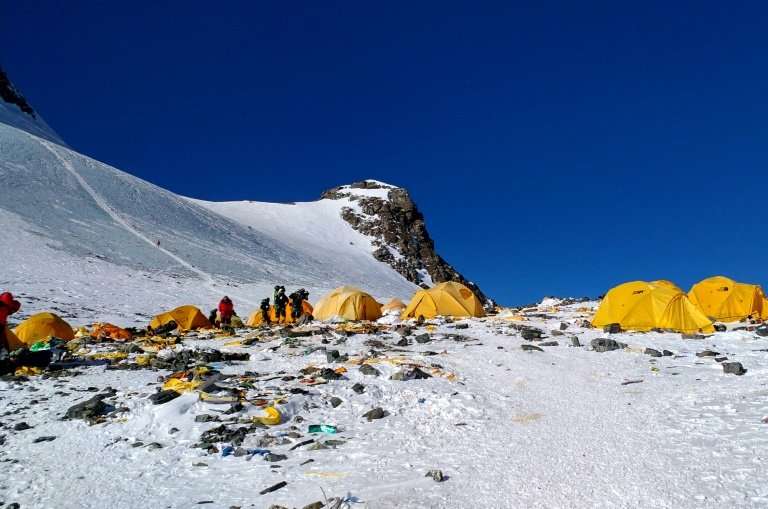
The name Rainbow Valley doesn’t come from natural rainbows or scenic views; instead, it refers to the brightly colored jackets, down suits, boots, tents, oxygen tanks, and other climbing gear that have remained on the mountain for decades. Many climbers who died during their summit attempts were left where they fell because the extreme cold, low oxygen, and steep, icy terrain make rescue or body recovery almost impossible above this altitude. The cold, dry conditions preserve clothing and gear for years, so the vivid reds, blues, yellows, greens, and oranges sharply contrast with the white snow and ice, creating an eerie “rainbow” effect on the barren slope.
Because of these conditions, many of the bodies and gear remain in place, and climbers may pass by them as they descend or ascend. In some cases, specific locations became well known by the gear people were wearing—most famously Green Boots, a climber who died in 1996 and whose body was a landmark until it was moved from the trail.
Rainbow Valley has become a symbol of the real dangers of high‑altitude climbing and serves as a sobering reminder of how unforgiving Mount Everest can be.
What is Death Zone?
Rainbow Valley is located in what mountaineers term the “Death Zone”, anything over 8,000 meters, where the human body simply can’t keep it up for so long.
Mountaineers in the Death Zone suffer from not being able to oxygenate, where the oxygen is so diluted that the body’s repair process is impaired, and physical and mental abilities deteriorate. One has only a third of the oxygen one would have at sea level at that height.
In the Death Zone:
- Breathing is very difficult.
- Your body becomes weak, and your brain gets confused.
- Even small steps take a lot of effort.
- If someone gets tired or sick, it’s very difficult to rescue them.
This is why so many climbers lose their lives in this part of the mountain.
Why is it Important to Know About Rainbow Valley?
Rainbow Valley is situated upon the northern slope of Mount Everest, along the route most climbers take descending from the Tibetan border. It runs across a hundred meters or so of high sloping rock ground, which is snowed up and iced over. The ground is bleak with thin ridges that are steep crests and sometimes rapidly changing weather conditions, which have the power to change within minutes.
This is a bottleneck that the climbers have to climb step by agonising step, one after the other, battling the might of high altitude. The double whammy of the body resisting altitude sickness and technical climbing is the ultimate tragedy in the making.
Many of the climbers in Rainbow Valley are strong, smart, and brave. But the mountain is bigger and stronger. Their colourful clothes are a reminder that dreams come with risks.
The Dark Reality: Why It’s Called Rainbow Valley
Rainbow Valley is a name that has such dreamlike beauty in it that it hides what it is. Climbing equipment or even the bodies of dead climbers seem to come out of nowhere, so does a rainbow. Yellows and greens and blues and reds of shiny new climbing equipment fight the snow-white and gray mountain rock.
The Preservation Effect
At extreme altitudes on Mount Everest, temperatures remain far below freezing, and the air is extremely dry. These conditions significantly slow down natural decomposition.
As a result:
- Climbing gear and equipment remain in place for years
- Clothing retains its color and shape
- In some cases, even the bodies of climbers are preserved
The mountain, in a way, acts like a natural freezer, keeping everything almost unchanged over long periods of time.
Over the years, some of these preserved items have become unofficial reference points for climbers. However, they are also a stark reminder of the dangers of high-altitude climbing—showing how unforgiving the environment can be when conditions turn against even the most experienced mountaineers.
The Emotional Impact on Climbers
For climbers who pass through Rainbow Valley, the experience can be deeply unsettling. The sight of abandoned gear and the knowledge of what it represents create a powerful emotional response.
Many climbers describe feeling a mix of:
- sadness
- fear
- and a heightened determination to keep moving
Each piece of brightly colored equipment serves as a silent reminder of how close success and tragedy can be on Mount Everest.
The impact is not only physical but psychological. Climbers must stay focused and composed, even while processing what they see around them. In such extreme conditions, maintaining mental strength becomes just as important as physical endurance.
For some, this experience reinforces caution and respect for the mountain. For others, it strengthens their resolve to complete the climb—but always with a deeper awareness of the risks involved.
The History and Stories of Rainbow Valley, Mount Everest
Rainbow Valley, found high on Mount Everest’s upper slopes, is one of the most somber and haunting areas on the world’s tallest mountain. It lies in the Death Zone, where extreme cold, dangerously low oxygen levels, fierce winds, and sudden weather changes make survival extremely difficult. Since Sir Edmund Hillary and Tenzing Norgay first summited Everest in 1953, climbers from around the world have attempted the peak. Most return safely, but some have tragically perished in the low oxygen, where rescue and body recovery are nearly impossible due to the harsh conditions.
The name “Rainbow Valley” comes from a visual impression rather than a natural phenomenon. Brightly colored jackets, down suits, tents, and other climbing gear left behind by climbers who did not survive create a patchwork of color across the snow and ice. From a distance, these hues can resemble a rainbow on the slopes, but closer inspection reveals the somber reality of loss and risk in extreme-altitude mountaineering.
Several individual stories in or near this area have become well‑known over the years:
Green Boots
Perhaps the most famous landmark once associated with Rainbow Valley was the body known as Green Boots, widely believed to be that of Indian climber Tsewang Paljor from the 1996 expedition. His green boots and gear made him easily recognizable, and climbers used the site as an unofficial marker on the northeast ridge route. Although his remains were moved or hidden from view in the mid‑2000s as part of cleanup efforts, the story remains one of Everest’s most iconic reminders of risk.

Sleeping Beauty
This name refers to Francys Arsentiev, an American climber who reached the summit in 1998 without supplemental oxygen. She became stranded on the descent, and fellow climbers found her in a resting‑like position as she weakened and froze. The eerie image led others to call her “Sleeping Beauty.” Her body remained on the mountain for years before being relocated to a less visible spot in 2007.
Hannelore Schmatz
In 1979, German mountaineer Hannelore Schmatz became one of the earliest women to die on Everest. After a successful summit, she struggled on the descent and succumbed to the extreme conditions. Her passing highlighted how even experienced climbers can fall victim to the Death Zone’s dangers.
These stories remind us that behind every piece of gear and every landmark in Rainbow Valley is a human being with dreams, loved ones, and aspirations. The valley is not just a geographic location; it stands as a powerful testament to the courage, determination, and profound risks of high‑altitude mountaineering.
Why Body Recovery from Rainbow Valley on Mount Everest Is Rare and Expensive
Recovering bodies from Rainbow Valley, located high in the Death Zone above 8,000 meters, is one of the most difficult and dangerous tasks in the world. The extreme environment, physical limitations, and ethical concerns make such operations rare—and incredibly costly.
1. Extreme Conditions in the Death Zone
At this altitude, oxygen levels drop to about one-third of what they are at sea level. Even with supplemental oxygen, the human body begins to deteriorate. Rescuers face severe risks such as exhaustion, confusion, and life-threatening altitude illnesses like HACE and HAPE.
Spending extra time in this zone—especially for physically demanding work like recovery—can quickly become fatal.
2. Frozen and Immovable Bodies
Bodies in Rainbow Valley are often frozen solid due to constant sub-zero temperatures. Over time, they can become embedded in ice and snow.
A frozen body, along with climbing gear, can weigh well over 100 kilograms. Removing it requires hours of intense labor, which consumes valuable energy and oxygen—resources that are already limited at that altitude.
3. No Practical Helicopter Access
Although helicopters have reached extreme heights on Everest, they cannot reliably land or operate safely in the Death Zone. Thin air reduces lift, making precise maneuvering nearly impossible.
As a result, recovery teams must carry bodies down manually to lower camps before any airlift becomes possible.
4. High Risk to Rescuers
Body recovery is far more dangerous than guiding climbers. It often requires a team of multiple Sherpas working together on narrow, exposed ridges.
These rescuers face the same hazards—extreme cold, low oxygen, avalanches, and fatigue. In some cases, people have lost their lives attempting recovery missions, which is why such operations are approached with great caution.
5. Difficult Terrain and Limited Space
The routes near Rainbow Valley are narrow and steep, often allowing only one climber to pass at a time. Managing a heavy, rigid body in such conditions is extremely difficult and can endanger everyone on the route.
6. Extremely High Costs
If recovery is attempted, it can cost between $60,000 and $100,000 or more. This includes:
- Specialized high-altitude teams (mainly Sherpas)
- Large amounts of supplemental oxygen
- Permits and insurance
- Transport logistics and helicopter evacuation from lower camps
These costs make recovery inaccessible for many families.
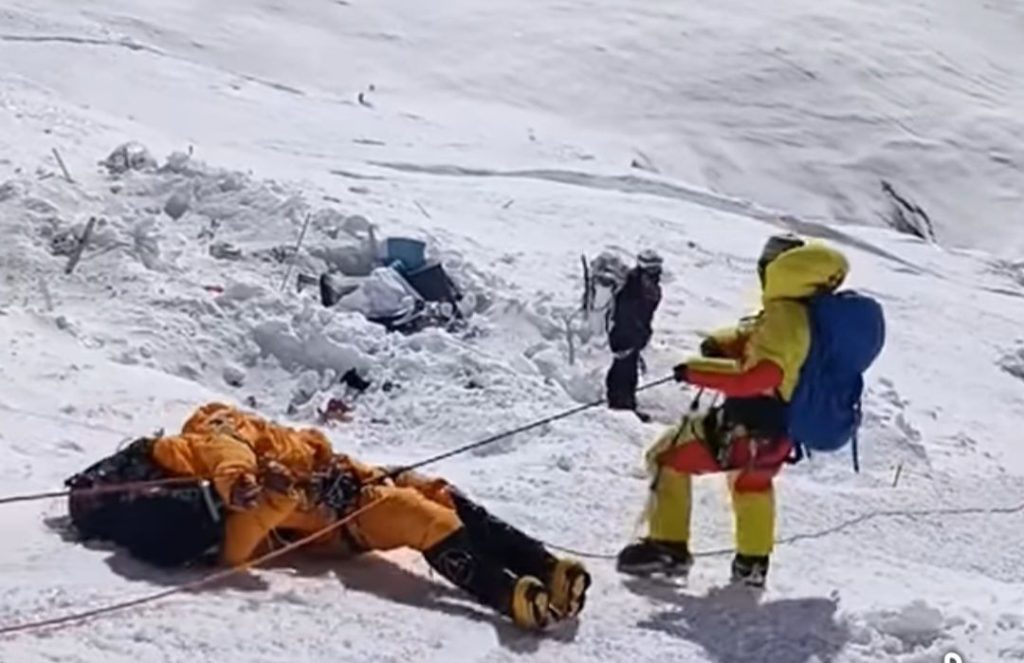
The 2024 Breakthrough: Nepal’s Everest Cleanup Effort
While body recovery on Mount Everest has long been considered nearly impossible, especially in the Death Zone, recent efforts show that limited progress is possible with significant resources and planning.
In 2024, the Nepal Army, working alongside experienced Sherpa climbers, carried out a major high-altitude cleanup mission as part of the government’s ongoing Everest conservation efforts.
Key Achievements of the 2024 Campaign
Recovery of Human Remains
The team successfully recovered several bodies from high-altitude areas, including locations near the South Col and routes associated with Rainbow Valley. These operations required careful coordination and extreme physical effort in dangerous conditions.
Large-Scale Waste Removal
In addition to recovery efforts, the mission removed more than 10 tons of waste from the mountain. This included old tents, oxygen cylinders, ropes, and plastic debris that had accumulated over decades.
Part of a Broader Cleanup Initiative
This mission is part of Nepal’s long-term effort to reduce pollution and manage the environmental and ethical impact of climbing Everest. It also aims to address concerns about the mountain becoming both a waste site and a resting place for climbers who never returned.
What This Means for the Future
The 2024 mission demonstrates that recovery and cleanup are possible—but only under very specific conditions. These missions require:
- Extensive funding
- Highly trained teams
- Careful planning over several months
- Significant risk to those involved
Even with modern equipment and government support, such efforts remain limited. The extreme altitude, unpredictable weather, and physical dangers of the low oxygen still make large-scale recovery operations incredibly difficult.
Safety Measures and Prevention
Modern Equipment and Technology
Modern-day mountaineers are far better attired than any earlier generation could have dreamed. Advances in oxygen equipment, heated garments, enhanced communication methods, and enhanced weather forecasting have all helped to make it safer.
Global positioning and satellite phones enable rescuers to call for assistance and give precise coordinates. With all these new technologies, though, the root problems of the Death Zone are the same.
Training and Preparation
There has to be proper training for anyone who tries to tackle Everest. This includes weeks or even months of physically preparing the body, acclimatisation on lower mountains, and learning about the risks. Climbing agencies now increasingly demand loads of experience before sending clients up Everest.
And psychological preparation, too. The climbers must be aware of what they are most likely going to encounter in Rainbow Valley and psychologically prepared to deal with the trauma of encountering the bodies of dead climbers.
Weather Window Planning
Weather forecasting nowadays is so much better than before, and climbers attempt harder at the top. But the weather in the low oxygen remains susceptible to abrupt and whimsical changes.
Climbing expeditions now use the latest weather-tracking equipment and even full-time meteorologists to assist with planning summit attempts. Weather remains one of the biggest variables in climbing success and safety, even with technology.
The Psychological Impact on Climbers
Confrontation with Death
Climbing over Rainbow Valley forces the climber to confront his death in the most real way possible. The reality that they can see the dead bodies of individuals who did not make it back home is a vivid reminder that climbing Everest truly is a life-and-death experience.
All but a couple of climbers say the experience shifts their perception of the climb and life. Some are more cautious, some are more resolved to keep going in place of those who didn’t make it back.
Survivor’s Guilt
Survivor’s guilt also occurs among Rainbow Valley survivors. They find themselves asking why they lived and others didn’t, particularly if they notice other climbers using the same gear or being from the same hometown.
This psychological trauma can last well after the climb. Climbers have even had to see a counsellor to cope with such images and emotions.
The Decision to Continue
Perhaps the most challenging aspect of climbing Rainbow Valley is deciding whether or not to continue climbing after encountering dead climbers. There is rarely anything that can be done to help, but leaving someone behind is mentally crippling.
They must balance their desire to help against the reality that breaking will execute them and the remainder of their expedition. The decision plagues most climbers for years after they make it to the base.
Environmental and Conservation Concerns
The Growing Trash Problem
Rainbow Valley is not only scattered with human corpses – it’s also filled with abandoned climbing equipment, oxygen canisters, and rubbish. It’s so poor that it’s impossible to take anything off the mountain, and the effect on the environment is a serious concern.
Attempts to restore cleaning have been made, but the dangerous condition makes it almost impractical. Quotas now imposed on climbers to return trash are some measures, but it is understandably difficult to enforce.
Impact on the Mountain Ecosystem
Although there are few large plants and animals in the Death Zone, the increasing amount of human waste and trash still puts its mark on the mountain ecosystem. The increasing amount of climbing has a major impact on plant and animal life at the lower elevations, though.
Conservationists are working to address the environmental impact of climbing expeditions, but access and conservation’s delicate balance is a thin rope to tread.
Climate Change Effects
Climate change is changing things at Everest, and some areas will be even more dangerous. Weather, ice, and snow cover changes can affect the size and position of Rainbow Valley.
Some researchers consider that changing conditions will make the Death Zone riskier, but others think that it can contribute to safer locations becoming safer. No one has any knowledge about the long-term effects.
The Sherpa Communities’ Role
Risking Lives for Others
The Sherpa communities who support Everest climbing face many of the same risks as international climbers, often with less recognition. However, more foreigners have died than Sherpas, 225 compared to 110. While the numbers show that Sherpas have lower death rates, they still face significant risks.
Sherpas would then have to cross treacherous terrain, such as Rainbow Valley, several times to lead climbing expeditions through. They are priceless in their experience and know-how, but they are also out in the same lethal setting.
Cultural Perspective
The Sherpas also have a cultural affinity for Everest, to whom they give the name Chomolungma. They have a very different Western-style death and mountain culture, based on Buddhist philosophy and centuries of residence at the base of the mountain.
Their cultural perspective colors their response to the Rainbow Valley’s dead and the hazards of climbing. Both responses are something every human being who would climb Everest with pride should respect.
Economic Dependence
The Sherpa’s economic livelihood is dependent on mountaineering tourism, and their reaction to the risk of such places as Rainbow Valley is thus ambivalent.
Expedition guiding is a livelihood necessary for their people, but not one of gigantic risk for nothing. Some effort is put into arming Sherpa guides with better protective equipment and instruction, but the character of the risks cannot be removed. The seesaw between the risk and the reward is unresolved.
Lessons from Rainbow Valley
The Value of Humility
Rainbow Valley teaches climbers the importance of humility when facing the immense power of nature. Even experienced mountaineers with advanced equipment are not immune to the risks of high-altitude climbing.
This lesson extends beyond mountaineering. Recognizing our limitations and respecting forces beyond our control is essential for making wise decisions in dangerous situations, both on the mountain and in life.
Risk Assessment and Decision Making
Rainbow Valley reminds all climbers to balance risks and make difficult decisions. Do they climb into worsening conditions? Do they wait for how long for the storm to blow over? These are decisions that are life and death.
The skill of making those kinds of decisions quickly and reliably is one that any dedicated climber can benefit from. What is learned on Everest can, to a great extent, be transferred to other risky challenges in life.
The Importance of Preparation
Each Rainbow Valley victim is an individual not fully prepared to deal with what he or she faced. The harsh reality is used to enable one to realize the most important factor in total preparation for any hazardous undertaking.
Physical fitness, technical expertise, mental preparedness, and proper equipment are all required, yet perfect preparation will never guarantee success or even survival on Everest.
Modern Climbing: Reducing the “Rainbow Valley” Risk
While the Death Zone on Mount Everest remains as dangerous as ever, modern expeditions have significantly improved how they approach high-risk areas like Rainbow Valley. The goal today is not just to reach the summit, but to return safely.
1. Improved Safety Protocols
Modern teams follow strict turnaround times—often around 1:00 PM or 2:00 PM—regardless of how close climbers are to the summit. This ensures enough time, energy, and oxygen for a safe descent through dangerous sections like Rainbow Valley.
Regular radio check-ins are now standard, helping teams monitor climbers for early signs of altitude-related illnesses. In addition, improved Sherpa-to-client ratios allow for faster assistance in emergencies.
2. Technology Integration
Technology has made Everest more connected than ever before. Satellite communication devices and advanced weather forecasting allow climbers to stay informed and in contact with base camp even at extreme altitudes.
However, technology is not foolproof. Extreme cold can quickly drain batteries, and equipment may fail when it is needed most. For this reason, climbers often rely on both technology and experience to stay safe.
3. Changing Climbing Culture
The culture of climbing Everest has gradually shifted from a “summit at all costs” mindset to a more safety-focused and ethical approach. Climbers today are generally better trained and more aware of the risks involved.
There is also growing awareness around how to handle difficult situations, including encounters with fallen climbers. While debates still exist, the focus has increasingly shifted toward respect, responsibility, and realistic decision-making on the mountain.
The Future of Rainbow Valley
Ongoing Cleanup Efforts
Other teams continue to clean up Everest, such as pulling bodies and equipment out of Rainbow Valley. The ascents are dangerous and expensive, but we are gradually making progress. Techniques and new technology can ensure that cleanups in the future are safer and more efficient. But the conditions will never be anything but extreme, so such efforts will be truly daunting.
Evolving Safety Standards
As high-altitude physiology and meteorology are increasingly understood, so is the measurement of safety. Theoretically, the risk of flight over such regions as Rainbow Valley can be reduced with more advanced equipment and techniques. But the basic problem of the revival of human beings at extreme altitude will make Rainbow Valley hazardous for years to come.
The Ongoing Debate
The mountaineering community remains divided on the trade-off between reaching Everest and safety and dignity for the dead. Some demand more regulations, but others feel climbers must be offered autonomy to take the risk. The controversy raises broader concerns about risk, adventure, and accountability in extreme sports. There are no simple solutions, but the debate goes on.
Respect for Everest and the Sherpa Culture
Rainbow Valley makes us pose uncomfortable questions about risk, preparation, and what we hold precious about high achievement. The valley is probably the most melancholy part of Everest. That rainbow-colored equipment sticking out of the snow is a heartrending sign of one person’s goal that didn’t pan out, a ghastly reminder that even seasoned climbers can’t get away from the mountain.
When visitors or tourists come to Everest, they are asked to:
- Respect the mountain
- Be kind to local people
- Keep the area clean
- Learn and understand the risks
For Travellers and Adventurers
You can enjoy the amazing views of Everest Base Camp, even if you don’t want to climb up to the top.
Here are a few safety tips for meaningful travel:
- Take a local guide who knows the way.
- Stay warm and hydrated.
- Walk gently and enjoy every step.
- Learn simple Nepali greetings, such as Namaste and Dhanyabad.
Conclusion: The Enduring Legacy of Rainbow Valley
Rainbow Valley stands as a profound testament to both the heights of human ambition and the overwhelming power of Mount Everest, whose height is 8,848.86 meters (29,031.7 feet) above sea level. For climbers, it is more than just a location—it is a powerful lesson in humility. Even with advanced equipment and peak physical conditioning, the Death Zone remains an environment where survival is never guaranteed.
The paradox of Rainbow Valley, where bright colors mark silent tragedies, continues to shape modern mountaineering culture. While efforts such as improved safety protocols, better technology, and cleanup initiatives are making progress, the mountain’s inherent danger can never be fully removed. That very risk is part of what makes Everest one of the greatest challenges on Earth.
Ultimately, Rainbow Valley is both a warning and a tribute. It reflects the courage of those who dared to climb, while reminding us of the deep respect owed to the mountain and the Sherpa communities who support these journeys. Whether you are an aspiring climber or simply learning from afar, its story encourages a sense of awareness, responsibility, and lasting wonder.
Comments (0)
Write a comment- Rainbow Valley — A Haunting Part of Mount Everest
- What is Death Zone?
- Why is it Important to Know About Rainbow Valley?
- The Dark Reality: Why It’s Called Rainbow Valley
- The History and Stories of Rainbow Valley, Mount Everest
- Why Body Recovery from Rainbow Valley on Mount Everest Is Rare and Expensive
- The 2024 Breakthrough: Nepal’s Everest Cleanup Effort
- Safety Measures and Prevention
- The Psychological Impact on Climbers
- Environmental and Conservation Concerns
- The Sherpa Communities’ Role
- Lessons from Rainbow Valley
- Modern Climbing: Reducing the “Rainbow Valley” Risk
- The Future of Rainbow Valley
- Respect for Everest and the Sherpa Culture
- For Travellers and Adventurers
- Conclusion: The Enduring Legacy of Rainbow Valley
Read the latest Blogs & Insights
Explore our collection of articles and insights to gain in-depth travel knowledge, expert advice, and stay updated on the latest trends and tips.
View All Articles
Broad Peak Avalanche: Nirmal Purja & the Team
10 Aug. 2026
Prayer Flags
10 Jul. 2026
Golf Tour in Nepal
24 Aug. 2026



No comments yet.