Major Attractions of Annapurna Circuit Trek
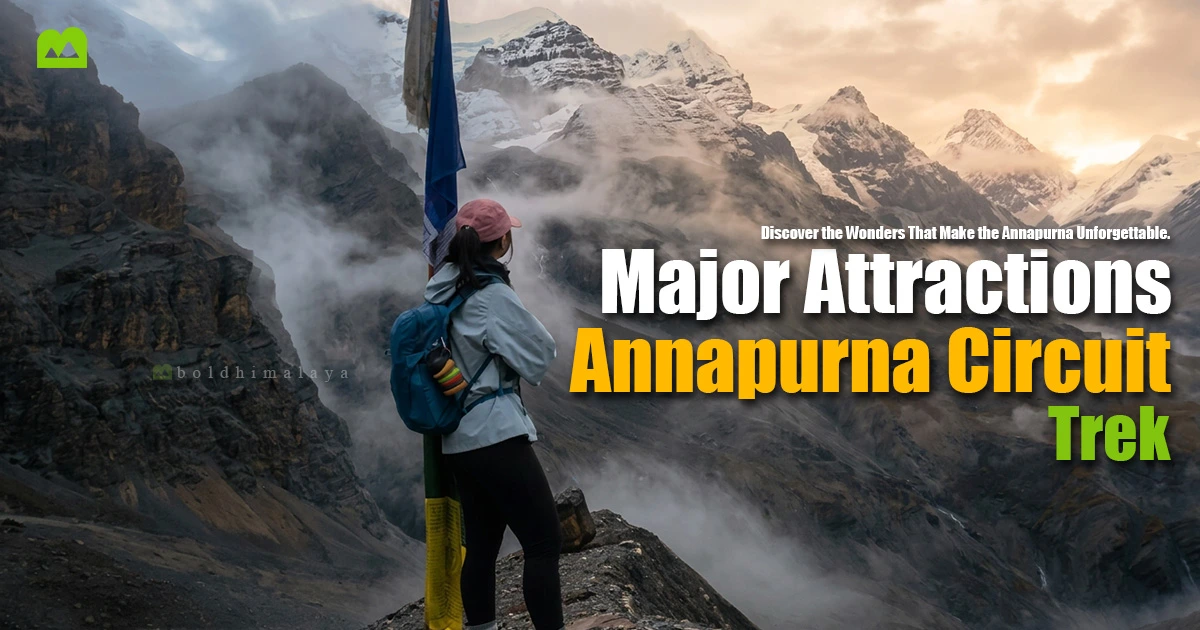
The Annapurna Circuit Trek is not defined by a single viewpoint or mountain. Its real attraction lies in how beautifully the landscape changes as you walk around the Annapurna massif.
The first thing you notice during the Annapurna Circuit Trek is how the scenery of the Himalayas never looks the same for long. What begins as a path through green river valleys eventually turns into pine forests, stone-built villages, high alpine terrain, monasteries, glacial lakes, and the mountain ranges of Mustang.
As you finally cross Thorong La Pass at 5,416m and descend towards Muktinath and Kagbeni, the entire landscape, architecture, and culture will be totally different. This is what makes the major attractions of Annapurna Circuit Trek so unique.
Major attractions of the Annapurna Circuit Trek
1. Thorong La Pass (The Highest Point of the Trek)
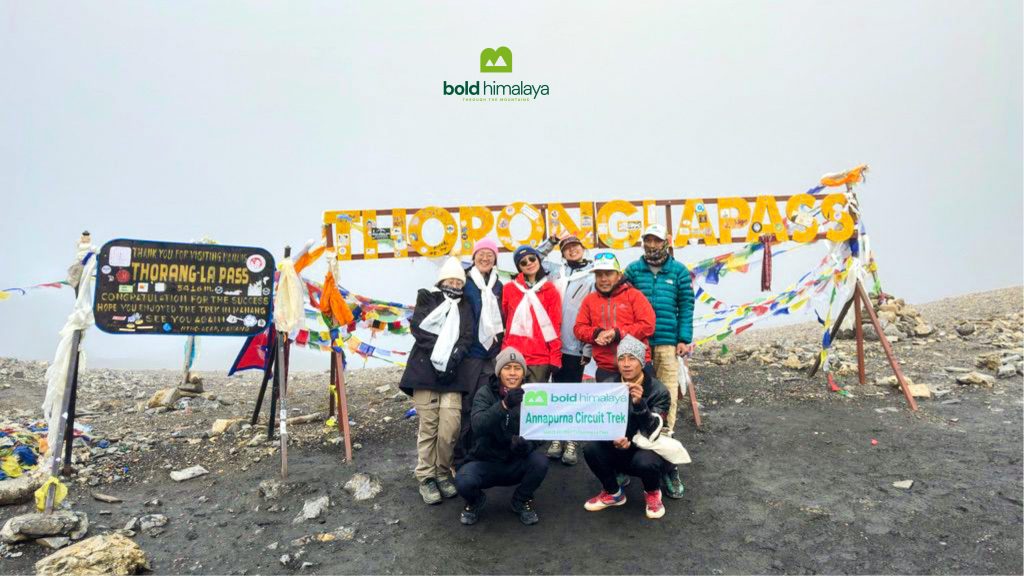
Thorong La Pass, at 5,416 meters (17,769 feet) above sea level, forms the highest point and one of the major attractions of Annapurna Circuit Trek. It lies between the valleys of Manang and Mustang, where the trek traverses a tough, high mountainous landscape with snow-capped Himalayan mountains all around.
On top, the prayer flags flutter in the winds of the mountains, along with the chortens and breathtaking views that will make your arrival unforgettable. Beyond the pass lies the transition in the landscape into the dry and windy areas of Mustang as you travel down to Muktinath from Manang.
This dramatic change in elevation, scenery, and culture makes crossing Thorong La much more than simply reaching the highest point of the trek; it is a defining moment of the entire Annapurna Circuit.
2. Manang Village (The Cultural and Scenic Heart of the High Route)
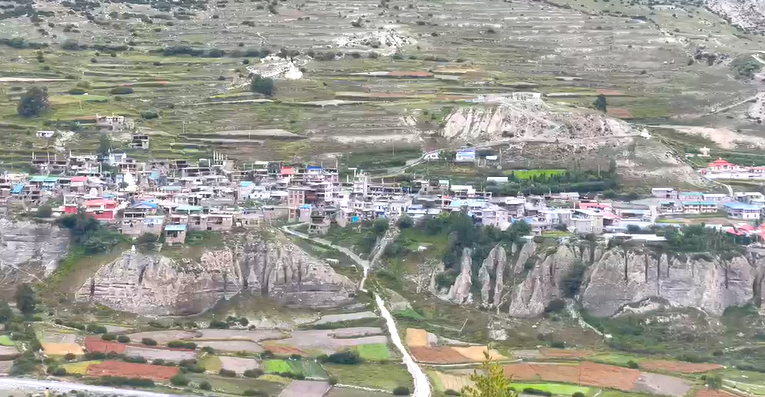
Manang Village, which is situated at an elevation of approximately 3,500m (11,483 ft), is one of the most interesting sights of the Annapurna Circuit Trek in terms of both culture and scenery.
This is because the village portrays the way of life of the people of Manang through the design of the stone houses, Buddhist monasteries, prayer wheels, mani walls, and prayer flags, among other structures. Its Tibetan-influenced culture and architecture provide a clear contrast to the greener lower sections of the trek.
Manang is also a popular acclimatization stop before heading toward the higher sections of the circuit. Rather than simply resting, trekkers can explore the village and take short hikes to nearby viewpoints and landmarks while allowing their bodies to adjust to the increasing altitude. This location is among the most significant highlights of the Annapurna Circuit.
3. Tilicho Lake (The Famous High-Altitude Lake)
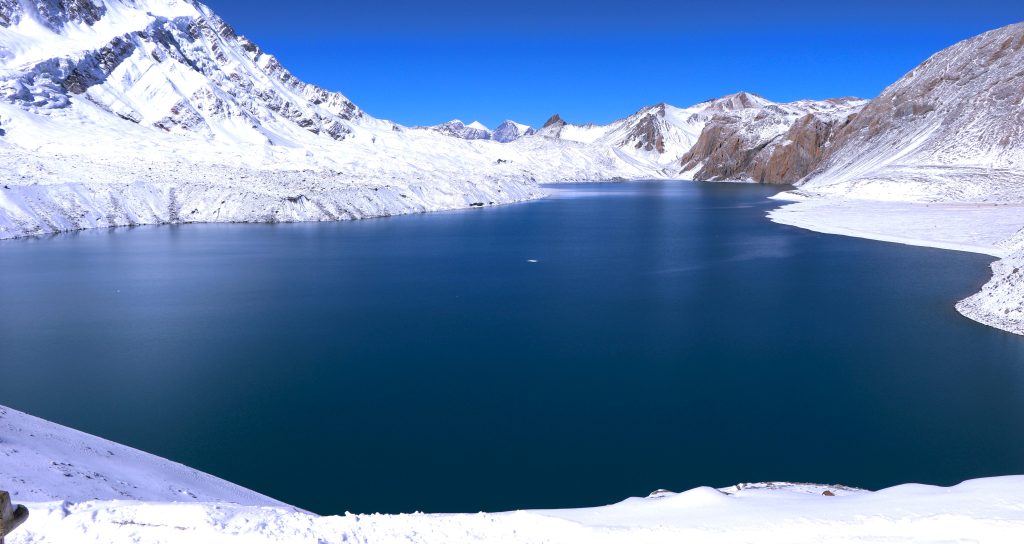
Tilicho Lake is one of the major natural attractions of Annapurna Circuit Trek, sitting at around 4,919 m (16,138 ft) in the Manang region. Surrounded by rugged Himalayan peaks and barren mountain slopes, the lake is known for its striking blue waters and dramatic high-altitude setting.
Even though it does not lie directly on the main Annapurna Circuit trail, it is a popular side trip for trekkers who want to experience one of the region’s most scenic alpine landscapes.
Reaching Tilicho Lake requires a detour through Khangsar and Tilicho Base Camp, usually adding around 2 days to the trek. The high elevation means trekkers should be properly acclimatized and prepared for cold, wind, and rapidly changing weather.
4. Braga Monastery and Buddhist Heritage
Braga Monastery is a significant cultural site in the Annapurna Circuit, situated in the upper Manang Valley. It is believed to be around a 900-year-old monastery. The monastery reflects the region’s strong Tibetan Buddhist influence, with the traditional stone-mud structure, prayer flags, chortens, mani walls, and prayer wheels that surround the settlement. The ancient monastery, set against the dramatic Himalayan landscape, offers trekkers a glimpse into the spiritual traditions and long-established culture of the Manang communities.
Braga is worth exploring rather than simply passing through because it combines religious heritage, traditional architecture, and mountain scenery in one place.
Visitors can observe local Buddhist practices, explore the historic settlement, and appreciate the quieter atmosphere of the upper Manang Valley. It provides a cultural perspective that complements the natural attractions of Annapurna Circuit trek.
5. Kali Gandaki Gorge (A Himalayan River Valley)
One of the most striking natural wonders found along the Annapurna Circuit is the Kali Gandaki Gorge, carved by the Kali Gandaki River between the high mountains of the Annapurna and Dhaulagiri massifs.
The landscape changes dramatically as the trail follows the river, with steep rocky cliffs, dry hills, and expansive mountain views replacing the greener scenery found on the lower sections of the trek. The gorge also marks the transition toward the arid, rain-shadow landscape of Mustang.
Apart from being scenic, the Kali Gandaki Valley is also known for its unique geology: Shaligrams fossils. Shaligrams are present on the riverbed and are of religious significance to Hindus. With the combination of the immense Himalayas, a powerful river valley, unique geological formations, and arid Mustang terrain, the Kali Gandaki Gorge stands out as a unique feature of the Annapurna Circuit.
6. Gangapurna Lake (A Scenic Glacial Lake Near Manang)
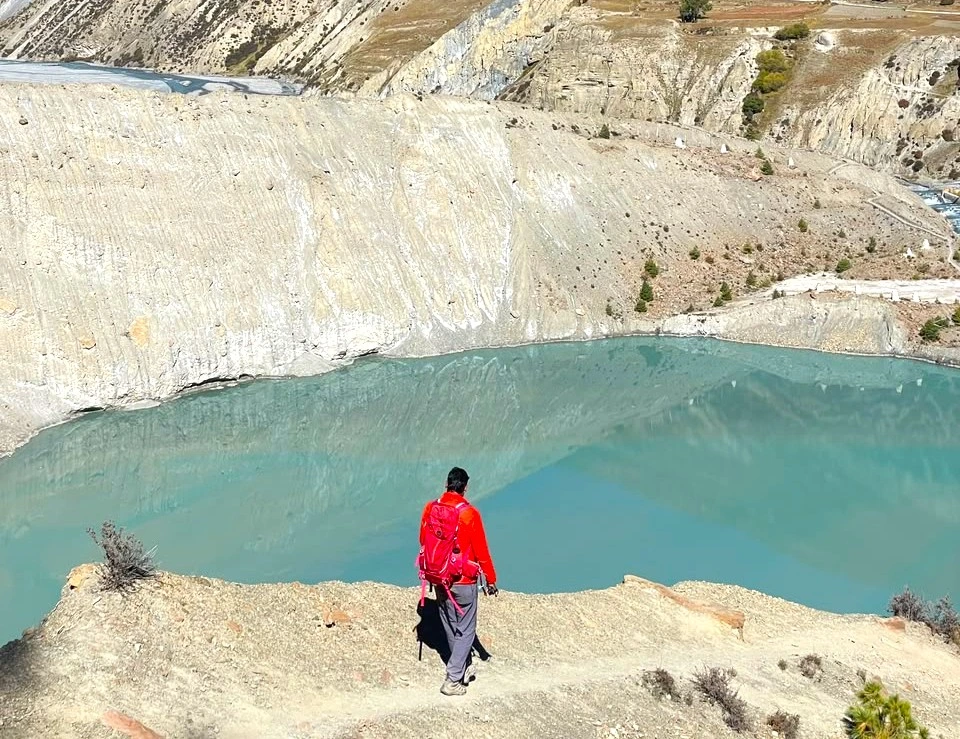
Gangapurna Lake is a beautiful glacial lake near Manang Village, formed from meltwater from the surrounding Gangapurna Glacier. Sitting at roughly 3,500 m, the lake is surrounded by rugged mountain slopes, ice-covered peaks, and rocky terrain. Its mesmerizing blue-green water and the dramatic backdrop of Gangapurna make it one of the most beautiful places to visit on Annapurna Circuit Trek in the Manang section.
The lake is also easy to visit on an acclimatization day in Manang, as it’s a relatively short hike from the village. The walk offers changing views of the valley and surrounding mountains before reaching the tranquil lakeside. Its accessibility, glacial landscape, and impressive Himalayan setting make Gangapurna Lake a worthwhile stop for trekkers exploring the upper Manang Valley.
7. Ice Lake (A High-Altitude Viewpoint Above Manang)
Ice Lake, also called Kicho Tal, is a high-altitude lake that makes for a nice side trip from Manang, as part of the Annapurna Circuit Trek. At about 4,600 m (15,100 ft), the lake lies in arid mountain terrain with rocky slopes and towering Himalayas.
The journey to Ice Lake is itself an attraction, offering increasingly expansive views of Annapurna II, Annapurna III, Gangapurna, and surrounding mountains as the trail climbs above the Manang Valley.
Ice Lake is generally undertaken as an acclimatization hike from Manang, rather than as part of the main circuit route. The steep ascent makes it physically demanding, particularly at high altitude, but the panoramic scenery from the lake makes it a rewarding addition for trekkers who are properly acclimatized. It is one of the popular Annapurna Circuit Trek main attractions.
8. Pisang and Its Dramatic Mountain Landscape
Pisang is one of the most scenic villages along the Annapurna Circuit. The village is famous for its spectacular mountain location and cultural significance as a traditional Himalayan village. Pisang village is divided into Lower Pisang and Upper Pisang. Upper Pisang is at a higher elevation, where you can get great views of Annapurna II and other surrounding peaks.
The Upper Pisang route is often chosen by trekkers for its more elevated and scenic surroundings compared with the lower trail. As the trail climbs, the views open across cliffs, pine forests, the Marsyangdi Valley, and snow-covered mountains.
The combination of traditional village life, Buddhist heritage, forests, and expansive Himalayan views makes Pisang an important attraction on the Annapurna Circuit.
9. Muktinath Temple (A Sacred Pilgrimage Site)
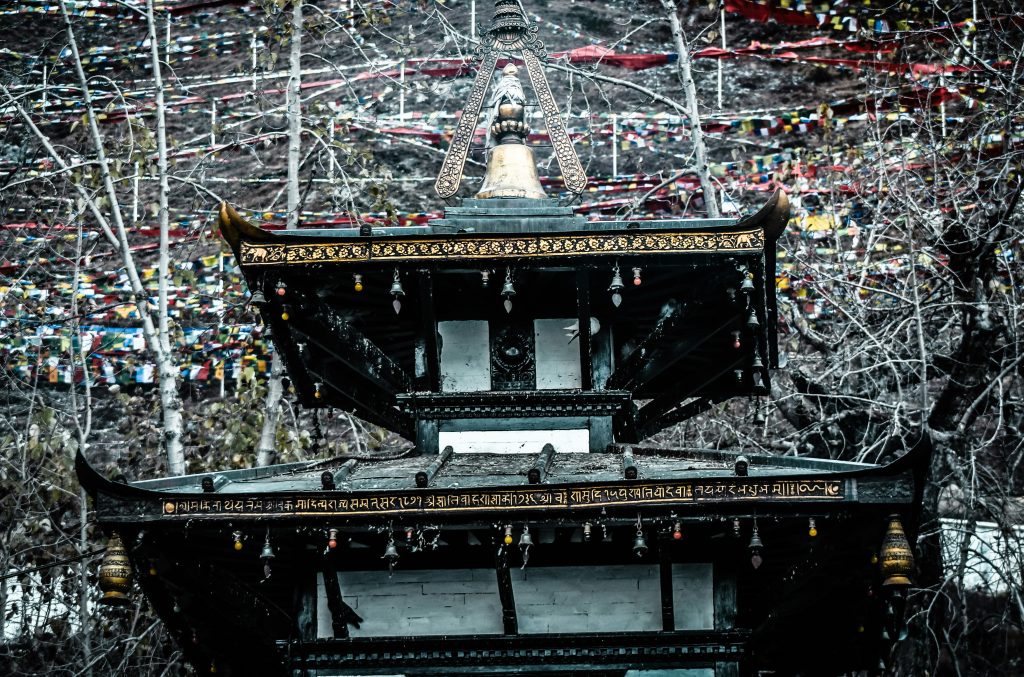
Mukninath temple is one of the most important cultural and spiritual sites at 3,800m/12,467ft along the Annapurna Circuit Trek. After crossing the Thorong La Pass, Muktinath is considered sacred by both Hindus and Buddhists, which makes it a unique religious attraction in the Himalayas.
The temple is famous for the presence of 108 holy water spouts where pilgrims traditionally take a bath beneath the flowing water. Next to the site is Jwala Mai Temple, which is known for its association with a natural flame that has been of great importance in terms of worship. There are Buddhist shrines and prayer wheels, among other religious structures, around the place.
For trekkers, reaching Muktinath after crossing Thorong La marks a striking change in both scenery and culture.
10. Mountain Views Along the Annapurna Circuit
Mountain views are one of the defining attractions of Annapurna Circuit, with different peaks becoming visible as the trail moves through higher sections. The scenery becomes particularly dramatic around Pisang, Ghyaru, Ngawal, Manang, Thorong La, and the Kali Gandaki Valley.
Among the most prominent peaks visible along different sections are Annapurna I (8,091 m), Annapurna II, Annapurna III, Annapurna IV, Gangapurna, Tilicho Peak, Dhaulagiri, Nilgiri, and Tukuche Peak. The views change as you move around the massif, giving the trek a sense of constantly unfolding scenery rather than one fixed mountain panorama.
Towards the eastern side of the trek, especially in the region from Dharapani to Manang, you may also come across views of Manaslu and other surrounding peaks. To the west, the landscape gradually opens up towards Dhaulagiri, as well as the Nilgiri-Tukuche range, providing a contrast between the giant snow-capped mountains and the arid valleys of Mustang.
The mountain views do not simply provide background scenery; they accompany the journey through forests, traditional villages, high valleys, glacier regions, and finally the arid Kali Gandaki Valley.
11. Marpha (Apple Orchards & the Famous Thakali Village)
Marpha is a beautiful village in the Kali Gandaki Valley, known for its traditional whitewashed stone houses, narrow paved alleys, and the Thakali culture. It is widely famous for its apple orchards and locally produced apples, which have become closely associated with the village.
Trekkers can walk through the orchards, explore the traditional settlement, and experience the local lifestyle while enjoying views of the surrounding mountains. Its location along the Kali Gandaki valley also makes Marpha an important cultural and scenic attraction on the Annapurna Circuit Trek.
12. Tatopani Natural Hot Springs
Tatopani, which means ‘hot water’ in Nepali, is a popular stop for trekkers who extend their Annapurna Circuit trek journey south from the Jomsom and Mustang area. Tatopani presents a refreshing change of scenery, with lush vegetation, a warmer climate and a riverside setting.
The main attraction is its natural hot springs, where trekkers take a break and relax in the warm mineral rich water after long days of trekking. Sitting beside the river and surrounded by green hills, the hot springs provide a peaceful contrast to the dry landscapes of Mustang and the rugged terrain around Thorong La.
13. Jomsom (Mustang’s Mountain Town)
Jomsom is one of the most distinctive settlements on the western side of the Annapurna Circuit, situated along the Kali Gandaki River. The town has a very different character from the greener valleys and high alpine landscapes encountered earlier on the trek.
Jomsom is also an important center for the Thakali community, with local culture, traditional food and mountain architecture adding to the experience. This area is also known for its local apple products, which are a refreshing contrast to the barren landscapes of Mustang.
Its airport also makes Jomsom an important transport hub, connecting the Mustang region with Pokhara and providing an alternative way to enter or leave the area.
13. Waterfalls of the Annapurna Circuit Trek
The waterfalls along the Annapurna Circuit add another layer to the trek’s changing scenery. In the lower and middle sections, streams cascade down steep mountain cliffs and into the Marsyangdi and Kali Gandaki valleys. Among the most notable are Chamje Waterfall, Tal Waterfall, and Rupse Waterfall, while several smaller seasonal cascades appear along the trail.
- Chamje Waterfall
One of the first significant waterfalls you will come across during the Annapurna Circuit hike is the Chamje Waterfall, which flows down the hillside next to the trekking trail. Located near Chamje village in the Marsyangdi Valley, the waterfall drops dramatically.
The surrounding landscape is still relatively green, with dense vegetation, rocky cliffs, and the Marsyangdi River running through the valley below. The combination of rushing water, steep terrain, and suspension bridges gives this section of the trail a distinctly adventurous character.
- Tal Waterfall
The area around Tal is another scenic waterfall section of the Circuit. Tal itself is a beautiful riverside settlement situated beside the Marsyangdi River, surrounded by cliffs and green hills.
Waterfalls and cascading streams descend from the surrounding mountains, particularly during the wetter months, adding to the dramatic atmosphere of the valley. The village’s position beside the river, combined with the waterfalls and surrounding cliffs, makes Tal one of the more scenic early stops on the trek.
Rather than being famous for one single waterfall alone, Tal is attractive because of the entire riverside landscape- waterfalls, cliffs, forested slopes, and the Marsyangdi River coming together in one setting.
- Rupse Waterfall
Rupse Waterfall is one of the most recognizable waterfalls on the western side of the Annapurna Circuit, particularly around the Kali Gandaki Valley near Ghasa.
The waterfall flows down a steep rocky cliff surrounded by lush vegetation, which creates a dramatic contrast with the increasingly rugged mountains of the region. Its flowing water becomes particularly impressive during the rainy season, although the surrounding landscape remains attractive throughout the trekking seasons.
For many trekkers, it is one of the last major waterfall highlights before the scenery changes significantly as the route continues toward Tatopani, Marpha, and Jomsom.
- Octopus Waterfall
Octopus Waterfall is an impressive waterfall along the Annapurna Circuit trail, where multiple streams of water spread across the rocky mountainside, creating an appearance similar to an octopus’s tentacles.
Surrounded by rugged cliffs and lush vegetation, it adds another scenic highlight to the lower sections of the trek, especially during the wetter months when the flow is stronger.
Conclusion
The Annapurna Circuit is much more than a trek to Thorong La Pass. From the waterfalls and lush valleys of the lower Marsyangdi region to the traditional villages of Manang, high-altitude lakes, dramatic Himalayan peaks, sacred Muktinath, and the dry landscapes of Mustang, every section brings something different.
Attractions such as Tilicho Lake, Ice Lake, Kali Gandaki Gorge, Kagbeni, Jomsom, and Marpha add further natural and cultural depth to the journey. This remarkable combination of changing landscapes, mountain scenery, local traditions, and historic sites is what makes the Annapurna Circuit one of Nepal’s most diverse and rewarding trekking experiences.
Related more Traveler Information
Some more related traveler information