



Everest Base Camp Trek vs Kilimanjaro Climb: Which Adventure Is Right
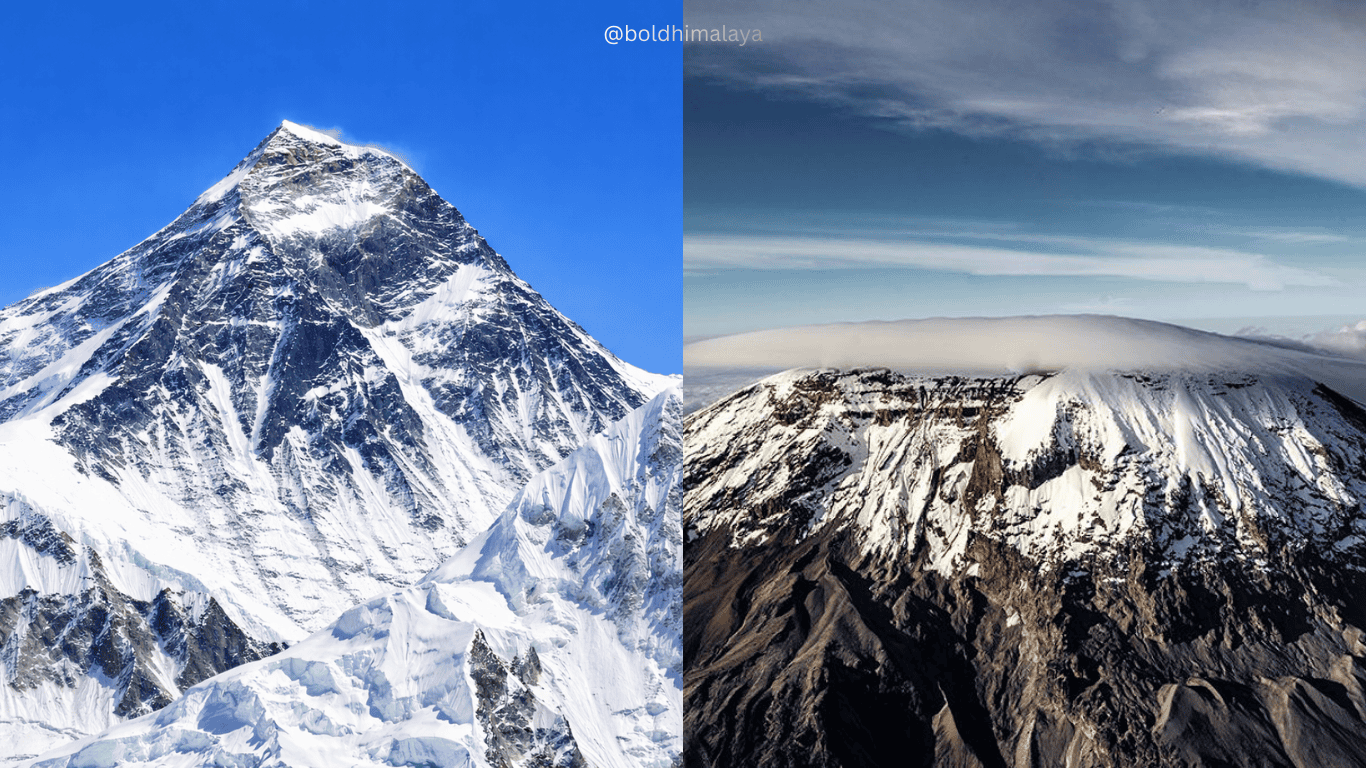
-
 Sobit Bhandari
 -
20 December, 2024
-
12 mins read
-
2160 Views
-
0 Comments


Introduction: Two Legendary Journeys, One Big Decision

Choosing between the Everest Base Camp Trek vs Kilimanjaro Climb is not just about picking a destination—it’s about choosing the kind of adventure you will remember for the rest of your life.
Imagine waking up in a Himalayan village, sipping hot tea as the first light hits Mount Everest. Prayer flags flutter in the wind, and the sound of distant yak bells fills the air or standing in freezing darkness on the final ascent of Mount Kilimanjaro, pushing your limits step by step, knowing that sunrise at the summit will be your reward.
Both are once-in-a-lifetime journeys. But they offer completely different experiences, challenges, and outcomes.
Choosing the wrong trek can turn your dream adventure into an exhausting struggle—this guide ensures you make the right decision.
Which is Better: Everest Base Camp Trek or Kilimanjaro Climb?
If you want a scenic, culturally rich journey with gradual trekking, the Everest Base Camp Trek is the better choice. If you prefer a shorter but more physically demanding challenge with a clear goal of reaching the summit, the Kilimanjaro climb is ideal.
In simple terms, Everest Base Camp focuses on the journey, while Kilimanjaro focuses on achievement.
Quick Verdict
The EBC Trek is the better choice if you want a complete Himalayan experience—culture, landscapes, and a gradual trekking journey.
Kilimanjaro is ideal if you want a physically demanding challenge with a clear goal: reaching the summit in a shorter time.
Quick Comparison
| Factor | Everest Base Camp | Kilimanjaro |
|---|---|---|
| Continent | Asia (Nepal) | Africa (Tanzania) |
| Difficulty | Moderate to Challenging | More Physical Demanding |
| Duration | 12-14 Days | 6-9 Days |
| Max Altitude | 5,364m | 5,895m |
| Cost | $1200-$3000 | $2000-$4000 |
| Accommodation | Teahouses, Better Facilities | Camping (Basic) |
| Cultural | Rich Sherpa Culture | Minimal |
| Experience | Scenic/Immersive | Goal Driven |
| Success Rate | Higher | Lower |
Everest Base Camp Trek Overview— The Heart of the Himalayas

The EBC Trek is one of the most iconic trekking experiences in the world, taking you deep into the Khumbu region of Nepal. Unlike a summit climb, this journey focuses on gradual exploration, allowing trekkers to experience the Himalayas step by step.
The journey to Everest Base Camp takes you through diverse landscapes, high-altitude villages, and culturally rich environments where the Sherpa way of life remains deeply rooted.
You’ll walk through:
- Namche Bazaar’s lively streets
- Ancient monasteries like Tengboche
- Suspension bridges over glacial rivers
Each day builds gradually, giving your body time to adjust and your mind time to absorb the beauty around you.
After days of steady trekking, you wake up early at Kala Patthar. The air is cold and silent. As the sun rises, Mount Everest slowly lights up in gold—this is the moment that makes every step worth it.
Verdict: Best for those who want a balanced journey of culture, scenery, and achievement.
Kilimanjaro Overview — Africa’s Highest Freestanding Peak

The Kilimanjaro Climb is a world-famous high-altitude adventure that takes you to the summit of Mount Kilimanjaro, the highest peak in Africa. Unlike Everest Base Camp, this experience is focused on reaching the top rather than the journey itself.
Located in Tanzania, this climb offers a unique progression through different ecological zones, making it one of the most diverse trekking environments in the world.
You pass through:
- Dense rainforest
- Open moorlands
- Alpine desert
- Arctic summit zone
Summit night begins in complete darkness. Every step feels heavier as you climb higher. But when the sun rises above the clouds at the top of Mount Kilimanjaro, the sense of achievement is unforgettable.
Verdict: Best for those who want a goal-driven challenge and summit achievement.
Difference Experience: Journey vs Summit
When comparing the Everest Base Camp Trek vs Kilimanjaro Climb, the biggest difference lies in the purpose of the journey. One is about immersing yourself in a region over time, while the other is about pushing your limits to achieve a specific goal.
The Everest Base Camp trek emphasizes exploration, culture, and gradual progression. In contrast, Kilimanjaro is structured around reaching the summit as efficiently as possible.
- Everest Base Camp = Journey & immersion
- Kilimanjaro = Challenge & achievement
Verdict: Choose Everest for experience, Kilimanjaro for accomplishment.
Which Trek is Harder?
Understanding difficulty is crucial when deciding between these two adventures. While both are physically demanding, the way the challenge is experienced is very different.
Kilimanjaro is generally harder due to:
- Rapid altitude gain
- Intense summit push
- Shorter acclimatization time
Everest Base Camp is more manageable because:
- Gradual ascent
- Built-in acclimatization days
- Steady trekking pace
Verdict: Kilimanjaro is more physically demanding, while Everest Base Camp is more manageable.
Scenery & Experience

Both treks offer incredible landscapes, but the type of scenery and overall experience differ significantly. Everest Base Camp combines natural beauty with cultural depth, while Kilimanjaro focuses more on raw environmental diversity.
Everest Base Camp offers:
- Himalayan peaks
- Glaciers and valleys
- Sherpa villages and monasteries
Kilimanjaro offers:
- Multiple climate zones
- Dramatic terrain changes
- Less cultural interaction
Verdict: EBC provides a richer and more immersive experience.
Time Duration
Time plays an important role when choosing between the Everest Base Camp Trek and Kilimanjaro. Your schedule and flexibility will directly impact which trek suits you better.
- Everest Base Camp: 12–14 days
- Kilimanjaro : 6–9 days
The longer duration of Everest allows for proper acclimatization and a more relaxed pace, while Kilimanjaro’s shorter duration demands more intensity.
Verdict: Choose Everest for a slower journey, Kilimanjaro if you’re short on time.
Cost Comparison
Budget is a key factor for many trekkers, and both adventures vary significantly in pricing depending on services and logistics.
- Everest Base Camp: $1200–$3000
- Kilimanjaro: $2000–$4000
Everest offers more flexibility with budget options, while Kilimanjaro costs are higher due to park fees and mandatory support teams.
Verdict: EBC is more budget-friendly and flexible.
Altitude & Safety
Altitude is one of the most critical challenges in high-altitude trekking. How your body adapts to elevation can determine your overall experience.
Everest Base Camp:
- Gradual ascent
- Better acclimatization
- Lower risk
Kilimanjaro Climb:
- Faster ascent
- Higher altitude
- Increased risk
Verdict: Everest Base Camp is safer in terms of altitude management.
Success Rate
Success rate is often overlooked, but it plays a major role in setting realistic expectations for your trek.
- Everest Base Camp → Higher success rate
- Kilimanjaro → Lower due to summit challenge
The structured acclimatization in Everest improves completion rates, while Kilimanjaro’s rapid climb reduces summit success.
Verdict: Everest is more achievable; Kilimanjaro is more demanding.
Best Time To Go
Choosing the right season can significantly impact your trekking experience. Weather conditions affect visibility, safety, and overall enjoyment.
Best Time For Everest Base Camp:
- Spring (March–May)
- Autumn (September–November)
Best Time For Kilimanjaro Climb:
- January–March
- June–October
Verdict: Both have ideal seasons, but Everest offers more consistent trekking conditions.
Permits & Logistics
Everest Base Camp Permits & Logistics
The Everest Base Camp Trek offers more flexibility in planning, allowing trekkers to organize their journey independently or with a guide. However, you’ll need to arrange permits and flights in advance.
- Requires Sagarmatha National Park Permit
- Requires Khumbu local permit
- Lukla flight needed to start the trek
- Guide is optional but recommended
- Flexible itinerary options
Kilimanjaro Permits & Logistics
The Kilimanjaro climb is highly regulated and must be done through a registered operator. Everything is usually arranged as part of a package, making the process more structured.
- All park permits included in the package
- Licensed guide is mandatory
- Full support crew (porters, cook, staff) required
- No independent trekking allowed
- Fixed routes and itineraries
Accommodation
Everest Base Camp Accommodation

Accommodation on the Everest Base Camp trek is relatively comfortable compared to high-altitude expeditions. Teahouses provide a warm and social environment after long trekking days.
- Stay in teahouses or mountain lodges
- Basic but comfortable rooms
- Shared dining areas with heating
- Opportunity to interact with other trekkers
- Charging and WiFi available in some areas
Kilimanjaro Climb Accommodation

Accommodation on Kilimanjaro is entirely camping-based, making the experience more rugged and physically demanding. Comfort is limited, but it adds to the adventure.
- Sleep in tents throughout the climb
- Campsites at designated locations
- No permanent lodges or buildings
- Support crew sets up and manages camps
- More exposed to weather conditions
Guide Requirement
Everest Base Camp Guide Requirement
Trekkers have the flexibility to choose whether to hire a guide, depending on their experience and confidence.
- Guide is optional but highly recommended
- Solo trekking is possible
- Porters available for support
- More independence during the trek
Kilimanjaro Climb Guide Requirement
Guides are mandatory on Kilimanjaro, and every trekker must be accompanied by a full support team.
- Licensed guide required by law
- Includes porters, cook, and crew
- No solo trekking allowed
- Fully supported expedition-style experience
Who Should Choose What
Choosing between these two treks depends on your expectations, fitness level, and the type of adventure you want.
Choose Everest Base Camp if you want:
- Scenic beauty and cultural immersion
- Comfortable trekking with gradual ascent
- Flexible travel experience
Choose Kilimanjaro Climb if you want:
- A physically demanding challenge
- A clear goal of reaching the summit
- A shorter, intense adventure
Conclusion

Both the Everest Base Camp Trek and the Kilimanjaro climb offer unforgettable adventures, but they cater to different types of travelers. Everest Base Camp is about enjoying the journey through culture and landscapes, while Kilimanjaro is about pushing your limits to achieve the summit. The right choice depends on your goals, time, and how you want to experience the mountains.
Ready To Plan Your Trek The Right Way?
Most trekkers make one critical mistake—they choose based on popularity, not suitability.
That’s why many end up:
- Struggling with altitude
- Feeling unprepared
- Not fully enjoying the journey
At Bold Himalaya, we don’t just sell treks—we help you choose the right adventure for you.
What you get:
- Personalized trek recommendations
- Expert local guidance
- Safe and well-planned itineraries
- 100% support from planning to completion
Still unsure which trek is right for you? Let our experts design your perfect adventure based on your fitness, time, and goals.
Start your journey with clarity, confidence, and expert support
FAQs
1. Is Everest Base Camp harder than Kilimanjaro
The Everest Base Camp Trek is generally considered less physically demanding than climbing Mount Kilimanjaro. While Everest Base Camp is longer in duration, it allows for gradual altitude gain and proper acclimatization, making it more manageable for most trekkers. In contrast, Kilimanjaro involves a faster ascent and a challenging summit push, often done overnight in extreme conditions, which makes it feel more intense and physically demanding.
2. Which trek has a higher success rate: Everest Base Camp or Kilimanjaro?
The Everest Base Camp Trek typically has a higher success rate because of its longer itinerary and built-in acclimatization days. Trekkers have more time to adjust to the altitude, reducing the risk of altitude sickness. On the other hand, the Kilimanjaro climb has a lower summit success rate due to rapid altitude gain and the physically demanding final ascent, which many trekkers find challenging.
3. Do I need prior trekking experience for Everest Base Camp or Kilimanjaro?
You do not necessarily need prior trekking experience for either the Everest Base Camp Trek or the Kilimanjaro climb. However, a good level of physical fitness is essential. Everest Base Camp is more suitable for beginners because of its gradual pace and better infrastructure, while Kilimanjaro is better suited for those who are prepared for a more intense physical challenge and high-altitude conditions.
4. Which trek is better for beginners?
For beginners, the EBC Trek is generally the better choice. It offers a more gradual ascent, well-established trails, and access to teahouse accommodations, which provide comfort and support along the way. In comparison, climbing Mount Kilimanjaro requires camping, a faster climb, and a more demanding summit push, making it more suitable for trekkers with stronger physical preparation.
5. Is altitude sickness a major risk on both treks?
Yes, altitude sickness is a potential risk on both the EBC Trek and the Kilimanjaro. However, the risk is generally better managed on Everest Base Camp due to its gradual ascent and scheduled acclimatization days. Kilimanjaro involves a quicker climb to a higher altitude, which increases the chances of altitude-related issues if proper preparation and pacing are not followed.
6. Which trek offers better scenery and overall experience?
The EBC Trek is widely considered to offer a richer and more diverse experience. It combines stunning Himalayan landscapes with cultural immersion, including Sherpa villages and monasteries. In contrast, Mount Kilimanjaro provides unique scenery through different ecological zones, but the experience is more focused on the climb itself rather than cultural and scenic diversity.
7. Can I do Everest Base Camp or Kilimanjaro solo?
You can trek to EBC independently, although hiring a guide is recommended for safety, navigation, and a better overall experience. However, climbing Mount Kilimanjaro independently is not allowed. All trekkers must be accompanied by licensed guides and a support crew, making it a fully guided expedition.
8. How long does it take to complete EBC vs Kilimanjaro?
The EBC Trek typically takes around 12 to 14 days, allowing for a gradual pace and proper acclimatization. The Kilimanjaro climb usually takes between 6 to 9 days, depending on the route chosen. While Kilimanjaro is shorter, it is more intense due to the faster altitude gain and summit push.
9. Which trek is more expensive: EBC or Kilimanjaro?
The Kilimanjaro climb is generally more expensive than the Everest Base Camp Trek. This is mainly due to high park fees, mandatory guides, and the need for a full support crew. Everest Base Camp offers more flexibility in pricing, allowing trekkers to choose different levels of service depending on their budget.
10. Which trek should I choose for my first high-altitude adventure?
If it’s your first high-altitude trek, the Everest Base Camp Trek is usually the better option. It provides a more gradual introduction to altitude, better infrastructure, and a more comfortable trekking experience. Kilimanjaro is better suited for those who are specifically aiming for a summit challenge and are prepared for a more physically demanding experience.
Comments (0)
Write a comment- Which is Better: Everest Base Camp Trek or Kilimanjaro Climb?
- Quick Verdict
- Quick Comparison
- Everest Base Camp Trek Overview— The Heart of the Himalayas
- Kilimanjaro Overview — Africa’s Highest Freestanding Peak
- Difference Experience: Journey vs Summit
- Which Trek is Harder?
- Scenery & Experience
- Time Duration
- Cost Comparison
- Altitude & Safety
- Success Rate
- Best Time To Go
- Permits & Logistics
- Accommodation
- Guide Requirement
- Who Should Choose What
- Conclusion
- Ready To Plan Your Trek The Right Way?
- FAQs
- 1. Is Everest Base Camp harder than Kilimanjaro
- 2. Which trek has a higher success rate: Everest Base Camp or Kilimanjaro?
- 3. Do I need prior trekking experience for Everest Base Camp or Kilimanjaro?
- 4. Which trek is better for beginners?
- 5. Is altitude sickness a major risk on both treks?
- 6. Which trek offers better scenery and overall experience?
- 7. Can I do Everest Base Camp or Kilimanjaro solo?
- 8. How long does it take to complete EBC vs Kilimanjaro?
- 9. Which trek is more expensive: EBC or Kilimanjaro?
- 10. Which trek should I choose for my first high-altitude adventure?
Read the latest Blogs & Insights
Explore our collection of articles and insights to gain in-depth travel knowledge, expert advice, and stay updated on the latest trends and tips.
View All Articles
Top 10 Best Treks in the World
23 Aug. 2026



No comments yet.