


Mount Everest Records by Country and Climber (Most Summits, Fastest Ascent, Age Records)
Mount Everest Records Overview Rising to 8,849 meters, Mount Everest poses an extreme test for those who climb. Following the ascent by Edmund Hillary and Tenzing Norgay in 1953, many individuals have made attempts on its peak. Physical limits are pushed here, alongside precise technique, where resolve is quietly measured. Climbers representing numerous countries aim […]
-
 Bold Himalaya
-
21 January, 2026
-
23 mins read
-
365 Views
-
0 Comments


Mount Everest Records Overview
Rising to 8,849 meters, Mount Everest poses an extreme test for those who climb. Following the ascent by Edmund Hillary and Tenzing Norgay in 1953, many individuals have made attempts on its peak. Physical limits are pushed here, alongside precise technique, where resolve is quietly measured. Climbers representing numerous countries aim for distinct milestones across its slopes.
Records on Everest climbs do more than mark achievements. Through time, they show how methods of ascent have shifted. Equipment advances become visible when reviewing past expeditions. Safety measures grow clearer with each documented season. Contributions emerge from diverse countries, shaping the story of altitude pursuits. Cultural roles surface within these summits reached. Trends in outdoor travel are closely to these logged attempts. Attention to nature often rises alongside climb statistics. Business interests increasingly appear in expedition details. Each number tells part of a larger pattern unfolding above the clouds.
Atop the highest point, adventurers challenge their limits where few dare to go. While some focus on quick ascents, a slower pace suits others just fine. Reaching the roof of the planet remains a rare goal for many. Data on those who’ve made the climb - frequency, timing, circumstances - reveals patterns behind effort and ambition. This record also reflects shifts in how people approach one of Earth’s last great heights.
Countries With the Most Mount Everest Summits
When looking at countries with the most Mount Everest summits, Nepal overwhelmingly leads global records, followed by the United States, China, India, and several European and Asian nations. These trends reflect how access, tradition, mountaineering culture, and guide roles shape who climbs Mount Everest.
Nepal — The Country With the Most Mount Everest Summits
Nepal has by far the highest number of people who have climbed Mount Everest and reached the summit.
According to The Himalayan Database, Nepal leads with the highest number of Everest summits. Nepalese climbers, especially Sherpas, account for the largest share of total Everest summit counts, with approximately 7,000+ successful ascents by Nepalese climbers and guides as of 2025. Their multiple repeat ascents, many Sherpas climb Everest several times each season, contribute significantly to this total.
Sherpa climbers are deeply connected with Everest, called Sagarmāthā in Nepal, not just culturally but economically, as guiding and mountaineering are central to many families’ livelihoods.
United States — High Participation and Summit Numbers
The United States ranks among the top countries whose citizens have climbed Mount Everest. American climbers account for over 800 successful summits recorded through 2025, making the U.S. one of the most represented nationalities after Nepal.
Historically, Western climbers from the U.S. helped popularize Everest expeditions from the 1960s onward, contributing to gear innovations and risk management practices that have influenced modern climbing strategies.
China — Summit Totals and theNorth Route
China also has a large mountaineering presence on Everest, primarily via the north route through Tibet. Chinese climbers, including Tibetan nationals, have completed several hundred summits, contributing to the global tally.
The Tibetan (China) route is officially managed by the China Mountaineering Association, and although it sees fewer overall summits than Nepal’s southern approach, it remains one of the main paths climbers use to reach Everest’s peak.
India — Growing Everest Participation
India also ranks among the leading countries with climbers who have climbed Mount Everest, with hundreds of successful summits recorded. This includes both military and civilian expeditions supported by the Indian Mountaineering Foundation and Indian armed forces units.
India’s early Everest successes date back to the 1960s, and since then, Indian climbers have maintained a strong presence on the mountain.
Other Countries With Notable Summit Counts
Beyond the top four, several countries also appear frequently in Everest’s summiting statistics:
- United Kingdom — with several hundred summits recorded.
- Japan — significant presence among Asian climbers.
- Russia — notable European participation.
- South Korea, Canada, France, Australia, Spain, and Germany all have climbers who have climbed Mount Everest multiple times.
These nations contribute to modern Everest record totals, and their climbers range from commercial guided expeditions to elite alpine alpinists.
Accurate Summary of Everest Summits by Country
| Country | Approximate Summit Count* (As of 2025) |
|---|---|
| Nepal | approx 7,000+ total successful summits by Nepalese climbers and guides |
| United States | ~800+ summits |
| China (including Tibet) | ~600+ summits |
| India | ~460+ summits |
| United Kingdom | ~260+ summits |
| Japan | ~200+ summits |
| Russia | ~200+ summits |
| Canada, France, Australia, South Korea, Spain, Germany | 100+ each |
Climbers With the Most Everest Records
Kami Rita Sherpa — Most Everest Ascents Ever
Kami Rita Sherpa holds the world record for the most Mount Everest ascents ever, with an extraordinary 31 successful summits to the peak. A native of Nepal’s Khumbu region, he has served for decades as a high-altitude guide, often completing multiple climbs in a single season.
His repeated victories on Everest reflect a lifetime of experience, physical resilience, and deep understanding of the mountain’s hazards. Sherpas like him are crucial to safe summit success for climbers from around the world.
Pasang Dawa Sherpa — Second Most Everest Summits
Pasang Dawa Sherpa ranks second among climbers with the most Everest records. He has reached the summit around 29 times, often guiding multiple expeditions each climbing season.
His long career mirrors that of Kami Rita, marked by persistence, expertise at high altitude, and repeated success on Everest’s demanding slopes.
Lhakpa Sherpa — Most Summits by a Woman
Lhakpa Sherpa holds the confirmed record for the most Everest summits by a woman, with 10 successful ascents. Her achievements stand out in Mount Everest records and among mountain climbers’ names globally, particularly given the economic and logistical challenges she overcame.
Reinhold Messner & Peter Habeler — Oxygen-Free Pioneers
In 1978, Reinhold Messner and Peter Habeler achieved one of the most iconic feats in Everest history: the first ascent without supplemental oxygen.
This breakthrough proved human physiology could cope with the extreme thin air at the summit. Two years later, Messner soloed Everest without oxygen, another historic milestone.
Babu Chiri Sherpa — Legendary Endurance and Summit Records
Babu Chiri Sherpa was a remarkable climber who reached the Everest summit 10 times and held important historical records, including the longest time spent at the summit (21 hours without supplemental oxygen) and one of the fastest ascents of his era (16 hours 56 minutes). His legacy remains significant in Everest record discussions.

Summary of Everest Climbing Records
| Record Type | Record Holder | Fact |
|---|---|---|
| Most Everest Ascents | Kami Rita Sherpa | 31 summits (2025) |
| Second Most Everest Ascents | Pasang Dawa Sherpa | ~29 summits |
| Most Ascent by a Woman | Lhakpa Sherpa | 10 summits |
| First Oxygen-Free Ascent | Reinhold Messner & Peter Habeler | 1978 |
| Longest Time at Summit (no O2) | Babu Chiri Sherpa | 21 hours |
Speed and Endurance Records on Mount Everest
Speed and endurance records on Mount Everest highlight how quickly some climbers have scaled the world’s highest mountain and the extreme physical and mental demands involved. These records depend heavily on altitude adaptation, weather windows, route knowledge, and oxygen use.
Fastest Ascent of Mount Everest (Base Camp to Summit)
The fastest verified ascent of Mount Everest from Nepal’s south side was set by Lhakpa (Lakpa) Gelu Sherpa, who climbed from **Everest Base Camp to the summit in 10 hours 56 minutes and 46 seconds in May 2003. This timing remains one of the most remarkable speed records on Mount Everest and is recognized by Guinness World Records.
Such rapid ascents require exceptional conditioning, deep route familiarity, and optimal weather conditions. Most climbers attempting speed ascents use supplemental oxygen to maintain mental clarity and physical strength at the highest elevations.
Fastest Known Oxygen-Free Climb
In 2017, Spanish mountaineer Kílian Jornet reached the summit from base camp in about 26 hours without supplemental oxygen, one of the fastest known oxygen-free climbs of Mount Everest.
Jornet’s ascent relied on extensive acclimatization and his background in endurance sports. Though widely reported, his time is sometimes discussed with debate among climbers because of differences in start points and verification standards.
Multiple Everest Summits in One Season
Some elite Sherpa guides have achieved the rare feat of summiting Mount Everest three times in a single climbing season. These repeated ascents usually occur in May, when the weather window for summit attempts is most stable. Guides descend back to base camp between climbs for brief recovery before leading a new expedition upward.
Back-to-Back Ascents of Everest and Lhotse
A remarkable endurance challenge for elite climbers is completing back-to-back ascents of Mount Everest and the nearby peak Lhotse within the same week. Together, these two climbs involve over 16,000 meters of vertical gain and require precise timing, well-adjusted acclimatization, and excellent weather windows to succeed.
Time Spent Above 8,000 Meters (The Death Zone)
Not all Mount Everest records focus on speed. Some milestones are defined by time spent above 8,000 meters, where the air contains extremely low oxygen levels, an area climbers refer to as the “death zone.”
Extended stays at this altitude can accelerate physical deterioration, increasing the risk of severe altitude illnesses, frostbite, or long-term damage. Years of medical observation have shaped modern climbing strategies, leading most teams to minimize time in the death zone and instead focus on planned acclimatization and safer summit pushes.
Notable Everest Endurance Highlights
- Longest stay on the Everest summit: Babu Chiri Sherpa spent 21 hours at the top in 1999 — a remarkable endurance achievement.
- Multiple summits in a week: Some Sherpas, like Kami Rita Sherpa, have completed two ascents within a short span of days.
- Fastest female ascent records continue to be updated, with climbers like Phunjo Lama setting new benchmarks for women.
Summary of Verified Everest Speed and Endurance Records
| Record Type | Climber | Route / Condition | Time |
|---|---|---|---|
| Fastest Everest ascent (Base Camp → Summit) | Lhakpa Gelu Sherpa | South side with oxygen | 10h 56m 46s (2003) |
| Fastest known oxygen-free Everest climb | Kílian Jornet | Base Camp ascent without oxygen | ~26 hours (2017) |
| Multiple summits in one season | Various Sherpa guides | South side | 3 summits in one season |
| Back-to-back Everest + Lhotse | Elite alpinists | Combined Everest & Lhotse ascent | ~7 days |
Everest Ascents Unaided by Extra Oxygen
Climbing Mount Everest without supplemental oxygen represents one of the most demanding challenges in high-altitude mountaineering. The region above 8,000 meters — often called the death zone — contains so little oxygen that even elite climbers struggle to breathe normally. In this zone, physical performance deteriorates quickly, and the risk of altitude illness rises sharply, making oxygen-free attempts among the most respected Everest records in climbing history.
Historic Milestone: First Oxygen-Free Everest Summit
In 1978, Reinhold Messner and Peter Habeler achieved what was long thought impossible: they reached the Everest summit without supplemental oxygen. Before their climb, many doctors and mountaineers believed that surviving at such extreme altitude without extra air was impossible.
Their success marked a major shift in how climbers approached the highest peaks and expanded the definition of Everest oxygen-free ascents.

Ed Viesturs — Oxygen-Free High-Altitude Record Holder
American climber Ed Viesturs stands out among high-altitude alpinists for reaching every mountain above 8,000 meters without supplemental oxygen, including Everest. Viesturs is known for his emphasis on safety and cautious decision-making, sometimes turning back when conditions were not ideal — demonstrating that restraint can be as important as stamina in oxygen-free climbing.
Anatoli Boukreev — Oxygen-Free Strength and Rescue Actions
Kazakhstani alpinist Anatoli Boukreev often led expeditions without supplemental oxygen, a choice that drew both admiration and debate among his peers. During the 1996 Everest disaster, Boukreev’s speed and endurance at high altitude — even without extra air — enabled him to help rescue several climbers. His actions reshaped discussions around Everest oxygen-free climbing and guide responsibilities.
Oxygen-Free Everest – Preparation and Acclimatization
Reaching the summit without supplemental oxygen requires extensive acclimatization. Most climbers spend weeks rotating between camps higher on the mountain to help the body adjust to thinning air.
While genetics may play a supportive role in altitude adaptation, steady acclimatization, physical conditioning, and experience are the most reliable factors in successful oxygen-free ascents. These efforts combine to form some of the most respected Everest records by climbers.
The Ongoing Debate: Oxygen or No Oxygen
Discussions about climbing Mount Everest without supplemental oxygen continue among mountaineers. Some argue that using oxygen lessens the achievement, while others highlight that extra air significantly reduces risk and makes the mountain more accessible to a broader range of climbers. Both perspectives have merit within climbing communities, and respect exists for achievements on either path.
Everest Age Milestones
Mount Everest holds remarkable age records, from the youngest climbers to the oldest summiters. These milestones highlight human potential at both ends of life’s spectrum and shape how age limits and safety policies are discussed in high-altitude climbing.
Youngest Climbers to Summit Mount Everest
The title of the youngest person to climb Everest belongs to Jordan Romero of the United States. He reached the summit on May 22, 2010, at 13 years, 10 months, and 10 days old, climbing via the north route from Tibet with his father and stepmother.
Before him, Ming Kipa Sherpa of Nepal summited at 15 years old in 2003 — though she climbed from the Tibet side because Nepali rules prohibit climbers under 16 on the Nepalese side of Everest.
Another notable age record is held by Malavath Poorna of India, who at 13 years, 11 months, 15 days, became the youngest female climber to reach the summit in 2014.
Today, most professional expeditions and authorities require climbers to be at least 16 years old to obtain permits on the Nepali side, a policy partly shaped by age-related safety concerns.

Oldest Climbers on Mount Everest
One of the most remarkable and oldest climber records on Everest is held by Yūichirō Miura of Japan. On May 23, 2013, he stood atop Everest at 80 years old, making him the oldest person to summit the world’s highest mountain.
Before Miura’s 2013 climb, Min Bahadur Sherchan of Nepal held the record at 76 years old in 2008. Sherchan later attempted to regain this record and died at base camp in 2024 while preparing another ascent.
There is no formal maximum age limit for climbing Everest, but health checks and physical evaluations are standard parts of expedition preparation, especially for older climbers.
Why Everest Age Records Matter
Age milestones on Everest draw global interest because they illustrate:
- How youthful determination can achieve extraordinary feats
- How older climbers continue to pursue goals safely
- How climbing policies adapt to safety concerns
- How experience and fitness, not just age, shape success on extreme peaks
Age records also highlight differences in permit requirements between countries — for example, Nepal’s minimum age limit versus the absence of a specific lower limit on the Tibet (China) route.
Unusual and Scarce Mount Everest Feats
Mount Everest not only tests climbers who seek the summit, but also serves as the backdrop for some of the rarest, unusual, and record-setting achievements in high-altitude exploration. These feats go beyond ordinary ascents, showing how individuals have pushed the boundaries of what’s possible on Earth’s tallest mountain.
First Full Ski Descent From Mount Everest Summit
In October 2000, Slovenian extreme skier Davo Karničar made history by becoming the first person to ski nonstop from the summit of Mount Everest to base camp on skis. Starting at 8,848 m (29,029 ft), he descended more than 3,500 m (11,500 ft) down the mountain without removing his skis. Karničar’s run took about five hours, and he navigated hazardous snow conditions and steep terrain on the south (Nepal) side.
This full ski descent remains one of the most uncommon Mount Everest feats because of the technical difficulty, danger, and difficult conditions that keep it rare even decades later.
Reinhold Messner — Solo Ascent and Oxygen-Free Climb
One of the greatest achievements in mountain history took place in 1980, when Reinhold Messner completed the first solo ascent of Mount Everest without supplemental oxygen. Leaving base camp alone and navigating extreme terrain over several days, his climb redefined what was considered possible at high altitude. Messner had earlier, with Peter Habeler in 1978, completed the first Everest ascent without bottled oxygen, fundamentally changing the definition of elite mountaineering.
Both feats, oxygen-free ascent and solo climb, stand among the most legendary in Everest record history.
First Ascent by Edmund Hillary and Tenzing Norgay
The first successful climb of Mount Everest remains one of the most historic achievements in mountaineering. On May 29, 1953, Edmund Hillary (New Zealand) and Tenzing Norgay (Nepal) reached the summit via the South Col route. Their success proved that the highest point on Earth was climbable with the technology and skill of the time, and it marked a turning point in Himalayan exploration.
This milestone is often celebrated as the beginning of modern Everest ascents and continues to inspire climbers worldwide.
First Woman to Climb Everest — Junko Tabei
In 1975, Junko Tabei of Japan became the first woman to reach the summit of Mount Everest. Her achievement was significant not only for mountaineering but also for expanding opportunities for women in extreme adventure sports. Though she faced resistance within the climbing community, Tabei’s summit helped open doors for countless female climbers afterward.
Tabei’s success is frequently highlighted in lists of notable Everest achievements and records.
First Blind Person to Summit Everest — Erik Weihenmayer
Another rare feat in Everest history occurred in May 2001, when Erik Weihenmayer became the first blind individual to climb Mount Everest. His climb required precise communication and teamwork, emphasizing that adaptive strategies and shared responsibility are vital to success on dangerous high-altitude terrain.
Weihenmayer’s accomplishment is included among unusual Mount Everest records because it redefined expectations for climbers with disabilities.

The 1996 Mount Everest Disaster and What Happened After
The 1996 Mount Everest disaster is one of the deadliest and most discussed events in mountaineering history. During the May 10–11, 1996, Everest storm, a sudden weather change trapped multiple climbers near the summit, leading to the deaths of eight people within hours. The event exposed the dangers of commercial expeditions and sparked major debates about safety on Everest.
What Caused the 1996 Everest Disaster?
Several factors combined to create the tragedy:
- Severe Weather and Sudden Storms
A powerful storm developed unexpectedly, reducing visibility to near zero and causing extreme wind speeds. Climbers became disoriented, and many were forced to stop in the death zone (above 8,000 meters), where the body cannot recover.
- Overcrowding and Delays
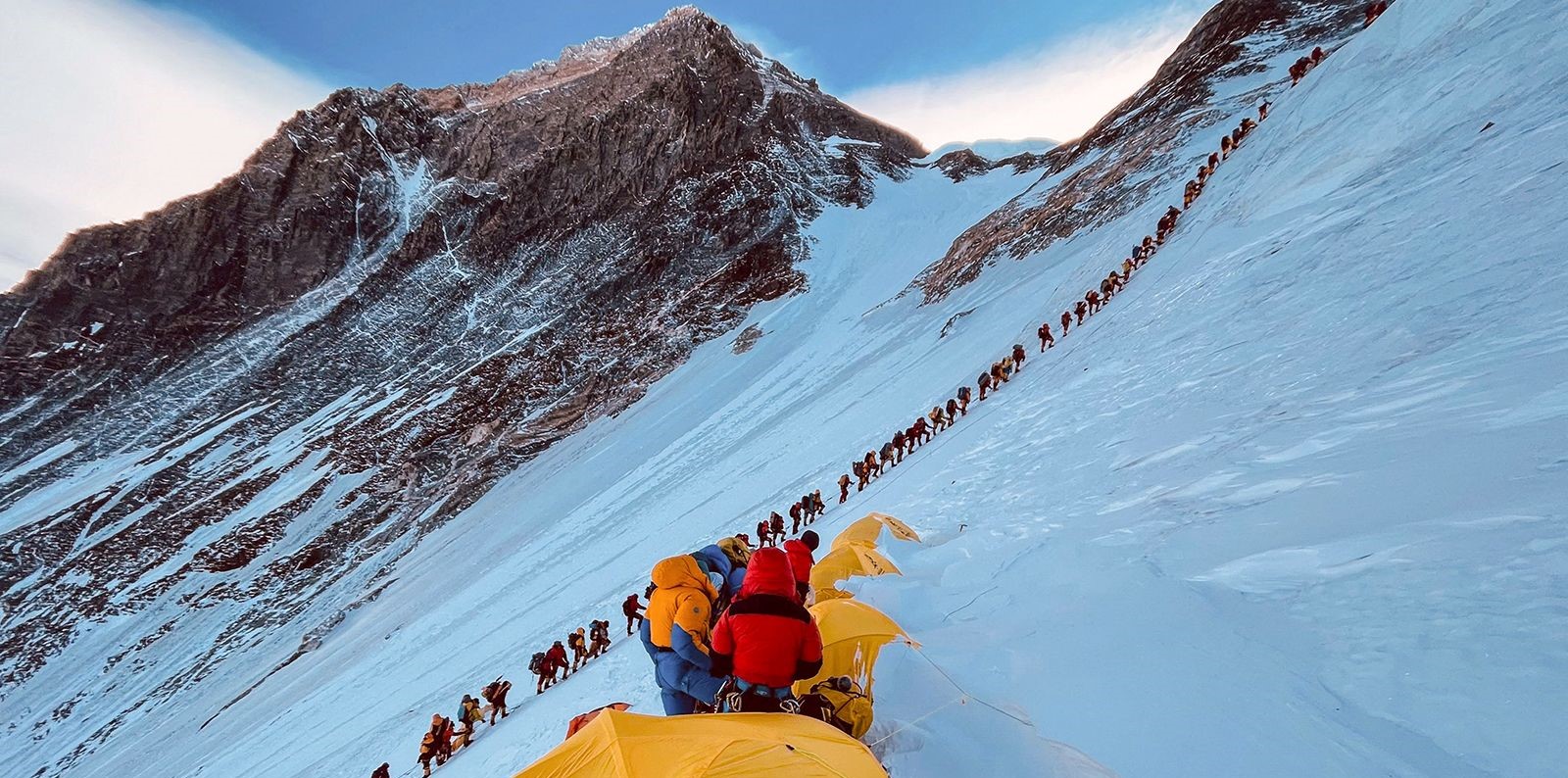
Many climbers were waiting in long lines near the summit. This caused dangerous delays, especially because weather windows on Everest are very short. When the storm hit, climbers had less time to return safely.
- Poor Decision-Making
Several teams continued toward the summit despite worsening conditions. Fatigue and low oxygen levels affected judgment, leading to critical errors in decision-making.
- Miscommunication Between Teams
Guides and climbers were separated by terrain and weather, causing confusion. Radios were limited, and communication failures became fatal.
Major Deaths in the 1996 Everest Disaster
Two of the most well-known climbers who died were:
- Rob Hall (New Zealand) – guide and leader of Adventure Consultants
- Scott Fischer (USA) – leader of Mountain Madness
Their deaths became symbolic of the risks of commercial guiding and the pressure to reach the summit.
The Role of “Into Thin Air” and Public Reaction
The disaster gained global attention after journalist Jon Krakauer published Into Thin Air, a personal account of the tragedy. The book raised questions about:
- Ethics of commercial Everest expeditions
- Safety standards
- The role of guides
- High-altitude decision-making
Other survivors, including Anatoli Boukreev, later published books defending their actions and offering alternate perspectives. These accounts created long-term debate among climbers and historians.

Anatoli Boukreev’s Role in the 1996 Everest Tragedy
Russian guide Anatoli Boukreev is widely recognized for rescuing climbers during the storm. Despite climbing without supplemental oxygen, he helped several climbers reach safety. His actions remain controversial, but his rescue efforts are considered heroic by many.
What Changed After the 1996 Everest Disaster?
The tragedy led to major improvements in Everest safety:
- Better weather forecasting
- Improved satellite communication
- Higher standards for guides and expedition teams
- Stricter safety policies by expedition companies
Despite these changes, Everest's overcrowding and commercialization remain major problems.
Why the 1996 Everest Disaster Still Matters Today
The 1996 Everest disaster proved that even experienced climbers and guides cannot control the mountain. It remains a reminder that Mount Everest is unpredictable, and even the best preparation can fail in extreme conditions.
Everest climbs today and how records shift
Mount Everest climbing has changed dramatically since the first successful ascent in 1953. Everest climbs today look very different from those early expeditions — shaped by advancements in technology, evolving safety rules, commercial guiding, and growing numbers of climbers each season.
Modern Tools, Technology, and Safety
Today’s climbers rely on satellite communication, GPS tracking, and lighter technical gear that improves navigation and safety compared with older methods. Equipment such as advanced boots, lighter tents, and efficient breathing systems makes high-altitude expeditions more manageable. Knowledge of how the human body reacts at extreme elevation continues to improve, helping teams plan better acclimatization and safer summit pushes.
These developments contribute to higher Everest summit success rates, but they also raise questions about the meaning of reaching the top when support systems can carry significant parts of the load.
Commercial Guiding and Changes in Climbing Culture
One of the biggest shifts in Everest climbs today is the growth of commercial guide services. Climbers willing to pay substantial fees gain access to professionally supported expeditions where Sherpa guides prepare routes, fix ropes, transport gear, manage camps, and handle logistics. This has opened Everest to a wider range of adventurers, including those without extensive climbing backgrounds.
Some climbers argue that this trend changes the nature of Everest summit records. Others say that without such support, many successful ascents, especially by foreign climbers, would not occur.
Everest Overcrowding and Permit Changes
Overcrowding on Mount Everest has become a serious issue, especially during the narrow spring climbing window. Nepal has issued hundreds of climbing permits each season, leading to large numbers of climbers and guides on the mountain at the same time.
To address safety and overcrowding concerns, Nepal has proposed new permit rules, including experience requirements such as previous 7,000-meter climbs. These rules are intended to improve climber safety and reduce dangerous congestion near the summit.
Permit fees have also increased in recent years, partly to manage overcrowding and fund mountain management efforts.
Climate Change and Environmental Impact
Climate change is reshaping the physical landscape of Everest and affecting climbing conditions. Warming temperatures have made the Khumbu Icefall more unstable, increasing avalanche risks and shifting routes. Glacier thinning exposes hidden crevasses and forces frequent rerouting of ladders and paths.
Environmental concerns extend beyond safety. Tons of leftover gear, oxygen canisters, and human waste accumulate each season, stressing the fragile alpine ecosystem. To reduce waste, Nepal has introduced the Clean Everest initiative. Climbers must pay a garbage deposit that is refunded when they bring back trash from the mountain. Although cleanup programs exist, enforcement and waste collection remain challenging due to high traffic and extreme conditions.

Shifting Records and Climbing Trends
Even with increased traffic, record-breaking climbs still occur. Everest climbing trends now include:
- faster summit attempts
- Repeated ascents by elite Sherpas
- oxygen-free climbs
- lightweight expeditions
- record attempts for age and speed
These trends show how Everest record holders continue to push boundaries, even as the mountain becomes more crowded.
Future of Everest Climbing
Uncertainty surrounds the future of Everest climbing. Permit reforms, safety regulations, and environmental conservation may shape who climbs and how often. Changing permit requirements and experience minimums could reduce overcrowding and improve safety, but they also raise questions about access and equity.
The balance between preserving Everest’s natural condition and allowing people to reach one of the world’s most iconic summits remains the central issue. Money from climbing supports Nepal’s economy, yet ecological degradation and safety concerns continue to push authorities toward stricter regulations and better mountain stewardship.
Frequently Asked Questions
1. Country with the Most Mount Everest Summits?
Among nations, Nepal leads in Everest ascents by a wide measure. This edge comes from Sherpa mountaineers, whose work guiding climbs allows repeated trips to the peak over time.
2. Most climbs of Mount Everest by one person?
Kami Rita Sherpa stands ahead, having reached the summit over 30 times by 2024. Each climbing season brings another ascent, pushing further beyond previous marks.
3. The Fastest Climb Up Mount Everest?
Faster than most, Lakpa Gelu Sherpa reached the peak from base camp in about 10 hours and 56 minutes in 2003. With extra oxygen aiding his climb, he completed the rise quicker than any before him. This record was set from base camp to summit, not from Everest’s base to the top.
4. Everest summit without oxygen use?
In 1978, Reinhold Messner and Peter Habeler became the first climbers to reach the summit without supplemental oxygen.
5. Who is the youngest person to climb Everest?
Jordan Romero (USA) reached the summit at age 13 in 2010. After that, Nepal changed its rules to require climbers to be at least 16 years old.
6. Who is the oldest person to climb Everest?
At eighty, Yuichiro Miura from Japan stood atop the peak in 2013 - holding today’s mark for eldest ascent. Though many attempt, few reach such heights late in life; his climb remains unmatched since that May morning. While age often slows progress, preparation allowed him a steady footing where others turn back. The mountain does not favor names or nations; it responds only to persistence. His achievement stands quiet amid roaring winds and thin air, a fact without fanfare.
7. What happened in the 1996 Everest disaster?
On May 10–11, 1996, eight climbers died during a sudden storm. Several guided teams were trapped near the summit, leading to major safety reforms and global scrutiny of commercial expeditions.
8. Is Skiing Down Mount Everest Possible?
Yes. The first full ski descent was completed by Davo Karničar in 2000, and several climbers have since completed similar descents.
9. How many people have climbed Everest?
As of the mid-2020s, more than 10,000 climbers have successfully reached Everest’s summit. The number increases every year due to commercial expeditions and improved gear.
10. What is the death rate on Mount Everest?
The death rate on Everest is approximately 1–2% of all climbers who attempt the summit. Risks include altitude sickness, avalanches, and extreme weather.
11. What is the most dangerous route on Everest?
The South Col route (Nepal side) is often considered the most dangerous due to the Khumbu Icefall, where shifting ice can cause deadly collapses. This route has high objective hazards such as avalanches and icefall collapses, even though the climbing sections are technically easier.
The North Ridge route (Tibet side) is technically harder but more stable. It has fewer avalanches, but greater wind exposure and colder temperatures, making it dangerous in a different way.
12. What is the highest number of Everest summits by a woman?
The highest number of Everest summits by a woman is 10, held by Lhakpa Sherpa. She is recognized as the female climber with the most Everest ascents.
Comments (0)
Write a comment- Mount Everest Records Overview
- Countries With the Most Mount Everest Summits
- Nepal — The Country With the Most Mount Everest Summits
- United States — High Participation and Summit Numbers
- China — Summit Totals and theNorth Route
- India — Growing Everest Participation
- Other Countries With Notable Summit Counts
- Accurate Summary of Everest Summits by Country
- Climbers With the Most Everest Records
- Kami Rita Sherpa — Most Everest Ascents Ever
- Pasang Dawa Sherpa — Second Most Everest Summits
- Lhakpa Sherpa — Most Summits by a Woman
- Reinhold Messner & Peter Habeler — Oxygen-Free Pioneers
- Babu Chiri Sherpa — Legendary Endurance and Summit Records
- Summary of Everest Climbing Records
- Speed and Endurance Records on Mount Everest
- Fastest Ascent of Mount Everest (Base Camp to Summit)
- Fastest Known Oxygen-Free Climb
- Multiple Everest Summits in One Season
- Back-to-Back Ascents of Everest and Lhotse
- Time Spent Above 8,000 Meters (The Death Zone)
- Notable Everest Endurance Highlights
- Summary of Verified Everest Speed and Endurance Records
- Everest Ascents Unaided by Extra Oxygen
- Historic Milestone: First Oxygen-Free Everest Summit
- Ed Viesturs — Oxygen-Free High-Altitude Record Holder
- Anatoli Boukreev — Oxygen-Free Strength and Rescue Actions
- Oxygen-Free Everest – Preparation and Acclimatization
- The Ongoing Debate: Oxygen or No Oxygen
- Everest Age Milestones
- Youngest Climbers to Summit Mount Everest
- Oldest Climbers on Mount Everest
- Why Everest Age Records Matter
- Unusual and Scarce Mount Everest Feats
- First Full Ski Descent From Mount Everest Summit
- Reinhold Messner — Solo Ascent and Oxygen-Free Climb
- First Ascent by Edmund Hillary and Tenzing Norgay
- First Woman to Climb Everest — Junko Tabei
- First Blind Person to Summit Everest — Erik Weihenmayer
- The 1996 Mount Everest Disaster and What Happened After
- What Caused the 1996 Everest Disaster?
- Major Deaths in the 1996 Everest Disaster
- The Role of “Into Thin Air” and Public Reaction
- Anatoli Boukreev’s Role in the 1996 Everest Tragedy
- What Changed After the 1996 Everest Disaster?
- Why the 1996 Everest Disaster Still Matters Today
- Everest climbs today and how records shift
- Modern Tools, Technology, and Safety
- Commercial Guiding and Changes in Climbing Culture
- Everest Overcrowding and Permit Changes
- Climate Change and Environmental Impact
- Shifting Records and Climbing Trends
- Future of Everest Climbing
- Frequently Asked Questions
- 1. Country with the Most Mount Everest Summits?
- 2. Most climbs of Mount Everest by one person?
- 3. The Fastest Climb Up Mount Everest?
- 4. Everest summit without oxygen use?
- 5. Who is the youngest person to climb Everest?
- 6. Who is the oldest person to climb Everest?
- 7. What happened in the 1996 Everest disaster?
- 8. Is Skiing Down Mount Everest Possible?
- 9. How many people have climbed Everest?
- 10. What is the death rate on Mount Everest?
- 11. What is the most dangerous route on Everest?
- 12. What is the highest number of Everest summits by a woman?
Read the latest Blogs & Insights
Explore our collection of articles and insights to gain in-depth travel knowledge, expert advice, and stay updated on the latest trends and tips.



No comments yet.