




Everest Base Camp Trek with Island Peak Climbing


Everest Base Camp Trek with Island Peak Climbing Itinerary
Your Journey, Step by Step
Arrival in Kathmandu (1,350 m / 4,429 ft) – Gateway to Your Everest Adventure
Your Everest Base Camp (EBC) Trek with Island Peak Climbing begins as soon as you arrive at Tribhuvan International Airport (TIA) in Kathmandu. A Bold Himalaya representative will greet you at the arrivals terminal and transfer you by private vehicle to your 3-star hotel in Thamel, the city’s hub for trekking and adventure travel.
After checking in, a mandatory high-altitude gear inspection ensures you have essentials such as −20°C down jackets, glacier glasses, and crampons; our team can assist with rentals or purchases if needed.
The day concludes with a detailed 2026 Lukla flight briefing, covering possible diversions to Ramechhap (Manthali) Airport and finalizing departure logistics, ensuring your trek to the Himalayas starts smoothly and safely.
Flight to Lukla (2,860 m / 9,383 ft) & Trek to Phakding (2,610 m / 8,563 ft)
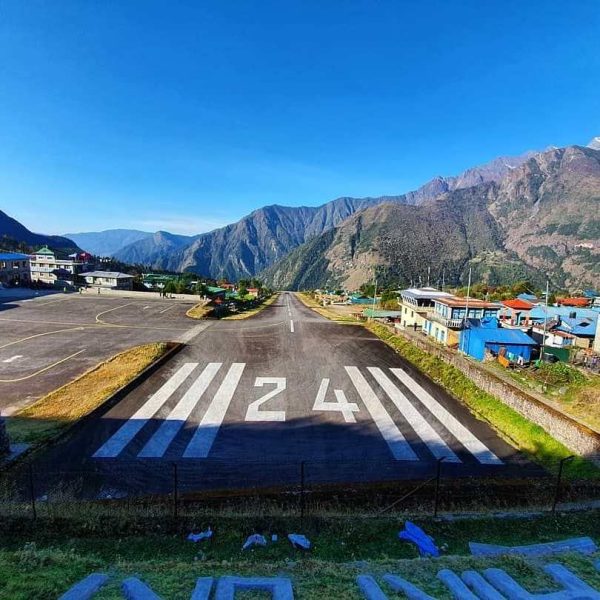
The Everest Base Camp (EBC) Trek with Island Peak Climbing begins with the iconic scenic flight from Kathmandu to Lukla’s Tenzing-Hillary Airport. While most flights depart directly from Tribhuvan International Airport, during peak trekking seasons (March–May and September–November), flights may be rerouted via Ramechhap (Manthali) Airport to avoid congestion.
The 35-minute flight offers breathtaking aerial views of the Himalayas, introducing you to the towering peaks of the Khumbu region. Upon landing, you’ll register at the Lukla Tourism Checkpoint before starting the trek. Passing through the Pasang Lhamu Sherpa Memorial Gate, the trail gently descends toward Thalsaroa.
Along the route, you’ll enjoy panoramic views of Mt. Kusum Kanguru (6,367 m), cross the suspension bridge over Thado Khola with Mt. Khumbila in the background, and walk through traditional Sherpa villages like Chheplung and Ghat. Carved Mani stones, prayer wheels, and small gompas add cultural depth, making this first 2-hour trek to Phakding a perfect introduction to the Himalayan landscape and Sherpa heritage. Here, you’ll spend your first night, acclimatizing and soaking in the unique atmosphere of the Everest region.
Phakding to Namche Bazaar (3,440m/11,286ft) Trek
The trek from Phakding to Namche Bazaar is one of the most scenic yet physically demanding days on the Everest Base Camp (EBC) trek, marking your official entry into Sagarmatha National Park, a UNESCO World Heritage Site. The trail follows the banks of the Dudh Koshi River, passing through traditional Sherpa villages such as Rimijung, Zamfute, Benkar, and Chhamuwa, where you first register your local entry card.
At Monjo village, your Sagarmatha National Park permit is checked before the trail continues to the confluence of the Bhote Koshi and Dudh Koshi rivers. After crossing the iconic Tenzing–Hillary Suspension Bridge, the route begins the challenging “Namche Hill”, a steady 2 to 3-hour zigzag ascent through pine forests.
Walking slowly is essential here to help your body adjust to the increasing altitude. On a clear day, a brief stop along the climb rewards you with your first glimpse of Mount Everest, framed by Lhotse and Nuptse.
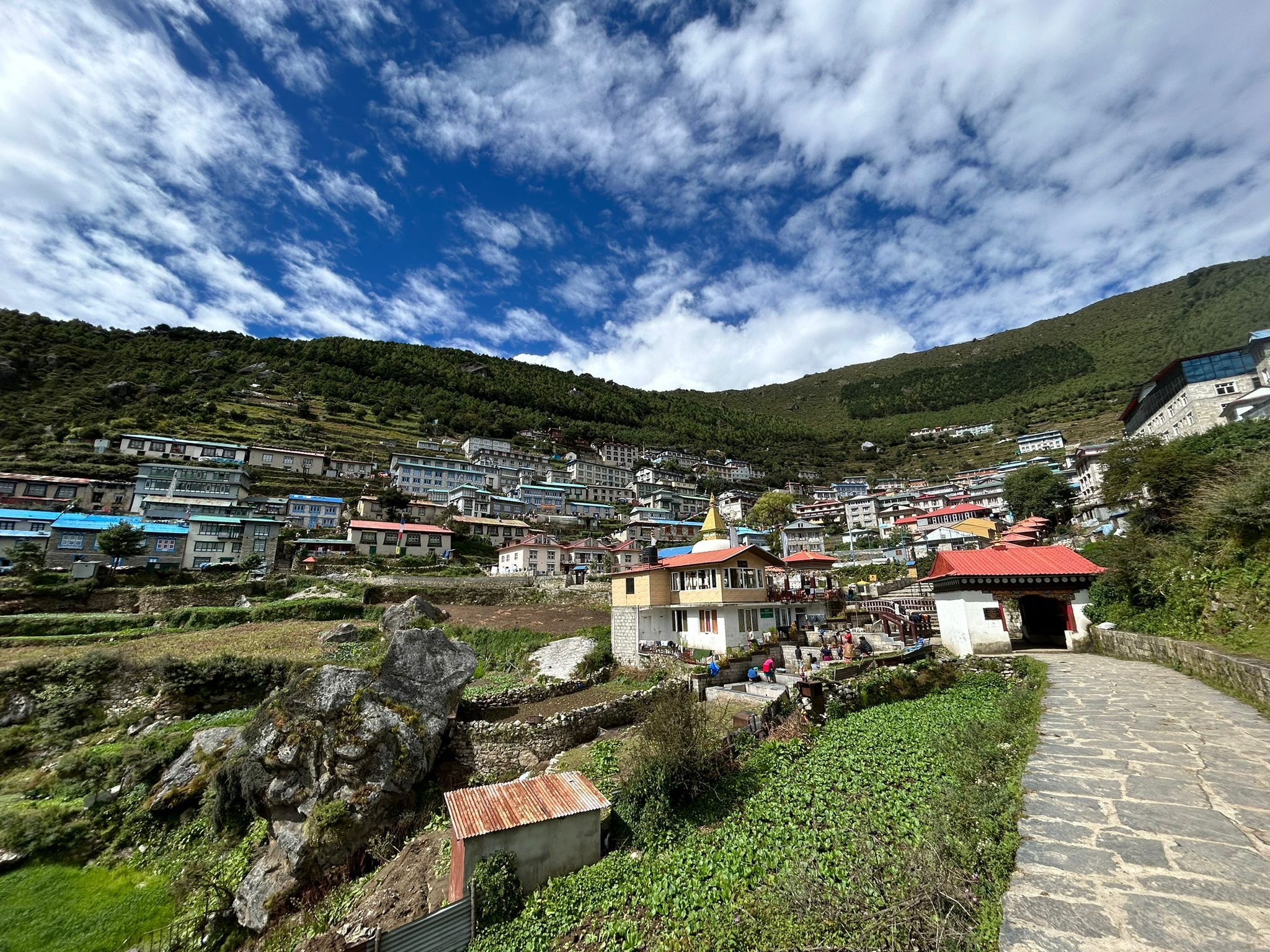
The day concludes with your arrival at Namche Bazaar, the vibrant commercial and cultural hub of the Khumbu region, where teahouses, bakeries, and gear shops provide comfort and a perfect setting for acclimatization. The total trekking time today is approximately 5–6 hours, combining natural beauty, cultural immersion, and an important altitude gain

Acclimatization Day in Namche Bazaar (3,440 m / 11,286 ft)
Today is a crucial acclimatization day on the Everest Base Camp (EBC) trek with Island Peak climbing, following the proven principle of “climb high, sleep low.” Rather than resting completely, you take a purposeful hike to higher elevations to help your body adapt to thinning oxygen and prepare for the 6,189 m Island Peak summit.
The day begins with a steady uphill walk from Namche Bazaar toward the Syangboche area, offering expanding views of Thamserku, Kangtega, and the iconic Ama Dablam.
The highlight is a visit to the famous Everest View Hotel (3,880 m), one of the highest hotels in the world, where clear-weather conditions reward you with stunning views of Everest, Lhotse, and Nuptse while gaining valuable altitude exposure.
From here, the trail continues to the traditional Sherpa village of Khumjung, home to the historic Khumjung Monastery, known for its cultural artifacts and the Hillary School, symbolizing Sir Edmund Hillary’s legacy in the region. After completing this acclimatization loop, you descend back to Namche Bazaar for the afternoon.
The rest of the day is free to explore local markets, visit the Sherpa Culture Museum, enjoy a café or bakery, and make any final gear or ATM stops before heading deeper into the remote upper Khumbu. This balanced acclimatization strategy significantly improves summit success and altitude safety for the days ahead.

Namche Bazaar to Tengboche (3,870m/12,697ft)
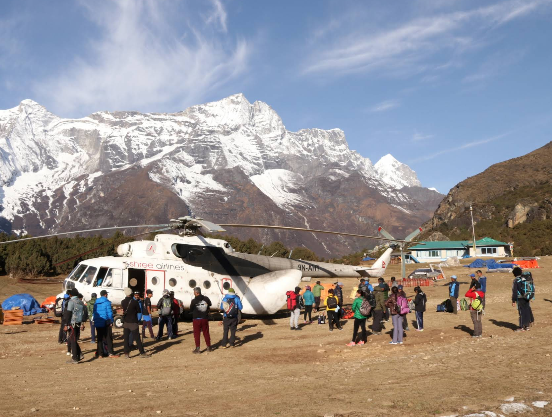
Day 5 of the Everest Base Camp trek is one of the most scenic and rewarding trekking days in the Khumbu region. The journey begins from Namche Bazaar, following the famous Everest View trail, often called the Everest Highway.
As you trek, the trail gently traverses high above the Dudh Koshi Valley, passing through alpine landscapes where Himalayan tahr and colorful Danphe (Nepal’s national bird) are sometimes spotted. The route then descends steeply through rhododendron and pine forests to Phunki Thenga (3,250 m), a peaceful riverside settlement known for its large, water-powered prayer wheels. This is the main lunch stop and the lowest point of the day.
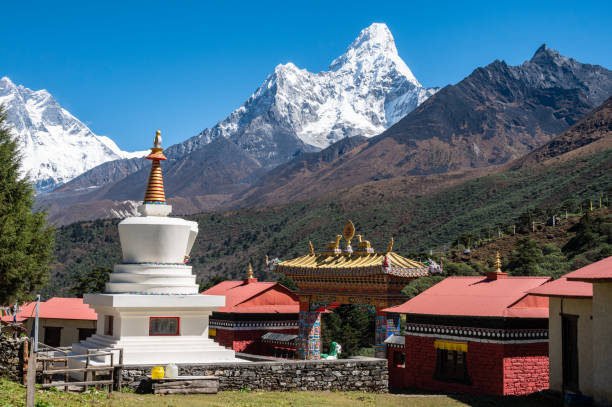
After lunch, the trail begins a steady uphill climb toward Tengboche, gaining altitude through shaded forests of fir and pine. This ascent is gradual but sustained, making it an important acclimatization walk. The climb ends at a wide alpine meadow where the famous Tengboche Monastery stands, surrounded by towering Himalayan peaks.
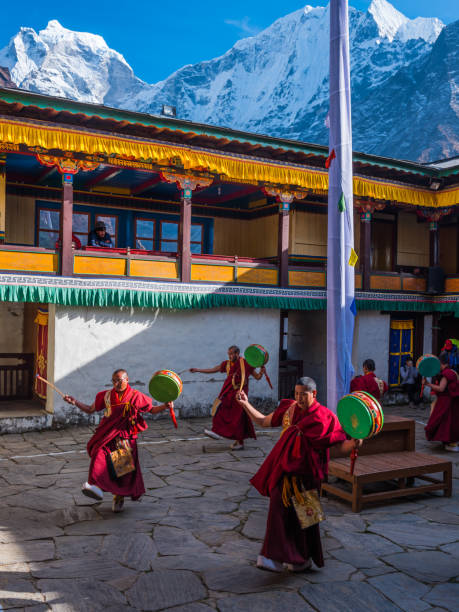
Tengboche is the spiritual heart of the Everest region and home to the largest monastery in Khumbu. If time permits, trekkers can attend the monks’ afternoon prayer ceremony, offering a meaningful cultural and spiritual experience. Overnight stay in Tengboche, enjoying a serene mountain atmosphere and unforgettable Himalayan scenery.
Tengboche to Dingboche
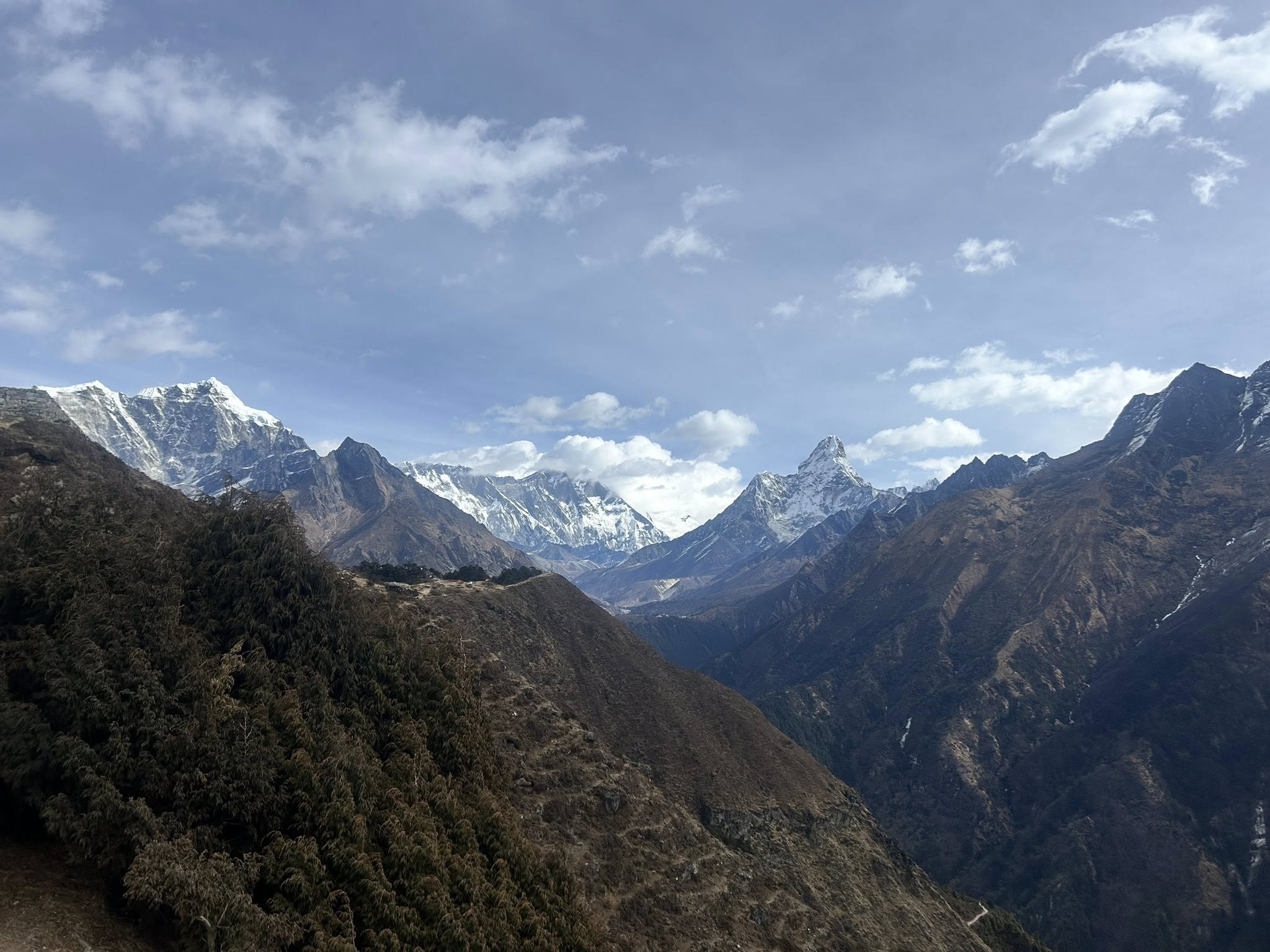
The Tengboche to Dingboche trek is a key high-altitude day on the Everest Base Camp trek with Island Peak climbing, as you move above the tree line into the alpine landscape of the Khumbu region. The day begins with a gentle descent from Tengboche through rhododendron and birch forests to Debuche, passing a quiet Buddhist nunnery. After crossing the Imja Khola via a suspension bridge, the trail climbs steadily to Pangboche, the highest permanent Sherpa settlement, known for its historic monastery and dramatic close-up views of Ama Dablam.
From Pangboche, the route enters the wide and windy Imja Valley, where the terrain becomes dry and rugged, signaling true high-altitude trekking conditions. After a gradual walk past Somare, you reach Dingboche, a sunny acclimatization village surrounded by stone-walled fields that protect crops from strong mountain winds. Dingboche is a crucial stop for proper acclimatization and preparation for higher elevations on the Everest Base Camp trail and the Island Peak summit push.
Note: Reaching 4,410m is a major milestone. This is the altitude where oxygen levels are roughly 60% of sea level. You may feel a slight “tightness” in your chest or a mild headache. This is normal, but it’s why we have scheduled a second acclimatization day here tomorrow.
Trek from Dingboche to Lobuche
Today’s trek takes you higher into the Khumbu high-altitude zone, with thinner air and dramatically rugged landscapes as you approach the base of the world’s tallest peaks. The morning starts with a steady ascent across the wide, treeless valley. On your left, you’ll see towering peaks like Taboche and Cholatse. After about two hours, you arrive at Thukla, a small settlement at the edge of the Khumbu Glacier.
From Thukla, a steep hour-long climb takes you to the ridge at 4,830 m, home to stone memorials (Chortens) honoring climbers and Sherpas who lost their lives on Everest. Surrounded by prayer flags and the towering mountains, this is a humbling and reflective spot.
Descending slightly from the pass, the trail follows the rocky lateral moraine of the Khumbu Glacier, with iconic views of Mt. Nuptse and Pumori ahead. The rugged terrain emphasizes the high-altitude environment.
Nestled under Lobuche East, the small cluster of teahouses offers a place to rest and acclimatize. The sunset here casts a golden glow on the surrounding peaks, a stunning reward after a day of high-altitude trekking.
Trek from Lobuche to Gorak Shep (5,170 m / 16,961 ft) & Everest Base Camp (5,364 m / 17,598 ft)
Today is the pinnacle of your Everest Base Camp trek, as you move from Lobuche to Gorak Shep, the highest permanent settlement in the Khumbu region, before visiting the legendary Everest Base Camp (EBC). This day blends technical trekking with a psychological milestone: standing at the foot of the world’s highest peak.
Everest Base Camp Trek with Island Peak Climbing journey begins on the rugged lateral moraine of the Khumbu Glacier, navigating short, steep sections, boulders, and frozen streams. Oxygen levels are roughly 50% of sea level, so trekking slowly and maintaining proper hydration is crucial. Along the way, you’ll enjoy close-up views of Lhotse, Nuptse, Pumori, and the surrounding Himalayan giants.
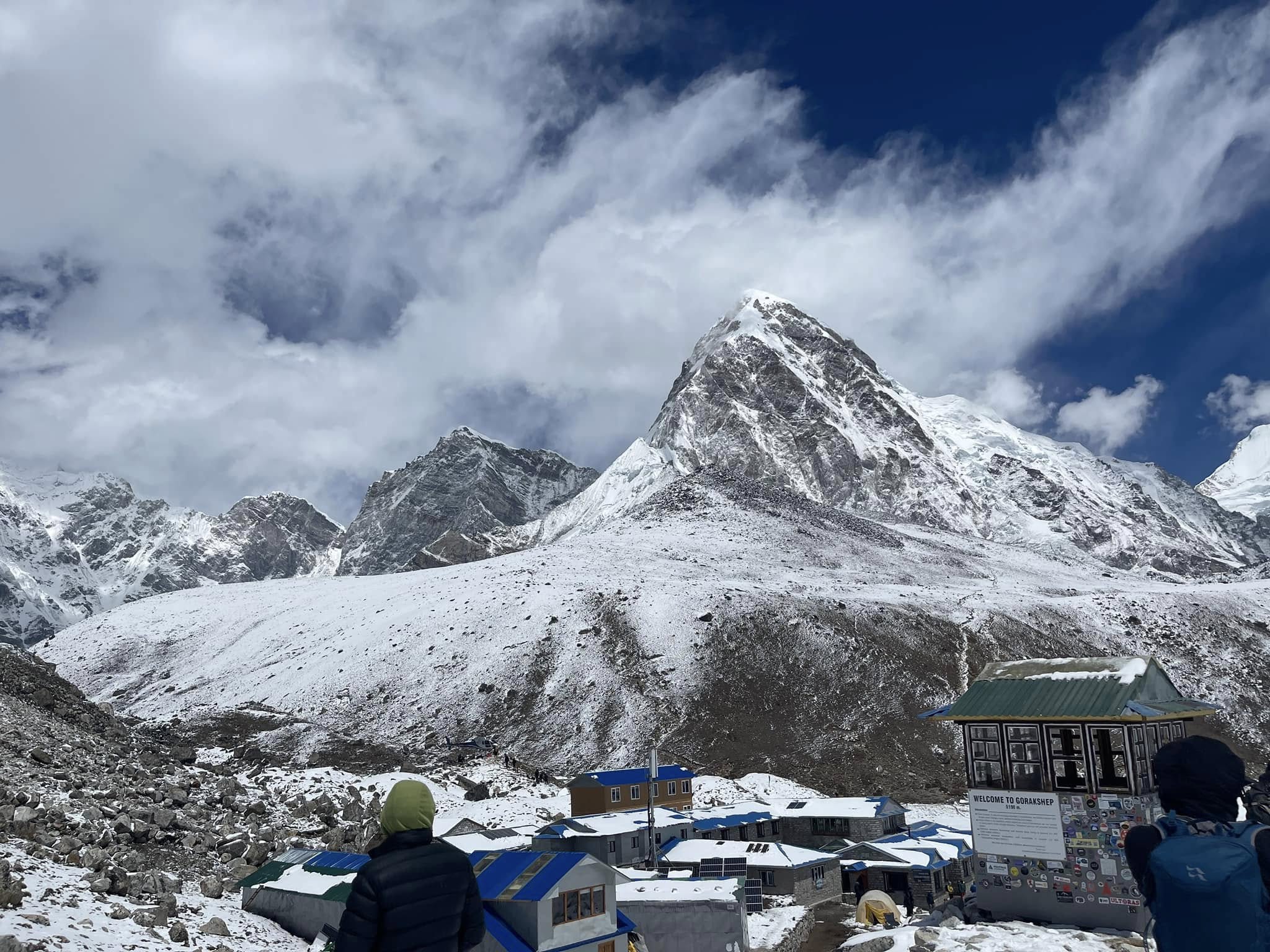
After about 3 hours of trekking, you reach Gorak Shep (5,170 m), a small high-altitude settlement with lodges and panoramic mountain views. Here, you’ll rest briefly, enjoy a high-energy lunch, and prepare for the final push to EBC.
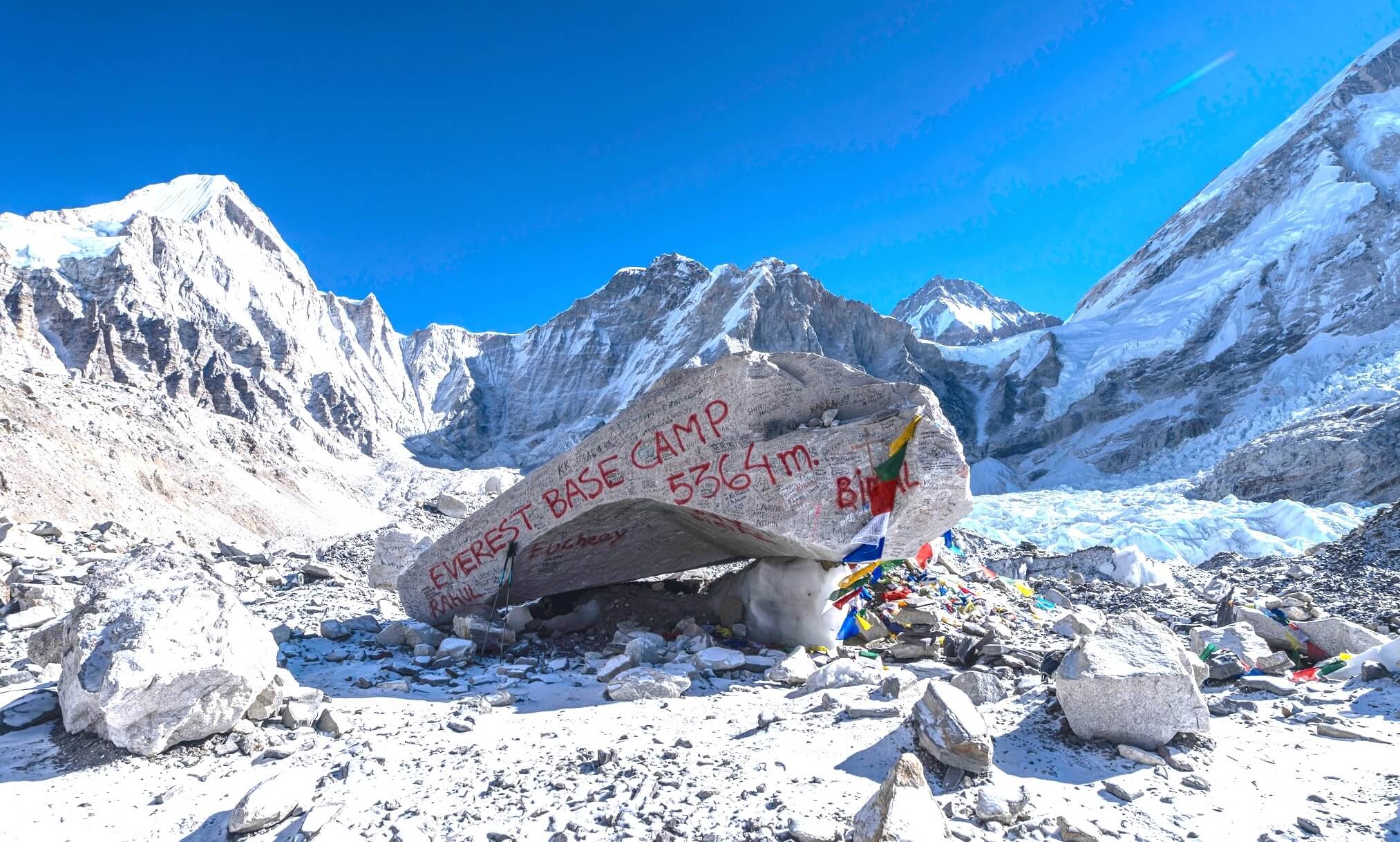
The trail to Everest Base Camp is a 2-hour trek along the shifting crest of the Khumbu Glacier. The path is rugged and constantly changing due to glacial movement. As you approach the camp, the iconic yellow expedition tents and the massive Khumbu Icefall come into view. While Everest’s summit remains hidden behind Nuptse and the West Shoulder, the sense of achievement is unparalleled.
Reaching Everest Base Camp is a bucket-list experience. Surrounded by Lhotse, Nuptse, and Lingtren, you are at the historic launching point for elite mountaineers tackling the world’s tallest peak. Take in the views, capture photos, and soak in the energy of this iconic location.
After the visit, trek back to Gorak Shep to rest, hydrate, and prepare for the next day’s sunrise hike to Kala Patthar, the best viewpoint for Mount Everest. Overnight at Gorak Shep in lodges equipped for high-altitude trekking.

Trek from Gorak Shep to Kala Patthar (5,545 m / 18,192 ft) & Descent to Lobuche (4,940 m / 16,207 ft)
Today is the highlight of the Everest Base Camp trek, as you ascend Kala Patthar, the ultimate viewpoint for Mount Everest, and then descend back to Lobuche. This day combines high-altitude trekking, stunning Himalayan panoramas, and a memorable summit experience.
The day starts early, around 4:00 AM, for the sunrise hike to Kala Patthar. The trail is a steep, rocky ridge that challenges your endurance and lungs in the thin, cold air. Trekking carefully, you gain around 375 m in elevation from Gorak Shep to the 5,545 m summit.
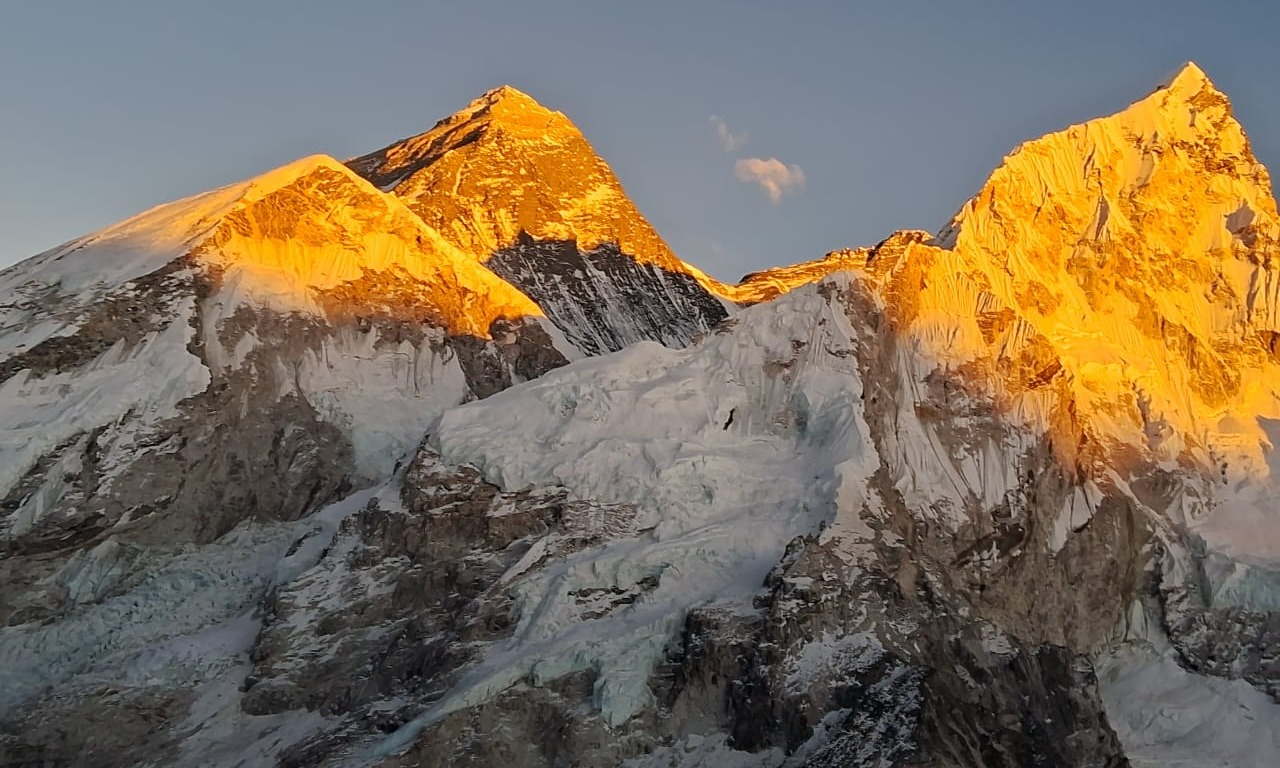
Reaching Kala Patthar, you are rewarded with the best unobstructed panoramic view of Mount Everest (8,848 m), including its South Face, the Western Cwm, and neighboring peaks Nuptse, Pumori, and Ama Dablam. This is the highest point accessible to trekkers on the Everest Base Camp trek, making it an iconic photo opportunity.
After capturing your summit photos, descend carefully back to Gorak Shep for a warm breakfast. The lower altitude brings a noticeable relief to your breathing and allows your body to recover after the demanding climb. Post-breakfast, retrace your steps along the Khumbu Glacier moraine to Lobuche (4,940 m). The downhill trek is easier on the legs, giving time for recovery while still taking in views of the surrounding Himalayan peaks.
Arriving in Lobuche by mid-afternoon provides a chance to rest, hydrate, and prepare for the next stage of your trek. This strategic recovery day ensures your body is ready for the upcoming high passes or the continuation of the Everest region adventure.
Lobuche to Chhukung (4,730 m / 15,518 ft) – Gateway to Island Peak
Today’s trek leads from Lobuche through the Imja Valley to the high-alpine village of Chhukung, the final settlement before the Island Peak (Imja Tse) climbing route. This segment is essential for acclimatization and preparation for technical mountaineering.
Leaving Lobuche, the trail gently descends along the Khumbu Glacier moraine and then follows the wide, sunlit Imja Khola Valley. Surrounded by towering peaks like Ama Dablam, Lhotse, and Island Peak, the scenery is dramatic and motivating for trekkers.
En route, you cross Pangboche, home to the region’s oldest monastery, and continue past Somare, where local stone-walled fields highlight traditional high-altitude agriculture.
At 4,730 m, Chhukung serves as the base village for Island Peak expeditions. Trekkers conduct a final gear check, enjoy a restful night, and begin to mentally and physically prepare for the ascent to Island Peak’s high camps. The village’s sun-drenched terraces and clear mountain views make it an ideal high-altitude acclimatization stop.
Chhukung to Island Peak Base Camp (5,200 m / 17,060 ft) – Begin Your Island Peak Expedition
Today marks the transition from the Everest Base Camp trek to the technical Island Peak (Imja Tse) mountaineering expedition. Leaving the teahouses of Chhukung, we enter high-alpine terrain and hike toward our private Island Peak Base Camp, set beneath the towering walls of Lhotse and Nuptse.
The trail gradually ascends along the southern flank of the Lhotse Glacier moraine, offering dramatic views of nearby peaks like Baruntse and Ama Dablam. As the valley narrows, the mountain amphitheater creates a breathtaking backdrop that signals the shift from trekking to expedition mode.
From the approach, Island Peak rises like an island of rock and ice amidst vast glaciers, giving the peak its local name, Imja Tse. This vantage point prepares climbers mentally for the technical ascent ahead.
Upon arrival at Base Camp (5,200 m), our professional team ensures a fully functional high-altitude tented camp.
The afternoon is reserved for rest, hydration, and pre-climbing preparation. At 5,200 m, oxygen levels are about 50% of sea level, making acclimatization, mental focus, and energy management critical for the upcoming summit attempt.
Pre-Climb Training at Island Peak Base Camp (5,200 m / 17,060 ft) – Summit Preparation Day
Today, we will have pre-climbing training after breakfast. Our guides will provide training on peak climbing methods. And will teach appropriate ways of using gears such as the ice axe, harness, ascender, Climbing boots, and crampons.
Training will also include how to do up and down using ropes. Although it is not compulsory to have preceding training for Island Peak Climbing, we consider that some training experience will boost your confidence and climbing skills. Once preparation is done, we keep climbing stuff in order and get ready for tomorrow’s climb to Island Peak. Overnight at a tented camp.
Island Peak base camp to Island Peak summit (6,189m/20,305ft), back to base camp
Today is the most important day of your Island Peak expedition. With a midnight alpine start, you leave base camp behind and attempt the summit of Island Peak, stepping fully into the world of Himalayan mountaineering.
The climb begins around 1:00 AM with a light, high-energy breakfast. Using headlamps, we ascend in the cold, quiet darkness. The trail climbs steeply above Base Camp, moving from grassy slopes into rocky, boulder-covered terrain.
As elevation increases, the route enters a narrow rock gully that demands slow, careful movement. Beyond this section, the trail follows a high ridge with dramatic exposure, guiding us toward the glacier beneath the summit.
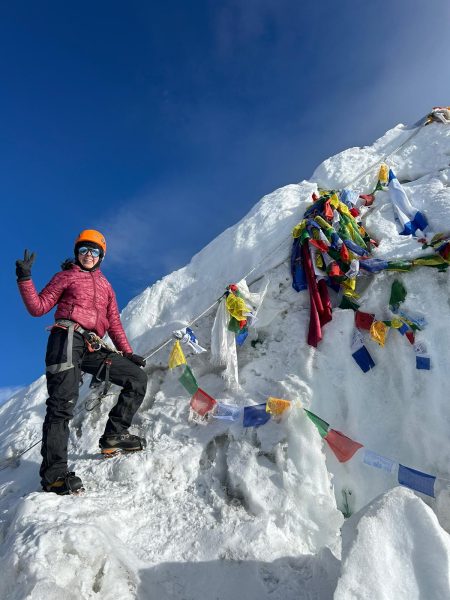
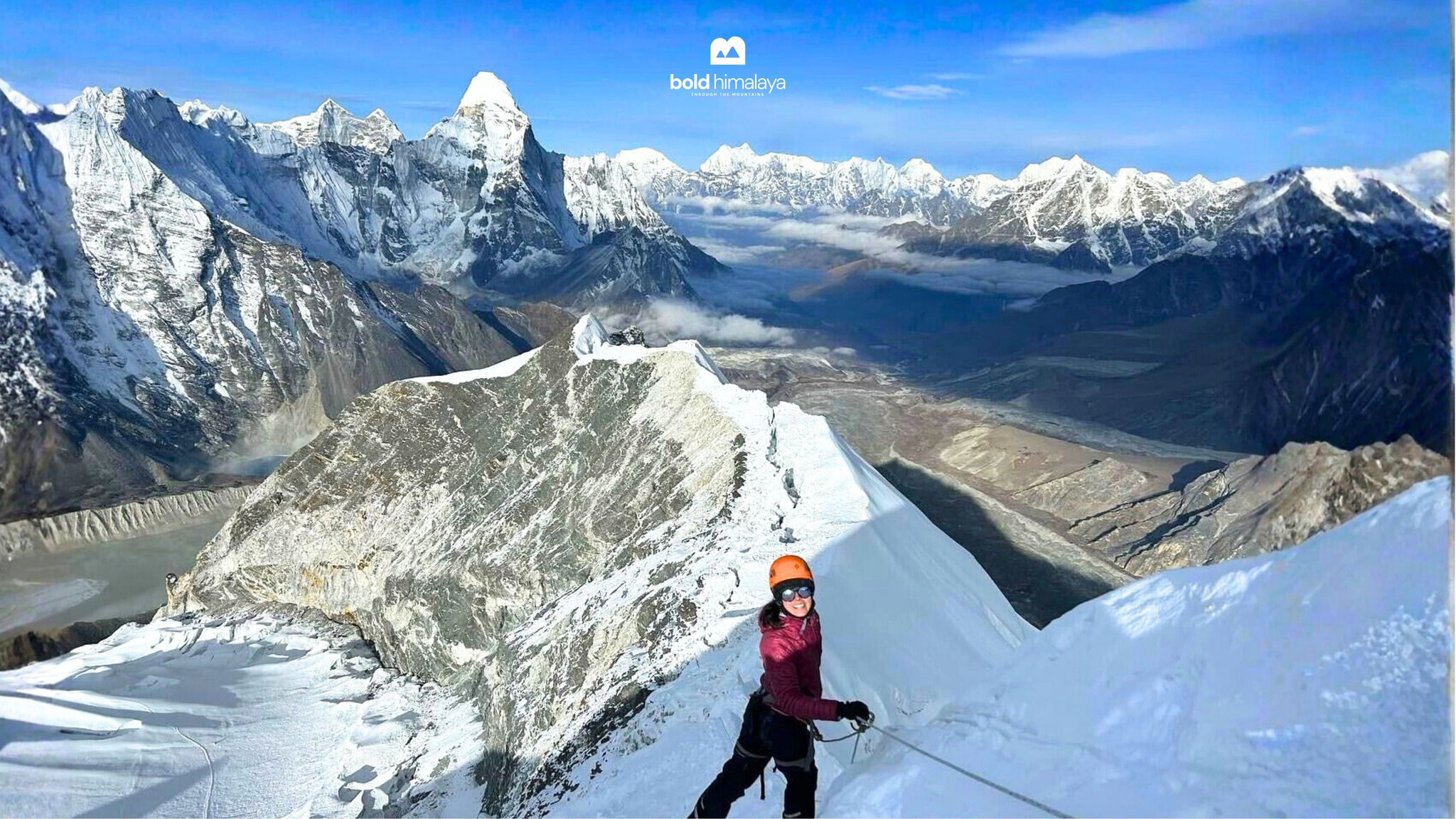
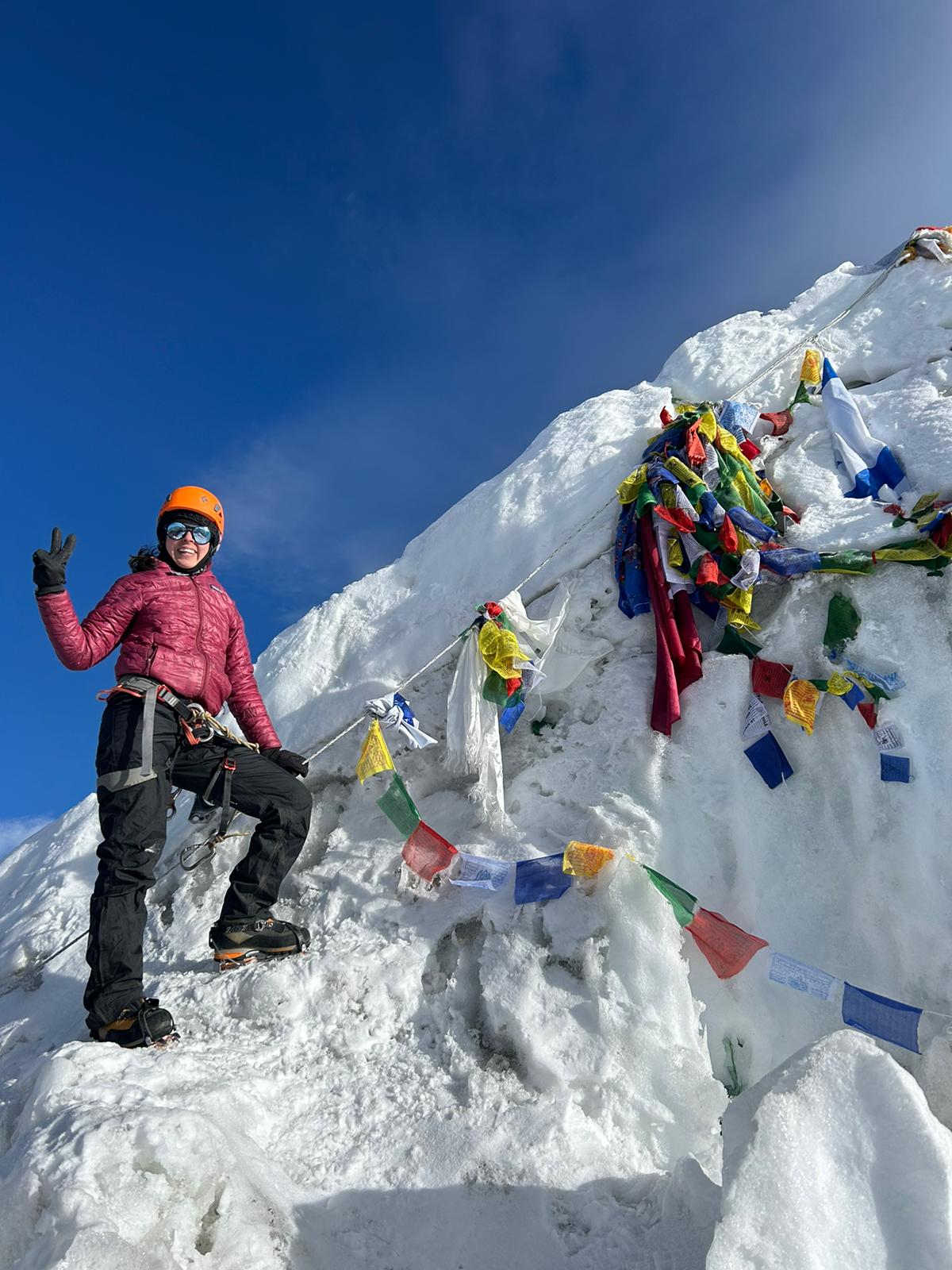
At the glacier, we put on crampons, ice axes, and rope up for safety. Moving together across the crevassed Imja Glacier, the terrain is quiet, icy, and awe-inspiring. The final technical section is a 100-meter snow and ice wall (40–50°). Using fixed ropes and a Jumar ascender, climbers steadily make their way upward under the guidance of experienced Sherpa leaders.
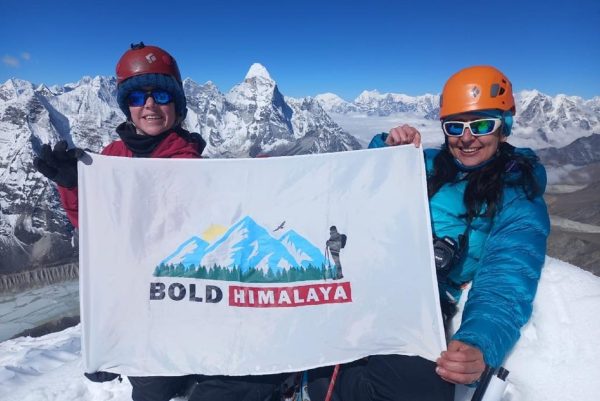
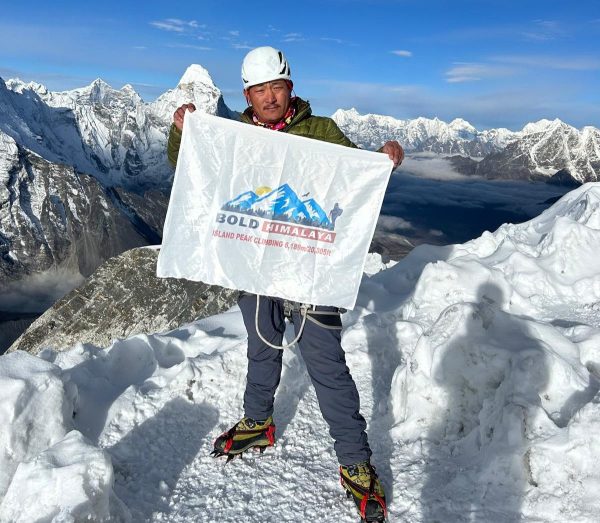
From the narrow summit ridge, you reach the top and are rewarded with breathtaking views of Lhotse, Ama Dablam, Makalu, and Baruntse. This is one of the finest viewpoints in the Everest region.
After photos and a short celebration, we descend carefully. The ice wall is rappelled using a figure-eight descender, followed by a steady return across the glacier and down the rocky slopes to Base Camp for a hot meal and well-earned rest.
Island Peak Base Camp to Pangboche (3,985 m / 13,074 ft) – Recovery Descent
After summiting Island Peak (6,189 m), today focuses on recovery and a steady descent. You leave the high-altitude glacier environment and return to the greener, oxygen-rich lower Khumbu Valley.
The trek begins from Island Peak Base Camp (5,200 m). The trail follows the wide Imja Khola Valley, passing through alpine terrain and gradually losing elevation. Breathing becomes easier as oxygen levels increase, helping your body recover after the summit push.
You pass through Chhukung and Dingboche, popular acclimatization villages on the Everest Base Camp and Island Peak route. These settlements provide good rest stops and lunch options during the descent. Below Somare, the landscape slowly changes. Rocky alpine terrain gives way to shrubs and small trees as you approach the tree line, signaling your return to the lower Everest region.
You reach Pangboche (3,985 m), one of the oldest Sherpa villages in the Khumbu. The village sits beneath the impressive north face of Ama Dablam and offers comfortable teahouses with hot meals and showers. If time allows, you can visit the historic Pangboche Monastery, considered the oldest monastery in the Khumbu region.
Pangboche to Namche Bazaar (3,440m/11,286ft)
Today’s trek is a rewarding descent as you return to the lively hub of the Khumbu after completing the Everest Base Camp Trek with Island Peak Climbing.
The trail descends gently from Pangboche through rhododendron and birch forests to Debuche, then climbs shortly to Tengboche Monastery. From here, you enjoy final views back toward Island Peak and the Lhotse wall—an inspiring reminder of your recent summit success.
From Tengboche, the trail drops steeply to the Dudh Koshi River at Phunki Thenga, crossing a suspension bridge before beginning the gradual climb toward Namche. The path from Sanasa offers a scenic high traverse with views of Thamserku and Kangtega. This section is one of the most enjoyable walks of the trek, with wide trails and mountain panoramas.
You arrive back in Namche Bazaar (3,440 m), the main trading center of the Everest region. After days in remote alpine terrain, Namche’s bakeries, cafés, and lodges feel like a luxury.
Namche Bazaar to Lukla
Today is the last walking day of your Everest Base Camp Trek with Island Peak Climbing. It’s a long but satisfying descent as you return to Lukla, where the adventure began. The day starts with a steep descent from Namche Bazaar, offering final views of the Everest skyline. As you lose altitude, breathing becomes easier, and the trail passes through pine forests and small Sherpa villages.
You cross the famous Hillary Suspension Bridge for the last time and officially exit Sagarmatha National Park near Monjo. Following the Dudh Koshi River, the trail gently rolls until the final short uphill climb into Lukla. This last ascent is a small but symbolic test before the journey ends.
Reaching Lukla marks the successful completion of the Everest Base Camp Trek, Kala Patthar hike, and Island Peak (6,189 m) summit. In the evening, a farewell dinner is shared with your guides and porters to celebrate the achievement and thank the team.
Fly to Kathmandu (1,350m/4,428ft)
Today, you take an early morning flight from Lukla back to Kathmandu, officially concluding your mountain adventure. Your journey begins at Tenzing-Hillary Airport, one of the most famous high-altitude airstrips in the world. The short 30–35 minute flight offers breathtaking aerial views of the Himalayas, including distant glimpses of the Everest region peaks.
You land at Tribhuvan International Airport and transfer to your hotel. After weeks in remote mountain terrain, the vibrant energy of Kathmandu feels lively and colorful. The rest of the day is free for relaxation, souvenir shopping in Thamel, or enjoying a comfortable hotel stay with hot showers and modern amenities.
This flight marks the successful completion of your Everest Base Camp Trek with Island Peak Climbing, combining high-altitude trekking, Kala Patthar views, and the 6,189 m Island Peak summit into one unforgettable Himalayan expedition.
A perfect ending to a challenging and rewarding adventure in Nepal.
Final Departure or Join Next Program
Today is the departing day. A representative from Bold Himalayas drops you at the airport before 3 hours of your departing time. You can join for another thrilling adventure or trip with Bold Himalaya. We can right away arrange your awesome trip
Inclusions
What’s Covered in Your Adventure
- All ground transportation during the trip as per the itinerary
- Four-star hotel accommodation in Kathmandu on a twin-sharing basis on BB (Bed and Breakfast) plan.
- Best available trekking lodge during trek & tented camp in high camp before Island climbing
- Three meals in a day (Breakfasts, Lunch, and Dinners with tea or coffee) during the trek and climbing period.
- All camping equipment in Base camp.
- All climbing equipment
- Sagarmatha National Park entry permit
- Experienced Climbing Sherpa climbing guide during the trek & Climbing including their food accommodation salary insurance
- Porter (2guest: 1 Porter) including their food accommodation salary insurance
- TIMS card (Trekking Information Management System) Permit.
- Group medical supplies (First Aid medical kit will be available).
- One tent will be available in the Base camp for 2 people on a shared basis.
- High altitude food and all climbing crew will be available above base camp.
- Necessary fixed and dynamic ropes will be available during the climbing period.
- A necessary kitchen crew will be available in the base camp.
- Complete pre-departure information, flight ticket reconfirmation, and extend visa service(if necessary).
- Farewell Dinner in Kathmandu before departure.
- All necessary paper works, office Service charges,s, and Government & local taxes.
- Extra Breakfast, Lunch in the Kathmandu
- Dessert & Bar Bills
- Your international air ticket & travel insurance
- Tips for the trekking, climbing crew members

Essential Gear List for Everest Base Camp Trek with Island Peak Climbing
Packing for the Everest Base Camp (EBC) Trek with Island Peak Climbing is about the “Layering Principle.” You need gear that can handle the warm valleys of Lukla 15°C) and the brutal, sub-zero winds of the summit 20°C.
Neck gaiter
Headlamp
Snow goggles
Sunglasses with UV protection
Prescription glasses
Long sleeve shirt
Tshirt
Thermal base layer
Fleece jacket
Waterproof jacket
Down jacket
Expedition jacket
Hiking shorts
Lightweight thermals
Trekking trousers waterproof
Hardshell trousers
Insulated Pants
Insulated Climbing Boots
Hiking boots
Gaiters
Crampons
Inner woolen and cotton socks
Sandals
Running shoes
Sleeping Bag
Fleece sleeping bag liner
Pillowcase
Paracetamol
Cough Medicine
Anti-Diarrhea pills
First Aid Kit
Eye drops
Lip Guard
Sunscreen
Quick Drying Towel
Toothbrush and paste
Soap
Female hygiene products
Wet tissues
Hand Sanitizer
Ice Axe
Harness
Crampons
Descender
Ascender
Helmet
Tape slings
Ice Bar
Ice Hammer
Ice Screw
Rope
Good to Know
Your Journey, Step by Step
Everest Base Camp (EBC) Trek with Island Peak Climbing Difficulty
The Everest Base Camp Trek with Island Peak climbing difficulty is classified as hard, combining high-altitude trekking with a moderate technical alpine climb. This expedition is ideal for trekkers who want more than just the iconic EBC trek, those who want the thrill of summiting Island Peak (6,189m) while experiencing the legendary Himalayan trails.
With the right preparation, hybrid acclimatization, and expert guidance, even first-time climbers can achieve summit success safely.
Trekking Difficulty – Everest Base Camp (EBC)
The EBC trek is moderate to challenging, with 6–8 hours of trekking per day across the Khumbu region, suspension bridges, glacial rivers, and Sherpa villages. While it is a non-technical hike, the high altitude (up to 5,364m) can be physically demanding.
Tips for trekkers:
- Follow a structured pre-trip fitness plan
- Practice long hikes with a weighted backpack (6–10 kg)
- Build stamina for consecutive trekking days at altitude
Proper training and acclimatization turn this section into a manageable and enjoyable high-altitude trek.
Technical Climbing Difficulty – Island Peak Summit
The Island Peak climbing difficulty is classified as Alpine Grade PD+ (Peu Difficile Plus), meaning “slightly difficult” in mountaineering terms. The summit involves:
- Glacier travel with crampons
- Fixed-rope sections and steep snow slopes
- 80–100 meter ice headwall ascent
- Exposure on the narrow summit ridge
Equipment and training provided:
- Harness, crampons, ice axe, jumars (ascenders)
- Pre-climb hands-on clinic at Base Camp or Chhukung
- Training in crampon walking, rope techniques, and safe abseiling
Even beginners can succeed with our PD+ alpine climb preparation and expert Sherpa guidance.
Hybrid Acclimatization for Summit Success
Altitude, not technical difficulty, is the main challenge for most climbers. That’s why our itinerary uses a hybrid acclimatization strategy:
- Trek to EBC (5,364m) and Kala Patthar (5,545m) first
- Spend 10 days at high altitude to increase red blood cell count
- Prepares the body for Island Peak High Camp and the summit push
This approach significantly improves summit success compared to rushed climb-only itineraries.
Physical Preparation and Endurance
The summit day can take 10–14 hours, requiring:
- Cardiovascular fitness and stamina
- Ability to hike 6–8 hours per day with a 6–10 kg backpack
- Core and leg strength for steep snow and ice climbs
Combining physical preparation with the hybrid acclimatization strategy reduces fatigue on summit day by up to 30%, increasing safety and confidence.
Best Season for Everest Base Camp Trek with Island Peak Climbing
Choosing the best season for the Everest Base Camp (EBC) Trek with Island Peak Climbing is the single most important factor for your safety and summit success. While the EBC trek is possible for much of the year, climbing Island Peak (6,189m) requires a specific “weather window” characterized by low wind speeds and stable snow.
The two primary windows for this expedition are Spring (March to May) and Autumn (September to November).
Spring (March–May): The Mountaineer’s Favorite
Spring is widely considered the optimal window for Island Peak summit success. As the region transitions out of winter, temperatures stabilize and the “climbing season” begins in earnest.
During these months, the snow on the Island Peak headwall is typically well-compacted, providing excellent traction for crampons.
Trekkers are rewarded with blooming rhododendron forests at lower altitudes and the excitement of the “Everest Season,” as the trail is filled with international expeditions.
1. Success Factor: High—due to warmer temperatures and predictable morning weather.
2. Visual Highlight: The vibrant contrast of colorful flora against the white peaks of the Khumbu.
Autumn (September–November): The Clear Sky Window
Following the monsoon rains, Autumn is the peak season for photography and panoramic views. The rain washes away the dust, leaving the atmosphere incredibly crisp and clear. This season offers the most spectacular high-definition views of Lhotse, Ama Dablam, and Mount Everest.
While temperatures are colder than in Spring—averaging $-15$°C to $-20$°C during the summit push—the winds are often at their calmest, and the sky remains a deep blue with minimal cloud cover.
1. Success Factor: High—due to the movement of the Jet Stream away from the peaks, creating calm summit days.
2. Visual Highlight: The sharpest, most unobstructed views of the world’s highest mountains.
The Off-Season: Why We Avoid Summer and Winter
For your safety, we do not recommend this expedition during the Monsoon (June–August) or Winter (December–February). The summer months bring heavy rain, leeches, and a high risk of avalanches and landslides, while Lukla flights are frequently cancelled.
In contrast, winter offers clear skies but extreme high-altitude cold and high-velocity winds that make standing on the narrow summit ridge of Island Peak (6,189m) dangerous for all but the most elite winter mountaineers.
Travel Insurance – Everest Base Camp (EBC) Trek with Island Peak Climbing
For anyone planning the Everest Base Camp (EBC) Trek with Island Peak Climbing, having comprehensive travel insurance is essential. Because this expedition involves high-altitude trekking above 5,000 m and a technical climb to Island Peak (6,189 m), you need a policy that specifically covers high-altitude trekking and mountaineering activities, including emergency medical care, evacuation, and helicopter rescue from remote Himalayan locations.
Standard travel insurance often excludes coverage above 3,000 m, which is not sufficient for this journey, so be sure your policy includes trekking and climbing up to at least 6,500 m.
Good travel insurance should also cover hospitalization, treatment for altitude-related illnesses, trip cancellation or delays (common with Lukla flight schedules), and lost or damaged gear, giving you peace of mind and financial protection while you explore one of the world’s most iconic and challenging mountain regions.
Altitude Sickness and How to Prevent It
Altitude sickness (Acute Mountain Sickness – AMS) is a common risk on the Everest Base Camp trek with Island Peak climbing, as trekkers ascend above 4,000 m and reach Island Peak High Camp at 5,600 m. Symptoms include headache, nausea, dizziness, shortness of breath, and fatigue.
To prevent altitude sickness, follow these key strategies: gradual acclimatization, including trekking first to Everest Base Camp (5,364 m) and Kala Patthar (5,545 m); hydration, eating light and nutritious meals; avoiding alcohol and overexertion; and listening to your body.
Our expeditions also provide daily health monitoring, oxygen saturation checks, and expert Sherpa guidance, ensuring early detection and management of any symptoms. Following these measures significantly increases the chances of a safe climb and successful summit while minimizing the risks of HAPE or HACE.
Accommodation Facilities During Everest Base Camp (EBC) Trek with Island Peak Climbing
One of the most unique aspects of the Everest Base Camp (EBC) trek with Island Peak climbing is the progression of accommodation, which mirrors your journey from urban comfort to high-altitude adventure.
1. Kathmandu: 3-Star Comfort
Your trip begins in Kathmandu with 3-star hotel comfort, typically in the vibrant Thamel district, where rooms include en-suite bathrooms, hot water, Wi-Fi, and air conditioning. This comfortable start gives you time to rest, organize gear, and prepare for the trek ahead while providing a relaxing place to celebrate your summit achievement afterward.
2. The Trekking Phase: Traditional Sherpa Teahouses
As you enter the trekking phase, the journey transitions into the heart of the Himalayas with traditional Sherpa teahouses. These Mountain Lodges are the cultural and social hubs of the Khumbu Valley. Trekkers stay in twin-sharing rooms with wooden beds, foam mattresses, and blankets, and dining halls warmed by yak-dung stoves serve hearty meals while fostering camaraderie.
Facilities vary by altitude: lower villages such as Namche Bazaar provide attached bathrooms and hot showers, while higher stops like Lobuche and Gorak Shep rely on shared toilets and bucket showers, emphasizing simplicity and authentic mountain living.
3. The Climbing Phase: Expedition-Style Tented Camps
When the itinerary shifts toward the Island Peak summit, accommodation moves to high-altitude expedition-style tents at Base Camp (5,200 m) and High Camp (5,600 m).
These camps feature four-season sleeping tents with insulated foam mattresses, as well as dedicated kitchen and dining tents where the expedition cook prepares high-calorie meals to fuel the climb.
Private toilet tents are provided for hygiene and environmental care, ensuring safety and comfort in a remote alpine environment.
4. Luxury vs. Standard Accommodation Upgrades
Finally, trekkers can choose between standard and luxury lodge options depending on their preference. The standard teahouse trek offers cozy, authentic lodges that highlight the traditional Himalayan experience, while luxury lodge upgrades in villages like Lukla, Phakding, and Namche include electric blankets, private hot showers, and gourmet meals, providing a more comfortable and indulgent Himalayan adventure without compromising acclimatization or summit preparation.
From the modern comfort of Kathmandu to Sherpa teahouses and high-altitude expedition camps, the accommodation along the Everest Base Camp trek with Island Peak climbing is thoughtfully structured to support acclimatization, rest, and summit success, creating a safe, comfortable, and unforgettable Himalayan experience.
Guide and Porter Services for Everest Base Camp Trek with Island Peak Climbing
On the Everest Base Camp trek with Island Peak climbing, we provide experienced, knowledgeable, and English-speaking guides to make your journey safe, enjoyable, and unforgettable. Our guides share detailed insights about the Himalayan mountains, local history, Sherpa culture, and traditions, ensuring a rich and immersive trekking experience.
In addition, we provide one porter for every two trekkers, capable of carrying up to 25 kg of combined luggage. Our porters are strong, reliable, and accustomed to high-altitude trekking, helping to lighten your load so you can focus on the trek and climbing.
While guides and porters work tirelessly to provide exceptional service, it is customary to offer tips at the end of the trek as a gesture of appreciation, following the common tipping culture in Nepal’s tourism sector. Proper guidance and porter support not only enhance comfort but also contribute to safer and more successful high-altitude trekking and climbing experiences.
Safety and Emergency Support on Everest Base Camp Trek with Island Peak Climbing
Safety is our top priority on the Everest Base Camp trek with Island Peak climbing, where high-altitude conditions and technical terrain demand rigorous planning. We maintain an elite 1:2 guide-to-client ratio on summit days, ensuring personalized attention and rapid response if a climber feels unwell.
Our expeditions feature advanced health monitoring, including twice-daily pulse oximetry and symptom tracking with the Lake Louise scoring system, alongside supplemental oxygen and Portable Altitude Chambers (PAC bags) for emergencies. Communication is seamless with satellite phones and Garmin inReach devices, paired with professional weather forecasts to identify safe summit windows.
In rare emergencies, helicopter evacuation is fully coordinated through our Kathmandu office, with pre-verified insurance coverage for high-altitude rescue. Technical safety is ensured by our UIAGM-certified Sherpa guides, who set and inspect UIAA-certified ropes, anchors, and climbing gear on the Island Peak headwall, glacier crossings, and ice wall.
This comprehensive approach guarantees maximum safety, early detection of altitude-related issues, and a higher probability of summit success on this high-altitude Himalayan expedition.
Meals on Everest Base Camp Trek with Island Peak Climbing
Proper nutrition and hydration are critical for high-altitude trekking and climbing. On the Everest Base Camp trek with Island Peak climbing, your metabolism increases by 10–25%, while appetite may decrease, so we provide high-calorie, easy-to-digest meals designed to fuel endurance and prevent altitude-related fatigue.
During the trekking phase, meals are served at teahouses, featuring the traditional Dal Bhat, lentil soup, rice, and vegetable curry with unlimited refills, alongside energy-rich breakfasts like porridge, Tibetan bread, eggs, or pancakes.
Lunch and dinner include a mix of local and international dishes, carb-loading options such as pasta, fried rice, and warming soups, with a vegetarian focus recommended above Namche Bazaar (3,440 m) to avoid digestive issues.
Drinking Water on Everest Base Camp Trek with Island Peak Climbing
For hydration, 4–5 liters of fluid per day is essential to prevent dehydration and altitude sickness. Safe drinking water is provided through boiled water at teahouses or treated with purification methods like UV SteriPENs or chlorine/iodine tablets.
On the Island Peak summit push, staff provide hot tea and boiled water, with insulated bottles recommended to prevent freezing. Essential personal snacks include electrolyte powders, energy gels or bars, and chocolate/hard candies to maintain energy for the final summit climb.
This careful meal and hydration strategy ensures trekkers stay energized, hydrated, and ready for summit success on both the EBC trek and Island Peak climb.
Required Permits for Everest Base Camp & Island Peak Climbing
Completing the Everest Base Camp trek with Island Peak climbing requires several official permits, each serving a specific purpose to ensure safety, conservation, and legal compliance in the Khumbu region.
1. NMA Island Peak (Imja Tse) Climbing Permit
The first is the NMA Island Peak (Imja Tse) Climbing Permit, issued by the Nepal Mountaineering Association (NMA).
Island Peak is classified as a Group B Trekking Peak, so this permit is a formal climbing authorization rather than a standard trekking permit. Permit fees vary by season, with spring being the most expensive at around $250, followed by autumn ($125), and winter or summer at approximately $70.
In addition, a $500 refundable garbage deposit is required, which ensures that all expedition waste is properly carried down from High Camp.
2. Khumbu Pasang Lhamu Rural Municipality Permit
The second required document is the Khumbu Pasang Lhamu Rural Municipality Permit, which replaced the old TIMS card in 2018. The funds from this local permit support trail maintenance, bridge repairs, and local community development. It costs approximately 2,000 NPR (around $15–$20) for the first four weeks of trekking and must be obtained upon arrival in Lukla, as it is not issued in Kathmandu.
3. Sagarmatha National Park Entry Permit
Finally, trekkers must obtain the Sagarmatha National Park Entry Permit, as the entire trek falls within a UNESCO World Heritage Site. This permit costs roughly 3,000 NPR (around $25–$30) plus 13% VAT and is collected at the park entrance in Monjo.
Having all these permits organized in your trekker’s permit folder is essential, and when booking with a professional expedition team, all of these permits are typically arranged for you, allowing you to focus on the trek and the Island Peak climb.
FAQs
Your Questions, Answered
How long is the itinerary and what is the route?
The expedition typically spans 16 to 18 days, beginning with Kathmandu–Lukla, then Phakding, Namche Bazaar (with acclimatization hikes), Tengboche, Dingboche, Lobuche, Gorakshep, Everest Base Camp, Kala Patthar, back to Dingboche, onward to Chhukung, Island Peak Base Camp, summit push, and descent via Chhukung–Tengboche–Namche–Lukla–Kathmandu.
When is the best time to undertake this combined trek and climb?
Pre-monsoon (Spring: March–May) offers rhododendron blooms and stable weather, while post-monsoon (Autumn: September–November) brings crystal-clear views and festive Sherpa cultural events. These windows minimize snow on high passes and reduce afternoon storms.
What level of fitness and technical experience do I need?
You should be capable of trekking 6–8 hours daily with a loaded pack at altitudes up to 5,555 m, plus have basic familiarity with climbing equipment (crampons, ice axe) for a Grade I/II ascent. No prior high-altitude experience is strictly required, but prior trekking or climbing background is highly recommended.
Which permits and documentation are required?
Trek permits include the Sagarmatha National Park Entry Permit and Khumbu Pasang Lhamu Rural Municipality Permit; climbing Island Peak requires an additional Island Peak Climbing Permit from the Nepal Mountaineering Association. All permits are handled and included by the operator.
What types of accommodation and meals are provided?
Nights before and after the trek are spent in Kathmandu hotels. On the trail, you stay in teahouses or lodges (twin-share rooms, basic private/shared bathrooms), with two nights’ camping/tenting at Island Peak Base Camp. Meals include standard Nepali, Asian, and Western dishes—breakfast, lunch, and dinner—plus hot beverages.
How much does the trek cost?
The standard 16–18 day package from Bold Himalaya is priced at approximately USD 1,890 per person on a group basis. Prices may fluctuate based on group size, season, and any custom extensions or private services.
What is the best time to visit?
The best time to visit is during the dry season, from April to October, when the weather is pleasant and ideal for outdoor activities.
What is the height of Island Peak?
The height of Island Peak (Imja Tse) is 6,189 meters, which is equivalent to 20,305 feet.
What is the height of Mount Everest?
The height of Mount Everest is 8,848.86 meters (29,031.7 feet) above sea level.
Can I do the Everest Base Camp Trek with Island Peak Climbing solo?
While technically possible, it’s not recommended. This expedition reaches high altitudes (5,364m at EBC, 6,189m on Island Peak) and includes a PD+ Alpine climb with glaciers, steep snow slopes, and a 100m ice headwall.
Solo travelers face higher risks of altitude sickness, navigation errors, and accidents. Guided expeditions provide safety monitoring, expert route guidance, porter support, and hybrid acclimatization, all of which increase summit success and reduce danger.
Solo attempts are only suitable for very experienced high-altitude mountaineers.
Should I bring extra cash during the Everest Base Camp Trek with Island Peak Climbing?
Yes, it’s highly recommended to carry some extra cash (around $200–$300 USD) for personal expenses. This covers tea/coffee at teahouses, hot showers, snacks, tips for guides and porters, and small souvenirs.
Most remote villages do not have ATMs, and credit/debit cards are rarely accepted, so cash is essential. Always carry small denominations in Nepali Rupees or USD, as larger bills can be difficult to exchange.
Is there Wi‑Fi on the Island Peak Climbing with EBC Trek?
Limited Wi‑Fi is available at some teahouses along the Everest Base Camp trail for a fee, but it’s slow and unreliable at higher elevations.
On the Island Peak climbing phase (Base Camp and High Camp), Wi‑Fi is generally unavailable; only satellite devices are used for safety and emergencies.
Is there any possibility to customize Island Peak Climbing with EBC Trek?
Yes! Bold Himalaya offers flexible options to tailor your Island Peak Climbing with the Everest Base Camp trek.
You can adjust the duration, accommodation style, acclimatization days, or add side trips like Gokyo Lakes or Everest Viewpoints, ensuring the adventure fits your pace and preferences.
What gear do the company provide for Island Peak Climbing?
For Island Peak Climbing with Bold Himalaya, we provide high-quality down jackets and 4-season sleeping bags for high-altitude comfort. All other technical climbing gear, such as harnesses, crampons, ice axes, and helmets, can be rented locally, ensuring you have everything needed for a safe and successful summit.
What should be the weight of the bag for Island Peak Climbing with EBC Trek?
We recommend keeping your personal trek luggage under 15 kg (33 lbs). Each porter can carry up to 30 kg (66 lbs), usually shared between two clients.
Note that for the flight to Lukla, the maximum allowed weight, including your hand luggage, is 15 kg. Any excess will incur additional charges, so packing light and efficiently is essential for a smooth journey.
What kind of temperature and weather can I expect on the Island Peak Climbing with EBC Trek?
During the trek and climb, weather and temperature vary widely depending on altitude and season:
1. Lower elevations (Lukla to Namche Bazaar, 2,800–3,400 m): Daytime temperatures are usually 10–20°C (50–68°F) in spring/autumn, while nights can drop to 0–5°C (32–41°F).
2. Mid-elevations (Tengboche to Pheriche, 3,800–4,200 m): Days are cooler at 5–15°C (41–59°F); nights often fall below 0°C (32°F).
3. High elevations (Lobuche, Gorak Shep, Island Peak Base/High Camp, 5,100–5,600 m): Expect -5 to -15°C (23–5°F) during the day and -15 to -25°C (-5 to -13°F) at night. Summit day can feel even colder due to wind chill.
Pack layered clothing, windproof jackets, insulated gloves, and thermal gear to handle the wide temperature ranges and sudden weather changes at high altitude.
Are there toilets on the Island Peak Climbing with EBC Trek trail?
Yes, but the availability and type of toilets vary depending on the altitude. In lower and mid-altitude teahouses, from Lukla to Namche Bazaar (2,800–3,400 m), most lodges have attached or shared toilets, usually squat or Western-style, with hot showers sometimes available for a small fee.
As you trek higher, in villages like Tengboche, Pheriche, Lobuche, and Gorak Shep (3,800–5,200 m), facilities become more basic, typically shared squat toilets, often with a nominal fee.
At Island Peak Base Camp and High Camp (5,200–5,600 m), expedition-style toilet tents are provided, using portable and eco-friendly methods to minimize environmental impact.
It is recommended to carry toilet paper, hand sanitizer, and biodegradable wipes, as these are not always supplied.
View OurSimilar Packages
Discover our top tours, loved by thousands of travelers annually. Choose the adventure that inspires you and embark on a journey tailored to your desires.

Save 21%
Island Peak Climbing
Island Peak Climbing (Imja Tse, 6,189m) is one of the most... Nepal Tour Packages
 16.0 Days

Chhukung Ri Peak Climbing
Chhukung Peak climbing has a perfect short adventure peak climbing experience....
Nepal Tour Packages
13.0 Days

Lobuche Peak Climbing
Just imagine this: you’re hiking the famous Everest route, and the...
Nepal Tour Packages
17.0 Days

Mera Peak Climbing | Mera Peak Expedition
Mera Peak (6,476 m / 21,247 ft) is widely recognized as...
Nepal Tour Packages
18.0 Days


