




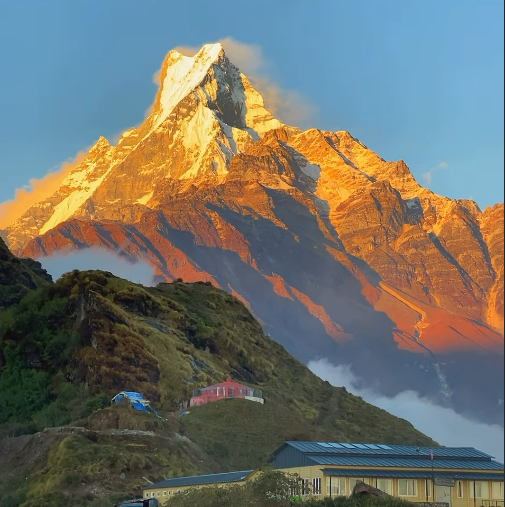
Mardi Himal Base Camp 5 Day Trek From Pokhara


5(49)


Detailed 5 Day Itinerary: The Ridge Ascent
Your Journey, Step by Step
Drive from Pokhara to Kande, Trek to Deurali
You’ll begin your Mardi Himal Base Camp Trek from Pokhara early in the morning with a scenic drive to Kande, a small hilltop settlement marking the official trailhead. The road winds through terraced hillsides, traditional Gurung villages, and open country, giving your first glimpses of the Annapurna range as you ascend.
Once at Kande, you switch from vehicle to trail. The trekking route starts with a series of steady stone steps that climb above the forest canopy, rewarding you with expansive views of Lamjung Himal, Annapurna South, Hiunchuli, and Machhapuchhre (Fishtail) on clear days.
Beyond Australian Camp, the path levels out and winds gently through forested terrain toward Pothana village, a traditional settlement where the first ACAP permit checkpoint is located. Here, the surface changes underfoot—from rough stone steps to softer forest soil cushioned with roots and moss—while the forest canopy provides welcome shade.
The final stretch continues through quiet woodland before reaching Deurali (2,100 m). Perched at a natural junction of ridges, Deurali overlooks the Modi Khola valley on one side while facing the rising slopes of Mardi Himal on the other. As daylight fades, the village settles into stillness, setting the tone for the higher terrain ahead.
Accommodation at Deurali is typical of authentic Himalayan trekking: simple teahouses with shared rooms, basic bedding, and warm vegetarian meals. Dinner here often includes dal bhat (rice and lentils), seasonal vegetables, and soups—perfect fuel for the days ahead.
Trek from Deurali to Forest Camp and Continue to Low Camp
The morning of Day 2 on the Mardi Himal Base Camp 5 Day Trek from Pokhara begins deep within the lush embrace of the Cloud Forest. Here, ancient trees stand tall and proud, their trunks wrapped in thick layers of lichen and moss that cushion every footstep. The trail veers gently from the main Annapurna route toward the northern ridge, marking your first step into the quieter reaches of the Mardi Himal Trek.
Underfoot, moss blankets much of the path, making footing soft but sometimes slippery when wet—especially after rain or early morning dew. The air is cool and still, punctuated only by the chatter of birds hidden deep within the canopy.
After several hours of steady climbing, the trail leads into Forest Camp (2,500 m)—also known locally as Kokar. This remote settlement of teahouses offers welcome shelter, hot meals, and a chance to rest. It’s a common lunch stop for trekkers and one of the first real opportunities to interact with fellow hikers on this relatively quiet route.
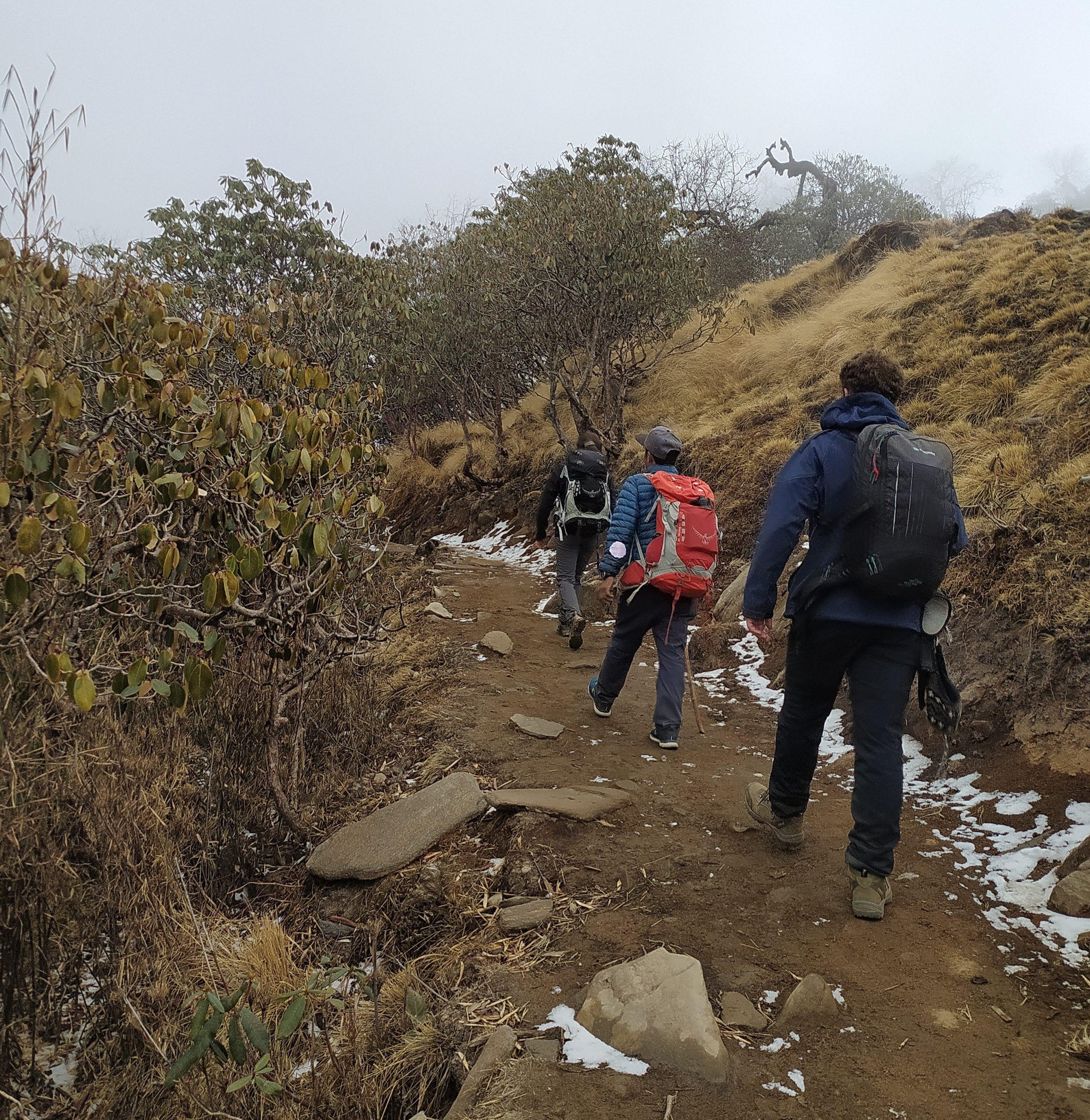
Once refreshed, the climb resumes. The forest begins to thin as elevation increases, and in spring, local rhododendrons erupt with colors ranging from bright crimson to soft pink, lighting up the slopes like scattered petals. With every step, the foliage gradually opens, granting glimpses of distant peaks.
By mid‑afternoon, you’ll arrive at Low Camp (2,970 m). Here, the trees give way almost entirely, and views of Machhapuchhre (Fishtail) break through the thinning trunks—an unforgettable moment for many trekkers. Teahouses at Low Camp offer basic yet comfortable lodging and warm meals, perfect for replenishing energy for the higher ground ahead.
Trek from Low Camp to High Camp
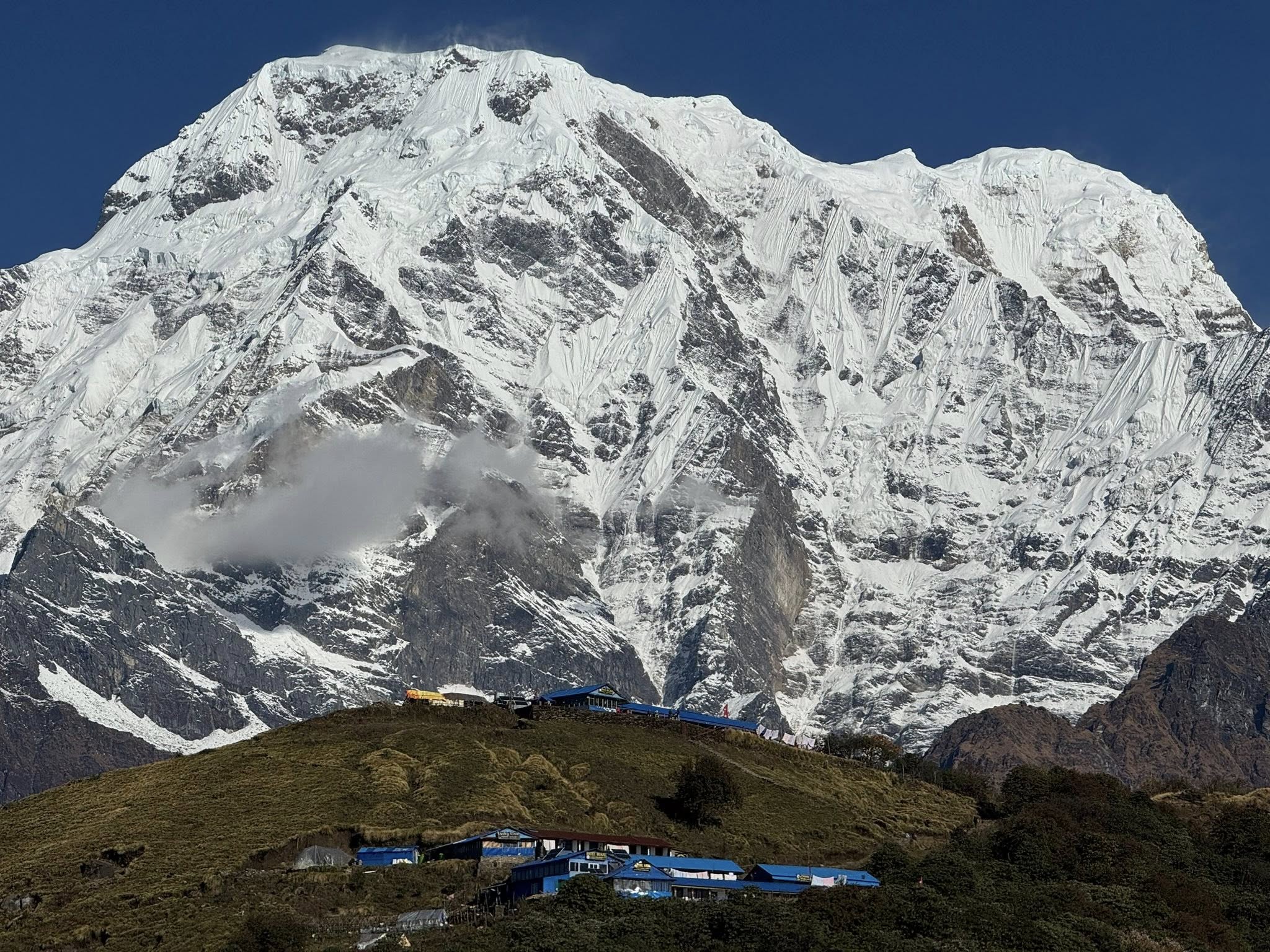
Day 3 begins early with the first light of dawn filtering through the peaks. Leaving Low Camp, trekkers follow a trail ascending toward Badal Danda, also known as Cloud Hill. Mist often hangs below, creating the magical feeling of walking above the clouds. The forest gradually thins, giving way to alpine shrubs and open ridges, while distant peaks of Machhapuchhre (Fishtail), Annapurna South, and Hiunchuli dominate the skyline.
The trail moves along narrow ridges, requiring careful steps, especially where sharp descents flank the path. On your left, the Annapurna Sanctuary spreads wide; to your right, the Mardi Khola valley descends steeply. The combination of dramatic terrain and alpine flora makes this one of the most scenic days of the Mardi Himal trek.
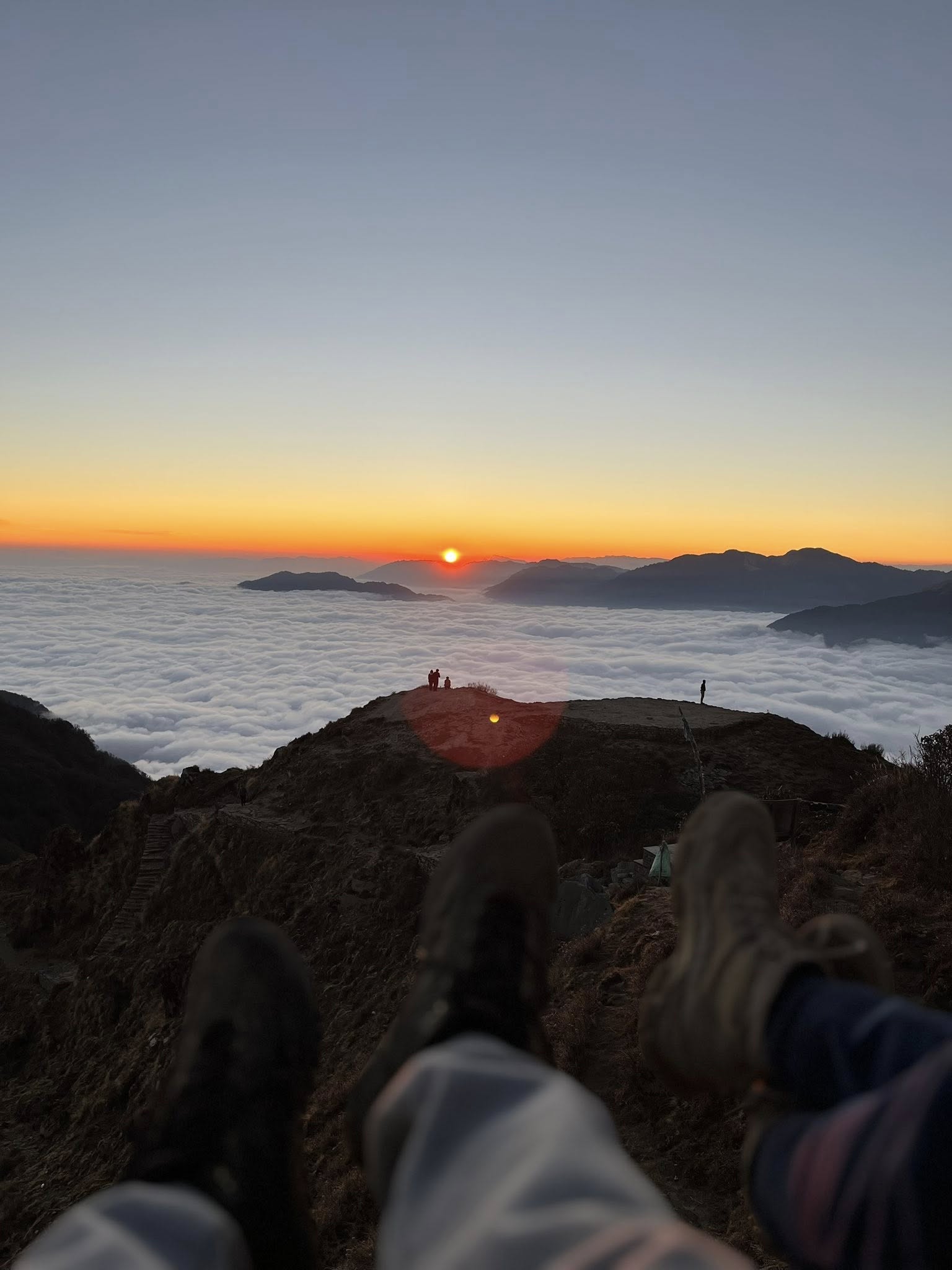
By midday, you will arrive at High Camp (3,550 m). This exposed hilltop settlement, often swept by wind, offers basic teahouse lodging with warm meals. It also serves as the launch point for the early-morning ascent to Mardi Himal Base Camp or Upper Viewpoint on Day 4. Afternoon hours are perfect for rest, acclimatization, and photography, as sunlight bathes the surrounding peaks in golden light.
High Camp to Mardi Himal Base Camp and Return
Day 4 is the highlight of the 5-Day Mardi Himal Base Camp Trek, as trekkers reach the Upper Viewpoint or Mardi Himal Base Camp, the highest point of the trek at 4,500 m. Most trekkers wake up around 3:30 AM and start walking before dawn at 4:00 AM, guided by headlamps through the cold, thin alpine air. The early start ensures reaching the summit by first light, perfect for sunrise views of Machhapuchhre (Fishtail) and surrounding peaks.
The trail climbs steeply along a narrow, rocky spine above High Camp. The forest has long disappeared, replaced by alpine shrubs, meadows, and bare slopes. As altitude increases, the views become more dramatic, with Machhapuchhre towering to the south and Annapurna South, Hiunchuli, and the Annapurna Sanctuary unfolding across the horizon.
Upon reaching Mardi Himal Base Camp / Upper Viewpoint (4,500 m), trekkers are greeted with panoramic, unobstructed Himalayan vistas. This is a prime spot for photos, taking a moment to soak in the immense peaks, and enjoying a sense of accomplishment. A hot tea or snack at the camp offers a welcome respite before beginning the descent.
The return trek follows the same ridge trail, stopping at High Camp for lunch and additional rest. From there, trekkers continue downward toward Low Camp or Forest Camp if continuing the trek, before finally heading to a safe overnight stop. The descent is gradual but requires care, as altitude gain and loss can strain knees and legs. Despite the long day, the experience is unforgettable, combining high-altitude adventure with some of the most spectacular Himalayan scenery.
Descent from Low Camp to Siding Village and Drive to Pokhara
On Day 5 of the Mardi Himal Base Camp Trek, trekkers begin their descent from Low Camp, leaving the high alpine environment behind. The trail passes through lush forests, mossy slopes, and rhododendron groves, gradually descending into the green foothills of the Annapurna region. Unlike the high ridges of previous days, this part of the trek is calmer, scenic, and rich in local flora and fauna, offering a peaceful conclusion to the trekking experience.
As you continue downhill, the path leads to Siding Village, a traditional Gurung and Magar community. Walking through the village, you’ll notice stone houses, terraced fields, and small farm plots, giving a glimpse of rural mountain life in Nepal. This quiet village serves as the final stop for the trek, allowing trekkers to rest, enjoy local culture, and prepare for the journey back to Pokhara.
From Siding, trekkers board a private jeep or shared vehicle for the scenic drive back to Pokhara, which takes approximately 2–3 hours. The road winds through valleys, rivers, and farmland, offering a final chance to enjoy picturesque Annapurna foothills before returning to the comfort of Pokhara’s hotels or lakeside area.
Inclusions
What’s Covered in Your Adventure
- Pick-up and drop-off within a 4 km radius of Lakeside.
- A short drive from Pokhara to Kande. After completing the trek and descending to Siding Village, a vehicle will pick you up and take you back to Pokhara
- English-speaking guide, including their expenses
- Meals during trek: 4 Breakfasts, 5 Lunches, and 4 Dinners
- Seasonal fruits provided each day
- Permits: Annapurna Conservation Area Permit (ACAP) and TIMS card
- Trekking map
- Accommodation: 4 nights at the best tea houses during the trek
- Extras: Trip certificate, Bold Himalaya cap or T-shirt.
- First aid kit and basic medical supplies
- Gear: Down jacket and trekking poles available for use if needed
- Porter: Available upon request for USD 90
- Tips for the guide and porter
- Any personal items or services not listed in the inclusions

Equipment and Gear for the Mardi Himal Base Camp 5 Day Trek From Pokhara
Proper gear is crucial for a safe and enjoyable 5-day Mardi Himal Base Camp Trek from Pokhara, especially as the trail rises from lush forests to high alpine terrain. Trekkers should pack according to season, altitude, and daily trekking hours, balancing comfort with light weight.
Insulated down jacket
Waterproof and windproof outer layer
Base layers
Trekking pants and thermal leggings
Hat, gloves, and beanie
Socks
Hiking boots
Lightweight sandals or slippers f
Trekking poles
Headlamp
Water bladder
Purification tablets
Sunglasses and sunscreen
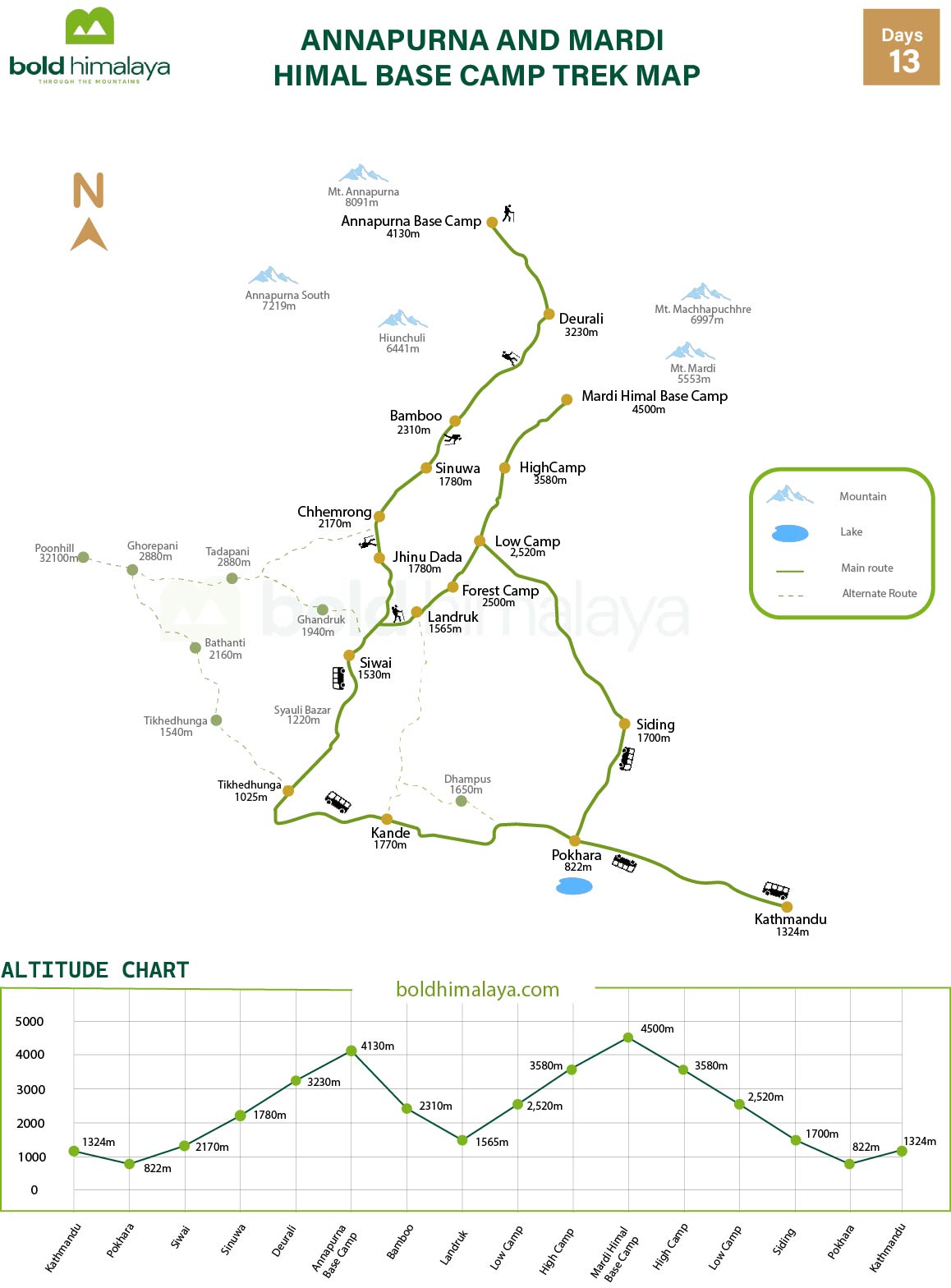
Maps
Navigate Your Journey
Good to Know
Your Journey, Step by Step
Safety and Health
Trekking in the Himalayas is an incredible experience, but it comes with unique health and safety considerations. Proper preparation can ensure a safe and enjoyable journey.
Altitude Sickness (AMS)
Achieving relief from altitude sickness means moving downhill – no exceptions. When headaches linger, or vomiting and lightheadedness appear, climbing further risks serious harm. Going lower remains the single effective response.
Travel Insurance
Not having the right coverage might leave you facing bills of over five thousand dollars. Check that your insurance includes emergency helicopter evacuation. Policies must extend to high altitude trekking, specifically up to five thousand meters. Missing one part could mean no support when it matters. Coverage gaps often show up only after an incident occurs.
Cultural Etiquette on the Mardi Himal Trek
The Mardi Himal Trek offers more than breathtaking mountain scenery; it also provides a window into the rich cultural heritage of the Gurung and Magar communities living in the Annapurna region.
Trekkers are encouraged to show respect through simple gestures, such as greeting locals with a “Namaste” and a slight bow, which is widely appreciated. When passing prayer wheels or mani walls, always walk clockwise with the structures to your left, honoring local spiritual traditions.
Photography requires sensitivity; always ask for permission before capturing people or sacred events, and never assume access is allowed.
By observing these customs, respecting sacred spaces, and engaging politely with villagers, trekkers not only enrich their experience but also contribute to responsible and respectful tourism in Nepal.
Packing Essentials for the 5-Day Mardi Himal Trek
Packing for the Mardi Himal Trek depends heavily on the season of your trek, as weather and temperatures vary significantly.
In spring (March–May), bring light layers for daytime warmth, along with a mid-layer and a down jacket for cooler mornings and evenings. Bright, comfortable trekking clothes and sun protection are essential, as UV exposure increases with altitude.
During autumn (September–November), pack similarly, but include a windproof jacket, as winds at higher elevations can be strong.
Winter treks (December–February) require heavy insulated jackets, thermal layers, gloves, and hats, as temperatures at High Camp can drop below −15°C. In monsoon season (June–August), waterproof gear is critical: a reliable rain jacket, rain pants, and quick-dry clothes, along with anti-leech socks.
Regardless of season, trekkers should carry well-fitted hiking boots, trekking poles, headlamps, a 2-liter water bladder, sunscreen, lip balm, and a compact first-aid kit (including Diamox for altitude).
Choosing gear wisely and adjusting for the season ensures comfort, safety, and an enjoyable trekking experience.
Permits and Regulations
Walking does not begin without preparation. Two key papers must be in hand before taking a step
A fee of 3,000 Nepalese rupees – around twenty-five U.S. dollars – is required for entry into the Annapurna Conservation Area. This payment grants access to the protected region managed under the ACAP system.
A fee applies for the TIMS card, ranging from 1,000 to 2,000 Nepalese rupees – shaped by your travel setup, alone or in company. Payment shifts slightly based on group status. The exact amount depends on how you’re trekking.
By 2023, hiring a certified guide will be required in several areas by order of the Nepal Tourism Board, mainly for traveler safety. Regulations may shift; always verify current rules ahead of your trip in 2026.
Mountain Views and Alpine Meadows on the Mardi Himal Trek
One of the highlights of the Mardi Himal Base Camp Trek is the combination of spectacular mountain views and vibrant alpine meadows. As trekkers ascend above Low Camp (2,970 m) toward High Camp (3,550 m) and the Base Camp/Upper Viewpoint (4,500 m), the forested trails gradually give way to open slopes, revealing sweeping panoramas of the Annapurna range, Machhapuchhre (Fishtail), Hiunchuli, and the wider Annapurna Sanctuary.
The alpine meadows, locally called highland pastures, burst with seasonal color. In spring (March–May), rhododendrons bloom in vivid red and pink, contrasting with golden grasslands. In autumn (September–November), the crisp, clear skies enhance the view of jagged peaks, while the meadows remain lush and green. Even in winter, frosted meadows under the bright sunlight create a serene, pristine landscape.
These open ridges offer perfect photography opportunities, allowing trekkers to capture unobstructed mountain vistas. Walking through these meadows also provides a gentle respite from dense forests and a chance to enjoy the high-altitude environment in a calm, scenic setting.
The Route and Experience
The Mardi Himal Base Camp Trek offers a unique blend of adventure, natural beauty, and cultural immersion. Starting from Pokhara, trekkers ascend through terraced hills, traditional Gurung and Magar villages, and dense cloud forests before reaching open alpine meadows and high ridges.
Along the way, panoramic views of Machhapuchhre (Fishtail), Annapurna South, and Hiunchuli unfold, with sunrise vistas from High Camp and Base Camp creating unforgettable memories. The trek remains relatively uncrowded, allowing for moments of solitude amid breathtaking scenery, while the descent through forested trails and terraced farmland to Siding Village offers a closer look at local life.
This moderate five-day route perfectly balances nature, culture, and Himalayan adventure, making it an ideal choice for trekkers seeking a compact but rewarding journey.
Flora and Fauna on the Mardi Himal Trek
The Mardi Himal Trek offers a rich diversity of flora and fauna, making the journey a nature lover’s delight. As you ascend from Pokhara through Deurali and Low Camp, dense cloud forests dominate, filled with oak, rhododendron, maple, and bamboo groves. In spring, rhododendrons burst into vibrant red and pink, creating colorful highland landscapes.
Higher up, above 3,300 m, forests give way to alpine meadows, dotted with hardy shrubs, mosses, and wildflowers adapted to cold, rocky terrain.
Wildlife is present but often elusive; trekkers may spot Himalayan monals, langurs, barking deer, and a variety of bird species along the trail.
This blend of high-altitude flora and wildlife enriches the trekking experience, adding both beauty and a sense of wilderness to the journey.
Baggage and Weight Limit for the Mardi Himal Trek
When trekking to Mardi Himal Base Camp, it’s important to pack light and efficiently. Most trekking agencies allow a duffel bag or backpack weighing 20-25 kg to be carried by porters, while you should carry a daypack of 5–7 kg with essentials such as water, snacks, a camera, extra layers, and personal items.
Overloading can slow your pace and increase fatigue, especially on steep or slippery sections. For safety and comfort, trekking poles, a headlamp, and a water bladder should be kept in your daypack. Lightweight clothing suitable for the season, a warm jacket, and waterproof layers are essential.
Keeping your load minimal ensures you can enjoy the trek without strain while still having everything needed for a five-day Himalayan adventure.
Electricity, Charging, and Wi-Fi
While some teahouses along the Mardi Himal Trek offer charging facilities and Wi-Fi at an extra cost, availability is limited and not guaranteed.
Trekkers are encouraged to disconnect from work and online tasks to fully enjoy the natural beauty and serenity of the Himalayas.
FAQs
Your Questions, Answered
Do I need trekking permits for Mardi Himal?
Yes. To trek in the Annapurna Conservation Area, you must obtain an Annapurna Conservation Area Permit (ACAP). A TIMS card may also be required depending on current regulations, though in some cases it has been replaced by local permits.
Can I do this trek without a guide?
Yes, the trek can be done independently because the route is well‑marked and teahouse owners and other trekkers can help with navigation. However, many choose to hire a licensed guide for safety, local insight, and support with permits and logistics.
What is the highest point on the trek?
The highest point is Mardi Himal Base Camp or Upper Viewpoint at about 4,500 m above sea level.
What type of accommodation is available?
Accommodation along the trail is in mountain teahouses that offer basic rooms with beds and shared toilets. Lower elevations sometimes have private bathrooms, while higher lodges usually have shared facilities.
Is altitude sickness a concern?
Altitude sickness can occur, especially above 3,000 m. Symptoms include headache, dizziness, or nausea. Proper hydration, slow pacing, and acclimatization help reduce risks.
What food can I expect on the trail?
Teahouses serve a mix of Nepali and international options, such as dal bhat, noodles, soups, and pancakes. Dal bhat is a staple meal and available at most stops for energy and nutrition.
How much does the Mardi Himal Trek cost?
Costs vary, but on a basic budget, expect to pay for:
- ACAP permit and TIMS
- Transportation to/from Pokhara (bus or jeep)
- Teahouse accommodation
- Meals
- Optional guide and porter fees
On average, food and lodging are affordable, with meals typically costing a moderate amount and permits included in trekking packages.
When is the best time to trek Mardi Himal?
The most popular trekking seasons are autumn (September–November) and spring (March–May) when the weather is stable, and the mountain views are clear. Winter and monsoon seasons are possible,e but present challenges like snow or rain.
How do I get to the Mardi Himal trailhead?
The trek traditionally begins near Kande or Phedi, which you can reach by a short jeep or taxi ride from Pokhara after arriving in Nepal.
Is Wi‑Fi and charging available on the trail?
Basic charging and limited Wi‑Fi are available at lower teahouses for a fee, but connectivity becomes unreliable or unavailable at higher elevations.
Is the Mardi Himal Trek suitable for beginners?
Yes, because of its moderate difficulty, clear paths, and shorter duration, this trek is often recommended as an introductory high‑altitude trek for newcomers to Himalayan trekking.
The best time to visit is during the dry season, from April to October, when the weather is pleasant and ideal for outdoor activities.

View OurSimilar Packages
Discover our top tours, loved by thousands of travelers annually. Choose the adventure that inspires you and embark on a journey tailored to your desires.

Save 27%
Mardi Himal Base Camp Helicopter Tour
The Mardi Himal Helicopter Tour is a new helicopter trip from... Nepal Tour Packages
 1.0 Days

Save 19%
Annapurna and Mardi Himal Base Camp Trek
Annapurna Base Camp and Mardi Himal Combined Trek is an excellent...
Nepal Tour Packages
13 Days
Save 39%
3 Days Ghorepani Poon Hill Trek from Pokhara
Looking for a short trek from Pokhara that gives you jaw-dropping... 5 (49)
4 Days
5 (49)
4 Days


