
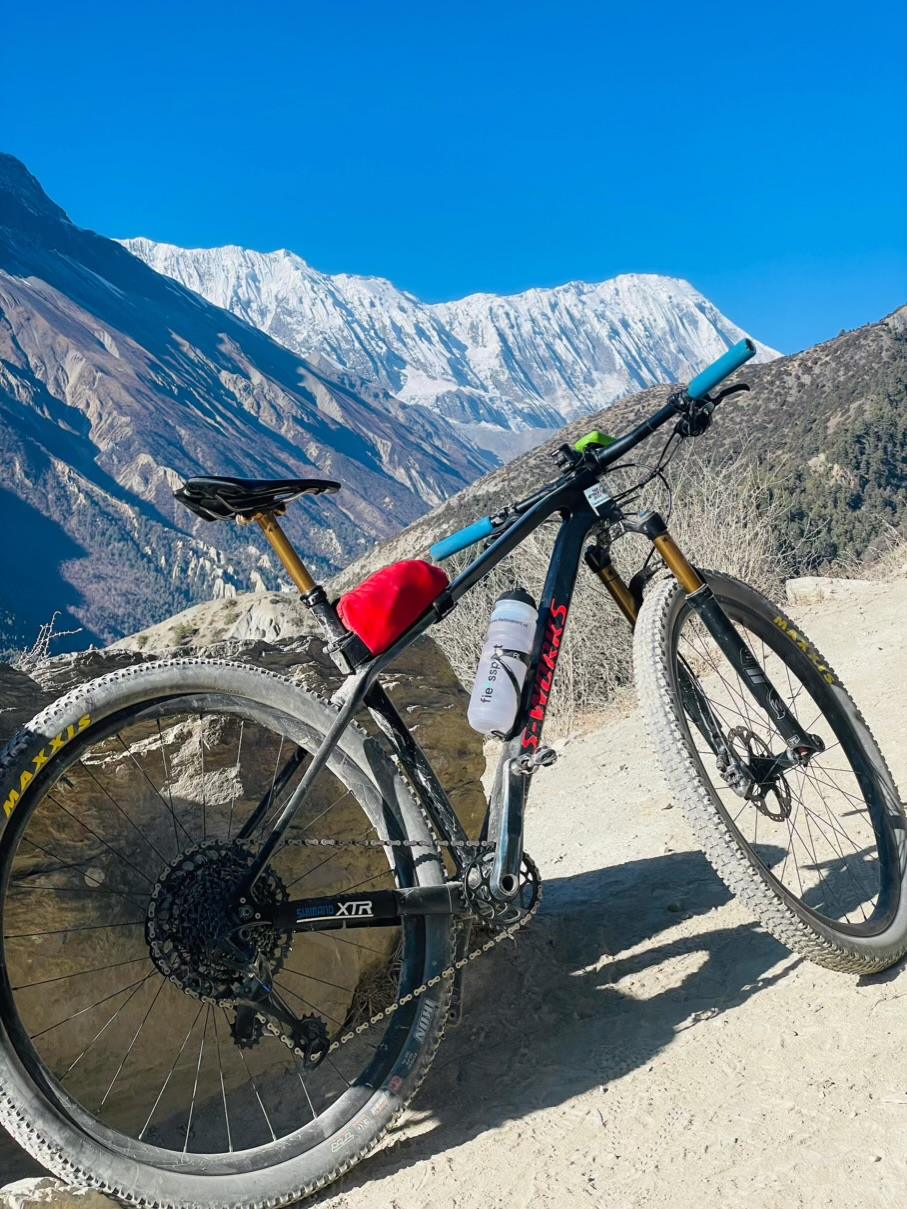
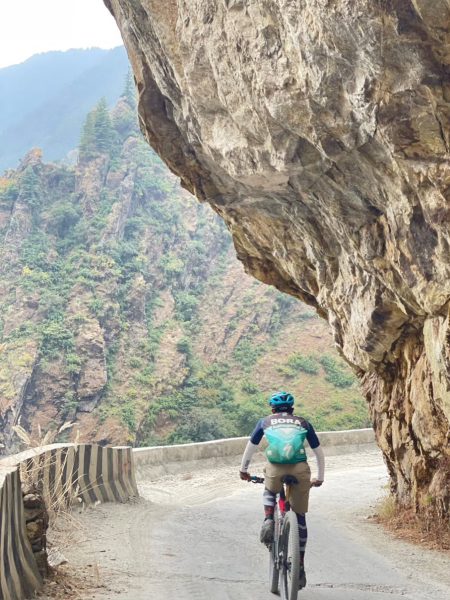
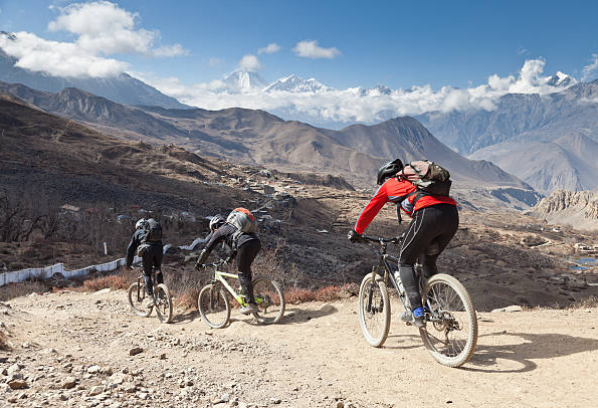
Annapurna Circuit Mountain Biking Trip


5(30)


Detailed Itinerary for Annapurna Circuit Mountain Biking
Your Journey, Step by Step
Day 1: Drive from Kathmandu to Besi Sahar to Chame
Breakfast, Lunch, Dinner

Local Lodge of Chame
Kathmandu to Besi Sahar – 175 km
6–7 hours by road
Your Annapurna Circuit Mountain Biking Trip starts with an early morning drive from Kathmandu to Besi Sahar, 175 km of curving road. Watch the city spread give way to rolling green hills, fields, and rooftops of villages. The road follows the Marsyangdi River, catching here and there brief glimpses now and then of snowy peaks on the horizon as you wind deeper and deeper into the mountains. The scenery shifts with every bend, a preview of things to come.
We begin the off-road adventure from Besi Sahar on bumpy, stony roads along rocky mountain tops and through cataract waterfalls. The terrain becomes alpine in nature with pine forests and huge mountain summits. You will spend the night at Chame (2,670m), headquarters of Manang District, renowned for its Tibetan culture and ancient monasteries. Mountain breeze and soothing river sounds are the perfect ambience for the next bike adventure.
Day 2: Chame to Pisang
Breakfast, Lunch, Dinner
Lodge in Pisang
3,200 m
~12–15 km
Day 2 marks your first real mountain biking experience on the Annapurna Circuit Mountain Biking Trip, covering about 15 km of thrilling trails. The day begins with gentle riding through dense pine forests, passing traditional villages like Bhratang, where life seems untouched by time.
Above is the spectacular Marsyangdi River raging its way through a great transition to green and distant white-topped peaks. Keep an eye out for wildlife that roams this area and inhale crisp mountain air as you develop your riding rhythm.
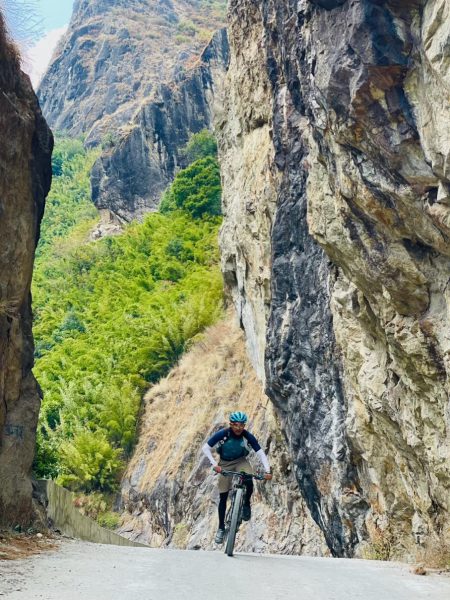
The route reveals spectacular natural formations, including the Paungda Danda, a colossal 1,500-meter-high arched rock face towering above the river. As the trail climbs, it becomes more challenging, with rocky and scrubby sections testing your skills and stamina.
Arriving at Lower Pisang (3,200 m), the valley opens dramatically, revealing sweeping views of Annapurna II and Annapurna IV. Take time to explore Upper Pisang Village, known for its ancient monasteries, traditional Tibetan-style stone houses, and stunning mountain vistas—an ideal spot to rest and soak in the scenery.
Day 3: Pisang to Manang – Riding Higher into the Himalayas
Breakfast, Lunch, Dinner
Cozy Hotel in Manang
17 km
3,540 m
Day 3 of your Annapurna Circuit Mountain Biking Trip spans 17 km and presents two route options for riders:
- The easier lower road that follows the Marsyangdi River, or
- The tougher route up Upper Pisang, with long ascents, rewards fearless riders with stunning views of the Annapurna Massif.
The trail winds through high-altitude grasslands and ancient Buddhist villages like Ghyaru and Ngawal, where wind-blown prayer flags flutter, and stupas and chortens line the horizon. The air grows thinner with each ascent into the Himalayas.
The drier but amazingly beautiful landscapes lead you to Manang (3,540m), a charming town at the foot of gigantic mountains. This acclimatization stop strategically provides you with interesting glimpses into Himalayan life in its monasteries, yak grazing, and old stone houses. Spend the day walking around the town or just stand amazed at the otherworldly scenery of glaciers, blue lakes, and the giant Annapurna range that forms a natural amphitheater around the town.
Day 4: Acclimatization day in Manang
BLD
Guest House
3,540 m (Manang)
Today is a day to rest, acclimatize, and explore the beautiful surroundings of Manang. You can spend the day walking through nearby villages, visiting monasteries, and enjoying alpine lakes and scenic viewpoints, immersing yourself in the rich Himalayan culture and stunning landscapes.
For those seeking a more active option, it’s possible to bike to Tilicho Lake, a 6–7 hour ride from Manang, though this should be decided in consultation with your guide or trip leader. If your itinerary allows an extra day, visiting Tilicho Lake is highly recommended; its turquoise waters and dramatic mountain backdrop make it one of the most spectacular sights in the Annapurna region.
This day balances gentle activity with rest, allowing your body to adjust to the altitude while experiencing the cultural and natural beauty of the area.
Day 5: Manang to Yak Kharka
Breakfast, Lunch, Dinner
Local lodge in Yak Kharka
~10–12 km
~4,100 m
Leaving the cultural center of Manang, today’s 10 km ride is an easy climb with Yak Kharka. The air gets thinner as you ride higher and higher, so every pedal stroke becomes heavier. The view is starkly different—trees give way to exposed, rocky landscape that is more and more isolated. Gaze out at the blue sheep grazing on the steep hillside and the huge Himalayan griffons soaring the thermal currents above.
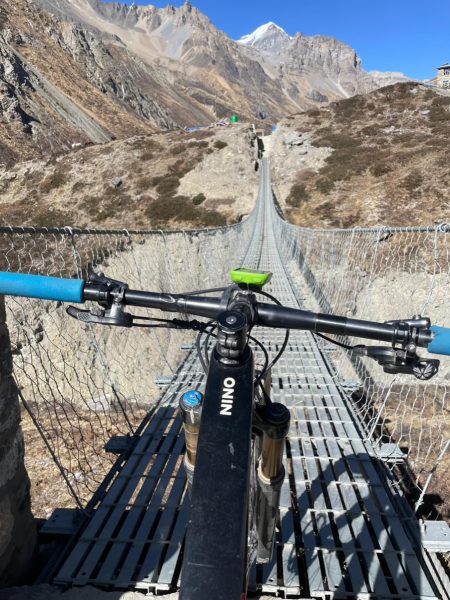
The trek crosses rough suspension bridges and small villages like Gunsang, where there is hot tea and hospitality offered by courageous villagers. At Yak Kharka (4,020m), the huge silhouette of Gangapurna and Tilicho Peak overpowers the horizon, and ponies and yaks feed on the upper grazing pastures. Such a high altitude offers such a powerful feeling of solitude and mountain peace. Take it easy today and get your body accustomed to the increasingly demanding conditions of higher and higher altitude cycling to come.
Day 6: Yak Kharka to High Camp
Breakfast, Lunch, Dinner
Lodge in Thorong Phedi
~6–7 km
4,880 m (High Camp)
The journey from Yak Kharka (4,020 m) to High Camp (4,880 m) is one of the most challenging and critical segments of the Annapurna Circuit Mountain Biking Trip. Covering roughly 6–7 km, this high-altitude ascent is short in distance but steep and demanding, requiring careful pacing and acclimatization. The trail is rocky and uneven, with loose gravel and occasional scree slopes that test your stamina and focus.
As you leave the green alpine pastures of Yak Kharka, the terrain becomes increasingly barren and exposed. Towering cliffs, glacial valleys, and snow-capped peaks dominate the horizon, while the thin Himalayan air makes each pedal stroke heavier and every step more challenging. Along the way, grazing yaks and hardy highland vegetation provide glimpses of life adapted to the extreme altitude.
High Camp (4,880 m) is a small, utilitarian stop with simple teahouses offering warmth, rest, and a place to acclimatize before the iconic Thorong La Pass, one of the highest rideable mountain passes in the world at 5,416 meters. This stop is crucial: travelers spend the afternoon checking gear, hydrating, and mentally preparing for the dawn crossing. From here, panoramic views of the surrounding Annapurna and Dhaulagiri ranges give a first taste of the dramatic scenery awaiting at the pass.
Day 7: High Camp to Muktinath via Thorong La Pass
Breakfast, Lunch, Dinner
Comfortable Hotel in Muktinath
~15–16 km
5,416 m
The most difficult and rewarding day begins pre-dawn with a tough 5 km ascent to Thorong La Pass (5,416m). Headlamps lighting the way through blackness, you’ll ascend a steep, occasionally icy, and often gusty trail that tests every ounce of your resolve. Thin air turns each pedal stroke into an accomplishment, but determination provides you with the highest prize—your triumph is passing the prayer-flag-shredded pass, the crowning of the entire loop.
After the celebratory descent up with stunning 360-degree vistas of Annapurna and Dhaulagiri ranges, the thrilling 16 km downhill descent to Muktinath (3,800m) begins. Downhill running is exhilarating but needs extreme care as you traverse loose gravel and steep switchbacks. Your ultimate destination, Muktinath, is a holy temple sanctified by both Hindus and Buddhists. The old temple complex with blazing fuel and 108 water spouts is a nice cultural contrast to the morning training.
Day 8: Muktinath to Marpha
Breakfast, Lunch, Dinner
Hotel in Marpha
~23 km
2,670 m
Day 8 gives you some 23 km of quite downhill riding in the interesting lower Mustang landscape. The route drops down through dry, windy country that feels like being on another planet. You’ll ride along the medieval town of Kagbeni, a centuries-old time capsule with dusty mud-brick buildings, winding cobblestone lanes, and rich Tibetan culture where people stick to centuries-long tradition. Pretty views continue as you drive over the Kali Gandaki River on its route within the globe’s deepest gorge.
Your path continues under the massive Dhaulagiri and Nilgiri giants on your way up to Marpha (2,670m), famous for its apple orchards and special architecture. The idyllic village is made up of immaculately whitewashed houses with flat roofs, narrow cobbled streets, and peaceful Buddhist monasteries. Spend time strolling along the cobbled streets, sampling some local apple brandy, and strolling through the peaceful courtyards hidden in this ancient Thakali village. The scenery of the mountains and the harmony of ethnicity make this arguably the most memorable place in the tour.
Day 9: Marpha to Tatopani
Breakfast, Lunch, Dinner
Comfortable Hotel in Tatopani
~45 km
Today is a long day ride of over 45 km, with some spine-tingling descents and some flat riding. The road follows the enormous Kali Gandaki River through villages representative of the area, such as Tukuche and Kalopani, with breathtaking vistas of Annapurna and Dhaulagiri looming up on either side. You feel like you can see the warmer climate and more fertile, denser growth as you descend—a welcome relief from the rough high-altitude landscape of the last couple of days.
Your hard-won riding day finishes at Tatopani (1,190m), Nepali for “hot water.” This river town is renowned for hot springs, the ultimate massage for tense muscles following days of riding some of the world’s most challenging terrain. Lying there in the warm, soothing mineral waters after days of riding over some of the world’s most challenging terrain is like being in heaven itself. Relax, look back on the mountain hike, and enjoy the much more pleasant weather of this lower elevation.
Day 10: Tatopani to Beni and Drive to Pokhara
Breakfast, Lunch, Dinner
3-Star Hotel in Pokhara
~30 km
Your last leg of your bicycle tour is along the Kali Gandaki valley once more, 18 km to Beni. Now nicely paved, it’s a serene and scenic finale to this portion as you slip through undulating rice-terraced country, subtropical rainforest, and hilltop villages. The early-morning ride provides plenty of time to look back on the terrific miles traveled and stunning views taken in over the past week.
By the time you arrive in Beni, your mountain bike trip has come to a halt, since you travel in jeeps for the road transfer to Pokhara. Your lakeside town welcomes you with its laid-back ambiance, international food, and breathtaking view of the Annapurna range from an entirely different perspective. Take a boat tour around the Phewa Lake, take a walk in the rainbow-painted streets, or just pick a seat and sit back at a café and feel great about having overcome one of the world’s most difficult but rewarding off-road cycling trails at the centre of the Himalayas!
Day 11: Transfer Back to Kathmandu
On the final day of your Annapurna Circuit Mountain Biking Trip, you will board a bus in Pokhara and return to Kathmandu, completing the journey. The drive covers approximately 200–220 km along the scenic Prithvi Highway, winding through rolling hills, terraced farmland, rivers, and roadside villages. Along the way, you can stop for refreshments, photographs, and to admire views of the Mahabharat hills and rural Nepali landscapes.
The bus ride typically takes 6–8 hours, giving you a chance to relax and reflect on your incredible journey through the Annapurna region—from high Himalayan passes and sacred sites to cultural villages and fertile river valleys. Upon arrival in Kathmandu, you’ll check into your hotel, marking the conclusion of the adventure in Nepal’s bustling capital.
If you have extra time, you can explore other parts of Nepal. We, Bold Himalaya, offer a variety of packages, like Nagarkot—famous for panoramic Himalayan sunrise views, which is a popular short trip from Kathmandu. These optional trips allow you to extend your adventure, experience more of Nepal’s natural beauty, and enjoy different perspectives of the Himalayas.
Want to customize your trip?
We ensure every trip meets your expectations — customize your itinerary anytime to match your travel style and preferences.
Inclusions
What’s Covered in Your Adventure
- Mountain Bike & Helmet – Top-of-the-line full-suspension bikes and safety helmets for the entire ride.
- Comfortable Accommodation – Twin-sharing rooms in teahouses and lodges along the mountain trail.
- Meals Taken Care Of – Nutritious breakfast, lunch, and dinner during your trip, along with tea/coffee.
- All Permits Included – We organize your ACAP permit and TIMS card so that you can have a smooth ride.
- Expert Guide Team – Experienced mountain bike guides to keep you rolling and safe.
- Safety Equipment – Full first aid kit and emergency oxygen for high-altitude reassurance.
- Hassle-free Transfers – Easy pickup and drop-off between your hotel and Kathmandu airport.
- Mountain Transportation – Private vehicle from Kathmandu to Chame and back from Beni to Pokhara.
- Flights – International and domestic flights to/from Nepal
- Personal Extras – Snacks, drinks, hot showers, WiFi, device charging, and laundry during travel.
- Insurance Coverage – Comprehensive travel and medical insurance covering emergency helicopter evacuation.
- Adult Beverages – Beer, wine, and bottled drinks are extra during the journey.
- Guide Appreciation – Tips for your hardworking guides and support team (optional but welcome).
- Extra Nights – Any additional stay at Pokhara and Kathmandu prior and post the adventure.

Gears and Equipment for the Annapurna Circuit Mountain Biking Trip
Proper gears and equipment are essential for a safe, comfortable, and enjoyable Annapurna Circuit Mountain Biking Trip. While personal choices may vary, the most important consideration is having enough clothing and gear to tackle cold and variable Himalayan weather.
Riding Gear
- Cycling gloves (3 pairs)
- Biking glasses
- Padded cycling shorts (for at least 5 rides)
- Long- and short-sleeved cycling tops
- Biking socks (5 pairs minimum)
- Hat and non-biking gloves
- Headlamp
Upper Body
- Sun hat or cap
- Knitted hat/beanie
- Scarf, neck gaiter, or buff
- Headlamp
- Sunglasses
- Waterproof, windproof shell
- Fleece jacket or pullover
Lower Body
- Technical fabric base layer
- Hiking pants (2)
- Comfortable pants for teahouses
- Waterproof, windproof shell
- Hiking shorts
Hands and Feet
- Wool or technical liner gloves
- Insulated hard-shell gloves (for cold months)
- Wool or technical warm socks
- Hiking socks and liner socks (optional)
- Trekking/hiking boots (waterproof recommended)
- Casual shoes
- Gaiters (for dust or snow)
Good to Know
Things to Remember
2. Physical Conditioning & Cycling Expertise
This ain’t no normal bike tour—it’s a serious physical test with very high endurance, stamina, and technical skills in cycling. You’ll encounter steep climbs, rocky technical descents, and the severe conditions of high-altitude riding.
Start training well ahead of a number of months with intense mountain bike training, cardiovascular training, and strength training. You need to be extremely at ease on gravel roads, rocky single-track, and dirt trails with tight turns in possibly poor weather.
If new to high-altitude cycling, attempt to gain experience by doing progressively tougher mountain rides before attempting this legendary route. This will be a big factor in your enjoyment and success.
3. Altitude Acclimatization & High-Altitude Problems
Since this trek will have you over 5,400m at Thorong La Pass, altitude sickness is a problem. Headache, nausea, dizziness, and shortness of breath are symptoms which can occur. To acclimatize:
- Ascend slowly, with time to acclimatize.
- Consume plenty of water with no alcohol or caffeine.
- Adhere to the “climb high, sleep low” rule.
- Rest days in Manang to acclimatize.
- Carry Diamox (altitude sickness medication) but only after consultation with a doctor.
4. Trail Difficulty Level
Don’t be fooled—this trail is renowned as one of the world’s most challenging bike odysseys for a reason. You have it all here, ranging from smooth asphalt pieces to vicious rocky sections, riverbed fording, and thigh-searing ascents.
The Thorong La Pass section tests experienced cyclists with thin air, steep inclines, and loose gravel when descending. Strong gusty afternoons’ winds on the Muktinath to Marpha section make it more challenging.
You need A-grade technical skill, brute physical strength, and mental toughness to navigate these difficult sections. In uncertainty about any section, there is backup support that can take you through the worst of the sections.
5. Proper Equipment & Gear
Buying good equipment is required to embark on this extreme adventure. A good mountain bike with good suspension, good disc brakes, and rugged Himalayan terrain-friendly coarse tires would be your first requirements. Safety equipment includes a properly fitting helmet, bike gloves, and knee/elbow pads for those inevitable rocky patches.
Dress intelligently in lightly layered, breathable bike attire and a reliable waterproof jacket in case of surprise rain. A water bottle pack is essential for constant hydrating, and don’t forget to always bring minimal repair kit, spare tubes, and a pump—mechanical aid is usually hours away on way-back mountain roads.
6. Accommodation & Food Options
The path has plain but adequate teahouses and lodges; do not expect luxury at these elevations. Plain rooms generally have beds with blankets and shared bathrooms, but hot showers grow scarcer at higher elevations.
Larger towns like Chame, Manang, and Muktinath have slightly better facilities, like limited WiFi and electricity outlets. Meals are plain, energy-rich food like dal bhat (lentils and rice), soups, noodles, and Tibetan bread. Expect fewer options and higher-priced fares as you go higher, where the provision must be dragged up.
Seasoned bikers supplement with power bars, nuts, and dehydrated fruit for sustenance on the trails.
7. Weather Cycles & Extremes in Temperatures
The Himalayas have their own weather, and expect extremes and precipitous change. Lower altitudes are pleasant and warm (15-20°C) during riding hours, but close to Thorong La Pass, temperatures are way below freezing (-10°C or lower), especially at night.
Diurnal temperature variation is extreme—freezing mornings turn quite hot midday before cooling down quickly. Afternoon winds in Manang, Muktinath, and Marpha are powerful, sometimes strong enough to affect your riding.
Dress suitably in wind/waterproof outerwear, suitable thermals, warm gloves, and a hat that can be adjusted to wear during the day as required by the weather.
8. Support Vehicles & Emergency Standby
Our treks include well-thought-out support infrastructure for the high mountainous country requirements. Although the greater part of the lower circuit can be approached by 4×4 vehicles, the farthest and highest parts of the track between Yak Kharka and Muktinath are less vehicle-accessible.
For these areas, we employ qualified porters who are able to carry essentials and emergency equipment on foot or by pack animal. Our guides each have satellite communication equipment to request emergency assistance when needed, and we also have arrangements with local helicopter rescue services in case of major emergencies.
We also arrange backup trekking routes in areas that are impassable and carry large first-aid kits. This multi-tiered strategy enables you to enjoy backup facilities even in the most remote location of the circuit.
9. Local Culture & Way of Life
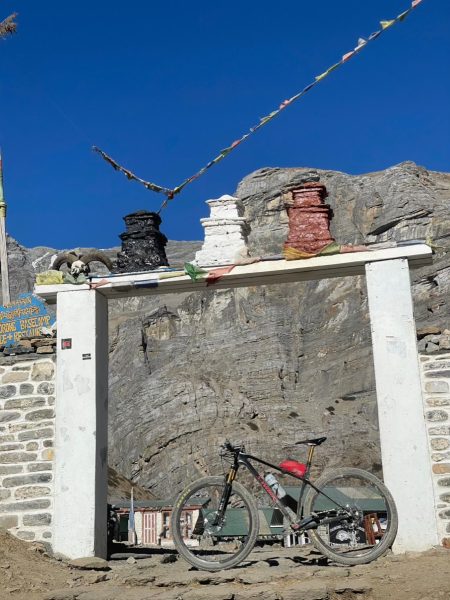
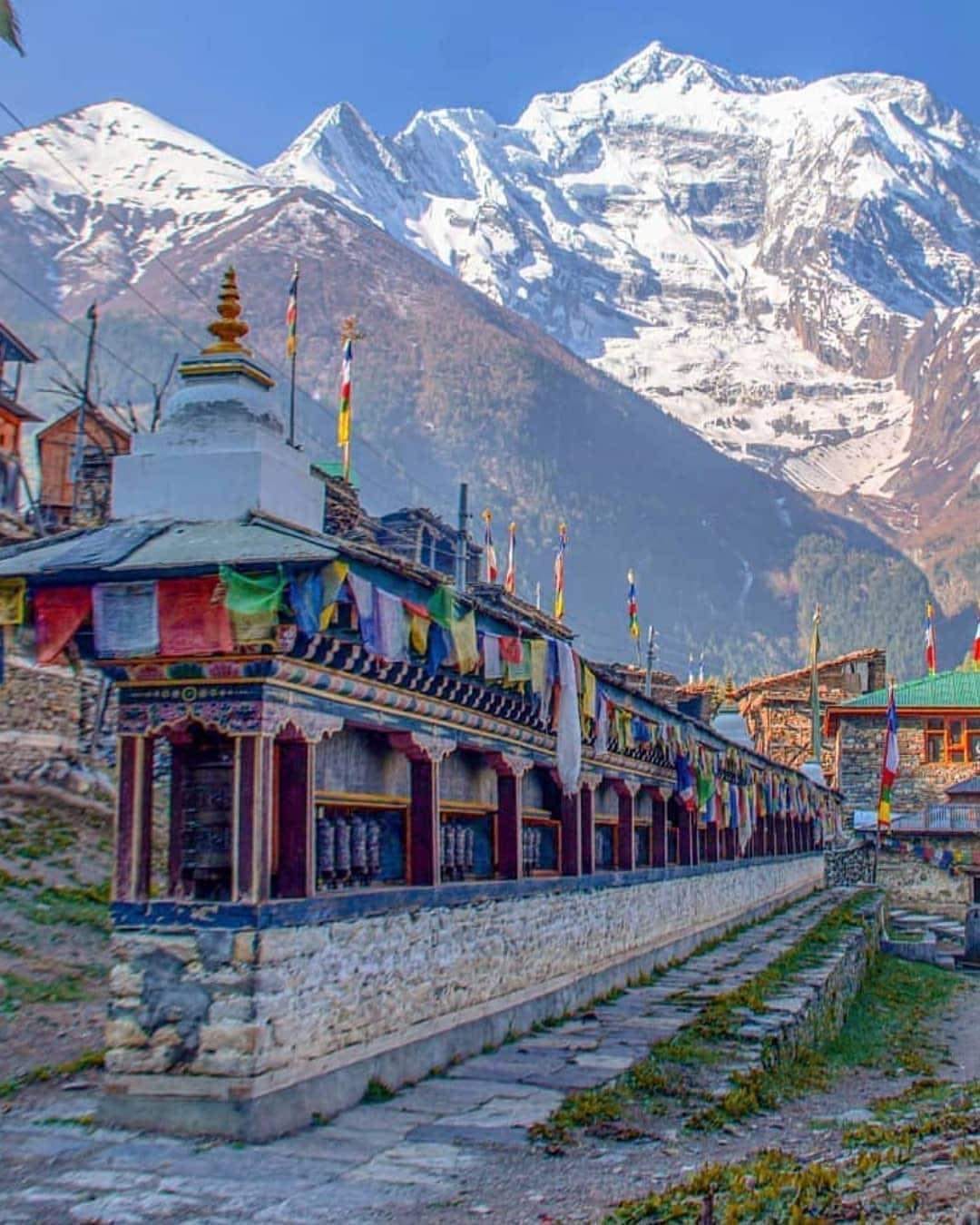
Aside from physical adventure, the trek affords a wonderful local culture experience in terms of diversified mountain habitations like Tamang, Gurung, Thakali, and Tibetan-type settlements. Each part of the territory is known by typical tradition in terms of extremely ancient Buddhist monasteries, prayer wheels, chortens (Buddhist stupas), and pleasant mani stone walls.
You’ll observe ancient rock houses, yak caravans, and multicolored prayer flags against mountain landscapes in villages like Pisang, Manang, and Marpha. Spiritual significance is offered by the holy Muktinath Temple as a pilgrimage site revered by Hindus and Buddhists alike.
Locals’ natural hospitality and warmth become riders’ most cherished memories apart from the stunning scenery.
10. Wildlife & Natural Beauty
The Annapurna Circuit is aesthetically satisfying. You see Himalayan blue sheep in meadows, yaks in meadows high above the timber line, and langur monkeys on forest. Birds of prey that you might find flying overhead include eagles and Himalayan griffon vultures.
The vista itself is constantly changing, going from rain jungle and field near the base, to lush green tropical jungle at the base, to desert-style plateaus covered with gravel of Tibetan look, higher up.
On your mountain biking tour, you’re treated to views of gigantic mountains like Annapurna (8,091m), Dhaulagiri (8,167m), and the legendary Machapuchare (6,993m).
11. Permits & Entry Requirements
There are two permissions cyclists need to cycle the Annapurna Circuit:
- Annapurna Conservation Area Permit (ACAP) – For a visit to the conservation area.
- Trekkers’ Information Management System (TIMS) Card – For all the trekkers and cyclists for safety monitoring.
These are issues by NTNC.
11. Bikes for the Annapurna Circuit Mountain Biking Trip
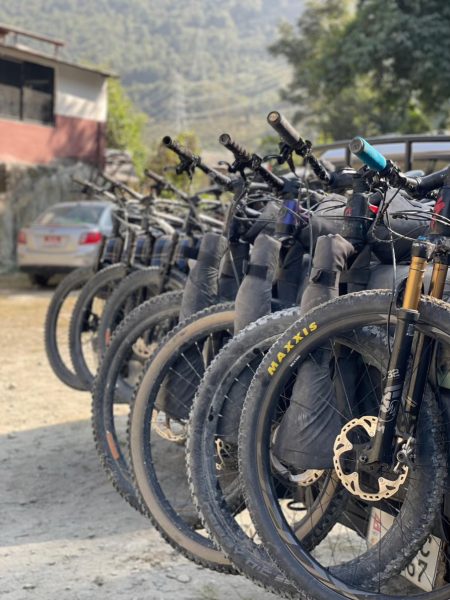
For this adventure, either a hard-tail or full-suspension mountain bike will work well. Certain parts of the route feature downhill shortcuts, where a full-suspension bike is strongly recommended for better control and comfort. Your guide will point out where these shortcuts are available.
All rental bikes are properly serviced and fully functional, with standard hard-tail bikes included in the base rental—ideal for most sections of the trip. For those who prefer extra suspension and comfort, full-suspension bikes are available for an additional charge.
Available Bike Brands and Models
Trek: 3-series, 4-series, 6-series, 8-series
Cube: Comp, LTD, CMPT, Reaction
Giant: ATX, Tralon
Other brands: Capic, V-Ket8
These bikes are carefully maintained to ensure safety, reliability, and performance across the diverse terrains of the Annapurna Circuit from smooth valley roads to rocky mountain trails.
FAQs
Your Questions, Answered
2. When is this bike tour done?
Best time is spring (March to May) and autumn (September to November) with dry country and not hot weather, and monsoon season has wet trails and winter has slippery snow and chilly temperature.
3. Do I need to possess a lot of experience in mountain biking?
Yes, vast experience of off-road mountain biking on this tour since technical downhill and high-altitude lessons exclude inexperienced riders.
4. Do I use my own mountain bike, or can I hire one?
We also have high-quality full-suspension Himalayan trail bikes available for hire, but do use your own if you’re accustomed to it (don’t just remember international transport planning and bring appropriate spares with you, though).
5. How's the accommodation?
You’ll be sleeping in straightforward but comfortable mountain teahouses with twin beds and shared toilet and shower facilities, and a bit more refined lodges in larger villages like Manang and Muktinath where you’ll enjoy the luxury of WiFi and hot showers.
6. Will I probably suffer from altitude sickness?
Altitude sickness is a risk, especially rising to Thorong La Pass at 5,416m, but our trek has gradual inclines and acclimatization days and our guides are experienced at recognizing and dealing with altitude problems at an early stage.
7. Do I need a guide for this trip?
Though it is definitely possible to climb alone, a guide adds ten times the fun to your experience by doing the hard work, solving issues, offering altitude safety support and insider information you would never get otherwise.
8. What will I eat?
Seek decent mountain food like dal bhat (rice and lentils), noodle soups, pasta, momos (dumplings) and pancakes with Nepali-Tibetan spices, with veg highly recommended at high altitudes where fresh meat is not easily available.
9. What do I do if I get too tired or otherwise unable to complete a section?
The rugged terrain of the nation means that motor support is impossible in most of the nation, so we have added rest days and backup roads where possible, and your baggage can be portered on the worst sections.
10. What's the weather like?
Weather is very changeable with height: warm lower valleys (15-20°C) but cold high passes (down to -10°C at Thorong La), with windy afternoons characteristic of Marpha and Muktinath.
11. Do I have to buy special insurance for the trek?
Standard travel insurance will not suffice – you will need to make sure that you arrange special high-altitude adventure cover (over 5,000m) with emergency helicopter evacuation and full medical costs, which we will arrange in advance.
12. Can I charge my mobile phone and access WiFi while away?
Most teahouses have internet and charging stations for a small additional fee, but the better the better, the more unstable the connections, so it’s good to get a chance to have a digital detox.
13. How much extra money should I take?
$15-25 per day for incidentals like hot showers, internet, souvenirs, snacks, and drinks, and bring enough cash since there are not easily accessible ATMs after you exit towns.
14. Can we hire the bike for the trip?
Yes, bikes can be hired at the time of booking. To ensure a comfortable and safe ride, the bike’s frame size must match your height, and availability is limited for each size. We strongly recommend providing your height details well in advance to secure the right bike for you.
All rental bikes are fully serviced and functional, but in case of any damage to the bike or equipment, the client is responsible for repair or replacement costs, depending on the nature and extent of the damage.
This policy ensures safety, proper bike fit, and a smooth experience while riding through the varied and challenging terrains of the Annapurna Circuit.
15. Are there any bike Maintenance and Repairs center on the Annapurna Circuit?
During the trip, bike maintenance and repairs are fully supported. Where available, the support vehicle and your guide carry essential repair tools and spare parts to address common issues along the route.
We also recommend that riders carry some basic tools and spares, such as a puncture kit, spare tube, and Allen keys, for minor fixes on the trail.
All guides are experienced cyclists and qualified mechanics, skilled at maintaining and repairing bikes in remote conditions. This ensures that your ride remains safe, smooth, and enjoyable throughout the Annapurna Circuit.
16. What Cycling Gear do i need for for the Annapurna Circuit Mountain Biking Trip?
For safety and comfort, it’s important to bring the right gear. Here’s a checklist of essentials for the trip:
Essential Cycling Gear
Cycling helmet – Provided with bike rental
Touring or mountain biking shoes – Sturdy and comfortable for long rides
Cycling gloves – To protect your hands and improve grip
Cycling shorts – 1 to 3 pairs for comfort on long rides
Socks – Wool or synthetic, 2 to 3 pairs
Leg warmers or tights – For cooler mornings and high-altitude sections
Short-sleeved cycling shirts – 2 for layering
Light long-sleeved shirt – For sun protection and layering
Weather Protection
Windcheater, rain gear, jacket, and pants – Essential for unpredictable mountain weather
Waterproof shoe covers – Useful during rain or wet trails
Other Essentials
Backpack – Recommended for valuables such as your camera, passport, and wallet
Note: Panniers are not suitable for this trip due to rough trails and steep sections
With the right gear, you’ll stay comfortable, protected, and ready to enjoy the diverse terrain and stunning landscapes of the Annapurna Circuit.
17. Can a Beginner Do the Annapurna Circuit?
The Annapurna Circuit Mountain Biking Trip is suitable for beginners with a good level of basic fitness and some cycling experience.
While the route includes challenging mountain climbs, rocky trails, and high-altitude passes, the trip is designed with support from experienced guides and optional support vehicles, making it accessible even for those who are not expert cyclists.
18. What are the Starting and Ending Points of the Annapurna Circuit Mountain Biking Trip
The Bold Himalaya itinerary starting point is Besisahar, located about 170 km from Kathmandu, which takes roughly 6 hours by vehicle to reach. Besisahar is the gateway to the Annapurna region and the beginning of the mountain biking adventure, offering access to the Marsyangdi River valley and surrounding villages.
The ending point is Beni, approximately 83 km from Pokhara. It takes around 4 hours by road from Beni to reach Pokhara, where travelers can rest, explore, or continue their journey in Nepal. Beni lies at the confluence of the Myagdi and Kali Gandaki rivers, providing a scenic finish to the circuit and easy access to transportation.
View OurSimilar Packages
Discover our top tours, loved by thousands of travelers annually. Choose the adventure that inspires you and embark on a journey tailored to your desires.
View All Packages

Upper Mustang Mountain Biking Tour
 Nepal Tour Packages
  13.0 Days

Save 25%
Annapurna Circuit Trek
Nepal Tour Packages
11.0 Days
Save 28%
Nar Phu Valley Trek – 11-Day Remote Himalayan Adventure
Nepal Tour Packages
11 Days
Save 22%
Nar Phu Valley with Annapurna Circuit Trek
Nepal Tour Packages
16 Days

Nagarkot Mountain Biking
Nepal Tour Packages
2.0 Days