




Everest Base Camp Trek with Helicopter Return


Detailed Itinerary: Everest Base Camp Trek with Helicopter Return to Lukla
Here’s How Your Journey Will Unfold
Day 1: Arrival in Kathmandu
1,400m/4,600ft
4* Hotel
Upon your arrival at Tribhuvan International Airport, a Bold Himalaya representative will receive you there and transfer you to your hotel. You can either relax or go out and experience the vibrant streets of Thamel.
In the evening, you’ll meet your trekking guide for a short briefing about your Everest Base Camp Trek with Helicopter Return, and also help arrange the necessary gear. Then, you will spend the night in Kathmandu, preparing for the adventure ahead.
Note: If you arrive in Kathmandu early in the morning, then you will have a whole day to visit Kathmandu. So, if you want, you can do a Kathmandu Sightseeing tour.
Day 2: Fly to Lukla & Trek to Phakding
30 minutes
3-4 hours
Tea House
Lunch & Dinner
Early in the morning, you will take a scenic flight from Kathmandu to Lukla, the main gateway to the Everest Base Camp trek. This thrilling 30-minute mountain flight offers spectacular views of the Himalayan range, including rolling hills, deep valleys, and snow-capped peaks.
Once you land, you will meet your trekking crew and porters. Then, the trek officially begins as you head towards Phakding, a charming village located along the banks of the Dudh Koshi River.
The trail descends gently through traditional Sherpa villages such as Cheplung and Ghat. Along the way, you will pass prayer wheels, mani walls, Buddhist stupas, and colorful prayer flags, strong indicators of the region’s deep-rooted Buddhist culture.
Upon reaching Phakding, you will check into a cozy teahouse lodge, enjoy a warm meal, and rest overnight in preparation for the next day’s trek toward Namche Bazaar.
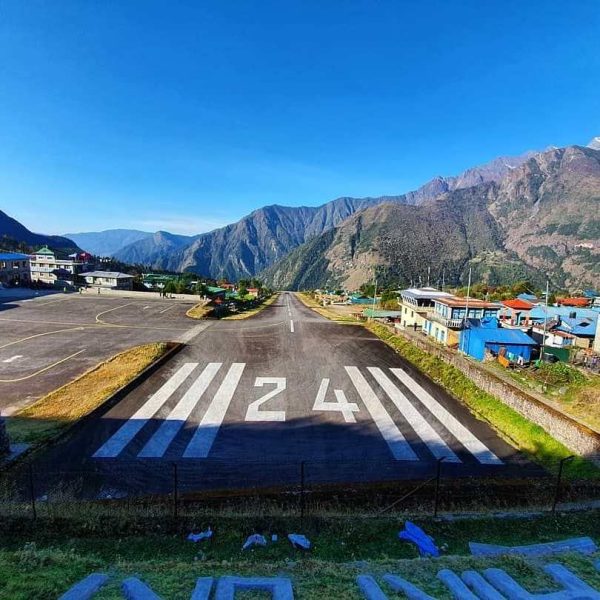
Lukla – Gateway to the Everest Region
Lukla, located at 2,860 meters (9,383 ft) in Nepal’s Khumbu region, is famously known as the starting point ... Read More
Day 3: Phakding to Namche Bazaar
3,440m/11,286ft
Teahouse
Breakfast, Lunch & Dinner
5-6 hours
After having breakfast, you leave Phakding behind and trek deeper into the Khumbu Valley, heading toward Namche Bazaar, the vibrant Sherpa hub. The trek starts along the scenic Dudh Koshi River, passing multiple suspension bridges, including the iconic Hillary Bridge, perched high above the river valley. This section is also an excellent opportunity to capture photographs of Kusum Kanguru and the surrounding peaks.
Passing through Monjo village, you will have your Sagarmatha National Park permit checked by park officials. Once inside the park, the landscape begins to open, providing your first views of Everest, Lhotse, and Thamserku.
Arriving at Namche Bazaar, you’ll be greeted by the mountain town’s lively atmosphere, with cafes, bakeries, trekking shops, and lodges lining its streets. Overnight in Namche Bazaar.
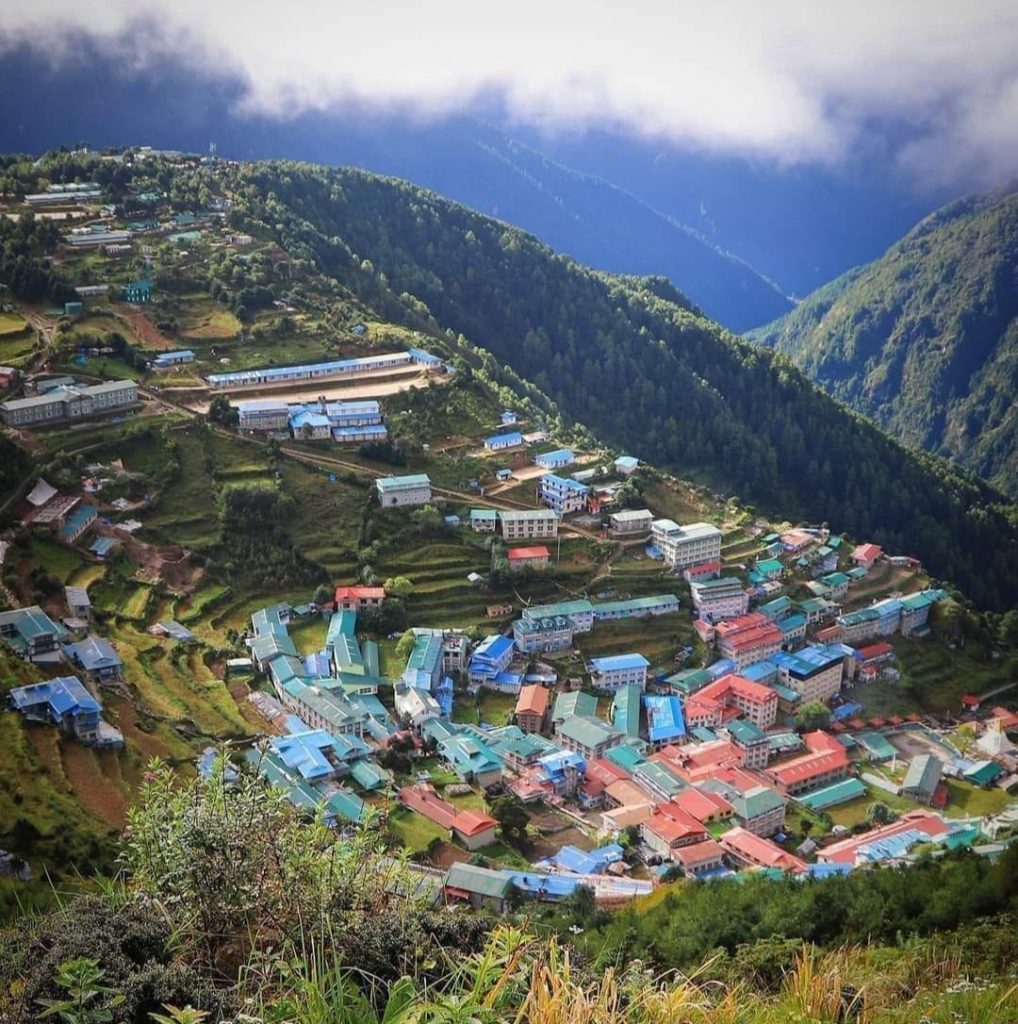
Namche Bazaar – Gateway to the Everest Region
Namche Bazaar is the largest and most important town in Nepal’s Everest region, located at an altitude of ... Read More
Day 4: Acclimatization at Namche Bazaar
3,440m/11,286ft
Teahouse/ Lodge
Breakfast, Lunch & Dinner
5-6 hours
Today is our acclimatization stop in Namche Bazaar. You’ll stay an extra day so your body can slowly adapt to thinner air. But this does not mean you’ll rest the full day. You can go for a hike to Everest View Hotel for breathtaking panoramic views of Mount Everest, Ama Dablam, Lhotse, and Thamserku.
Back in Namche, immerse yourself in Sherpa culture by visiting the Sherpa Museum, or you can explore cafes and bakeries. Spending a day in Namche not only reduces the risk of altitude sickness but also gives you a deeper appreciation of the Himalayan Sherpa lifestyle, making it a crucial and enjoyable part of the Everest Base Camp trekking experience.
Note: If you are a seasoned trekker with prior high-altitude experience, you may skip the full acclimatization day at Namche Bazaar and continue directly to Tengboche.
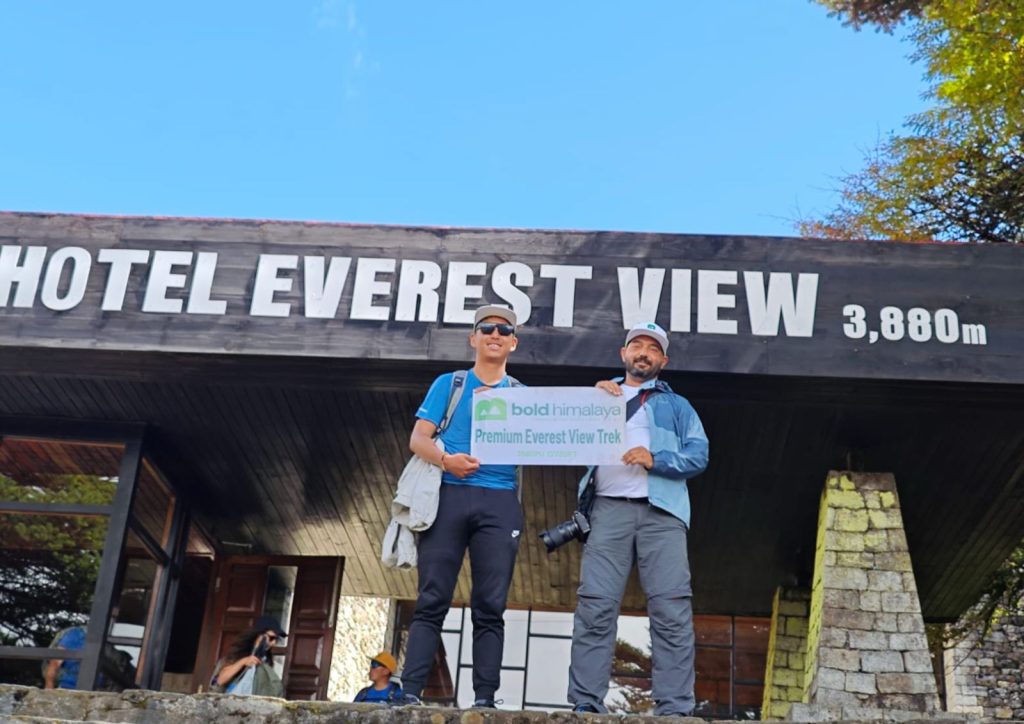
Everest View Hotel – World’s Highest Luxury Hotel
Everest View Hotel is one of the most iconic landmarks in Nepal’s Everest region, famous for being the ... Read More
Day 5: Namche Bazaar to Tengboche
3,870m/12,694ft
Teahouse/ Lodge
Breakfast, Lunch & Dinner
5-6 hours
Continuing our trek, you ascend to Tengboche following the mountainside, with wide views of Everest, Ama Dablam, and surrounding peaks on clear days. The path gently rises and falls through pine forests, open ridges, and small settlements, which gives a mix of natural scenery and cultural encounters.
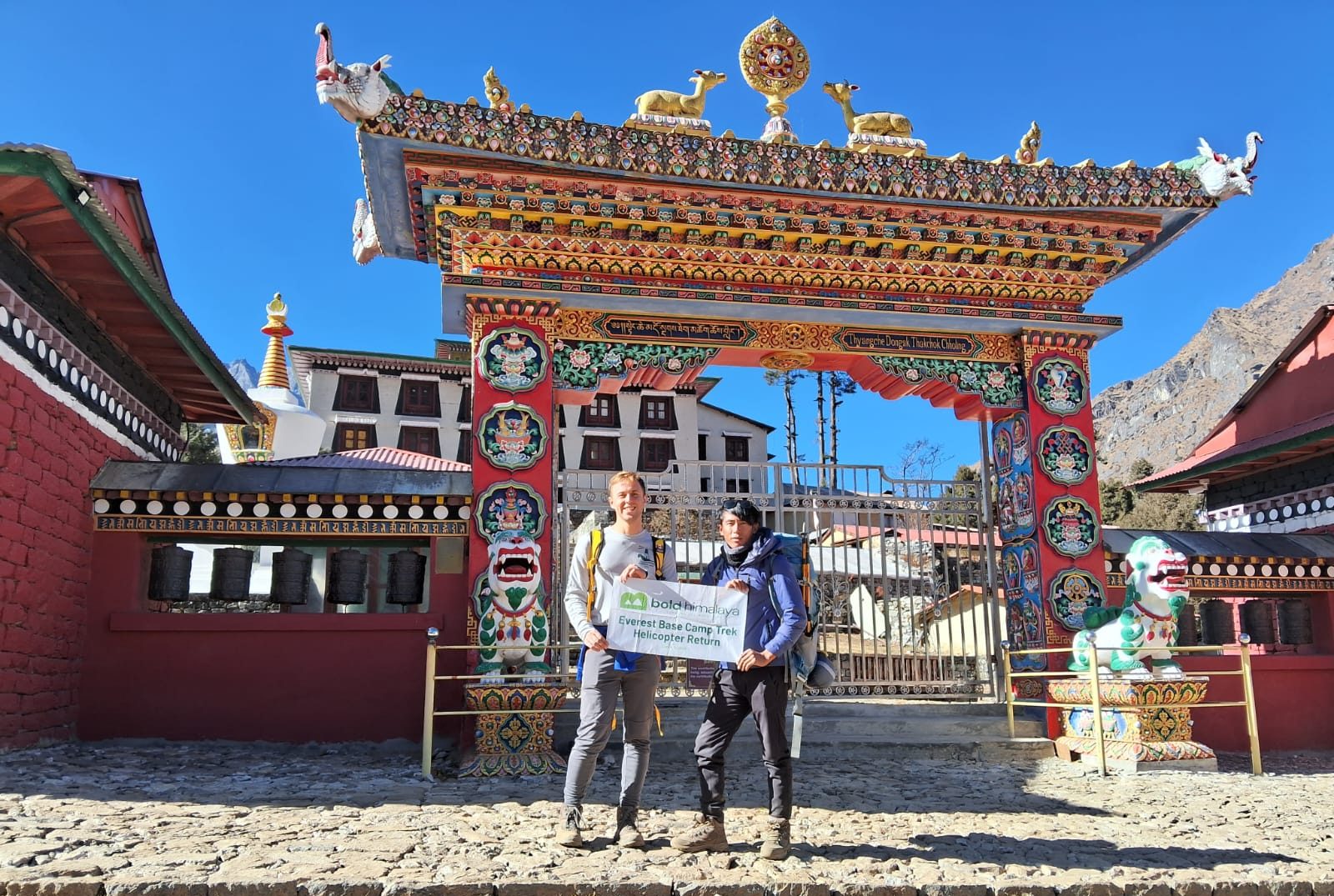
As you descend toward the Dudh Koshi River and then climb again, the walk becomes more rhythmic and steady. Eventually, you reach Tengboche, home to the famous monastery, where the peaceful atmosphere and mountain backdrop make it a rewarding place to rest after the day’s trek.
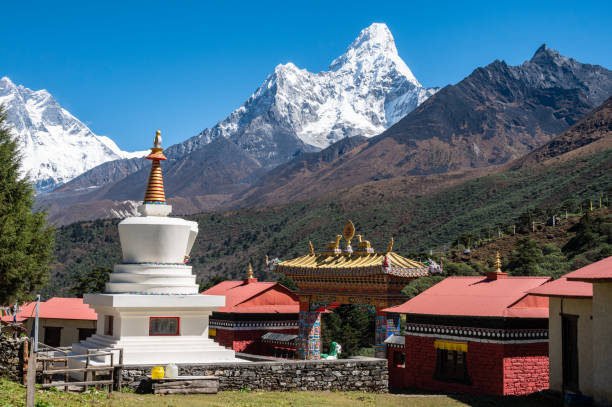
Tengboche Monastery – The Spiritual Heart of the Khumbu
Perched at 3,870m (12,694ft) in the Khumbu Valley, Nepal, Tengboche Monastery is the largest and most famous monastery ... Read More
Day 6: Tengboche to Dingboche
4,410m/14,470ft
Tea house / Lodge
Breakfast, Lunch & Dinner
5-6 hours
Today your trek starts from Tengboche to Dingboche, which takes you deeper into the high Himalayas, where the landscape slowly becomes more open, drier, and more dramatic.
You begin by descending through rhododendron and juniper forests from Tengboche, crossing suspension bridges over the Imja Khola river valley. The trail then passes through villages like Pangboche, where traditional stone houses and views of Ama Dablam stand out clearly against the sky.
As you continue upward, the vegetation becomes sparse and the air noticeably thinner. The valley widens, and you walk across windy alpine terrain with sweeping views of towering peaks all around. After some hours of walking, you reach Dingboche, a peaceful high-altitude village surrounded by stone-walled fields, where trekkers rest and acclimatize before moving higher toward Everest Base Camp.
Day 7: Rest day at Dingboche
4,410m/14,470ft
Teahouse / Lodge
Breakfast, Lunch & Dinner
Today is a rest and acclimatization day at Dingboche, a key part of the Everest Base Camp Trek with Helicopter Return. The main goal is to let your body adjust to thin mountain air while enjoying the beauty of the Khumbu Valley, Nepal.
Most trekkers take short acclimatization hikes. A popular option is Nagarjun Hill (5,100m). The climb is challenging but rewards you with panoramic views of Makalu, Lhotse, Ama Dablam, and Island Peak.
Another great option is a walk to Chhukung (4,730m), offering a close-up view of Island Peak and the imposing Lhotse-Nuptse wall.
Back in Dingboche, soak in the peaceful Sherpa village atmosphere, watch yaks graze in the pastures, and enjoy sunsets that turn the surrounding peaks golden, perfect for photography and reflection.
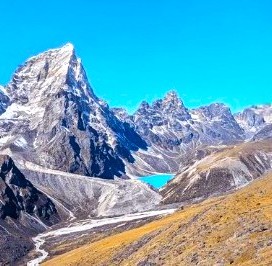
Nangtartshang Peak
Nangkartshang Peak, also known as Nangkar Tshang, is a well-known acclimatization viewpoint that lies above the village of ... Read More
Day 8: Dingboche to Lobuche
4,940m/16,210ft
5–6 hours
Teahouse
Breakfast, Lunch, Dinner
Your morning walk is that much more serious today with your elevation higher and the air considerably thinner. The path rises consistently higher on grass well above the glacial moraines of rock, with Ama Dablam, Thamserku, and Taboche rising high away to the south as a dramatic backdrop.
Before you reach Dughla (Thukla), a tiny village of tea houses well situated as a convenient rest-stop before attempting to climb the testing Thukla Pass rise. There is a row of markers here for the dead climbers on Everest, an unpleasant but emotive reminder of the perils of the mountain. The ground is rockier and more scree-like after the pass, with huge boulders and glacier detritus scattered everywhere. Overnight in Lobuche.
Day 9: Gorakshep to Everest Base Camp & return back to Gorakshep
5,107m/16,961ft
Teahouse /Lodge
Breakfast, Lunch, Dinner
7-8 hours
The Lobuche to Gorakshep trekking route begins with a slow, steady walk over the lateral moraine of the Khumbu Glacier. At this altitude, the air is thin, and every step requires controlled breathing and focus. The trail is rocky and uneven, shaped by centuries of glacial movement.
As you progress, you pass dramatic ice formations, frozen meltwater pools, and deep blue crevasses. After several hours, you reach Gorakshep, the last settlement before Everest Base Camp. Following a short rest and a refuel, the Gorakshep to Everest Base Camp hike leads across glacial ice and shifting moraine, guided by colorful prayer flags.
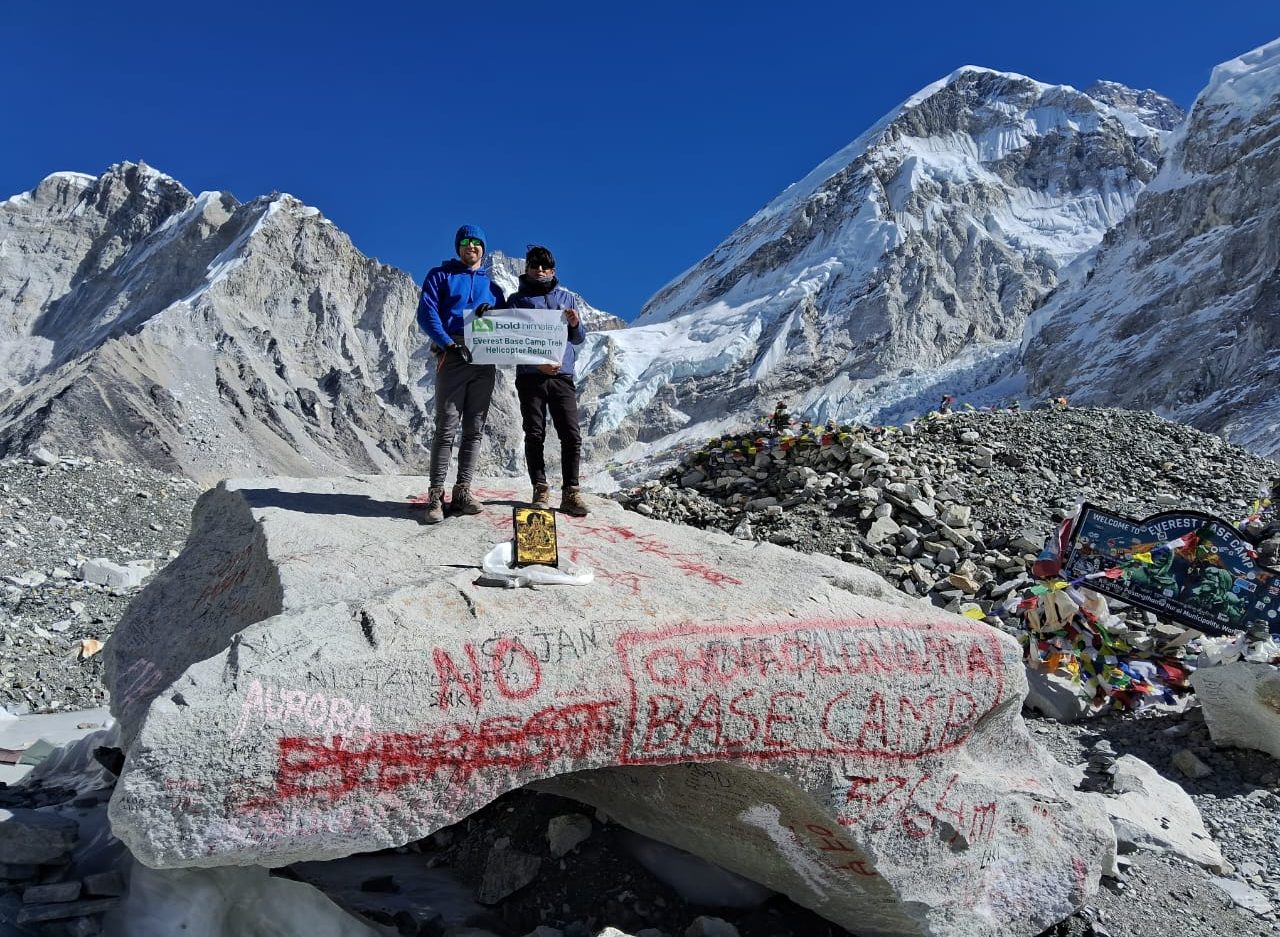
Finally, reaching the main destination, Everest Base Camp (5,364m/17,594ft) is a moment of deep achievement. While Mount Everest’s summit is not visible from base camp, the surrounding amphitheater of peaks creates an unforgettable experience.
After spending time at base camp, you return to Gorakshep for a well-earned rest, completing Day 9 of the Everest Base Camp trek.
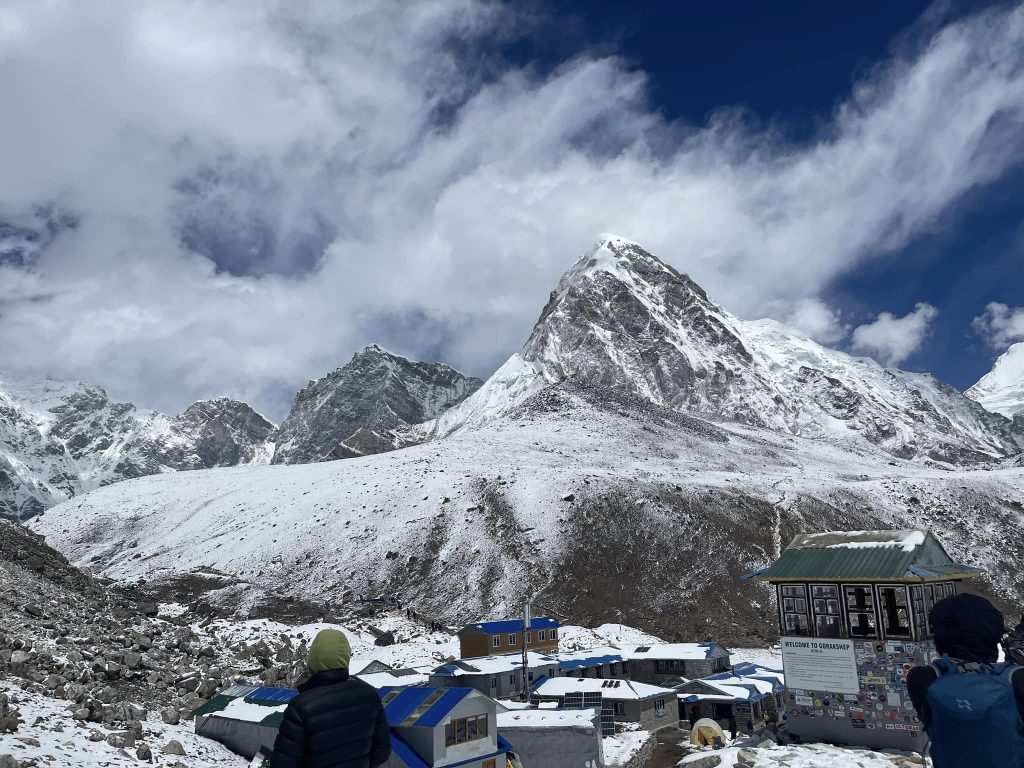
Gorakshep (5,170m / 16,961ft)
Gorakshep is the last permanent settlement on the Everest Base Camp trekking route, located at 5,170 meters in ... Read More
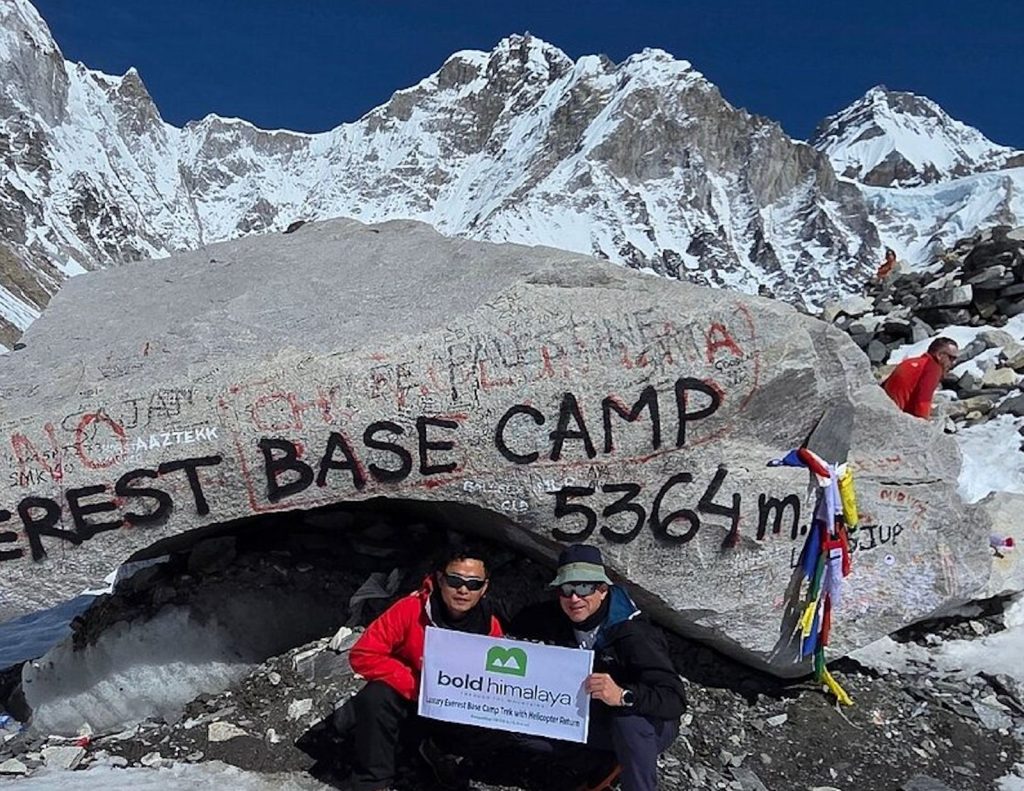
Everest Base Camp (5,364m / 17,594ft)
Everest Base Camp (EBC) is the legendary trekking destination located at the foot of Mount Everest, the highest ... Read More
Day 10: Hike to Kala Patthar, Return to Gorak Shep, & fly back to Kathmandu
5,545m/18,192ft
Teahouse / Lodge
Breakfast, Lunch & Dinner
4-5 hours
The last day of the Everest Base Camp itinerary, combining the most iconic viewpoint in the Everest region with a spectacular scenic flight. The day begins very early in the morning, usually before dawn, as you set out from Gorakshep to hike Kala Patthar (5,545m / 18,192ft).
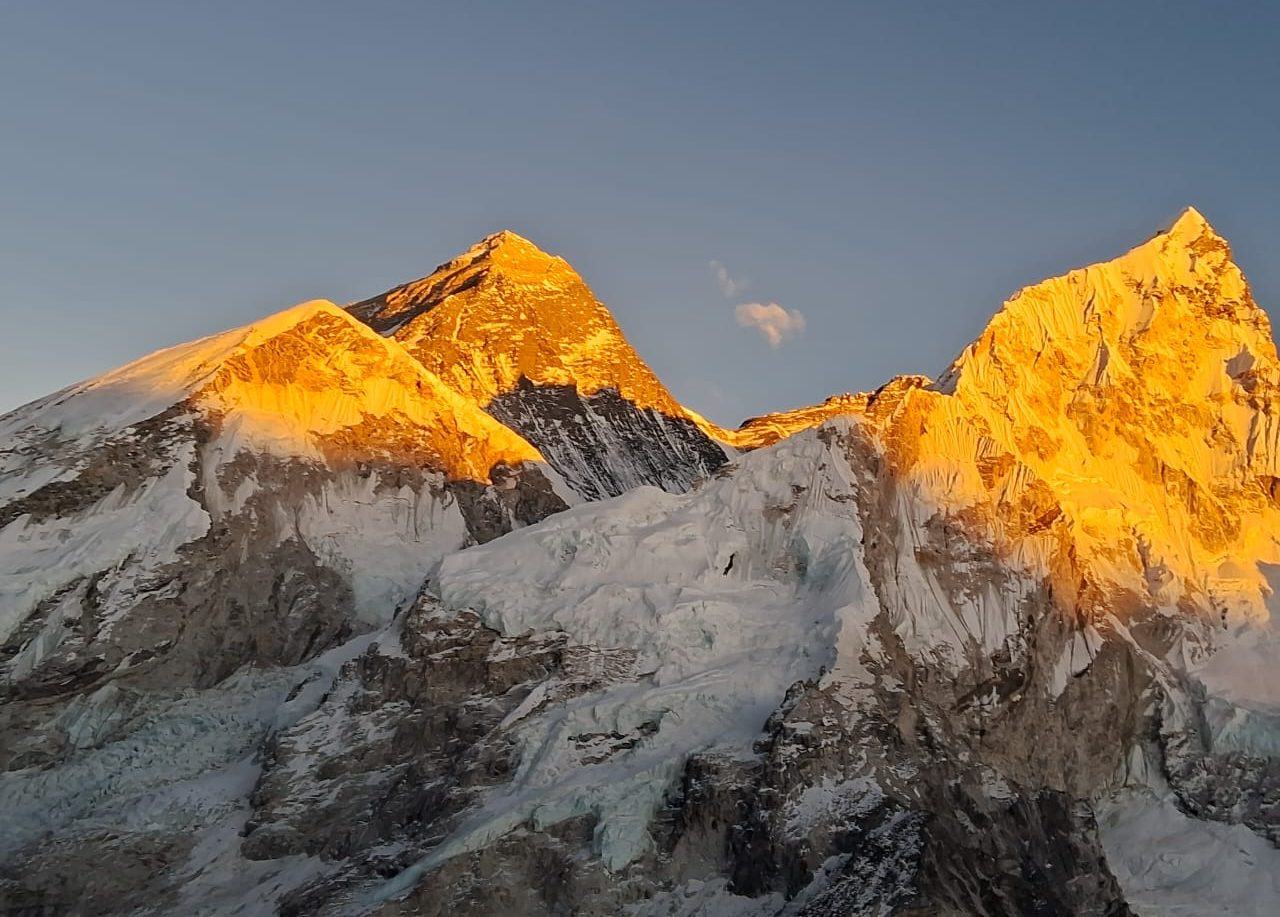
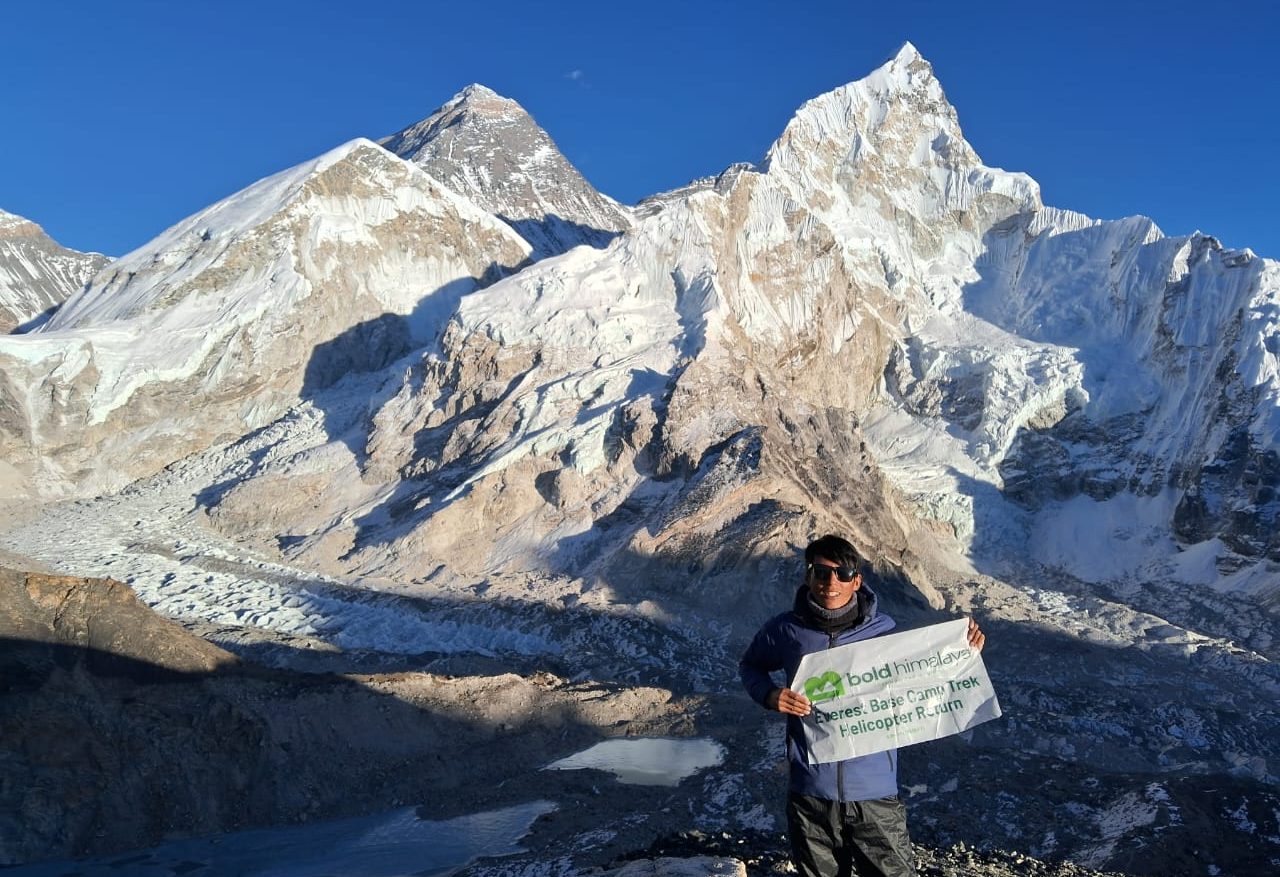
Kala Patthar is famous for offering the best close-up view of Mount Everest, which cannot be seen clearly from Everest Base Camp itself. As the sun rises, the peaks of Mount Everest, Lhotse, Nuptse, and Pumori glow in shades of gold and crimson. The sunrise from Kala Patthar is considered one of the most breathtaking mountain views in the world.
After enjoying the views, you descend back to Gorakshep for breakfast and a short rest. Soon after, your trek concludes most memorably, with a helicopter flight from Gorakshep & fly back to Kathmandu, ending your unforgettable journey.
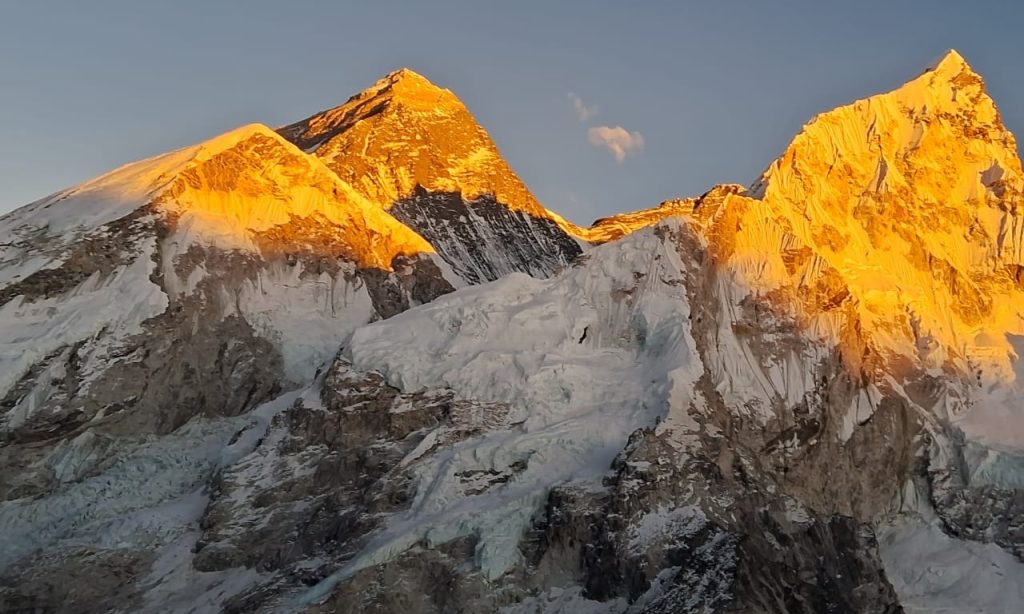
Kala Patthar (5,545m / 18,192ft)
Kala Patthar (5,545m / 18,192ft) is the most famous viewpoint in the Everest region and the ultimate highlight ... Read More
Day 11: Final Departure
Your Everest trek ends today with your departure preparations to head back home. One of our representatives drops you at the airport 3 hours before your departure time.
Or you can join another thrilling adventure or trip with Bold Himalaya. We can right away arrange your awesome trip.
Want to customize your trip?
We ensure every trip meets your expectations — customize your itinerary anytime to match your travel style and preferences.
Inclusions
What’s Covered in Your Adventure
- Airport pick-up and drop-off, as well as all ground transportation during the trip.
- Domestic flight from Kathmandu to Lukla.
- Shared helicopter flight from Gorak Shep to Lukla up to 5 pax
- 2 nights 3 star accommodation in twin-sharing rooms with breakfast in Kathmandu
- Trekking accommodation in standard/ local guest houses/lodges.
- Full board meals for all day during the trek (Breakfast, Lunch, Dinner each time one main course).
- Each day seasonal fruits and snacks during the trek.
- First aid supplies and necessary.
- Entrance fees for Sagarmatha National Park, Pasang Lhamu Rural Municipality, and TIMS.
- A special cultural show and dinner program in Kathmandu.
- Our service charge and government taxes.
- Experienced local trekking guide
- One porter carry bags loads up to 20kg for 2 trekkers
- Additional meals during the trekking portion and lunch/dinner in Kathmandu.
- Desserts and bar bills.
- Your international airfare and travel insurance.
- Tips for the trekking crew members.

What to pack for Everest Base Camp Trek with Helicopter Return
Packing the right gear is essential for staying safe, comfortable, and well-prepared on your Everest Base Camp Trek with Helicopter Return. The weather can be unpredictable, temperatures can drop sharply at night, and you’ll face long days of high-altitude trekking, so choosing the right equipment makes a big difference.

Clothing
- Base layers
- Insulating layer
- Outer shell
- Trekking shirts & pants
- Warm hat & balaclava
- Gloves
- Trekking socks

Footwear
- Sturdy trekking boots
- Gaiters
- Camp shoes / sandals

Backpack & Accessories
- Daypack (20–30L)
- Rain cover
- Duffel or large pack

Trekking Essentials
- Trekking poles
- Headlamp
- Sunglasses
- Sun hat / cap
- Water bottles or hydration bladder
Detailed Map of Everest Base Camp with Helicopter return
Altitude Chart of Everest Base Camp Trek with Helicopter Return

Good to Know of Everest Base Camp Trek with Helicopter Return
Get All the Information Right Here
2. Trek Difficulty & Fitness Level
Everest Base Camp trek is moderate to challenging; almost anyone who’s physically fit can accomplish it. You’ll be trekking 5-7 hours a day along very steep ground with quite a few ups and downs, but our carefully crafted itinerary has rest days at Namche Bazaar and Dingboche to allow your body to acclimatize to altitude.
Want to make your trek even more special? Begin with some fundamentals of prep 2-3 weeks before your adventure – steady cardio workouts, weekend hiking, and basic strength training will make those hill segments a breeze! Remember, it’s not a competition – an adventure to enjoy at your pace!
3. Helicopter Return Benefit
This is where our trek shines above the others. Instead of spending extra days hiking back the same way down that you ascended, you’ll embark on a heart-stopping helicopter flight from Gorak Shep to Lukla.
This is not just time-saving; it’s an adrenaline-rich flight that treats you with stunning bird’s-eye views of Everest, sweeping glaciers, and endless valleys hikers rarely behold. Bird’s-eye view adds a whole new level to your Everest experience and saves your knees the long climb down.
Bear in mind that mountain weather patterns sometimes cause helicopters to wait a few minutes, but the delay is well worth it for this once-in-a-lifetime event.
4. Altitude Sickness & Safety Precautions
Altitude sickness, also known as Acute Mountain Sickness (AMS), can occur when you ascend to high elevations too quickly without giving your body enough time to adjust to lower oxygen levels. It is common on high-altitude treks like the Everest region, especially above 3,000 meters.
Early symptoms may include headache, dizziness, loss of appetite, nausea, fatigue, and difficulty sleeping. If ignored, it can become serious and lead to more severe conditions, so recognizing the signs early is very important.
To stay safe, the key is gradual ascent and proper acclimatization days, allowing your body to adapt naturally. Staying well-hydrated, eating light but nutritious meals, and avoiding alcohol or overexertion also help significantly. Walking at a steady, comfortable pace rather than rushing is highly recommended.
If symptoms appear, the best action is to stop ascending immediately and rest. In most cases, descending to a lower altitude helps recovery. Medications like acetazolamide are sometimes used as a preventive measure, but they should only be taken with proper medical advice.
6. Permits & Entrance Requirements
You will need two major permits as an Everest trekker:
Sagarmatha National Park Permit
This permit is required to enter the protected Himalayan area of Sagarmatha National Park.
- Fee (Foreign Nationals): NPR 3,000 per person (approx. $22 USD)
- SAARC Nationals: NPR 1,500 per person
- Where to get: Nepal Tourism Board in Kathmandu or at Monjo (park entry gate)
Khumbu Pasang Lhamu Rural Municipality Permit
This local permit is required for entering the Khumbu region villages and trekking routes.
- Fee: NPR 2,000 per person (approx. $15 USD)
- Where to get: Lukla or Monjo checkpoint (on arrival in the region)
These are checked by rangers somewhere along the trail, particularly at Monjo and Namche Bazaar. Don’t stress about the paperwork – we organize all the permit bookings for you!
Important Notes
- Carry passport copies and passport-sized photos for permit processing.
- Keep permits with you at all times; there are multiple checkpoints along the trail.
- Fees may change slightly depending on government updates, so it’s best to confirm before departure.
- Most trekking agencies arrange all permits in advance for convenience.
Your permit fees fund this stunning mountain scenery and Sherpa locals, funding schools, medicine, trail upkeep, and conservation. It’s a modest fee that yields huge dividends to the region.
7. Accommodation & Food
Don’t listen to the hype about camping out in the mountains. You’ll be sleeping in charming teahouses with simple but comfortable twin rooms that look so inviting after a day’s trek. Only the most rudimentary huts provide blankets, though, and carrying your own sleeping bag brings the added warmth at the high altitudes.
The Everest Base Camp trek gives a surprisingly varied menu, with teahouses serving both traditional Nepali and international dishes. The most popular meal is Dal Bhat, a nutritious combination of rice, lentil soup, vegetables, and pickles that provides excellent energy for trekking days.
Other common options include noodles, pasta, fried rice, momos (dumplings), soups, potatoes, pancakes, porridge, eggs, and freshly baked bread. Tea, coffee, hot chocolate, and other hot drinks are widely available throughout the route.
As all supplies are transported into the mountains by porters, yaks, or helicopters, food prices increase with altitude.
8. Trek Cost & Additional Expenses
Wondering how much this lifetime experience is going to set you back?
The Helicopter Return Everest Base Camp Trek will run a standard $3,000-$4,000 per person, depending on group size and services. All is included: permits, internal flights, teahouse lodge, trail meals, experienced guides and porters, and that wonderful helicopter ride back.
You will have some extra costs for Wi-Fi, battery charging, hot showers (a luxury at high altitude), and personal gear if needed. We recommend that you bring a little extra money to spend on souvenirs, snacks, or dinner in Kathmandu for a celebratory end to the trek. And remember, this is not a holiday – it’s an investment in memories that you will cherish forever.
9. Acclimatization Strategy (Everest Base Camp Trek)
Acclimatization is a key part of the Everest Base Camp Trek with Helicopter Return, especially because the trek climbs above 3,000m (9,842ft) where the air is thin. The best Everest Base Camp acclimatization strategy is to follow the proven principle of “climb high, sleep low,” which helps your body adjust gradually to high altitude and reduces the risk of altitude sickness.
Most trekkers include an acclimatization day at Namche Bazaar and a rest day at Dingboche to allow the body time to adapt. During these days, you can take short hikes to higher viewpoints and return to sleep at a lower altitude, which improves oxygen efficiency and overall trekking performance.
To stay safe, walk slowly, drink plenty of water, avoid alcohol, and listen to your body. Proper acclimatization not only helps prevent acute mountain sickness (AMS) but also increases your chances of successfully reaching Everest Base Camp and Kala Patthar while enjoying a comfortable and safe high-altitude trekking experience
10. Safety & Emergency Evacuation
Safety is the top priority on the Everest Base Camp Trek with Helicopter Return, and having a clear high-altitude emergency evacuation plan is essential.
In case of severe altitude sickness, injury, or sudden illness, the most reliable solution is emergency helicopter evacuation from the Everest region. Most trekking companies, including Bold Himalaya, arrange helicopter rescue services and coordinate with local rescue teams to ensure a quick response.
If a trekker experiences serious symptoms of acute mountain sickness (AMS), such as extreme headache, confusion, or breathlessness, the safest action is immediate descent to a lower altitude. That’s why our guides monitor each trekker’s health daily and follow strict high altitude trekking safety guidelines.
While the trek is challenging, the Everest region has well-established emergency protocols, and the helicopter return option provides added security by reducing time spent at extreme altitude. For added protection, we strongly recommend purchasing travel insurance with helicopter evacuation coverage before your trek.
12. Trekking Guide & Porter Options
Choosing the right Everest Base Camp trekking guide and porter can greatly improve your experience, comfort, and safety. A professional Everest Base Camp guide provides route guidance, altitude safety monitoring, and local cultural insights, making the trek smoother and safer, especially at high altitudes.
If you prefer to carry less weight, a trekking porter in the Everest region is a valuable option. Porters usually carry your main backpack (up to 15–20 kg), allowing you to trek with only a daypack, which reduces fatigue and improves your endurance.
For those planning the Everest Base Camp Trek with Helicopter Return, having a guide is highly recommended since they manage logistics, permits, and the helicopter booking process.
While porters are optional, they are ideal for travelers who want a more comfortable and enjoyable journey. The cost of hiring a guide and porter varies, but most companies offer affordable packages that include accommodation, meals, and insurance for the staff. Choosing a guide and porter not only supports local Sherpa communities but also ensures a safer and more organized Everest trekking experience.
13. Cultural Etiquette & Local Customs
The Everest Base Camp Trek with Helicopter Return is not only a scenic adventure but also a cultural journey through Sherpa communities and Buddhist heritage. Respecting local customs in the Everest region is essential for a meaningful and responsible trekking experience.
When visiting monasteries like Tengboche Monastery or Pangboche Monastery, dress modestly, speak quietly, and avoid pointing your feet toward religious objects. Always ask permission before taking photos of locals, especially monks and villagers. A simple greeting like “Tashi Delek” (a traditional Sherpa greeting) goes a long way in showing respect. Avoid touching prayer flags, mani walls, or sacred stones, and walk clockwise around mani walls if you pass them.
It is also important to support local communities by buying local products, tipping guides and porters fairly, and respecting village rules. Following these Everest region cultural etiquette guidelines ensures a positive interaction with the Sherpa people and helps preserve the region’s traditions and spiritual atmosphere.
FAQs
Your Questions, Answered
2. How does the helicopter return work?
After your triumphant hike to Everest Base Camp and Kala Patthar, you’ll embark on a spine-tingling helicopter ride from Gorak Shep all the way back to Lukla, with super bird’s-eye views, without tiring your legs with the days of downhill hiking.
3. How likely is altitude sickness?
Although it can occur to anyone, our meticulously planned itinerary with acclimatization days and our qualified guides looking after you minimize the chances of serious altitude issues.
4. What in case the helicopter flight is held up because of inclement weather?
Mountain weather may be unpredictable at times, but do not fret – we leave room for maneuver and will make immediate alternative plans if clouds come in, keeping your experience on schedule!
5. What accommodation can I look forward to?
You’ll be lodging in mountain teahouses with cozy twin rooms that are mini pieces of heaven after a day’s hike through the world’s most stunning mountains.
6. Do I need a guide and porter?
Although you will be trekking on your own, having our professional guides increases safety and cultural awareness, and porters for your heavy loads so that you can enjoy the scenic views!
7. What about food?
You’ll enjoy good wholesome food like Dal Bhat (with refills in abundance!), noodles, soups, eggs and Tibetan bread – perfect fuel for your Himalayan trek.
8. Can I charge my phone and connect online during the hike?
The majority of teahouses offer charging and WiFi at a small fee, but connectivity becomes more intermittent higher up on the mountain, so a power bank and local SIM card are useful additions to your list.
9. Do I require travel insurance?
Completely essential – make sure your policy includes high-altitude trekking and helicopter evacuation so you can travel safely and enjoy your mountain adventure.
10. How much of a fitness level is required for this trek?
No sporting ability necessary – fit enough with some pre-holiday training before you go to allow you to tackle the 5-7 hours of walking per day with a smile, not a scowl.
11. What should I do if I start to fall sick during the trek?
Tell your guide immediately – they are trained to handle altitude sickness and can immediately determine whether you need to rest, take medicine, or in the worst scenario, a fast descent to lower altitude.
12. Is drinking water available during the trek?
You’ll be covered in water, but take a good water bottle and purification tablets so you don’t spend extra money on overpriced plastic bottles and leave those mountains looking lovely!
13. What Kind of Food Is Available on the Trail?
On the Everest Base Camp Trek, food is mainly served at teahouses and lodges along the trail. Most meals are simple, hot, and high-energy, designed to help trekkers stay strong at high altitude. You’ll find a wide variety of Nepali food, including dal bhat (rice and lentils), momos (dumplings), and noodles, which are the most popular options for trekkers.
At higher elevations like Dingboche, Lobuche, and Gorakshep, the menu becomes more limited due to transportation challenges. However, you can still enjoy soups, pasta, rice dishes, and omelettes, plus snacks like chocolate, energy bars, and biscuits. Most teahouses also offer tea, coffee, hot chocolate, and local drinks to keep you warm.
If you prefer vegetarian or vegan meals, you’ll have plenty of options, but it’s a good idea to inform your guide beforehand. Also, because water is limited at high altitude, bottled water or purified water is usually available for a small fee.
Overall, the food on the trail is filling, comforting, and affordable, giving you the energy you need for the Everest region trekking itinerary.
14. Can Older Travelers or People with Mild Health Issues Attempt This Trek?
Yes, older travelers and people with mild health issues can attempt the Everest Base Camp Trek with Helicopter Return, but it depends on fitness level, medical condition, and acclimatization strategy. This trek is high altitude (up to 5,364m at Everest Base Camp and 5,645m at Kala Patthar), so age is not the only factor — the most important thing is how your body handles altitude.
For older trekkers, the Everest Base Camp trek with helicopter return is often a better option because the helicopter descent reduces physical strain and the risk of prolonged exposure to high altitude. If you have mild health issues such as controlled hypertension, asthma, or joint problems, you can still trek, but you must consult a doctor first and get a fitness clearance.
Key factors that make the trek possible include:
- Good physical conditioning (cardio and leg strength)
- Slow pacing and proper acclimatization
- Regular hydration and a balanced diet
- A professional trekking guide who monitors health
- Travel insurance with high-altitude evacuation coverage
If you have a pre-existing condition, the safest approach is to discuss your plan with your doctor and inform your trekking company. With the right preparation, many older trekkers complete the Everest region trekking itinerary, and the helicopter return provides an extra layer of safety and comfort.
15. What emergency evacuation options are available?
Emergency evacuation in the Everest region is available but can be challenging due to high altitude and unpredictable weather. The most reliable and fastest option is helicopter rescue evacuation from the Everest Base Camp trek, which is commonly used for serious altitude sickness, injury, or sudden illness.
There are two main emergency evacuation options:
1. Helicopter Evacuation (Most Common & Fastest)
If a trekker develops severe altitude sickness (AMS), injury, or any life-threatening condition, a rescue helicopter from the Everest region can be arranged. Helicopter evacuation usually operates from Gorakshep, Lobuche, or Dingboche, depending on the location and weather. The helicopter can quickly transport the patient to Lukla or Kathmandu for medical treatment. However, helicopter evacuation depends heavily on weather conditions and availability.
2. Ground Evacuation (Slow but Reliable)
If weather prevents helicopter flight, the next option is ground evacuation. This involves descending to a lower altitude as quickly and safely as possible, usually to Namche Bazaar or Lukla, where medical help is more accessible. A professional guide and porter can assist in the descent.
16 Are there rescue teams or medical aid posts along the route?
Yes, there are basic medical aid posts and rescue support along the Everest Base Camp trekking route, especially at major stops like Namche Bazaar, Dingboche, and Gorakshep. These facilities provide first aid and basic treatment, but they are not full hospitals. For serious emergencies, helicopter evacuation is the main option. That’s why it’s important to trek with a guide and have travel insurance with high-altitude evacuation coverage.
17. Are there any local festivals or ceremonies worth knowing about?
Yes, the Everest region has rich cultural festivals that are amazing to experience if your trek dates align. The most popular ones are the Tengboche Mani Rimdu Festival (usually in October/November) and the Losar (Tibetan New Year), celebrated in Namche and surrounding Sherpa villages. These festivals feature traditional dances, colorful masks, and Buddhist rituals. If you plan your trek during these months, you may get a rare chance to witness authentic Sherpa cultural events along the Everest Base Camp route.
18. Where are the Best Photo Spots on the Trek?
The Everest Base Camp Trek with Helicopter Return is packed with iconic photo locations. Some of the best spots for unforgettable photos are:
Tengboche Monastery – perfect for sunrise/sunset with Ama Dablam in the background
Namche Bazaar viewpoint – panoramic views of Everest, Lhotse, and Thamserku
Dingboche village – wide valley views with Ama Dablam and Island Peak
Lobuche and Khumbu Glacier – dramatic glacier landscapes and towering peaks
Gorakshep – the highest settlement with vast mountain views
Everest Base Camp – the ultimate photo moment on the glacier
Kala Patthar viewpoint – the best close-up view of Mount Everest at sunrise
These spots are the most popular because they offer the clearest views, best lighting, and the most iconic Everest region scenery.
19. Can Teenagers or Kids Do the Trek?
Yes, teenagers and older kids (usually 12–14+) can do the Everest Base Camp Trek with Helicopter Return, but the trek is high altitude and challenging. The helicopter return option makes it safer and more comfortable for young trekkers because it reduces the long descent and fatigue. Kids should be physically fit, able to walk 5–7 hours a day, and follow proper acclimatization and safety rules.


Try Some of Our Other Popular Trips
Had something else in mind? You are in good hands. Our expertise extends to multiple unique trips all over Nepal.
View All Packages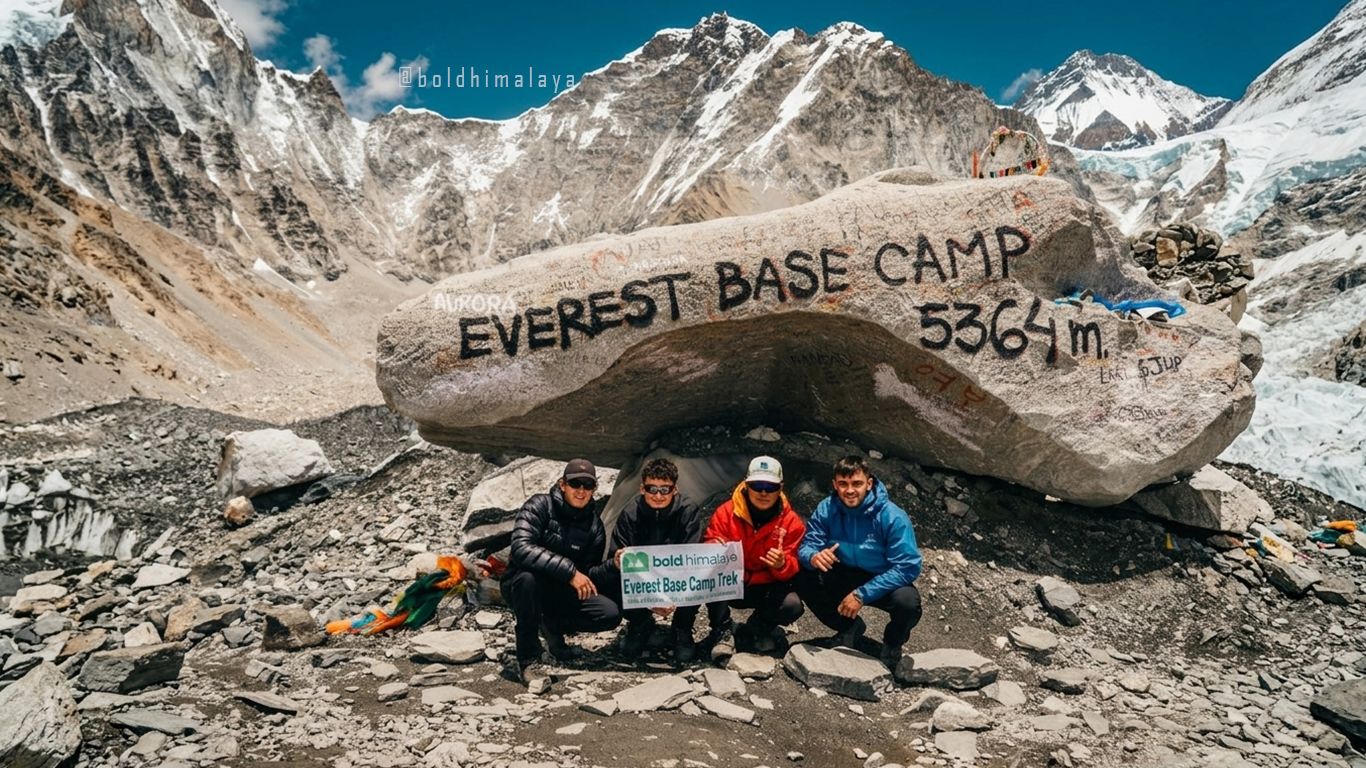
Save 28%

Everest Base Camp Luxury Lodge Trek
 Nepal Tour Packages
  15.0 Days
Save 24%
Luxury Everest Base Camp Trek with Helicopter Return – 2026 Premium Himalayan Adventure
Nepal Tour Packages
11 Days

Save 33%
Everest Three Pass Trek: The Ultimate High Altitude Adventure in Nepal
Nepal Tour Packages
18.0 Days

2 Day Kathmandu Valley Sightseeing Tour
Nepal Tour Packages
2.0 Days

Save 34%
Chitwan National Park Jungle Safari Tour
Nepal Tour Packages
3.0 Days

Save 32%
Everest Base Camp with Gokyo Lake Helicopter Tour – Guarantee Landing
Nepal Tour Packages
4- 5 Hours Days

Save 21%
Island Peak Climbing
Nepal Tour Packages
16.0 Days