



Easy Peaks to Climb in Nepal
-
 Sobit Bhandari
 -
20 December, 2024
-
20 mins read
-
1933 Views
-
0 Comments


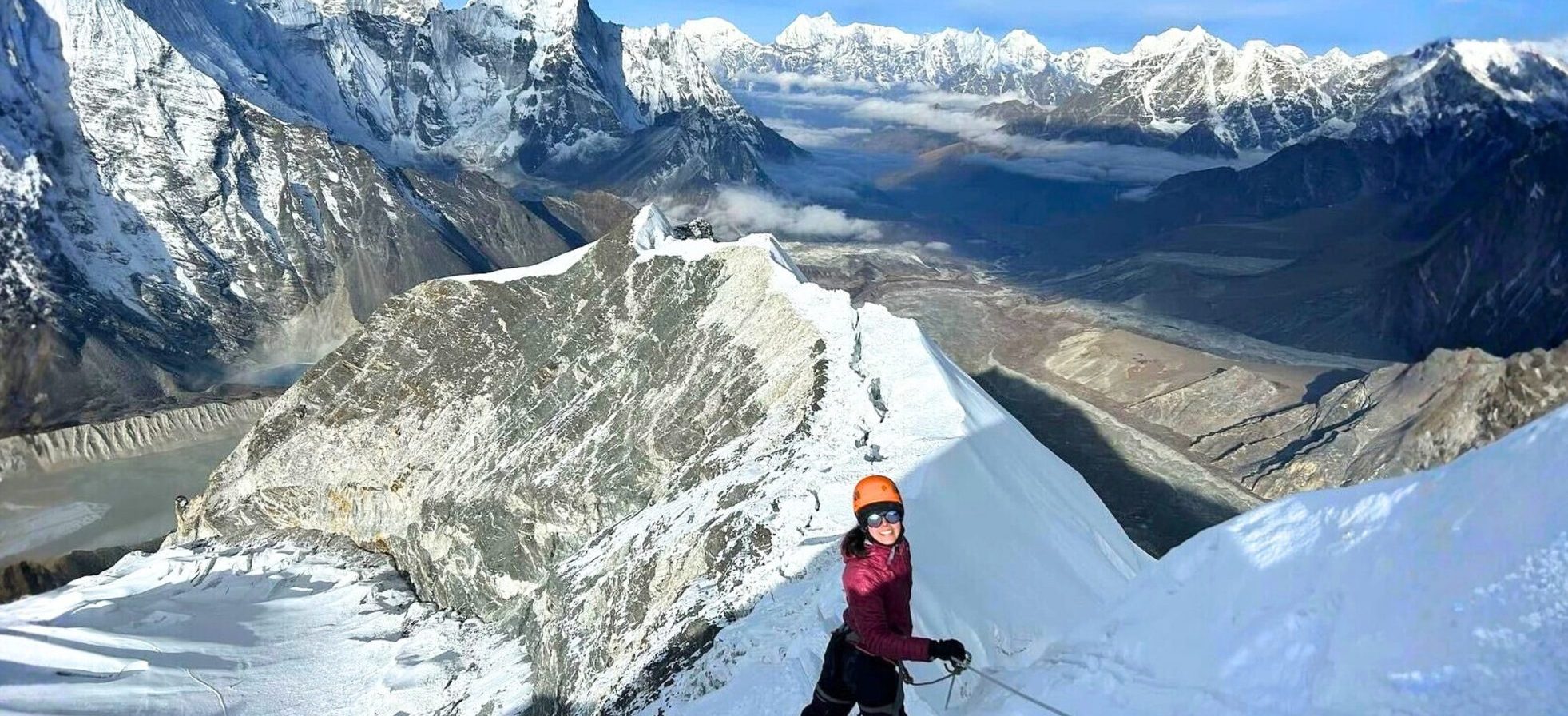
Nepal, with eight of the fourteen 8,000-meter peaks, is more adventurous than simply climbing Mount Everest. Beyond those giants, the country is also famous for several easy peaks to climb in Nepal that provide the ideal introduction to mountaineering. These ‘trekking peaks’ provide the excitement of high-altitude climbing with relatively easy technical challenges and are an ideal introduction to mountaineering.
For those brave and equipped enough to move off the crowd along the much-trodden route of normal trekking paths, Nepal’s easily accessible peaks present strong argument for a departure: sweeping views of the kind that simply don’t exist along conventional trails, a sense of accomplishment at climbing to the summit of a Himalayan peak, and learning minimum mountaineering techniques in the world’s greatest range of mountains.
While expedition peaks demand years of experience and elaborate logistics, trekking peaks can be attempted by well-trained and well-fitted individuals with proper leadership. Novices particularly should have some trekking experience in high altitudes and know the use of climbing gear, although most peaks are not technically required.
Nepal’s abundance of established climbing routes, experienced guides, and efficient permit processes render it the perfect destination for the novice to transition from trekker to mountaineer.
Understanding Trekking Peaks in Nepal
1. What are NMA Trekking Peaks?
NMA Trekking Peaks are mountains in Nepal that are officially designated for climbing by the Nepal Mountaineering Association (NMA). These peaks are generally lower and less technically difficult than major expedition peaks, making them ideal for trekkers who want to experience high-altitude mountaineering without extreme technical climbing.
A trekking peak is a mountain that can be climbed by trekkers with basic mountaineering skills and equipment. These peaks usually range from about 5,800 meters to 6,700 meters in height.
2. Classification: Group A and Group B peaks
There are two categories of Nepal trekking peaks:
- Group A summits: They are technically challenging and require technical climbing ability and acclimatisation to snow and ice.
- Group B summits: They are simple to climb, and novices can try them in a technical climbing experience.
3. Permit Requirements and Issuing Bodies
Permits to climb to trekking peaks are granted by the Nepal Mountaineering Association, whereas permits to climb to expedition peaks are granted by Nepal’s Department of Tourism. The permit system for trekking peaks has made the latter cheaper and accessible than the big expeditions.
Easy Peaks to Climb in Nepal
1. Island Peak (Imja Tse) – 6,189m(20,305ft)
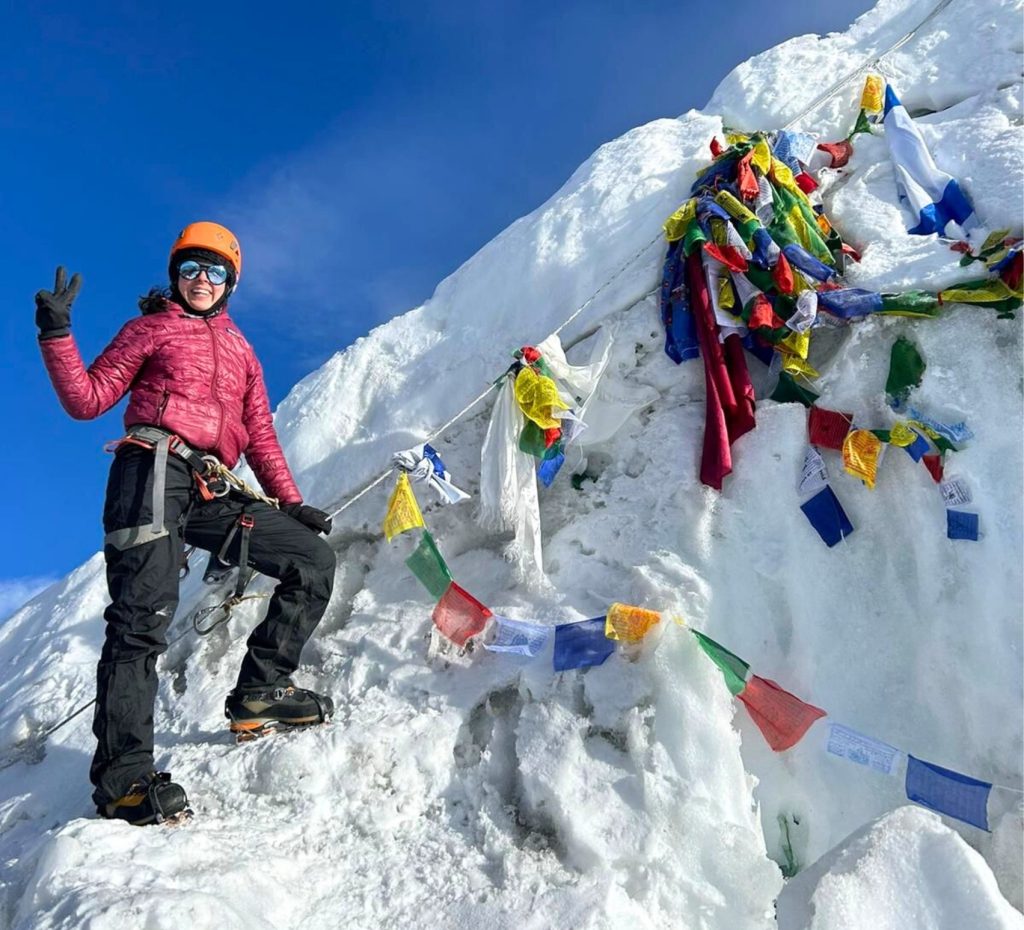
An extremely popular Nepal trekking peak and a great first-time experience of Himalaya mountaineering, the Island Peak is located within the Sagarmatha National Park in the Khumbu region of eastern Nepal. This region offers satisfactory trekking through the usual Sherpa settlements and nice glacier hiking, suitable for trekkers seeking some technical climbing with crampons and ice axes.
The ascent is spectacular as one climbs a vertical headwall on fixed ropes, offering glorious views of some of the highest peaks on Earth, such as Lhotse, Makalu, and the legendary Ama Dablam and is one of the easy peaks to climb in Nepal.
Key facts:
- Location: Sagarmatha National Park in the Khumbu Region
- Duration & Difficulty: 12-16 days, moderate difficulty, but involving activation of basic ice climbing skills
- Best Season: April-May and October-November for optimal weather
- Logistics: Overnight at the teahouse during the approach, camp for the summit push
2. Mera Peak – 6,476m(21,247ft)
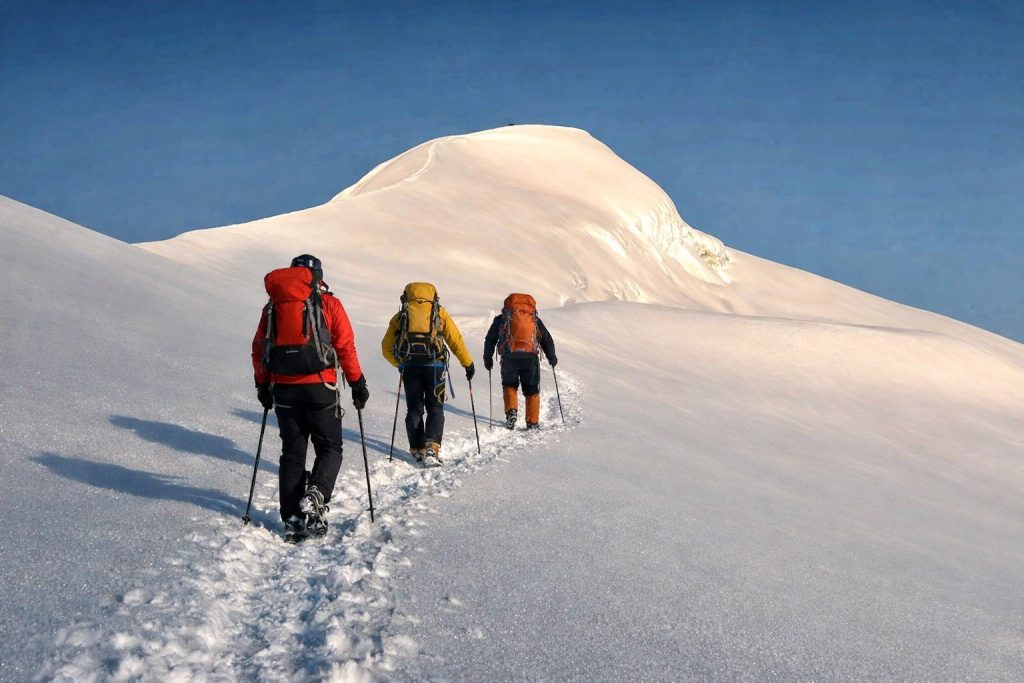
Mera Peak is Nepal’s highest trekking peak and a low-key, uncomplicated climb in proportion to its altitude. Hinku Valley treks offer an off-the-beaten-track alternative to the Everest trail, where, rather than being part of a large mass trekker group, one gets to experience the viewing of real Sherpa villages that do not get to be seen by large mass trekking groups.
At the summit, trekkers are rewarded with Nepal’s finest chain of mountains with a view of five giants at 8,000m: Everest, Lhotse, Cho Oyu, Makalu, and Kangchenjunga, as Himalayan as it gets.
Key Information:
- Location: In the remote Hinku Valley of the Khumbu Region
- Duration & Difficulty: 14-16 days, easy to moderate, with very little technical requirement
- Best Time: April-May and October-November for good weather
- Logistics: A combination of teahouse and tent camping on the trek
3. Lobuche East Peak – 6,119m(20,075ft)
Lobuche East is a convenient and challenging product located near the popular Everest Base Camp trekking path. Proximity provides it as a great value-add to the standard Everest Base Camp trek to travellers who want to experience a better deal. Summit climber proficiency is necessary, especially on the upper, steep section near the summit, where fixed ropes are a sure lifesaver.
What distinguishes Lobuche is its breathtaking position among the Everest giants with intimate panoramas of Nuptse, Lhotse, and Everest from a unique angle that few trekking tourists experience. It is also consider as easy peaks to climb in Nepal.
Key facts:
- Location: Khumbu region, inside Sagarmatha National Park
- Duration & Difficulty: 14-16 days, moderate to challenging with precipitous ridges
- Best Time: April-May and October-November for peaceful weather
- Logistics: Established good teahouses to base camp, camping for the summit drive
4. Pisang Peak – 6,091m(19,984ft)
Pisang Peak offers a great climbing opportunity from the very popular Annapurna Circuit trek. Such trekkers who are already planning to trek around Annapurna and want the adventure of reaching the top of the mountain will be able to climb the mountain. The west ridge offers an easy climb compared to other places, whereas the north faces are difficult routes for serious climbers.
The summit gives tremendous views out over Manang Valley to the Annapurna range, with the bonus of being able to descend to teahouse level not long after you attempt the climb.
Key facts:
- Location: Annapurna Region, above the village of Pisang
- Time & Difficulty Level: 12-14 days, moderate with some occasional technical terrain
- Optimal Time of Year: April-May and Sept-Nov for best view
- Organisation: Teahouses throughout the whole Annapurna Circuit, high camp camping only
5. Yala Peak – 5,732m(18,806ft)
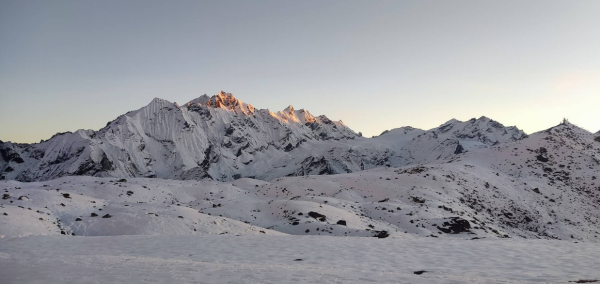
Yala Peak is one of Nepal’s simplest, genuine climbing experiences with little technical knowledge but all the excitement that goes with a Himalayan summit. Located in beautiful Langtang Valley, north of Kathmandu, it’s ideal for busy travellers who can enjoy mountaineering without needing to undertake longer expeditions.
The ascent is easy enough to be a first-time climb with no prior climbing experience, but crampons and an ice axe are good skills to have in advance. On a clear day, the summits all the way into Tibet can be seen from here over towards Shishapangma, an 8,000-meter peak.
Summary notes:
- Location: Langtang Valley, inside Langtang National Park
- Timing & Difficulty: 10-13 days, easy and novice
- Most Sought: Fine weather season either March-May & October-November
- Accommodation: Easy teahouse sleeping points along the route; there’s no camping.
6. Chulu Far East Peak – 6,059m(19,880ft)
Chulu Far East is a decent climb choice in the Annapurna range with little technical difficulty. The trek along the first half of the Annapurna Circuit offers good acclimatisation in varied terrain from subtropical jungle to high desert, like that in Tibet.
The climb itself is a glacier and moderate snow slope crevassed traverse, with some crampon and rope skill required. The panorama from the top is great over the entire Annapurna massif and over to the Manaslu summits.
Key facts:
- Location: Annapurna Region near Chulu West Peak
- Duration & Difficulty: 16-18 days, moderate with glacier travel skill required
- Best Season: April-May and October-November for fixed conditions
- Logistics: Teahouse accommodation to base camp, summit push camping
7. Dhampus Peak – 6,012m(19,724ft)
Dhampus Peak is in the remote Dhaulagiri district, offering a less-travelled alternative to other more climbed peaks. A trek along the world’s deepest gorge, Kali Gandaki, and over challenging Dhampus Pass is an adventure in itself before trying to climb.
The climb itself is technically demanding with attractive prospects into the Hidden Valley and over to the massive south face of Dhaulagiri. Its relative inaccessibility means that climbers are most likely to have the mountain to themselves, an extremely valuable commodity in Nepal’s busy trekking areas.
Key facts:
- Location: Annapurna region, near the village of Dhampus
- Duration & Difficulty: 14-16 days, moderate difficulty with requirements for excellent physical fitness
- Best Season: April-May and October-November are safest
- Logistics: Combo camping and teahouse accommodation
8. Mardi Himal – 5,587m(18,330ft)
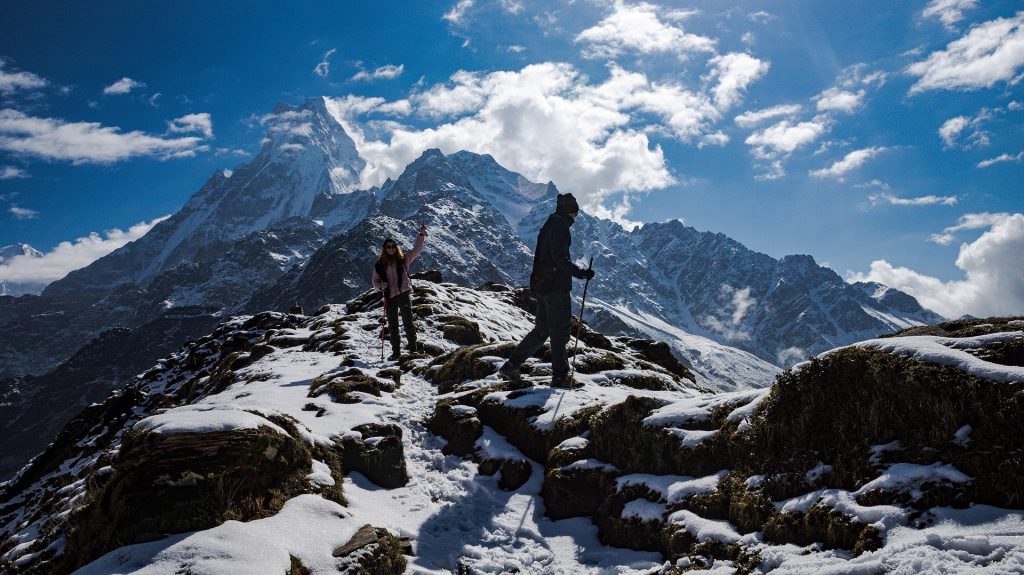
Mardi Himal is a mountain that stands at about 5,587 meters (18,330 ft) above sea level, making it a notable peak, though smaller compared with many surrounding giants like Machhapuchhare. What makes Mardi Himal interesting is its location beneath the more prominent Machhapuchhare and its position as the most southerly peak of the Annapurna range, visible as a distinct mountain mass separated by a high col and one of the easy peaks to climb in Nepal.
The peak was first climbed in 1961 and today is recognised as a trekking peaks, meaning it can be attempted by climbers with some basic technical skills. From the summit and surrounding area, you can enjoy spectacular panoramic views of the Annapurna Himalayan range, with dramatic ridges, hanging glaciers, and steep forested slopes below.
Key facts:
- Location: Annapurna Region near Machhapuchhre
- Duration & Difficulty: 9-12 days, moderate trek with good fitness required (Base Camp only; no technical climbing needed)
- Best Season: March-May and September-November for clear views and stable weather
- Logistics: Teahouse accommodation up to High Camp; camping optional at Base Camp
9. Tharpu Chuli (Tent Peak) – 5,695m(18,685ft)
Tharpu Chuli is in the Annapurna Sanctuary in the middle of a mountain amphitheatre above 7,000m in height. One of Nepal’s very beautiful treks, from the varied spectrum of environment, from bamboo jungle to alpine grazing fields, to the beautiful Annapurna Base Camp.
It is from here that the climb is via crossing snow and quite steep moraine-like terrain. Most typical feature of this mountain, and quite possibly the most, is the position that trekkers are left with the impression that they are standing at the centre of a great circular ring of mountains, and the sacred fishtail-topped peak of Machapuchare is so close that one can almost touch it.
Key Facts:
- Location: Annapurna Region, on the route to Annapurna Base Camp
- Duration & Challenging: 12-14 days, moderate with steep snow slopes
- Best Time: April-May and Oct-Nov for clear view enjoyment
- Logistics: Base camp to base camp, tent camp for summit climb
10. Kyangjin Ri – 4,773m(15,659ft)
Technically a trekking peak, not a climbing peak, Kyangjin Ri is a wonderful high-altitude trek with no technical participation. In the Langtang Valley, within a day’s trek from Kyangjin Gompa, it is well within the capability of any physically fit individual with good acclimatisation.
Half-day summit trek is compensated by a 360-degree view of the Langtang range, Shishapangma of Tibet, and the unique peaks of Ganesh Himal. Lack of technical challenge allows the trekkers to concentrate solely on panoramic view sightseeing and photography without the issue of ascension.
Key points:
- Location: Langtang Valley, above the village of Kyangjin Gompa
- Duration & Difficulty: 7-9 days total, an easy, non-technical trek for all trekkers
- Best Season: Possible year-round except monsoon season (June-August)
- Logistics: Teahouse-style comfortable accommodation during the trek, no camping required
Optional Peaks of Nepal
- Naya Kanga (5,846m): A non-technical Langtang Valley peak with moderate ratings and good views of Tibet and the surrounding Himalayan giants.
- Pokalde Peak (5,806m): An isolated peak close to Everest Base Camp is most appropriate for acclimatisation with no significant technical requirement.
- Singu Chuli (6,501m): A technical ascent in the Annapurna Sanctuary requiring good mountaineering skills and creative problem-solving in the sanctuary basin.
- Pharchamo (6,273m): A great introductory peak of the Rolwaling ridge with non-technical snow ridges and ring views to Everest and Cho Oyu.
Documents and Permits Needed
1. NMA Permit Procedure: You need to possess a climbing permit from the Nepal Mountaineering Association to climb any trekking peak. You can get it from Nepal’s registered trekking agencies.
Climbing Permits
- Group A peaks: $500 per person in Spring and lower in other seasons
- Group B peaks: $350 per person in Spring and lower in other seasons
The above rates are subject to revision; thus, you should obtain current rates before planning.
2. Other Permits: Most of the climbing routes include:
- TIMS (Trekkers’ Information Management System) card
- National Park or Conservation Area entry permits
- Allow restricted areas (for specific areas)
3. Insurance: Helicopter evacuation and high-altitude hiking (at and above 5,500m) can only be accomplished via proper travel insurance. Travel insurance itself does not include the activity of mountaineering.
4. Passport and Visa Requirement: At least a six-month valid passport and a Nepalese visa. The visas are available for purchase on arrival at Tribhuvan International Airport or via Nepalese missions abroad.
Physical Conditioning and Training
The most common reason climbers fail to stand on Nepal’s easy summits is not technical challenge, but a lack of physical conditioning. Climbing these mountains requires specialised conditioning, which your average gym workout does not provide. Begin training at least 3-4 months before your expedition, both in developing cardiovascular strength and endurance.
Your conditioning must mimic mountain conditions using a combination of long uphill hikes with intense packs, stair climb workouts, and interval training so your body acclimates to the stop-and-go nature of high-altitude climbing. And don’t forget mental toughness, the ability to push through pain will pay dividends on summit day.
Important aspects of training:
- Cardiovascular endurance: 3-4 times a week of hiking, running, or stair climbing (30-60 minutes)
- Strength training: Legs and core, specifically lunges, squats, and weighted step-ups
- Practice hikes: Regular long hikes (4+ hours) with a full pack (10-15kg)
Essential Gear and Equipment
The correct gear can equal success and failure, or safety and risk, on Nepal’s trekking peaks. Although rental gear is available in Kathmandu, some personal equipment needs to be taken from home for fitness and reliability.
The wildly fluctuating temperatures you’ll encounter from the hike, from day sweats to the subfreezing summit attempts, demand a functioning layering system. Quality mountaineering boots and proper sleeping equipment are particularly excellent investments, as numb fingers and toes and sleepless nights drain energy reserves from spontaneous summit attempts.
Critical gear considerations:
- Must bring with you: Worn-in climbing boots, personal medications, base layers, good socks
- Can be rented in Kathmandu: Climbing technical equipment (crampons, ice axes, harness, helmet)
- Essential but often forgotten: Sunscreen (SPF 50+), lip balm with SPF, blister prevention, portable charger
Hiring Guides and Support Staff
Hiking with experienced Nepali guides is not only a legal requirement for climbing trekking peaks, but it’s also a vital safety measure and a significant contributor to your experience. Local guides offer first-hand knowledge of mountain conditions, technical expertise, and cultural sensitivity that enhance your trip.
When selecting a guide service, do not shop around by price. Select those companies that emphasise guide training, quality employee practices, and equipment. Great guides are excellent communicators, adaptable in changing conditions, and take conservative safety decisions without sacrificing summit potential.
Guide service essentials:
- Recommended ratio: 1 climbing guide for every 2-4 clients for safety
- Expected Costs: $30-50 per day for guides, $15-25 per day for porters (tips are additional)
- Vetting queries: Guide certification, emergency routines, and reserve oxygen supply
Altitude Acclimatisation and Altitude Safety
Acute mountain sickness is the greatest health hazard on trekking mountains and can befall anyone, irrespective of how well they are and how much experience they have. Proper acclimatisation has nothing to do with comfort but with living and dying. It takes the human body time to acclimatise to dropping oxygen levels, and shortcuts might result in building potentially lethal complications.
The golden rule of ascending the Himalayas is ‘climb high, sleep low,’ i.e., ascending progressively throughout the day but sleeping lower. Appropriate hydration (4-5 litres daily) and resting also reduce altitude sickness risk and improve summit opportunities quite significantly.
Altitude Management Essentials:
- Acclimatisation principle: Gradually build sleeping altitude to a maximum of 300-500m/day, rest day after each 1000m
- Warning signs: Delayed onset headache, vomiting, confusion, shortness of breath
- Emergency response: Descend immediately if symptoms get worse, bring an emergency communication device
Understanding Expedition Costs
Nepal trekking peaks offer great value compared to big expeditions, yet still, there needs to be sound planning with the budget. Prices vary wildly with summit choice, group size, and comfort level. Inexperienced climbers overspend in the wrong areas for sufficient acclimatisation days and guide quality that jeopardise safety and summit success.
When comparing expedition prices, be sure to look closely at what is included – particularly the number of acclimatisation days, client-to-guide ratio, and emergency arrangements. Good operations have adequate contingency days in their itineraries and have full-range backup along your route.
Budget planning requirements:
- Permit fees: $125-250 for climbing permits and $30-50 for entry into conservation areas
- Package deal: $2,500-3,500 for a standard 14-18 day trekking peak expedition
- Hidden costs: Tips (10-15% of the cost of the trip), travel insurance, personal gear, extra days
Tips for First-Time Peak Climbers
Your first Himalayan summit attempt should be a balance of challenge and potential. Too many climbers choose mountains too technically challenging or ambitious for them, and then are disappointed. Instead, choose a mountain that is within your present ability but still has growth potential.
Unrestricted dialogue with your guide is essential – be honest about your experience, issues, and physical condition during the ascent. Do not forget local guides have observed hundreds of climbers pressuring for these summits and may provide wise guidance specific to your situation.
Beginner climber success tips:
- Optimal starter peaks: Mera Peak or Island Peak due to their relatively low technical requirements
- Preparation mentally: Read personal accounts of your goal peak to have realistic expectations
- Emergency numbers: Call Save Nepal Tourism Board (+977-1-4256909), and your country’s embassy contact number
Communication in Remote Areas
The trekking mountains in Nepal generally do not have or have poor cellular coverage, and good communication gear is thus necessary for safety. While improved, especially in more frequented regions like Everest and Annapurna, the coverage is still patchy in inclement weather or behind older teahouse settlements.
Communication alternatives:
- Satellite phones: Best option ($15-20/day rental in Kathmandu)
- Walkie-talkies: Necessary for group comms on climbs (range 2-5km)
Some of the leading guide agencies offer satellite devices. Local cellular phone network (Ncell and NTC) up to 4,000m, with tourists being able to purchase prepaid SIM cards. WiFi in most teahouses along popular routes, but decreasing at very high elevations.
Key facts:
- Download maps offline before travelling
- Inform families to expect disruption of communications
- Bring a power bank and include a solar charger for long trips
Cultural Experience and Sustainable Travel
The Himalayan mountaineering experience goes far beyond the physical ascent. The mountains have a rich cultural heritage, with Sherpa, Tamang, and Tibetan Buddhist villages with centuries-old histories. Time spent respectfully engaging with the culture enhances the experience and fills memories for a lifetime.
Sustainable tourism is needed in Nepal’s fragile mountain environments. Choose your operators based on environmentally friendly conservation, equitable labour, and local community dividends.
Small things like packing purification tablets and not purchasing plastic water bottles make a huge difference if thousands of tourists do it.
Cultural enrichment activities:
- Khumbu region: Blessing ceremony visit to Tengboche Monastery
- Annapurna region: Appreciation of indigenous agricultural practices and irrigation systems
- Langtang region: Observing Tibetan culture in architecture, food, and religion
Essential Packing Guide
Packing is a balance between packing necessary equipment and dealing with the weight. Sleeping and climbing equipment into your duffel (this is portered), and trekking equipment every day into your daypack. Weather in the Himalayas can change quickly within hours, so it’s best to pack multiple-purpose layers.
In terms of technical equipment, don’t forget comfort accessories. Comfort socks avoid blisters, a sleeping mask makes napping in congested teahouses easy, and beloved snack foods give psychological comfort when things get tough.
Effective packing techniques:
- Daypack items: Water (2-3 litres), energy foods, sun cream, first-aid kit, camera
- Technical necessities: Quality climbing boots, decent crampons, ice axes, harness
- Comfort difference-makers: Earplugs, battery pack, beloved snack foods, blister prevention
Environmental Responsibility and Leave No Trace
1. Waste Disposal
Pack out all trash and join an organised clean-up if provided. Use toilet facilities if provided or have good human waste disposal habits away from human populations.
2. Supporting Local People
Accommodate locally owned teahouses, hire local guides and porters, and purchase locally made products. Refrain from cultural taboos and request permission prior to photographing people.
3. Sustainable Practices
Use trail marking routes to prevent erosion, camp at sites, and leave no trace on sensitive high-altitude environments. Counterbalance your flights with carbon offset programs.
FAQS of Easy Peaks to climb in Nepal
1. Is climbing experience necessary to approach Nepal’s trekking peaks?
While preferable, some of the easier peaks are within reach for experienced first-timers with no prior experience, though high-altitude trekking experience is preferable.
2. How unsafe are these ‘easy’ peaks, actually?
With proper preparation, acclimatisation, and experienced guides, risks (inclement weather, altitude sickness, crevasse hazards) are minimised, many accidents being altitude-related, not technical climbing errors.
3. What is the success rate of first-time climbers?
Well-prepared climbers on guided expeditions generally have a 70-80% success rate on such mountains as Mera and Island Peak in the best season.
4. Is it possible for one to climb these mountains independently without a guide?
Nepal requires all foreign trekkers on trekking peaks to be accompanied by a certified Nepali climbing guide for safety reasons as well as for economic benefit.
5. Can I go to base camp without climbing?
Some climbers trek with climbing expeditions only for the approach trek and base camp, and most operators offer this at lower rates.
6. In case of poor weather, should we give up on the summit attempt?
Good expeditions schedule 1-2 back-up days on the agenda, but if, unfortunately, the situation doesn’t improve, then priority is security, and most operators don’t refund charges in case of cancellations due to bad weather.
7. What’s the temperature during such ascents?
Temperatures on summit day are -15°C to -25°C, with day temperatures at lower altitudes typically 10-20°C, so a good layering system is required.
8. How fit am I going to have to be to climb peaks?
You need to be able to walk slowly for 6-8 hours carrying a 10kg pack over several days in succession, with summit days taking 10-12 hours of climbing.
9. Can I take pills to prevent altitude sickness?
Acetazolamide (Diamox) is available but not a substitute for proper acclimatisation and needs to be negotiated with your doctor before your tour.
Conclusion
Nepal trekking summits are the perfect steppingstone to high-altitude climbing without spending years mastering technical climbing techniques. These accessible summits provide the excitement of sitting at the top of a Himalayan summit while having the chance to learn basic skills to be applied later on more challenging summits.
Apart from the physical achievement, climbing in Nepal introduces you to the strong cultural heritage of the people who’ve lived under the shadows of these giants for thousands of years. The world perspective of things from these mountains, physical or otherwise, is something that often proves to be an individual transformation process and draws many climbers to Nepal every year.
For those mountaineers who will range beyond their comfort zone as far as these mountains and their people are involved, Nepal’s soft peaks offer the perfect introduction to high-altitude mountaineering. Proper planning, care taken in acclimatisation, and professional guidance will render your first Himalayan triumph both secure and richly satisfying.
Remember that in mountaineering, the summit is not compulsory, but a safe descent is compulsory. By choosing the appropriate mountain for your experience and climbing it with the appropriate humility, you will be able to earn a successful and memorable Himalayan climbing adventure.
Comments (0)
Write a comment- Understanding Trekking Peaks in Nepal
- Easy Peaks to Climb in Nepal
- 1. Island Peak (Imja Tse) – 6,189m(20,305ft)
- 2. Mera Peak – 6,476m(21,247ft)
- 3. Lobuche East Peak – 6,119m(20,075ft)
- 4. Pisang Peak – 6,091m(19,984ft)
- 5. Yala Peak – 5,732m(18,806ft)
- 6. Chulu Far East Peak – 6,059m(19,880ft)
- 7. Dhampus Peak – 6,012m(19,724ft)
- 8. Mardi Himal – 5,587m(18,330ft)
- 9. Tharpu Chuli (Tent Peak) – 5,695m(18,685ft)
- 10. Kyangjin Ri – 4,773m(15,659ft)
- Optional Peaks of Nepal
- Documents and Permits Needed
- Physical Conditioning and Training
- Essential Gear and Equipment
- Hiring Guides and Support Staff
- Altitude Acclimatisation and Altitude Safety
- Understanding Expedition Costs
- Tips for First-Time Peak Climbers
- Communication in Remote Areas
- Cultural Experience and Sustainable Travel
- Essential Packing Guide
- Environmental Responsibility and Leave No Trace
- FAQS of Easy Peaks to climb in Nepal
- 1. Is climbing experience necessary to approach Nepal’s trekking peaks?
- 2. How unsafe are these ‘easy’ peaks, actually?
- 3. What is the success rate of first-time climbers?
- 4. Is it possible for one to climb these mountains independently without a guide?
- 5. Can I go to base camp without climbing?
- 6. In case of poor weather, should we give up on the summit attempt?
- 7. What’s the temperature during such ascents?
- 8. How fit am I going to have to be to climb peaks?
- 9. Can I take pills to prevent altitude sickness?
- Conclusion
Read the latest Blogs & Insights
Explore our collection of articles and insights to gain in-depth travel knowledge, expert advice, and stay updated on the latest trends and tips.
View All Articles



No comments yet.