


Upper Dolpo to Upper Mustang Trek


Itinerary
Your Journey, Step by Step
Day 1: Arrival at Kathmandu
1,400m/4,600ft
Hotel
Enjoying the beautiful views of snow-capped mountains, you arrive in Kathmandu. Our representative will meet you at the airport and transfer you to your hotel. You will be briefed about your trek to Upper Dolpo and Upper Mustang and prepared well.
If you have time, then you can also explore Kathmandu city. Overnight at Kathmandu hotel.
Day 2: Kathmandu to Nepalgunj
1,400m/4,600ft
Hotel
Breakfast, Lunch, Dinner
1 hr
Early morning, having breakfast, we fly to Nepalgunj from the domestic airport(Kathmandu). It takes about 1 hour to reach Nepal on a scenic flight. Nepalgunj is very close to the Indian border and Bardia National Park. Overnight stay at the hotel.
Day 3: Nepalgunj to Juphal (Flight) - Sulighat Trek
2,475m/8,120ft
Tea House
Breakfast, Lunch, Dinner
4-5 hrs
After spending a night at Nepalgunj, we take an early morning flight to Juphal. Over the Himalayan foothills, with views of Annapurna and Dhaulagiri peaks to the north, we reach Juphal after about 45 minutes. From Juphal, our adventure begins with an hour of downhill walking through the village below the airstrip. Then the trail leads through the terraced fields to the Bheri River. Following the upstream of the Bheri River along the traffic road crossing the Bheri River, we enter the Phoksundo River valley. Then, you walk to Sulighat. Overnight at Sulighat.
Day 4: Sulighat to Chhepka (2,675m) Trek
2,670m/8,760ft
Tea House
Breakfast, Lunch, Dinner
5-6 hrs
Today, after having breakfast, our trek follows the trail beside the Phoksundo River till Kageni. The landscapes in the vicinity begin to change, and we trek through the lush tropical forest. The trail frequently emerges at isolate mid-hill village-like Jutung and arrives at Shangta. As the trek goes further, we cross the bridge twice and begin to head north towards Chhepka. Finally, we arrive at Chhepka, trekking upstream along the trail beside Phoksundo Khola for a while. Overnight in Chhepka.
Day 5: Chhepka to Chunuwar (3,110m)Trek
3,110m/10,170ft
Tea House
Breakfast, Lunch, Dinner
5-7 hrs
Today, we trek in the opposite direction of the river flowing to Amchi Hospital and cross the bridge over Phoksundo Khola twice. Trekking along the amazing, peaceful region, we approach closer to Kharka, then the trail goes high above Phoksundo Khola to Rechi (3,011m). We again hike along the riverside trail to Sulligad Dovan, crossing Phoksundo Khola and Yulung Khola to Chunuwar. Overnight in Chunuwar.
Day 6: Chunuwar to Phoksundo Lake Trek
3,611m/11,849ft
Camping
Breakfast, Lunch, Dinner
4-5 hours
Climbing through a forest of big cedars onto Palam (3,710m), there is the entrance station for the Shey Phoksundo National Park at the southern end of the village. The route switchbacks steeply on a sandy trail through the open country, then starts up even steeper, gaining over 400 meters of ridge at 3,730m, and just before the ridge, prayer flags mark a choice view of the spectacular highest waterfall (200m) in Nepal. Our route continues to Ringmo village, and just below Ringmo, we cross a bridge and follow the trail to Phoksundo Lake. Overnight tented camp at the Phoksundo.
Day 7: Acclimatize & Explore at Phoksundo Lake
3,660m/12,010ft
Camping
Breakfast, Lunch, Dinner
full day
Today, we will explore Ringmo village and several Gompas. And have a magnificent view of Phoksundo lake walking around the lake and also explore the wonderful natural sites and enjoy our nature tour and exploring a day in Phoksundo.
Day 8: Phoksundo Lake- Sallaghari Trek
3,630m/11,909ft
Camping
Breakfast, Lunch Dinner
5-6 hrs
After spending a day at Phoksundo, today is probably one of the best trekking days of the Dolpo-Mustang trek. The fascinating trail brings us to another side of Phoksundo Lake. We slide down along the forest to get to the Phoksundo Khola camp on the other side of the lake. Finally, today’s trek slides up to the beautiful campsite at Sallaghari. Overnight in the camp between the beautiful pine forest.
Day 9: Sallaghari -Kang-la (Nangdalo) Base Camp Trek
4,500m/14,763ft
Camping
Breakfast, Lunch, Dinner
5-7 hrs
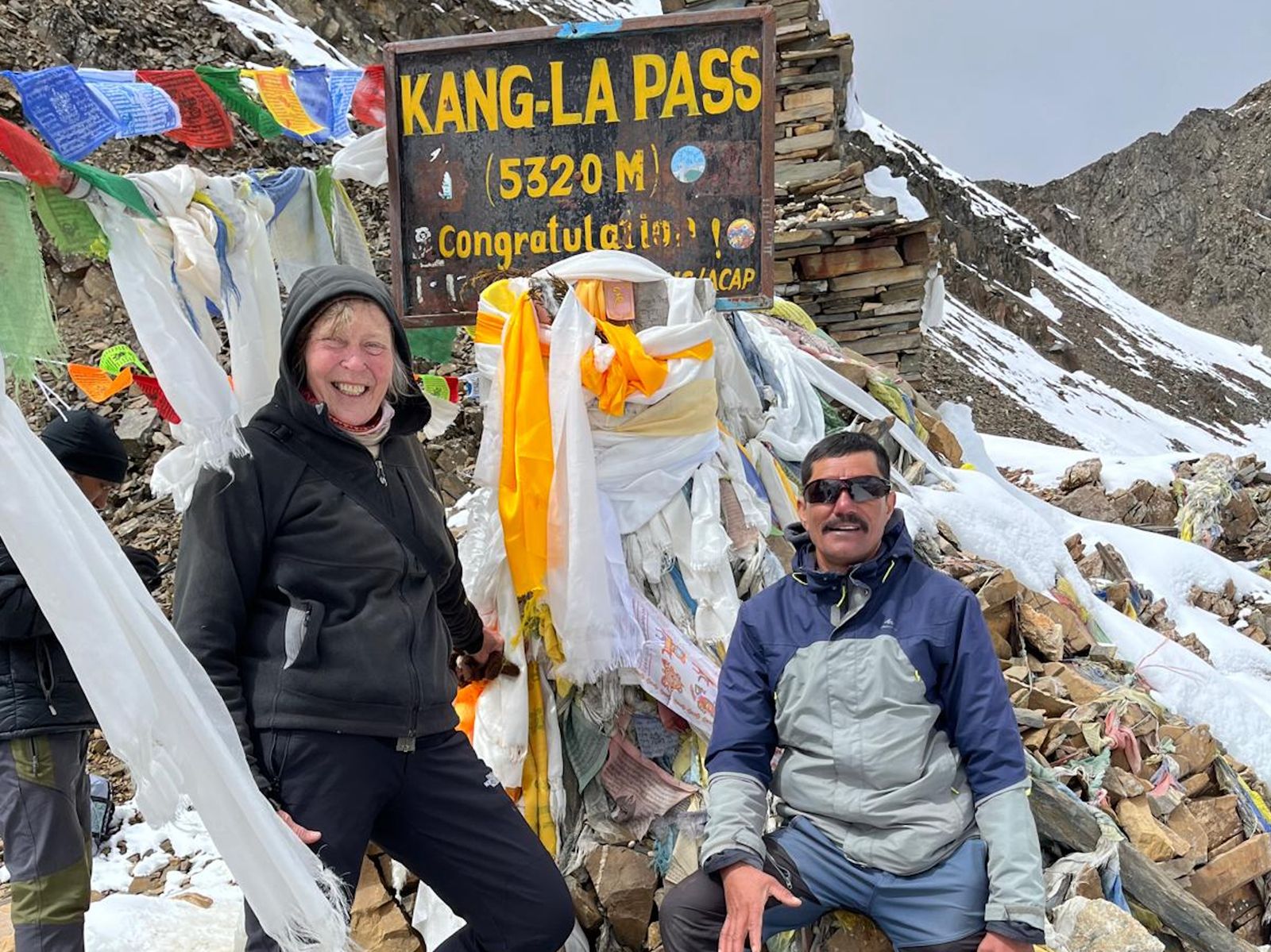
From Sallaghari, we head for the base camp of Kang-la, also known as Nangdalo. We ascend to the narrow defile of the Tuk Kyaksa River first, then the trail switches to the opposite side of the river several times, and we arrive at the place where the rapids of the river are calmer. We further walk across the wide valley along the canyon to the campsite and finally to the massive rock slab, which is Kang-la High Camp. Overnight at the campsite.
Day 10: Kang-la Pass base camp- Shey gompa Trek
5,300m/17,388ft
Camping
Breakfast, Lunch, Dinner
6-7 hrs
Today, we are entering the real Dolpo, crossing the Kang-la pass. From Kang-la, Crystal Mountain, the mountain in Tibetan territory, and the fascinating landscape of Dolpo are seen. Before descending steeply down to the valley floor and along the river, we also have a view of peaks Shey Shikkar and Kang Chunne, both just over 6,000 meters. We trek to the fabled Shey Gompa. A red Chorten marks the entrance to Shey. Overnight at a tented camp.
Day 11: Shey Gompa –Namgong Gomp Trek
5,010m/16,437ft
Camping
Breakfast, Lunch, Dinner
5-6 hours
After exploring Shey Gompa in the morning, we begin our trek to Namgong Gompa. We follow the trail beside Sephu Khola and begin to climb toward the top of Shey La Pass. The magnificent view of Mustang to the East, Tibet to the North, and Kanjiroba, Kagmara, and Riu Dhukta, or the Crystal Mountain to the West, is rewarded from the peak of Shey la pass. And finally, two hours walk downhill from Sela La (5,010m), we reach Namgong. Overnight at Namgong.
Day 12: Namgong -( via Karang, Sibu,) Marang Trek
4,350m/14,271ft
Camping
Breakfast, Lunch, Dinner
6-7 hrs
Today, from Namgong, we trek toward the beautiful valley behind Saldang, Marang. Gradual trail with little ups and downs, passing through Karang, Sibuk, and some other interesting villages, with a similar elevation level, we reach Marang. Overnight at Marang.
Day 13: Marang – Dora Simna Trek
3,670m/12,040ft
Camping
Breakfast, Lunch, Dinner
6-7 hours
From Marang, today we head toward Dora Simna. We will be descending slightly down toward a lower elevation, i.e., we will lose the elevation of 680m. We pass through the famous Sungjer Gompa. And there is a place named Luri Gau, similar to Upper Mustang in Dolpo. We arrive at Dora Simna, passing through Luri Gau on the way. Overnight at Dora Simna.
Day 14: Dora Simna – (via Yangjer Gompa) Mishagaon-Trek
4,599m/38,325ft
Camping
Breakfast, Lunch, Dinner
6-7 hrs
After breakfast, we head toward Mishagaon. The first part of the trail leads us toward the Yangjer Gompa, which is a very old Bon-Po monastery and one of the wealthiest among the monasteries in Dolpo. The trail passing through a terraced field, stupas, Chortens, and monasteries, we walk past Namdo villages, a prosperous one in the region, to reach Mishagaon. Overnight at a tented camp.
Day 15: Mishagaon –Chanpola Goth near Shimengaon
5,030m/16,503ft
Camping
Breakfast, Lunch, Dinner
6 hrs
The landscapes in the vicinity are full of the highland desert with few shrubs or vegetation. The trail steeps up to the top of the Musi La Pass at 5,030m and descends to Shimengaon at an elevation of 3,850m. We will camp close to Shimengaon, the place named Chanpola Goth.
Day 16: Shimengaon - Tinje gaon (4,110m)
4,110m/13,480ft
Camping
Breakfast, Lunch, Dinner
5-7 hrs
Today, after a good breakfast, we will walk towards the beautiful village of Tinje. The trail goes by the side of Panjang Khola. Walking through very rocky uphill and downhill, we reach Tinje after about seven hours hiking. The village is located in the valley with a big spread of land, which is observable for its scenic beauty and tradition. Overnight at tented camp.
Day 17: Tinje gaon – Rakpa Trek
4,535m/14,878ft
Camping
Breakfast, Lunch, Dinner
5-6 hrs
After a good breakfast, today’s trail is mostly uphill through gentle terrain. We will gain around 400m of elevation on the way. Passing the runway of the mysterious Tinje Airport, we continue southwards to the campsite on the bank of the river at Rakpa. Overnight at Rakpa.
Day 18: Rakpa - Chharka Trek
5,030m/16,503ft
Camping
Breakfast, Lunch, Dinner
6-7 hrs
From Rakpa, we start a long climb to the Chharka La. The first few hours of the trek will be a gradual uphill, and we will reach the highest point of Charka pass. Then, we descend along the side of the valley and a long traverse down to the village of Chharka on the bank of Barbung Khola. Overnight at Chharka.
Day 19: Chharka - Tulsi khola Trek
4,987m/16,361ft
Camping
Breakfast, Lunch, Dinner
5-6 hrs
Today, we will be heading very close to the territory of The Last Forbidden Kingdom of Lo. Following some ups and downs, we reach Tulsi Khola. Tulsi Khola has a great significance in Hindu Culture. Overnight tented camp next to the Tulsi Riverbank.
Day 20: Tulsi khola - Nakhkem Khola Trek
5,066m/16,620ft
Camping
Breakfast, Lunch, Dinner
5-6 hours
After having breakfast in the morning, we begin our hike from Tulsi Khola toward Nakhkem Khola. The trail is mostly gentle and flat, following the river through serene landscapes with occasional views of surrounding hills and scattered vegetation.
Along the way, we pass small streams and enjoy the peaceful atmosphere of this less-traveled route. The walk is relatively easy, allowing time to appreciate the natural beauty and relax into the rhythm of the trek. Upon reaching Nakhkem Khola, we set up our tented camp and spent the night.
Day 21: Nakhem Khola - Kharka camp Trek
5,445m/45,375ft
Camping
Breakfast, Lunch, Dinner
6 hrs
From Nakhem Khola, we will start ascending toward Kharka, enjoying the beautiful view of mountain ranges and lakes. We can have the incredible view of the Dhaulagiri Himalayan Ranges and a few lakes from Kharka. And it’s the final night in the Dolpo region. Overnight in camp.
Day 22: Kharka camp – (Cross Ghami Pass) Ghami Phedi Trek
5,694m/18,681ft
Camping
Breakfast, Lunch, Dinner
7-8 hrs
From today, we will be heading toward Upper Mustang. After an early morning breakfast, we will start trekking through a quite difficult way. We must be very careful and concentrate on every footstep. The spectacular view of the mountain ranges and the surrounding area can be seen. The unique terrain of Upper Mustang from the top of the Ghami Pass can be enjoyed. Overnight in Ghami Phedi.
Day 23: Ghami Phedi - Ghami Trek
3,520m/11,548ft
Tea House
Breakfast, Lunch, Dinner
6-8 hrs
Today, we will be crossing the Ghami River several times on the way to Ghami. Rising and going down along the way, we reach Ghami. Ghami is a beautiful settlement of people, where people are influenced by the Tibetan cultures and traditions. Overnight in a local lodge.
Day 24: Ghami - Marang Trek
3,800m/12,467ft
Tea house
Breakfast, Lunch, Dinner
5-6 hrs
Having breakfast in Ghami, we continue our trek to Marang, whose name is similar to the Marang in the Dolpo region. Marang is a small village on the right of Tsarang. Tsarang (Charang) has probably been the most beautiful village in Mustang. Overnight at Marang.
Day 25: Marang - Lo-Manthang Trekking
3,950m/12,959ft
Tea House
Breakfast, Lunch, Dinner
6-7 hrs
After having breakfast, we begin our trek. We will be descending to a canyon and crossing a river before beginning our uphill trek to Lo La pass(3,950m). We can admire the beautiful Lo Manthang village from the top of the pass.
Now, we descend to Lo Manthang, a beautiful walled village. The views of the Himalayas, including Nilgiri, Annapurna I, Bhrikuti Peak, as well as Damodar Kunda (pond), are quite good from here. Overnight in Lo Manthang.
Day 26: Explore Lo-Manthang & Choser Village
3,840m/12,598ft
Tea House
Breakfast, Lunch, Dinner
Full day
It’s the second day in Lo Manthang, a walled town of the remote Upper Mustang region of Nepal. After breakfast, you’ll explore the ancient walled city of Lo-Manthang, visiting its royal palace and centuries-old monasteries like Jampa and Thubchen, known for their beautiful murals and deep spiritual significance.
Later, you take a short excursion to Choser Village, passing through dramatic landscapes of cliffs and canyons. Here, you visit the fascinating sky caves, including the famous Jhong Cave (Jhove Cave), a multi-story cave dwelling carved into the cliffs. You may also explore Nyphu Cave Monastery and Rangchyung Cave, each holding unique historical and religious importance.
After the exploration, you return to Lo-Manthang for an overnight stay, ending a day filled with culture, history, and stunning Himalayan scenery.
Day 27: Lo-Manthang - Yara Gaon Trek
3,650m/11,975ft
Tea House
Breakfast, Lunch, Dinner
6-7 hrs
After spending two nights in the beautiful Lo Manthang, we will start hiking to Yara Gaon. From here, the trail steadily climbs two small passes, then we will be tumbling through an outstanding gorge to Dhi village. And a continuous walk along the riverbed, from Dhi we reach Yara Gaon. Overnight at Yara Gaon.
Day 28: Yara - Tyange Trek
3,880m/12,467ft
Tea House
Breakfast, Lunch, Dinner
6-7 hrs
Today, having breakfast at Yara, we are heading toward Tyange, which will be a comparatively quiet, long trail, with some steeper parts. We will reach a riverbank after a long walk. This river originates from Damodar Kunda, where we will see some black fossils. From there, we will continue walking up and down and reach the village of Tyange. There are several Chortens that give us a warm welcome. Overnight in Tyange.
Day 29: Tyange – Chhusang Trek
4,210m/13,812ft
Tea House
Breakfast, Lunch, Dinner
6-7 hrs
From Tyange, we start walking down to the river crossing, then climb up to a pass Pa (4,100). As the panorama unfolds between Tsarang, Lo, and the northern border, the views north are increasingly fantastic. Then the summit of the pass reaches 4,050m, where we can see the first stunning view of Dhaulagiri to the south. Then, half an hour from the pass is the only water source on this section, locally known as Ba Ha. Continuing the walk from there, we can see the impressive V-shaped Kali Gandaki valley as it cuts between the Annapurnas, Nilgiris, and Dhaulagiri. Finally, the path flattens out on a plateau and splits in two, right and left, and choosing the right one, we reach Chhusang. Overnight at Chhusang.
Day 30: Chhusang – Muktinath Trek
3,800m/12,467ft
Tea House
Breakfast, Lunch, Dinner
6-7 hrs
From Chhusang, the trail goes up the Narsing chu to the village of Tetang, which is in two parts. From Tetang, trail heads up across a plateau area. Then it turns east into a narrow river valley. On reaching a pass at 4,030m, we have a superb view of the Dhaulagiri and Annapurna ranges. We walk down to Jhong and cross the Jhong River before climbing up to Muktinath, and after some hours, we reach Muktinath. Overnight in the lodge.
Day 31: Muktinath –Jomsom via Kagbeni Trek
2,810m/9,219ft
Hotel
Breakfast, Lunch, Dinner
5-6 hrs
Today is the last day of the trek, so before starting the trek, we will visit the most famous Hindu temple, Muktinath. Muktinath is a holy place for all devotees. The local name of Muktinath is Chhumig Gyatsa (a hundred water springs). This place reflects a unique blend of Hinduism and Buddhism.
Later, continuing the trek toward Jomsom, first, we start descending towards Kagbeni while passing through the field. And after a walk from Kagbeni, we reach Jomsom. Overnight at Jomsom
Day 32: Jomsom-Pokhara morning flight & Back to Kathmandu flight
2,740m/8,988ft
Hotel
Breakfast, Lunch, Dinner
1-2 hrs
After having an early morning breakfast, we head toward the airport and catch the flight to Pokhara. Enjoying the beautiful view of the mountains, we arrive at Pokhara after 30 minutes. On arriving Pokhara we will have lunch and after some rest, we take another flight to Kathmandu. Overnight in Kathmandu Hotel.
Day 33: Departure
After breakfast, one of our representatives will drop you off at the airport approximately 3 hours before your scheduled flight. But if you want to spend more time exploring Nepal, we offer a wide variety of tour packages you can choose from based on your interests.
Want to customize your trip?
We ensure every trip meets your expectations — customize your itinerary anytime to match your travel style and preferences.
Inclusions
What’s Covered in Your Adventure
- All Ground transfers during the trip by private vehicle
- All Accommodation 4* Category Hotel in Kathmandu, Tea houses & Tented camp in Trekking
- Full Board meal ( Breakfast, Lunch, Dinner ) during trip as mentioned in itinerary
- All Domestic flights and domestic airport transfers
- All Necessary Permit Upper Mustang & Upper Dolpa Especial restricted area Permit, ACAP Permit, Phokshundo National Permit & TIMS(Trekkers Information Management System) Card
- English speaking Guide
- All necessary stuff Cooking, Sleeping Down Jacket & Sleeping Bag
- First aid medicine
- Bold Himalaya's T-Shirt, Douffele Bag & Trip certificate
- All Nepal Government & Local Taxes
- International Flights
- Travel Insurance
- Nepal Travel Visa fee
- Cold & alcohols drinks or your all personal expenses
- Personal Trekking gears & Laundry
- Tips for crews members
Good to Know
Your Journey, Step by Step
Required Permits for this Trek
Trekking from Upper Dolpo to Upper Mustang requires multiple special permits because both regions are classified as restricted areas of Nepal. Here’s what you need to know:
Upper Dolpo Restricted Area Permit
This is the most important permit for entering Upper Dolpo. It is relatively expensive due to the remoteness and controlled access.
- Required for trekking beyond Phoksundo Lake
- Issued only through a registered trekking agency
- Mandatory to trek with a licensed guide
Upper Mustang Restricted Area Permit
To enter Upper Mustang (beyond Kagbeni), you must obtain a separate permit.
- Fixed permit cost (typically for 10 days)
- Additional daily fees apply if you stay longer
- Also requires a guide and agency arrangement
Shey Phoksundo National Park Permit
You need this permit to enter the protected area that covers much of Dolpo, including the famous Shey Phoksundo National Park.
- Helps conserve wildlife and natural heritage
- Checked at entry points along the trek
Annapurna Conservation Area Permit (ACAP)
Since the trek ends in Mustang, which falls under the Annapurna region, you’ll also need a permit for the Annapurna Conservation Area.
- Required for entry into the Mustang region
- Covers conservation and trail maintenance
Accommodation In Upper Doplo and Upper Mustang Trek
Accommodation during the trek from Upper Dolpo to Upper Mustang varies greatly due to differences in accessibility and infrastructure. Here’s what you can expect:
Accommodation in Upper Dolpo
Upper Dolpo is one of the most remote trekking regions in Nepal, so accommodation is quite basic and often limited.
- Camping (Primary Option): Most of the trek in Dolpo is done with fully organized camping. Your trekking crew will set up tents, prepare meals, and manage logistics.
- Basic Teahouses (Limited): In a few villages, you may find very simple lodges or homestays. Facilities are minimal, basic beds, shared toilets, and simple local meals.
Accommodation in Upper Mustang
Upper Mustang is comparatively more developed and offers better accommodation options.
Teahouses & Lodges: Well-established teahouses are available in most villages, like Lo Manthang. Rooms are simple but comfortable, usually with twin beds and blankets.
Food in Upper Dolpo and Upper Mustang
Food during the trek from Upper Dolpo to Upper Mustang is simple, hearty, and designed to provide energy for long trekking days in remote high-altitude terrain.
In Upper Dolpo, meals are mostly prepared by the trekking crew during camping, with a limited variety consisting of staple dishes like dal bhat, noodles, soups, potatoes, and occasional local foods such as Tsampa. Fresh ingredients are scarce, so food is basic but filling.
As you enter Upper Mustang, the food experience improves with the availability of teahouses offering a wider range of options, including rice dishes, pasta, momos, pancakes, and hot drinks like tea and coffee.
Although the menu becomes more diverse, it is still recommended to stick to vegetarian meals for safety and carry extra snacks for added energy. Overall, while food on this trek is not luxurious, it is nutritious and sufficient to support the challenging journey through these remote Himalayan regions.
High Altitude Challenge
The trek from Upper Dolpo to Upper Mustang is a true high-altitude adventure, with several sections exceeding 4,000 meters and multiple mountain passes rising above 5,000 meters. As you gain elevation, the air becomes thinner, meaning less oxygen is available for your body, which can lead to altitude-related illnesses if proper precautions are not taken. Trekkers may experience symptoms such as headaches, nausea, dizziness, fatigue, and shortness of breath, common signs of Acute Mountain Sickness (AMS).
To safely complete this trek, gradual acclimatization is essential. Most itineraries include rest days at key points to help your body adjust to the altitude. Staying well-hydrated, maintaining a steady pace, and avoiding rapid ascent are crucial practices. In more serious cases, immediate descent is the best remedy. Due to the remoteness of the region and limited access to medical facilities, preparation is key; carrying basic medication and trekking with an experienced guide can make a significant difference.
Despite the challenges, the high-altitude environment rewards trekkers with breathtaking landscapes, dramatic mountain passes, and a sense of true wilderness that makes the journey both demanding and incredibly fulfilling.
What to pack for this trek?
Trekking from Upper Dolpo to Upper Mustang requires careful packing due to remoteness, high altitude, and changing weather conditions. Here’s a complete and practical packing list:
Clothing
- Moisture-wicking base layers (tops & bottoms)
- Insulating layers (fleece/down jacket)
- Waterproof & windproof jacket and pants
- Trekking pants & shirts (quick-dry)
- Thermal innerwear
- Warm hat, sun hat, and buff/scarf
- Gloves (inner + insulated outer)
- Undergarments & extra socks (wool recommended)
Footwear
- Sturdy trekking boots (well broken-in)
- Camp shoes or sandals
- Warm socks & liner socks
Sleeping Gear
- Four-season sleeping bag (rated -15°C to -20°C)
- Sleeping bag liner (optional but useful)
Trekking Gear
- Backpack (30–40L for daily use)
- Duffel bag (for porter/yak transport)
- Trekking poles
- Headlamp with extra batteries
- Water bottles/hydration bladder
- Sunglasses (UV protection)
Personal Items & Toiletries
- Sunscreen (SPF 50+) & lip balm
- Toothbrush, toothpaste, wet wipes, sanitizer
- Quick-dry towel
- Toilet paper & biodegradable soap
Health & First Aid
- Personal medications
- Basic first aid kit (bandages, antiseptic, painkillers)
- Medication for altitude sickness
- Water purification tablets or a filter
Snacks & Extras
- Energy bars, nuts, and chocolates
- Electrolyte powders
- Reusable lunch box or snacks pouch
Documents & Essentials
- Passport & permits (multiple copies)
- Travel insurance (must cover high altitude trekking)
- Cash (no ATMs in remote areas)
Optional but Useful
- Power bank / solar charger
- A camera or phone for photography
- Lightweight book or journal
FAQs
Your Questions, Answered
How difficult is this trek?
It is considered a strenuous trek due to its long duration (27-33 days), high altitude passes above 5,000 meters, and remote terrain. Prior trekking experience and good physical fitness are highly recommended.
Do I need permits for this trek?
Yes, multiple permits are required, including restricted area permits for both regions, as well as conservation permits like Shey Phoksundo National Park and Annapurna Conservation Area.
Is a guide mandatory?
Yes, trekking independently is not allowed in these restricted areas. You must trek with a licensed guide and through a registered trekking agency.
What kind of accommodation can I expect?
In Upper Dolpo, accommodation is mostly camping with very basic facilities, while in Upper Mustang, you’ll find teahouses with relatively better comfort and food options.
What type of food is available during the trek?
Food is simple and nutritious. In Dolpo, meals are mostly prepared by the trekking crew, while Mustang offers a wider variety of teahouse meals, including local and some Western dishes.
Is altitude sickness a concern?
Yes, altitude sickness is a major concern as the trek reaches over 5,000 meters. Proper acclimatization, hydration, and gradual ascent are essential.
How long does the trek take?
The full trek usually takes around 27 to 33 days, depending on the route, acclimatization days, and itinerary.
Is there internet or a mobile network on the trek?
Connectivity is very limited, especially in Upper Dolpo. Some areas in Upper Mustang may have occasional network or Wi-Fi, but don’t rely on it.
How expensive is this trek?
It is one of the more expensive treks in Nepal due to high permit costs, flights, guide/porter services, and logistics.
Do I need travel insurance?
Yes, travel insurance is highly recommended and should cover high-altitude trekking and emergency evacuation.

Reviews
What Our Travelers Say


Based on 0 ratings
View OurSimilar Packages
Discover our top tours, loved by thousands of travelers annually. Choose the adventure that inspires you and embark on a journey tailored to your desires.
View All Packages

Premium Nepal & Bhutan Luxury Tour | 11-Day Himalaya Adventure
 Multi-country
  11 Days Days
Save 33%
Mulde View Point Trek with Poon Hill – Four Days of Annapurna
Nepal Tour Packages
4 Days
Save 32%
Mardi Himal Base Camp 5 Days Trek
Nepal Tour Packages
5 Days
Save 32%
Annapurna Circuit Trek with Tilicho Lake
Nepal Tour Packages
13 Days
Save 28%
Nar Phu Valley Trek – 11-Day Remote Himalayan Adventure
Nepal Tour Packages
11 Days