

Shey Phoksundo Lake Trek


Day-by-Day Shey Phoksundo Lake Trek Schedule
Your Journey, Step by Step
Day 1: Arrive in Kathmandu & Trek Preparation
Dinner
3-Star Hotel in Kathmandu
Upon arrival in Kathmandu, you are surrounded by a whirlwind of ancient temples, vibrant bazaars, and crazy streets. The day is spent preparing for the trek, obtaining permits, any additional equipment, and a briefing session with your guide, who is going to guide you across the Himalayas. If you have an early morning flight out, why not get some of Kathmandu’s amazing UNESCO landmarks off the agenda? Stroll through centuries-old palace structures at Kathmandu Durbar Square and see Newari architecture in its best light. Tonight, enjoy a fine welcome dinner on which we will organize the fine adventure to come.
Day 2: Fly to Nepalgunj (150m/492ft.)
Hotel
Breakfast, Lunch, Dinner
50 minutes
Your Shey Phoksundo Lake Trek begins with a 50-minute domestic flight from Kathmandu to Nepalgunj, the gateway to western Nepal’s remote Dolpo region. Nepalgunj, located near the Indian border at an altitude of 150 meters, offers a stark contrast to Kathmandu’s mid-hills, with its warm, humid tropical climate.
An overnight stay in Nepalgunj is necessary, as mountain flights to Juphal operate only in the early-morning calm. Use this time to explore local flavors, like street Biryani and Rabri, or visit the historic Bageshwori Temple, dedicated to Goddess Durga.
It’s also the perfect opportunity for a final gear check and briefing from your guide before heading into the heart of the Himalayas.
Day 3: Flight to Juphal & Trek to Kagani (2,300m / 7,546ft)
Breakfast, Lunch, Dinner
Cozy Hotel
~35 minutes
Your adventure into the heart of Dolpo begins today with one of the most scenic short-haul flights in Nepal. After breakfast in Nepalgunj, board a small STOL (Short Take-Off and Landing) aircraft for a 35-minute flight to Juphal (2,475m), where breathtaking aerial views of the Dhaulagiri and Kanjirowa ranges await. Landing on the rugged mountain airstrip is an experience in itself.
Upon arrival, you will meet your trekking crew and begin a 3–4 hour trek toward Kagani. The trail descends through lush wheat and maize fields, passes the bustling town of Dunai, the district headquarters, and follows the Suli Gaad River valley, offering riverside walking and picturesque landscapes.
Arriving at Kagani (2,300m), a quiet village with local teahouse accommodation, positions you perfectly for an early start into Shey Phoksundo National Park the next morning. This stage of the Shey Phoksundo Lake trek combines gentle terrain with stunning Dolpo scenery, making it an ideal introduction to high-altitude Himalayan trekking.
Day 4: Kagani to Rechi (3,010m / 9,875ft)
Breakfast, Lunch, Dinner
Local Lodge of Rechi
5–6 hours
~12 km / 7.5 miles
Today’s trek takes you deeper into Shey Phoksundo National Park, following the spectacular Suli Gaad River (Phoksundo Khola) as it cascades through rocky gorges. Shortly after leaving Kagani, you’ll reach the park checkpost at Sulighat, where your trekking permits are verified. The air grows cooler and fresher as you enter the protected forests of the park.
The trail winds through dense Himalayan woodland with towering cedars, pine, bamboo, and walnut trees. Birdwatchers will delight in glimpses of the Impeyan Pheasant (Danphe), Nepal’s national bird, and other alpine species. The route includes gentle climbs and descents, crossing multiple suspension bridges over the turquoise river below.
Along the way, you pass the village of Chhepka (2,670m), an ideal spot for a break or lunch. The trek then continues through varied terrain before reaching Rechi, a tranquil settlement in the valley used by local herders and trekkers. This peaceful stop offers a quiet retreat before the final ascent to Shey Phoksundo Lake tomorrow.
Day 5: Rechi to Shey Phoksundo Lake (3,611m / 11,847ft) – High-Altitude Dolpo Trek
Breakfast, Lunch, Dinner
Local lodge
6–7 hours
~14 km / 8.7 miles
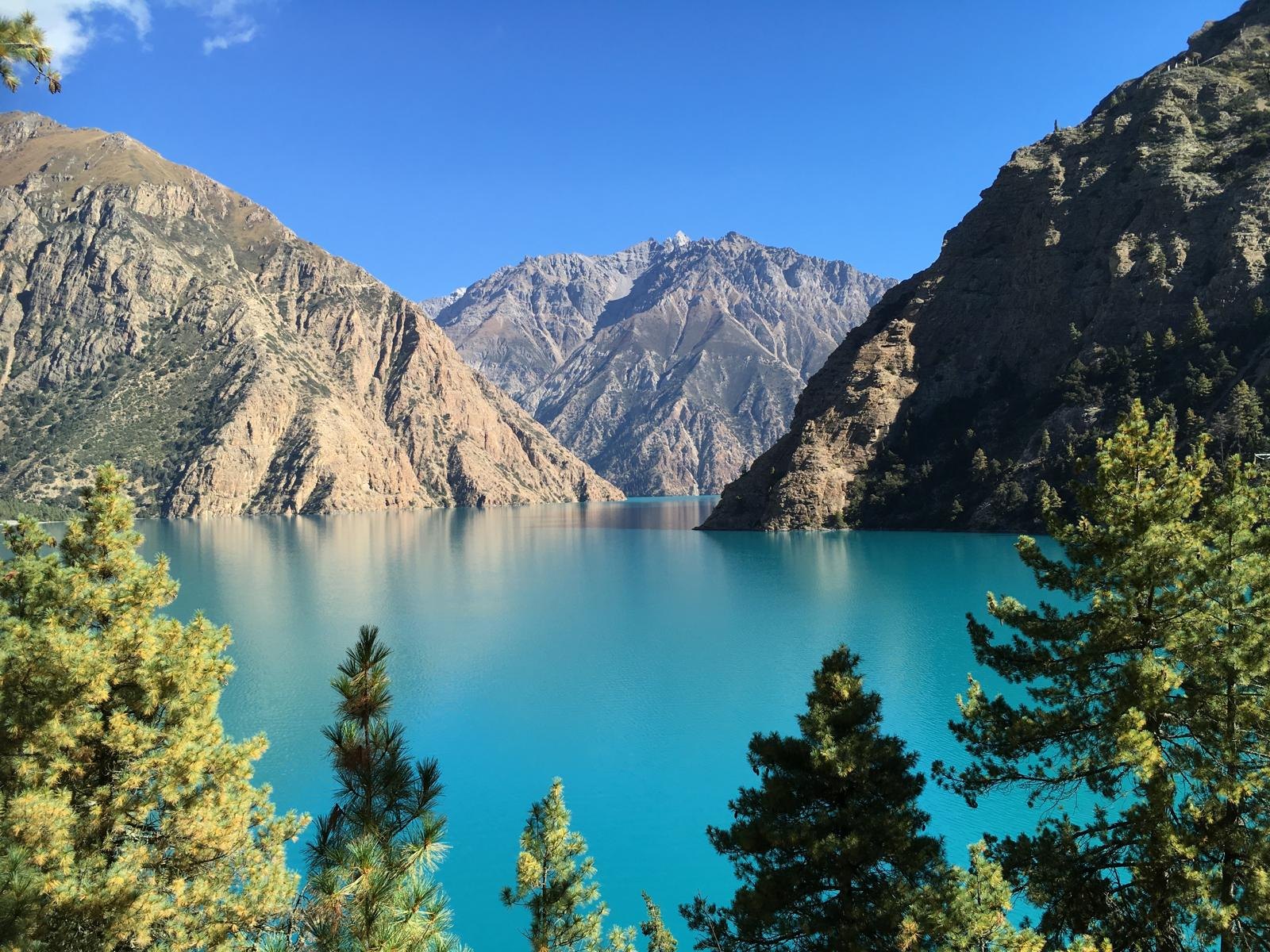
On Day 5, your trek ascends from the serene river valleys of Dolpo into the stunning high-altitude alpine landscapes surrounding Shey Phoksundo Lake, Nepal’s deepest turquoise alpine lake.
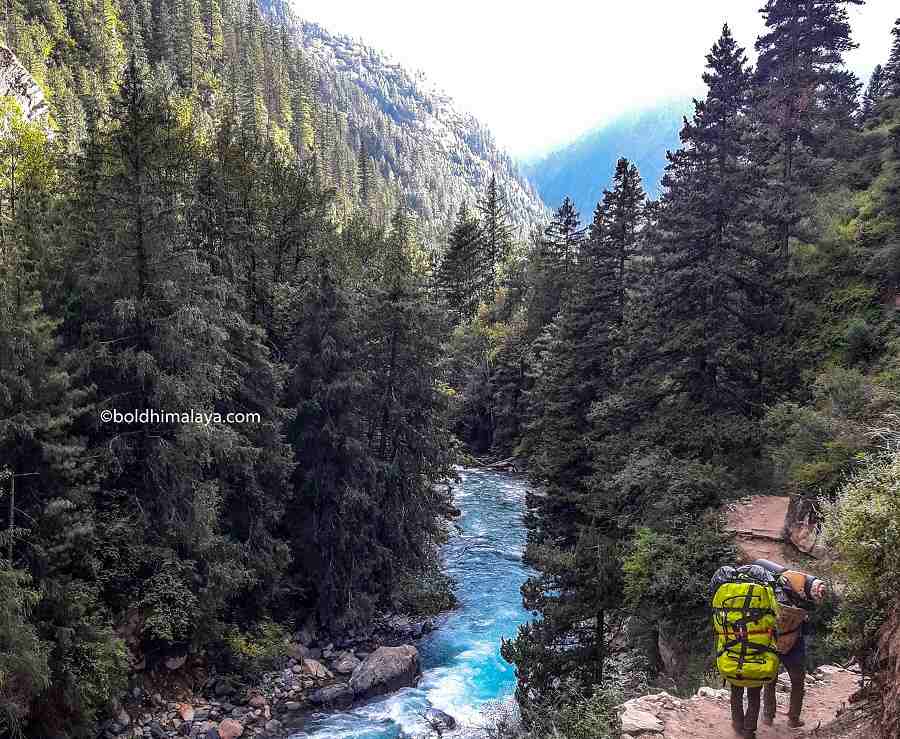
Leaving Rechi, the trail continues along the Suli Gaad River (Phoksundo Khola), weaving through dense pine, birch, and juniper forests. Trekkers cross multiple suspension bridges while enjoying the pristine wilderness. Along the way, you pass Amchi Hospital, a center for traditional Tibetan medicine (Sowa Rigpa), offering a unique insight into the centuries-old healing practices and rich cultural heritage of the Dolpo people.
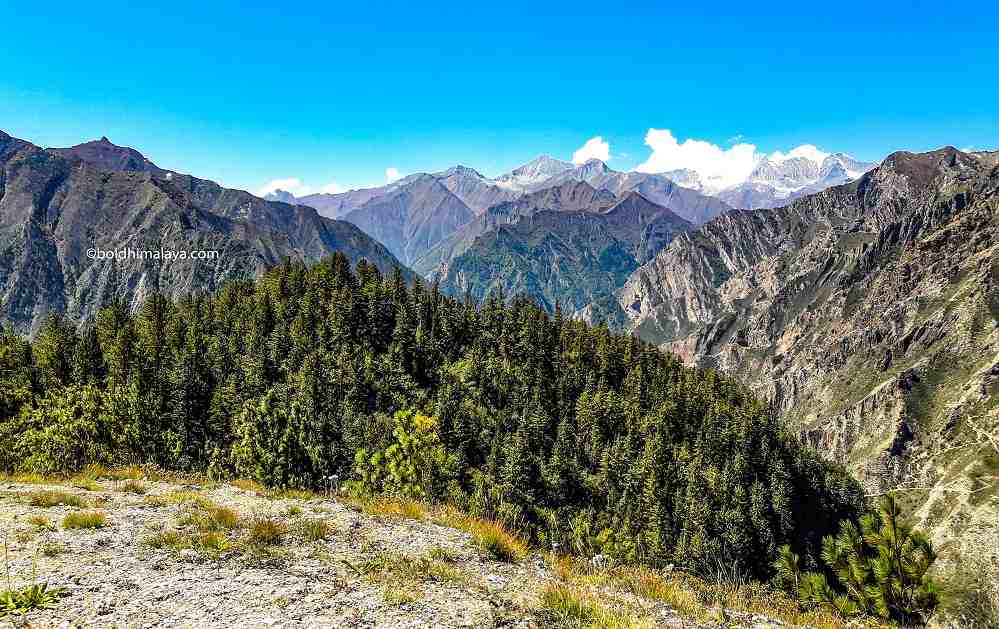
After reaching the confluence of the Phoksundo and Pungmo rivers, the trail climbs steeply via the famous Phoksundo Switchbacks. This is the most strenuous part of the trek, but the effort is rewarded with spectacular panoramic views of the surrounding trans-Himalayan mountains.
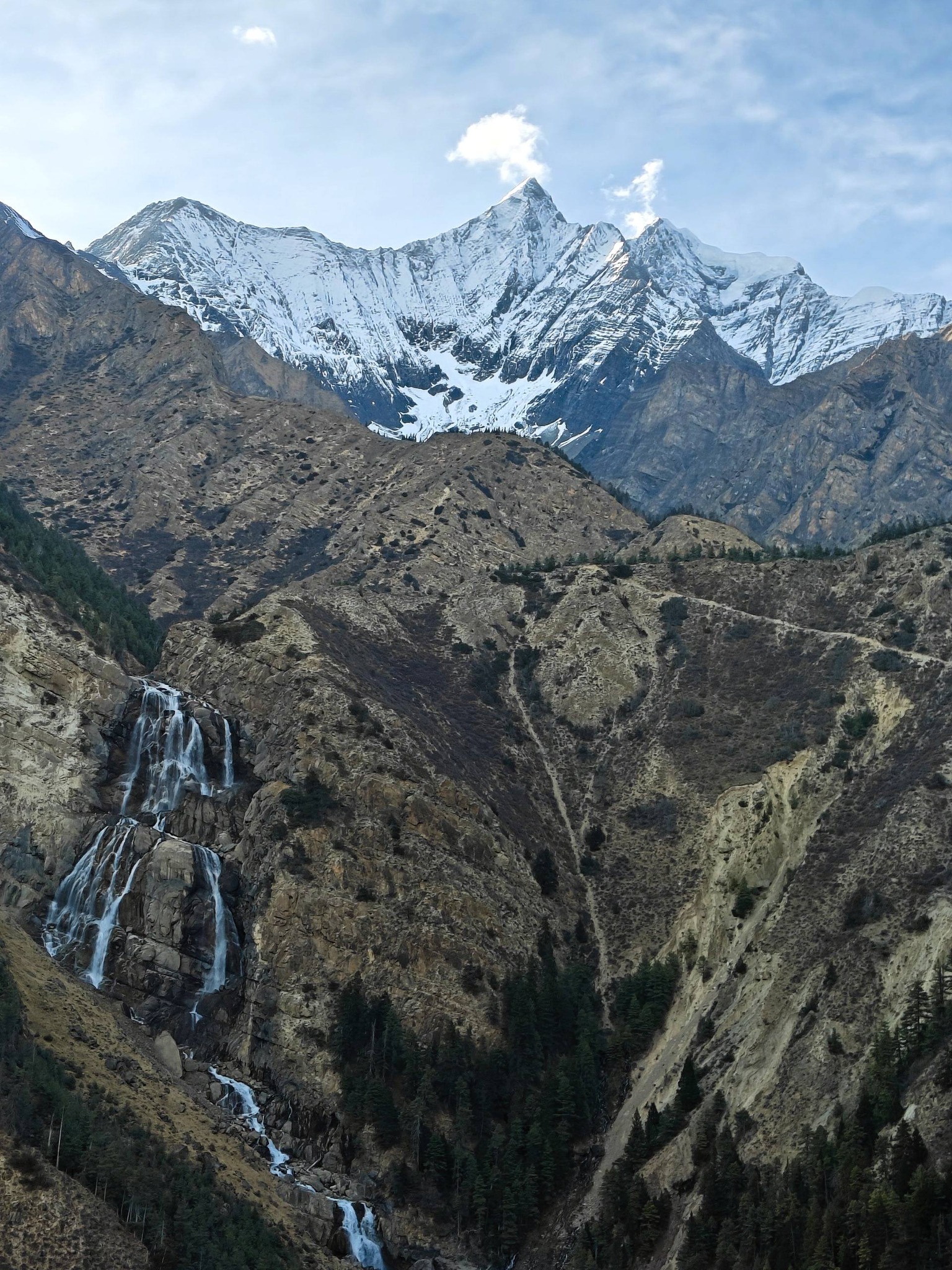
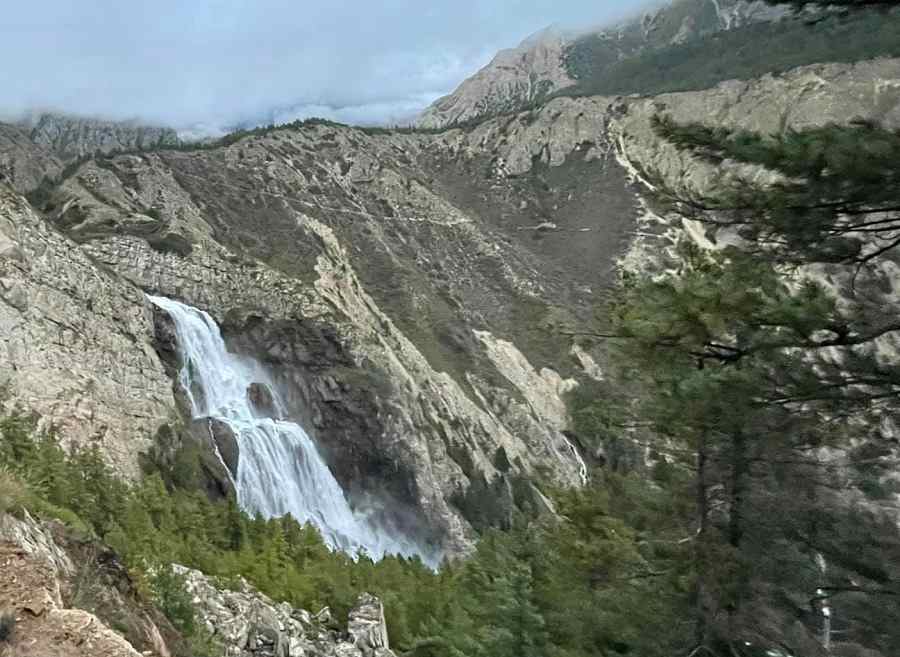
At the ridge top, enjoy a breathtaking view of Jharana Waterfall, one of Nepal’s tallest waterfalls at 330 meters (1,083 ft). From here, the first striking glimpse of Shey Phoksundo Lake’s turquoise waters appears, shimmering against the rocky cliffs and snow-capped peaks.
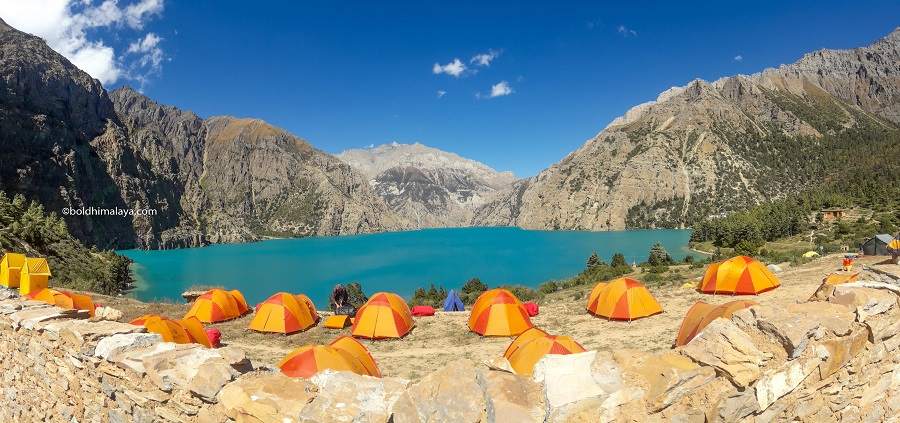
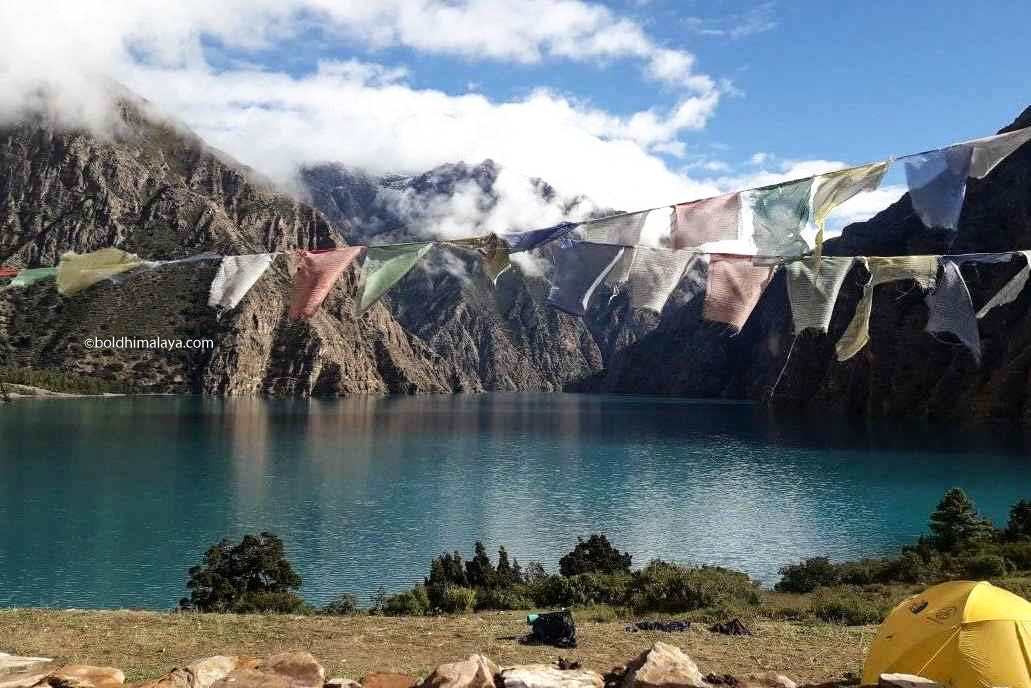
The final stretch descends gently through lush birch forests to Ringmo Village, a traditional Bonpo settlement. Just beyond the village, the expansive beauty of Shey Phoksundo Lake unfolds, making this moment one of the most iconic in Nepal trekking adventures. The lake’s calm, mineral-rich waters mirror the surrounding cliffs, creating an unforgettable Himalayan landscape.
Day 6: Exploration & Spiritual Immersion at Shey Phoksundo Lake
Breakfast, Lunch, Dinner
Local Homestay
3,611.5 m / 11,849 ft
Day 6 at Shey Phoksundo Lake is more than a rest day—it is a crucial acclimatization and cultural exploration day that allows trekkers to adjust to the high altitude of 3,611.5 meters (11,849 ft) while immersing themselves in the ancient Dolpo culture.
Begin with a peaceful breakfast overlooking the pristine turquoise waters of Phoksundo Lake, then take a short hike to Tshowa Gompa (Thasung Tsoling Gonpa). Perched on a ridge above the lake’s eastern shore, this ancient Bonpo monastery offers a rare insight into a spiritual tradition that predates Tibetan Buddhism. Inside, discover centuries-old statues, sacred thangkas, and ritual spaces, and witness monks performing centuries-old ceremonies—a living connection to Dolpo’s cultural heritage.
For those seeking adventure, explore the Demon’s Trail, a cliffside path famously featured in Eric Valli’s Oscar-nominated film Himalaya (Caravan). The trail provides dramatic panoramic views of Phoksundo Lake, with its still, mineral-rich waters reflecting the surrounding Kanjirowa Himal peaks. Later, enjoy tranquil lakeshore meditation, taking in the serene, mirror-like lake, a perfect spot for reflection and photography.
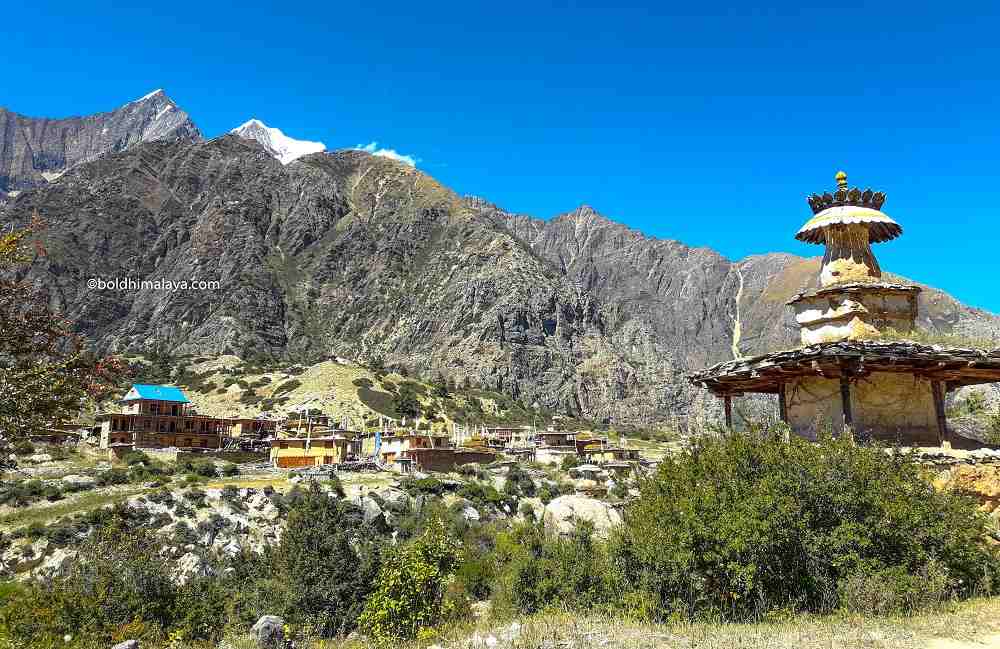
Spend the evening in Ringmo, a traditional Tibetan-style village with stone houses, mani walls, and a close-knit community. Engage with locals over salt butter tea or barley-based snacks, learning about their daily lives and Bonpo cultural practices. With zero light pollution, the night sky here is exceptional for stargazing, offering breathtaking views of the Milky Way arching over the Himalayas.
Day 7: Trek from Shey Phoksundo Lake to Chhepka (2,670m / 8,760ft)
Breakfast, Lunch, Dinner
Local Homestay
2,670 m / 8,760 ft
Today marks a rewarding descent from the turquoise waters of Shey Phoksundo Lake, dropping 941 meters to Chhepka. After witnessing one last sunrise over the lake, you bid farewell to Ringmo Village and retrace your steps through dense birch and pine forests along the Phoksundo Khola (Suli Gaad River). The trail features the famous switchbacks and panoramic views of Jharana Waterfall, offering perfect photo opportunities.
Along the way, stop at Rechi Village for a lunch break before continuing through several suspension bridges and peaceful forest paths. The lower altitude brings warmer air and more oxygen, making your night in Chhepka restful. Trekking poles are recommended for a safe and comfortable descent on the rocky and steep terrain.
Day 8: Trek from Chhepka to Juphal via Suligad (2,475m / 8,120ft)
Cozy Hotel
Breakfast, Lunch, Dinner
5–7 hours
On Day 8, you retrace your route through the Shey Phoksundo National Park, enjoying the scenic Dolpo landscapes one last time. The trail follows the Suli Gaad River, winding through lush forests of walnut and maple trees, with lower altitudes providing warmer air and easier breathing.
After 3–4 hours, you reach Suligad, the official park exit point, where permits are checked, and the exit formalities are completed. Crossing the Bheri River bridge, you continue along the final stretch toward Juphal, passing through Kalagaunda Village and terraced fields. This section can be walked in 2–3 hours or traveled via a local jeep for convenience.
Arriving in Juphal marks the successful completion of your Shey Phoksundo Lake Trek. You will check into a local lodge for your final night in Dolpo and celebrate with a farewell dinner with your guides and porters. Highlights of the day include crossing the confluence of the Phoksundo and Thuli Bheri rivers and savoring the “mission accomplished” feeling at the Juphal airstrip. The trail today is mostly flat and downhill, with a gentle uphill approach into Juphal.
Day 9: Flight from Juphal to Nepalgunj and Return to Kathmandu
Breakfast
Juphal → Nepalgunj→Kathmandu
3-Star Hotel in Kathmandu
Your final day marks the conclusion of the Shey Phoksundo Lake trek with a scenic two-stage flight back to the Kathmandu Valley, offering stunning aerial views of the Dolpo wilderness and the Himalayas. The first leg takes you from Juphal (2,475m) to Nepalgunj (150m) via a small STOL aircraft. Operating only in the calm morning hours, this 35-minute flight gives a breathtaking perspective of the high-altitude Dolpo landscapes, river valleys, and rugged mountains. Upon landing in Nepalgunj, you transition from crisp mountain air to the warm tropical Terai plains.
The second leg is a 50-minute domestic flight from Nepalgunj to Kathmandu, operated by airlines such as Buddha Air, Yeti Airlines, or Shree Airlines. As you approach Kathmandu, the panoramic views of the Dhaulagiri and Annapurna ranges serve as a final reminder of your Himalayan adventure. Upon arrival at Tribhuvan International Airport, the Bold Himalaya team transfers you to your hotel in Thamel.
In the evening, Bold Himalaya hosts a special farewell dinner, celebrating your successful journey through the remote and mesmerizing Dolpo region.
Tips: The small aircraft from Juphal enforce a strict baggage limit of 15kg (10kg checked + 5kg hand carry), and mountain weather can cause flight delays—so schedule your international departure with a 24–48 hour buffer.
Day 10: Departure from Kathmandu or Tour Extension
Breakfast
Your Nepal experience ends today. Depending on flight schedules, you may have time to fit in some last-minute shopping or take part in any of the Kathmandu sightseeing activities that didn’t fit your itinerary. Want more? Tour extensions are available – an optional trek, cultural observing, or Chitwan National Park wildlife safari.
When the time finally comes to depart, our representative from Bold Himalaya will escort you to the airport, bidding farewell to an adventure that will be remembered for a lifetime.
Want to customize your trip?
We ensure every trip meets your expectations — customize your itinerary anytime to match your travel style and preferences.
Inclusions
What’s Covered in Your Adventure
- All ground transportation
- All Domestic flight tickets (Kathmandu-Nepalgunj-Jhuphal-Nepalgunj-Kathmandu)
- One Experienced Mountain Guide with their (food, accommodation, salary, Insurance)
- One assistance guide (If group are more than 6pax)
- One porter to carry luggage of two guests with their(food, accommodation, salary, Insurance)
- All accommodation during the trip(4-Star accommodation in Kathmandu, 3-Star accommodation in Nepajung & Local Trekking lodge in Shey Phoksundo trekking route)
- All Meals (Breakfast, Lunch, Dinner with tea or coffee)
- Necessary equipment Down Jacket, Trekking Pole, and sleeping Bag(Return after Trek)
- Necessary permits: Shey Phoksundo National Park Permit, TIMS Card(Trekkers Information Management System) Restricted Area Permit
- One special welcome cultural dinner show and farewell dinner program
- Duffle Bag, T-shirt, and Trip certificate
- First Aid items
- Emergency Evacuation and Support
- All Government, Local taxes & Service charges
- International Airfare
- Travel Insurance
- Tips for the trekking crew
- Dessert and Bar Bills

Trekking Essentials for Phoksundo Lake Trek
Preparing properly for the Phoksundo Lake trek will make your journey safer and more enjoyable. Because this is a remote, high‑altitude region, packing the right gear is essential.

Clothing
- Base layers
- Insulating layers
- Outer shell
- Trekking pants and shirts
- Warm hat and gloves
- Sun hat and UV sunglasses

Footwear
- Sturdy trekking boots
- Hiking socks
- Camp shoes/sandals

Trekking Gear
- Backpack (40–60L)
- Daypack
- Trekking poles
- Sleeping bag
- Water bottles / hydration bladder + water purification

Health & Safety
- First‑aid kit
- Altitude medication
- Sunblock (SPF 50+) and lip balm
- Insect repellent
- Headlamp/torch

Documents & Money
- Passport and permits
- Travel/trekking insurance
- Cash (Nepalese rupees)
- Flight tickets and itinerary printouts
Personal Items
- Snacks: energy bars, chocolate, trail mix
- Toiletries & quick‑dry towel
- Hand sanitizer and wet wipes
- Camera / phone + power bank
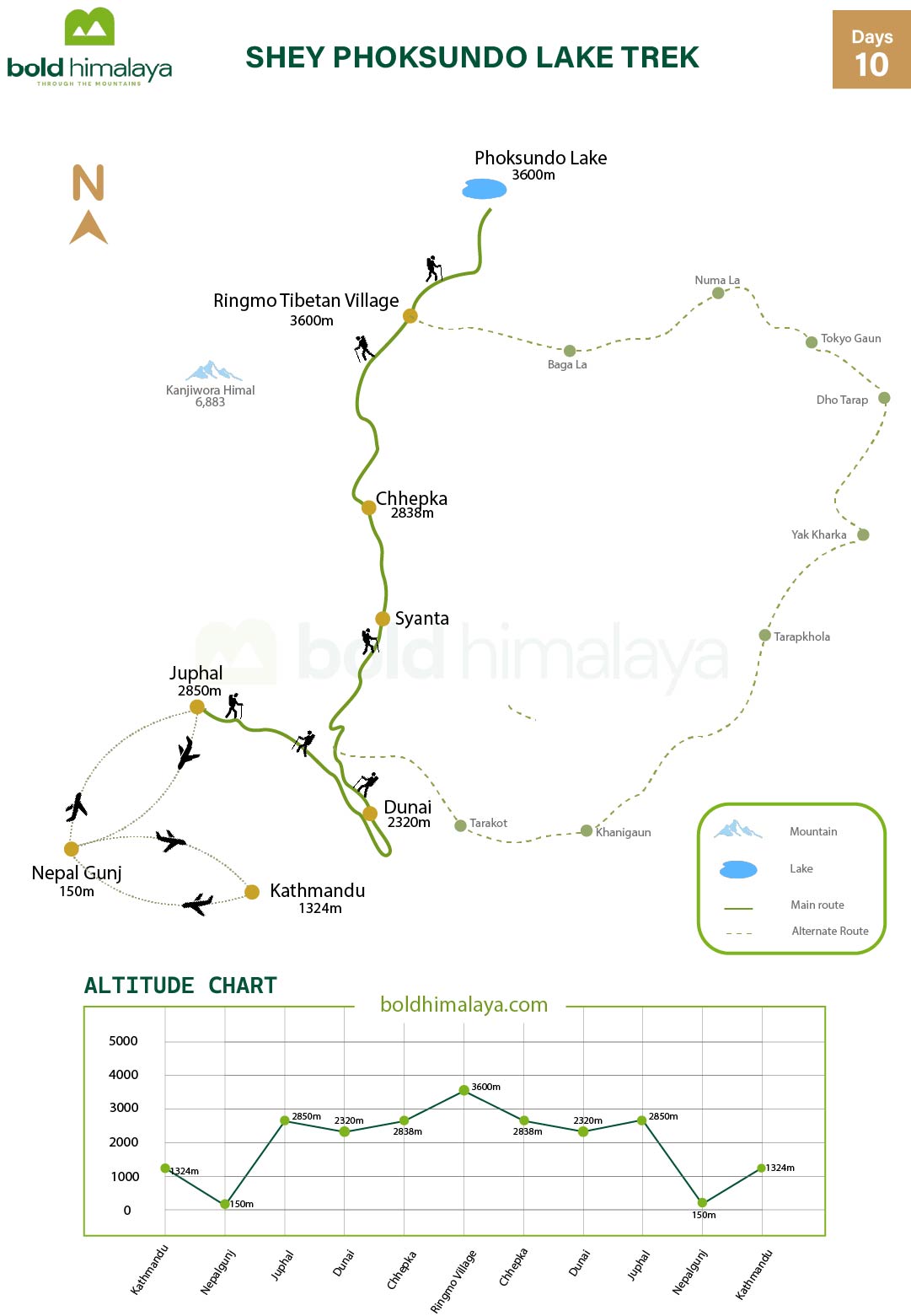
Detailed Map for Shey Phoksundo Lake Trek
Altitude Chart of Shey Phoksundo Lake Trek
Good to Know Before Trekking to Shey Phoksundo Lake
Things to Remember
Shey Phoksundo Trek Cost
Understanding the Shey Phoksundo Trek cost is essential for budgeting a journey into Nepal’s remote west. For a standard 9-day itinerary in 2026, trekkers should expect to pay between $1,450 and $2,550 per person, a range primarily influenced by group size and the choice between a budget-friendly teahouse trek or a more inclusive service.
This cost covers mandatory logistics like the Lower Dolpo Restricted Area Permit ($20 USD per person/week) and the Shey Phoksundo National Park entry fee ($30 USD), as well as the significant expense of dual domestic flights from Kathmandu to Nepalgunj and then to Juphal, which can total approximately $450 to $550 round-trip.
While your package typically includes a licensed guide, porter services, basic teahouse accommodation, and three meals a day, it is wise to carry extra cash for personal expenses such as hot showers, battery charging, and trail snacks, ensuring a smooth adventure through this pristine, high-altitude wilderness.
Trek Distance and Duration
The whole trek is around 70-80 km (44-50 miles) round-trip, and it will take about 9 days with rest days for acclimatization. You’ll be walking 5-7 hours daily in remote villages, dense forest, mountain ridges, and along spectacular waterfalls. You’ll start from Juphal and ascend slowly to 3,600m (11,811ft) at Phoksundo Lake, walking on a mix of easy trails and steeper ascents on diverse landscapes. It is all so very worth the effort!
Shey Phoksundo from Pokhara
From Pokhara? You would have to first take a 1-hour flight from Pokhara to Nepalgunj, and then another flight to Juphal (35 minutes), approximately. There is no direct flight from Pokhara to Juphal. If you are on a very limited budget, you can travel from Pokhara to Nepalgunj by jeep or bus (10-12 hours), and then fly to Juphal. It takes a longer time but is less expensive.
Traveling to Shey Phoksundo via Bus or Jeep
Yes, you can drive to Shey Phoksundo fully by road, but hold your breath for a ride in itself! Drive by jeep or bus from Pokhara or Kathmandu to Surkhet or Nepalgunj (10-15 hours), and another dusty jeep ride (10-12 hours) to Dunai or Jajarkot. And then a 3-4 days trek to Shey Phoksundo. This one saves you money but is time-consuming and tests your patience with a bumpy off-road drive.
How to Get to Shey Phoksundo National Park: Transportation by Road or Flights
Reaching Shey Phoksundo National Park is an adventure in itself, requiring a combination of flights and trekking through one of Nepal’s most remote regions. The journey typically begins in Kathmandu and involves multiple stages to reach the trailhead at Juphal, the gateway to Dolpo.
By Air: The Most Convenient Option
The fastest and most popular way to access the park is by air, involving two connecting flights. First, you take a 55-minute scenic flight from Kathmandu to Nepalgunj, a bustling city in western Nepal’s Terai region near the Indian border.
From Nepalgunj, a second 35-minute mountain flight takes you to Juphal Airport, the small airstrip that serves as the starting point for all treks into Shey Phoksundo National Park. These flights offer spectacular aerial views of the Himalayas, but trekkers should be aware that flights to Juphal are highly weather-dependent, particularly in winter and monsoon seasons, and delays or cancellations are common.
It is strongly recommended to build 2-3 buffer days into your itinerary to accommodate potential flight disruptions.
By Road: The Overland Alternative
For those seeking a more adventurous or budget-conscious approach, traveling by road is possible but considerably longer. The journey begins with a 12 to 14-hour bus ride from Kathmandu to Nepalgunj.
From Nepalgunj, you can continue by local bus or jeep toward Juphal, though this leg takes approximately 10 hours over rough, unpaved roads that are often in poor condition. Some travelers drive as far as Sulighat, where the trekking trail begins, but this requires an overnight stop along the way in towns like Tallo Bahar or Tribeni.
Important Considerations for Road Travel
While road transport can save money compared to flights, the experience comes with significant trade-offs. First-hand accounts describe the buses as “not in good condition” and the journey as “long and not pleasing”.
Additionally, ongoing road construction in the region means trails near Sulighat toward Chhepka are extremely dusty, with sections covered in fine dust from construction activity. When factoring in bus fares, food, accommodation, and the extra 2-3 travel days required, the cost difference between road and air transport becomes minimal, making flights the strongly preferred option for most trekkers.
From Juphal to the Park
Once you arrive at Juphal (2,475m), the actual trek begins. From here, you walk approximately 3 hours to Dunai, the administrative headquarters of the Dolpo district. From Dunai, it takes another 2-3 days of trekking through villages like Chhepka and Ringmo before reaching Shey Phoksundo Lake itself.
The total trekking distance from Juphal to the lake and back is approximately 70-80 kilometers round trip
Accommodation: Simple Teahouses with Local Hospitality
Accommodation on the Shey Phoksundo Lake trek is basic but authentic, giving trekkers a real experience of remote Himalayan village life. You’ll stay in teahouses and lodges in villages like Dunai, Chhepka, Jharana, and Ringmo, with additional options at Juphal, Sulighat, Syangta, Rechi, and Saijol.
Rooms are generally shared, with simple bedding (two beds per room). Private rooms are rare and may cost extra. Bathrooms are shared, and hot showers are uncommon—usually a bucket of boiled water.
Most teahouses now offer WiFi, while accommodations in Nepalgunj before and after the trek are more comfortable, with reliable WiFi, hot showers, and proper meals.
Tips: Bring your own sleeping bag for warmth, especially in colder months. During winter, some teahouses in Ringmo and Chhepka close as villagers move to lower elevations like Dunai.
Food: Nourishing, Limited, and Dal Bhat Dominates
Meals along the Shey Phoksundo Lake trek are basic but nourishing, designed to fuel long trekking days rather than offer gourmet variety. The staple is Dal Bhat, Nepal’s traditional lentil soup with rice and vegetables—served at nearly every teahouse. Many lodges also add vegetables or an egg to the meal. If you’re not a fan of Dal Bhat, this trek can feel limiting.
Unlike the Everest or Annapurna routes, teahouses here have limited menus, so you’ll mostly eat what’s available locally. International dishes like pizza, momo, or spaghetti are rare.
Typical Meal Options and Costs
Breakfast: Tibetan bread, roti, eggs, or cooked vegetables with jam/honey (~400 NPR)
Lunch: Dal Bhat or simple local dishes (~500 NPR)
Dinner: Dal Bhat with rice, lentils, vegetables, sometimes egg (~500–600 NPR)
Tips: Hot water is usually free. Snacks and drinks (Coke, chocolate, etc.) are expensive in remote villages—bring your own from Kathmandu or Nepalgunj. Overall, food prices on this trek are cheaper than most other Nepal treks.
Water and Drinking Supplies
Drinking water is available along the trail, and the water in the Bheri River and its tributaries is generally clean and pure. However, trekkers should still carry water purification tablets, a Steripen, or other treatment methods to ensure safety.
You will be walking alongside rivers for most of the journey, so water sources are plentiful, but treating them is always wise.
Network and Electricity Services
Regarding communication, trekkers should be aware that Ncell SIM cards do not work in this region. NTC (Nepal Telecom) services become available from Jharana Hotel and above, although data connectivity may be unreliable.
The trail from Sulighat toward Chhepka is currently affected by road construction, with approximately half the trail covered in fine dust from construction activity, something to prepare for in terms of both comfort and protecting your gear.
Additionally, trekkers should note that it can become extremely windy at the lake viewpoints after 11:00 AM, so reaching viewpoints before 10:30 AM is recommended for the best experience and photographs
There are a few teahouses that offer satellite Wi-Fi as an added fee. Solar charges are accessible for most lodges, but there will be a $2-$5 per charge for charging your equipment. A working power bank is a definite necessity for this hike!
Shey Phoksundo Lake Trek Difficulty: Moderate & Beginner-Friendly
The Shey Phoksundo Lake trek is graded moderate, making it suitable for beginners with good fitness. Daily walks are 5–7 hours, covering 10–15 km over varied terrain of river valleys, forest paths, and open landscapes. The trek reaches a maximum altitude of 3,611 m (11,847 ft) at Phoksundo Lake, lower than many Himalayan treks, reducing the risk of altitude sickness.
The trail is mostly straightforward, with no technical climbing required, though a short exposed section near the lake demands surefootedness. The weather can change quickly, with cold mornings and evenings even in peak season.
Accommodation is basic teahouses, and meals mainly consist of Dal Bhat. Despite its simplicity, trekkers are rewarded with stunning turquoise lake views, remote villages, and pristine Himalayan scenery—making this trek a perfect introduction to Dolpo trekking in Nepal.
Shey Phoksundo Lake Helicopter Tour
Short on time or energy? Experience the stunning Shey Phoksundo Lake without trekking by taking a helicopter tour. Flights depart from Pokhara or Kathmandu and last 3–4 hours round-trip, offering breathtaking aerial views of the Himalayas, Dolpo river valleys, and the turquoise lake.
Private helicopter tours cost $2,500–$4,500, depending on group size and departure city. For convenience and comfort, Bold Himalaya also offers this helicopter package, making it ideal for travelers who are time-strapped or prefer a stress-free visit.
Additional Tips
- Permits Required: Restricted Area Permit (RAP) for Dolpo ($20/week) and Shey Phoksundo National Park Permit ($30/person).
- ATM and Money: No ATMs past Dunai! Bring plenty of Nepali rupees.
- Drinking Water: Bottled water gets expensive up here. Bring water purification tablets or a filter.
- Guide and Porter Hire: Solo is possible, but a guide ($25-$30/day) and porter ($20-$25/day) do much to ease it and benefit local families.
- Cultural Sensitivity: You’re visiting a Tibetan-influenced region – greet locals with “Tashi Delek,” and don’t touch sacred things without permission. Respect works miracles here!
Flora in Shey Phoksundo National Park
Shey Phoksundo National Park has diverse plant life because of its wide range of elevations. Lower areas are covered with blue pine, oak, spruce, walnut, and willow forests, while higher slopes feature juniper and dwarf rhododendron.
In spring and summer, alpine meadows bloom with flowers like edelweiss and gentians. The park also contains many medicinal herb species used in traditional medicine.
Mammals of Shey Phoksundo
The park is home to rare Himalayan wildlife. Snow leopards, one of the world’s most elusive big cats, live at higher elevations, often hunting blue sheep (bharal). Other mammals include Himalayan tahr, musk deer, Tibetan wolf, and Himalayan black bear, reflecting the region’s rich animal diversity.
Birds of Shey Phoksundo National Park
Over 200 bird species have been recorded in the park. Highlights include Nepal’s national bird, the Himalayan monal (Danphe), as well as high‑altitude species like Tibetan partridge, Tibetan snowcock, and large soaring birds such as the lammergeier (bearded vulture) and Himalayan griffon.
Reptiles and Insects
Shey Phoksundo National Park also supports several lizard and skink species, especially in lower zones, and a variety of butterflies and insects that help pollinate plant life and maintain the park’s ecological balance.
Cultural Insights of Shey Phoksundo Lake Trek
The Shey Phoksundo region is home to Tibetan-descended communities who follow Bon and Tibetan Buddhist traditions, preserving lifestyles and customs that have remained largely unchanged for centuries.
Villages like Ringmo feature stone houses, prayer flags, mani walls, chortens, and ancient monasteries such as the 900-year-old Tshowa Gompa. The Bon religion, which predates Buddhism, is central to daily life, with rituals honoring the lake, mountains, and guardian spirits.
Festivals, like the Shey Gompa Festival, involve sacred rituals, lama dances, and prayers, keeping ancient traditions alive. Visitors should respect local customs, including walking clockwise around prayer sites, seeking permission before photography, and observing silence during ceremonies.
This cultural richness makes the Shey Phoksundo trek a profound journey through one of Nepal’s last traditional Himalayan cultures.
FAQs
Your Questions, Answered
What permits are required for the Shey Phoksundo Lake Trek?
Trekkers need the required Dolpo Restricted Area Permit and Shey Phoksundo National Park Entry Permit. The necessary permits are arranged by Bold Himalaya as part of the trekking package.
What is the maximum altitude of the Shey Phoksundo Lake Trek?
The trek reaches around 3,611 meters (11,847 feet) at Shey Phoksundo Lake. Although it is lower than many high-altitude Himalayan treks, trekkers should still allow time to adjust to the elevation.
How difficult is the Shey Phoksundo Lake Trek?
The trek is considered moderate in difficulty. No technical climbing experience is required, but you should be physically fit enough to walk around 5–7 hours a day over varied terrain.
Do I need a guide and porter for the trek?
Yes. Traveling with an experienced guide is strongly recommended, especially because the route passes through remote areas. Porters can also carry your main luggage, allowing you to trek more comfortably while your guide provides navigation and local cultural information.
What is the best time to trek to Shey Phoksundo Lake?
The best time is generally spring (March to May) and autumn (September to November), when the weather is more stable and mountain visibility is usually good. The Dolpo region is also influenced by the Himalayan rain shadow, making it suitable for trekking during parts of the monsoon season.
Is altitude sickness a concern on the Shey Phoksundo Lake Trek?
Altitude sickness is possible because the trek reaches above 3,500 meters. Walking at a steady pace, staying hydrated, getting enough rest and following your guide’s advice can help reduce the risk. Inform your guide immediately if you experience significant altitude-related symptoms.
Can you swim in Shey Phoksundo Lake?
Swimming in Shey Phoksundo Lake is not recommended. The lake has deep religious and cultural significance for local Buddhist and Bon communities, so visitors should respect local traditions and avoid entering the water.
Are there ATMs on the Shey Phoksundo Trek route?
ATM facilities are extremely limited once you leave the main urban areas. It is best to carry enough Nepalese cash before starting the trek to cover personal expenses, charging, hot water and other additional costs.
What kind of accommodation is available on the Shey Phoksundo Lake Trek?
Accommodation is basic but comfortable enough for trekkers. Depending on the itinerary, you can stay in simple teahouses or lodges offering twin-sharing rooms and local meals. Facilities such as hot showers, Wi-Fi and charging may be limited and can cost extra.
How many hours do you walk each day on the Shey Phoksundo Lake Trek?
You will typically walk around 5–7 hours per day, although the duration varies according to the trail, elevation gain and walking pace. Some days may involve shorter or longer walking periods depending on the itinerary.
Can the Shey Phoksundo Lake Trek be extended to Upper Dolpo or Rara Lake?
Yes. Travelers looking for a longer adventure can extend or combine the journey with Upper Dolpo or routes toward Rara Lake, depending on the available itinerary and trekking conditions. Bold Himalaya can help arrange a customized itinerary based on your travel plans.
View OurSimilar Packages
Discover our top tours, loved by thousands of travelers annually. Choose the adventure that inspires you and embark on a journey tailored to your desires.
View All Packages

Shey Phoksundo Lake Trek Via Upper Dolpo
 Nepal Tour Packages
  22.0 Days

The Great Himalaya Trail
Nepal Tour Packages
88.0 Days
Rara lake short trek
Nepal Tour Packages
5.0 Days

Rara to Upper Dolpo Trek | Jumla Rara Dolpo Trekking
Nepal Tour Packages
28.0 Days
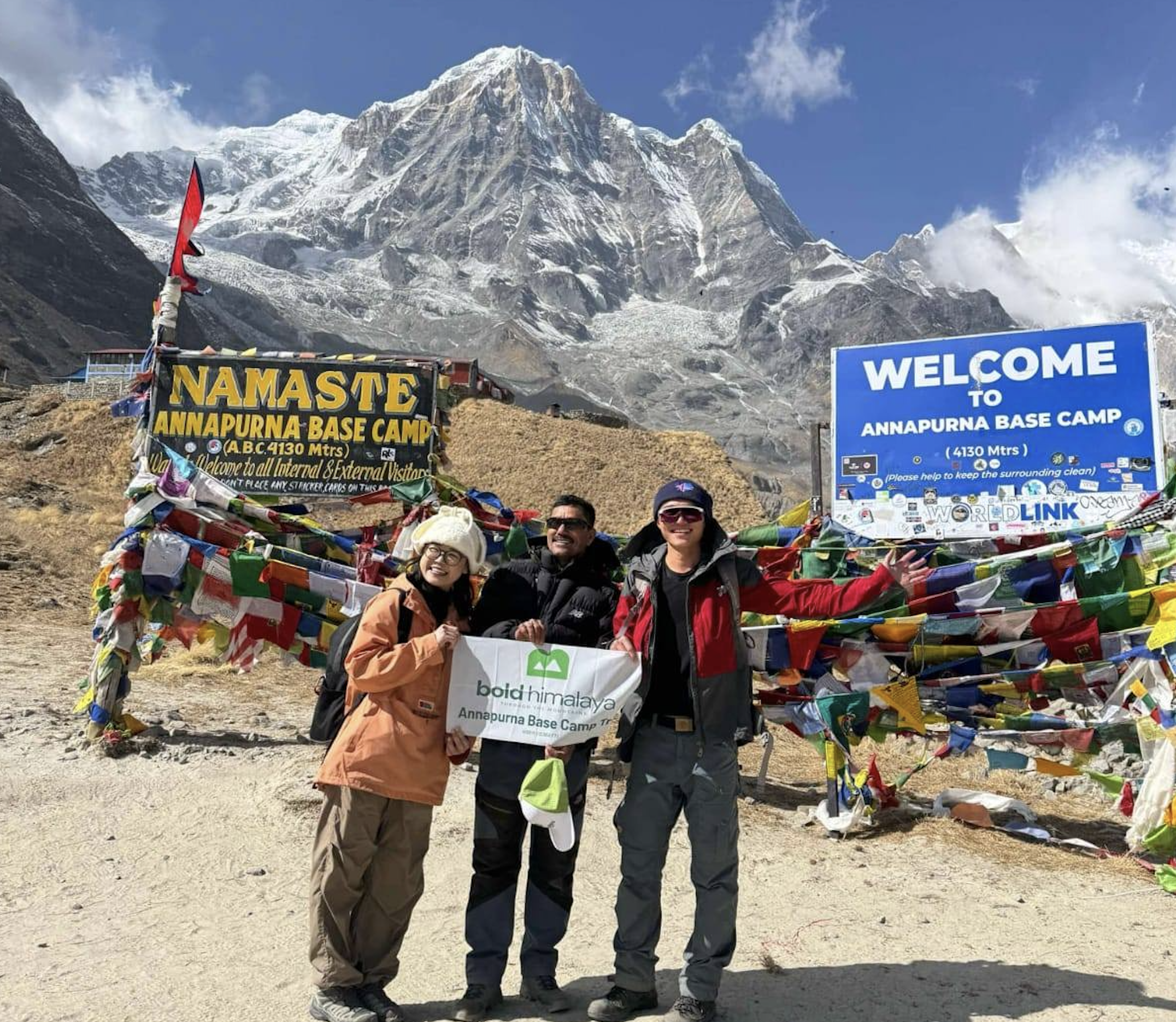
Save 37%
Annapurna Base Camp Trek
Nepal Tour Packages
9 Days