



Best Treks in Nepal for 2026
-
 Sobit Bhandari
 -
20 December, 2024
-
55 mins read
-
1683 Views
-
0 Comments


2026 is shaping up to be one of the most unforgettable years ever to trek in Nepal. In 2026, Nepal holds its reputation even more as one of the ultimate trekking destinations to go on an adventure because of the unpreventable blend of mountains, culture, treks, and friendly villagers. Trails are better maintained with more comfortable teahouses even in remote regions.
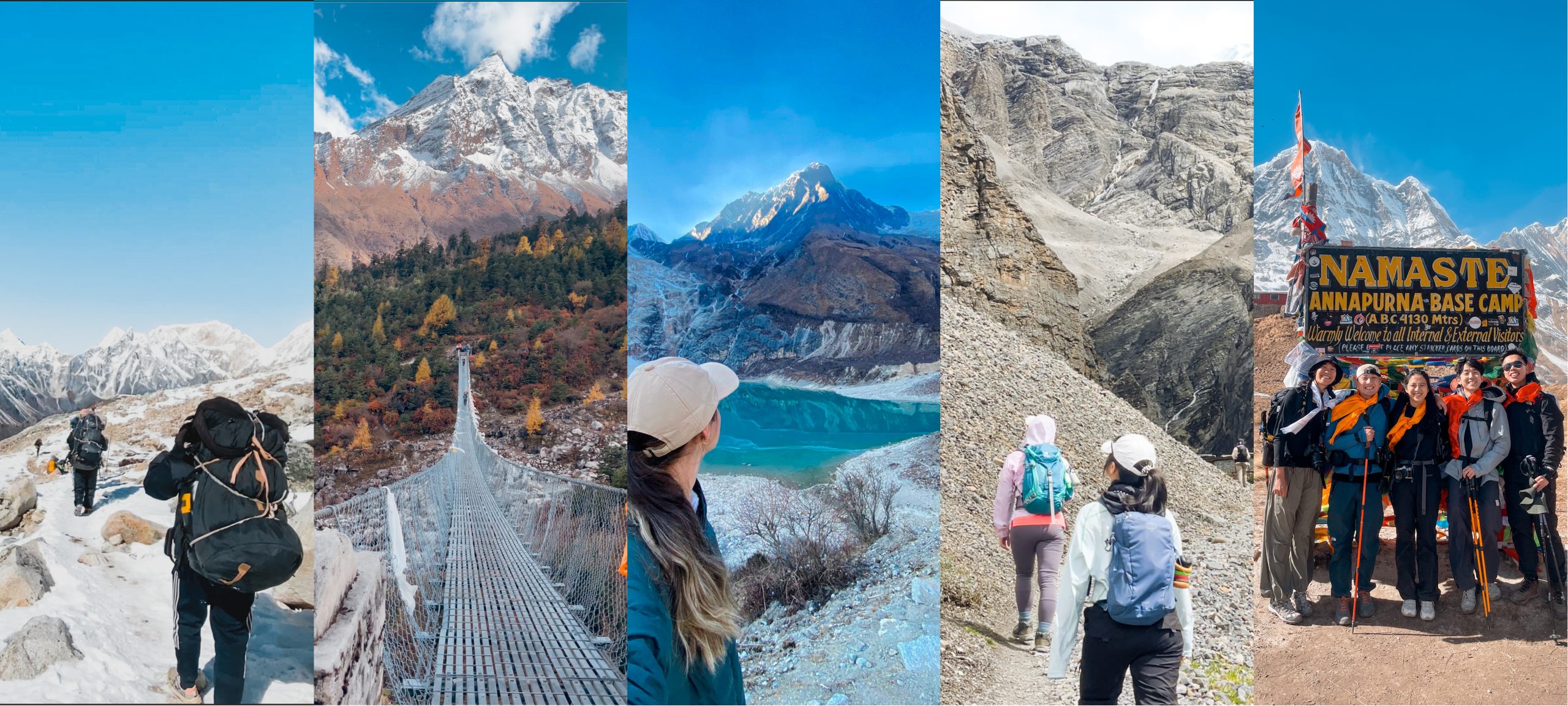
Those who have been on adventures such as the Everest Base Camp Trek, Annapurna Circuit Treks, and Langtang Valley Treks have often described each day of adventure as starting with a new landscape, forests, valleys, suspension bridges, and snowy passes.
Many first-time trekkers share that Nepal was where they truly understood trekking. Walking through Sherpa villages in the Everest region, sharing tea with locals in Annapurna, or listening to prayer flags flutter in the Langtang Valley creates a deep connection between nature and culture. Experienced hikers, on the other hand, often return to Nepal again and again, drawn by challenging high passes, remote trails like the Manaslu Circuit, and the sense of peace found far from modern roads.
Conversely, extreme treks lead you to the world’s highest peak and deepest valley across high passes and mountain glaciers. But whichever adventure you decide to take, the most well-known treks, like the Everest Base Camp Trek, Annapurna Base Camp Trek, Langtang Valley Trek, and many more, will undoubtedly provide you with a once-in-a-lifetime trekking experience.
Why is 2026 special?
If you have been thinking about trekking in Nepal, 2026 is the moment with its specialities below:
- Trekking infrastructure has improved across both classic and remote routes, offering better trails, safer crossings, and more comfortable teahouses.
- Alternative and lesser-known routes are gaining attention, allowing trekkers to avoid crowds and enjoy a quieter Himalayan experience.
- Travel has matured, with post-pandemic trekkers prioritizing meaningful, well-paced journeys over rushed itineraries.
- Safety and proper acclimatization are now treated as essential parts of trekking, not afterthoughts.
- Responsible travel is more important than ever, and Nepal is leading the way through community-based trekking that benefits local people and preserves the mountains.
Criteria Behind Our Trek Choices
Scenic Value: We selected treks that give unforgettable scenery every single day, from forested trails and river valleys to dramatic Himalayan panoramas and high mountain passes.
Cultural Richness: Cultural richness is equally important, as trekking in Nepal is as much about meeting local communities, visiting monasteries, and experiencing mountain life as it is about reaching viewpoints.
Safety & Acclimatization: Each trek allows proper altitude gain and acclimatization, with reliable trails and support systems that prioritize trekkers’ health and safety.
Crowd Levels: We balanced iconic routes with quieter alternatives, ensuring memorable experiences without feeling rushed or overwhelmed by large crowds.
Best Conditions in 2026: All treks are chosen based on expected trail conditions, weather patterns, and accessibility, making them especially rewarding to trek in 2026.
Guest Feedback from Recent Years: Real feedback from recent trekkers helped shape this list, highlighting routes that consistently deliver comfort, beauty, meaningful experiences, and are truly worth your time.
Some of the Best Treks in Nepal
1. Classic Treks That Never Fail
These iconic routes define trekking in Nepal and continue to deliver unforgettable Himalayan experiences year after year.
2. Less-Crowded Hidden Gems
Perfect for trekkers seeking quieter trails, authentic villages, and a deeper connection with nature.
3. Challenging Treks for Experienced Trekkers
High-altitude routes are designed for seasoned trekkers who crave adventure beyond the ordinary.
- Everest Three Passes Trek
- Kanchenjunga Base Camp Trek
- Manaslu Circuit Trek
4. Short & Scenic Treks
Ideal for those short on time who still want breathtaking mountain views and rewarding trails.
- Mardi Himal Trek
- Langtang Valley Trek
- Gokyo Lakes Trek
5. Spiritual & Cultural Journeys
Treks that combine dramatic landscapes with deep cultural, historical, and spiritual significance.
- Upper Mustang Trek
- Manaslu Circuit Trek
- Langtang Valley Trek
Everest Base Camp Trek
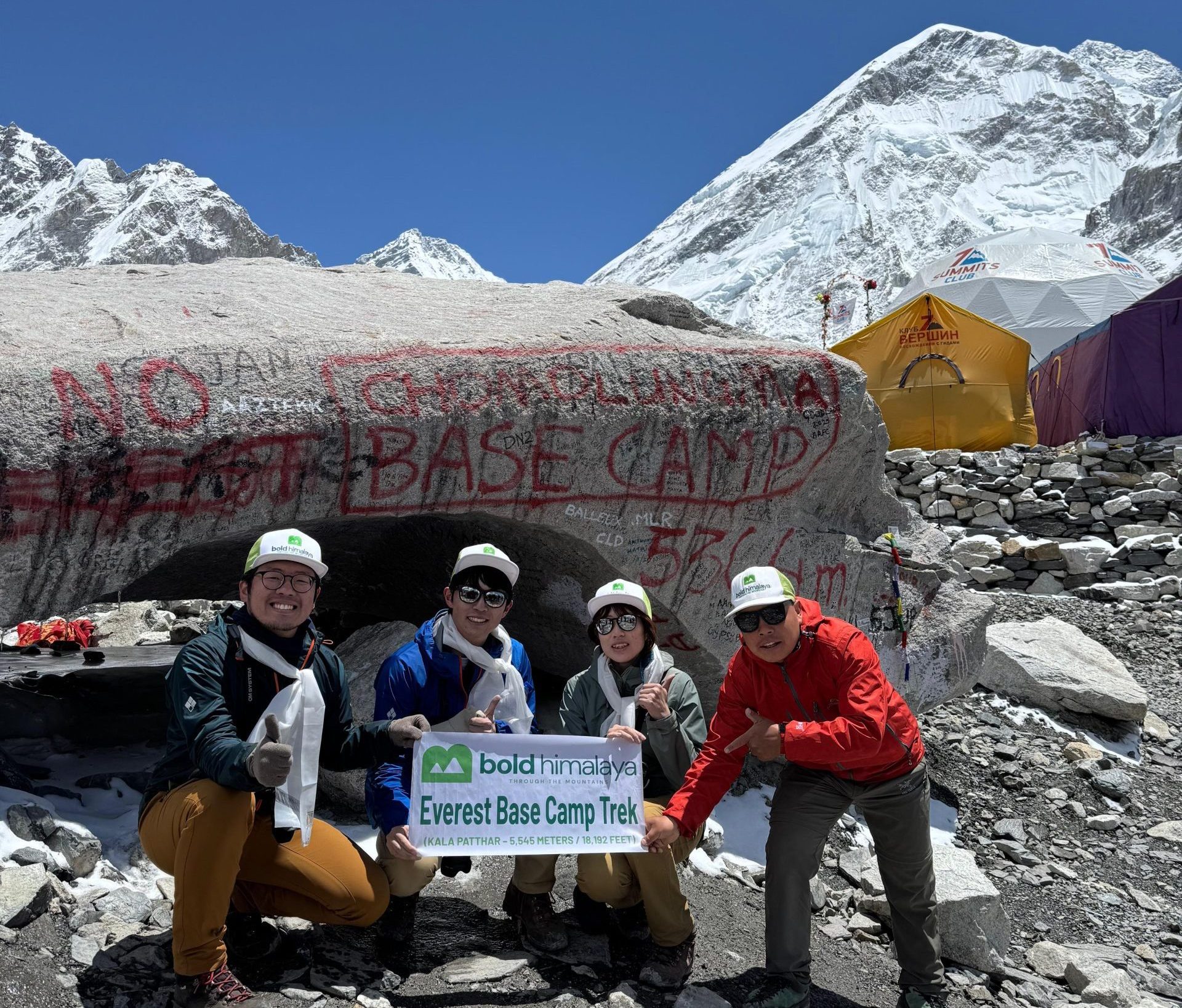
Being surrounded by the world’s highest peaks, hearing prayer flags flutter, and watching Everest glow at sunrise from Kala Patthar is a moment you never forget. The Everest Base Camp Trek is one of the best treks in Nepal and a renowned trekking route in the Himalayas of Nepal, leading hikers to the base camp of Mount Everest, the world’s highest mountain. It is located in the Khumbu region of northeastern Nepal, within Sagarmatha National Park, a UNESCO World Heritage Site.
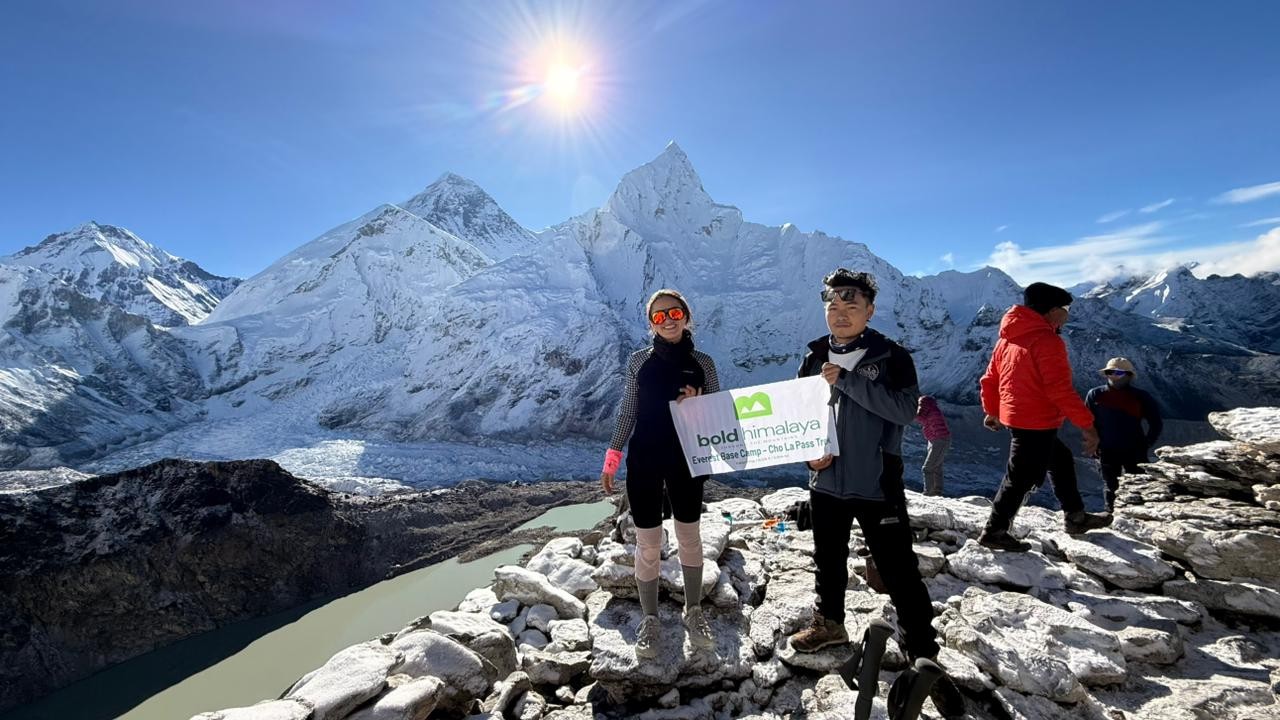
The trek is something of a look into spectacular high-mountain scenery, Sherpa culture, and natural wonders combined. Your route could traverse rugged trails, suspension bridges over glacial rivers, and picturesque villages before finally landing you at the windswept base camp where climbers prepare for their summit attempts. You also climb to Kala Patthar (5,545 m), a famed viewpoint offering the best panoramic sunrise views of Everest and neighboring giants like Lhotse and Nuptse.
For 2026, better trails, improved teahouses, smoother flight services, and enhanced trekking support make the Everest Base Camp Trek more comfortable, safer, and enjoyable than ever.
Note: Even if you’re unable to trek, you don’t have to miss out on Everest. We offer Everest Base Camp helicopter tours that let you experience the Himalayas in just a few hours, with incredible mountain views.
Overview of Everest Base Camp
- Location: Khumbu region of northeastern Nepal
- Duration: 12-14 days
- Maximum Height: 5,545 meters/18,192 feet (Kalapathar), 5,364 meters/17,598 feet (Base camp)
- Trek Distance: Approximately 130 kilometers (80 miles)
- Difficulty Level: Moderate (anyone with basic fitness)
- Best Time: Spring, Autumn, Winter
- Permits: Sagarmatha National Park, Khumbu Pasang Lhamu Rural Municipality Permit
- Estimated Cost: USD 1,100-1,400
Reasons to do the Everest Base Camp Trek
1. Breathtaking Scenery: Enjoy panoramic views of Mount Everest, Lhotse, Nuptse, Ama Dablam, and other Himalayan peaks throughout the trek.
2. Adventure and Challenge: Navigate suspension bridges, high-altitude passes, glaciers, and rugged terrain for an exhilarating journey.
3. Cultural Experience: Explore Sherpa villages like Namche Bazaar, Tengboche, Dingboche, Lobuche, and Gorak Shep, visit Tengboche Monastery, spin prayer wheels, and experience local traditions and hospitality.
4. Iconic Landmarks: Start your trek from Lukla Airport, visit Everest View Hotel, walk alongside the Dudh Koshi River, and explore Khumbu Glacier on your way to Everest Base Camp.
5. Sense of Achievement: Reach Everest Base Camp (5,364 m) and climb Kala Patthar (5,545 m) for the ultimate Himalayan accomplishment.
6. Health and Fitness Benefits: Daily trekking improves stamina, strengthens muscles, and provides fresh mountain air for rejuvenation.
7. Personal Growth: Overcome challenges, push limits, and gain confidence through high-altitude trekking.
8. Support Local Communities: Hiring local guides, porters, and staying in teahouses helps preserve Sherpa culture and contributes to the local economy.
9. Accommodation: Teahouse standards are better than ever.
10. Unforgettable Memories: From stunning landscapes, glaciers, and suspension bridges to cultural interactions in Sherpa villages, every moment of the trek creates lifelong memories.
Best time for Everest Base Camp Trek
The best time to trek to Everest Base Camp is during spring (March-May) and autumn (September-November), when the weather is stable, skies are clear, and mountain views are at their best. Spring offers blooming rhododendrons and warmer days, while autumn provides crisp air and excellent visibility after the monsoon.
Winter (December-February) trekking is rewarding, especially for those seeking quiet trails and beautiful snowfall. The Everest region generally has low avalanche risk on the main route, and clear winter days often bring stunning mountain views. While temperatures are much colder and trails can be icy, proper gear, flexibility, and preparation are essential.
Monsoon season (June-August) brings frequent rain, slippery trails, cloud-covered views, leeches at lower elevations, and increased chances of landslides, which can disrupt trekking plans and reduce overall comfort. But the landscape is lush and quieter for those prepared for wet conditions.
Everest Base Camp trekking routes
Kathmandu (1,324m) to Lukla (2,800m): The journey begins with a scenic flight from Kathmandu to Lukla, a small mountain town and the starting point of the Everest region trek.
Lukla (2,800m) to Phakding (2,652m): The trail descends gently through pine forests and small villages along the Dudh Koshi River, offering your first taste of Himalayan landscapes.
Phakding (2,652m) to Namche Bazaar (3,440m): The trek climbs steadily, crossing suspension bridges and passing Sherpa villages, culminating at Namche Bazaar, the bustling gateway to the high Himalayas.
Namche Bazaar (3,440m) to Tengboche (3,870m): The trail continues through rhododendron and pine forests, with stunning views of Everest and Ama Dablam, before reaching the spiritual center of Tengboche Monastery.
Tengboche (3,870m) to Dingboche (4,360m): The trek passes through high alpine terrain, grazing lands, and scattered villages, gradually ascending to the quiet village of Dingboche.
Dingboche (4,360m) to Lobuche (4,940m): The trail climbs past glacial moraines and rocky ridges, offering breathtaking views of the surrounding peaks as you approach Lobuche.
Lobuche (4,940m) to Gorak Shep (5,160m): From Lobuche, the trek reaches Gorak Shep, the last settlement before Everest Base Camp. A side hike takes you to Everest Base Camp, followed by an early morning ascent to Kala Patthar for unforgettable sunrise views of Mount Everest.
Gorak Shep (5,160m) to Everest Base Camp(5,364m): Then, hike to Everest Base Camp and enjoy the view, and back to Gorak Shep, and then trek to Kala Patthar to enjoy the breathtaking view of Mount Everest.
Kala Patthar to Pheriche (4,240m): After soaking in the views, the trail descends back through Lobuche and Dingboche to Pheriche for overnight rest.
Pheriche (4,240m) to Namche Bazaar (3,440m): The trek continues downhill, retracing the route through the scenic Sagarmatha National Park to Namche Bazaar.
Namche Bazaar (3,440m) to Lukla (2,800m): The final trekking days take you back through pine forests, rivers, and villages to Lukla, marking the end of the Everest region trek.
Lukla (2,800m) to Kathmandu (1,324m): The adventure concludes with a scenic flight back to Kathmandu, completing your Everest Base Camp journey.
Annapurna Base Camp Trek
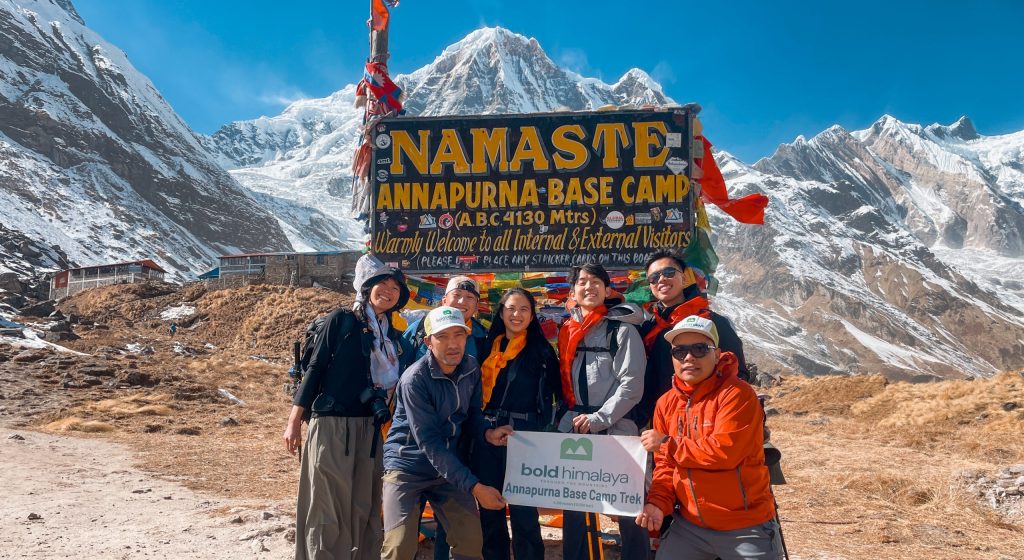
There are few moments in life as humbling as standing beneath the mighty Annapurna giants, where silence speaks louder than words, and every breath feels sacred. One of the most breathtaking treks on earth, the Annapurna Base Camp Trek, attracts trekkers from all over the world for its stunning Himalayan panoramas, cultural experiences, and accessibility. This trek passes through communities rich in cultural diversity, various climates, and varied landscapes. Fishtail, Hiunchuli, Annapurna Massif, Dhaulagiri, Tilicho, Pisang, and Pungda Danda, among many other peaks, are breathtaking from the Annapurna Base Camp.
You will stop over at the famous spot of Poon Hill to witness the sunrise bathing the peaks of Annapurna and Dhaulagiri with golden colors, and later relax in the natural hot springs of Jhinu Danda. The Annapurna Base Camp Trek of 2026 will prove to be the best adventure for physically fit individuals.
Surrounded by the majestic Annapurna ranges, the Annapurna Sanctuary has traditional Gurung and Magar settlements, diverse wildlife and flora, and varied biodiversity. The availability of well-trodden treks, better infrastructure, and optimal trekking circumstances in the year 2026 will make the Annapurna Base Camp Trek a perfect package of comfort, reality, and Himalayan panorama in a single expedition.
Overview of Annapurna Base Camp
- Location: Annapurna region, central Nepal
- Duration: 8-12 days
- Maximum Height: 4,130 meters / 13,549 feet
- Trek Distance: Approximately 115 kilometers (round trip)
- Difficulty Level: Moderate (with basic fitness)
- Best Time: Spring, Autumn, Winter
- Permits: ACAP (Annapurna Conservation Area Permit), TIMS Card (Trekkers’ Information Management System)
- Estimated Cost: USD 450-600
Reasons to do the Annapurna Base Camp Trek
1. Shorter yet rewarding: The Annapurna Base Camp trek is ideal for first-time trekkers or those with limited time but still want to experience the beauty of the Himalayas.
2. Spectacular scenery: The trek offers stunning scenery, providing Himalayan views of peaks like Annapurna I (8,091 m), Machapuchare (6,993 m), and Hiunchuli without extreme altitude, which makes it accessible for most trekkers.
3. Annapurna Conservation Area: The trek passes through the Annapurna Conservation Area, a protected area home to a diverse range of flora and fauna. Alpine meadows and high-altitude valleys lead to the base camp.
4. Cultural immersion: Trekkers can experience the culture of traditional Gurung and Magar villages, teahouses, local traditions, and the warm hospitality of local people along the trail.
5. Flexibility: The trek provides flexibility, with multiple entry points such as Poon Hill, Nayapul, as well as Jhinu Danda. Side trips to Jhinu Hot Springs for natural relaxation add extra value to the experience.
6. Photogenic destinations: It is also perfect for photography enthusiasts, offering photogenic destinations such as Poon Hill sunrise, stunning views of Annapurna Base Camp, and golden hour at Machapuchhre Base Camp, and dramatic cloud movements over the sanctuary, creating unforgettable photo opportunities in 2026.
Best Time for Annapurna Base Camp Trek
The best time to trek to Annapurna Base Camp is spring (March-May) and autumn (September-November), when the weather is stable, and the views are clear. Daytime temperatures range from 10°C to 20°C, while nights can drop to 0°C to -5°C at higher altitudes, making these seasons ideal for comfortable trekking.
Winter (December-February) offers quiet trails and snowy scenery, with daytime temperatures ranging from 5°C to 10°C and nights dropping to -10°C or lower. Heavy snowfall may block trails, so good preparation is required.
Monsoon (June-August) brings lush landscapes and fewer crowds, with temperatures between 15°C and 25°C. However, frequent rain, slippery trails, leeches, and cloudy views make this season less ideal for trekking.
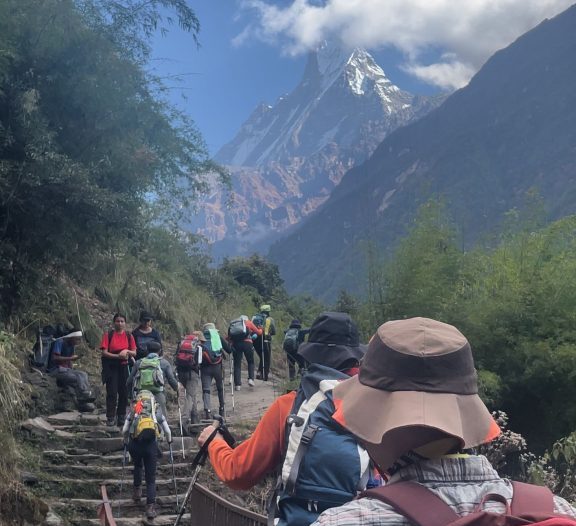
Annapurna Base Camp Trekking Routes
Kathmandu (1,324m) to Pokhara (820m): The journey starts with a scenic drive or short flight from Kathmandu to Pokhara, a beautiful lakeside city and the gateway to the Annapurna region.
Pokhara (820m) to Ghandruk (1,940m): From Pokhara, the drive continues to the traditional Gurung village of Ghandruk, offering stunning views of Annapurna South and Machhapuchhre.
Ghandruk (1,940m) to Sinuwa (2,360m): The trail descends through terraced fields and forests to the Modi Khola, then climbs steadily through Chhomrong to reach Sinuwa, passing charming villages and lush landscapes.
Sinuwa (2,360m) to Deurali (3,230m): The trek continues through dense bamboo and rhododendron forests, passing Bamboo and Himalaya villages before ascending gradually to Deurali, with views of cliffs and waterfalls.
Deurali (3,230m) to Annapurna Base Camp (4,130m): From Deurali, the trail passes Machhapuchhre Base Camp and enters the Annapurna Sanctuary, finally reaching Annapurna Base Camp, surrounded by towering Himalayan peaks.
Annapurna Base Camp (4,130m) to Bamboo (2,310m): After enjoying sunrise views at Annapurna Base Camp, the trail descends retracing the route through Machapuchre and Deurali to Bamboo.
Bamboo (2,310m) to Jhinu Danda (1,780m): The trail continues downhill through Sinuwa and Chhomrong to Jhinu Danda, famous for its natural hot springs.
Jhinu Danda (1,780m) to Pokhara (820m): From Jhinu Danda, the trek ends at Nayapul, followed by a drive back to Pokhara.
Pokhara (820m) to Kathmandu (1,324m): The adventure concludes with a drive or flight back to Kathmandu, marking the end of the Annapurna Base Camp trek.
Annapurna Circuit Trek with Tilicho Lake
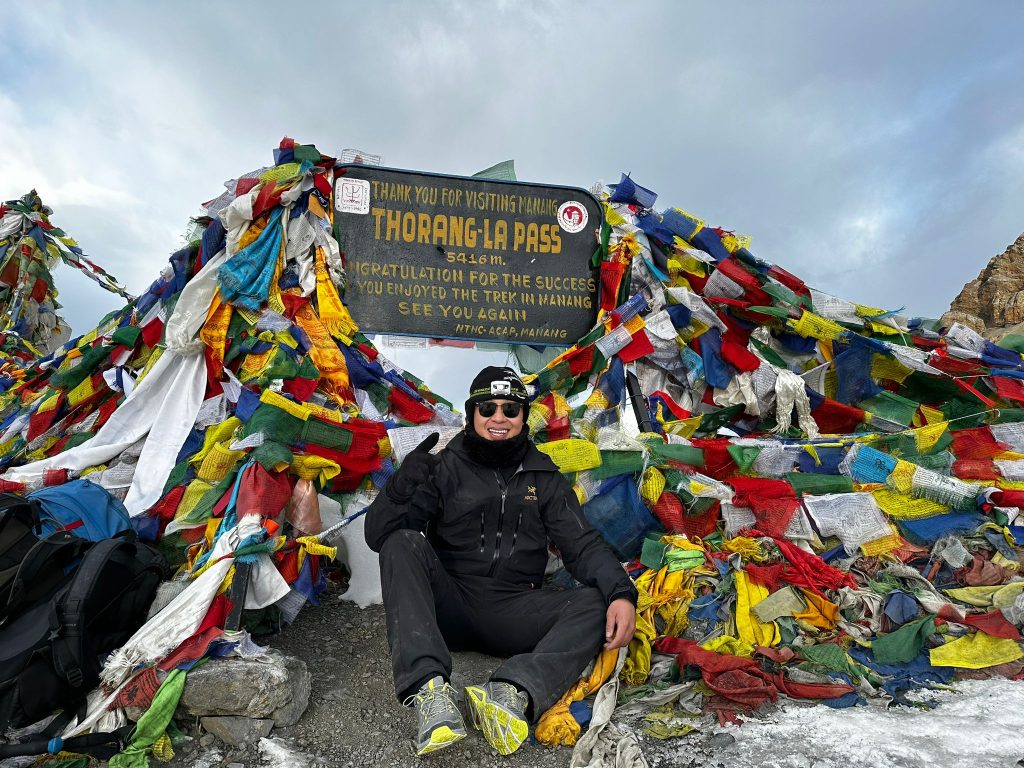
The Annapurna Circuit Trek is one of the famous treks in the world and the third most popular trek in Nepal in terms of number, known for its diverse landscapes, high mountain passes, and rich cultural experiences. Crossing Thorong La Pass offers a serious sense of achievement without requiring mountaineering skills. For 2026 trekkers seeking challenge, altitude, and reward, this trek strikes the perfect balance.
Adding Tilicho Lake, which is the highest lake in the world, to the itinerary makes it even more spectacular, offering trekkers a chance to visit one of the highest lakes in the world, situated at 4,919 meters (16,138 feet) above sea level. This makes it one of the best treks in Nepal.
By 2026, the Annapurna Circuit will benefit from well-maintained trails, improved bridges, clearer signage, and upgraded teahouses. These improvements make the trek safer and more comfortable while still preserving its raw Himalayan character.
Overview of Annapurna Circuit Trek
- Location: Annapurna Region, Nepal
- Maximum Height: Thorong La Pass (5,416 m/17,769 feet), Tilicho Lake (4,919 m /16,138 feet)
- Duration: 15-18 days
- Trek Distance: Approximately 230-250 km (circuit with Tilicho Lake)
- Difficulty Level: Challenging
- Best Time: Spring, Autumn, Winter
- Permits Required: ACAP (Annapurna Conservation Area Permit), TIMS Card
- Estimated Cost: USD 690-850
Reasons to do the Annapurna Circuit Trek
There are many reasons to do the Annapurna Circuit Trek; some of the most notable reasons are:
1. Conquer the Legendary Thorong La Pass (5,416m): Crossing Thorong La Pass, the highest point of the trek, is both a physical and emotional triumph. From the top, trekkers are rewarded with jaw-dropping panoramic views of the surrounding Himalayan giants, making the challenge truly unforgettable.
2. Scenic Beauty: The Annapurna Circuit offers some of the most diverse and dramatic scenery in Nepal. Trekkers are treated to breathtaking views of towering peaks such as Annapurna I, Dhaulagiri, Machhapuchhre, Nilgiri, Hiunchuli, Tukuche Peak, Chulu West and East, Lamjung Himal, and distant vistas of Manaslu and Langtang.
3. Diverse Landscapes in a Single Journey: Few treks in the world transition so seamlessly from lush subtropical forests and terraced farmlands to alpine meadows and stark high-altitude deserts. Each day feels like entering a new world, keeping the journey endlessly fascinating.
4. Rich Cultural Encounters: The trail passes through traditional farming villages inhabited by Gurung, Thakali, and Manangi communities. Ancient Buddhist monasteries, prayer flags, and Hindu shrines give a deep insight into local traditions, spirituality, and mountain life.
5. Sacred Pilgrimage Sites: A highlight of the trek is the visit to Muktinath Temple, a revered pilgrimage site for both Hindus and Buddhists. This sacred stop adds spiritual depth to the adventure, powerfully blending faith and nature.
6. Natural Hot Springs at Tatopani: After long days on the trail, the natural hot springs at Tatopani provide the perfect place to relax, rejuvenate, and soothe tired muscles.
7. A True Physical and Mental Challenge: Rated moderate to strenuous, the Annapurna Circuit Trek pushes your endurance while rewarding you with immense satisfaction. It is ideal for trekkers looking to test their limits and experience a genuine Himalayan adventure.
Best Time for Annapurna Circuit
The best time to trek the Annapurna Circuit with Tilicho Lake is during spring (March-May) and autumn (September-November), when the weather is stable, skies are clear, and mountain views are spectacular. During these seasons, daytime temperatures range from 10°C to 18°C at lower altitudes and -5°C to 5°C in higher regions like Tilicho Lake and Thorong La Pass, making trekking safer and more enjoyable.
Winter (December-February) offers fewer crowds and stunning snow-covered landscapes, but temperatures can drop to -15°C or lower, and heavy snowfall may block Tilicho Lake and Thorong La Pass. We can do this trek with proper gear.
Monsoon (June-August) brings lush scenery and warmer temperatures (15°C – 25°C), but rain, landslides, and limited visibility make this season less suitable, especially for the Tilicho Lake section.
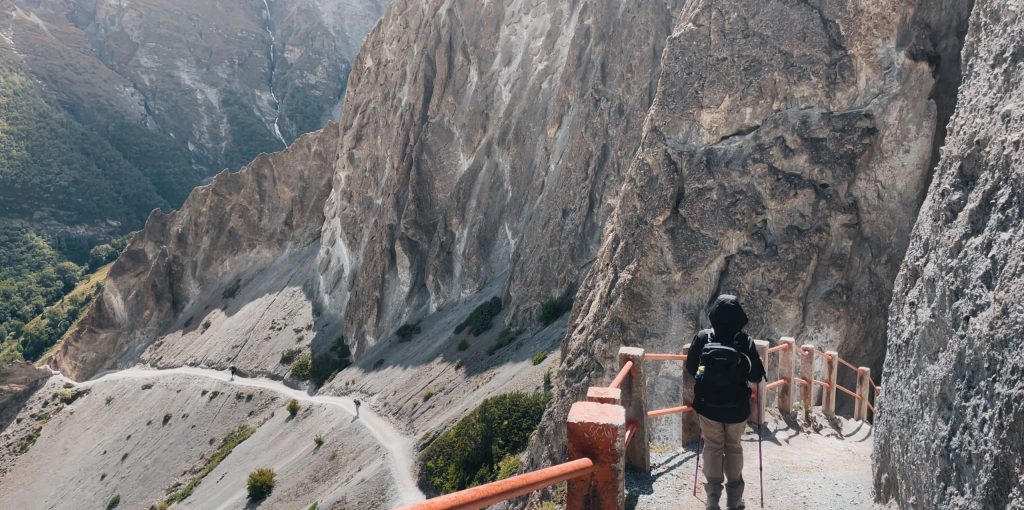
Annapurna Circuit with Tilicho Trekking Routes
The Annapurna Circuit Trek is a long-distance trek that circles the Annapurna massif, passing through the districts of Lamjung, Manang, Mustang, and Myagdi. There are a few different routes that can be taken on the Annapurna Circuit Trek, but the most common route is:
Kathmandu (1,324m) to Chame (2,710m): The trail starts from Kathmandu and continues to Chame, the district headquarters of Manang.
Chame (2,710m) to Pisang (3,190m): The trail continues to the village of Pisang, passing through beautiful rhododendron forests and traditional farming villages.
Pisang (3,190m) to Manang (3,540m): The trail continues to the village of Manang, passing through the Upper Pisang and Lower Manang regions.
Manang (3,540m) to Tilicho Base Camp (4,150m): The trail branches off from Manang and leads through rugged, landslide-prone terrain to Tilicho Base Camp, before climbing further to Tilicho Lake, one of the highest lakes in the world.
Tilicho Base Camp(4,150m) to Tilicho Lake (4,919m): Then, the trek leads to Tilicho Lake, which is the highest lake in the world.
Tilicho Lake (4,919m) to Siri Kharka (4,060m): The trail leads to Siri Kharka, passing glacial streams and alpine meadows.
Siri Kharka (4,060m) to Letdar(4,450m): The trail continues to Letdar, a quite high-altitude village, passing through alpine meadows, rocky ridges, and small streams, with beautiful views of Tilicho Peak, Annapurna II, and Gangapurna.
Letdar (4,450m) to High Camp (5000m): Then, you trek to High Camp, the final stop before Thorong La Pass. The trail climbs steadily through rocky paths and sparse meadows.
High Camp (5000m) to Thorong La Pass (5,416m): Then, from High Camp, we trek to the Thorong La Pass, which is the highest point of the trek at 5,416m. Then, descending to Thorong Phedi.
Thorong Phedi (4,450m) to Muktinath (3,800m): The trail continues over the Thorong Phedi and descends to the sacred pilgrimage site of Muktinath.
Muktinath (3,800m) to Jomsom (2,700m): The trail continues to Jomsom, a small town in the Mustang district, passing through the Kagbeni and Marpha villages.
Jomsom (2,700m) to Pokhara (820m): The trek ends in Pokhara, a popular tourist destination known for its natural beauty and adventure activities
Pokhara (820m) to Kathmandu (1,324m): Then, we drive back to Kathmandu from Pokhara.
Note: There are also shorter routes, like the Jomsom Muktinath trek, a popular alternative for those who need more time to complete the entire circuit.
Manaslu Circuit Trek
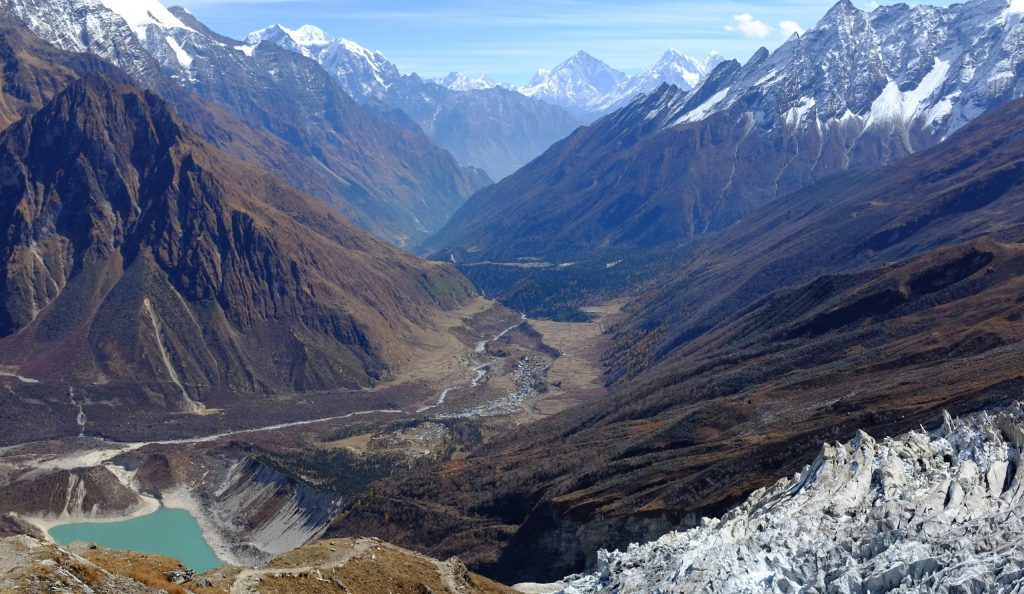
The Manaslu Circuit Trekking Trail is one of the finest and most adventurous treks of Nepal that provides stunning views of the Mt. Manaslu range, the world’s eighth-highest mountain at 8,163m. This tour through the untouched Manaslu Conservation Area makes it the perfect alternative in 2026 for those groups that have already visited the Annapurna Circuit.
The trail rises from warm lowlands and rice terraces, rising into breathtaking gorges carved by the Budi Gandaki River, and some of the country’s longest and highest suspension bridges crossing the river. The trek, in 2026, still bears the elements of pioneering trails, as it is less crowded, more culturally intact, and breathtakingly natural. The trekking route ends up at the snow-capped Larkya La Pass (5,106 meters/16,752 feet), close to the border with Tibet, where improved safety-consciousness and advanced trekking equipment can handle the challenge, and the majestic views of the Himalayas justify each step taken.
A massive glacial cirque suddenly appears. While Annapurna II rises in front, a magnificent wall formed by Cheo Himal, Himlung Himal, Nemjung, Gyaji Kang, and Kang Guru pours down a stream of glaciers. The journey is worthwhile just for this vista. Your all-inclusive trek can be organized with Magical Nepal. Unless you wish to deviate from the path, when camping is the sole option, the walk can be completed using teahouses.
Overview of Manaslu Circuit Trek
- Location: Gorkha district, Western Nepal
- Maximum Height: Larkya La Pass (5,106 m/16,752 feet)
- Duration: 12-14 days
- Trek Distance: Approximately 170-180 km
- Difficulty Level: Challenging
- Best Time: Spring, Autumn, Winter
- Permits Required: Manaslu Restricted Area Permit (MRAP), Manaslu Conservation Area Permit (MCAP), Annapurna Conservation Area Permit (ACAP)
- Estimated Cost: USD 850-1100
Reasons to do the Manaslu Circuit Trek
1. Spectacular Himalayan Scenery: The Manaslu Circuit Trek rewards trekkers with breathtaking views of some of the world’s most majestic mountain ranges, including Mt. Manaslu (8,163m), Ganesh Himal, Shringi Himal, and Boudha Himal. From dramatic snow-capped peaks to deep river valleys, every day offers a new visual masterpiece.
2. Cross the Iconic Larkya La Pass: Standing at 5,106 meters, the Larkya La Pass is the highest point of the trek and one of its most thrilling highlights. Crossing this high-altitude pass offers sweeping panoramic views and a deep sense of achievement, making the challenge truly rewarding.
3. Rich Cultural Immersion: The trail winds through remote Himalayan villages where traditional lifestyles remain unchanged. Ancient Tibetan Buddhist monasteries (Gumbas), prayer wheels, mani walls, and centuries-old traditions offer an authentic glimpse into the spiritual and cultural heritage of the region.
4. Sacred High-Altitude Lakes: The trek features serene and sacred lakes such as Birendra Tal and Phunkar Lake, surrounded by towering mountains. These peaceful settings provide moments of reflection and connection with nature, cherished by both trekkers and local communities.
5. Experience Remote Village Life: Unlike more commercial trekking routes, the Manaslu Circuit passes through isolated villages where you can experience genuine hospitality and traditional mountain life, offering meaningful interactions with local communities.
6. Adventure and Physical Challenge: With steep ascents, descents, and high-altitude terrain, the Manaslu Circuit Trek is ideal for trekkers seeking both physical and mental challenge. It is demanding, yet deeply fulfilling for those ready to push their limits.
7. Off-the-Beaten-Path Exploration
The Manaslu Circuit remains one of Nepal’s least crowded major treks. Its restricted status and remote location ensure a quieter, more intimate trekking experience, perfect for those seeking solitude and wilderness.
8. Exceptional Natural Diversity
Trekking through the Manaslu Conservation Area, you’ll encounter a wide variety of flora and fauna, from lush forests to alpine landscapes. The region is home to rare and endangered species, making the journey especially appealing for nature lovers and wildlife enthusiasts.
Best Time for Manaslu Circuit Trek
The best season to trek the Manaslu Circuit is spring (March-May) and autumn (September-November), when the weather is clear, temperatures are comfortable, and trails are safest. These months offer the best mountain views and smoother crossings of Larkya La Pass, making the trek both enjoyable and reliable.
You can trek in winter (December-February) if you are well-prepared with complete cold-weather gear. Winter rewards you with quiet trails and beautiful snow-covered landscapes, but extreme cold, heavy snowfall, and possible pass closures are major challenges.
Monsoon (June-August) trekking is also possible, yet less recommended due to frequent rain, landslides, slippery trails, leeches, and limited visibility, especially in the lower regions.
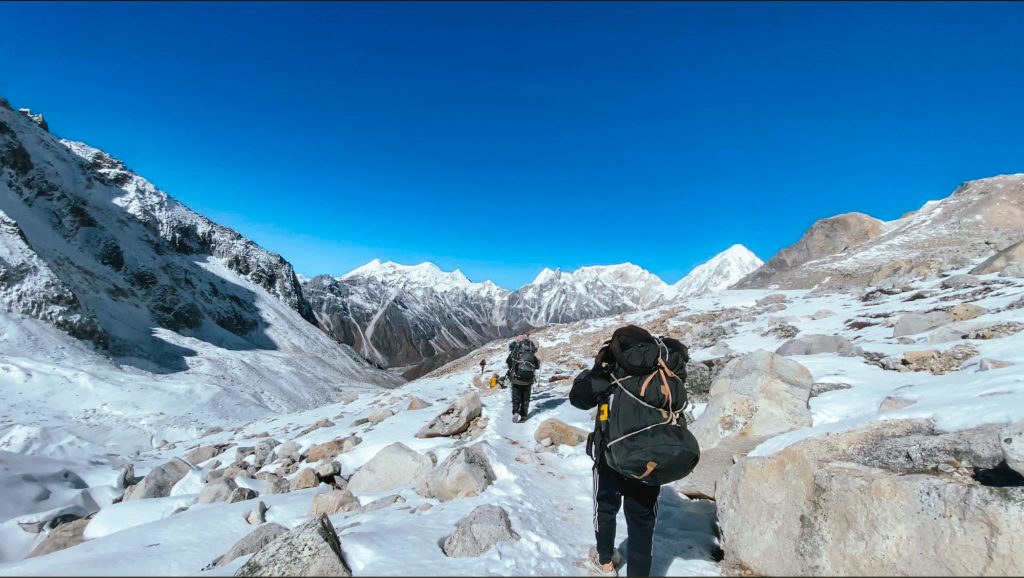
Manaslu Circuit Trekking Routes
Kathmandu (1,324m) to Machha Khola (930m): The journey begins from Kathmandu to Machha Khola, crossing hillside farm fields, villages, and glimpses of the Trishuli River.
Machha Khola (930m) to Jagat (1,410m): The trail continues to the village of Jagat, passing through the Budhi Gandaki River valley and a traditional Gurung village.
Jagat (1,410m) to Deng (1,804m): The trail leads to Deng, a small village located at the base of the mountains, offering views of terraced fields, forests, and Mani walls.
Deng (1,804m) to Namrung (2,630m): The trek climbs steadily along the Budhi Gandaki River, passing small villages, suspension bridges, and lush forests to reach Namrung.
Namrung (2,630m) to Samagaon (3,530m): The trail continues into the high Himalaya, offering panoramic views of Manaslu and its surrounding peaks. Samagaon is a quiet village known for its Tibetan culture and monasteries.
Samagaon (3,530m) to Samdo (3,860m): The trail ascends through alpine meadows and moraine valleys, approaching Samdo, a traditional Tibetan-style village near the Nepal-Tibet border.
Samdo (3,860m) to Dharamsala / Larkya La Base Camp (4,460m): The trail continues past glaciers and rocky terrain, reaching Dharamsala, the high-altitude base camp for Larkya La Pass.
Dharamsala (4,460m) to Larkya La Pass (5,160m) to Bimtang (3,590m): The challenging climb reaches the highest point of the trek, Larkya La Pass (5,160m), offering breathtaking panoramic views. After crossing the pass, the trail descends through alpine landscapes to Bimthang.
Bimthang (3,590m) to Tilije (1,700m): The trail continues downhill through terraced fields, forests, and traditional villages, reaching Tilije, known for its scenic beauty and local culture.
Tilije (1,700m) to Dharapani (1,860m): The trek passes through beautiful landscapes and rivers, ending in Dharapani, a small village on the trekking route.
Dharapani (1,860m) to Besisahar (760m): The trail continues descending through forests, villages, and farmland, eventually reaching Besisahar, the starting point of many Annapurna and Manaslu treks.
Besisahar (760m) to Kathmandu (1,324m): The trek concludes with a scenic drive back to Kathmandu, marking the end of the Manaslu Circuit Trek.
Langtang Valley Trek
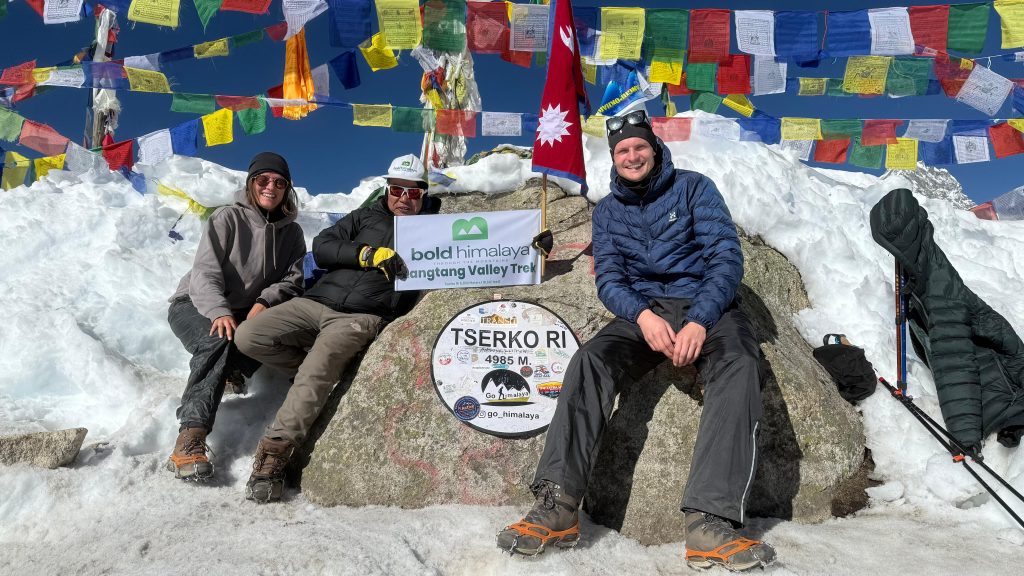
Trekking through Langtang Valley feels like entering a hidden Himalayan world, with misty peaks, ancient monasteries, and friendly Tamang villagers that stay in your heart. The Langtang Valley Trek remains one of Nepal’s best trekking experiences, offering a perfect mix of natural beauty, cultural encounters, and Himalayan adventure. The trail leads through lush rhododendron forests, alpine meadows, yak pastures, and traditional Tamang villages, with panoramic views of snow-capped peaks like Langtang Lirung.
This trek is ideal for both beginners and experienced hikers seeking an authentic, less-crowded alternative to Everest or Annapurna routes. Along the way, you can visit Buddhist monasteries such as Kyanjin Gompa, enjoy local cuisine, and connect with villagers to learn about Tibetan-influenced culture and traditions. The trek culminates in the breathtaking vista from Kyanjin Ri, offering a rewarding view that makes the journey unforgettable.
In 2026, improved trail maintenance and eco-friendly lodges will enhance comfort and safety while preserving the valley’s pristine charm.
Overview of Langtang Valley Trek
- Location: Langtang Region, Nepal
- Maximum Height: Tserko Ri (4,984 m / 16,345 feet)
- Duration: 7-10 days
- Trek Distance: Approximately 65-70 km
- Difficulty Level: Moderate
- Best Time: Spring, Autumn, Winter
- Permits Required: Langtang National Park Permit, TIMS Card (Trekkers’ Information Management System)
- Estimated Cost: USD 450-650
Reasons to do the Langtang Valley Trek
There are many reasons to do the Langtang Valley Trek. Some of the most notable reasons are:
Scenic Beauty: The trek offers breathtaking views of the Langtang massif, including Langtang Lirung(7234m/23733ft), Gangchenpo, and Dorje Lakpa, as well as the surrounding peaks and valleys.
Cultural Experience: The trek takes you through traditional Tamang villages, offering an opportunity to experience the local culture and way of life.
Natural Beauty: The trek takes you through lush rhododendron forests, beautiful terraced fields, and cascading waterfalls.
Langtang National Park: The trek passes through the Langtang National Park, which is the first national park in the Himalayas, a protected area home to a diverse range of flora and fauna.
Moderate Difficulty: The trek is considered easy to moderate in terms of difficulty, making it accessible to a wide range of trekkers.
Wildlife: The trek offers an opportunity to spot diverse wildlife like Tigers, Wild boar, red pandas, pica, musk deer, Himalayan black bear, and Himalayan Thar.
Best Time for Langtang Valley Trek
The best time to trek the Langtang Valley is during spring (March-May) and autumn (September-November), when the weather is stable, skies are clear, and mountain views are at their best. Spring brings blooming rhododendrons and vibrant forests, while autumn offers crisp air, excellent visibility, and comfortable trekking conditions.
In Winter (December–February), trekking is possible with proper cold-weather gear, offering quiet trails and snow-covered landscapes, but temperatures can drop significantly, and some higher passes may be snowy or icy.
In Monsoon (June-August), trekking is less recommended due to heavy rain, slippery trails, leeches, and limited mountain views, though the forests are lush and vibrant.
Langtang Valley Trekking Routes
Kathmandu (1,324m) to Syabru Besi (1,462m): The journey starts with a ride from Kathmandu to Syabru Besi, the starting point of the trek.
Syabru Besi (1,462m) to Lama Hotel (2,380m): The trek starts in Syabru Besi, a small village in the Rasuwa district. It continues to the Lama Hotel, a small town on the banks of the Langtang River.
Lama Hotel (2,380m) to Langtang (3,430m): The trail continues to the village of Langtang, passing through traditional Tamang villages and lush rhododendron forests.
Langtang (3,430m) to Kyanjin Gompa (3,800m): The trail continues to the village of Kyanjin Gompa, passing through beautiful landscapes and traditional villages.
Kyanjin Gompa (3,800m) to Tserko Ri (4,984m): The trail continues to the viewpoint of Tserko Ri, passing through beautiful landscapes and traditional villages.
Tserko Ri (4,984m) to Kyanjin Gompa (3,800m): The trail descends to the village of Kyanjin Gompa.
Kyanjin Gompa (3,800m) to Lama Hotel (2,380m): The trail descends back to the village of Lama Hotel.
Lama Hotel (2,380m) to Syabru Besi (1,462m): Here, our trek ends in Syabru Besi, with beautiful memories.
Syabru Besi (1,462m) to Kathmandu (1,324m): Then, we drive back to Kathmandu, ending our Lantang Valley Trek.
The trek offers a combination of stunning views, cultural experiences, and adventure, making it one of the most popular treks in Nepal. The route can also be customized to include other attractions like Langtang Lirung base camp and Gosaikunda Lake.
Everest Three Passes Trek
The Everest Three Passes Trek is a journey that fills your soul with awe and tests your limits, surrounded by the towering giants of the Himalayas. This challenging trek takes adventurers through three high passes, i.e, Kongma La, Cho La, and Renjo La, offering spectacular panoramic views of Everest, Lhotse, Ama Dablam, and other Himalayan giants.
Along the way, trekkers pass through Sherpa villages, Buddhist monasteries, and glacial landscapes, experiencing the rich culture and rugged beauty of the Khumbu region. In 2026, improved trail maintenance, better teahouses, and more organized trekking permits make this demanding yet rewarding trek safer, more comfortable, and accessible for experienced hikers seeking the ultimate Himalayan adventure.
Overview of the Everest Three Passes Trek
- Location: Khumbu Region of Nepal
- Maximum Height: Kongma La Pass (5,535 m / 18,159 feet)
- Duration: 18-21 days
- Trek Distance: Approximately 130-140 km
- Difficulty Level: Challenging
- Best Time: Spring, Autumn, Winter
- Permits Required: Sagarmatha National Park Permit, TIMS Card (Trekkers’ Information Management System)
- Estimated Cost: USD 1,600-1,850
Reasons to do the Everest Three Passes Trek
1. Spectacular Himalayan Views: The trek crosses three high passes, i.e, Kongma La, Cho La, and Renjo La, which give unparalleled panoramic views of Mount Everest, Lhotse, Ama Dablam, Nuptse, and Makalu. Each pass reveals a new perspective of the Khumbu region’s towering peaks and glaciers.
2. Cultural Immersion: Travel through Sherpa villages like Namche Bazaar, Dingboche, and Pangboche, and experience the local culture firsthand. Visit ancient monasteries, prayer walls, and mani stones, gaining insight into Buddhist traditions and Sherpa heritage.
3. Challenging but Rewarding: This trek is very challenging and requires good fitness and experience at high altitudes, but crossing the three passes gives an amazing sense of accomplishment.
4. Variety of Experiences: From glacial landscapes, alpine meadows, and hanging valleys to bustling Sherpa towns and remote monasteries, this trek offers a perfect mix of nature, culture, and adventure in one journey.
5. Ultimate Adventure for 2026: In 2026, improved trails, updated teahouses, and better trekking management make the Everest Three Passes Trek safer, more comfortable, and highly rewarding for experienced trekkers seeking a once-in-a-lifetime challenge.
Everest Three Passes Trekking Routes
Fly Kathmandu (1,324m) to Lukla (2,860m) and Trek to Phakding (2,610m):
The journey begins with a scenic flight from Kathmandu to Lukla, followed by an easy trek along the Dudh Koshi River to Phakding, passing forests, suspension bridges, and small villages.
Phakding (2,610m) to Namche Bazaar (3,440m):
The trail gradually ascends through rhododendron and pine forests, crossing the Dudh Koshi River multiple times, before reaching Namche Bazaar, the gateway to Khumbu.
Namche Bazaar (3,440m) to Tengboche (3,870m):
The trek leads through pine forests and small villages to reach Tengboche, famous for its historic monastery and stunning views of Ama Dablam and Everest.
Tengboche (3,870m) to Dingboche (4,360m):
Then, the trail climbs through alpine meadows, passing Mani walls, prayer flags, and yak pastures, with panoramic views of Lhotse and Island Peak to Dingboche.
Dingboche (4,360m) to Chhukung (4,730m):
A short trek takes you through glacial moraines and rocky paths to Chhukung, a small alpine village often used as an acclimatization stop.
Chhukung (4,730m) to Kongma La Pass (5,535m) to Lobuche (4,940m):
The trek leads to the first high pass, Kongma La, with spectacular Himalayan vistas, and descends to Lobuche, a high-altitude settlement near the Khumbu Glacier.
Lobuche (4,940m) to Gorak Shep (5,170m) – Everest Base Camp (5,364m) – Gorak Shep:
From Lobuche, the trail leads to Gorak Shep, the base for Everest Base Camp, offering breathtaking views of Everest, Nuptse, and Lhotse. And then, return to Gorak Shep for an overnight stay.
Gorak Shep (5,170m) to Kala Patthar (5,545m) to Dzongla (4,830m):
Early morning hike to Kala Patthar for panoramic sunrise views of Everest, then descend through glacial paths to Dzongla.
Dzongla (4,830m) to Cho La Pass (5,420m) to Thagnak (4,700m) to Gokyo (4,790m):
From Dzongla, the trail leads to the Cho La Pass, the second high pass, surrounded by the sharp peaks of Ama Dablam and Cholatse, which feels like walking through a frozen paradise and descending to Thagnak and continuing to Gokyo, famous for its emerald lakes and surrounding peaks.
Gokyo (4,790m) to Renjo La Pass (5,360m) to Marulung (4,350m):
From Gokyo, the trek ascends to the third high pass, Renjo La, with sweeping views of Everest, Makalu, and Cho Oyu, before descending to Marulung village.
Marulung (4,350m) to Namche Bazaar (3,440m):
The trek winds back through rhododendron forests and traditional Sherpa villages, returning to Namche Bazaar.
Namche Bazaar (3,440m) to Lukla (2,860m):
The trail descends through pine forests and small villages, completing the high-altitude loop at Lukla.
Fly Lukla to Kathmandu (1,324m):
The adventure concludes with a scenic flight back to Kathmandu, offering aerial views of the Khumbu peaks and glaciers.
Mardi Himal Base Camp Trek
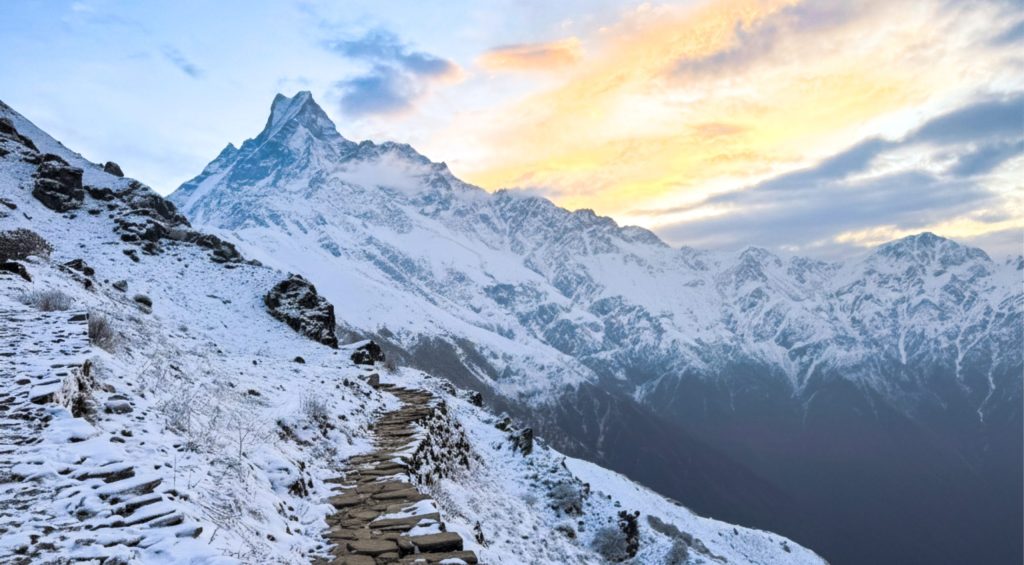
Every sunrise over Machhapuchhre and Annapurna on the Mardi Himal trail fills your heart with awe and the quiet magic of the mountains. The Mardi Himal Base Camp Trek is relatively short and easy in Nepal’s Annapurna region. It offers stunning views of the Annapurna massif, including Annapurna South, Hiunchuli, Gangapurna, and Machhapuchhre (Fishtail).
The trek takes you through beautiful rhododendron and oak forests, past small villages and terraced farmland, and to the base camp of Mardi Himal, which is located at an altitude of approximately 4,500 meters (14,764 feet).
Overview of Mardi Himal Trek
- Location: Annapurna Region, Western Nepal
- Maximum Height: Mardi Himal Base Camp (4,500 m/14,764 feet)
- Duration: 6-9 days
- Trek Distance: Approximately 50-55 km
- Difficulty Level: Moderate (anyone with basic fitness)
- Best Time: Spring, Autumn, Winter
- Permits Required: Annapurna Conservation Area Permit (ACAP), Trekkers’ Information Management System (TIMS) Card
- Estimated Cost: USD 450-680
Reasons to do the Mardi Himal Base Camp Trek
1. Stunning mountain views: The Mardi Himal Trek offers incredible views of the Annapurna range and the Dhaulagiri mountain range, as well as the lesser-known peaks of Mardi Himal, Hiunchuli, and Machhapuchhre.
2. Off the beaten path: The Mardi Himal Trek is less traveled than other popular treks in the Annapurna region, making it a more authentic and peaceful experience.
3. Cultural immersion: The trek takes you through traditional villages, giving you a chance to learn about the local people’s culture and way of life. You’ll have the chance to see traditional houses, taste local food, and learn about local customs and traditions.
4. A variety of landscapes: The trek takes you through diverse landscapes, including rhododendron forests, terraced fields, and high-altitude passes.
5. Challenging but achievable: The trek is considered moderate in difficulty and can be completed by most people in good physical condition.
6. Excellent Acclimatisation: The Mardi Himal trek is a good option for those planning a higher altitude trek or climbing, as it provides excellent acclimatization.
Best Time For Mardi Himal Trek
The trek can be done all year round, but the best seasons are Spring, Autumn, and Winter.
The best time to trek Mardi Himal depends on what kind of experience you want. Spring (March–May) is very popular, with rhododendron forests in full bloom, mild weather, and clear mountain views, perfect for photography and wildlife spotting. Autumn (September–November) offers crisp air, stable weather, and breathtaking panoramic views of Annapurna, Machhapuchhre, and Hiunchuli, making it the most recommended season overall.
Winter (December–February) provides peaceful, less crowded trails and snow-dusted peaks, creating a serene Himalayan landscape, though it is colder, and some higher sections may be icy. Monsoon (June–August) brings heavy rain, slippery trails, and limited visibility, so trekking is generally not advised during this season except for short, lower-altitude hikes.
Mardi Himal Trekking Routes
Kathmandu (1,324m) to Pokhara (820m): Your journey begins with a scenic drive or flight from Kathmandu to Pokhara, the gateway to the Annapurna region.
Pokhara (820m) to Pitham Deurali (2,000m): Then, drive to Pitham Deurali, passing terraced fields, small villages, and forests as you prepare to start the Mardi Himal trail.
Pitham Deurali to Low Camp (3,200m): The trek leads through rhododendron and oak forests, suspension bridges, and local villages, with your first alpine views of Machhapuchhre and Annapurna South appearing as you reach Low Camp.
Low Camp (3,200m) to High Camp (3,580m): Continue ascending through alpine meadows and prayer-flag-covered ridges, reaching High Camp where sunset over the mountains is breathtaking.
High Camp (3,580m) to Upper Viewpoint / Mardi Himal Base Camp (4,500m): Making the final push to Mardi Himal Base Camp or the upper viewpoint, enjoying panoramic views of Machhapuchhre, Annapurna I, and Hiunchuli, then descend to Forest Camp for an overnight stay.
Forest Camp to Siding Village (1,750m): The trail descends through forests, streams, and small villages to Siding, experiencing local Gurung hospitality and culture.
Siding Village to Pokhara (820m): Return to Pokhara with scenic views of the Annapurna foothills and valleys.
Pokhara to Kathmandu (1,324m): Complete your adventure with a scenic drive or flight back to Kathmandu.
Gokyo Lake Trek
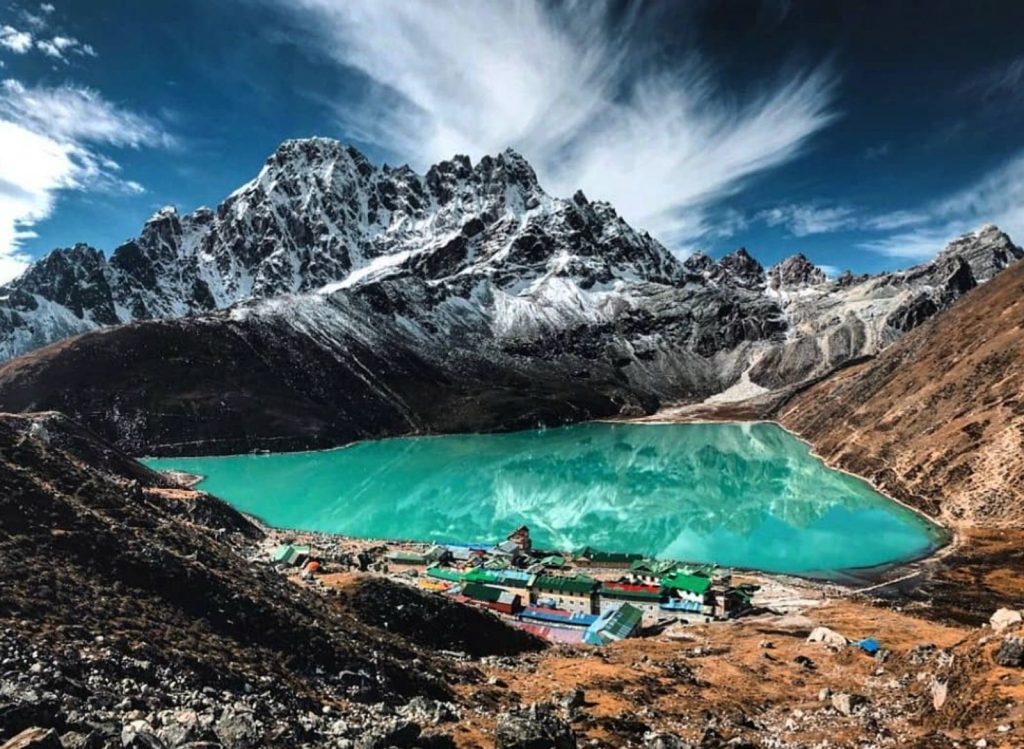
Standing at the turquoise shores of Gokyo Lake, with Everest and the giants reflected in the crystalline waters of the lake, it was as if we had entered the realm of the Himalayan dream. The Gokyo Lake Trek puts you right in the heart of the Khumbu Valley and allows you to explore the beautiful glacial lakes, Sherpa villages, and the harsh high altitudes of the region.
Whether it’s the trek through the banks of the Ngozumpa Glacier or the ascent to Gokyo Ri to get breathtaking views of the Everest (8,848m/29,028ft), Cho Oyu (8,201m), Mount Lhotse (8,516m), and Mount Makalu, is what makes it so well-known (8,463m). And the peaks of Cho Oyu, Lhotse, and Makalu, the paths will never leave you wanting for adventure and the wonders of the Himalayas.
This journey should provide you with a unique experience if you have already undertaken traditional Everest treks. The Gokyo Ri trek could be the finest option for people looking to experience something new in Sagarmatha National Park. You can see the Himalayas from a variety of angles if you take a stroll through Sagarmatha National Park.
In 2026, eco-friendly lodges and improved trails make the journey safer, more comfortable, and even more rewarding, while still preserving the feeling of a remote, untouched Himalayan escape.
Overview of Gokyo Lake Trek
- Location: Khumbu Region of Nepal
- Maximum Height: Gokyo Ri (5,357 m/17,575 ft)
- Duration: 12-14 days
- Trek Distance: Approximately 130-140 km
- Difficulty Level: Moderate to Challenging
- Best Time: Spring, Autumn, Winter
- Permits Required: Sagarmatha National Park Permit, TIMS Card (Trekkers’ Information Management System)
- Estimated Cost: USD 1,050-1,350
Reasons to do the Gokyo Lake Trek
There are several reasons why someone might choose to do the Gokyo Lake Trek:
1. Breathtaking Glacial Lakes: The Gokyo Lake Trek takes you to a chain of stunning turquoise glacial lakes, considered sacred by local communities. Their crystal-clear waters set against towering Himalayan peaks create one of the most photogenic landscapes in Nepal.
2. Panoramic Views from Gokyo Ri: Climbing Gokyo Ri (5,357m) rewards trekkers with unforgettable 360° views of Mount Everest, Cho Oyu, Lhotse, Makalu, and Nuptse, and one of the finest viewpoints in the Everest region.
3. Sagarmatha National Park Experience: The Gokyo Lake Trek lies within Sagarmatha National Park, a UNESCO World Heritage Site known for its dramatic landscapes, glaciers, and protected Himalayan ecosystems. Trekking here means walking through one of the world’s most iconic mountain conservation areas
3. Quieter Alternative to Everest Base Camp: Unlike the busy EBC trail, the Gokyo route remains relatively less crowded, offering a peaceful and more authentic Himalayan experience, perfect for trekkers seeking solitude in 2026.
4. Improved Comfort and Safety in 2026: By 2026, better trail maintenance, upgraded teahouses, and improved trekking management will make the journey safer and more comfortable, even at high altitudes, without losing its remote charm.
5. Natural Acclimatization Route: The gradual ascent toward Gokyo allows better acclimatization, reducing altitude-related risks and making the trek suitable for trekkers with moderate to good fitness levels.
6. Unique Glacier Experience: The trek follows the edge of the Ngozumpa Glacier, the longest glacier in Nepal, offering a rare chance to walk alongside massive ice formations and dramatic alpine scenery.
7. Rich Sherpa Culture: Passing through traditional Sherpa villages, prayer flags, monasteries, and stone walls gives insight into Himalayan life and Tibetan Buddhist culture.
Best Time for Gokyo Lake Trek
The best time to trek to Gokyo Lake is during spring (March-May) and autumn (September-November), when the weather is stable, skies are clear, and Himalayan views are at their best.
Winter (December-February) offers a quiet, snow-covered landscape with fewer crowds, though temperatures are colder and some lakes may freeze.
Monsoon (June-August) brings rain, cloudy skies, and slippery trails, making it the least ideal season, but the region becomes lush and peaceful for experienced trekkers seeking solitude.
Gokyo Lake Trekking Routes
The Gokyo Lake Trek offers several routes for trekkers to choose from, depending on their level of experience and the amount of time they have available.
One of the routes via the Cho La Pass Trek:
Kathmandu (1,324 m) to Lukla (2,860 m): Your journey starts with a thrilling scenic flight from Kathmandu to Lukla, offering breathtaking views of the Himalayan range.
Lukla (2,860 m) to Phakding (2,610 m): An easy first-day walk through Sherpa villages, mani walls, and suspension bridges along the Dudh Koshi River.
Phakding (2,610 m) to Namche Bazaar (3,440 m): The trail crosses high suspension bridges and ascends steadily to Namche Bazaar, the heart of the Everest region.
Namche Bazaar (3,440 m) to Phortse Village (3,810 m): Leaving the busy EBC route, the trek climbs to the peaceful village of Phortse with stunning views of Ama Dablam.
Phortse Village (3,810 m) to Machhermo (4,470 m): The trail passes through alpine landscapes, yak pastures, and open valleys as altitude increases.
Machhermo (4,470 m) to Gokyo (4,790 m): Following the Ngozumpa Glacier, the trail leads into the sacred Gokyo Valley, home to turquoise glacial lakes.
Gokyo (4,790 m) to Gokyo Ri (5,357 m): A sunrise hike to Gokyo Ri rewards trekkers with panoramic views of Everest, Lhotse, Makalu, Cho Oyu, and the Gokyo Lakes.
Gokyo (4,790 m) to Dole (4,110 m): The descent begins through scenic alpine terrain, offering relaxed walking and beautiful valley views.
Dole (4,110 m) to Namche Bazaar (3,440 m): The trail continues downhill through forests and villages, returning to the Sherpa capital.
Namche Bazaar (3,440 m) to Lukla (2,860 m): The final trekking day follows familiar trails back to Lukla, marking the end of the trek.
Lukla (2,860 m) to Kathmandu (1,324 m): A scenic return flight to Kathmandu concludes the Gokyo Lake Trek.
Kanchenjunga Circuit Trek ( Including South and North Base Camp)
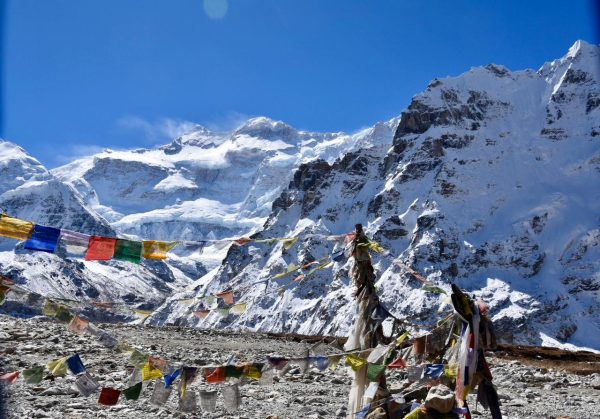
Hidden in the remote eastern Himalayas, the Kanchenjunga Base Camp Trek is a true test of spirit and endurance, which is one of the most raw and rewarding experiences of trekking in Nepal. Circling Mount Kanchenjunga, the third-highest mountain in the world, this demanding journey takes trekkers to both the North and South Base Camps, making it one of the best treks in Nepal for 2026. The trek begins in Taplejung and unfolds through alpine forests, vast meadows, glacier-fed rivers, and high mountain passes.
You will have the opportunity to see stunning views of the mountain, as well as other peaks in the region such as Makalu and Lhotse. During the trek, you will pass through several small villages and interact with the local people, who are predominantly of the Limbu ethnic group. You will have the opportunity to learn about their culture and way of life.
The Kanchenjunga Base Camp Trek is physically demanding, and it is recommended for experienced trekkers who are in good physical condition. It is important to be properly acclimatized and to take necessary precautions to avoid altitude sickness. For trekkers seeking solitude, pristine landscapes, and a powerful sense of achievement, the Kanchenjunga stands out as one of the best treks in Nepal for 2026, offering an unforgettable blend of raw nature, cultural depth, and Himalayan grandeur.
If you want to know more details about the Kanchenjunga Base Camp Trek, click here: Kanchenjunga Base Camp
Overview of Kanchenjunga Base Camp Trek
- Location: Eastern Nepal, Kanchenjunga Conservation Area
- Maximum Height: North Base Camp – Pangpema (5,143 m/16,870 ft), South Base Camp – Oktang (4,730 m/15,518 ft)
- Duration: 20-24 days
- Trek Distance: Approximately 230-250 km (round trip, including both base camps)
- Difficulty Level: Strenuous / Challenging
- Best Time: Spring, Autumn, Winter (for experienced trekkers)
- Permits Required: Kanchenjunga Conservation Area Permit (KCAP), Restricted Area Permit (RAP)
- Estimated Cost: USD 1,700-2,100
Reasons for the Kanchenjunga Base Camp Trek
1. Spectacular mountain views: This base camp presents breathtaking views of Mount Kanchenjunga (8,586 m), the world’s third-highest peak, along with surrounding giants like Yalung Kang, Jannu (Kumbhakarna), and Kabru. Visiting both North Base Camp (Pangpema) and South Base Camp (Oktang) allows trekkers to experience the mountain from two strikingly different angles, making the scenery more diverse and rewarding.
2. Truly off the beaten path: Compared to Everest and Annapurna, the region of Kanchenjunga remains one of the remotest and least crowded trekking routes in Nepal. The reason for the restricted region and the long trek to the summit makes it one of the least-visited routes by trekker enthusiasts in 2026.
3. Rich cultural immersion: The trek passes through traditional villages of Limbu, Rai, Sherpa, and Tibetan-influenced communities, where daily life remains largely unchanged. Trekkers can experience local hospitality, ancient monasteries, prayer flags, mani walls, and traditional farming practices, providing a deep cultural connection rarely found on busier trails.
4. Diverse and dramatic landscapes: The Kanchenjunga trek features an exceptional variety of landscapes, from subtropical forests and terraced farmlands to dense rhododendron forests, alpine pastures, and vast glacier valleys. This constant change in scenery keeps the journey visually exciting throughout the trek.
5. A challenging and rewarding adventure: This trek is considered moderate to strenuous, with long walking days, remote terrain, and high altitudes exceeding 5,000 m. While demanding, it is achievable for trekkers with good fitness and preparation, making it perfect for experienced hikers looking for a serious Himalayan challenge in 2026.
Best Time for Kanchenjunga Base Camp Trek
The best seasons for the Kanchenjunga Base Camp Trek are spring and autumn, as these months offer the most stable weather, clear mountain views, and safer trail conditions in this remote region of eastern Nepal.
Spring (March to May) is considered the best overall time for the Kanchenjunga Base Camp Trek. During spring, the weather is generally stable with clear skies and mild temperatures, making high-altitude trekking more comfortable and blooming rhododendron forests, adding vibrant colors to the trail.
Autumn (September to November) is another excellent season and the most popular time for trekking in the Kanchenjunga region. After the monsoon rains, the air becomes clean and crisp, offering crystal-clear views of Mount Kanchenjunga and surrounding peaks. The trails are dry, and weather conditions are generally stable, which is especially important when crossing high passes such as Mirgin La and Sinion La.
Winter (December to February) is possible but challenging for the Kanchenjunga Base Camp Trek. Temperatures drop significantly, especially above Ghunsa and Kambachen, and heavy snowfall can block high passes and trails. Many teahouses may close due to harsh conditions, and days are shorter. However, for experienced trekkers seeking solitude and dramatic snow-covered landscapes, winter can still be rewarding with proper preparation and flexibility.
Monsoon (June to August) is generally not recommended for the Kanchenjunga Base Camp Trek. Heavy rainfall increases the risk of landslides, slippery trails, and leeches in lower elevations. Cloud cover often obscures mountain views, and transportation to and from Taplejung can become unreliable. Due to the remoteness of the region, trekking during the monsoon can be logistically difficult and unsafe.
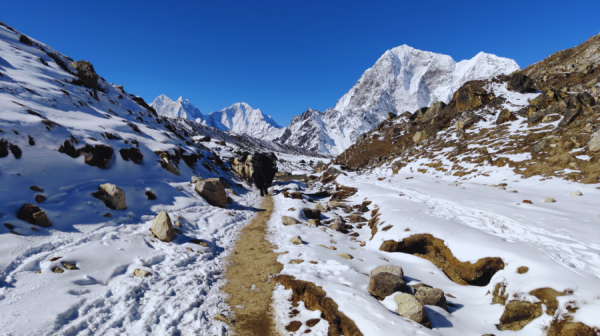
Kanchenjunga Circuit Trekking Routes
Different trekking paths exist for the Kanchenjunga Circuit, which depend on the starting and ending points of the trek. Two main base camps, Kanchenjunga South and Kanchenjunga North, are available for trekkers. The trek starts and ends in Taplejung and passes through the districts of Taplejung, Panchthar, Ilam, and Taplejung. The trek’s itinerary typically includes the following:
Kathmandu (1,324m) to Bhadrapur (91m) to Taplejung (1,820m)
The journey begins with a flight from Kathmandu to Bhadrapur, followed by a scenic drive through tea estates, hills, and rural villages to Taplejung, the starting point of the trek.
Taplejung (1,820m) to Sekathum (1,650m) to Amjilosa (2,300m)
From Taplejung, the trail descends and ascends through forested paths, terraced fields, and river valleys to Sekathum, then continues uphill to the small settlement of Amjilosa.
Amjilosa (2,300m) to Gyabla (2,730m)
The trail climbs gradually through dense bamboo and rhododendron forests, crossing suspension bridges and waterfalls before reaching Gyabla.
Gyabla (2,730m) to Ghunsa (3,475m)
Following the Ghunsa Khola, the trail ascends steadily through pine and rhododendron forests to reach Ghunsa, the main Sherpa settlement in the region and a key acclimatization stop.
Ghunsa (3,475m) to Kambachen (4,145m)
The trek continues into alpine terrain, passing rocky landscapes and glacial streams with impressive views of surrounding peaks before arriving at Kambachen.
Kambachen (4,145m) to Lhonak (4,780m)
From Kambachen, the trail follows remote, windswept valleys and moraine paths to reach Lhonak, one of the highest overnight points of the trek.
Lhonak (4,780m) to Pangpema / Kanchenjunga North Base Camp (5,143m) and return to Kambachen (4,145m)
A rewarding day hike leads to Pangpema, the North Base Camp of Mount Kanchenjunga. After enjoying panoramic mountain views, the trail descends back to Kambachen.
Kambachen (4,145m) to Ghunsa (3,475m)
The return trail descends through alpine and forested terrain back to Ghunsa, allowing for recovery and acclimatization.
Ghunsa (3,475m) to Selele Camp (4,290m)
Leaving Ghunsa, the trail climbs steeply through dense forest and high ridges to Selele Camp, a basic campsite before crossing the high passes.
Selele Camp (4,290m) to Tseram (3,870m) via Mirgin La (4,663m) & Sinion La (4,660m)
This challenging day crosses high mountain passes offering dramatic Himalayan panoramas before descending to Tseram in the southern Kanchenjunga region.
Tseram (3,870m) to Oktang Viewpoint (4,900m) and back to Tseram (3,870m)
A side trip takes you to Oktang Viewpoint, known for spectacular views of the Kanchenjunga South Face and Yalung Glacier, before returning to Tseram.
Tseram (3,870m) to Yarsang (1,800m)
The trail descends sharply through alpine terrain into warmer, forested landscapes, reaching the village of Yarsang.
Tseram (3,870m) to Ramche (4,580m) to Kanchenjunga South Base Camp (4,750m)
From Tseram, the trek ascends toward Ramche through glacial terrain and yak pastures, followed by a hike to Kanchenjunga South Base Camp.
Taplejung to Birtamod (140m)
After completing the trek, a scenic drive takes you from Taplejung down to Birtamod in the eastern Terai.
Birtamod (140m) to Kathmandu (1,324m)
The journey concludes with a drive or flight back to Kathmandu, marking the end of the remote Kanchenjunga Base Camp adventure.
Upper Mustang Trek
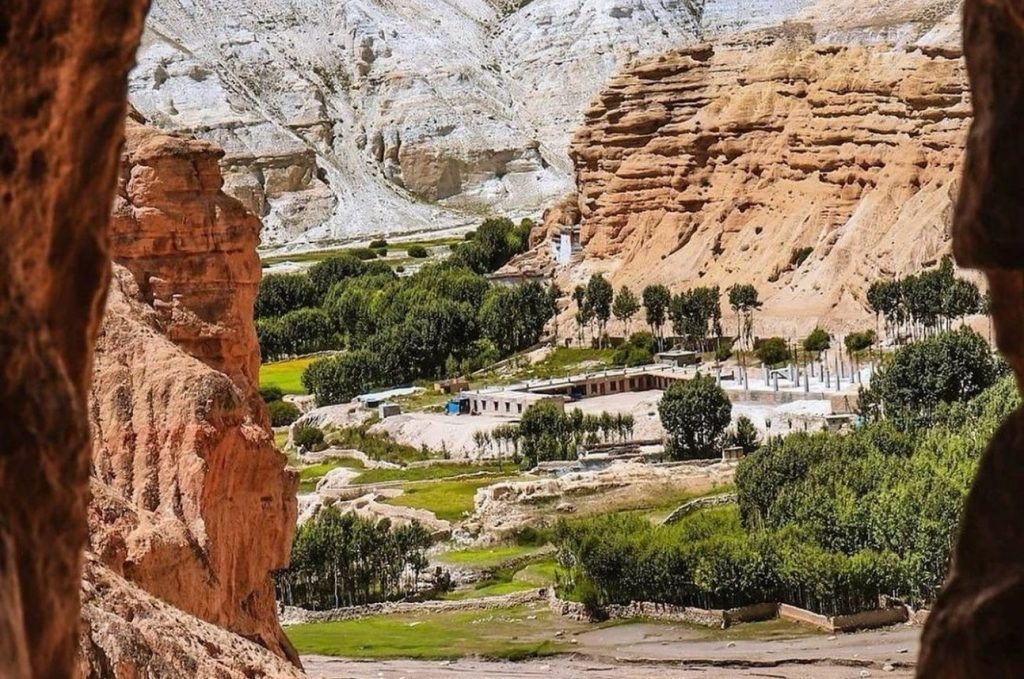
Upper Mustang is a journey into a sacred land where spirituality and raw Himalayan beauty blend seamlessly. Often described as one of the best treks in Nepal, Upper Mustang feels like stepping back in time. Every step along the trail carries a sense of silence and reverence, making trekking in Nepal here a deeply personal and soulful experience rather than just a physical adventure.
The focus of the Upper Mustang Trek is discovering the mysterious realm of the former Buddhist kingdom of Mustang. More remoteness is impossible. Because of its difficulty in access, Mustang has long been shielded from commercial tourists and is now regarded as the final stronghold of traditional Tibetan culture.
Due to its lengthy, rich, and complicated history, Upper Mustang is one of the Himalayas’ most fascinating locations for trekking. It almost slips your mind that you can hike there. Of course, you can. As was planned, the Upper Mustang Trek is the ideal fusion of culture and hiking. In the heart of the woods, far from the more populated world.
Allow the Himalayas to envelop you and savor the magic of the Mustang. Long after you return home, the Mustang’s breathtakingly tanned red cliffs and unlimited diversity of grey rolling hills will remain seared in your memory. Incorporate your encounters with the amazing towns of the Kingdom and the warmth of the Mustang population.
Overview of Upper Mustang Trek
- Location: Upper Mustang region, north-central Nepal
- Duration: 12-14 days
- Maximum Height: 3,810 meters/12,500 feet (Lo Manthang)
- Trek Distance: Approximately 125 kilometers (78 miles)
- Difficulty Level: Moderate (suitable for trekkers with basic fitness; no technical climbing required)
- Best Time: Spring, Autumn, also suitable during the Monsoon due to the dry climate, Winter
- Permits Required: Upper Mustang Restricted Area Permit, Annapurna Conservation Area Permit (ACAP)
- Estimated Cost: USD 900-1,300
Reasons to do the Upper Mustang Trek
1. Lo-Manthang, the walled city: Lo-Manthang is the capital of an ancient kingdom and is surrounded by walls that were built to protect it from enemies in the past. Visitors can explore the city’s 15th-century Thugchen Gompa and small monasteries, and will feel as though they have entered a magical place.
2. Hidden Kingdom in the Trans-Himalayan region: Upper Mustang is also known as the “Last forbidden kingdom” in Nepal and has a rich Tibetan Buddhist culture that has been well preserved. The region is located on an ancient trade route between Tibet and India and is situated between the Dolpo region and the beautiful Manang district. With low or no rainfall, the region can be explored year-round.
3. Muktinath Temple: The Muktinath temple is a holy spot for both Hindus and Buddhists located at an elevation of 3710 meters. Thousands of pilgrims from India, Tibet, and Nepal embark on the Jomsom Muktinath trek to worship at the temple. The trek also offers a breathtaking view of 108 waterspouts, which represent salvation after death, and a natural flame that never goes out.
4. Local tribes and unique culture: Upper Mustang is a hidden paradise on earth, and visitors can discover the local tribes, their unique culture, and their unexplored lifestyles. The ethnic Loba tribe, who resemble Tibetans in their lifestyle and language, have culture and traditions dating back to the 8th century when Buddhism reached Tibet during the Yalung dynasty. They celebrate four major religious festivals: Gine, Gensu, Gelug, and Nature.
5. Ancient Buddhist monasteries, caves, and palaces: As a former kingdom, Upper Mustang offers the opportunity to explore numerous ancient Buddhist monasteries, caves, and palaces. Famous monasteries include Drakkar-Thegchen Ling Gompa, Jampa Gompa, and Thupchen Gompa. Visitors can also visit the Monastic Museum and Choe Gompa.
6. Horseback riding in Upper Mustang: Many travelers enjoy horseback riding in Upper Mustang as the high-altitude terrain makes it a comfortable and efficient way to explore the region. Horseback riding is also a fun way to make the trip less tiring. Trekkers often use horses for at least one day during the exploration day around Lo-Manthang to rest and cover more places within a limited time.
7. Tiji Festival: Tiji is an annual three-day festival that takes place in May and features Tibetan rituals celebrating the myth of a son who saved the Mustang kingdom from destruction. The festival marks the victory of good over evil and is based on the legend of the Mustang region, where the Mustang was in trouble because of a demon who spread diseases, and a hero named Dorje Jono defeated the demon. It is a fascinating event to attend.
Upper Mustang Trekking Routes
Kathmandu (1,324 m) to Pokhara (820 m)
Your journey begins with a scenic flight or drive from Kathmandu to Pokhara, a beautiful lakeside city and the main gateway to the Mustang region.
Pokhara (820 m) to Jomsom (2,720 m) – Flight
A short but spectacular mountain flight takes you to Jomsom, flying between the Annapurna and Dhaulagiri ranges with dramatic Himalayan views.
Jomsom (2,720 m) to Kagbeni (2,810 m)
The trek starts with a gentle walk along the Kali Gandaki River to Kagbeni, a picturesque medieval village and the official entry point to Upper Mustang.
Kagbeni (2,810 m) to Chele (3,050 m)
After permit checks, the trail enters the restricted Upper Mustang region, climbing gradually through arid landscapes, wind-carved cliffs, and ancient chortens to reach Chele.
Chele (3,050 m) to Syanbochen (3,800 m)
The trail ascends steeply, crossing high ridges and deep canyons, with expanding views of the Mustang desert and surrounding peaks before arriving at Syanbochen.
Syanbochen (3,800 m) to Ghami (3,520 m)
Crossing high passes and barren plateaus, the trail leads to Ghami, one of the largest villages in Upper Mustang, famous for its long mani walls and traditional stone houses.
Ghami (3,520 m) to Tsarang (3,560 m)
The trek continues through dramatic landscapes and ancient settlements to Tsarang, home to an impressive monastery and the historic Tsarang Dzong.
Tsarang (3,560 m) to Lo Manthang (3,810 m)
A gradual ascent takes you to Lo Manthang, the walled capital of the former Kingdom of Mustang, rich in Tibetan Buddhist culture and centuries-old monasteries.
Lo Manthang (3,810 m) to Drakmar (3,820 m)
Leaving Lo Manthang, the trail passes sacred caves and colorful cliffs to reach Drakmar, known for its striking red rock formations and spiritual significance.
Drakmar (3,820 m) to Ghiling (3,570 m)
The route descends gently through open valleys and traditional villages, offering peaceful walking and expansive views of Mustang’s high-desert landscape.
Ghiling (3,570 m) to Chhusang (2,980 m)
The trail continues downhill along the Kali Gandaki corridor, passing eroded cliffs and wind-shaped terrain before reaching the riverside village of Chhusang.
Chhusang (2,980 m) to Muktinath (3,800 m)
A steady climb leads to Muktinath, one of Nepal’s most sacred pilgrimage sites for both Hindus and Buddhists, set against a dramatic Himalayan backdrop.
Muktinath (3,800 m) to Jomsom (2,720 m)
The trail descends through the dry trans-Himalayan landscape back to Jomsom, marking the end of the trekking section.
Jomsom (2,720 m) to Pokhara (820 m) to Kathmandu (1,324 m)
A scenic flight returns you to Pokhara, followed by a drive or flight back to Kathmandu, concluding the unforgettable Upper Mustang Trek.
FAQs of Best Treks in Nepal for 2026
1. What are the best treks in Nepal for 2026?
The best treks in Nepal for 2026 include Everest Base Camp, Annapurna Circuit, Annapurna Base Camp, Manaslu Circuit, Langtang Valley, Upper Mustang, Gokyo Lakes, and Kanchenjunga Base Camp. In 2026, better trail access and lodge facilities will make both classic and remote routes more comfortable and safer for trekkers.
2. Is 2026 a good year for trekking in Nepal?
Yes, 2026 is an excellent year for trekking in Nepal. Trekking routes are fully open, permits are streamlined, and local communities are well-prepared to welcome international trekkers. With growing focus on sustainable tourism and safety standards, trekking in Nepal in 2026 offers a rewarding and well-organized experience across all major regions.
3. Which trek is best for beginners in Nepal?
For beginners, the best treks in Nepal include Ghorepani Poon Hill, Langtang Valley, Mardi Himal, and Annapurna Base Camp. These treks have moderate difficulty levels, good accommodation, and well-marked trails. Basic fitness and gradual acclimatization are usually sufficient to complete these routes safely.
4. Which is the most challenging trek in Nepal?
Kanchenjunga Base Camp, Upper Dolpo, and Manaslu Circuit are among the most challenging treks in Nepal. These treks involve high altitudes, long walking days, remote terrain, and limited facilities. They are best suited for experienced trekkers with strong physical fitness and prior high-altitude trekking experience.
5. Do I need a guide for trekking in Nepal in 2026?
Yes, for many treks in Nepal in 2026, hiring a licensed guide is mandatory or strongly recommended. Restricted areas such as Upper Mustang, Manaslu, Kanchenjunga, and Upper Dolpo require a registered guide and special permits. Even on open routes, a guide enhances safety, navigation, cultural understanding, and overall trekking experience.
6. How difficult is trekking in Nepal?
Trekking in Nepal ranges from easy to very challenging. Short treks like Poon Hill are easy, while classic routes such as Everest Base Camp and Annapurna Circuit are moderate. Remote treks like Kanchenjunga or Dolpo are challenging due to altitude and remoteness. Difficulty depends on altitude, duration, terrain, and acclimatization.
7. What permits are required for trekking in Nepal?
Common permits include the TIMS Card, the Annapurna Conservation Area Permit (ACAP), Sagarmatha National Park Permit, Langtang National Park Permit, and restricted area permits for regions like Upper Mustang, Manaslu, and Kanchenjunga. Permit requirements depend on the trekking region and must be arranged before or during the trek.
8. Is altitude sickness a concern while trekking in Nepal?
Yes, altitude sickness is a potential risk on many treks in Nepal, especially those above 3,000 meters. Proper acclimatization, gradual ascent, hydration, and rest days significantly reduce the risk. Popular treks like Everest Base Camp and Manaslu Circuit are well-designed with acclimatization days.
9. Can I do trekking in Nepal without prior experience?
Yes, many treks in Nepal are suitable for people without prior trekking experience. With basic fitness, proper preparation, and a guided itinerary, first-time trekkers can comfortably complete routes such as Langtang Valley, Poon Hill, or Annapurna Base Camp.
10. What kind of accommodation is available on Nepal treks?
Most popular treks in Nepal offer teahouse accommodation with basic but comfortable rooms, shared bathrooms, and local meals. Remote treks may involve camping or very basic lodges. In 2026, facilities on major trekking routes continue to improve.
11. Is trekking in Nepal safe in 2026?
Yes, trekking in Nepal is generally safe in 2026 when done with proper planning. Using licensed guides, following weather forecasts, carrying insurance, and trekking during the best seasons greatly enhance safety. Nepal remains one of the world’s most trusted trekking destinations.
12. What should I pack for trekking in Nepal?
Essential items include layered clothing, a down jacket, trekking boots, a sleeping bag, trekking poles, sunscreen, and personal medication. Packing depends on the season and trek altitude, but proper gear is crucial for comfort and safety.
13. Which trek in Nepal is best for a cultural experience?
Upper Mustang, Manaslu Circuit, Langtang Valley, and Kanchenjunga treks offer rich cultural experiences. These regions preserve Tibetan-influenced traditions, monasteries, and ancient villages, making them ideal for trekkers seeking cultural immersion alongside natural beauty.
Comments (0)
Write a comment- Why is 2026 special?
- Criteria Behind Our Trek Choices
- Some of the Best Treks in Nepal
- Everest Base Camp Trek
- Annapurna Base Camp Trek
- Annapurna Circuit Trek with Tilicho Lake
- Manaslu Circuit Trek
- Langtang Valley Trek
- Everest Three Passes Trek
- Mardi Himal Base Camp Trek
- Gokyo Lake Trek
- Kanchenjunga Circuit Trek ( Including South and North Base Camp)
- Upper Mustang Trek
- FAQs of Best Treks in Nepal for 2026
- 1. What are the best treks in Nepal for 2026?
- 2. Is 2026 a good year for trekking in Nepal?
- 4. Which is the most challenging trek in Nepal?
- 5. Do I need a guide for trekking in Nepal in 2026?
- 6. How difficult is trekking in Nepal?
- 7. What permits are required for trekking in Nepal?
- 8. Is altitude sickness a concern while trekking in Nepal?
- 9. Can I do trekking in Nepal without prior experience?
- 10. What kind of accommodation is available on Nepal treks?
- 11. Is trekking in Nepal safe in 2026?
- 12. What should I pack for trekking in Nepal?
- 13. Which trek in Nepal is best for a cultural experience?
Read the latest Blogs & Insights
Explore our collection of articles and insights to gain in-depth travel knowledge, expert advice, and stay updated on the latest trends and tips.
View All Articles




No comments yet.