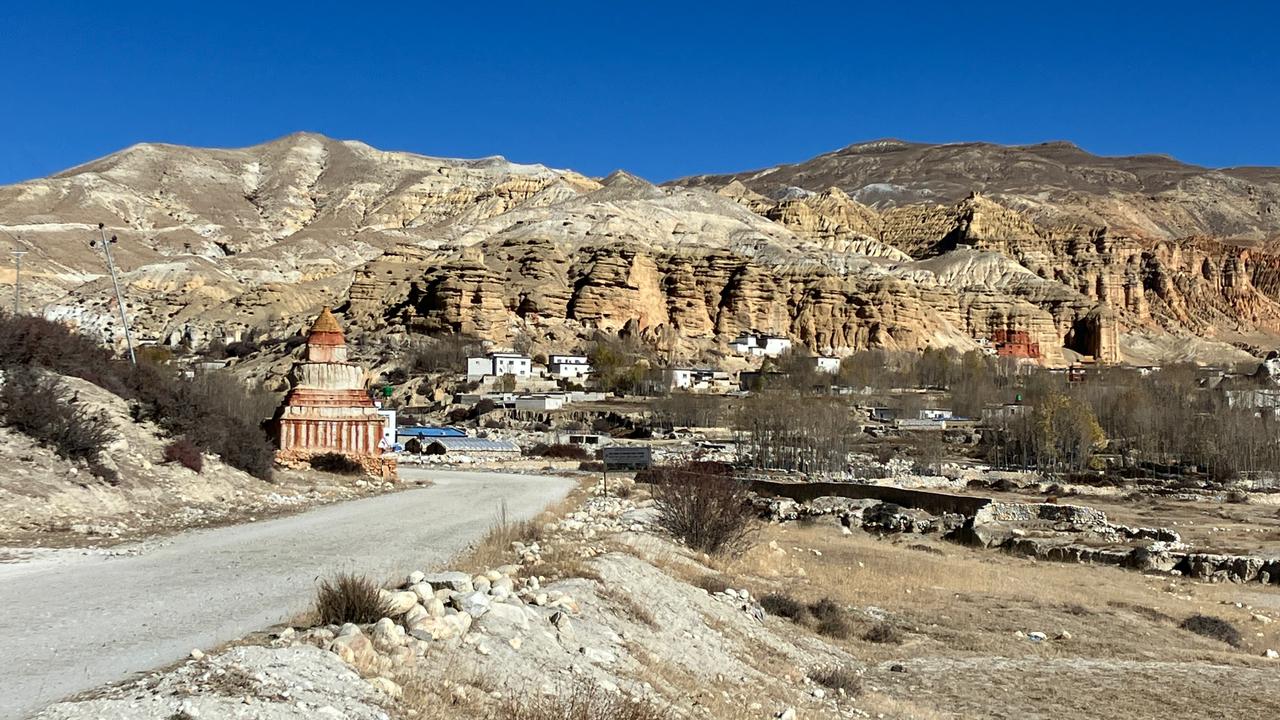
Upper Mustang Jeep Tour: Kathmandu to Lo Manthang – 12 Days


5(49)


The 12-Day Upper Mustang Jeep Tour: Complete Day-by-Day Itinerary
Your Journey, Step by Step
Day 01: Arrival in Kathmandu & Trip Preparation (1,400 m)
3 star hotel
Your Lo Manthang Jeep Tour adventure begins the moment you land at Tribhuvan International Airport (KTM). After collecting your luggage and clearing customs, a representative from Bold Himalaya will meet you at the arrival gate with a clearly marked sign. You’ll then enjoy a private transfer of 25–45 minutes through Kathmandu traffic to your hotel in Thamel, the bustling hub of the city.
If you arrive early, the afternoon is free for optional exploration of nearby UNESCO World Heritage sites, including Kathmandu Durbar Square, Swayambhunath (Monkey Temple) for panoramic valley views, and Boudhanath Stupa for a serene evening stroll. In the evening, the group gathers for a pre-trip briefing covering the Kathmandu to Upper Mustang Jeep itinerary, road conditions, and a day-by-day breakdown of the journey.
Your guide will also collect passports to process the Restricted Area Permit (RAP), check gear for dust and cold-weather readiness, and provide essential safety and altitude guidance following our “Slow Ascent” approach to ensure a comfortable start to your high-altitude adventure.
Day 02: Kathmandu to Pokhara – Scenic Drive Along the Prithvi Highway (827 m)
3 star hotel
Breakfast, Dinner

200 km, 6–8 hours
Today, you travel from Kathmandu to Pokhara by tourist bus, covering 200 km along the Prithvi Highway. Departure is early, around 7:00 AM, to avoid peak traffic at Nagdhunga Pass. The route follows the Trishuli River through terraced hills, local villages like Malekhu and Muglin, and small roadside markets.
The highway was newly blacktopped in 2026, offering a smoother ride, though some rough patches remain. Midway, there are stops for refreshments, lunch, and toilets.
Upon arrival in Pokhara, check into one of the Pokhara lakeside hotels near Phewa Lake and spend the evening strolling along the Lakeside strip or taking a sunset boat ride to Tal Barahi Temple. This is also a good time to prepare your gear, including cameras, for the upcoming Upper Mustang overland tour.
Day 03: Pokhara to Kagbeni via the Kali Gandaki Valley Road (2,804m)
Guesthouse
Breakfast, Lunch, Dinner
8–10 hours, ~200 km
2,804 m (9,199 ft)
On Day 3 of your Upper Mustang Jeep Tour, you leave the subtropical landscapes of Pokhara and climb into the rain-shadow of the Annapurna and Dhaulagiri ranges, following the scenic Kali Gandaki Valley Road. Travelers can enjoy the full jeep drive, taking in panoramic views of the world’s deepest gorge, or opt for a short mountain flight to Jomsom to save time (additional cost applies).
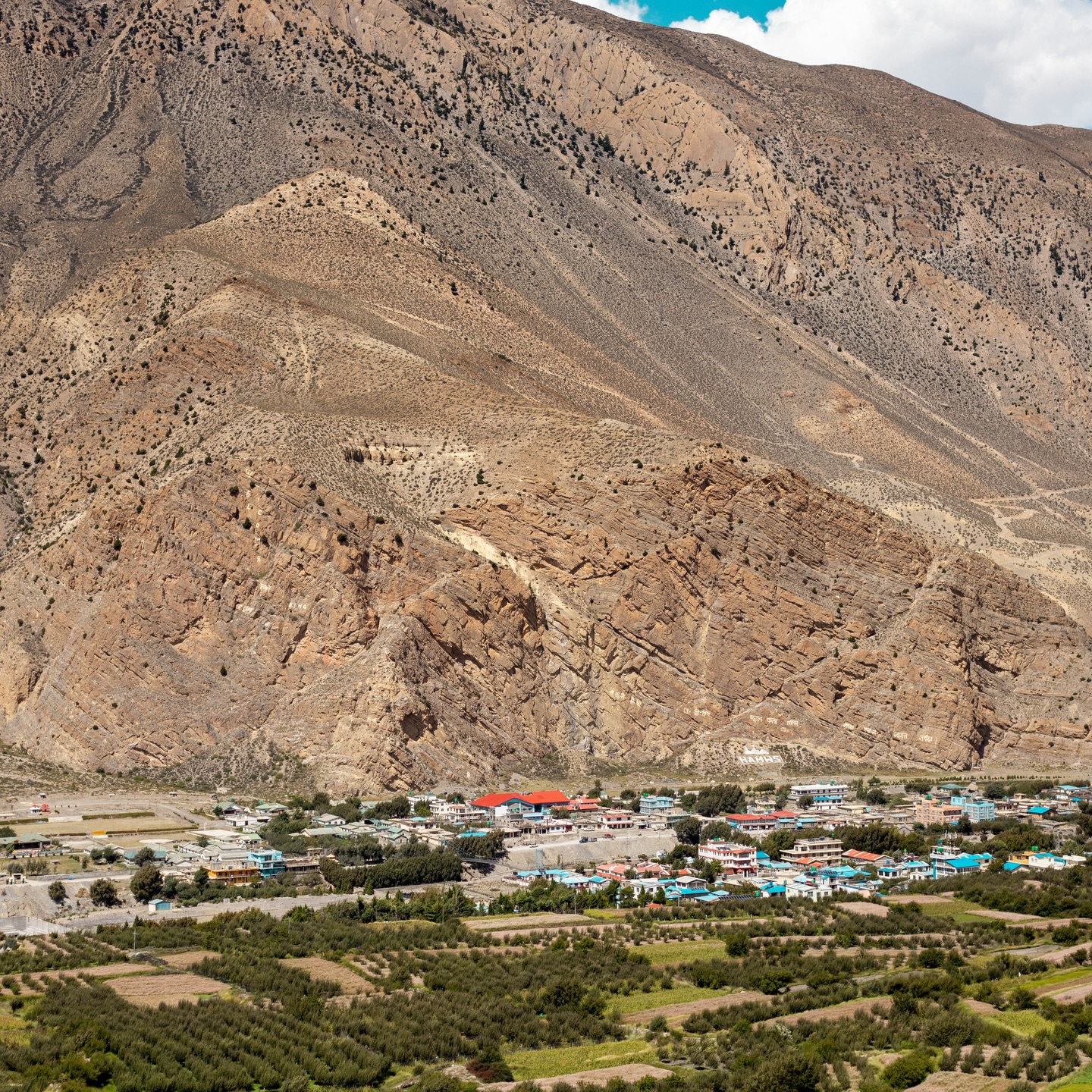
The first stop is Marpha (2,670 m), a picturesque Thakali village known for its stone houses, Tibetan-influenced culture, and apple orchards producing brandy, cider, and dried apple products. A visit to Samteling Monastery offers panoramic views of the village and Nilgiri peaks, and a brief detour to Dhumba Lake (2,830 m) provides a serene spot for photography. Continuing along the valley, you reach Jomsom (2,743 m), the administrative hub of Mustang, where the landscape turns arid and reflects Tibetan plateau influences.
From here, you drive to Kagbeni (2,804 m), a 500-year-old medieval village serving as the official entry point to the Upper Mustang overland tour. At the Restricted Area Permit (RAP) checkpoint, your permits are presented before entering the “Forbidden Kingdom.” Overnight is at a traditional teahouse in Kagbeni, providing comfortable lodging while immersing you in Mustang’s unique culture and desert landscapes.
Travel Tip:
The jeep route along the Kali Gandaki offers stunning cliff, river valley, and desert landscapes. Stop frequently for photos—jeep travel lets you enjoy these views without the strain of trekking.
Day 04: Kagbeni to Ghiling – Entering the Upper Mustang Restricted Zone (3,570 m)
Local lodge in Ghiling
Breakfast, lunch, dinner
40–50 kilometers
4–5 hours
On Day 4 of your Upper Mustang Jeep Tour, you cross the Kali Gandaki River and officially enter the Upper Mustang restricted zone. The lush green valleys of lower Mustang quickly give way to wind-sculpted red cliffs and arid desert landscapes, signaling the start of the high-altitude adventure.
After leaving Kagbeni, the jeep passes through Chhusang before crossing a dramatic gorge to reach Chele (3,050 m). Here, the first of Mustang’s famous Sky Caves appear, carved into the cliffs by ancient civilizations. Along the route, your guide manages all Restricted Area Permit (RAP) checks, ensuring a smooth and compliant entry into Upper Mustang.
The journey continues to Samar (3,660 m), a traditional village of mud-brick houses surrounded by barley and buckwheat fields. Travelers can take an optional detour to Chungsi Cave (3,400 m), a sacred meditation site of Guru Rinpoche featuring naturally formed stone deities—a hidden gem often missed by standard itineraries.
Next, the jeep climbs the Nyi La Pass (4,010 m), the highest point of the day, offering panoramic views of the Mustang plateau and distant Tibetan peaks. After a short photo stop, the road descends into Ghiling (3,570 m), a peaceful village with centuries-old stone houses and traditional agricultural terraces.
In the evening, visit Geling Monastery, a red-walled sanctuary with murals and prayer halls. Spend time acclimatizing by hydrating, enjoying a warm meal of dal bhat or thukpa, and following routine oxygen checks conducted by guides.
Overnight is at a traditional Mustangi teahouse, simple yet comfortable, providing a perfect base for the higher-altitude sections ahead.
Day 05: Ghiling to Tsarang via Ghami and Dhakmar (3,560 m)
Guesthouses
Breakfast, lunch, dinner
40 km
4–5 hours
Your Upper Mustang Jeep Tour today takes you through one of the most visually striking sections of the region, moving from high desert passes to the vibrant Red Cliffs of Dhakmar, before arriving in Tsarang, the former royal capital.
Our first stop is Ghami, a picturesque village of about 580 residents. Just outside the village lies Nepal’s longest Mani Wall, stretching roughly 250 meters. Each stone is intricately carved with the Buddhist mantra “Om Mani Padme Hum”. Local legend links this wall, along with the nearby red cliffs, to the demoness defeated by Guru Rinpoche in the 8th century.
Next, the route climbs to Dhakmar, renowned for its iron-rich cliffs that glow crimson under the sun. These dramatic cliffs are a photographer’s dream, especially around midday when the sunlight highlights every cave and crevice. At the base of the cliffs, Dhakmar Gompa serves as a spiritual center for the Loba community, preserving centuries-old rituals.
From Dhakmar, the jeep winds through the arid high desert to Tsarang, Upper Mustang’s second-largest settlement. Here, you visit the Tsarang Dzong, a 5-story white palace, and the 14th-century Tsarang Gompa, home to an impressive collection of statues and thangkas. Sheltered from the afternoon winds, Tsarang offers a comfortable overnight stop and ideal acclimatization before tomorrow’s journey to Lo Manthang.
Day 06: Tsarang to Lo Manthang via Lo Gekar Gumba (3,810 m)
Guesthouses
Breakfast, lunch, dinner
40 km, 3–4 hours
3,840 meters (12,598 feet)
Today, your Upper Mustang Jeep Tour Itinerary reaches its highlight: Lo Manthang, the walled capital of the former Mustang Kingdom. Leaving Tsarang, the Jeep crosses the treeless plateau, stopping briefly at Mijikdam to stretch and enjoy the high desert scenery.
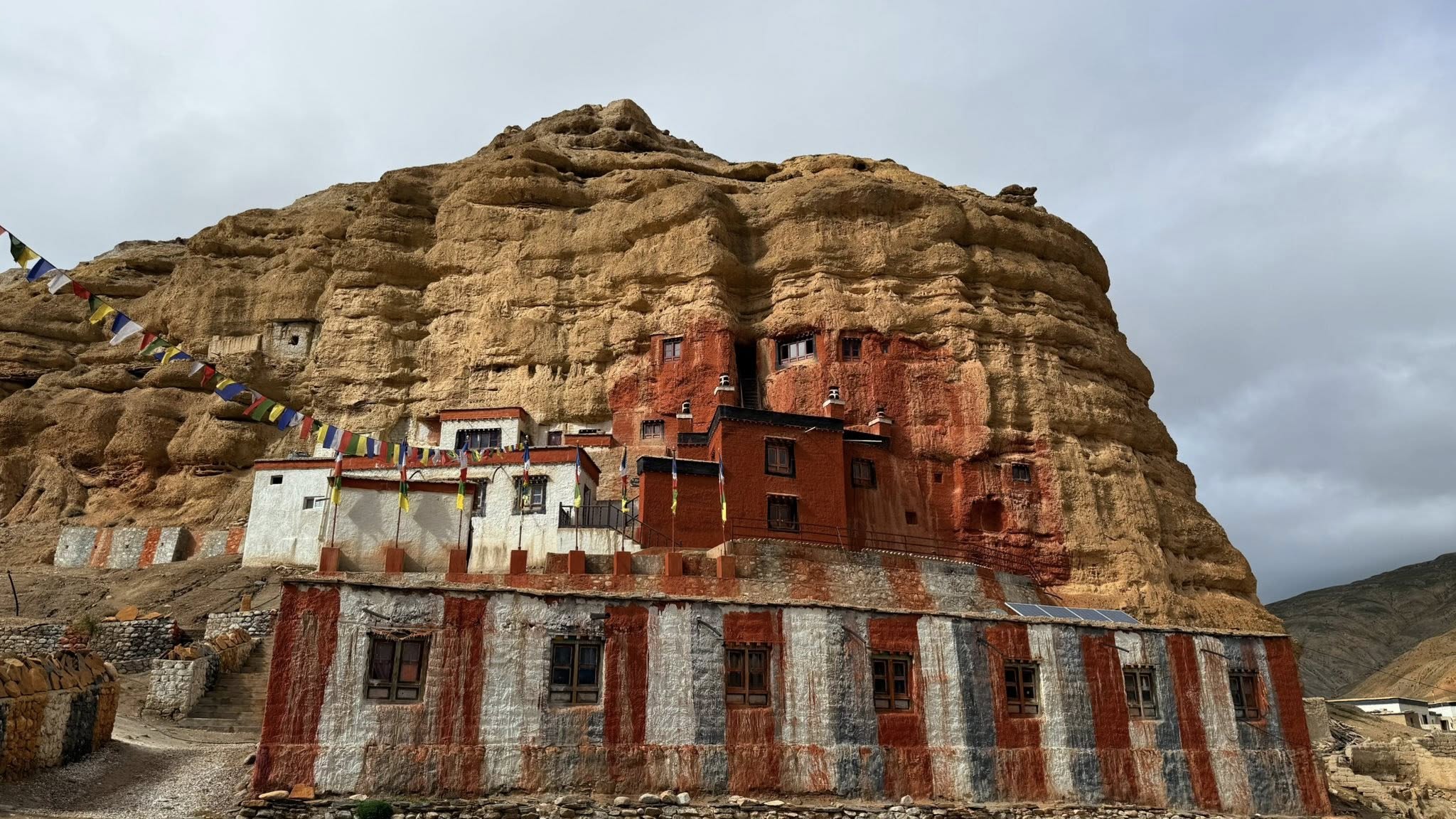
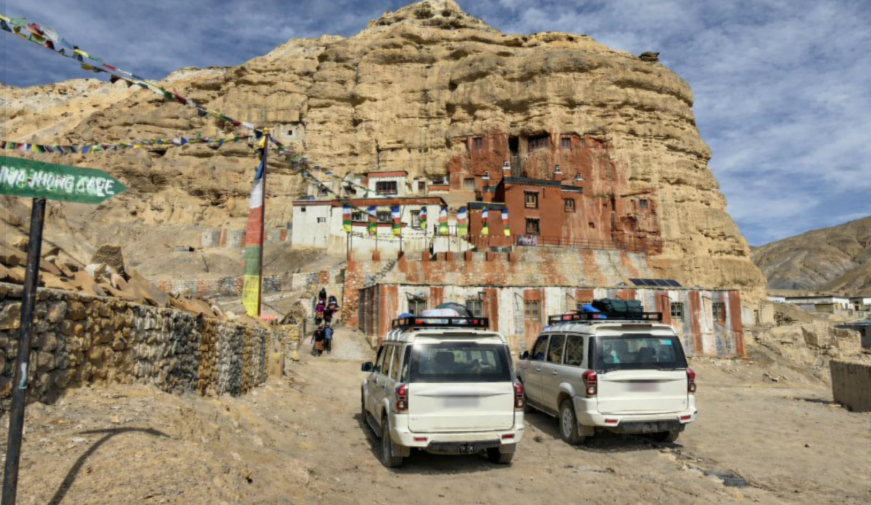
Before entering the city, you detour to Lo Gekar Gumba (Ghar Gumba), one of Upper Mustang’s oldest Tibetan Buddhist monasteries. Built in the 8th century by Guru Rinpoche, it features red-and-white architecture, ancient murals, and stone carvings. Monks welcome visitors with butter tea, offering insight into centuries-old monastic life.
The route continues over Lo La Pass (3,950 m), revealing the iconic white walls of Lo Manthang. Founded in the 1380s by King Ame Pal, the town has about 150 dwellings clustered around a central plaza, with four entry gates. Key sites include the Royal Palace, Jampa Lhakhang, Thupchen Gompa, and Chhoede Gompa. Entry requires permits and small fees to support preservation.
At 3,810 m, this is the highest stop of the tour. Travelers should rest, hydrate, and take short walks to acclimatize. Guesthouses within the walls provide basic but authentic accommodation, while hilltop and plaza views offer excellent photography opportunities.
This part of the Lo Manthang Jeep Travel 2026 blends culture, history, and stunning landscapes, making it a central highlight of the jeep tour to Lo Manthang from Kathmandu.
Day 07: Lo Manthang to Chhoser and Return (3,760 m)
Guesthouses
Breakfast, Lunch, Dinner
30 minutes each way
Chhoser Caves ~4,000m
On Day 7 of your Upper Mustang 4WD Tour, you take a short but scenic 30-minute jeep drive (approx. 20 km) north of Lo Manthang to Chhoser, a settlement nestled beneath towering cliffs. The highlight here is the Shija Jhong Cave, a five-story cliff labyrinth with over 40 interconnected rooms carved into vertical rock. Visitors explore ancient living quarters, meditation chambers, and storage units, all of which offer panoramic views of the valley. These caves were historically used as defensive bunkers, granaries, and hermitages for over 2,500 years.
The visit continues to the Nyiphuk Namdrol Norbuling Monastery, a cliff-side school for young monks, and Garphu Gompa, located on the eastern bank of the river, known for its serene atmosphere and centuries-old frescoes. From the ridges above Chhoser, travelers can glimpse the Korala Border (China-Tibet), providing a rare perspective on the edge of the Tibetan plateau.
After the excursion, the jeep returns to Lo Manthang, giving time for rest, last-minute souvenir shopping, or a quiet walk through the historic, torch-lit streets of the walled city. At 3,760 m, light activity, hydration, and acclimatization are recommended. Overnight stays are in local guesthouses, offering authentic Mustang experiences.
This excursion blends history, culture, and high-altitude scenery, making it a standout day in the Lo Manthang jeep travel 2026 itinerary.
Day 08: Lo Manthang to Samar via the Hidden Valley of Yara & Luri Gompa (3,620m)
Local teahouse / lodge
Breakfast, Lunch, Dinner
6–7 hours
~3,950 m (Luri Gompa)
Today’s journey is one of the most off-the-beaten-path experiences of the Upper Mustang Jeep Tour, exploring the remote eastern bank of the Kali Gandaki Valley—a rarely visited side of the Upper Mustang Region of Nepal. Leaving Lo Manthang, the route descends toward Dhi, where rugged canyon terrain and seasonal river crossings make this a technically demanding but rewarding drive, dependent on road and water conditions.
Continuing east, we reach Yara (3,650m), the most popular village of Upper Mustang, set beneath dramatic eroded cliffs, known for its ancient cave dwellings and preserved Tibetan culture. From here, a 45–60 minute moderate walk leads to Luri Gompa, one of Upper Mustang’s most remarkable cave monasteries. Carved into a sandstone pillar, Luri Gompa houses a central chorten and exceptionally well-preserved 14th-century murals, considered among the finest examples of Himalayan Buddhist art.
As Luri Gompa sits close to 4,000 meters, walking slowly and staying hydrated is important.
After exploring the eastern valley, the journey turns south, passing farming communities such as Ghami, before reaching Samar (3,620m). Known for its poplar trees and historic role on the ancient salt trade route, Samar offers a peaceful overnight stop and improved acclimatization after a long day.
Overnight stay: Samar
Day 09: Samar to Muktinath and Marpha
Lodge
Breakfast, Lunch, Dinner
5–6 hours
3,710 m (Muktinath)
Leaving Samar, the journey retraces the southern Mustang route before turning west toward Muktinath, one of Nepal’s most important pilgrimage sites for both Hindus and Buddhists. The drive takes approximately 2-3 hours through the stark desert of Upper Mustang.
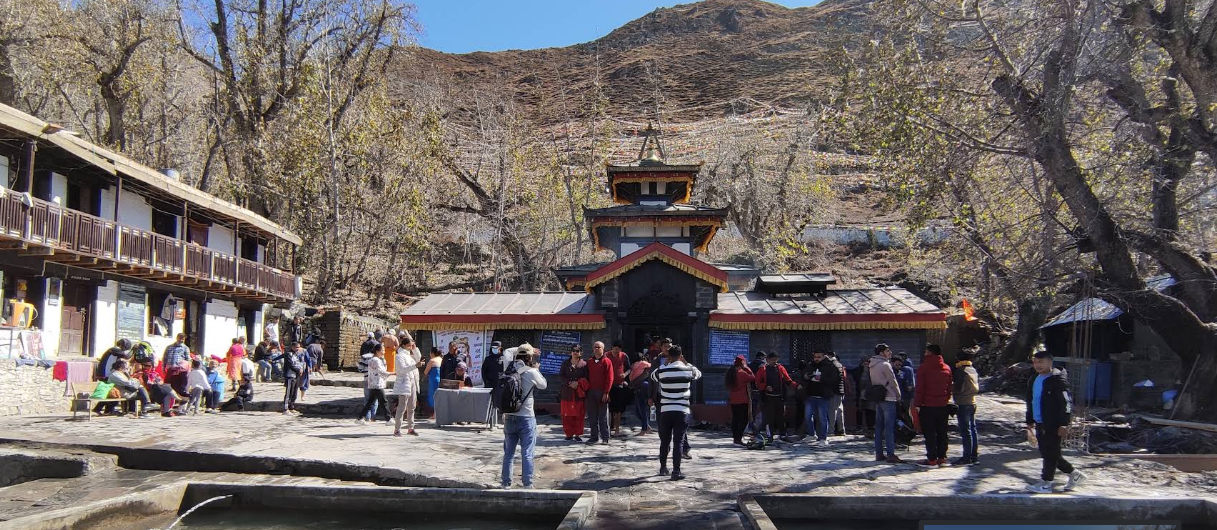
Situated at an altitude of 3,710 meters, Muktinath lies below the Thorong La range and attracts pilgrims from across the Himalayas. Hindus call it Mukti Kshetra (“Place of Salvation”), believing a pilgrimage here breaks the cycle of rebirth. Buddhists know it as Chumig Gyatsa (“Hundred Springs”), one of 24 tantric places where Guru Rinpoche meditated.
At the temple complex, visitors witness the unique spiritual harmony of the site, where earth, water, fire, and air coexist in one sacred setting. A naturally burning flame, fueled by underground gas, burns continuously inside the shrine, while devotees perform ritual cleansing under 108 stone water spouts nearby. The main sanctuary houses a golden statue and ancient ceremonial objects, reflecting centuries of devotion and belief.
After spending sufficient time at Muktinath for exploration and observance, the journey continues south through Jomsom, the administrative center of Mustang, before reaching Marpha. Known as the “apple capital” of the region, Marpha is famous for its whitewashed Thakali houses, cobbled streets, and apple-based products such as cider, brandy, and dried fruit. An overnight stay here allows time to explore local shops, enjoy better facilities, and relax in a more temperate setting.
Overnight stay: Marpha
Day 10: Marpha to Pokhara – Descent Through the Kali Gandaki (827m)
6–8 hours
137 km
On Day 10, the journey descends from the high-altitude desert of Upper Mustang to the lush subtropical landscapes of Pokhara. Traveling 137 km along the Kali Gandaki Valley, the scenery transforms dramatically: barren cliffs and arid slopes gradually give way to terraced hills, riverside villages, and greener valleys. The drive typically takes 6–8 hours by private 4WD jeep, following the Kali Gandaki riverbed via Beni, with road improvements in 2026 near Rupse Fall and Ghasa making the journey smoother and safer.
Along the way, travelers are treated to breathtaking views of the Dhaulagiri Icefall, one of the world’s 8,000-meter giants, and enjoy a stop at Tatopani Hot Springs (1,190m), where natural geothermal waters are believed to refresh the body and soothe tired muscles after high-altitude travel.
By mid-afternoon, you arrive in Pokhara (827m), with ample time to relax at Phewa Lake, take a sunset boat ride to the Tal Barahi Temple, stroll along Lakeside, or enjoy a meal at one of the many local and international restaurants.
Modern amenities, including high-speed Wi-Fi at most Lakeside hotels, make it easy to share your Mustang adventure photos with friends and family. Overnight stay is in Pokhara Lakeside, marking the comfortable conclusion of your Upper Mustang overland journey.
Day 11: Pokhara to Kathmandu
Lodge
Breakfast, Dinner
On Day 11, the journey concludes with your return to Kathmandu from Pokhara. Travelers may choose between a short 25-minute flight, offering sweeping views of the Himalayas while saving travel time, or a scenic road transfer, which allows for stops at overlooked villages and viewpoints along the way.
Both options typically arrive in Kathmandu by midday, giving you time to settle in before the evening. The afternoon is perfect for exploring Thamel’s bustling streets, where shops showcase climbing gear, handcrafted items, and traditional Nepali artifacts.
The day concludes with a farewell dinner at a local restaurant, offering an opportunity to share memories, enjoy authentic cuisine, and toast the completion of your unforgettable Upper Mustang adventure. Overnight stay: Kathmandu.
Want to customize your trip?
We ensure every trip meets your expectations — customize your itinerary anytime to match your travel style and preferences.
Inclusions
What’s Covered in Your Adventure
- All airport pick up and all ground transportation during trips.
- Hotel in Kathmandu, Pokhara three star category in twin sharing bed with breakfast basis
- Standard Guesthouse/ Trekking Lodge on the Upper Mustang trekking route
- All Breakfast, Lunch, and Dinner in the trekking with tea & coffee
- Special restricted area permit, Annapurna Conservation Area entrance fee, TIMS
- Our government tax & official expenses
- Private 4WD Jeep with all fuel charges, parking fees, and road taxes.
- Government-licensed, English-speaking guide with specialized knowledge of Upper Mustang history
- Experienced high-altitude driver specialized in river crossings and off-road safety.
- Salary, insurance, food, and lodging for the guide and driver.
- Comprehensive high-altitude kit including supplemental oxygen and Masimo oximeters.
- Sleeping Bag, Down Jacket (If you Needed Return after Trekking)
- Duffle Bag, T-shirt, and Trip certificate
- Travel Insurance
- Airfare to/from Kathmandu and Nepal Entry Visa fees
- Lunch and Dinner while in Kathmandu and Pokhara
- Tips & Gratuities
- Extra expenses due to flight delays, roadblocks, landslides, or political strikes.

Packing list for the Upper Mustang Jeep Tour
Even on a jeep tour, the roads can be bumpy and dusty, so pack a dust mask, sunglasses, and layered clothing to stay comfortable. Nights can drop below -5°C, especially near Lo Manthang, so warm layers are essential.

Clothing
- Lightweight down jacket or warm fleece
- Comfortable t-shirts and long-sleeve tops
- Windproof/ waterproof jacket
- Trekking pants or jeans
- Thermal inner layers
- Warm hat, gloves, and scarf
- Sturdy sneakers or light hiking shoes
- Extra pairs of socks and undergarments

Personal and Travel Essentials
- Passport, travel insurance, and permit copies
- Reusable water bottle and purification tablets
- Sunscreen (SPF 30+), lip balm, and moisturizer
- Power bank and universal adapter
- Personal medications and a small first-aid kit
- Face mask and sanitizer
- Light towel and toiletries

Optional but useful
- Camera with spare batteries and a memory card
- Portable charger or solar power bank
- Snacks like nuts, energy bars, or chocolates
- Journal or notebook for capturing the Mustang Experience
Good to Know
Your Journey, Step by Step
2026 Upper Mustang Restricted Area Permit (RAP)
Upper Mustang is a restricted region of Nepal, and all foreign travelers must obtain a Restricted Area Permit (RAP) issued by the Department of Immigration, Government of Nepal.
As of January 2026, the permit cost is USD 500 per person for the first 10 days, with an additional USD 50 per person per day beyond that. For a typical 12-day Upper Mustang itinerary, the total RAP fee is USD 600 per person.
The permit must be arranged through a registered Nepalese tour agency and requires a minimum of two foreign travelers, along with a government-licensed guide at all times. In addition to the RAP, all visitors must also hold an Annapurna Conservation Area Permit (ACAP), which costs approximately NPR 3,000 (USD 23).
Permit validity is calculated based on the number of calendar days spent within the restricted zone, starting from Kagbeni, the official entry checkpoint. Your agency handles all documentation and checkpoint formalities to ensure smooth and compliant travel throughout Upper Mustang.
Permit regulations and fees are subject to change. Always confirm current requirements with your registered agency before booking.
Why Choose Bold Himalaya for Your 2026 Upper Mustang Jeep Safari?
Exploring Upper Mustang isn’t a typical trip—it’s a journey into a Restricted Zone where every detail matters. From high-altitude safety to permit logistics, Bold Himalaya ensures your adventure is safe, seamless, and unforgettable. Here’s why savvy travelers trust us in 2026:
1. Safety First: Health & Altitude Management
- Twice-Daily Oximeter Checks: Every morning and evening, our guides track SpO₂ (oxygen saturation) and pulse using professional-grade Masimo oximeters.
- Onboard Oxygen & Medical Kit: All 4WD vehicles carry supplemental oxygen, Diamox, Dexamethasone, and a full high-altitude medical kit—ensuring minor altitude issues never turn into emergencies.
- Slow-Acclimatization Itinerary: Our 12-day route balances comfort with proper acclimatization, letting you enjoy every village, monastery, and sky cave fully energized.
2. 2026-Spec 4WD Fleet: Comfort Meets Capability
- Heavy-Duty Vehicles Only: High-clearance Toyota Land Cruiser 70 Series and Mahindra Scorpio Classics navigate rugged riverbeds and off-road terrain safely.
- Dust-Free, Climate-Controlled Cabins: Avoid Upper Mustang’s notorious “Khumbu Cough” from windblown dust. Travel comfortably and arrive fresh at every stop.
- Mobile Photography Studio: Our jeeps allow photographers to reach Golden Hour viewpoints without heavy backpacks or exhausting treks.
3. Starlink Connectivity: Always in Touch
- Emergency & Social Connectivity: Our preferred lodges in Lo Manthang, Tsarang, and Chhoser now have Starlink Wi-Fi. Weather updates, route monitoring, and family check-ins are possible from the most remote Himalayan desert.
4. Permit Expertise & Solo Traveler Solutions
- Zero-Hassle RAP Processing: Upper Mustang permits are complex, with a minimum of two travelers required. We handle permit matching for solo travelers and small groups, ensuring no cancellations due to bureaucracy.
- Full Compliance: From Kagbeni entry checkpoints to Lo Manthang authorities, we manage all Restricted Area Permit (RAP) and ACAP requirements seamlessly.
5. Ethical & Sustainable Travel
- Community Support: Part of your tour fee contributes to monastery restoration projects and high-altitude greenhouse initiatives in Lo Manthang.
- Plastic-Free Journeys: Each jeep carries sterilized 20L water jars, reducing single-use plastic bottles and preserving Mustang’s fragile ecosystem.
- Responsible Exploration: Every route, village visit, and cultural interaction prioritizes sustainability and respect for local heritage.
6. Award-Winning Local Expertise
- Led by Sobit Bhandari & Veteran Guides: Every trip is founder-led, not outsourced, ensuring hands-on care from Kathmandu to Lo Manthang.
- Recognized Excellence: Featured by TripAdvisor and LUXlife Magazine for Himalayan adventure expertise and ethical tourism.
Accommodation
Accommodation on the Upper Mustang Jeep Tour is designed for comfort and convenience. In cities like Kathmandu and Pokhara, we provide 3-star hotels on a bed and breakfast (B&B) basis, ensuring modern amenities and easy access to local attractions.
During the jeep tour across Upper Mustang, accommodation is arranged on a full-board basis, including both lodging and meals. Most rooms have attached bathrooms, though room type may vary depending on group size, budget, and availability. For families, we provide family-friendly rooms wherever possible.
In rural villages, we select the best available guesthouses or teahouses, offering a safe and authentic Mustang experience.
Travelers may also choose their preferred accommodation, but prices may vary accordingly. This approach ensures comfort while keeping you fully immersed in the cultural and remote landscapes of Upper Mustang.
Foods on the Upper Mustang Jeep Tour
In the Cities:
In cities like Kathmandu and Pokhara, you will have access to a wide variety of food options at hotels, restaurants, and cafes. Menus range from local Nepali cuisine to continental, Asian, and international dishes, giving you plenty of choices. While flavors may differ slightly from what you’re used to, most options are prepared with fresh ingredients and are suitable for a range of tastes.
In the Mountains:
While traveling through the high-altitude regions of Upper Mustang, food options are more limited but authentic.
Typical meals include momo (dumplings), dal bhat (lentil rice), parathas, fried rice, and other local specialties made from locally sourced ingredients. These dishes are prepared by local cooks, offering a genuine taste of Nepali mountain cuisine.
The flavors are hearty, wholesome, and reflect the traditions of the region, providing both nourishment and a cultural experience.
Experience the Rich Culture and Spiritual Heritage of Mustang
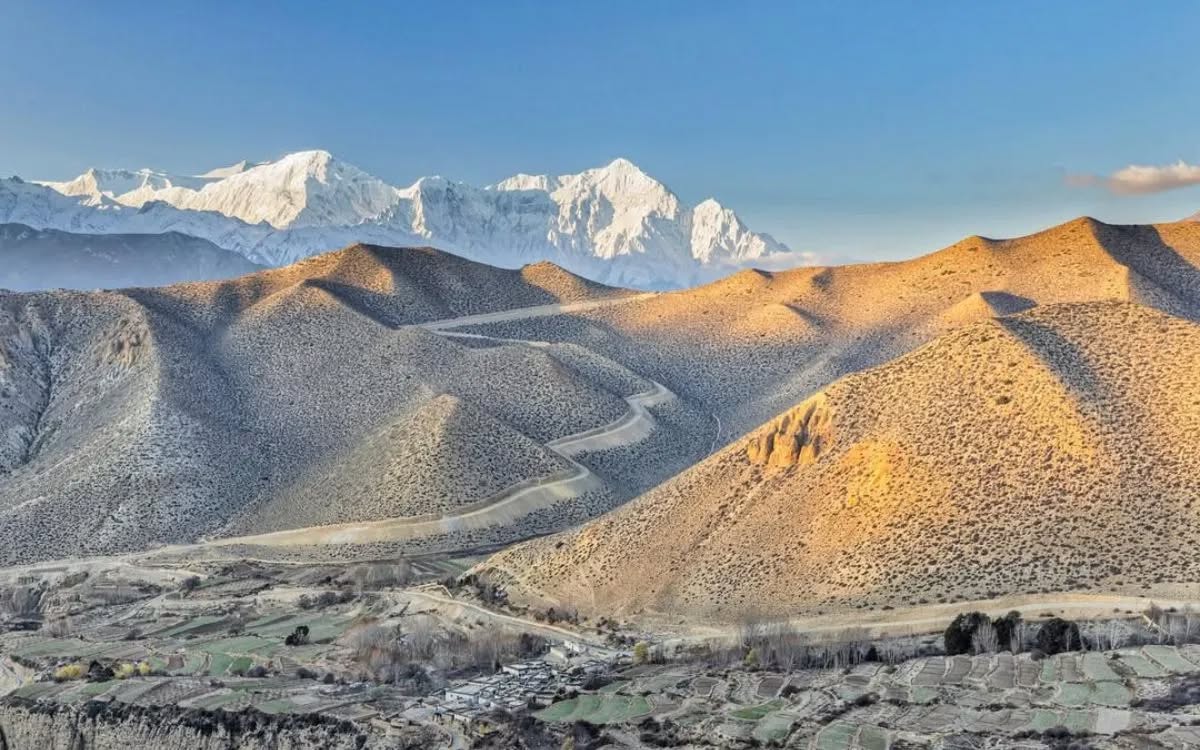
Upper Mustang, often called the Forbidden Kingdom of Mustang, is a land where ancient Tibetan culture and traditions remain vibrant. Travelers on a jeep tour to Lo Manthang from Kathmandu can explore centuries-old monasteries, chortens, and villages that reflect the region’s unique spiritual and cultural identity.
The journey along the Kali Gandaki Valley road offers breathtaking landscapes and dramatic cliffs, making the ride as memorable as the destinations. A Muktinath jeep tour via Upper Mustang provides access to one of Nepal’s most sacred pilgrimage sites, while allowing you to experience local customs and Tibetan-influenced festivals firsthand.
Planning your trip with regard to the Upper Mustang jeep tour best time ensures pleasant weather and safer road conditions for jeeps, while the Upper Mustang jeep tour cost remains reasonable considering the remote access and cultural richness of the region.
Upper Mustang Jeep Tour Difficult
The Upper Mustang Jeep Tour is moderately challenging but far less physically demanding than trekking. Traveling in sturdy 4×4 vehicles allows families, seniors, and travelers with limited mobility to experience the region comfortably, though long drives of 5–7 hours on narrow, rocky, and bumpy roads—especially between Kagbeni and Ghami can cause mild fatigue.
Altitude remains the main challenge, with overnight stays between 3,500 and 3,850 meters, so Acute Mountain Sickness (AMS) is possible; our 2026 itineraries use a slow-drive approach with stops at Kagbeni and Syangboche for acclimatization before reaching Lo Manthang.
Road conditions have improved, with 75–80% of the route from Pokhara to Kagbeni now paved, while beyond the Mustang checkpoint, travelers encounter high-clearance off-road tracks, dry river crossings, dust, and rugged terrain.
Environmental factors, such as low humidity below 10%, fine dust, and extreme temperature swings from 15°C in the sun to -5°C or lower at night, require warm layers, sun protection, and hydration. Overall, the jeep tour is accessible, safe, and manageable for most travelers who are prepared for high-altitude conditions and remote Himalayan landscapes.
ATM and Currency Exchange Access in Upper Mustang
Cash only covers expenses within the restricted zone. Those moving through must bring enough Nepali currency to last the full journey. Smaller bills handle small costs more smoothly. The machine dispensing money in Jomsom stands as the final one before deeper entry.
Cities like Pokhara and Kathmandu hold many spots where funds can shift forms or withdraw. Where card payments fail, cash becomes necessary. Though lodging and food are generally included in tour costs, additional funds may be needed for beverages, light refreshments, temple access charges, or souvenirs.
Lo Manthang history culture significance
Once ruled itself as a Buddhist realm before Nepal came together during the 1700s. Preserved ways of old Tibet, shaped hardly by external forces up to recent decades.
Inside its temples remain wall paintings from the 1400s, crafted by artists trained in Newari methods. Lineage of royalty lives on through heirs of the final monarch, yet holds no authority now.
Within high walls, a city stands as a rare survivor among Himalayan settlements shaped by Tibetan traditions. Protection of its art and culture draws effort from UNESCO alongside groups focused on preservation.
Upper Mustang Jeep Tour Possible Without Guide
Upper Mustang does not allow solo journeys. A certified guide must accompany every visitor, with entry documents arranged via an authorized trekking company. Preservation of local traditions and control over tourist numbers drive these rules.
Those traveling alone might consider shared expeditions, cutting expenses without breaking regulations. Accessibility improves for non-trekkers through vehicle-based itineraries that follow established routes.
Upper Mustang vs Lower Mustang
Upper Mustang is the “Forbidden Kingdom,” a high-altitude desert region with rugged cliffs, remote villages, and ancient Tibetan Buddhist culture preserved for centuries. Entry requires a Restricted Area Permit (RAP), and travel is mostly off-road, with jeep tours or trekking providing access to walled towns like Lo Manthang, cave monasteries, and cliff-side dwellings.
The landscape is arid, sparsely populated, and dominated by dramatic red cliffs, river gorges, and high plateaus, giving it a mystical, otherworldly feel.
In contrast, Lower Mustang, including villages like Kagbeni, Jomsom, and Marpha, lies at lower altitudes along the Kali Gandaki Valley, with greener valleys, terraced farmland, and more accessible roads. It has a milder climate, easier access via paved highways or flights, and a vibrant Thakali culture, making it suitable for first-time visitors or travelers seeking scenic drives without high-altitude challenges.
While Upper Mustang is about seclusion, spiritual sites, and the raw trans-Himalayan landscape, Lower Mustang offers convenience, cultural immersion, and serves as the gateway to the restricted northern region.
High-Altitude Safety & Medical Support
Your Upper Mustang Jeep Tour Kathmandu is managed under a structured high-altitude Safety Management System (SMS). Guides conduct twice-daily oxygen saturation (SpO₂) checks using professional pulse oximeters to monitor acclimatization and respond early to any altitude-related symptoms.
Each 4WD jeep carries a portable oxygen cylinder and a comprehensive high-altitude medical kit, and guides are trained in altitude illness recognition and emergency response. In 2026, improved connectivity—including Starlink Wi-Fi in several teahouses in Lo Manthang—enables faster communication and coordination in emergencies.
This system ensures a safer, well-paced, and professionally managed experience throughout the tour.
The 2026 “Mustang Road” Reality
Road conditions in Upper Mustang have improved in recent years, but they remain highly variable by section. As of early 2026, the main road between Jomsom and Kagbeni is largely blacktopped, which has significantly reduced dust and improved driving comfort compared to previous seasons. Beyond Kagbeni, however, conditions change quickly. The stretch from Chele toward Syangboche and onward to Lo Manthang remains predominantly rugged, unpaved, high-altitude terrain, requiring high-clearance 4WD vehicles and experienced drivers.
Several new bridge completions along the Kali Gandaki River corridor have also reduced the need for extended river-bed driving that was common in earlier years, improving safety during peak travel seasons. Despite these upgrades, Upper Mustang is still a remote Himalayan region, and road conditions can vary with weather, river levels, and seasonal maintenance—making local knowledge and proper vehicles essential.
Frequently Asked Questions (FAQ) – Upper Mustang Jeep Tour
Your Questions, Answered
How do your jeep routes avoid landslide zones?
Our Upper Mustang jeep tour routes are carefully planned to avoid known landslide-prone sections along the Kali Gandaki Valley and Upper Mustang plateaus.
Vehicles follow seasonally updated tracks based on real-time road assessments. Our experienced drivers use high-clearance 4WD jeeps to safely navigate river crossings, rugged passes, and unstable terrains while minimizing risk.
What makes your itinerary different from other Upper Mustang tours?
Unlike standard jeep tours, our 12-day itinerary offers:
1. Off-the-beaten-path exploration of hidden valleys like Yara and Luri Gompa.
2. Cultural immersion in Lo Manthang, Tsarang, and traditional villages.
3. Visits to ancient monasteries, sky caves, and the Muktinath pilgrimage site.
4. Thoughtful altitude pacing, allowing safe acclimatization for all travelers.
5. A balance of adventure, comfort, and photography-friendly stops for iconic Himalayan landscapes.
Do I need a guide for an Upper Mustang jeep tour?
Yes. A licensed guide is required for Restricted Area entry. Guides manage:
- Permit compliance (RAP) and document checks
- Cultural and historical explanations at monasteries, caves, and villages
- Navigation through remote roads and river crossings
- Altitude pacing and safety support
- Having a guide ensures a smooth, safe, and culturally immersive journey.
Can families and seniors safely join this tour?
Absolutely. The jeep tour is designed for all fitness levels, including families with children and senior travelers. Using comfortable 4WD vehicles, the tour avoids long treks while still offering cultural and scenic experiences. Stops are frequent, and altitude acclimatization is built into the itinerary.
Is Muktinath accessible in winter by jeep?
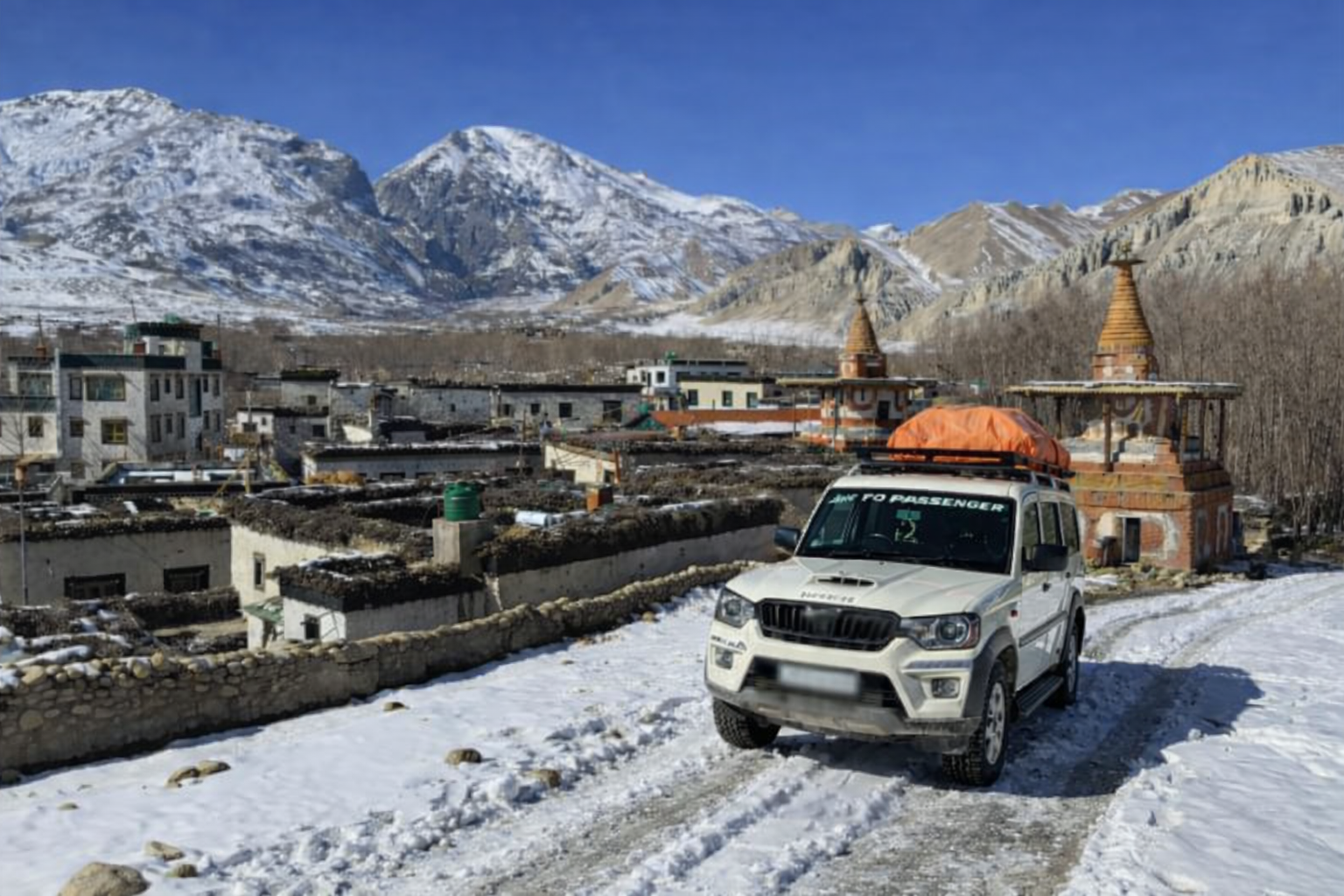
Yes, but winter access depends on road and weather conditions. Snowfall can temporarily block sections of the Kali Gandaki Valley. Our 4WD vehicles, driven by experienced local drivers, can usually navigate to Muktinath safely, but winter travelers should check conditions before departure.
What is the total cost including the Restricted Area Permit (RAP)?
As of 2026, the 10-day flat RAP fee for Upper Mustang is no longer mandatory. Travelers now pay only for the actual number of days spent in the restricted area, making the permit cost proportional to your itinerary. The exact RAP fee depends on your stay: typically around $50 per day per person.
Is a jeep tour to Upper Mustang worth it?
Absolutely. A 4WD jeep tour offers a comfortable, safe, and efficient way to explore the Forbidden Kingdom. You’ll access remote villages, monasteries, sky caves, and dramatic desert landscapes without the physical strain of trekking, maximizing your cultural and photographic opportunities.
How much does an Upper Mustang jeep tour cost?
Tour costs vary depending on vehicle type, accommodation, and services included. As of 2026, the Restricted Area Permit (RAP) fee is calculated per day spent inside the restricted zone, typically around $50 per person per day. A 12-day jeep tour package usually includes accommodation, jeep rental, guide and driver services, meals, and optional flights.
What is the best time for a Mustang jeep tour?
The ideal months are March–May and September–November. These periods offer clear skies, stable road conditions along the Kali Gandaki Valley road, and moderate temperatures for high-altitude travel. Winter is possible but may involve snow and limited road access.
How many days are needed for an Upper Mustang jeep tour?
Most travelers complete the route in 12 days, covering Kathmandu to Lo Manthang, Luri Gompa, and Muktinath.
Can I charge my Electric Vehicle in Lo Manthang?
No, the charging infrastructure is currently limited to Jomsom.
Is there an ATM in Upper Mustang?
There is one in Jomsom, but none in Lo Manthang. Carry cash!
Do I need a Chinese Visa for the Korala Border?
No, you only visit the border gate; you do not enter China
How much does an Upper Mustang jeep tour cost?
The cost of a 12-day Upper Mustang Jeep Tour typically starts at $2,500–$3,500 per person, depending on group size, vehicle type, and included services. This includes accommodation, meals as specified, experienced drivers and guides, and all logistics. Restricted Area Permit (RAP) fees of $600 per person for a 12-day itinerary are extra. Prices may vary slightly between agencies, so always confirm before booking.
Is Upper Mustang worth visiting?
Absolutely. Upper Mustang offers a unique blend of Tibetan-influenced culture, ancient monasteries, desert landscapes, and cliffside sky caves found nowhere else in Nepal. Its walled capital, Lo Manthang, and high desert villages like Chhoser and Tsarang provide immersive cultural experiences, making it a once-in-a-lifetime destination for history buffs, photographers, and adventure travelers.
What is the altitude in Lo Manthang?
Lo Manthang is situated at approximately 3,840 meters (12,598 feet) above sea level. Visitors should allow time for acclimatization and follow safety protocols, including proper hydration, light activity, and optional oxygen support during high-altitude excursions.
Can you do Upper Mustang without a guide?
No. The Upper Mustang region is a Restricted Area, and all foreign visitors must travel with a government-licensed guide arranged through a registered Nepalese tour agency. Solo travelers can be paired with other groups via their agency. Guides handle permits, navigation, and safety, ensuring a smooth, legal, and culturally respectful experience.
How long does it take to drive from Kathmandu to Lo Manthang?
By jeep, the journey from Kathmandu to Lo Manthang typically takes 5–6 days, depending on road conditions, acclimatization stops, and sightseeing along the Kali Gandaki Valley.
A standard 12-day Upper Mustang Jeep Tour allows for comfortable travel, cultural exploration, and acclimatization, including stops in Pokhara, Kagbeni, Tsarang, and Lo Manthang.
What is the Tiji Festival date in 2026?
The Tiji Festival in Lo Manthang is scheduled for May 13–15, 2026. This annual Tibetan Buddhist festival celebrates the victory of good over evil with masked dances, rituals, and cultural performances, making it a highlight for visitors seeking an authentic cultural experience.
View OurSimilar Packages
Discover our top tours, loved by thousands of travelers annually. Choose the adventure that inspires you and embark on a journey tailored to your desires.
View All Packages

Upper Mustang Mountain Biking Tour
 Nepal Tour Packages
  13.0 Days
Upper Mustang Trek
13 Days

Upper Dolpo to Upper Mustang Trek
Nepal Tour Packages
33.0 Days
Save -18%
Annapurna Base Camp Short Trek – 5 Days from Pokhara
Nepal Tour Packages
5.0 Days

Damodar Kunda Trek | Lo Manthang Damodar Kunda Muktinath Trekking
Nepal Tour Packages
21.0 Days