


Prayer Flags
- Bold Himalaya
- 10 July, 2026
- 11 mins read
- 388 Views
- 0 Comments
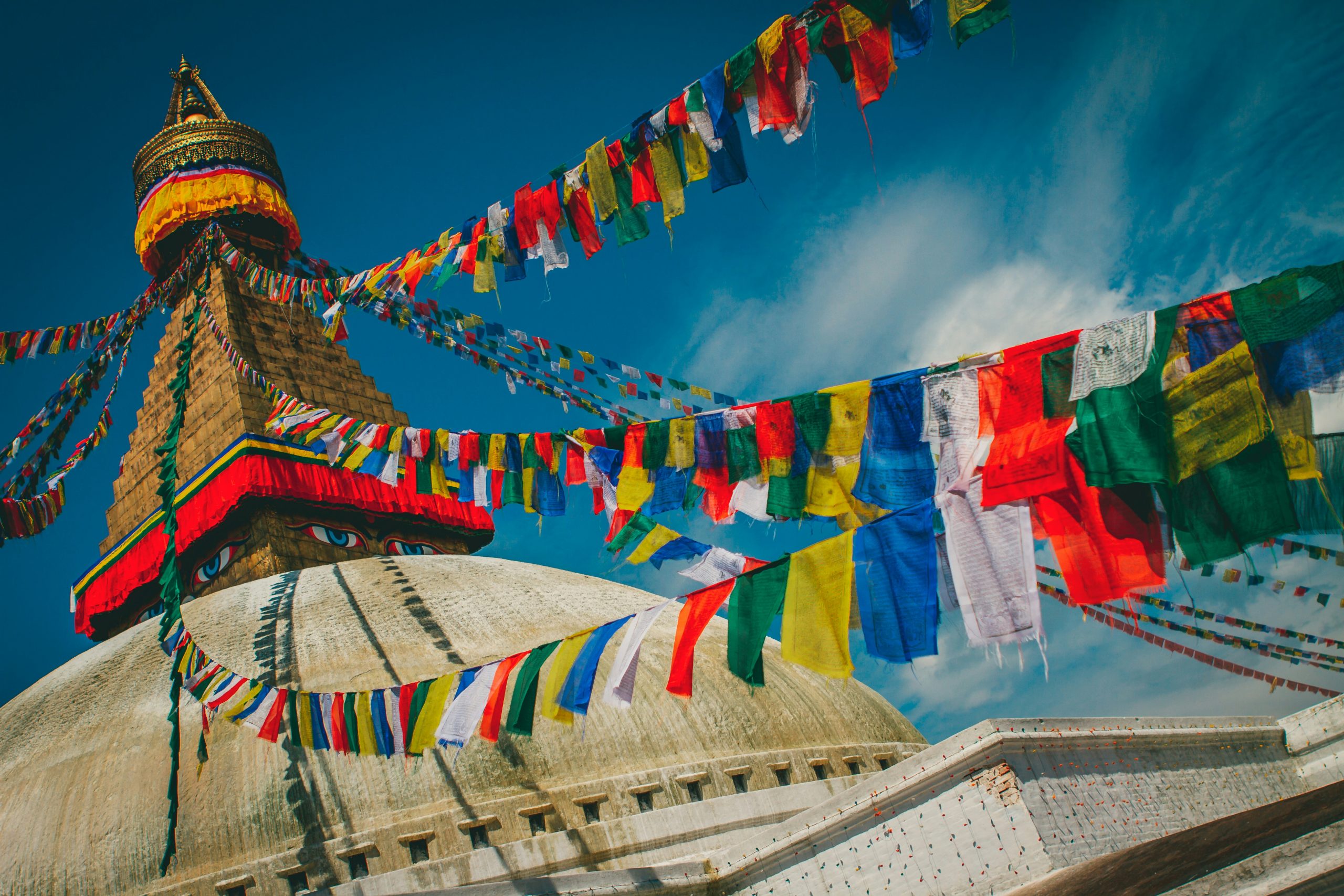
Across the high mountain trails, prayer flags hang in the wind where monks once walked. They are seen on temples, rooftops, and along stone paths, placed with quiet purpose rather than for decoration. Over time, the sun fades their colors, and the weather wears them down, but their meaning remains strong.
Each flag carries prayers and faith, slowly released into the air. When the wind blows, it spreads those prayers far and wide, like a silent messenger. Even as the flags age, what they represent does not disappear; it only continues to reach further.
Commonly seen across Nepal, Tibet, and Bhutan, they are not just decorative items but symbols of faith and positive energy. In the Himalayan regions, prayer flags are closely connected with daily life and spirituality. They reflect the strong relationship between nature, spirituality, and local culture in the Himalayas.
Quick Reference
| Detail | Information |
|---|---|
| Object Name | Prayer Flags / Lung Ta / Darchor |
| Religion | Tibetan Buddhism / Bon Tradition |
| Main Regions | Tibet / Nepal / Bhutan / Northern India / Sikkim |
| Purpose | Blessings / Mantras / Goodwill / Wind |
| Main Colors | Blue / White / Red / Green / Yellow |
| Symbolic Meaning | Five Elements / Compassion / Wisdom / Protection |
| Common Locations | Mountain Passes / Monasteries / Bridges / Homes / Stupas |
What are Prayer Flags?
Prayer Flags are pieces of colored cloth with printed prayers, symbols, and mantras according to Buddhism. These flags are not used for land marking or identifying property. Rather, they are hung up in an open place to spread positive energy.
As soon as there is wind, people think that the prayers contained in the flags rise into the air and bless everyone around with loving wishes. The air is believed to be filled with peace and gently embraces everything alive. At the same time, the one who has put up the flags receives silent merit from God.
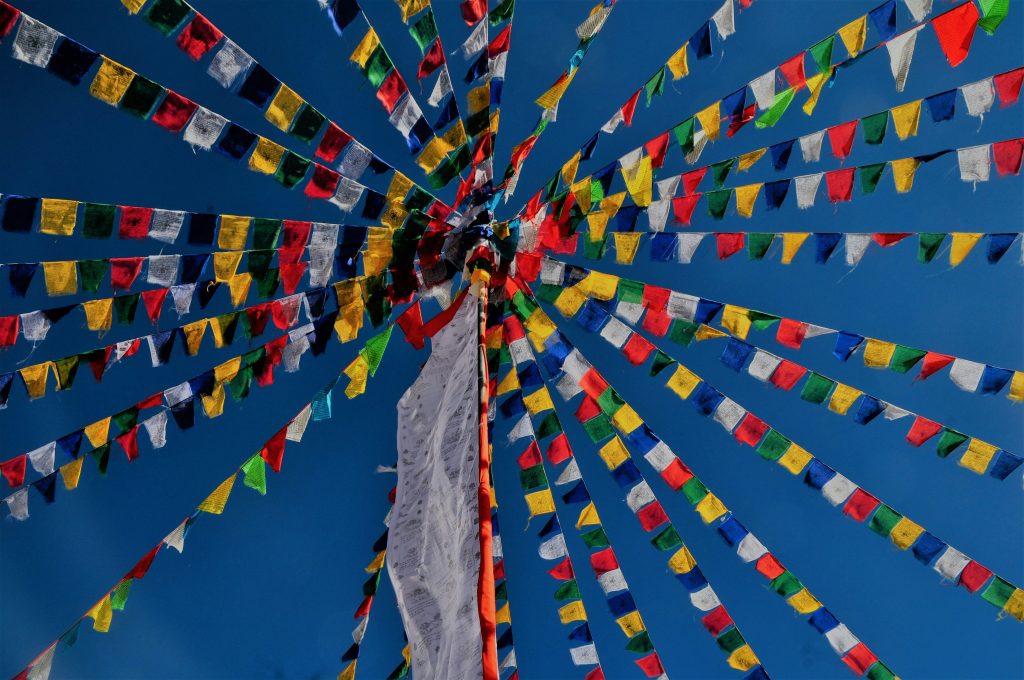
Even though the flags stay still when there is no wind, their purpose continues as long as they are there. It is believed that the breeze carries kindness wherever it goes, across valleys, rivers, and mountains, without choosing anyone in particular.
What truly matters is the intention behind them. The prayers are not just for one person but for all beings. Even though we cannot see it, their effect is wide and meaningful, carried softly by the wind.
Origin and History of Prayer Flags
Long before Buddhism ever made its way to Tibet, prayer flags had already begun. They came from the ancient Bon religion, where people tied pieces of colored cloth to trees and sticks as offerings to nature spirits. With time, as Indian Buddhism moved northward during the 600s CE, these old traditions did not disappear. Instead, they slowly changed. Over time, what started as simple rituals became part of Buddhist practice, shaped by new beliefs and many years of change.
Well into the 11th century, prayer flags began appearing in consistent shapes and arrangements. Because of the broader religious activity across Tibet, the five colors gained fixed meaning. Traders and travelers carried this tradition along mountain routes, helping it spread beyond central areas.
Instead of plain cloth, prayer flags became more detailed. Monks began using hand-carved wooden blocks to print prayers, often dedicated to Avalokitesvara or Padmasambhava. These printed flags slowly increased in number, especially at high mountain monasteries and sacred places.
From Tibet, Buddhism spread to nearby regions like Nepal, Bhutan, and Sikkim. Prayer flags traveled along with it, becoming part of daily life. Although local styles influenced them, they still kept their strong connection to Tibetan tradition.
Meaning of Prayer Flags Colors
Each color of the prayer flag has a meaning. Blue stands for the sky. White represents air. Red is linked to fire. Green stands for water. Yellow represents the earth.
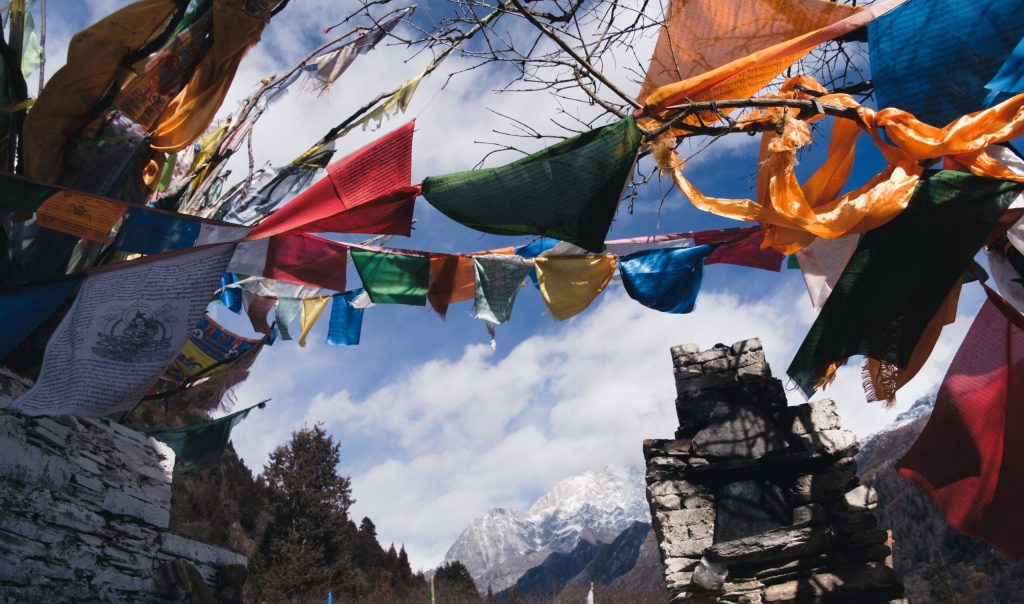
Blue: Blue symbolizes openness, like the sky. It reflects a sense of endless space and awareness. It is also connected to wisdom. In Buddhism, blue is linked to Akshobhya, a Buddha known for staying calm and steady. It is also believed to carry a quiet sense of healing.
White: White symbolizes wind and air. It stands for clarity, simplicity, and kindness. It is linked to Avalokitesvara and represents the washing away of harm and becoming whole. Its presence suggests openness and a space untouched by weight.
Red: Red represents fire. It shows energy, strength, and presence. Connected to Amitabha Buddha, it reflects both passion and calm understanding. It combines warmth with inner wisdom.
Green: Green represents water. It is linked to action, movement, and strength. Associated with Amoghasiddhi, it stands for taking positive actions and removing obstacles to help others.
Yellow: Yellow represents earth. It symbolizes stability, balance, and calmness. Connected to Ratnasambhava, it reflects wisdom and abundance. It suggests that true understanding comes quietly through stillness.
Wholeness comes from the five colors working together. The order matters: blue, white, red, green, then yellow. When they are placed in this sequence, they create balance. Balance among elements depends on precise alignment, as deviation may unsettle what the banners uphold.
Prayer Flag Text Meaning
Prayer flags often share common designs. At the center of many flags is the Lung Ta, or wind horse. It is shown carrying a wish-fulfilling jewel. Around it are four animals: the dragon, garuda (a mythical bird), tiger, and snow lion. These symbols represent strength and energy. As the wind blows, it is believed these prayers spread into the world.
Around the main image, you will see mantras and dharanis. These are sacred words and phrases in Buddhism. One of the most common is Om Mani Padme Hum, connected to Avalokitesvara, the figure of compassion. Other mantras honor different Buddhas and protectors.
Prayer flags often include wishes for long life, good health, and good fortune. Some also contain spiritual guidance or teachings. Most texts are written in Tibetan, but in Nepal, some flags may also use Sanskrit.
Types of Prayer Flags
Lung Ta: Horizontal Prayer Flags
Wind moves through the fabric and carries the written words into the sky. Lung Ta means ‘wind horse’ and refers to long strips of cloth hung in a line. These cloths are usually tied between trees, poles, rooftops, or ridges, and most people recognize them easily when they see them.
They are placed where the wind blows steadily so the fabric can move freely. The flags are stretched tight to flutter fully in the air. They are often hung in high places, as higher locations allow the wind to carry the messages farther.
In the mountains, these horizontal prayer flag waves along trails and represent wishes for health and prosperity. In narrow paths, they are sometimes stretched across streams, where both wind and flowing water help carry the prayers and intentions outward.
Darchor: Vertical Prayer Flags
A slender pole stands upright in the ground and carries Darchor banners attached vertically. The term is linked to the idea of increasing life force and gathering merit. These flags are often seen in monasteries, open spaces near temples, and in household yards. A single pole with flowing cloth is a common sight in sacred places across Tibet and Bhutan.
Each Darchor pole stands on its own and has a specific purpose. They are often connected to personal prayers or important moments in life. Sometimes they are placed to honor someone who has passed away, to mark a special place, or to remember a milestone. Unlike horizontal prayer flags that are tied in lines, Darchor flags stand alone. Their separate positions reflect individual meaning and intention.
Manners and Cultural Meanings of Prayer Flags
The prayer flag should always be treated with respect in Tibetan Buddhism. They should not be placed on the ground or used for everyday purposes. Instead, they are hung in high places where the wind can move through them freely. Traditional prayer flags are usually strung from left to right between poles or trees, following Buddhist customs.
As the sun and wind fade the colors, it is seen as a natural part of their purpose. When prayer flags become too worn, they are traditionally burned in a respectful ceremony instead of being thrown away with regular trash. The smoke is believed to carry the remaining prayers and blessings into the sky.
Prayer flags are often raised during important occasions such as Losar (Tibetan New Year), on auspicious lunar dates, or to mark special life events like births, weddings, or new beginnings.
Prayer Flags across the Himalayas
Nepal
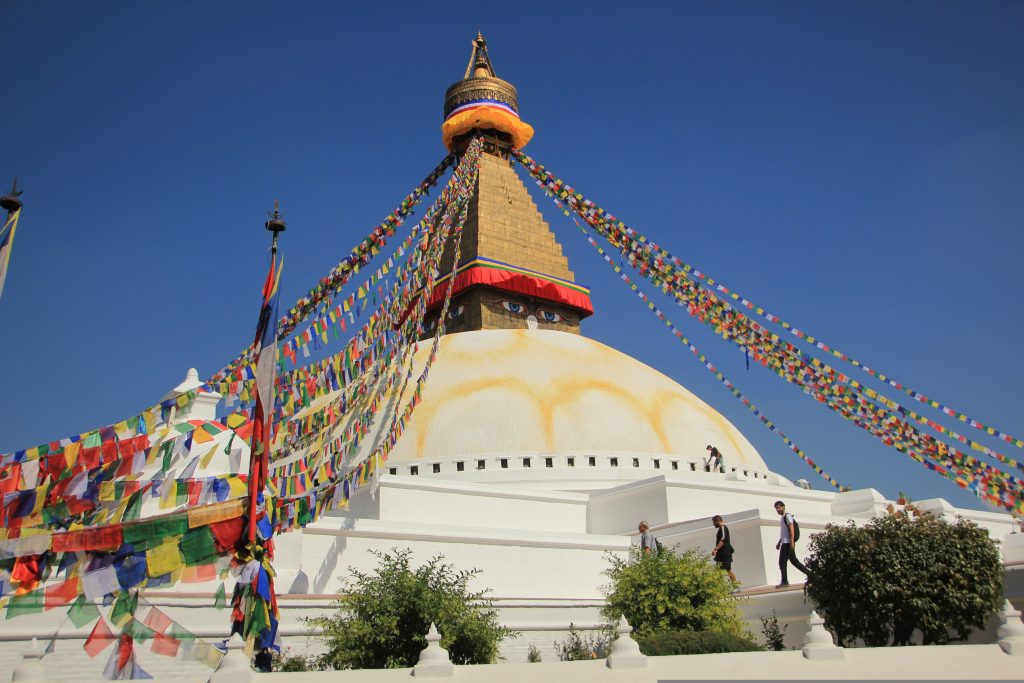
Prayer flags are found all across Nepal and reflect centuries of Buddhist and Hindu traditions. They fly above famous stupas like Boudhanath and Swayambhunath in the Kathmandu Valley. Also, we can see along the popular trekking routes, such as Everest and Annapurna, where they are tied across the mountain passes where the wind blows freely. Their colorful fabric adds beauty to the landscape, especially against the backdrop of snow-covered mountains and clear blue skies.
Tibet
In Tibet, prayer flags are commonly seen fluttering on mountain passes, around monasteries, beside stupas, on rooftops, and at other sacred sites. Their placement in high, open places allows the wind to carry the prayers across valleys and mountains, symbolizing harmony between nature and spirituality.
Across high mountain passes like Khamba La and Karo La, prayer flags hang in the wind after years of exposure. Tibet, where this tradition began, is filled with these colorful flags. During major festivals and religious gatherings, places like Lhasa, Shigatse, and Samye Monastery display tall Darchor prayer flag poles, with long cloth banners fluttering above temples and courtyards.
Bhutan
In Bhutan, where Vajrayana Buddhism is an important part of daily life, prayer flags can be seen almost everywhere. They are tied around sacred trees, stretched across hillsides, and placed near homes. White prayer flags are especially common, as families raise them after the death of a loved one to honor the deceased and offer prayers for their peaceful journey.
Himalayan Buddhist Communities
In Himalayan regions like Ladakh, Sikkim, and Spiti Valley, prayer flags remain an important tradition. During special ceremonies, villagers gather while monks or elders offer prayers and blessings. The prayer flags are then blessed and carefully raised on wooden poles or strung between rocks, where they flutter in the mountain wind carrying prayers and good wishes.
Common Misunderstanding of Prayer Flags
It might be assumed that prayer flags serve only as decoration. While they add beauty to the landscape, they hold much deeper spiritual meaning. In Tibetan Buddhism, prayer flags are sacred objects that carry prayers, blessings, and positive intentions. Seeing them only as decoration overlooks their true purpose.
Another common misunderstanding is about faded prayer flags. As the colors fade from sunlight and wind, some people believe they should be replaced immediately. However, in traditional belief, the fading colors symbolize that the prayers and blessings are gradually being carried into the world. It is considered a natural and meaningful process, not a sign of neglect.
People of any faith can hang prayer flags, but they should do so with understanding and respect. Many Tibetan Buddhist teachers welcome anyone who sincerely appreciates their spiritual significance. Prayer flags should not be used only as decorative items; learning their meaning and honoring the tradition is an important part of displaying them respectfully.
FAQs of Prayer Flags
1. Which direction should prayer flags face?
Prayer flags are traditionally hung in high, open places where the wind can move through them freely. Horizontal prayer flags are usually strung from a higher point to a lower point.
2. What is written on prayer flags?
Prayer flags usually contain mantras, sacred texts, and symbols such as the Wind Horse (Lungta), which represents strength, good fortune, and the spreading of prayers.
3. When should prayer flags be replaced?
There is no fixed time for replacing prayer flags. Many people hang new flags on auspicious days according to the Tibetan lunar calendar. Old flags are often left in place until they naturally wear out, while new ones are added alongside them as a symbol of continuing blessings.
4. Is there a correct way to hang prayer flags?
Yes, prayer flags should be hung in a specific order from left to right: Blue, White, Red, Green, Yellow. They should not touch the ground, as that is considered disrespectful.
5. Are prayer flags only used in Tibetan Buddhism?
Prayer flags are most closely associated with Tibetan Buddhism, but their origins can be traced to the ancient Bon tradition of Tibet. Similar colorful cloths may be found in other Buddhist cultures, although their designs, purpose, and meanings are often different.
6. What happens when prayer flags fade or tear?
Fading is considered a natural and positive process, symbolizing that the prayers have been carried into the universe. Old flags should be respectfully replaced, often burned rather than thrown away.
7. Why should prayer flags not be placed on the ground?
Placing them on the ground is seen as disrespectful because they contain sacred texts and symbols.
8. Can non-Buddhists display prayer flags?
Yes, non-Buddhists can display prayer flags if they do so with understanding and respect.
Comments (0)
Write a commentRead the latest Blogs & Insights
Explore our collection of articles and insights to gain in-depth travel knowledge, expert advice, and stay updated on the latest trends and tips.
View All Articles
Vishwakarma Puja
18 Sep. 2026
Prayer Wheels
18 Sep. 2026
Broad Peak Avalanche: Nirmal Purja & the Team
10 Aug. 2026


No comments yet.