


Mera Peak vs Island Peak Climbing
- Bold Himalaya
- 11 June, 2026
- 12 mins read
- 322 Views
- 0 Comments
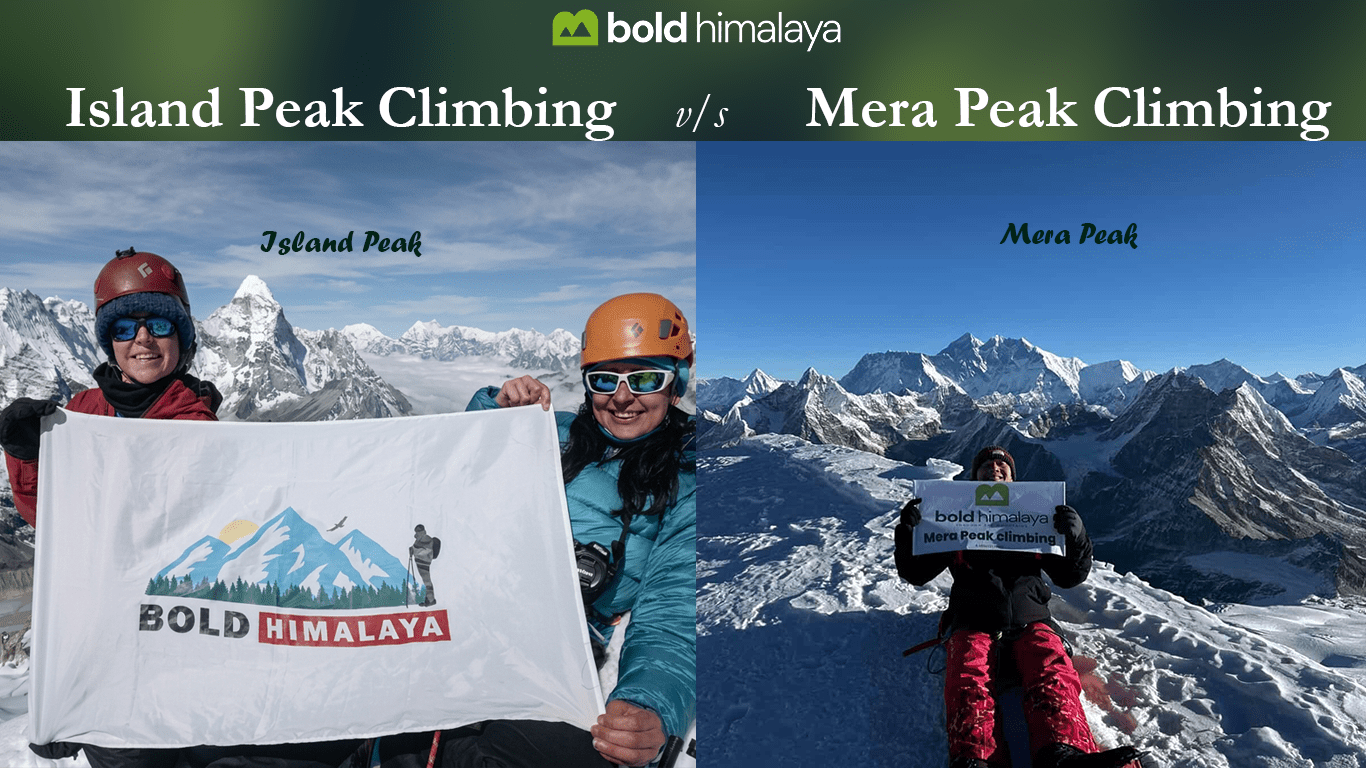
High in Nepal’s Khumbu and Hinku valleys lie two popular climbing peaks – Mera Peak and Island Peak. Both are well-known mountains that attract trekkers looking for a Himalayan adventure. Both peaks present completely different climbing experiences despite their similar altitude range.
Mera Peak is known for its vast Himalayan panoramas and relatively non-technical ascent, while Island Peak delivers a more hands-on mountaineering challenge with steeper sections and rope-assisted climbing. This is exactly why these two peaks are often compared by trekkers planning their first 6000m expedition in Nepal.
Choosing between them can feel confusing: should you go for the higher but less technical Mera Peak, or the slightly lower but more technical Island Peak? This guide breaks down everything you need to know, including difficulty level, cost, trekking routes, climbing experience, and overall adventure style, helping you decide which summit best matches your goals and experience.
Mera Peak vs Island Peak at a glance
| Category | Mera Peak | Island Peak |
|---|---|---|
| Altitude | 6,476 m (21,247 ft) | 6,189 m (20,305 ft) |
| Difficulty | Moderate | Moderate to Challenging |
| Technical Level | Low | Moderate to High |
| Duration | 18–22 days | 17–20 days |
| Cost Range | $1,800–$3,500 | $2,000–$4,000 |
| Success Rate | 80–85% | 65–75% |
| Route Type | Remote Hinku Valley route | Everest Base Camp and Khumbu route |
| Scenery | Wide Himalayan panoramas | Dramatic glacier and alpine landscapes |
| Crowd Level | Fewer trekkers | More popular and busier |
| Accommodation | Basic teahouses and expedition-style camps | Comfortable teahouses along the EBC trail |
| Acclimatization | Essential | Essential |
| Summit Views | Everest, Makalu, Cho Oyu, Lhotse, Kanchenjunga | Ama Dablam, Lhotse, Nuptse, and Khumbu peaks |
Mera Peak Overview
Mera Peak reaches 6,476 meters (21,247 feet), recognized as Nepal’s highest designated trekking summit. It is located in the Hinku Valley, which lies southeast of the Everest region, away from the busy Everest Base Camp trail. Because of this remote location, the area is quieter and sees fewer trekkers.
The climb starts from lower valleys and gradually follows a long glacier route. There are no very steep rock climbs on most of the way, but on summit day, climbers walk on snow and ice slopes using crampons and an ice axe. Mera Peak is not highly technical, so it doesn’t require advanced climbing skills. Instead, the main challenge is the high altitude. Good fitness, strong stamina, and proper acclimatization are the most important factors for reaching the summit safely.
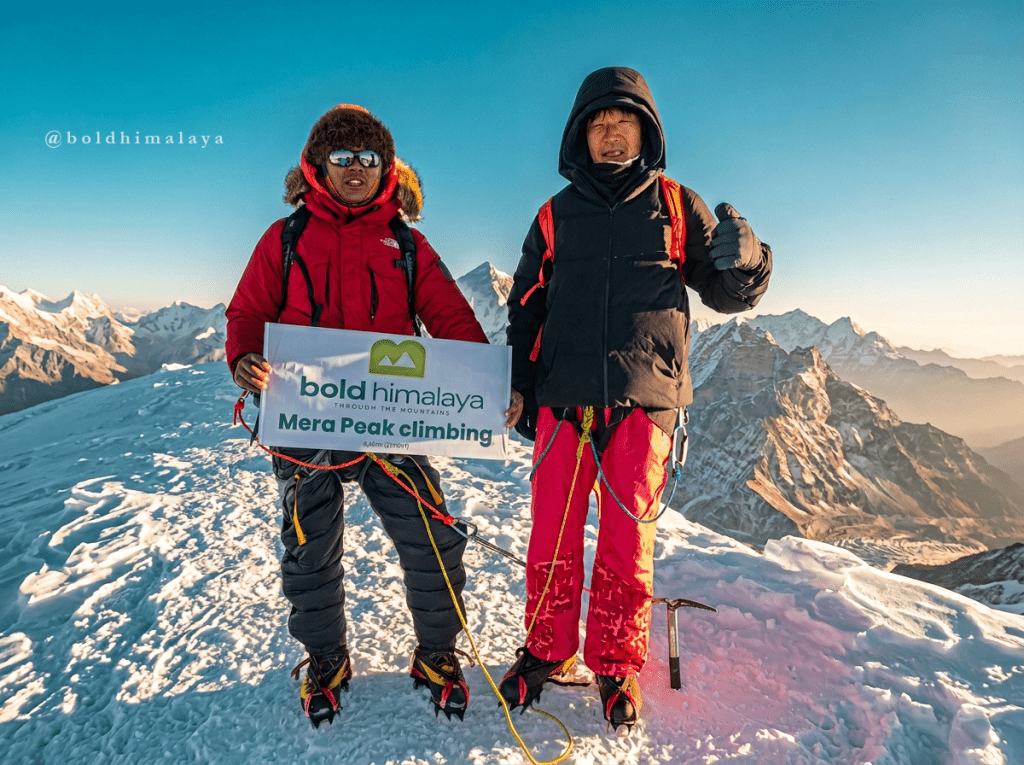
On clear days, the summit of Mera Peak offers views of five of the world’s highest mountains – Everest, Lhotse, Makalu, Cho Oyu, and Kangchenjunga. The long effort of the climb feels rewarding when you reach this rare viewpoint, surrounded by complete stillness at high altitude.
Mera Peak is often considered a good first climb above 6,000 meters in the Himalayas. The route is straightforward compared to more technical peaks, with only limited use of climbing equipment like crampons and an ice axe in certain sections.
Want to know more details about the Mera Peak Climbing? You can have a look at this given blog.
Things to Know About Mera Peak Climbing
Mera Peak Climbing
Enjoy great savings and benefits when booking with us, making your travel experience more affordable and accessible.
Book Mera Peak ClimbingIsland Peak Overview
Among Himalayan summits, Island Peak stands at 6,189 meters (20,305 feet), officially known as Imja Tse, and is one of Nepal’s most popular climbing peaks. It is located in the Khumbu region near Chhukung village, along the route to Everest Base Camp. The name ‘Island Peak’ was given by British explorer Eric Shipton, who thought the mountain looked like an island rising from a sea of ice when viewed from a distance.
Although Island Peak is lower than Mera Peak, it is considered more technically challenging. The climb involves crossing glaciers, walking on snow and ice, and ascending steep slopes that can reach 50-55 degrees. Climbers use equipment such as crampons, an ice axe, a climbing harness, and fixed ropes to safely navigate the higher sections of the mountain. Near the summit, a narrow ridge requires careful movement and good concentration.

The journey to Island Peak follows the classic Everest region trekking route through villages such as Namche Bazaar, Tengboche, and Dingboche. This allows climbers to acclimatize gradually while enjoying the famous landscapes and culture of the Everest region.
Island Peak is often chosen by trekkers who want to gain real mountaineering experience. While physical fitness is important, success on Island Peak also requires basic climbing skills, confidence with equipment, and the ability to move safely on steep snow and ice. For many climbers, it serves as an excellent introduction to technical Himalayan climbing.
Difficulty Level: Which one is harder?
The answer depends on the type of challenge you are considering. While both peaks rise above 6,000 meters and require good physical fitness, they test climbers in different ways. Mera Peak is higher and presents a greater altitude challenge, whereas Island Peak is more technical and demands stronger mountaineering skills.
At 6,476 meters, Mera Peak is significantly higher than Island Peak, which stands at 6,189 meters. Although the difference is only 287 meters, it becomes very noticeable at high altitude. The air is thinner on Mera Peak, making breathing more difficult and increasing the risk of altitude-related problems. For many climbers, coping with the elevation is the toughest part of the ascent.
Island Peak, on the other hand, is lower but requires more technical climbing. Basic knowledge of climbing equipment such as crampons, harnesses, jumars, and ice axes is important for a safe ascent.
In simple terms, if you are a strong trekker looking for your first Himalayan summit, Mera Peak is often considered the easier choice. If you want a more hands-on mountaineering experience and are comfortable using climbing equipment, Island Peak may be the better option.
Technical Skill Required
Mera Peak
Climbing Mera Peak begins with understanding basic glacier travel, as walking on snow and ice requires steady footing. Climbers use crampons to improve grip on icy terrain, which is one of the most important pieces of equipment during the ascent. In the event of a slip or fall, knowing how to use an ice axe for self-arrest can be extremely helpful.
Fixed ropes are installed on certain sections of the route, but these areas are generally straightforward. Technical background? Not required by rule. While previous technical climbing experience is not mandatory, taking a basic mountaineering course or participating in a short climbing training session before the expedition is highly recommended.
Learning these fundamental skills beforehand can make the climb safer and more enjoyable. More importantly, it helps build confidence, which becomes increasingly valuable as you gain altitude and approach the summit.
Island Peak
Island Peak needs more technical climbing skills than Mera Peak. Climbers must use a harness, ascend fixed ropes with a jumar, and move carefully across steep snow and ice slopes using crampons. The final summit ridge is narrow and exposed, demanding both concentration and confidence. Those who have little experience with glacier travel or rope systems may find the climb more challenging.
Most expedition operators provide a basic training session at base camp before the summit attempt. This usually covers the use of climbing equipment, fixed-rope techniques, and essential safety procedures. However, completing an introductory mountaineering course before the expedition can greatly improve your chances of success and help you feel more comfortable on the mountain.
Previous experience becomes especially valuable when weather conditions change, the terrain becomes more demanding, or decisions need to be made at high altitude. While beginners can climb Island Peak with proper guidance, some familiarity with mountaineering techniques can make the ascent safer, smoother, and more enjoyable.
Best Time to Climb
The best seasons for both Mera Peak and Island Peak climbing are the same, as weather conditions in the Himalayas largely determine safety and visibility.
- Spring (March-May)
Spring is one of the most popular seasons for climbing in Nepal. The weather is generally stable, with warmer daytime temperatures and clear skies. Visibility is excellent, allowing climbers to enjoy stunning Himalayan views during the trek and summit. Snow conditions are also relatively stable, making the ascent safer.
- Autumn (September-November)
Autumn is considered the best overall season for mountain expeditions. After the monsoon, the air becomes clean and crystal clear, presenting the best mountain visibility of the year. Temperatures are moderate, and weather conditions are usually dry and stable, which is ideal for both trekking and climbing.
Weather Stability & Visibility
In both seasons, stable weather plays a crucial role in summit success. Clear skies improve navigation and safety, while good visibility enhances the overall climbing experience. Unpredictable weather, strong winds, or snowfall can delay summit attempts, so choosing the right window is essential.
Cost Comparison Between Mera Peak and Island Peak
Mera Peak Cost
- Climbing permission costs close to 250 dollars per individual during the fall months
- Costs for agency services, along with guiding support, range between $1,200 and $2,000, varying by the selected plan
- Tea houses or camping typically cost between $200 and $400 for meals plus lodging
- Gear rental and miscellaneous: $150–$300
- Total estimated range: $1,800–$3,500
Island Peak Cost
- A fee of about $250 applies for each individual seeking a climbing permit
- Costs for agency services, along with instructional support, range between $1,400 and $2,500
- Tea houses are common in Khumbu, so lodging and meals range from $250 to $500. Costs rise slightly due to the available facilities there
- Gear rental and miscellaneous: $150–$300
- Total estimated range: $2,000–$4,000
Climbing permits in Nepal are issued by the Nepal Mountaineering Association, with minor differences depending on the time of year. During autumn (September to November) and spring, which runs (March to May), the number of climbers and permit requests rises. Attempting two summits in a single journey usually incurs additional expenses of $800 to $ 1,500. The schedule stretches longer too, often lasting 10 to 14 additional days.
Scenic Views: Which peaks offer the Best Panorama?
Mera Peak Route
Through the remote Hinku Valley, the route to Mera Peak unfolds far from the busy trails of the Everest region. Fewer trekkers come this way, and the settlements are smaller and more traditional. As the trail climbs higher, forests of rhododendron slowly give way to open rocky terrain and icy landscapes. The feeling of isolation is real and constant, offering a quieter and more reflective trekking experience for those who want distance from the crowded Everest Base Camp route.
One of the biggest rewards of climbing Mera Peak is the breathtaking 360-degree Himalayan panorama from its summit. Widely regarded as one of the finest viewpoints in Nepal, the peak offers an uninterrupted view of some of the world’s highest mountains.
On clear days, climbers can see Mount Everest, Makalu, Cho Oyu, Lhotse, and Kanchenjunga stretching across the horizon. This wide, panoramic view is one of the most impressive sights in the entire Himalayas and is rarely matched by other trekking routes.
Island Peak Route
The Island Peak trail lies deep within the Everest region and follows a much more established trekking path. The journey passes through well-known stops like Namche Bazaar, continues beneath the towering presence of Ama Dablam, and reaches cultural landmarks such as Tengboche Monastery. Compared to Mera Peak, this route is more populated, especially during peak trekking seasons, but it offers a richer cultural atmosphere and more interaction along the way.
As the ascent continues, the landscape becomes increasingly dominated by ice and rock. The route crosses glaciers, climbs past cliff sections, and follows an exposed ridge toward the summit. From higher up, dramatic views of Lhotse’s south face, Nuptse, and surrounding Khumbu peaks feel much closer and more intense, creating a powerful and focused mountain experience compared to the wide panoramas of Mera Peak.
Each delivers its own version of Himalayan adventure, and the best choice depends on whether you prefer openness and isolation or intensity and close-up mountain drama.
Who Should Choose Mera Peak?
Choose Mera Peak if you:
- Are attempting your first Himalayan climbing expedition.
- Prefer a less technical route.
- Want to experience a summit above 6,000 meters without advanced climbing skills?
- Enjoy remote trails, fewer crowds, and wilderness trekking.
- Are confident in your fitness and ability to handle high altitude.
Who Should Choose Island Peak?
Choose Island Peak if you:
- Want a more technical climbing experience.
- Are comfortable using a harness, crampons, and fixed ropes.
- Wish to combine a climbing expedition with the Everest region trek.
- Enjoy close-up mountain scenery and glacier travel.
- Are preparing for higher or more challenging mountaineering objectives in the future.
FAQs of Mera Peak vs Island Peak Climbing
1. Which is easier, Mera Peak or Island Peak?
Mera Peak is generally easier because it is less technical. The main challenge is high altitude and long trekking days. Island Peak is more difficult due to steep slopes, glacier travel, and fixed rope climbing.
2. Do I need climbing experience for Mera Peak or Island Peak?
You don’t need prior climbing experience for Mera Peak. Basic trekking fitness is enough. For Island Peak, some basic mountaineering knowledge is highly recommended, especially using crampons, a harness, and ropes.
3. Which peak is better for beginners?
Mera Peak is better for beginners who want their first 6,000m summit. Island Peak is better for those who want to learn real mountaineering skills.
4. Which offers better views, Mera Peak or Island Peak?
Mera Peak offers a wider 360° panorama including Everest, Makalu, and Kanchenjunga. Island Peak offers closer and more dramatic views of Ama Dablam, Lhotse, and surrounding Khumbu peaks.
5. Can I combine Mera Peak or Island Peak with the Everest Base Camp trek?
Island Peak is commonly combined with the Everest Base Camp trek. Mera Peak is usually done separately because it is located in the remote Hinku Valley.
6. Which is more challenging overall?
It depends: Mera Peak is more challenging physically due to altitude and long trekking, while Island Peak is more challenging technically due to climbing difficulty.
7. When is the best time to climb Mera Peak and Island Peak?
The best seasons are spring (March-May) and autumn (September-November), when the weather is stable and visibility is clear.
8. Which peak should I choose for future climbs like Everest or Ama Dablam?
Island Peak is better preparation for technical climbs like Ama Dablam or even Everest because it involves rope work and glacier climbing skills.
Comments (0)
Write a commentRead the latest Blogs & Insights
Explore our collection of articles and insights to gain in-depth travel knowledge, expert advice, and stay updated on the latest trends and tips.
View All Articles
Vishwakarma Puja
18 Sep. 2026
Prayer Wheels
18 Sep. 2026
Broad Peak Avalanche: Nirmal Purja & the Team
10 Aug. 2026


No comments yet.