Forgot Password
Register and start exploring through personalized experiences.
Register Account
Register and start exploring through personalized experiences.
By Registering, I agree to the terms and conditions of Bold Himalaya
View Nepal Tour Packages in Detail

Annapurna Base Camp Trek

Country
Country Nepal
Best Season
Best Season Whole Year
Duration
Duration 9 Days
Meal
Meal Full Board
Max-Altitude
Max-Altitude 4130.0m
Transportation
Transportation Tourist Vehicles
Accommodation
Accommodation 3* Hotel in City, Tea House in Mountain
Difficulty
Difficulty medium

The Annapurna Base Camp Trek via Ghandruk is the best mountain adventure of Nepal that takes a trekker on a sightseeing tour to the base of the 10th highest peak of the world at 8,091 meters. This iconic trek combines a great look at mountains, a cultural excursion to Gurung village, landform variance from productive valleys to alpine meadows, and the icing on the cake of being placed in the center of a natural amphitheater with the humongous Himalayas at the back.

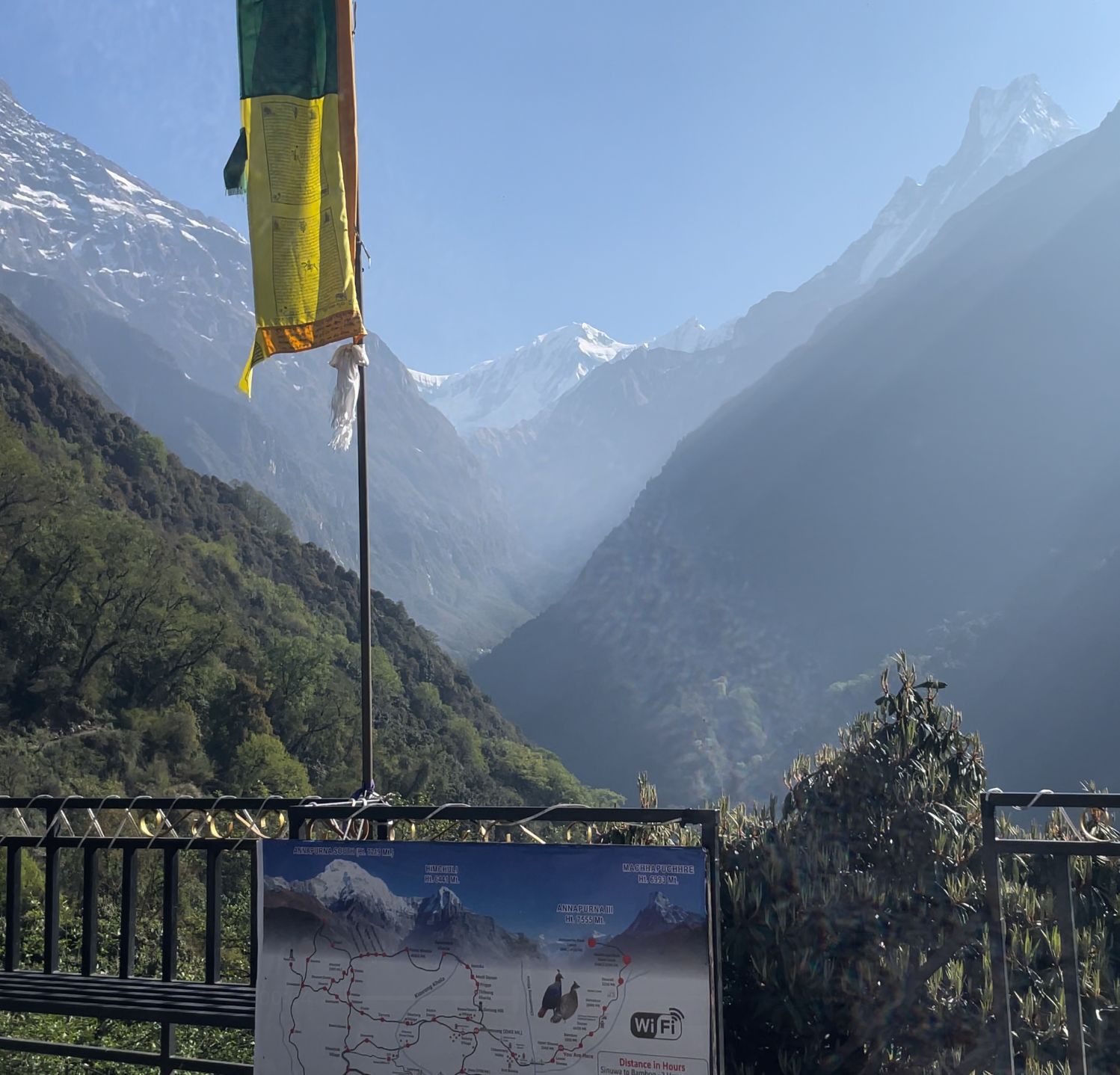
The trek through the famous Ghandruk route is a good blend of nature and cultural facts. Starting from the picturesque Gurung village of Ghandruk, well known as a stone house village, with polite culture, where the trekkers will be introduced to simple mountain life in the unattainable landscape of Annapurna South, Machhapuchhre (Fishtail), and Hiunchuli peaks.

The most unique aspect of this trek is that it is easily accessible, and there is a good landscape. Unlike the physically more challenging high-altitude treks elsewhere, with the added application of mountaineering techniques at the end, the Annapurna Base Camp trek also has moderately physically fit trekkers, but breathtaking mountain vistas. The trek is under a rhododendron forest that is laden with brightly colored flower blooms in spring, suspension bridges over deafeningly loud rivers, and mixed ecosystems that significantly change with altitude.

The ultimate destination, Annapurna Base Camp at 4,130m, is a 360-degree amphitheater of mountains all around, above 6,000 meters in height. Like nature’s cathedral at base camp, with the impenetrable mountain wall surrounding all around you, one of the world’s great and intimate mountain experiences for trekking anywhere on our planet.

Highlights of this Trek

  1. Annapurna Base Camp Sanctuary Experience

Trek to Annapurna Base Camp among the giants’ amphitheater of nature of Annapurna I, Annapurna South, Machhapuchhre, and Hiunchuli at 4,130m in breathtaking 360-degree views.

  1. Authentic Gurung Village Cultural Immersion

Experience the rich traditions of Ghandruk village, the ancient village of Gurkha soldiers, where you can inhabit centuries-old stone villages, mountain people, and their hospitality for centuries.

  1. Panoramic Machhapuchhre (Fishtail) Mountain view

Impressed by the divine and unconquerable summit of Machhapuchhre (6,993m) with its ancient fishtail summit standing tall above all your trekking trail, with postcard-perfect surroundings at every turn.

  1. Diverse Ecosystem Experience

Annapurna Base Camp Trek is Nepal’s most diverse landscape, from subtropical lush valleys at 1,000m to alpine meadows at 4,130m, and offers maximum flora, fauna, and climatic diversity on a single trek.

  1. Scenic Sunrise and Sunset View

Awe at stunning golden hour photographs of snowy summits radiating pale pink and orange, largely from Annapurna Base Camp and from every possible point along the trail.

  1. Rhododendron Forest Paradise

Walk through eerie rhododendron forests with splashes of brilliant color during springtime (Mar-May), in a nature paradise of red, white, and pink blooms under the canopy of snow-peaks.

  1. Hot Springs Relaxation at Jhinu Danda

Relax in a hot spring bath at Jhinu Danda, an excellent source of relaxation and rejuvenation after your trek to the base camp.

  1. Thrills on the Suspense Bridge

Trek through some spine-tingling suspension bridges suspended over turbulent streams raging in the mountains, giving thrill to your trek and panoramic views of green valleys and waterfalls dropping too.

  1. Himalayan Wildlife Encounters

Get to see langur monkeys, stunning pheasants, and, if fortunate, highly elusive Himalayan tahr along the route in the unspoiled Annapurna Conservation Area Forest.

Why Choose Bold Himalaya for Your Annapurna Base Camp Trek

Expert Local Guides with deep Mountain Knowledge

Natively born local Magar and  Gurung guides bring authentic local knowledge and security through their first-hand exposure to climatic conditions, altitude sickness, and trail situations.

Perfectly Crafted Itinerary for Optimal Experience

We’ve planned our 9-day trek meticulously so that acclimatization routines are as optimal as they get, rest days are placed strategically, and the viewpoints are maximized so that you’re in top form when you reach Annapurna Base Camp. And well-prepared to soak up every moment of it.

24/7 Safety Backup and Emergency Readiness

Our safety precautions involved prepping first-aid-qualified trekking guides, emergency evacuation planning insurance, satellite phones, and an instant response system in case of any mountaineering tragedy.

Authentic Cultural Experiences Beyond Trekking

We provide authentic homestays at Gurung village, cultural shows, visits to highland monasteries, and cultural interactions with highlanders for single trekkers.

Premium Quality Equipment and Logistics

We plan all the logistical issues in a professional order, from tea house accommodation to standby rescue assistance, so that your mountaineering adventure is not disrupted.

Transparency With No Hidden Cost

Our Annapurna Base Camp Trek package of fully boarded does not have lodges, permits, food, guide fees, and airport pick-up and drop-off in an uninterrupted transparency, so that you are fully aware of what you pay, and nothing is hidden.

Flexibility of Group Size and Tailor-Making

You can trek individually, couple-wise, or group-wise. We can arrange all your requirements under private trek booking, trekking groups, and customize itineraries according to your time schedules and requirements.

Environmental and Community Responsibility

We follow sustainable tourism and do our best in empowering the local communities, mitigating the adverse impact of tourism on nature, and conserving Annapurna’s nature in the form of an ethical trekking culture.

Annapurna Base Camp Trek Overview

Total days: 9 days (7 days trek, 2 days Kathmandu/Pokhara)

Difficulty Level: Moderate – for beginner trekkers who are pre-conditioned, as well as regular trekkers who want pleasant views of mountains without undertaking any technical climbing

Highest Point: 4,130m (13,549ft) at Annapurna Base Camp

Best Time: It can be done throughout the year. However, Spring (Mar-May) for rhododendron blooms and breathtaking mountain scenery, and Autumn (Sep-Nov) for pleasant weather and blue skies

Accommodation: Comfortable tea houses and mountain lodges throughout the trek with basic but clean rooms, plus 3-star hotel accommodation in Kathmandu

Food: Full board meal during trek (dinner, lunch, and breakfast) featuring local Nepali cuisine like dal bhat, international dishes, and fresh mountain vegetables

Group Size: 1-20 people for individualized service and an authentic mountain experience

Physical Condition: Regular cardio exercise and normal body fitness; technical climbing skills are not necessary

Permits: Trekkers’ Information Management System (TIMS) card and Annapurna Conservation Area Permit (ACAP)

Transport: Private drive or tourist bus to Pokhara, local transport from there to the Ghandruk trailhead

Read More

Detailed Itinerary

Guiding You Every Step of the Way

- Collapse All
Day 1

Arrival in Kathmandu (1,400m/4,593ft)

Flight time: As per your schedule | Accommodation: 3-star hotel

Day Highlights

  • Welcome from the Bold Himalaya staff at Tribhuvan International Airport
  • Transfer to a 3-star hotel in Thamel
  • Pre-trek briefing with an experienced guide
  • Nepali welcome dinner
  • Equipment checking and final bout of last-minute equipment shopping

Your Annapurna Base Camp trek tour begins with your arrival in the capital city of Nepal, Kathmandu. We welcome you at Tribhuvan International Airport with a warm Nepalese white scarf greeting of our heartily welcome, Bold Himalaya family members, and take you to your comfortable hotel in Thamel, Kathmandu, a tourist city. Your 30-45-minute ride on a congested road acquaints you with Nepalese culture and way of life.

Late afternoon, your trekking guide comes to your hotel for the official 9-day trek briefing. A briefing on daily routines, emergency procedures, altitude sickness, weather, and road conditions to be expected will be done. It’s also a good time to have your trekking gear inspected and procure additional pieces of equipment, low in stock in Thamel’s virtual outdoor adventure gear shop paradise.

Evening is spent enjoying dinner at a Nepali restaurant, dinner dal bhat-style (lentils and rice) and momos (steamed dumplings), and some Nepali cuisine. Nepali palate spoils your stomach to mountain food in the future, but introduces some rest and acclimatization from the time difference for tomorrow’s visit to Pokhara.

Day 2

Fly to Pokhara, Drive to Ghandruk (1,940m/6,365ft)

Flight: 25 minutes | Drive: 2-3 hours | Overnight: Tea house lodge

Day Highlights:

  • Pokhara mountain flight view of the Himalaya
  • Drive through beautiful Nepali countryside to Ghandruk
  • Orientation of Annapurna and Machhapuchhre mountains
  • Arrival at a typical Gurung village of Ghandruk
  • Cultural orientation and walking village tour

Your Himalayan holiday has started well. Early morning flight from Kathmandu to Nepal’s most beautiful resort town, Pokhara. The 25-minute flight is a thrill-chugging panorama if the weather permits viewing far horizons of Annapurna, Manaslu, and even Everest. Pokhara is situated at an altitude of 822 meters and is renowned for its lakes, scenery of the surrounding hills, and relaxing atmosphere.

You will drive out of Pokhara and cover 2-3 hours of Nepali countryside rural landscape to Nayapul, which is the trekking starting point. You will walk through hillside terraced villages and alongside Modi River as it winds down the hills. The road takes you up through subtropical landscapes with a glimpse of country life as farmers plough fields and villagers frolic in the village.

Your night stay is at Ghandruk village at 1,940 meters elevation, and experience local Gurung culture. Village at the hill base with huge numbers of Gurkha soldiers and breathtaking views of Annapurna South, Machhapuchhre, and Hiunchuli mountains. Your tea house offers basic but clean rooms, shared bathroom facilities, an afternoon village tour, a visit to the local museum, and sunset views from various corners of the village.

Day 3

Trek from Ghandruk to Sinuwa (2,340m/7,677ft)

Walking time: 5-6 hours | Walking distance: 11km | Altitude gained: 400m

Highlight of the day:

  • Trek downhill through terraced rice fields and villages
  • Cross the roaring Kimrong River on a suspension bridge
  • Trek through beautiful oaks and rhododendron forest
  • Arrive at Sinuwa with better mountain scenery
  • Break in the cover of vegetation and wildlife watching possibility

The day’s hike starts from Ghandruk and a gentle ascent over the millet, maize, and vegetable fields that have been planted by the farmers on well-constructed hillside terracing. The trek goes through some of the remote Gurung villages such as Kimrong with very rural stone-built houses, prayer wheel-waterwheels, and the people busy with the day’s work of cultivation. There are some great shot stops at one or two countryside landscape stops, and you meet friendly locals on the way along the morning hike.

The panorama is of reverse foaming of Kimrong River, steeply dropping down a green-lined, almost-vertical gorge. The route goes on a solid uphill gradient under the canopy cover of bamboo, oak, and rhododendron forests. Spring (March to May) gives the rhododendron trees riotous multi-colored red, pink, and white flowers, and the finest natural Himalayan scenery.

The closer you get to Sinuwa, the more subtropical and temperate the forest is, and it even welcomes you with a view of glistening langur monkeys, pheasants, and other birds. Sinuwa village at 2,340 meters elevation welcomes you with your first taste of high-altitude trek and with still more scenic mountain landscapes all around you. Overnight stay is also available here at the tea house, and a night’s rest will be sufficient to recover as well as acclimatize once again to higher elevations before us.

Day 4

Sinuwa to Deurali (3,230m/10,597ft)

Trek time: 4-5 hours | Distance: 8km | Altitude gain: 890m

Day Highlights:

  • Walk through a bamboo and rhododendron forest
  • Enjoy good altitude and cooler climatic conditions
  • Cross several small waterfalls and streams
  • Access Deurali with surrounding mountains that are scenic

This is a half-day hike today to the Annapurna Sanctuary as you walk up from 2,340m to 3,230m into genuine alpine territory. You walk up first through a closed bamboo forest, where the track becomes rocky and steep. There are creaking leaves of the bamboo and distant howls of disembodied sounds of odd noises from wildlife, forming a surrealist-like environment as you walk up in this surrealist environment.

The walk of the day follows lusciously gorgeous rhododendron forests, seductively gorgeous when blooming. When out of season, standing over you are the conditions above, like cathedrals and mottled conditions in intricate patterns on the forest floor created by them. You’ll need to push through dozens of little streams of glacial meltwater and boulder-hop across dozens of waterfalls cascading mossy, rocky faces.

As you go higher up to Deurali, the vegetation here simply transitions from alpine woodland to alpine scrub, revealing the high Himalayan landscape to you. Deurali, a Nepali word for “pass”, is at 3,230 meters and gives you your first reasonable view of the high walls of the Annapurna Sanctuary. It is cold these days, and you will be feeling your first symptoms of altitude sickness. The tea house is nice with nice sunsets on distant hills in the late afternoon.

Day 5

Deurali to Annapurna Base Camp (4,130m/13,549ft)

Walking distance: 5km | Hiking time: 3-4 hours | Altitude gain: 900m

Day Highlights:

  • Enter the holy Annapurna Sanctuary amphitheater
  • Reach Annapurna Base Camp at a height of 4,130m
  • 360° view of mountains above 6,000m
  • Witness the world’s 10th highest peak
  • Sunrise and sunset over the Annapurna massif are just breathtaking

This is your highlight of the whole trek – the world’s best natural amphitheater, Annapurna Base Camp. It begins with trekking early from Deurali, after ascending a soft ridge over alpine meadows where vegetation dies back and tough mountain scrub begins to dominate the scene. No time, thinner air with increasing altitude, but eagerness to reach base camp still maintains a high profile.

Here, the ramparts of Annapurna Sanctuary unfold one by one in all their glory. The trek crosses Machhapuchhre Base Camp (3,700m), with terrifying close-up glimpses of the holy Fishtail top. Then the final ascent to Annapurna Base Camp over boulder moraines and through the gate of the sanctuary, when suddenly, the entire vista unfolds before you.

It’s spiritually fulfilling to be at Annapurna Base Camp (4,130m). You’re hemmed in by a complete ring of 6,000-meter-tall mountains like Annapurna I (8,091m), Annapurna South (7,219m), Annapurna III (7,555m), Machhapuchhre (6,993m), Gangapurna (7,455m), and Hiunchuli (6,441m). You’re like within the cathedral of nature, with mountain walls looming above you. These golden and orange-hued hills appear most enchanting at sunset, and one of the finest experiences in store for you in the hills.

Day 6

Annapurna Base Camp to Bamboo (2,310m/7,579ft)

Trek time: 6-7 hours | Distance: 13km | Loss of altitude: 1,820m

Day Highlights:

  • Final glimpses of sunrise from Annapurna Base Camp
  • Precipitous descent on a gentle slope above altered vegetation belts
  • Dissolved down from Deurali to the lower plane
  • Arrived at Bamboo with welcome relief
  • Visualize success at base camp when going down

Your last morning at Annapurna Base Camp was an early pre-dawn one, and your last opportunity to see yet another incredible sunrise over the Annapurna ranges. The biting pre-dawn wind at 4,130 meters is invigorating, but to witness dawn break to illuminate the snow-white ranges in golden and pink colors is all the agony it is worth. This deceptive moment is for a passing few seconds but remains forever etched in one’s memory.

The descent back to base camp is a good, long, scenic one. You descend through the sanctuary and begin to appreciate how much variation there is in the view as altitude is lost. Traveling back from Machhapuchhre Base Camp and Deurali Tract, you get the general view from a whole different angle and get to appreciate nuances that otherwise would have passed unnoticed by climbing. The air becomes heavier and warmer with every step downward, and with every step downward, breathing becomes easier.

Warm. Bamboo village at 2,310 meters is once more in the forest section, with bamboo being the dominant vegetation. The cool climate and denser air are pampering by high-altitude standards. Your tea house room is a cozy haven after the long downhill trek, and the night is spent in reflection of your starry achievement in having reached Annapurna Base Camp and resting for the next trek day.

Day 7

Bamboo to Jhinu Danda (1,780m/5,840ft), Drive to Pokhara

Trekking time: 4-5 hours | Drive time: 3-4 hours | Overnight: Pokhara hotel

Day Highlights:

  • Final day of forest trekking
  • Arrival at Jhinu Danda, famous for natural hot springs
  • Relax aching muscles in rejuvenating hot springs
  • Drive through rolling hills to Pokhara
  • Farewell dinner and evening at a quaint hotel

Your final day of trekking begins with breakfast and easy downhill walking in dense jungle to Jhinu Danda village, famous all over Nepal for hot springs. Your path winds through beautiful bamboo and rhododendron forests and across babbling streams to this secret treasure. Weeks of acclimatization to high altitude have prepared you, and the morning trek is a stroll in the park. You can see how your endurance and mountain acclimatization have both been enhanced.

Jhinu Danda natural hot springs are the final pampering to complete your Annapurna Base Camp trek. The geothermally heated hot springs naturally warmed up because of the geothermal action in the deep inner earth; they are warm to the touch all year round and purportedly mend creaking joints and muscles. Natural hot pools surrounded by mountain and forest views, with which to soothe, are the epitome of welcome to civilization after the high-altitude treks.

Ran down to the road where your car is waiting for the 3–4-hour ride back to Pokhara. Your car follows the same road through villages, terracing farms, and rivers that challenged you a few days ago. Back to Pokhara means back to comfort with restaurant food, hot showers, and soft beds. Final farewell dinner tonight is the time to reflect upon your stunning trek to the foot of the world’s 10th highest peak.

Day 8

Drive from Pokhara to Kathmandu

Drive duration: 6-7 hours | Overnight: 3-star accommodation in Kathmandu

Day Highlights:

  • Scenic drive of Nepal’s diverse landscape
  • Final Himalayan peak landscape view from Pokhara
  • Drive back home to Kathmandu with sufficient time for last-minute shopping
  • Farewell dinner and cultural show

Your journey back to Kathmandu begins with a leisurely morning in Pokhara, your moment to collect your memory photos of the Annapurna range and glinting on Phewa Lake, and some final shopping along lakeside shopping promenades. The car journey from Pokhara to Kathmandu is 6-7 hours on Prithvi Highway, traveling the scenic route across the country from subtropical valleys up to hillside terracing to ascend finally into the Kathmandu valley.

The trek is one long walk of Nepali villagers’ country life in its contemporary form as it winds its way along the hundreds of villages, market townships, and fields of this nation. You trek hundreds of rivers on ancient bridges and cross high mountain passes with vista after vista of rolling hills. You eat on the trail and take time to encounter villagers and glimpse everyday life outside of tourist enclaves.

Back to your journey from remote mountain base camp to the chaotic capital city Kathmandu, you have experienced a cycle of city to base camp and civilization again. A cultural show and farewell dinner are the best conclusion to your Annapurna trek.

Day 9

Final Departure

Transfer time: 3 hours before flight time

Your 9-day Annapurna Base Camp trek concludes with onward arrangements and a drive back to Tribhuvan International Airport for your home departure international flight. Our Bold Himalaya representative ensures smooth airport transfer, handling all logistics so you can focus on saying goodbye to Nepal and reflecting on your amazing mountain experience.  The thrill of being at the Annapurna Base Camp with 7,000- to 8,000-meter giants around you, witnessing the Gurung culture in these breathtaking villages, and testing your body in one of the planet’s most beautiful mountain playgrounds will be carved into your memory bank forever.

Inclusions

This package includes the following:

Includes
  • Airport pick up and drop off in Kathmandu
  • 3-star hotel accommodation in Kathmandu (2 nights)
  • 3-star hotel accommodation in Pokhara (1 night)
  • All domestic transportation (Kathmandu-Pokhara-Kathmandu)
  • Tea house accommodation during the trek
  • Full meals during the trekking portion as per the itinerary
  • English-speaking experienced guide
  • Porter service (one porter for two trekkers)
  • All trekking permits (ACAP and TIMS)
  • First aid kit and emergency safety equipment
  • A duffle bag, t-shirt, and trip certificate
  • Government and local taxes and official expenses
  • Welcome and farewell dinner
Excludes
  • International flights to/from Nepal
  • Nepal entry visa fees
  • Travel insurance (compulsory for high altitude)
  • Trekking equipment and personal equipment
  • Tea house, hot shower, and Wi-Fi
  • Tip for guide and porter
  • Emergency evacuation cost
  • Soft drinks and alcoholic drinks in bottles
  • Extra accommodation charge in case of a late flight
Annapurna Base Camp Trek

Good to Know

Things to Remember

Difficulty & Fitness Requirements

Annapurna Base Camp is a grade 4 trekking holiday, i.e., of medium grade, so it is still within the range of fit newcomers but proper hill trekking in seriousness. You will walk 4-7 hours per day on mountain paths at heights of 1,400 m-4,130 m. You will require good cardiovascular condition, and we recommend 6-8 weeks of preparation with walking regularly, cardio, and leg-strengthening exercises.

No climbing gear or climbing experience is required for this trek beyond essential trekking gear. Steady daily climbs, altitude gain and loss, and mountain-exposed weather do demand good physical health and mental toughness on the trek, though. A prior backpacking experience is always appreciated, but never necessary for cautious trekkers with excellent physical health.

Necessary Permits

  • Annapurna Conservation Area Permit (ACAP): USD 30D – It is utilized to sponsor conservation and community development projects for all Annapurna trekkers.
  • Trekkers’ Information Management System (TIMS) Card: USD 20 – Utilized on Nepali trekkers, the card sponsors monitoring for safety and coordination of emergency response.

Bold Himalaya handles all permit applications in Kathmandu, requiring only your passport copy and passport photos. We ensure proper documentation is completed efficiently without any hassle to you.

Comprehensive Packing List

High Season Packing (Spring/Autumn):

  • Clothing: Moisture-wicking base layers, moisture-wicking mid-layers as insulating layers, wind and waterproof rain jacket and leggings, warm down or Fleece jacket, trekking pants, shorts, warm beanie hat, sun hat, liner gloves, warm gloves
  • Footwear: Broken-in trekking boots, camp shoes (sandals), warm socks, liner socks
  • Gears: Sleeping bag (-10°C rated), daypack (30-40L), trekking poles, headlamp and extra batteries, sunglasses, water bottles, water purification tablets, personal first aid kit

Low Season Packing (Monsoon/Winter):

  • Winter Add-ons: Insulated down jacket, sleeping bag (-15°C rated), face mask, hand/foot warmers, gaiters, microspikes for icy trails
  • Monsoon Additions: Waterproof rain jacket of good quality, quick drying t-shirts and trousers, plastic bags to use as waterproof undergarments and socks, waterproof backpack cover

Accommodation & Food during Trek

Tea House Accommodation: Spartan nature of personal or dorm rooms in mountain lodges, clean bed sheets, shared toilet and bathroom facility, common dining halls with heating (stove/fireplace), great views of mountains from most of the teahouses.

Meals: Full board covering breakfast (pancakes, eggs, porridge bread), lunch (dal bhat, noodles, soups, fried rice), and dinner (regular Nepali food, international food, fresh vegetables). Tea houses will also provide other diets like vegetarian, vegan, and gluten-free if one wishes.

Quality of food: Fresh local food wherever possible, cleanliness of food handling, rising cost with the level of altitude due to porter carrying charges, and clean drinking water provided (filtered or bottled).

Safety & Altitude Sickness Prevention

Altitude Issues: Moderate risk of altitude at Annapurna Base Camp 4,130m. Rest days and gradual ascent for easy acclimatization are in our itinerary.

Prevention Strategies:

  • Respect the body and slow ascent
  • Fluid consumption in abundance (3-4 liters/day)
  • Avoid alcohol and smoking
  • Eat regular meals and maintain energy
  • Sleep lower when feasible
  • Inform the leader immediately if one or more of the following symptoms are felt

Warning Signs: Headache, nausea, dizziness, drowsiness, loss of appetite, insomnia. And the perilous signs are sudden headache, vomiting, confusion, and staggering, which require emergency descent.

Safety Precautions: Guides are well-experienced in identifying symptoms of altitude sickness, carry first aid kits, are in touch with rescue teams, and can organize helicopter evacuation if required.

Cultural Insights: Gurung Villages and Tradition

Gurung Heritage: Gurungs have long been renowned all across the country of Nepal as brave warriors, and some of them even served in British and Indian Gurkha regiments. Slate roofs on dwellings, wooden trinkets shaped from wood, and multi-century stepped farming terraced agricultural land are a few among their old village settlements.

Village Life: Experience the authentic mountain lifestyle in homestays, local cuisine, local festivals (depending on timing), traditional handicrafts exhibits, and getting to meet friendly locals who live a plain, simple lifestyle in the presence of external modernization.

Religious Traditions: Buddhist and Hindu traditions reign supreme in the Gurung culture. Traditional monasteries exist, prayer flags fluttering in the mountain breeze on ridges, prayer wheels whirling round, and gaining a sense of mountain spirituality through mountain guides.

Reaching Annapurna Base Camp: The people there believe that this base camp is the abode of the goddess Annapurna. The amphitheater form of landscape is nature’s dwelling where the travelers are bound to become spiritual amidst stunning mountains, all the while.

Trek Challenges & Overcoming Tips

Altitude Problems: Gradual altitude gain helps acclimatization, but some effects are normal. Greet altitude with gradual ascent, water intake, avoid alcohol, heed body warning signs, and descend when negative symptoms are encountered.

Terrain Difficulties: Rock steps are merciless on knees – use trekking poles, take rest, stretch often. River crossings require careful attention to footing. Weather is unpredictable – well-equipped and prepared for flexible schedules.

Psychological Challenges: Long trekking days test determination. Stay motivated by focusing on daily goals, enjoying scenery, connecting with fellow trekkers, celebrating small victories, and remembering the ultimate base camp reward.

Practical Solutions: Hire porters for heavy loads, wear sturdy, well-made trekking boots, have spare clothes, remain upbeat, have faith in qualified guides, and recall that issues make achievement even more delectable.

Practical Tips for Mountain Life

Money Matters: It’s a good idea to keep some Nepali rupees in hand since there are no ATMs in Pokhara. Spend a bit more ($2-3) on hot showers, internet (WiFi) ($3-5 a day), battery charging ($2-3), beverages, and snacks. The higher the altitude, the costlier.

Communication: SIM cards work in lower areas, but connectivity becomes sporadic above 3,000m. Wi-Fi is available at all tea houses. Inform families of restricted communication while trekking. Satellite communicators’ emergency lifeline.

Hygiene Facilities: Shared toilets are standard (mostly Western style), no toilet paper, hand sanitizer essential, hot showers extra (solar or gas hot water), washing facilities limited.

Daily Comfort: Bedding in tea houses but sleeping bags are better for hygiene and warmth, heater during night in common areas, free power supply for charging batteries, early evening (8-9 PM) is the norm.

Seasonal Considerations

Spring Season (March-May): Rhododendron bloom view, clear mountain view, good weather, some rain in the afternoons, crowded trail, good photography.

Autumn Season (Sep-Nov): Good hillside view in pleasant weather, settled climatic conditions, pleasant weather, crowded trails, village harvest festival, ideal trekking weather.

Winter Season (Dec-Feb): Snow possible above 3,500m, very cold nighttime temperatures, clear mountain panorama, fewer trekkers, tea houses can close shop at high altitude, require more warm clothing.

Monsoon Season (June-August): Heavy rainfall, leeches in forest areas, cloud-covered peaks, slippery trails, landslide risks, very few trekkers, lowest prices, lush green landscapes.

Emotional Appeal: A Lifetime Experience Awaits

Reaching Annapurna Base Camp is not a destination – it’s a dream come true you never imagined you’d ever hope to attain when first learning about trekking to the base of the world’s 10th-tallest mountain. The journey of getting to the natural amphitheater paradise, with peaks that rise above well over 7,000 meters above sea level, all the hard and challenging trekking steps are worth the treadmill.

Stand up at 4,130 meters, unzip your backpack to receive the first light of dawn creeping over gigantic Annapurna’s summit in thundering gold. So absolute silence that it is only shattered by the remote thunder of avalanches thundering down giant ice and rock walls. It is here you have it, you haven’t so much trekked – you’ve become a human being who craved mountains, but not a human being who climbed mountains.

This experience changes you permanently. You return with a confidence shield that if you can sleep at night, acclimate at high altitude, and hike to one of the world’s most magnificent natural amphitheaters, then you can handle anything the world throws at you. The picture is taken by the camera of the phone, but irretrievable are the feeling of safety and security, cultural awareness, and a deep sense of belongingness to nature you carry with you for the rest of your life.

Your friends and your relatives will be able to see the difference in your eyes – the self-respectful stride of a man who has walked where few men have walked, who has been privileged to be able to call himself a Himalayan trekker, who wears an aura of the mountains even when he is not in the stunning.

Annapurna Base Camp vs Everest Base Camp Trek

Key Differences Between ABC and EBC:

Altitude & Difficulty:

  • Annapurna Base Camp: 4,130m altitude, moderate difficulty
  • Everest Base Camp: 5,364m altitude, challenging difficulty
  • ABC has a lower altitude sickness risk
  • EBC requires better fitness and more preparation time

Trek Duration:

  • Annapurna Base Camp: 7-12 days total
  • Everest Base Camp: 12-16 days total
  • ABC is shorter and fits tight schedules
  • EBC needs more vacation time

Cost Difference:

  • ABC costs $600-1200 for the full package
  • EBC costs $1200-2500 for a full package
  • ABC has no flight costs to the trailhead
  • EBC requires expensive Lukla flights

Crowds & Experience:

  • ABC has fewer trekkers, more peaceful
  • EBC is very crowded, especially in peak season
  • ABC offers an intimate mountain experience
  • EBC can feel like a highway during busy times

Views & Scenery:

  • ABC gives 360-degree mountain circle views
  • EBC shows a one-sided view of Everest
  • ABC has diverse forests and landscapes
  • EBC is mostly rocky and barren terrain

Responsible Tourism: Trek with Care

Be a Responsible Trekker:

  • Always carry your trash back and never litter on mountain trails to keep the Himalayas clean for future trekkers.
  • Use refillable water bottles instead of buying plastic bottles to reduce waste in the mountains.
  • Respect local culture by dressing modestly in villages and asking permission before taking photos of people.
  • Support local communities by buying from tea houses, hiring local guides, and purchasing handmade crafts.
  • Stay on marked trails to prevent soil erosion and protect fragile mountain ecosystems.
  • Turn off lights when not needed and take short showers to conserve energy and water in remote areas.
  • Learn basic Nepali words like “Namaste” and “Dhanyabad” to show respect for the local language and culture.

Frequently Asked Questions (FAQs)

Be Ready, Be Prepared

1. What's the best time to trek to Annapurna Base Camp via Ghandruk?

The best times for clear mountain views and good weather are spring (March-May) and autumn (September-November). Spring is famous for beautiful rhododendron flowers, and autumn has the bluest sky.

2. How fit do I need to be for this trek?

You should be fit to handle 4-7 hours of walking daily for 7 days. 6-8 weeks of doing gym, trekking, or running would be enough.

3. Do I require any experience in mountaineering or trekking to undertake this trek?

No trekking experience is needed, but it will be best. Freshers with good physical health and a strong mind for mountain treks can try this trek.

4. How high is the Annapurna Base Camp, and will I be sick with altitude sickness?

The base camp is 4,130 meters (13,549 feet) above sea level. Everyone is okay with our slow increase in altitude, although some get occasional headaches or tiredness.

5. What type of accommodation is available during the trek?

You will live in mountain tea houses with tidy but simple rooms and shared toilet facilities. The lodges provide beds, blankets, and food amidst the warmth of a mountain environment.

6. How much does this trek cost, and what is included?

Price depends on the season and service, but expect around $800-1200 per person. This will cover guides, permits, accommodation, food on trek, and transport.

7. Can I trek alone, or should I hire a guide?

One can trek by themselves, but we recommend a local guide for safety, culture, and directions. Guides know the trails, weather, and can help you in emergencies.

8. What do I bring with me on this trek?

Wear warm clothing, trekking shoes, a raincoat, a sleeping bag, and medication. We will send an email with the list along with confirmation.

9. How long does the entire trek last?

The entire trek lasts 9 days with arrival and departure in Kathmandu. You will be trekking for 7 days and 2 days in towns.

10. Is the trek safe for solo female trekkers?

Solo female trekkers are very safe on the trek, especially with a guide. The trails are well-trekked, and tea house owners are hospitable to all the trekkers.

11. What kind of food is available during the trek?

You are provided Nepali common food like dal bhat (lentils and rice), noodles, soups, and a little foreign food. Veg food is always provided.

12. What permits do I need for Annapurna Base Camp trek?

You need two permits: an ACAP (Annapurna Conservation Area Permit) for $30 and a TIMS card for $20. Permits are usually booked by your trekking company.

Reviews

What Our Travelers Say

Based on 0 ratings

0

Add a Review

Explore OurTop Tours

Discover our premier experiences, and choose the adventure that sparks your interest and set off on a journey tailored to your preferences.

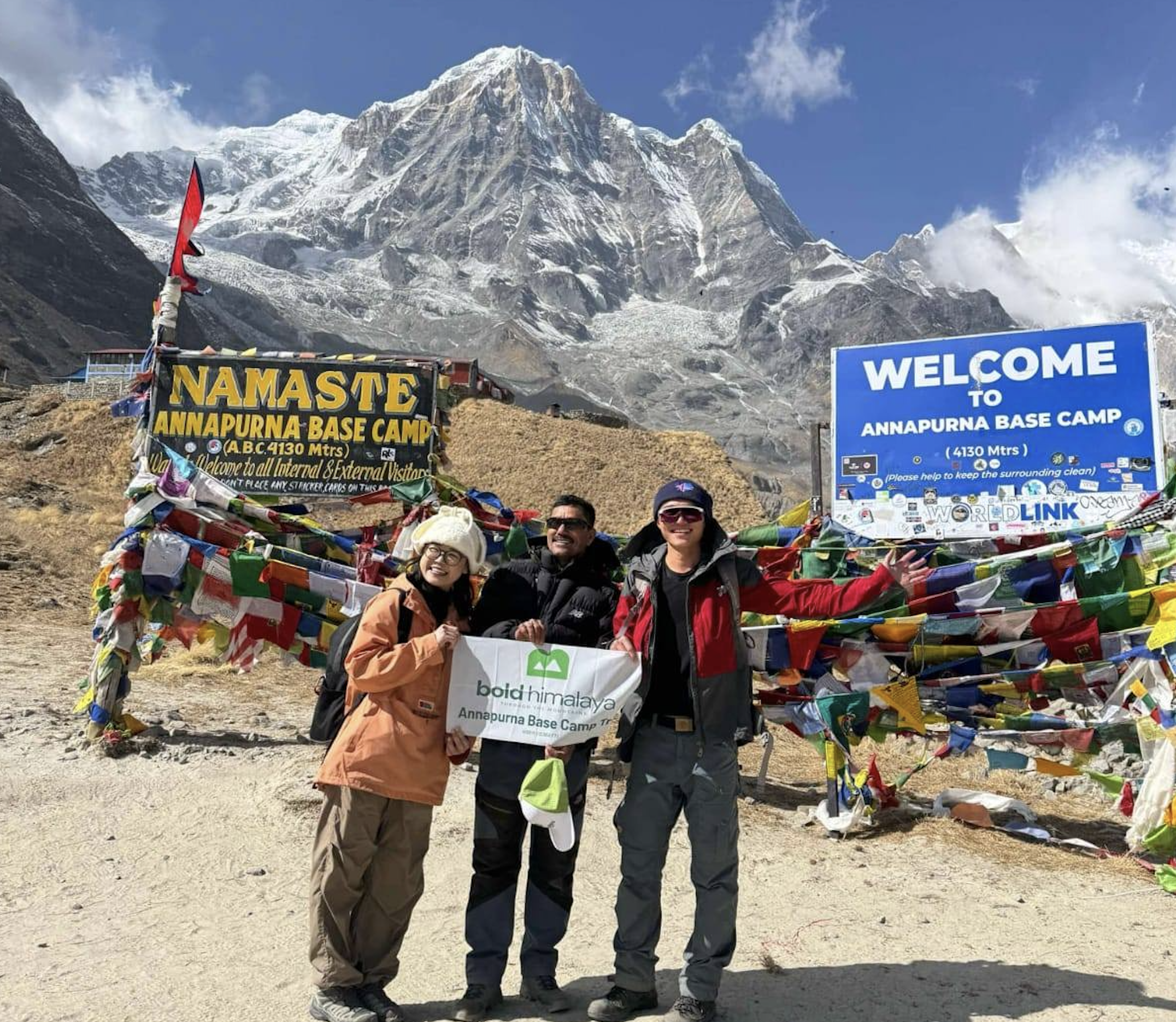
Celebration of Bold Himalaya Team after reaching Annapurna Base Camp 4130m and Mardi Himal Base Camp

Save 19%

Annapurna and Mardi Himal Base Camp Trek

Annapurna Base Camp and Mardi Himal Combined Trek is an excellent...
Thorung La Pass: A Scenic Gateway Between Manang and Mustang in Annapurna Circuit Trek

Save 29%

Annapurna Circuit Trek

The Annapurna Circuit Trek is one of the world’s most iconic...
Most Selling Tour
Trek to North Annapurna Base Camp with Himalayan views

Annapurna North Base Camp Trek

Be among the privileged few to trek the less-traveled Annapurna North...
Reaching Everest Base Camp: A Trekker’s Dream at 5,364m

Save 20%

Everest Base Camp Trek 14 days

The world’s most famous trekking destination is the Everest Base Camp...
Most Selling Tour
View of Tengboche monastery with Everest View Trek

Save 25%

Most Selling Tour
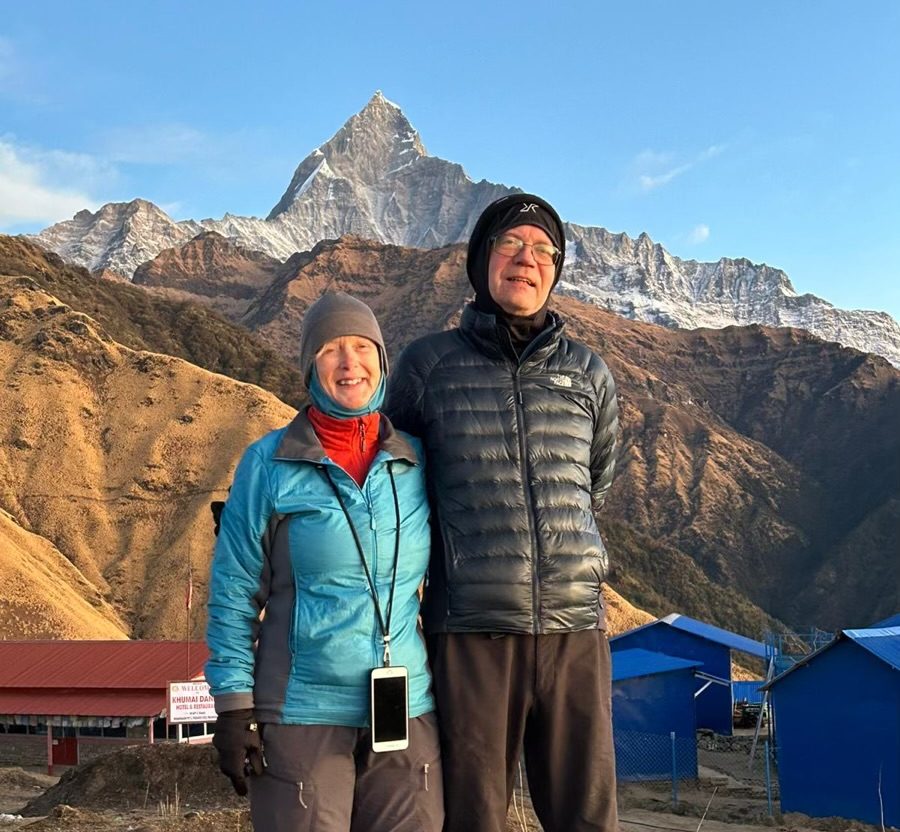
Beautiful Couple Enjoying the Scenic Khumai Danda Trek

Save 3%

Khumai Danda Trek

Looking for a peaceful beginner-friendly Himalayan trek off the track? Annapurna’s...
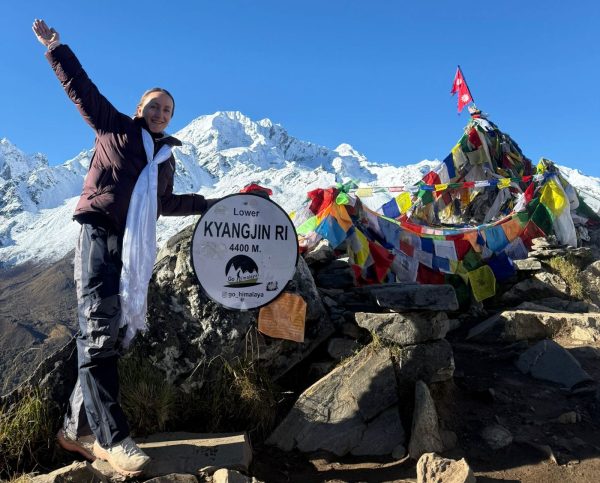
Trekker enjoys breathtaking views from Kyanjin Ri (4,785 m), surrounded by the majestic peaks of Langtang Valley, Nepal-best treks in nepal

Save 42%

Langtang Valley Trek

If you’ve ever dreamed of exploring the majestic Himalayas without the...
Bold Himalaya Team successfully reached Larkya La Pass (5,106 m / 16,752 ft) during the Manaslu Circuit Trek in Nepal-Rupina La with Larke La Pass Trek | Manaslu Trekking

Save 32%

Manaslu Circuit Trek

Are you ready for a journey that challenges your body, inspires...
Most Selling Tour
Pristine Beauty of Mardi Himal Base Camp Bold Himalaya Team

Save 7%

Mardi Himal Base Camp Trek

Tucked away in the heart of the Annapurna region, the Mardi...

$490

Per Person
Quick Inquiry

Plan a trip

Explore the recognitions we've earned and the legal foundations we've built.

What is the destination of choice? [Select Multiple]

Explore the recognitions we've earned and the legal foundations we've built.

Flexible Flexible
Nepal Nepal
India India
Bhutan Bhutan
China China
Maldives Maldives
Indonesia Indonesia
Peru Peru
What activities are you interested in?

Explore the recognitions we've earned and the legal foundations we've built.

Flexible
Trekking/Hiking
Tours sightseen
Peak Climbing
Wildlife & Nature
Biking & Cycling
Water Sports
Day Tours
Helicopter Tours
Spiritual Religious
Hunting
Travel Date & Duration

Explore the recognitions we've earned and the legal foundations we've built.

Contact Information

Explore the recognitions we've earned and the legal foundations we've built.

Bookmark Added Successfully
You can always view your bookmarks on the profile page.
Error
You can always view your bookmarks on the profile page.
Warning
You can always view your bookmarks on the profile page.
Information
You can always view your bookmarks on the profile page.
invoice
Bold Himalaya Kuleswor-13, Kathmandu, Nepal https://www.boldhimalaya.com +977-9862964046
BILL TO John Michael [email protected] +977-9819947321 Triyuga, Udayapur, Koshi Province, Nepal
  • Invoice #156
  • Created 15/11/2024
  • Due 28/11/2024
  • Booking Number #156
  • Booking Status Processing
  • Payment Method Offline Payment
  • Tour Name Everest Basecamp Trek
  • Address Indonesia
  • Departure Date 12 Nov. 2024
  • Duration 4 Days
  • Adult 2
Pricing
  • Adult: 2 * $700 $1,400
  • Service Tax $0
  • Discount - $100
  • Invoice #156
  • Created 15/11/2024
  • Due 28/11/2024