



Rupina La with Larke La Pass Trek | Manaslu Trekking


Itinerary
Your Journey, Step by Step
ARRIVAL IN KATHMANDU

Upon your arrival in Nepal, the land of the Himalayas, our representative from Bold Himalaya will pick you up from the Tribhuwan International Airport. Then, you will be transferred to your relevant hotel. You can spend your day exploring the busy Kathmandu. For the day, you can roam around beautiful Thamel and find yourself some typical local products to shop for and get a close look at the bustling urban life.
Moreover, you can also visit the Hindu temple of Pashupatinath, the famous ‘Monkey Temple’ (Swyambhunath), and the Buddhist shrine, Bouddhanath, which is one of the largest stupas in the world. Additionally, you can also visit restaurants and cafés and try out Nepali cuisine.
Also, the Bold Himalaya team will give you brief details regarding your trek as well as provide you with an opportunity to ask any questions you may have regarding your upcoming adventure. For your trek, you will find each and every branded trekking gear at Thamel. An overnight in Kathmandu.
DRIVE from Kathmandu TO BARPAK
Our beautiful adventure officially begins today with an 8–9-hour scenic road journey from Kathmandu to Barpak, a charming Gurung village in Gorkha district. Along the way, you will pass through lush forests, green terraced fields, rushing rivers, and sparkling waterfalls, witnessing the rich diversity of Nepal’s landscapes. The drive follows the mighty Budi Gandaki River and passes through Gorkha Bazaar before arriving in Barpak, offering travelers a feast of natural beauty and local life.
Barpak is a multiethnic village inhabited by Gurungs, Ghales, Sugars, Pariyars, and others. Clustered stone-roofed houses, narrow stone alleys, and panoramic views of the snow-capped Buddha Himal make it a culturally rich and visually stunning stop. Modern amenities such as toilets, showers, and even internet access are available at local homestays, making your stay comfortable after a long journey.
In the evening, villagers often organize traditional cultural shows, the proceeds of which support community development — a delightful way to experience local life and celebrate the resilience and spirit of Barpak, a village that rose from the devastation of the 2015 earthquake. This first day sets the tone for the Rupina La Trek: a perfect mix of breathtaking scenery, cultural richness, and historical significance, preparing you for the trails ahead.
Barpak → Bhome Danda
The Rupina La Trek begins in earnest today as you leave the lively village of Barpak and climb into the serene hills of Gorkha. The trail passes through Gurung villages, which are run by families and where the houses are built of stone and smoke endlessly out of the chimneys, creating a picture of life in the mountains that was a few centuries old. Gradually, the cultivated fields give way to dense forests of pine, rhododendron, and oak, where sunlight filters through the canopy, and the crisp mountain air invigorates every step.
Along the way, you catch your first glimpses of the snow-capped peaks of the Baudha and Ganesh Himal ranges shimmering in the distance. By late afternoon, you reach Bhome Danda, a quiet ridge settlement offering sweeping panoramas of the valleys below and golden sunsets that make every step of the climb worthwhile. The combination of forest trails, highland meadows, cultural glimpses, and early Himalayan vistas creates a perfect introduction to the beauty, challenge, and magic of the Rupina La Trek.
Bhome Danda → Lampra Kharka / Gai Kharka
On Day 4 of the Rupina La Trek, you leave the tranquil ridge of Bhome Danda (~2,800 m) behind and begin a gradual ascent into the highland pastures that define this stage. The trail winds through dense forests of pine, oak, and rhododendron, occasionally opening to reveal sweeping vistas of the Baudha and Ganesh Himal ranges. Along the way, trekkers encounter seasonal grazing areas, the kharkas, where yaks and shepherd huts punctuate the alpine meadows, offering a glimpse into the timeless rhythms of highland life.
By early afternoon, you arrive at Lampra Kharka (also referred to as Gai Kharka, ~3,200–3,300 m), a serene pasture settlement that provides the first real taste of alpine scenery on the trek. The quiet charm of this highland stop, combined with fluttering prayer flags and distant snow-capped peaks, makes it an ideal place to rest, hydrate, and acclimatize before pushing toward higher altitudes in the coming days. The day is moderately challenging, with a steady climb that rewards trekkers with expansive mountain vistas and the unmistakable sense of entering the high Himalayas.
Lampra Kharka → Sumrukhola
On Day 5 of the Rupina La Trek, the trail ascends from Lampra Kharka (~3,200 m) through alpine meadows and grazing pastures, offering spectacular views of Ganesh Himal and surrounding peaks. You’ll pass shepherd huts, streams, and fluttering prayer flags before reaching Sumrukhola. This highland campsite is ideal for acclimatization and preparing for the upcoming Rupina La Base Camp.
Rest & Acclimatization at Sumrukhola
Today on the Rupina La Trek, you rest at Sumrukhola (~3,650 m) to acclimatize before ascending higher. Use this day to hydrate, enjoy the alpine scenery, observe grazing yaks, and take short walks around the camp to adjust to the thinner air. Stunning views of surrounding peaks, meadows, and prayer-flag-decorated ridges make this day both relaxing and rejuvenating.
Sumrukhola → Rupina La Base Camp
Today on the Rupina La Trek, you leave Sumrukhola (~3,650 m) and ascend into the high Himalayan alpine zone. The trail follows the Daudi Khola, winding through serene valleys, crossing icy torrents, and traversing rocky ridges. Along the way, you pass Nirtse Kharka and Sanrung Kharka, high-altitude grazing pastures dotted with fluttering prayer flags and grazing yaks.
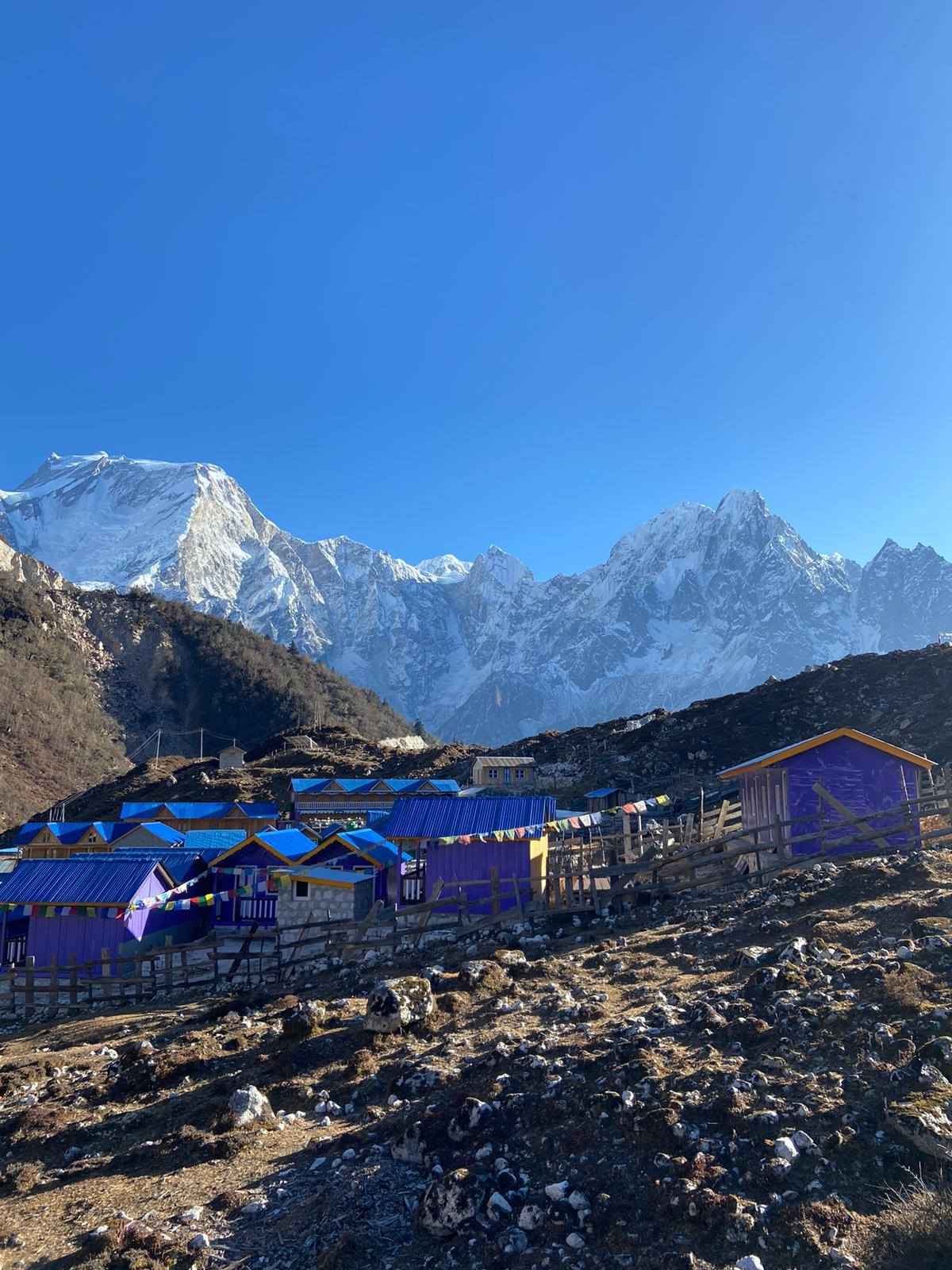
As you approach Rupina La Base Camp (~4,200 m), the scenery opens to a breathtaking panorama of Ganesh Himal, Manaslu, Himalchuli, and Buddha Himal, making it one of the most photogenic spots of the trek. Base Camp is a tented highland stop, offering a crucial chance to rest, acclimatize, and prepare for the early morning Rupina La Pass crossing. The crisp mountain air, alpine meadows, and rugged peaks make this day a true high-altitude adventure.
Rupina La Base Camp → Thado Bag
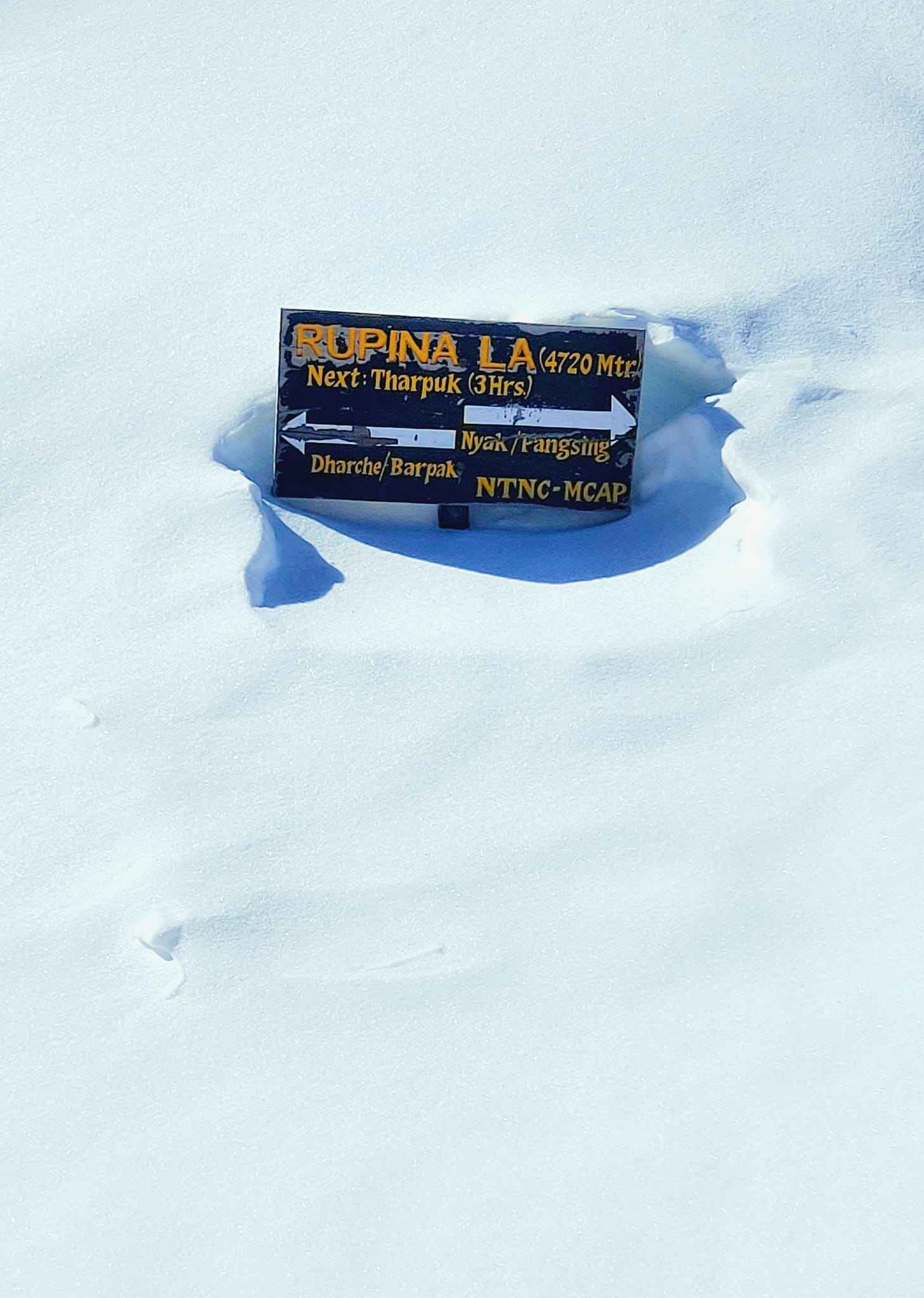
Day 7 is the most demanding yet rewarding stage of the Rupina La Trek — the day you cross the iconic Rupina La Pass (~4,720 m). A pre-dawn start is essential to safely summit before afternoon weather deteriorates. The day tests both endurance and high-altitude trekking skills, offering one of the most spectacular panoramic vistas of the Manaslu region.
You wake early, around 3:30–4:00 AM, for a final pack check and a hot drink, fully layered against sub-zero temperatures. Headlamps light your path as you set off into the pre-dawn silence. The ascent to the pass is steep and relentless, following scree and rocky switchbacks. Trekking techniques like the Rest Step and pressure breathing help you manage the altitude while enjoying the first light illuminating a stark, dramatic alpine landscape.
Reaching Rupina La Pass (~4,720 m) around 7:00–7:30 AM, you are rewarded with a 360° Himalayan panorama. Peaks such as Ganesh Himal, Manaslu, Himalchuli, and Buddha Himal tower above the rugged valleys. Prayer flags flutter in the wind, marking this high point of accomplishment. While tempting to linger, a short break of 20 minutes is ideal to keep the group on schedule and avoid worsening weather.
The descent into the east side toward Thado Bag (~3,500–3,600 m) is steep, long, and technical. The initial segment involves loose rocks and scree, demanding full attention, trekking poles for stability, and careful pacing to protect knees and quadriceps. As the trail transitions into a rocky moraine and valley, the terrain remains uneven but becomes more forgiving. Along the way, you may spot blue sheep (bharal) on distant cliffs, a rare and rewarding sight in this remote wilderness.
The final approach leads through wide alpine meadows and herder huts, with Thado Bag finally appearing as a welcoming collection of tents or basic shelters. After 8–10+ hours of trekking, reaching camp brings a profound sense of relief, achievement, and awe at the vast Himalayan scenery you just crossed. This high-altitude adventure combines physical challenge, natural beauty, and cultural immersion, making it the highlight of the Rupina La Trek.
Thado Bag → Ragrug Kharka
After the epic crossing of Rupina La Pass, Day 9 offers a gentler, restorative stage as you descend from Thado Bag (~3,500 m) into the serene valleys of the Manaslu region. The trail winds through alpine meadows, yak pastures, and gentle riverbanks, with occasional short climbs over small moraine ridges left by retreating glaciers. Early in the day, you can look back toward the towering walls of the Rupina La massif, a reminder of the achievement from the previous day.
As you follow the valley, the environment gradually shifts from the stark, high-alpine desert into areas with hardy grasses, juniper shrubs, and returning birdlife, creating a refreshing contrast. Crossing small streams and rocky patches, the trail opens up to Ragrug Kharka (~3,300 m), a peaceful seasonal grazing site dotted with yak herders’ huts.
Here, trekkers can rest, enjoy the wide alpine meadow vistas, and reflect on the journey through one of the most remote and beautiful parts of the Rupina La Trek. This stage is not only a physical recovery day but also a chance to reconnect with the valley’s natural beauty and prepare for the descent toward the Manaslu trail network.
Ragrug Kharka → Nyak Gaun
Day 10 is a long, rewarding descent that reconnects trekkers with permanent villages and the main trail network of the Manaslu region. Leaving Ragrug Kharka (~3,300 m), the trail contours down from high alpine pastures, gradually transitioning into a steady, sometimes steep descent along rocky and uneven terrain. Early in the trek, you can still enjoy panoramic views of the remote upper valleys you crossed during the Rupina La adventure, offering one last glimpse of the rugged highlands.
As the valley comes alive with moss, streams, and richer greenery, you experience a gentle ecological re-entry from the alpine desert. The trail eventually reaches a river junction, a tributary of the Budi Gandaki River, where you cross a wooden or suspension bridge, a symbolic gateway back to more inhabited valleys.
The final approach to Nyak Gaun (~2,100 m) involves a gentle traverse along the river valley, ending with a short climb to the village perched on terraced slopes. Nyak Gaun, also historically called Ngak Gaun or Prok, is a permanent Tibetan Buddhist settlement inhabited by the Ngakpa community, known for stone-and-mud flat-roofed houses, intricately carved wooden windows, long mani walls, and a prominent chorten, while prayer flags flutter across narrow alleys, reflecting deep cultural heritage.
This is the first night since Rupina La Pass where trekkers can enjoy teahouse accommodation, with simple beds, shared dining areas, and the opportunity to purchase snacks and refreshments—a welcome return to comfort. The village offers panoramic views of surrounding terraced fields and the lower valley, preparing trekkers for the continuation of the Manaslu circuit toward Deng.
Nyak → Pewa → Deng
From Nyak Gaun (~2,100 m), the trail gently winds downward, following the rhythm of the Manaslu valley. You pass by small farmsteads and cultivated terraces, glimpsing local farmers tending crops and the occasional herder guiding yaks. The path skirts riverbanks and peaceful streams, occasionally offering open views of the surrounding forested ridges and distant peaks.
Midway, you reach Pewa, a quiet riverside hamlet where trekkers often pause to rest and admire the broad valley panorama. Continuing onward, the trail meanders along gentle slopes and through shaded groves, offering a calm and scenic descent. By afternoon, you arrive at Deng (~1,860 m), a welcoming village with cozy teahouses, warm meals, and the chance to interact with locals. After several days in high alpine terrain, this stage provides a soothing finale to the trek, letting you soak in the valley’s natural charm and cultural warmth.
Deng → Rana → Bihi → Ghap → Namrung
Today’s walk leads you out of Deng’s narrow gorge and steadily into the cultural heart of the Nubri Valley. The trail climbs gently toward Rana, where the river’s roar softens, and the valley begins to open. By the time you reach Bihi, Tibetan influence becomes clear, mani walls, prayer stones, and traditional village life shape the trail.
The path then continues to Ghap (~2,160 m), a charming village known for its long mani walls, carved wooden windows, and a peaceful forested approach. From here, the ascent becomes more defined. You follow the river through a quiet forest corridor, crossing old stone paths and passing waterfalls dropping from cliffs above.
The final stretch is a steady climb of stone steps and switchbacks, eventually leading to the iconic gate of Namrung (~2,630 m). This beautifully built village offers your first big Himalayan views—Naike Peak, Manaslu North, and the distinct Tibetan architecture of upper Nubri. Namrung is a scenic and culturally rich stop, marking your official entry into the higher Manaslu region.
Namrung → Lihi → Sho → Lho → Samagaon
The day begins with a gentle climb from Namrung, meandering along the river through thick groves of bamboo and tall rhododendron. As you gain height, the trees thin out and the landscape broadens, opening onto expansive hillsides dotted with terraced fields and traditional stone homes. You reach Lihi, a quaint village where prayer wheels spin along narrow alleys and barley fields ripple in the wind.
The trail continues to Sho (3,000 m), where you can pause to admire Naike Peak and Manaslu North shimmering in the distance. Following streams from the Lidanda Glacier, the path ascends to Lho (3,180 m). Here, the massive ice-clad wall of Mount Manaslu towers above the village, accompanied by the historic Ribung Monastery, creating one of the trek’s most iconic viewpoints.
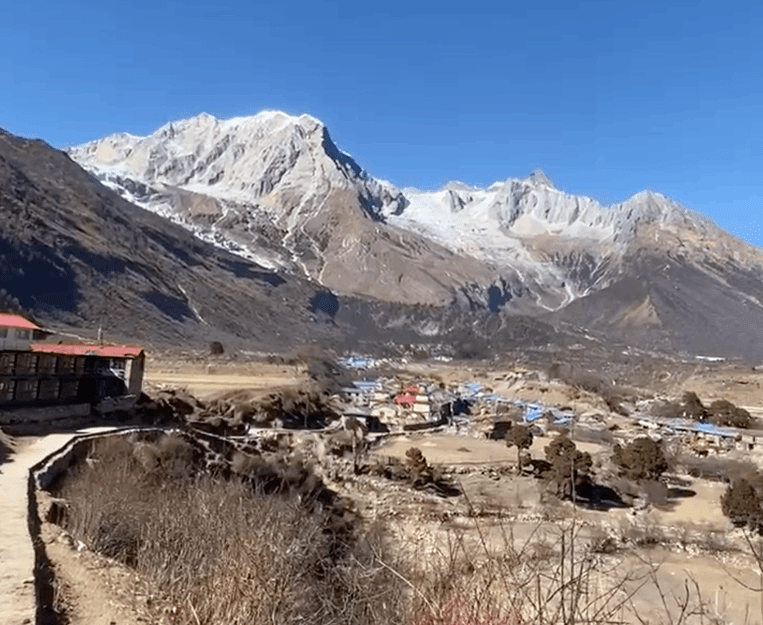
From Lho, the route passes through wide alpine meadows and yak pastures before arriving at Samagaon (~3,530 m). This vibrant village, with its monasteries, mani walls, and traditional homes, sits under the shadow of glaciers and high Himalayan peaks—a perfect stop to rest, acclimatize, and soak in the grandeur of the upper Manaslu region.
Acclimatization Day at Samagaon
The day begins gently in Samagaon (~3,530 m), allowing your body to adapt to the higher altitude. After breakfast, you stroll through the village, observing traditional stone-and-wood houses, mani walls, and the local Tibetan Buddhist culture.
The hike continues toward Birendra Lake, following a gradual hillside trail with panoramic views of Mount Manaslu, its glaciers, and the yak-filled pastures below. After 3–4 hours of steady walking, you reach the Manaslu Base Camp area, where expedition tents cluster during climbing season. This is a perfect spot for photos, taking in the high Himalayan scenery, and enjoying a short break.
You then descend back to Samagaon, reaching the village by mid-afternoon. This acclimatization hike is designed to gently prepare your body for the challenging ascent to Larke La Pass, while also offering a glimpse of the stunning alpine landscape and cultural richness of the Manaslu region.

Samagaon → Samdo
The trek from Samagaon (~3,530 m) to Samdo (~3,860 m) is a short, gentle, and scenic walk—perfect for acclimatization before the higher passes. Leaving the village after breakfast, the trail gradually climbs along open hillsides, quickly leaving forests behind and opening onto wide, dry alpine landscapes reminiscent of the Tibetan plateau.
Along the route, yak pastures, small seasonal shelters, and glacial streams dot the path, adding charm and interest to the walk. Panoramic views of Mount Manaslu, Nagdi Chuli, Simnang Himal, and surrounding glaciers follow you almost the entire way. The trail passes through Kani village, a yak-herding settlement ideal for a short break and to enjoy local snacks.
Approaching Samdo, the trail narrows and ascends slightly to reach the village perched on a ridge, with scattered stone houses, mani walls, and a peaceful alpine atmosphere. Trekking around the village or climbing Samdo Peak offers breathtaking views of the Manaslu Glacier, icefalls, and surrounding peaks, making it one of the most scenic stops on the Manaslu Circuit. Arrive in 3–4 hours, leaving time to rest and prepare for the challenging Larke La Pass ahead. Overnight at Samdo.
Samdo → Dharamsala (Larkya Phedi / High Camp)
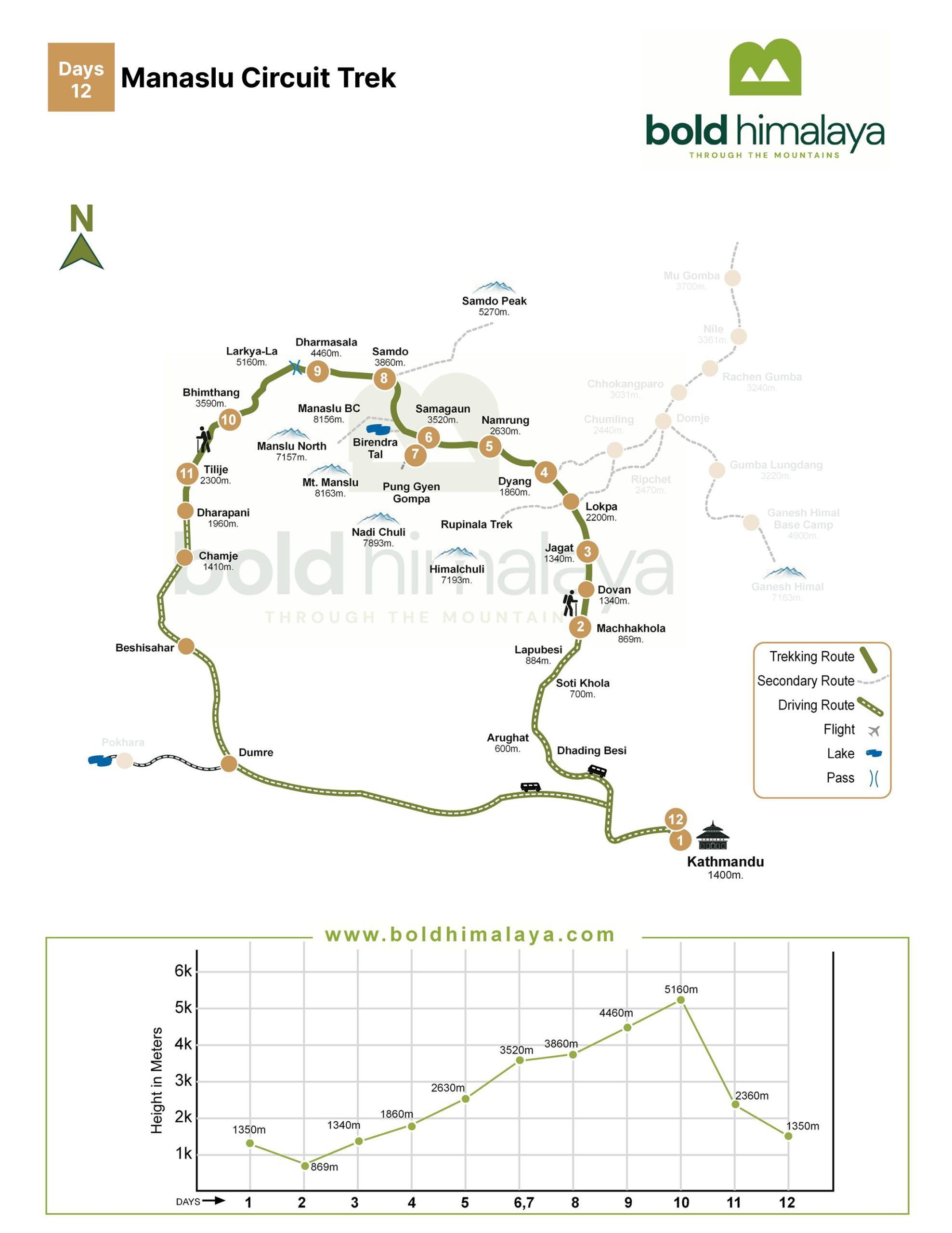
After breakfast in Samdo (~3,860 m), today’s trek to Dharamsala (Larkya Phedi, ~4,460 m) takes you deeper into the high Himalayas. The trail follows the river gorge before gradually ascending to Larkya Bazar, weaving through rugged moraine slopes and glacier-fed streams.
Along the way, you’ll notice the subtle shift from cultivated valleys to stark alpine terrain. Small stone shelters and prayer shrines hint at the long-standing Tibetan Buddhist traditions of the region. Majestic peaks, including Larkya Peak (6,249 m) and Naike Peak (6,211 m), dominate the skyline, while the expansive Syacha Glacier lies beneath the trail, offering breathtaking views of icefalls and crevasses.
Reaching Dharamsala / Larkya Phedi, the high camp sits amidst a windswept plateau, providing a strategic and scenic base to rest and acclimatize for the early morning ascent over the Larke La Pass. The sense of isolation and grandeur here makes this one of the most memorable stages on the Manaslu Circuit Trek.
Dharamsala → Larke La Pass → Bimthang
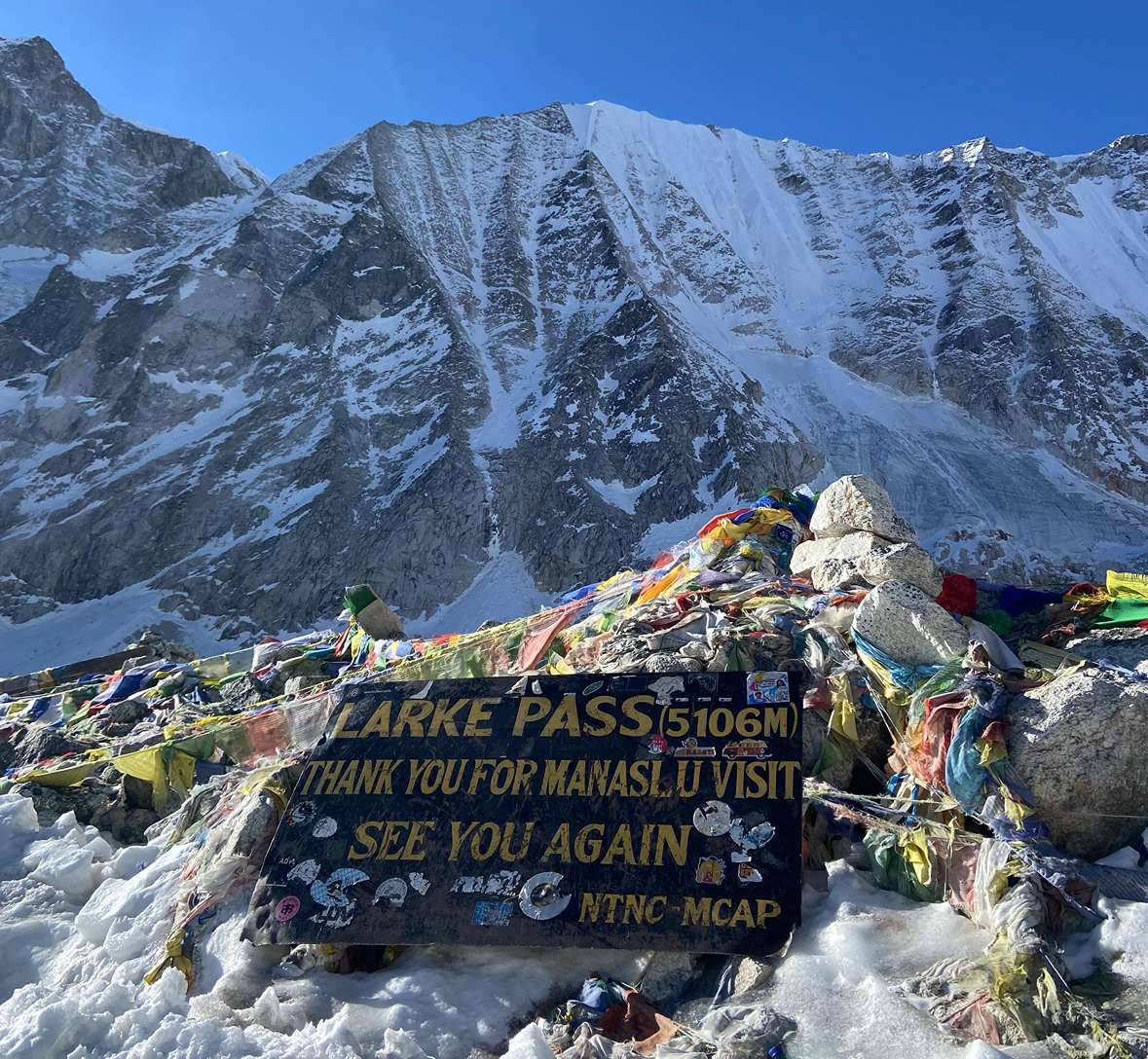
Today is the most challenging and rewarding day of the Manaslu Circuit Trek, as you cross the iconic Larke La Pass (~5,160 m)—the highest point of the trek. Trekkers start very early, typically around 3:00 AM, to avoid afternoon winds and potential weather changes. Pre-dawn breakfast and fully packed gear are essential.
The trek begins with a steep ascent over rocky moraine slopes, icy patches, and rugged high-alpine terrain. The trail is demanding, requiring slow, steady pacing and trekking poles for stability. Along the way, you are surrounded by jaw-dropping Himalayan vistas: Manaslu (8,156 m), Annapurna II (7,937 m), Larkya Peak (6,249 m), Himlung (7,126 m), Kang Guru (6,981 m), and Ratna Chuli (7,035 m). Glacier streams and moraines create a dramatic landscape, showcasing the raw beauty of the high Himalayas.
Reaching the summit of Larke La Pass is a triumphant moment, offering 360-degree panoramic views of snow-capped peaks and glacial valleys. After a short break for photos and reflection, the trail descends toward Bimthang (~3,590 m). The descent is easier than the ascent but still requires careful footing on loose rocks and uneven terrain.
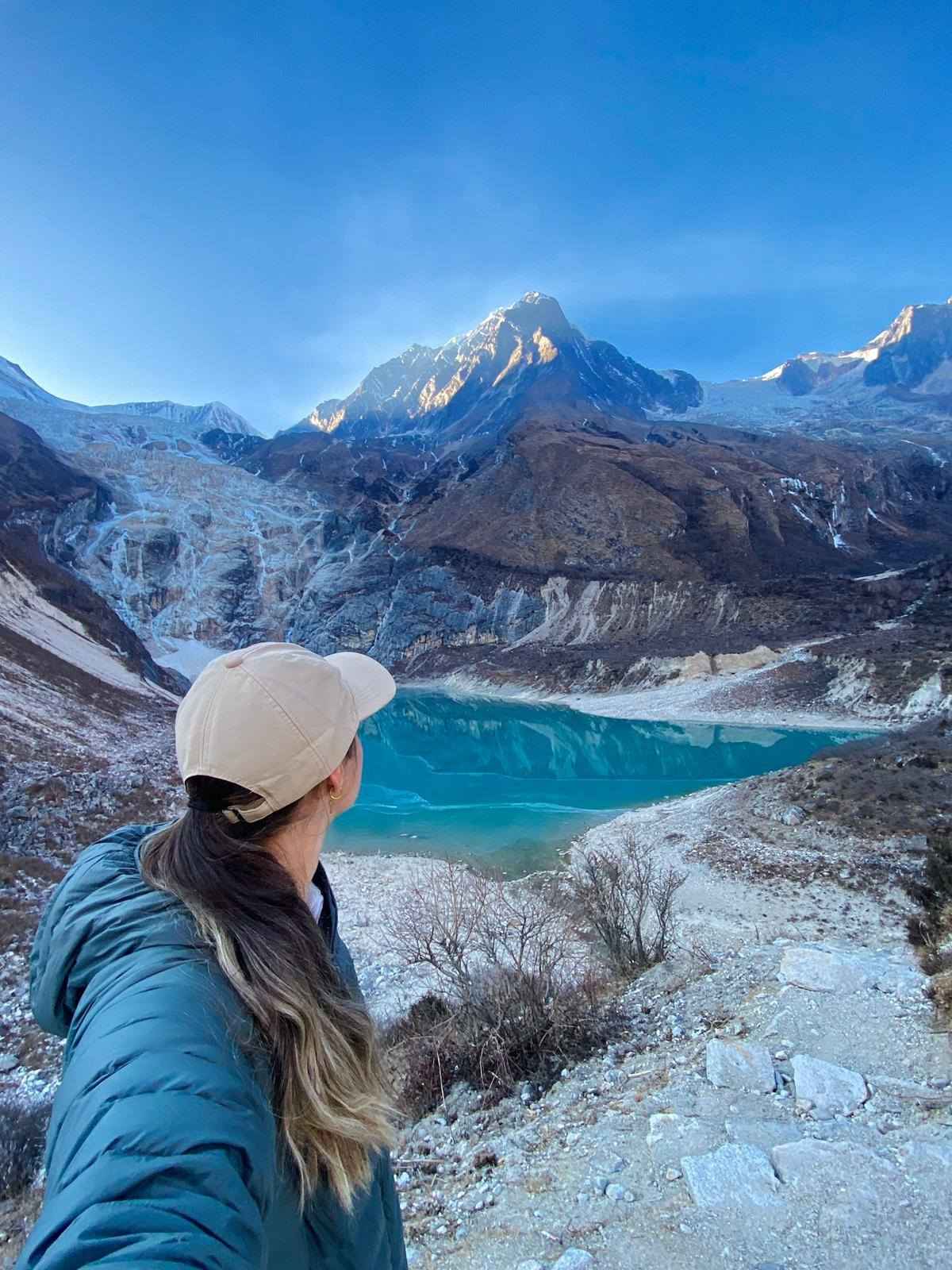
Along the way, trekkers may take a short detour to Ponkar Lake, a turquoise glacier-fed lake surrounded by high peaks, adding a scenic highlight to the day. The descent passes alpine meadows, yak pastures, and open valleys, giving a chance to spot Himalayan flora and fauna unique to this high-altitude region.
Arriving at Bimthang, trekkers can relax in teahouses or lodges, enjoy a hot meal, and recover from the exertion of the day. Bimthang serves as a strategic stop for acclimatization and preparation for the lower-altitude continuation of the Manaslu Circuit.
Trek from Bhimtang to Tilje, then Drive to Besisahar
After a well-deserved rest at Bimthang (~3,590 m), today marks the final day of trekking before returning to the lowlands. The trek begins with a gradual descent through alpine meadows and yak pastures, following the Budhi Gandaki River. Trekkers pass by open slopes, small streams, and scattered seasonal huts, enjoying the last panoramic views of the Manaslu region’s towering peaks.
The trail leads to Tilije (~1,500 m), a lively village marking the lower-altitude transition back to the main road network. From here, trekkers are picked up by vehicle and drive approximately 7–9 hours along winding mountain roads through terraced hills, forests, and rivers, returning to Besisahar (~760 m). The journey showcases Nepal’s lush mid-hill landscapes, with glimpses of rural life and terraced farming communities.
From Besisahar, the drive continues to Kathmandu, concluding the epic Rupina La + Larke La Pass Trek. Upon arrival, trekkers can enjoy a hot shower, comfortable accommodation, and a celebratory dinner reflecting on the journey through the remote and spectacular Manaslu region.
FINAL DEPARTURE
On the final leg of your journey, you will enjoy crisp, panoramic views of hills and distant mountains as you drive from Besisahar to Kathmandu. The route winds along the Marshyangdi and Trishuli rivers, passing vibrant villages, terraced farmlands, local markets, and colorful bridges that showcase the daily life of rural Nepal. Green hills and scattered mountain peaks create a serene backdrop, making the drive a scenic conclusion to your trek.
Upon arrival in Kathmandu, you will be transferred to your hotel to rest and refresh. In the evening, trekkers can celebrate the successful completion of the Rupina La + Larke La Pass Trek with a farewell dinner, reflecting on the adventure through the spectacular Manaslu region.
Inclusions
What’s Covered in Your Adventure
- All ground transportation (including trekking starting/ending point, airport pick up/drop) by private tourist vehicles as per itinerary
- Three-star category hotel in the city(Kathmandu) in twin sharing bed with breakfast basis & standard trekking lodge in Tsum Valley with Manaslu Circuit Trek route.
- Kathmandu sightseeing with private vehicles & experienced city tour guide
- Full meals during trekking as mentioned in the itinerary (Breakfast, Lunch, Dinner with tea or coffee )
- First aid medicine items
- Manaslu Conservation Area Trekking permit, Restricted Area Permit & TIMS card (Trekkers Information Management System)
- Experienced, licensed one trekking guide up to five trekkers in the group including their salary, accommodation, meals, and their insurance
- One assistance guide if trekkers are more than five in the group including their salary, accommodation, meals, transportation, and insurance
- One porter to carry your luggage (for two guests one porter to carry baggage) including their salary, accommodation, meals, transportation, and insurance
- Some necessary types of equipment sleeping bag & Down jacket (if you need, return after trek)
- One special cultural show and farewell dinner program
- Duffle Bag to use in trekking, T-shirt, and Trip certificate (after trip completion)
- Our government/Local taxes and official expenses
- Extra Lunch & Dinner in Kathmandu
- Dessert & any types of drinks during the trip
- Kathmandu city tour entrance fee
- Your international air ticket & travel insurance
- Tips for the trekking crew members

Packing List & Essential Gear for Rupina La – Larke La Pass Trek | Manaslu Trekking
Packing for the Rupina La – Larke La Pass Trek isn’t just about comfort, it’s about survival, warmth, and stability on one of Nepal’s wildest high-altitude trails. Below is a complete packing checklist tailored specifically for remote Himalayan trekking, high-altitude camping, and Manaslu region conditions.
Thermal tops & bottoms (2 sets)
Quick-dry trekking shirts
Lightweight inner leggings
Fleece jacket
Down jacket (0°C to –10°C rating)
Insulated trekking pants
Waterproof trousers
Windproof gloves
High-ankle waterproof boots
Camp shoes / sandals
Woolen socks (3–4 pairs)
Thermal socks (1–2 pairs)
Gaiters (for snow or mud)
Trekking poles
UV-protection sunglasses
Reusable water bottles
Water purification tablets / filter
Quicky Dry Towel
Duffel bag (60–70L) for porters
Sunscreen (SPF 50+)
Lip Bam (SPF 30+)
Wet wipes
Toothbrush + Toothpaste
Hand sanitizer
Diamox (if prescribed) for altitude
Personal medications
Band-aids, blister tape, antiseptic
Water purification tablets
Passport (original)
MCAP Permit
Restricted Area Permit (RAP)
Good to Know
Your Journey, Step by Step
Drinking water
During the trek, water is the most essential thing and should be prioritized first. Water is available at taps or streams in higher altitudes, but it is not considered fresh water to drink. You can ask for boiled water at tea houses, or you can carry water purification tablets along with you for purifying water.
Electricity and Internet Facilities
There is good access to electricity and the internet throughout the trekking trail.
Electricity at higher altitudes is generated through solar power or hydroelectricity, so it has less voltage. You might not get to charge your phone or any devices in your room, but you can ask with receptionist to charge your phone or any devices by paying some extra charges.
Good internet facilities are available even at higher altitudes through the access to wifi. You can connect your phone to wifi by paying some charges. Wifi may be a little slow due to overconnection, but it’s good to update your info online or to watch videos.
Visa Process to Enter Nepal
Every foreign citizen except the citizens of India requires a visa to enter Nepal. If you are interested in visiting Nepal, you will need a tourist visa, and you will have to fulfill the following requirements to get a visa for Nepal:
· Your original passport valid for at least the next two months and two blank visa pages.
· Photocopies of the personal information page of your passport.
· At least one recent passport-sized picture of yourself.
· The completed and signed Nepal Tourist Visa Application form.
· Valid return flight or travel ticket.
· Proof of sufficient financial means.
· Proof of having paid the Nepal visa fee.
Payment and Extra Money
While trekking, you have to make a payment even for small things. As Rupina La pass located in an isolated area of the Manaslu region, you have to make a payment to obtain a permit from the MCAP (Manaslu Conservation Area Project). Plus, you have to pay an estimated budget for food, accommodation, and hotel as well. You might be interested in consuming hard drinks or snacks while staying at tea houses or lodges. For that, you will be in need of extra money. Therefore, it is better to keep extra money with you while trekking.
Preparation
It is better to prepare yourself fully with all the essential documents, insurance papers, and including physical and mental fitness. As Rupina La and Larke La Pass lie in the Manaslu region, you will require a permit from MCAP (Manaslu Conservation Area Permit) to make the trek happen on Rupina La with the Larke Pass trek.
Travel insurance is compulsory as well, and you have to improve your physical and mental ability as the trek takes place at a higher altitude. You can prepare by improving your physical and mental fitness before trekking. You can do short hiking, running, swimming, join gym classes, and yoga classes to improve your physical and mental fitness.
Health and Safety
Since trekking in Nepal is more popular, the Government of Nepal has given more priority to ensure the safety of the trekkers. Concerning safety, buy travel insurance before trekking and keep updated with the weather while trekking. Carry warm clothes, water purification tablets, paracetamol, medications, and a first aid kit along with you. Be sure to have enough acclimatization days while trekking
Insurance
For trekking in Nepal, it is mandatory to have travel insurance for all trekkers. The majority of trekking areas are situated at higher altitudes in the lap of the Himalayas, and anything might happen at any time.
Therefore, to ensure the safety of trekkers, travel insurance is a must, and that should cover the highest altitude of your trekking destination as well as all the medical facilities and evacuation facilities.
Guide and Porters
A guide is the person who will take you through the right path during your trek, and a porter is the person who will carry your luggage through your entire journey.
The guide will make sure you have a comfortable trek with a good meal and comfortable accommodation, and he will even take a permit from MCAP for your trek. Porter will carry a maximum weight of 15 kg of luggage to make your trek comfortable and enjoyable.
Responsible Tourism
We strongly believe in responsible tourism as our policies are guided by economic, social, and environmental responsibility.
We encourage our customers to trek without affecting the cultural and natural values of the trekking areas.
Bold Himalaya wishes to preserve our local traditions, cultures, norms, and values, and biodiversity by doing environmentally friendly trekking.
Booking Confirmation
To book the trip to trek in Nepal, you must go through an online process. As our trekking agency Bold Himalaya has an online website, you can book for trips from there, and you can also phone us to ask the more booking information. Once your booking reaches us, we sincerely suggest the final trip booking procedure with an advance of 20 percent of Non non-refundable budget.
Packing List
Clothing items- Caps/Hats, Warm hats (Banie), jackets(Down, fleece jacket, Waterproof), shirts, Thermal Set( Base Layer), t-shirts, trousers/Hiking Pants (warm & waterproof), Neck Gaiter, Gloves (Inner & Insulated), Towel, Undergarments
Bag packs and Bags – Day Pack, at least you have a 45-50 liter backpack or Duffel bag that can hold your necessary items
Footwear- Trekking Shoes, sandals, socks (Warm), at least 4 pairs, Gaiters (for Winter)
Sleeping Bags- sleeping bags at least -15 to -20 for winter, Sleeping bag liner
Electronics items- Camera, Headlamp, or torch with batteries, portable charger( Power Bank)
Accessories – Eyewear (Sun Glass), Trekking Poles, Water Bottle (Hydration Bladder), Crampons/ microspikes (For Winter only)
Miscellaneous- Safety and First aid items & medicine (Including Oximeter & Thermometer), Bag cover/pack covers, Money Belt, hand sanitizer, Sun cream, Toothbrush, tooth cream, Shop, Shampoo, Toilet paper, Booties(for winter), Mitten( For winter,) Cards, Shanks, chocolates, Money, Passport, Travel insurance.
Trekker Tips for Rupina La – Larke La Pass Trek
Planning a trek in the Manaslu region? Here’s what every adventurer should know before attempting the Rupina La and Larke La Pass trek:
Best Months to Go
The ideal trekking season is Spring (March–May) and Autumn (September–November). During these months, the views of snow-capped peaks, alpine meadows, and glaciers are at their best. Avoid the monsoon season — heavy rains make trails slippery and obscure mountain vistas.
Coping with Altitude
Both Rupina La (4,800 m) and Larke La Pass (5,160 m) are high-altitude passes, so altitude sickness is a real concern. Tips from experienced trekkers:
-
Acclimatize properly with gradual ascent days.
-
Stay hydrated and avoid alcohol.
-
Listen to your body — don’t push if you feel dizzy or nauseous.
Recommended Gear
Pack smart for the Manaslu Circuit Trek:
-
Warm layers, a down jacket, and thermal wear
-
Sturdy trekking boots with good grip
-
Trekking poles for steep ascents and descents
-
Sunglasses, sunscreen, and a hat
-
Sleeping bag rated for sub-zero temperatures
Money & Connectivity
-
Carry enough Nepali rupees, especially for tea houses in remote villages — ATMs are scarce.
-
Internet access is limited; some lodges have Wi-Fi, but expect slow speeds.
-
Power banks and solar chargers are lifesavers for phones and cameras.
Insider Tips
-
Respect local customs and monasteries — some villages are very traditional.
-
Try local foods like yak butter tea, momo, and dal bhat — not only tasty but energy-rich for trekking.
-
Keep your camera ready: every village and mountain view is Instagram-worthy!
FAQs
Your Questions, Answered
How high is Larkya La Pass?
Larkya La pass is one of the longest passes of the Himalaya in the Manaslu region, situated at an altitude of 5,160 m (16,930 ft) above sea level.
How to prevent altitude sickness?
The best way to prevent getting altitude sickness is to travel to altitudes above 2,500 meters slowly.
You can also:
- Avoid trekking directly at high altitude
- Avoid climbing more than 300 to 500 meters a day after 2,500 meters.
- Have a rest day every 600 to 900 meters you go up.
- Make sure you’re drinking enough water
- Eat a light but high-calorie diet.
How many days does it take to reach Larkya La Pass?
It takes around 17 days to reach Larkya La Pass, including days at Kathmandu and an acclimatization day. Larkya La Pass is the highest point ofthe Manaslu Circuit trek at an altitude of 5,106 meters above sea level.
What are the popular trips in Manaslu region?
The best trips in the Manaslu region are Manaslu Base Camp, Serang gompa, Kalmachum Lake, Hinang Gumba, Birendra Lake, Manaslu Circuit, Annapurna Circuit, Tsum Valley, and Rupina La Pass trek.
Can I continue the trek after rest if I got sick?
You can continue going up with care once you feel you have fully recovered. If you do not feel any better after 24 hours, go down by at least 500 meters. Do not attempt to climb again until your symptoms have completely disappeared.
How much down payments should I pay while booking a trip?
To ensure your booking trip, the 20% down payment is required to make an advance as per company policy. As Nepal most liked tourist destinations and is always overbooked, we encourage you to make an advance payment on time to secure your reservations.
How much should I give tips to trekking crews?
It is a better rule of thumb when trekking is to tip the equivalent of $5 per day for guides and $2 to $4 per day for porters. With guides and porters, your trips will be more comfortable and memorable. You can give $ 5 per day for cook who will give you delicious food around the trek.
How difficult is Rupina La with Larkya La Pass trek?
The trail goes through two Passes: Rupina La Pass and Larkya La Pass. One at an altitude of 4,390 meters and another at 5,160 m (16,930 ft). As the trek goes through two different high passes, the trek is graded as moderate to strenuous.
How many days does it take to complete Rupina La with Larkya La pass trek?
The duration requires 20 days to complete the entire trek, including a days spent at Kathmandu and an acclimatization day. Besides, the trek starts at Gorkha and ends at Besisahar.

Reviews
What Our Travelers Say


Based on 2 ratings
View OurSimilar Packages
Discover our top tours, loved by thousands of travelers annually. Choose the adventure that inspires you and embark on a journey tailored to your desires.

Save 32%
Mardi Himal Base Camp 5 Day Trek From Pokhara
The Hidden Jewel of the Annapurna: Mardi Himal Base Camp 5... Nepal Tour Packages
 5 (49)
 4 Days
Save 22%
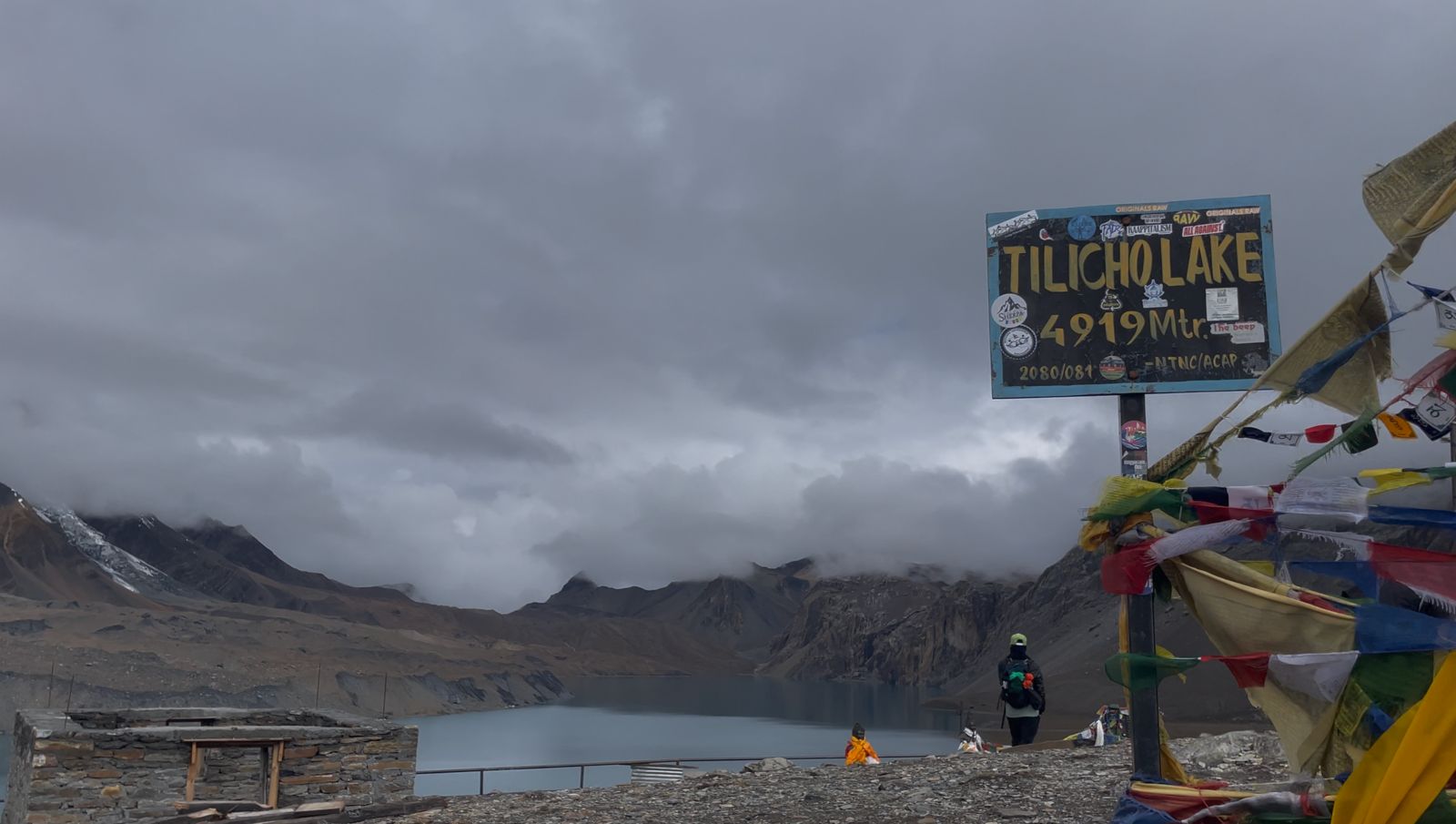
Annapurna Circuit Trek with Tilicho Lake
Imagine you walk up to a golden light that shines on...
Nepal Tour Packages
5 (49)
4 Days
Save 28%
Nar Phu Valley Trek – 11-Day Remote Himalayan Adventure
Tucked away between the legendary Annapurna and Manaslu regions lies one...
Nepal Tour Packages
5 (49)
11 Days
Save 22%
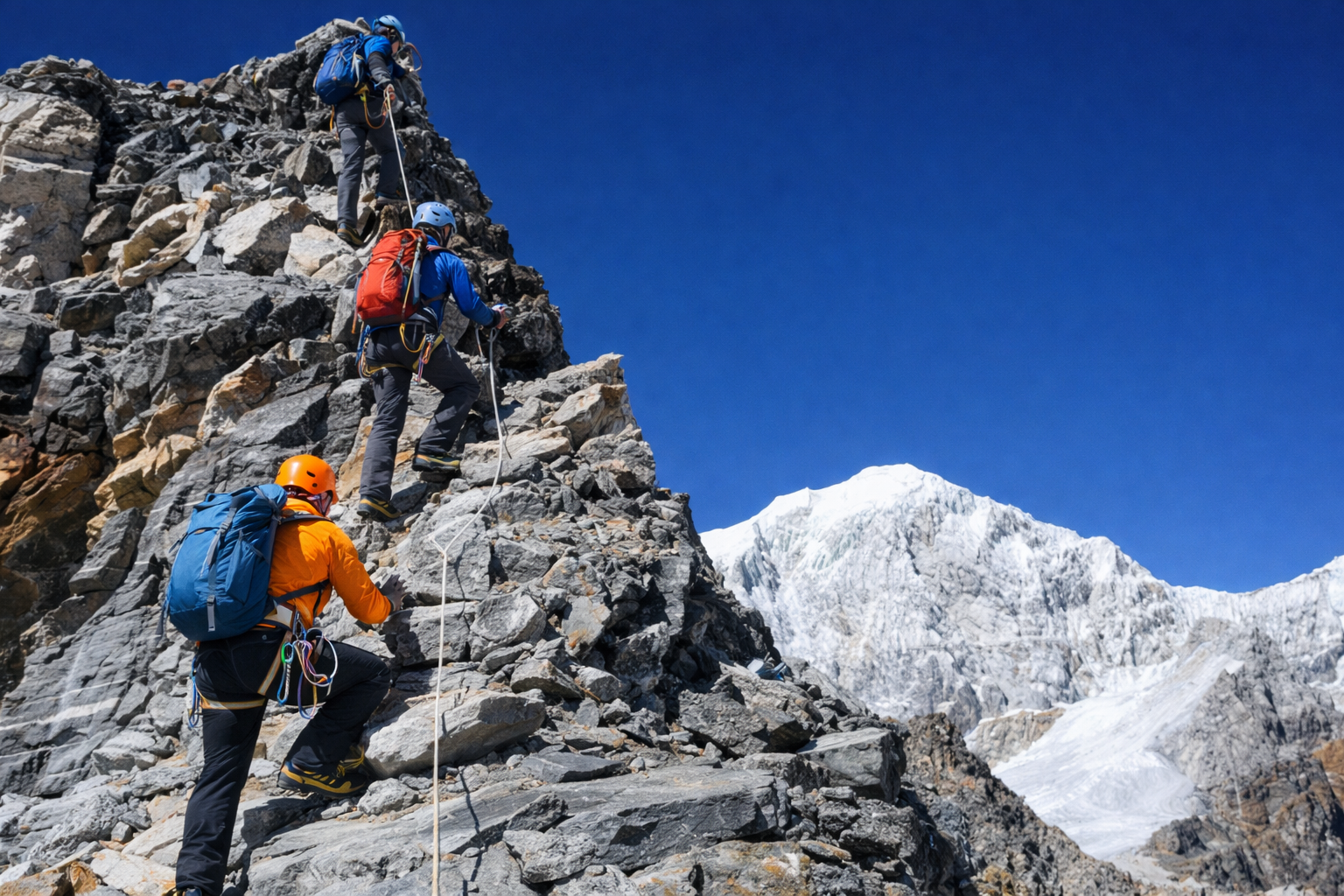
Yala Peak Climbing | Yala Peak Expedition
Yala Peak Climbing is widely considered the best first-time Himalayan climNTB-licensed...
Nepal Tour Packages
5 (49)
4 Days

Upper Mustang Trek
Upper Mustang Trek Nepal Unveil the hidden treasures of the Himalayas...
5 (49)
17 Days


