





Everest Three Pass Trek – The Ultimate High Altitude Adventure in Nepal


Everest Three Pass Trek itinerary
Your Journey, Step by Step
Arrival in Kathmandu Valley
Arrive at Tribhuvan International Airport and meet your Bold Himalaya representative for a transfer to your 3-star hotel in Thamel. Today is for acclimatization and preparation. Attend a pre-trek briefing covering the route, safety tips, gear check, and weather updates. Explore Kathmandu’s vibrant streets or visit UNESCO sites like Durbar Square, Swayambhunath, or Pashupatinath. Overnight at the hotel with hot showers, Wi-Fi, and comfortable beds. This easy day sets the tone for your Everest Three Passes adventure.
Phakding to Namche Bazaar - Gateway to Khumbu
It’s your first day, and it’s your official induction into the persona of Everest land through Sagarmatha National Park. Your adventure starts by walking across the humble Hillary Bridge, then ascending higher through a thick pine and rhododendron jungle. Having acquired park formalities at Monjo checkpoint, set yourself up for today’s most demanding exercise – the ferocious zigzag climb to Namche Bazaar.
This mythic Sherpa village sits on the amphitheater hilltop, offering your first proper glimpses of Everest, Lhotse, and other mountains. Namche is Khumbu’s market town and hosts traders, trekkers, and locals who provide a genuine atmosphere of the mountains to aid acclimatization.
Day Highlights:
- Hike along the UNESCO World Heritage-listed Sagarmatha National Park at the Monjo checkpoint.
- Walk along the famous Hillary Suspension Bridge spanning the Dudh Koshi River.
- First stunning view of Mount Everest (8,848.86m) on a hike
- Arrive at Namche Bazaar, the bustling Sherpa trading capital of Khumbu
Overnight: Mountain lodge in Namche Bazaar
Facilities: Better facilities with some of the lodges offering hot showers (pay locally), Wi-Fi, bakeries, and shops
Terrain & Challenges: Multiple suspension bridges, steep uphill climb, Sagarmatha National Park entry

Acclimatization Day in Namche Bazaar
Take a rest and acclimatize to high altitude in Namche Bazaar, the heart of the Khumbu region. Embark on a short acclimatization hike to the Everest View Hotel (3,880m) for breathtaking views of Mount Everest, Lhotse, Ama Dablam, and Thamserku.
Continue exploring nearby Sherpa villages like Khumjung and Kunde, visit the ancient monasteries, and experience the local Tibetan Buddhist culture.
This day helps your body adjust to altitude, reducing the risk of Acute Mountain Sickness (AMS) while preparing for the high-altitude Everest Three Pass Trek ahead.

Namche Bazaar to Tengboche
From Namche Bazaar (≈3,440 m), you begin a scenic Himalayan day trek through the heart of Sagarmatha National Park toward Tengboche (≈3,860 m). The trail is approximately 9–10 km and takes about 5–6 hours, depending on your pace and breaks.
The route starts with a gentle climb out of Namche, offering expansive views of mountains like Ama Dablam, Lhotse, Nuptse, and Everest. You pass through rhododendron and pine forests and small Sherpa settlements such as Sanasa, Phunki Tenga, and Kyangjuma, where you’ll find traditional tea houses and prayer‑flag‑lined paths.
After a short descent toward the Dudh Koshi River, cross a suspension bridge adorned with colorful prayer flags, then begin the steady uphill climb to Tengboche. The final ascent weaves through forested switchbacks and opens into wide ridgelines with sweeping Himalayan panoramas.
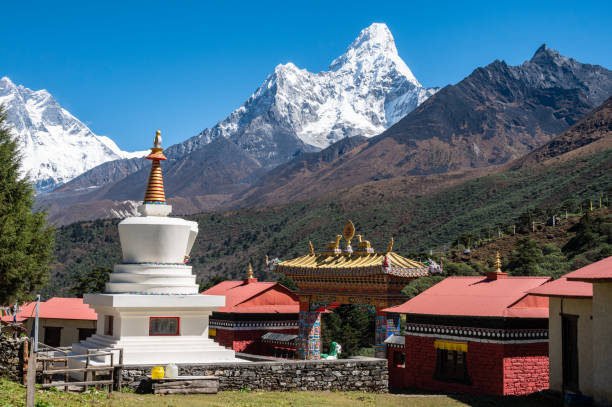
Tengboche is a serene high‑altitude village famous for the Tengboche Monastery, one of the most important Buddhist centers in the Khumbu. From its peaceful courtyard, you’ll enjoy unforgettable views of Everest, Ama Dablam, Lhotse, and Nuptse. This section of the trek not only progresses your journey toward the high alpine valleys and passes ahead but also continues your acclimatization to increasing altitude as you gradually gain height and take in cultural and spiritual highlights.
Tengboche to Dingboche
From Tengboche (≈3,860 m), you continue your high‑altitude trek toward Dingboche (≈4,410 m), a key acclimatization village in the Everest region. The trail is about 10–12 km (6–7 miles) and typically takes 5–6 hours of walking at a moderate pace.
The day begins with a gentle descent from Tengboche through rhododendron and pine forests toward Debuche, then you cross the Imja Khola (river) before ascending steadily into higher alpine terrain.
You’ll pass through traditional Sherpa villages such as Pangboche and Somare (Shomare) along well‑marked stone paths. The landscape gradually shifts from forests to open valleys and high‑altitude meadows, giving you wide views of Lhotse, Island Peak (Imja Tse), Ama Dablam, and surrounding Himalayan giants as you approach Dingboche.
Dingboche to Chhukung
From Dingboche (≈4,410 m), you trek to Chhukung (≈4,730 m), a key high‑altitude village en route to the passes of the Everest Three Pass Trek. This section is shorter than other days, but important for acclimatization as you gradually gain elevation before tackling the high passes ahead.
The trail rises gently from Dingboche, following stone paths and glacial moraine terrain. You’ll pass through open alpine valleys and yak pastures, with sweeping views of peaks such as Ama Dablam, Lhotse, Island Peak (Imja Tse), and the surrounding Himalayan giants. The landscape shifts from cultivated fields near Dingboche to more rugged, rocky high‑country terrain as you approach Chhukung.
Chhukung is a traditional Sherpa settlement used by trekkers and climbers as an acclimatization base for higher objectives like Island Peak and the passes of the Everest Three Pass Trek. The village is surrounded by dramatic mountain walls and glaciers, making it a scenic place to rest, eat, and prepare for the next day’s challenges.
Overnight Stay: Mountain lodge at Chhukung
Facilities: Simple teahouse with great views of the peaks, short hike from Island Peak Base Camp
Terrain & Challenges: Stone-walled fields, glacier moraines, increasing altitude
Rest and Acclimatization Day at Chhukung
Today is a planned rest and acclimatization day in Chhukung (≈4,730 m), an important part of your Everest Three Pass Trek before you tackle the first high pass, Kongma La. Acclimatization days help your body adjust to thinner air at high altitude and reduce the risk of altitude sickness, which is crucial for success on demanding high‑altitude treks.
You can rest in the village lodge and enjoy the dramatic surrounding views of peaks like Lhotse, Island Peak, Ama Dablam, and Makalu. If you feel good and want to enhance acclimatization further, consider a half‑day hike to nearby viewpoints such as Chhukung Ri (≈5,550 m). This popular acclimatization hike usually takes 4–7 hours round‑trip and offers 360° panoramas of Everest region giants and glacial valleys — a perfect way to prepare your body and mind for the high passes ahead.
Many trekkers also enjoy shorter side walks around the village or simply relax at the lodge, hydrate, and enjoy the peace of high‑altitude mountain life. Staying active with gentle walks—not complete rest—helps your body adapt better while still giving you time to recover.
Day Highlights:
-
Full rest and acclimatization at high altitude
-
Optional hike to Chhukung Ri for panoramic mountain views
-
Stunning scenery of Lhotse, Island Peak, and Ama Dablam
-
Prepare physically and mentally for high pass crossings
Inclusions
What’s Covered in Your Adventure
- All airport ( transfer) pick up and departure and all ground transportation during trips.
- Domestic Flight according to itinerary Kathmandu- Lukla- Kathmandu Domestic Flight 2 way flight ticket
- 2 Night three star category Hotel in Kathmandu in twin sharing bed with breakfast basis and standard Guesthouse / Trekking Lodge during trek
- All Breakfast, Lunch and Dinner in trekking each time one main course
- Everyday some seasonal fruit items
- First aid medicine items for emergency support
- Our government tax & official expenses
- Sagarmatha National Park entrance fee, Pasang Lhamu Rular Municipality Entrance fee, TIMS
- Sleeping Bag, Down Jacket (If you Needed Return after Trekking)
- Duffle Bag, T-shirt, and Trip certificate
- One cultural show and dinner program after three pass trek
- Our service charge and government taxes
- One porter will be assigned to carry a maximum of 20 kg of load for every two trekkers.
- 1 trekking guide for up to 5 participants. For more than 5 participants, 1 extra guide is added for every 5 people.
- Extra Breakfast, Lunch in the Kathmandu
- Dessert & Bar Bills
- Your international air ticket & travel insurance
- Tips for the trekking crew members
- Anything that is not mentioned is excluded

Essential Gear & Packing List for the Three Passes
Packing correctly is not about comfort; it’s a critical safety requirement for the Everest Three Pass Trek. The extreme altitude and rapidly changing weather conditions demand high-quality, reliable gear. This list has been refined over hundreds of successful treks and is designed to ensure you are prepared for everything from sunny hikes to freezing, windy pass crossings.
A Key Note on Provided Gear: To lighten your load and ensure quality, Bold Himalaya provides a high-quality expedition-grade Down Jacket and a Sleeping Bag rated to -20°C for the duration of your trek. This is one less major expense and packing headache for you.
Waterproof Trekking Boots
Camp Shoes
Trekking Socks
Fleece Jacket or Pullover
Waterproof & Windproof Jacket
Waterproof & Windproof Pants
Sun Hat or Cap
Gloves
Personal first-aid kit
Diamox
Hand sanitizer and wet wipes
Toothbrush, toothpaste, biodegradable soap, and shampoo
Quick-dry towel
Toilet paper and small plastic bags for waste
Detailed Map of Everest three pass trek
Altitude Chart of Everest Three Pass Trek

Good to Know
Your Journey, Step by Step
Best Time to Visit
The Everest Three High Pass Trek has to be undertaken in the spring season, March to May, and the autumn season, September to November, when the three passes offer a more picturesque view of the mountain, better weather, and the best cross passes. Two seasons offer the best mix of view, temperature, and trail conditions.
- Autumn Season (September-November): Provides good mountain views, a well-established climatic regime, and moderate daily temperatures. Optimum season with optimum rate of success and optimum overall condition for the cross passes.
- Spring Season (Mar-May): Offers great warm weather, blooming of the low-altitude rhododendrons, and otherwise great conditions. Afternoon thunderstorms become increasingly frequent later in the season, so passes need to be traversed as early in the day as possible.
- Winter Treks (Dec-Feb): Only for bold trekkers but with proper gear; anything short of expedition gear would be insufficient for as low as -25°C overnight lows. All lodges except a handful are shut, and the weather is unpredictable.
- Monsoon Season (Jun-Aug): With constant rains, mist-shrouded mountain vistas, poor trail conditions, and high chances of flight cancellations to/from Lukla.
Accommodation & Facilities
Three Pass trek mountain lodges go from very basic teahouses to decent ones, and the facilities also improve significantly in larger towns like Namche Bazaar and Gokyo. Most lodges feature shared bathrooms, communal dining halls, and simple twin-bedded rooms with basic bedding.
Namche Bazaar also has good facilities for hot showers (with additional cost), Wi-Fi internet, bakery shops, and gear shops. High-altitude stay has smaller rooms with shared toilet facilities, which are warm, and plain high-calorie food for acclimatization.
Power for charging equipment is usually provided in most camps (extra cost), but not high-altitude power. Charge cables and power packs should be carried. Shower stations that offer hot showers in a few camps range from $3-5 but reduce with altitude and climatic conditions.
Food & Dietary Considerations
Mountain teahouses serve primarily Nepali dal bhat (rice and lentils), noodles, pasta, potatoes, and basic international dishes adapted for high altitude. Vegetarian cuisine is typical and less likely to cause digestive problems at high altitude, with meat being left out at over 4,000m to accommodate storage needs.
Acclimatization (garlic soup) is a must to consume at altitude, calming digestion (ginger tea), and a carb diet as fuel. Avoid raw vegetables, raw food, and milk products from Namche Bazaar onwards to avoid stomach disease that will ruin your trek.
Munch between meals path snacks of high-calorie foods like nuts, chocolate, energy bars, and dried fruits. Drink purified water (filter bottles or iodine pills are good) and no booze, which is slow acclimatizing and enhances altitude sickness.
Altitude Sickness Prevention & Management
Greater popularity with acclimatization days at Namche Bazaar, Chhukung, and Gokyo greatly lowers the risk of altitude sickness, but still requires preventive sensibility and awareness. Stick with the golden rule of “climb high, sleep low” and stay generally well hydrated on the trek.
Recognize early manifestations of headache, nausea, dizziness, fatigue, and loss of appetite. More extreme symptoms of confusion, shortness of breath, or loss of balance require immediate descent. Pulse oximeters are always carried and certified in altitude sickness recognition and emergency descent.
Consider inquiring from your physician whether it is worth taking Diamox (acetazolamide) as a help for acclimatization, but a sound ascent plan takes priority over drugs. Avoid sleeping pills, alcohol, and overwork fatigue in the first few days above 3,000m altitude.
Permits & Documents Required
Permits Required:
- Sagarmatha National Park Entrance Permit (NPR 3,000 for foreign tourists)
- TIMS Card – Trekkers’ Information Management System (NPR 2,000)
- Pasang Lhamu Rural Municipality Permit (NPR 2,000)
Documents Required:
- Passport valid for at least 6 months from the date of travel
- Nepal visa (available on arrival at Kathmandu airport for most countries)
- High-altitude trek and helicopter evacuation travel insurance (mandatory)
- 4-6 passport-sized photographs for permit and record keeping
Bold Himalaya organizes all reservations of permissions in our package, an advance deposit, a photocopy of your passport, and photos. Ensure that your travel insurance policy covers direct trekking above 5,000m and emergency helicopter evacuation, as most policies will not pay out for high-altitude activity.
Packing List for All Seasons
Clothing Essentials:
- Insulated down jacket (from Bold Himalaya if needed)
- Waterproof/windproof outer shell jacket and trousers
- Insulating mid-layers (fleece or synthetic insulating layers)
- Moisture-wicking base layers (best merino wool)
- Warm winter hat and brimmed sun hat
- Outer insulated gloves and liner gloves
- Warm trekking socks (4-6) and liner socks
- Quick-drying trekking shorts and trekking trousers
- High-altitude and night-time thermal underwear
Footwear & Accessories:
- Strong good waterproof trekking boots (well-worn in)
- Camp shoes or sandals for lodge comfort
- Gaiters for snow and debris protection
- Micro spikes or crampons (passes need to be crossed)
- Trekking poles (highly recommended for support and joint protection)
- Sunglasses (glacier-rated UV protection required)
- Headlamp with extra light and reserve batteries
Technical Equipment:
- -20°C-rated sleeping bag (could be arranged by Bold Himalaya if necessary)
- Sleeping bag liner for hygiene and warmth
- Large rucksack (65-75L) for porter carry
- Daypack (30-40L) for day excursions
- Water bottle or hydration system (frost-proofed to be cold-temperature proof)
- Water purification tablets/filter system
Personal & Medication Items:
- Altitude sickness medication in the first aid kit
- Prescription medication & medications
- High SPF sunblock at high altitude
- Sun-protective lip balm
- Toiletries (RECOMMENDED using Biodegradable soap)
- Dry the towel and toilet paper
- Portable charger/power bank (multiple recommended)
- Waterproof bags for gear and electronics protection
Winter kit (Dec-Feb):
- Inner insulating layers for a sleeping bag
- Face mask or windproof balaclava
- Chemical hand/foot warmers
- Insulated cover for a water bottle
- Expedition-grade gloves and spares
Internet & Communication Facilities
Mobile phone network (Nepal Telecom and Ncell) is present nearly the whole trekking path to an altitude of around 4,500m, although the signal is very poor in the higher altitude and the valley parts. Purchase local SIM cards in Kathmandu with data packages for more reliability than in lodge Wi-Fi networks.
Wi-Fi is available in most tea houses at reasonable prices ($2-5/day) but is slow and unreliable, especially during peak trekking months when bandwidth is consumed by many users. There is little or no connectivity beyond Gorak Shep, and in very remote areas far from passes.
For emergency use, satellite communication equipment is also accessible to Bold Himalaya guides and rental emergency beacons. Download maps and information required beforehand offline, and inform family/friends of the anticipated time of communication blackout.
Money & Banking Facilities
There is no ATM facility after Namche Bazaar, and therefore adequate Nepali rupees must be carried for the entire trek. Spends $15-25 per day on other miscellaneous expenses like hot shower, Wi-Fi, drinks, snacks, and tips, apart from those included in the Bold Himalaya package.
Exchange money in Kathmandu in advance since it is a broader option that offers a better rate compared to the hills. Carry US dollars as backup money, which most lodges accept, but at terrible rates of exchange. Store money in a dry condition and separate it in different locations.
No credit card facilities are offered, and mountain lodges never have any mobile payment systems. Spend all the trek cash on spending, including emergency expenditure and helicopter evacuation charges if needed.
Training & Preparation Guidelines
Physical training must be initiated 12-16 weeks before departure with cardiovascular training, leg strengthening, and endurance hiking. Running up hills, stair climbing, and pack weight training must be done regularly to replicate the trekking stress and induce specific muscle recall.
Mental training must also be employed in managing bad weather, pain, and aches, and in negotiating crossing technical difficulties. Meditate, stress management, and positive visualization. Gain Sherpa culture and the Buddhist way of life to be aware of the culture and give it its rightful respect.
Consider completing a practice trek at altitude (above 3,000m) before attempting the Three Pass circuit. Get familiar with all technical gear like crampons, trekking poles, and cold-weather equipment by conducting dry runs before the trek.
Environmental Responsibility & Ethics
Bold Himalaya has No Trace policies and follows them strictly to achieve maximum environmental preservation by all the trekkers and with minimum environmental deterioration through proper waste disposal, water, and preservation of the natural environment. Dispose of all the non-biodegradable types of waste and utilize available toilet facilities.
Benefit the local community by traveling responsibly, being a respectful visitor to your cultural encounters, and being courteous to guides and porters. Never give gifts or money directly to children because it confines them to begging dependency and has the impact of undermining traditional social hierarchies.
Be respectful to Buddhist customs by going around monasteries and chortens in a counterclockwise direction, never pointing your feet towards religious objects, and requesting permission prior to taking a photo of people or religious objects. Dress humbly and behave respectfully at religious sites and villages.
Travel Insurance Requirement
Travel insurance is a must-have for those planning to embark on the Everest Three Pass Trek, as it provides coverage for unexpected situations. Insurance offers security in emergencies like altitude sickness or injuries, trip cancellations due to flight delay, or personal issues. It also includes protection for stolen items, emergency evacuation and rescue expenses in mountainous areas, and any legal responsibilities that may arise during the trek. With travel insurance in place, hikers can tackle the challenges of the Everest region confidently, knowing they are covered for any circumstance and can fully immerse themselves in the breathtaking beauty and thrills of the Himalayas.
Tipping in Nepal
The tipping custom is ingrained in the trekking culture of Nepal and is used to express gratitude for the porters’ and guides’ tireless efforts. It is a common habit and is seen as a sign of gratitude for the assistance given during the walk. Trekking guides are essential for guiding hikers over difficult terrain, ensuring their safety, and offering insightful information about the local way of life and environment. An average tip for porters is between 10% and 15% of the entire cost of the hike. Trekkers may decide to tip more generously as a sign of appreciation if the guide has gone above and above in providing great service or guaranteeing the group’s safety.
Three passes trek vs Everest base camp
Everest Three-Pass Trek |
Everest Base Camp Trek |
| Includes crossing the Renjo La, Cho La, and Kongma La Passes. | Includes Gorakshep and Everest Base Camp. |
| Along the way, you’ll explore the Gokyo Valley, Chhukung Valley, Renjo Valley, and Kala Patthar. | Excludes Gokyo Valley while encompassing Kala Patthar. |
| The total distance covered is 166 kilometers | The total distance covered is 130 kilometers |
| 14 to 18 days to complete | 12 to 14 days to complete |
| One of the lesser-known treks | One of the most popular in Nepal. |
| This route is recommended for those with some hiking experience due to its demanding nature. | Does not necessitate any specific skills. |
Everest Three Pass Trek Routes: Clockwise vs Anti-Clockwise Loop
The Everest Three Pass Trek is one of the most challenging and rewarding high-altitude trekking routes in Nepal, crossing three legendary Himalayan passes: Kongma La (5,535m), Cho La (5,420m), and Renjo La (5,360m).
Trekkers can complete this iconic circuit in two directions: the anti-clockwise (standard route) and the clockwise (alternative route). Each loop offers a unique trekking experience, different acclimatization patterns, and distinct mountain perspectives.
Choosing the right route direction for the Everest Three Pass Trek plays a vital role in safety, acclimatization, comfort, and overall trekking success. Below is a clear comparison of both routes to help you decide the best option for your Himalayan adventure.
Anti-Clockwise Route (Standard Everest Three Pass Trek Loop)
Route:
Namche Bazaar → Tengboche → Dingboche → Chukhung → Kongma La Pass → Lobuche → Gorak Shep → Everest Base Camp → Dzongla → Cho La Pass → Gokyo → Thame → Renjo La Pass → Namche Bazaar
The anti-clockwise Everest Three Pass Trek route is the most popular and widely used trekking loop. It follows the classic Everest Base Camp trekking trail first, allowing trekkers to acclimatize naturally before crossing the highest and most demanding pass, Kongma La. This route offers well-established teahouses, better rescue access, and smoother altitude adaptation, making it the safest and most recommended option for most trekkers.
Key benefits:
-
Best acclimatization sequence for high-altitude trekking
-
Strong infrastructure and teahouse availability
-
Follows the classic Everest Base Camp trail
-
Ideal for first-time Three Pass trekkers
-
Safer logistics and emergency support
Clockwise Route (Alternative Everest Three Pass Trek Loop)
Route:
Namche Bazaar → Thame → Lungden → Renjo La Pass → Gokyo → Dragnag → Cho La Pass → Lobuche → Gorak Shep → Everest Base Camp → Dingboche → Kongma La Pass → Namche Bazaar
The clockwise Everest Three Pass Trek route is the less-traveled and more adventurous option. Trekkers cross Renjo La Pass first and complete the circuit in reverse order. This route offers quieter trails, remote valley experiences, and unique views of Everest, Cho Oyu, and the Gokyo Lakes region. However, it requires stronger physical fitness, advanced planning, and better high-altitude trekking experience.
Key benefits:
-
Less crowded trekking trails
-
Remote and wilderness trekking experience
-
Unique mountain and valley perspectives
-
Ideal for experienced trekkers
-
Adventure-focused Himalayan route
Which Route is Best for the Everest Three Pass Trek?
For most trekkers, the anti-clockwise route is the best and safest choice due to better acclimatization, infrastructure, and logistics. The clockwise route is ideal for experienced high-altitude trekkers seeking solitude, challenge, and off-the-beaten-path Himalayan trekking experiences.
Why Everest Three Pass Trek Is the Ultimate Himalayan Challenge
The Everest Three Pass Trek is widely regarded as the most demanding and rewarding trekking adventure in the Nepal Himalayas. More than just a high-altitude journey, it is a complete Himalayan expedition experience that tests physical endurance, mental resilience, and high-mountain adaptability.
Crossing three extreme alpine passes, Kongma La Pass (5,535m), Cho La Pass (5,420m), and Renjo La Pass (5,360m), makes this route the ultimate high-altitude trekking challenge in the Everest region.
Unlike standard trekking routes, the Everest Three Pass Trek Nepal combines technical terrain, glacial crossings, steep ascents, long walking days, and extreme altitude exposure into one continuous circuit. Trekkers navigate remote valleys, icy moraine fields, high mountain ridgelines, and glacier corridors while staying above 4,500 meters for multiple days — a level of sustained altitude rarely found on other Himalayan treks.
This legendary route is not only physically demanding but also geographically complex. The Everest Three Pass Circuit connects the most iconic trekking destinations of the Khumbu region — Everest Base Camp, Gokyo Lakes, Kala Patthar, and traditional Sherpa villages like Namche Bazaar, Thame, and Dingboche — into one continuous loop. No other trekking route in Nepal offers such a complete combination of altitude, diversity, culture, scenery, and challenge in a single itinerary.
What truly defines the Everest Three Pass Trekking route as the ultimate Himalayan challenge is the mental and technical demand. Trekkers must manage:
-
Low-oxygen environments
-
Extreme weather fluctuations
-
Long alpine passes
-
Glacial terrain
-
Limited rescue access in remote sections
-
Consecutive high-altitude days
-
Physically exhausting descents and ascents
Beyond the physical challenge, the trek delivers unmatched rewards. From panoramic views of Mount Everest (8,848.86m), Lhotse, Makalu, Cho Oyu, and Ama Dablam, to the turquoise waters of the Gokyo Lakes and the spiritual landscapes of ancient Sherpa monasteries, the Everest Three Pass Trek in Nepal offers an experience that no standard Everest trekking route can match.
In every sense, altitude, difficulty, endurance, scenery, and achievement, the Everest Three Pass Trek stands as the ultimate Himalayan trekking challenge, designed for serious trekkers seeking the highest level of adventure in the Everest region.
Best Season for Everest Three Pass Trek
Spring Season (March–May): Great Weather and Scenic Beauty
Spring is one of the best seasons for the Everest Three Pass Trek because it brings stable weather, dry trails, and vibrant mountain scenery. During this period, the Khumbu region of Nepal comes alive with blooming rhododendrons and lush alpine meadows, which makes hiking between high‑altitude villages especially rewarding.
Daytime temperatures are moderate, usually ranging from about 8 °C to 15 °C in mid‑elevation areas, and skies are generally clear, offering spectacular views of Everest, Cho Oyu, and Ama Dablam. Early in the season (March), snow can remain near the high passes, so carrying microspikes or crampons is recommended for sections like Kongma La and Cho La.
Overall, spring offers a perfect balance of comfortable weather, scenic diversity, and excellent visibility for this high‑altitude trek.
Autumn Season (September–November): Best Overall Weather and Views
Autumn is widely regarded as the prime season for the Everest Three Pass Trek in Nepal because of its reliable post‑monsoon weather and ultra‑clear mountain views. After the summer rains have passed, the air becomes crisp and clean, dramatically increasing visibility of the Himalayan giants.
Daytime temperatures are comfortable for trekking, and nights are cool but manageable, which helps with recovery after long hiking days. Trails above 4,000 m remain dry and firm, which makes crossing the high passes — like Renjo La, Cho La, and Kongma La — significantly safer and more comfortable.
Because autumn is very popular, flights to Lukla and mountain lodges in places like Dingboche, Gokyo, and Dzongla fill up quickly, so early booking is recommended. For most trekkers seeking the ideal blend of weather, landscape, and view clarity, autumn is the top choice.
Winter Season (December–February): Quiet Trails but Harsh Conditions
Winter offers a unique experience for those attempting the Everest Three Pass Trek, but it comes with serious challenges that make it suitable only for experienced, well‑prepared trekkers. Temperatures drop significantly at higher altitudes, and heavy snowfall often covers the trail and high passes, especially in January and February.
On days with clear skies, the views can be stunning, and the trail is unusually peaceful and quiet — almost deserted compared to peak seasons. However, deep snow makes crossings like Kongma La and Cho La more difficult and sometimes unsafe without technical mountaineering experience.
Night temperatures can plunge far below freezing, and high‑altitude lodges may be closed or limited in service. Winter trekking is possible, but it requires excellent cold‑weather gear, careful planning, and the ability to handle icy, snowy routes.
Monsoon Season (June–August): Not Recommended for High Passes
The monsoon season is generally not recommended for the Everest Three Pass Trek because heavy rains and frequent storms make high‑altitude trails slippery, muddy, and sometimes dangerous. While lower areas in the Everest region may look lush and green during this time, rainy weather often means cloud cover obscures mountain peaks and reduces visibility — limiting the panoramic views hikers seek.
Landslides and stream flooding can affect trail safety, and flight schedules to and from Lukla are often disrupted. For trekkers set on exploring Nepal during the monsoon months, rain‑shadow regions like Upper Mustang or Lower Dolpo are safer and more accessible alternatives.
For high mountain challenges like the Three Pass Trek, avoiding the monsoon is strongly advised.
Summary: Best Time for Everest Three Pass Trek, Nepal
The best season forthe Everest Three Pass Trek in Nepal is clearly autumn (September–November), followed closely by spring (March–May). Autumn provides the most stable weather and clearest mountain views, while spring offers beautiful natural scenery and comfortable temperatures.
Winter can be rewarding for experienced trekkers but comes with cold temperatures and snow, and the monsoon should be avoided due to unsafe trail conditions and poor visibility.
Choosing the right season will greatly enhance your safety, comfort, and overall enjoyment of this legendary high‑altitude trekking route.
FAQs
Your Questions, Answered
2. What is the best time to attempt the Everest Three Pass Trek?
The best months are spring (March-May) and autumn (September-November), but best October-November with clear sky and sunshine, and most stable. An attempt can be made during winter by experienced climbers with proper equipment, but monsoon (June-August) should not be attempted since visibility is very poor, and the terrain is very hazardous.
3. What is the extent of experience and physical fitness needed?
The hike requires elite cardiovascular conditioning, adequate lower body power, and prior high-altitude trekking experience above 4,000m+. You must be able to hike 6-10 hours daily and be experienced in the use of crampons and walking poles on uneven slopes.
4. How much does the Everest Three Pass Trek cost with Bold Himalaya?
Bold Himalaya offers rates of $1,800-2,200/person for 2-4 people, more than 4 people discounted rate. Tips ($150-200), money for personal expenses ($15-25/day), and a Heli back flight (optional) ($1,200-2,000) are additional expenses.
5. What is the accommodation facility for trekking?
Accommodation ranges from comfortable lodges in Namche Bazaar with hot showers and Wi-Fi to basic teahouses at higher altitudes with shared facilities. Twin beds with minimal bedding, shared dining rooms, and more austere facilities with altitude are the norm in most lodges.
6. Is altitude sickness a factor in this trek?
There is some risk of altitude sickness, but tempered by our carefully planned schedule with ample acclimatization days at Namche Bazaar, Chhukung, and Gokyo. The guides are told to identify altitude sickness and bring first aid supplies like pulse oximeters and emergency medicine along with them.
7. How does the Three Pass Trek differ from the other treks of the Everest region?
The Three Pass Trek is the sole one that attempts to form a loop of the Everest region, covering all the highlight spots such as Everest Base Camp, Kala Patthar, and Gokyo Lakes. It fills what the others lack with glacier trekking, technical crossing of passes, and pristine wilderness regions with relatively fewer trekkers.
8. Will a helicopter rescue be arranged if needed while trekking?
Yes, helicopter rescue facilities are in place in addition to the majority of the trekking route, and Bold Himalaya has pre-arranged with rescue operators. Full travel insurance with helicopter evacuation is required, and the cost of rescue will typically range between $3,000-8,000, depending on the location.
9. What technical skills are required for pass crossings?
Basic mountaineering skills are essential including crampon use on icy terrain, pole balancing with a trekking pole, and loose scree slope experience. Technical climbing is not involved, but steep slope experience and perhaps icy traverses on passes must be well known to you.
10. How populated is the Three Pass Trek about the normal EBC route?
The Three Pass Trek is less touristic than the standard Everest Base Camp trek, particularly after the Chhukung area and in Gokyo Valley. Technicality and higher mileage inherently limit involvement, hence making it an upmarket and authentic mountain experience.
11. What happens if weather prevents pass crossings?
Dynamic trek route planning with back-up routes and buffer days in our itinerary for inclement weather, dynamic guides who remain current on prevailing weather conditions, and make decisions on the timing of pass ascents and side trail ascents based on safety considerations.
12. Is it possible to combine this trek with other activities in Nepal?
Yes! Bold Himalaya offers excellent add-on activities like Chitwan National Park safari, white-water rafting, Kathmandu Valley cultural tours, or other trek destination variations. Peak packages will have helicopter flights, summit climbing activities, or rest activities to offer complete Nepal experiences.
13. What is the group size and guide-to-trekker ratio?
Bold Himalaya maintains limited groups of a maximum of 12 to 20 trekkers in a group for personal care and experience management. We believe in and practice having one experienced guide for every 4-6 trekker, with additional assistant guides for larger groups for small group handling.
14. How do I prepare for the technical aspects of pass crossings?
Essential preparation includes practicing with crampons on various terrain types and developing confidence with trekking poles for stability. Attend a beginner’s course and develop rough ground balance, core strength, and confidence with frequent practice sessions.
15. How difficult is the Everest Three Pass Trek?
The Everest Three Pass Trek is considered one of the most challenging non-technical treks in the world. It is significantly harder than the standard Everest Base Camp trek due to three major factors: the high altitude of the passes (all above 5,300m), long and strenuous daily walking hours (often 7-9 hours), and the technical terrain on the passes themselves, which can involve loose scree, steep rock, and glacier travel. Excellent physical fitness and mental resilience are mandatory.
16. What is the best Everest Three Pass Trek itinerary?
The most effective and safe itinerary for the Everest High Pass Trek is an 18-day journey, like the one we offer. This duration is carefully designed with built-in acclimatization days in Namche Bazaar, Chhukung, and Gokyo to maximize your chance of success. Rushing the itinerary significantly increases the risk of Acute Mountain Sickness (AMS) and failure to complete the passes.
17. Do I need a guide for the Everest Three Pass Trek?
While not legally mandatory like in some restricted areas, a guide is highly recommended for the Everest High Pass Trek. The route over Kongma La, Cho La, and Renjo La is complex and not always well-marked. An experienced guide provides critical navigation, especially in poor weather, manages acclimatization, handles any emergencies, and ensures safe passage across the technical sections of the passes, particularly the glacier on Cho La.
18. Can I add a peak climb, like Island Peak, to this trek?
Yes, it is a popular and fantastic option to combine Island Peak with the Everest Three Pass Trek. The trek already passes through Chhukung, which is the starting point for the Island Peak ascent. This combination creates the ultimate Himalayan mountaineering adventure. Adding Island Peak typically extends the itinerary by 3-4 days and requires prior climbing experience or a willingness to learn basic mountaineering skills from our guides.


View OurSimilar Packages
Discover our top tours, loved by thousands of travelers annually. Choose the adventure that inspires you and embark on a journey tailored to your desires.
Save 30%
Everest Base Camp Luxury Lodge Trek
The Everest Base Camp Luxury Lodge Trek is one of the... Nepal Tour Packages
 15.0 Days

Save 20%
Everest Base Camp Trek 14 days
The world’s most famous trekking destination is the Everest Base Camp...
Nepal Tour Packages
 5 (149)
14.0 Days
5 (149)
14.0 Days

Save 34%
Everest Base Camp Trek with Gokyo Cho La Pass
Everest Base Camp with Gokyo Lake Cho La Pass trek is...
Nepal Tour Packages
16.0 Days

Save 20%
Gokyo Lake Trek
Situated in the breathtaking Khumbu valley of Nepal, the Gokyo Lake...
Nepal Tour Packages
13.0 Days

Gokyo Lakes Renjo La Pass Trek
Enjoy the Gokyo Lakes Renjo La Pass Trek with Bold Himalaya...
Nepal Tour Packages
14.0 Days

Save 21%
Island Peak Climbing
Island Peak Climbing (Imja Tse, 6,189m) is one of the most...
Nepal Tour Packages
16.0 Days


