
Everest View Trek – A Scenic Journey in the Everest Region


Everest View trek Itinerary
Have a look at our carefully planned Everest View trek itinerary below and discover what awaits you on the trail.
Day 1: Fly to Lukla and trek to Phakding
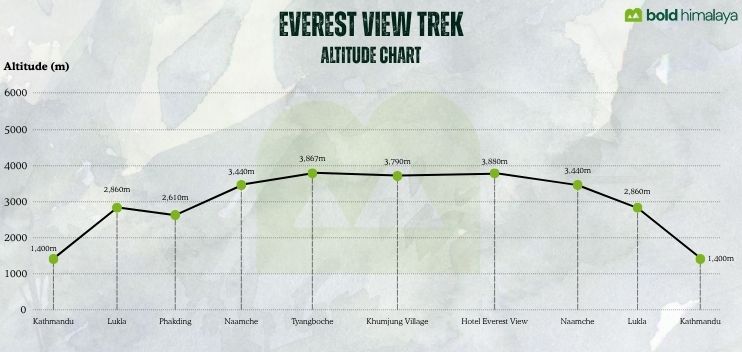
2,610m/8,563ft
30-35 mins flight & 3-4 hours trek
Tea House
Breakfast, Lunch, Dinner
Early in the morning, you will be picked up from your hotel within a 4 km radius of Thamel and transferred by private vehicle to Tribhuvan International Airport. Then, you will board a short scenic flight to Lukla, the gateway to the Everest region.
The flight from Kathmandu to Lukla takes around 30-35 minutes, offering beautiful aerial views of the Himalayan foothills and mountain landscapes. After landing at Tenzing-Hillary Airport in Lukla, you will meet your trekking team and begin your trek to Phakding.
The trail gradually descends and passes Sherpa settlements such as Chheplung, a small village, where you can see traditional stone houses, prayer wheels, and mani walls. The trail then continues toward Thado Koshi, crossing scenic mountain streams and offering views of the surrounding Himalayan landscape. You will continue walking through small villages and forested sections before reaching Ghat, a picturesque village beside the Dudh Koshi River.
After approximately 3-4 hours of trekking, you will reach Phakding, a peaceful village situated beside the Dudh Koshi River. Upon arrival in Phakding, you will check into your teahouse, have some time to rest, and enjoy your first evening in the Everest region. Overnight stay at a teahouse in Phakding.
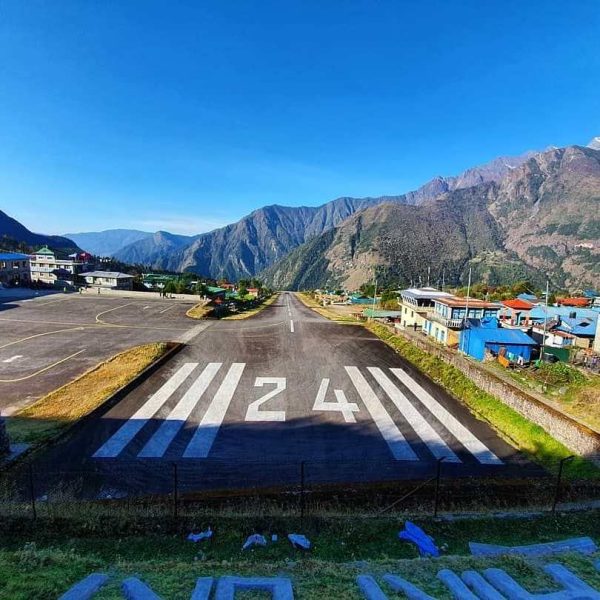
Lukla – Gateway to the Everest Region
Lukla, located at 2,860 meters (9,383 ft) in Nepal’s Khumbu region, is famously known as the starting point ... Read More
Day 2: Trek to Namche Bazaar
3,440m/11,286ft
5-6 hours
Tea House
Breakfast, Lunch, Dinner
After having breakfast in Phakding, you will begin your trek towards Namche Bazaar, which is approximately 10.4 km. Today is one of the exciting sections of the trek as the trail follows the Dudh Koshi River and gradually enters the Sagarmatha National Park.
The trail passes through several beautiful Sherpa settlements, including Toktok, Benkar, Chhamuwa, and Monjo. At Monjo, you will enter the Sagarmatha National Park after completing the necessary permit and checkpoint procedures. From here, the trail continues through Jorsale, where you may stop for a short break before continuing along the river.
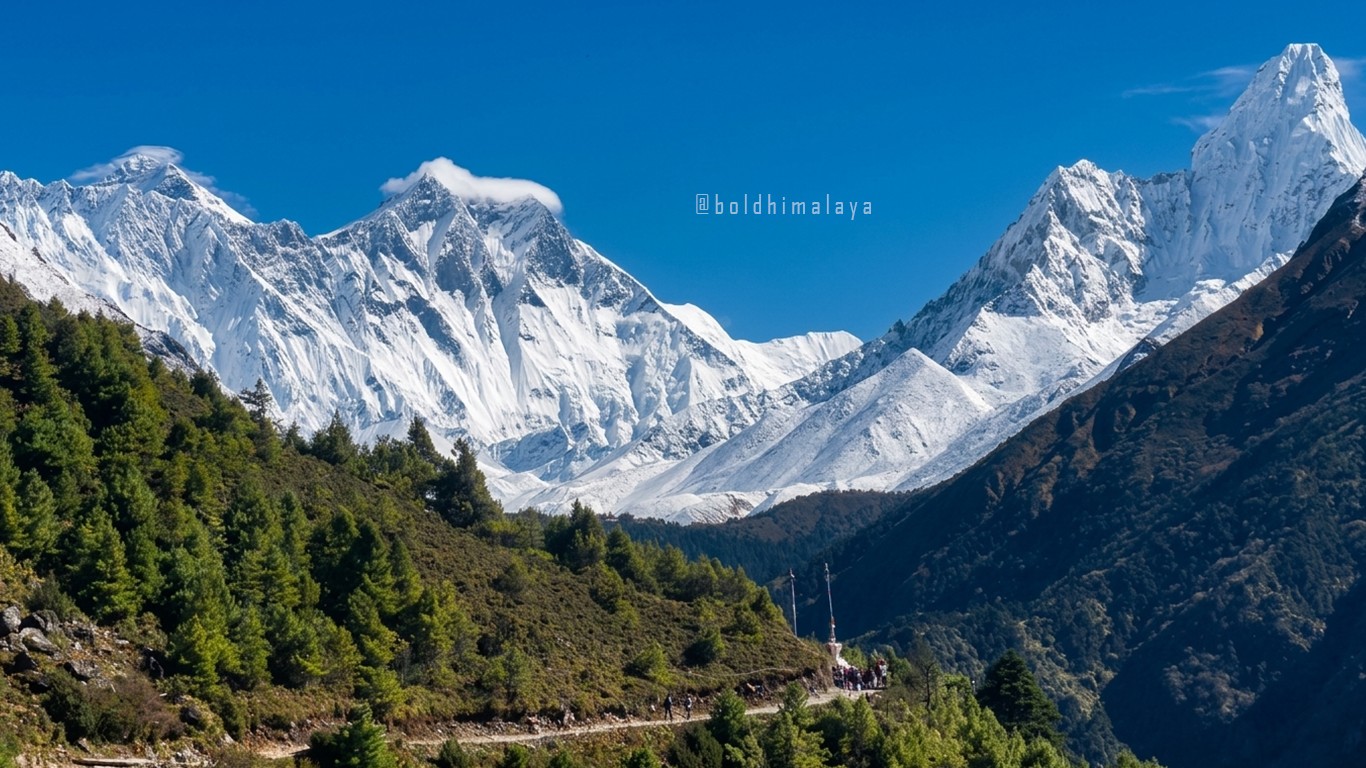
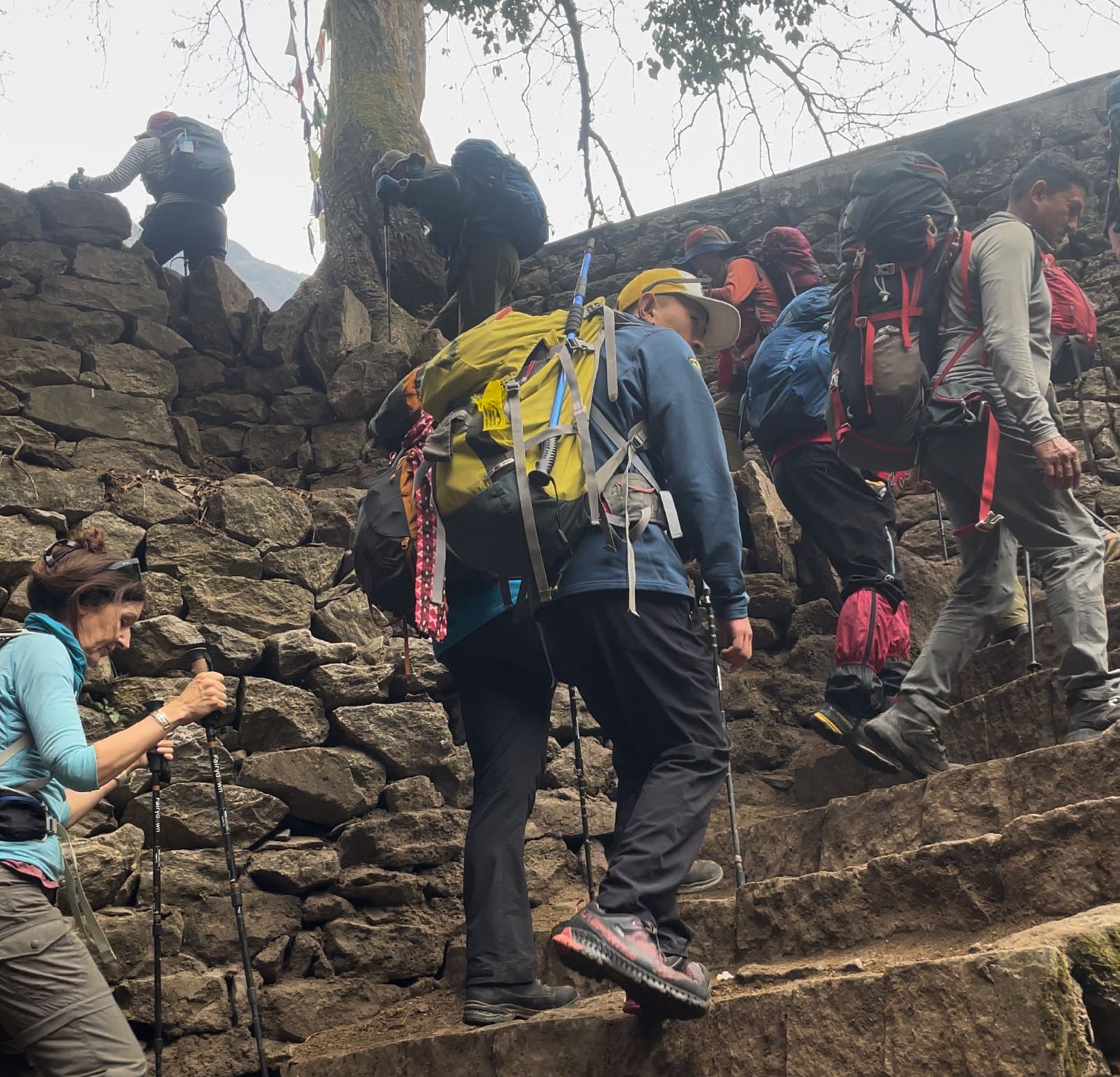
You will cross several suspension bridges and also the famous Hillary Suspension Bridge decorated with colorful prayer flags. After crossing the bridge, the trail becomes steeper as you begin the challenging climb toward Namche Bazaar. The uphill section takes you through pine and rhododendron forests, with occasional views of Mount Everest, Lhotse, and Nuptse when the weather is clear.
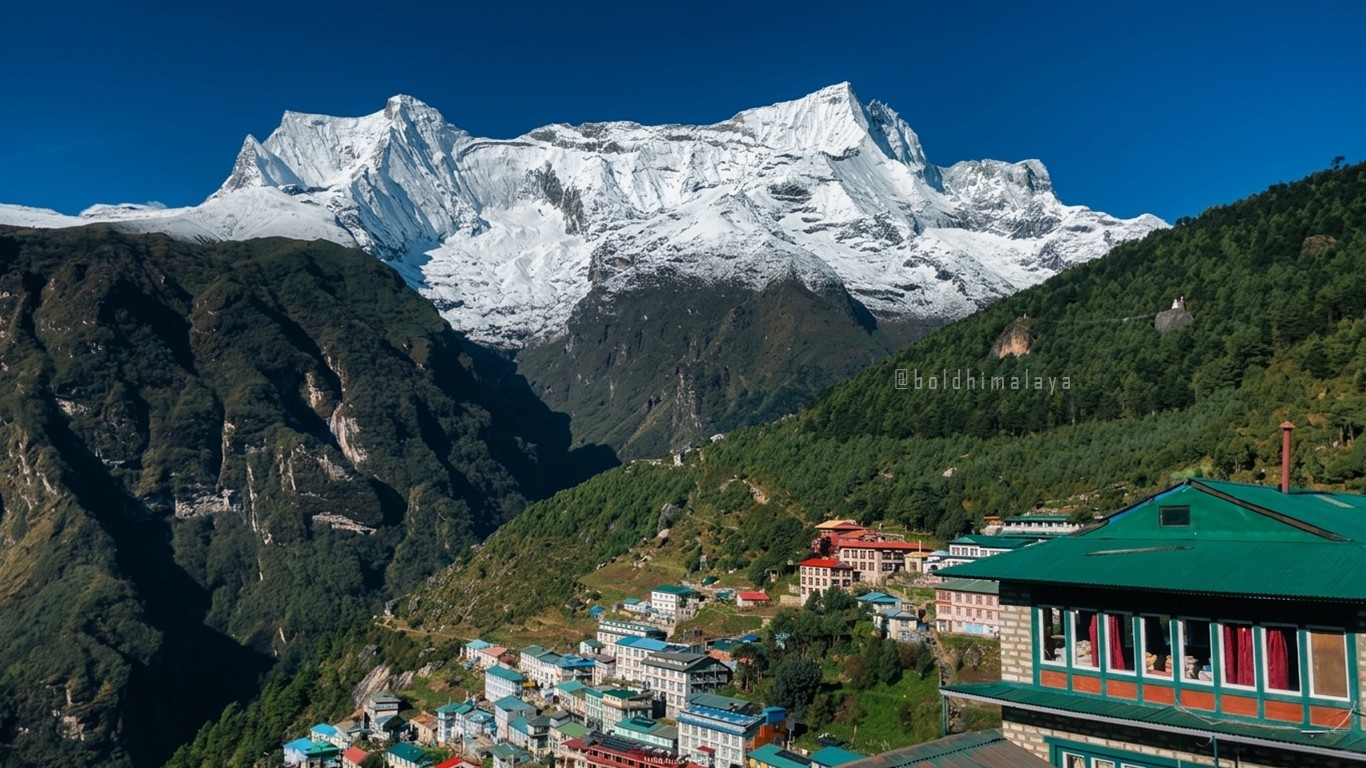
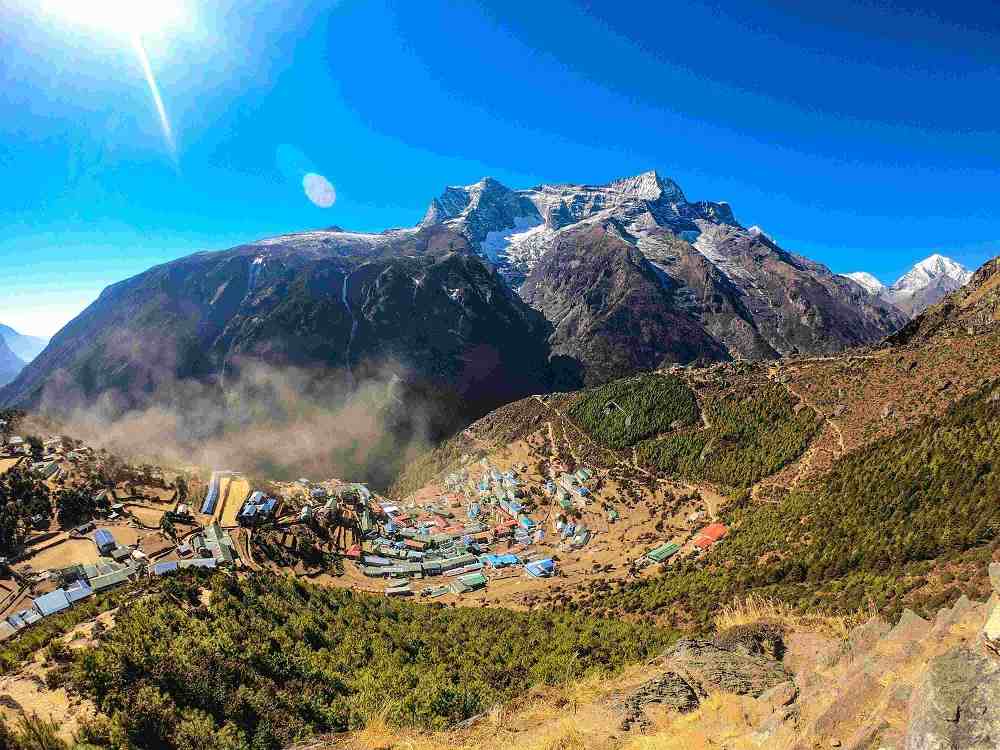
After several hours of walking, you will finally reach Namche Bazaar, the famous cultural hub of the Everest region. Overnight in Namche Bazaar.
Note: If you feel tired or need additional time to adjust to the altitude, an extra acclimatization day can be taken at Namche Bazaar. Please note that this will extend the itinerary by one additional day.
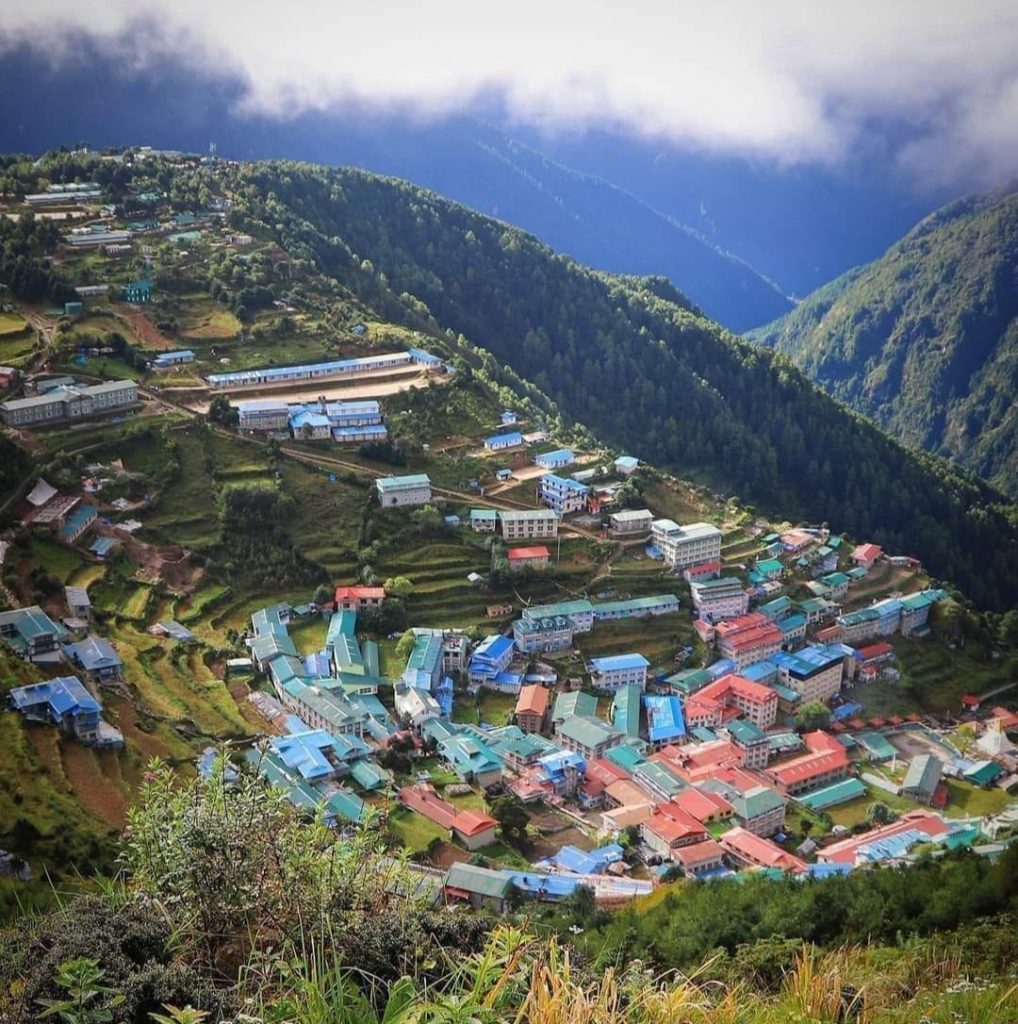
Namche Bazaar – Gateway to the Everest Region
Namche Bazaar is the largest and most important town in Nepal’s Everest region, located at an altitude of ... Read More
Day 3: Trek to Tengboche
3,867m/12,687ft
5-6 hours
Tea House
Breakfast, Lunch, Dinner
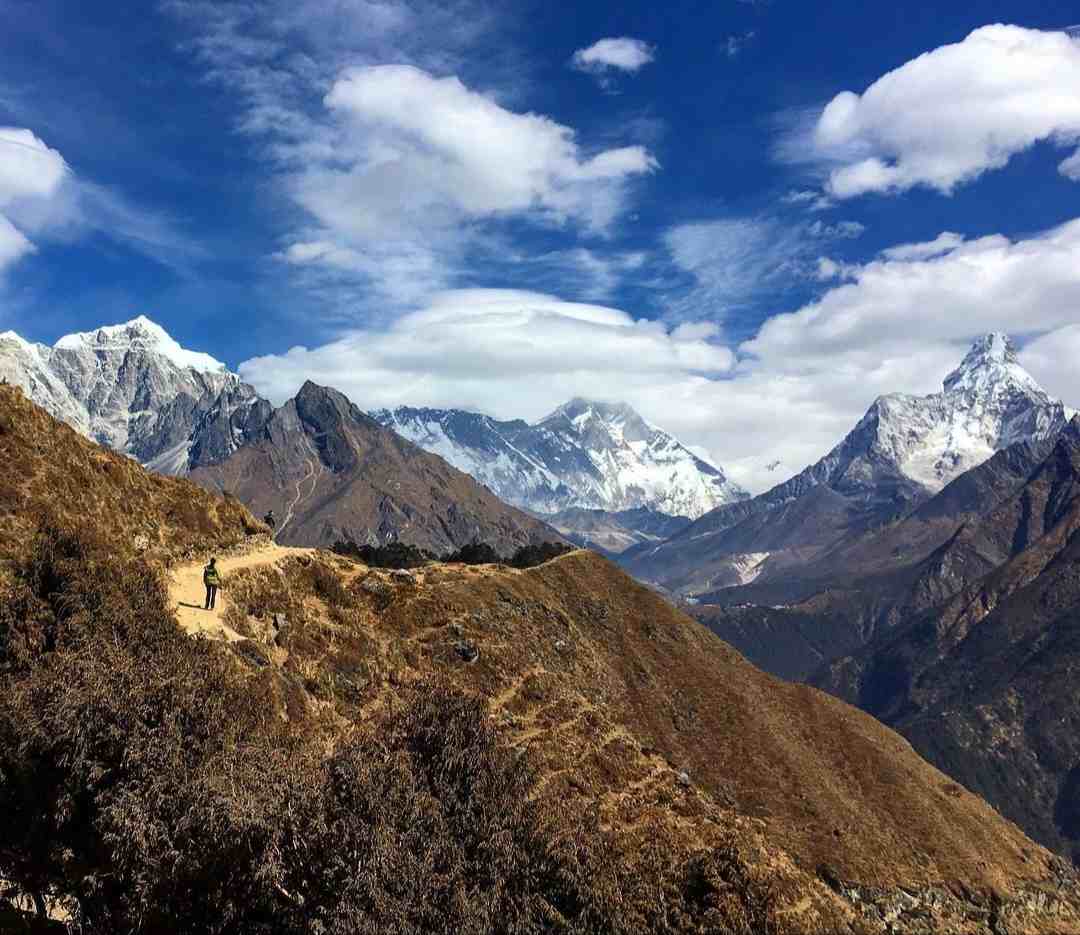
Today, you’ll follow a scenic trail toward Tengboche, which covers approximately 9.3 km. The trail initially climbs gently above the Dudh Koshi Valley, with spectacular views of Mount Everest, Ama Dablam, Lhotse, Nuptse, and Thamserku.
You will pass through the small settlements of Kyangjuma and Sanasa before continuing through beautiful rhododendron and pine forests toward Phunki Tenga, where you’ll stop at Phunki Tenga for lunch or a short rest. Then, after crossing the river, the trail climbs steadily through the forest to Tengboche, famous for its Tengboche Monastery.
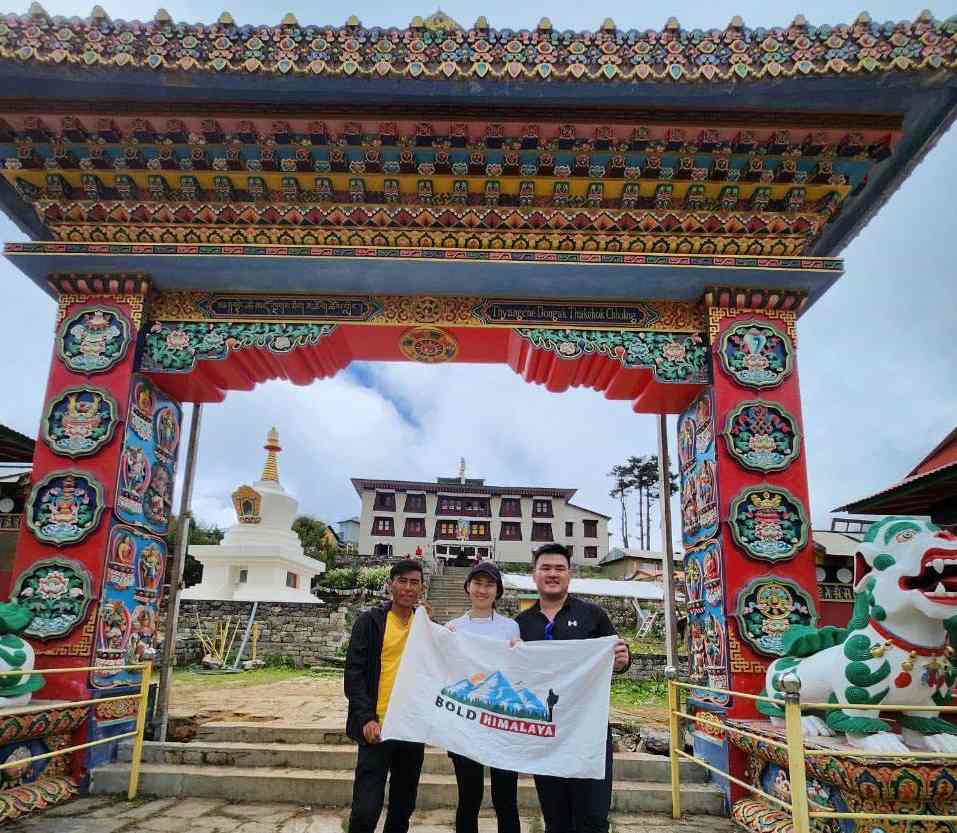
Upon arrival, you can explore the monastery, observe Buddhist prayers and rituals when available, spin prayer wheels, and enjoy the peaceful surroundings and Himalayan views before settling into your teahouse for the night.
Note: We also offer a helicopter charter option to Tengboche as an alternative from/back to Lukla. Additionally, you can take a scenic helicopter flight from Tengboche to Everest Base Camp (5,364 m) and then return to Lukla.
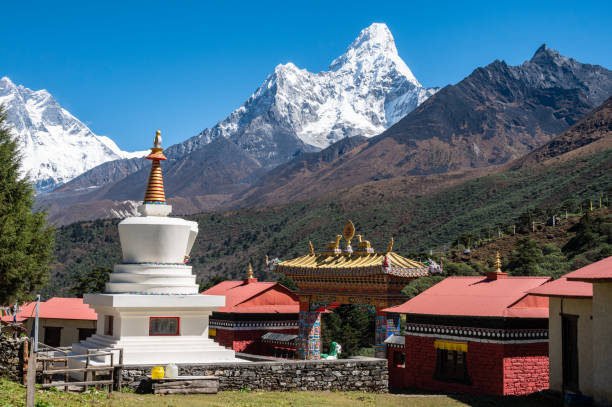
Tengboche Monastery – The Spiritual Heart of the Khumbu
Perched at 3,870m (12,694ft) in the Khumbu Valley, Nepal, Tengboche Monastery is the largest and most famous monastery ... Read More
Day 4: Trek back to Namche via Khumjung village & Hotel Everest View
3,880m/12,730ft
5-6 hours
Tea House
Breakfast, Lunch, Dinner
After breakfast, you’ll leave Tengboche and trek back to Namche Bazaar. The trail descends through beautiful rhododendron and pine forests toward Phunki Tenga, before climbing gradually toward Khumjung Village, one of the traditional Sherpa settlements in the Khumbu region.
Here, you’ll get the chance to see the real Sherpa lifestyle and culture. Visit Hillary School, which is funded by the Sir Edmund Hillary Foundation, and Khumjung monastery, home to the famous preserved Yeti skull.
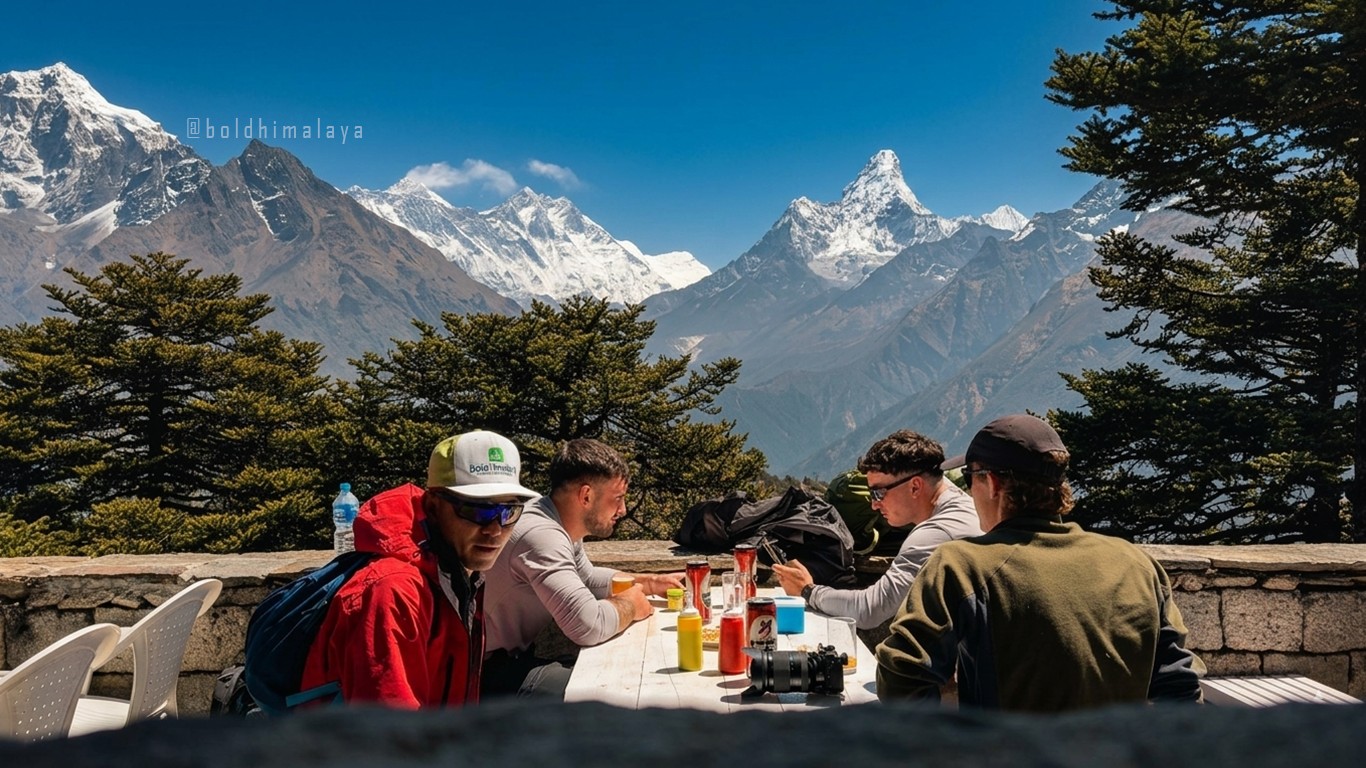
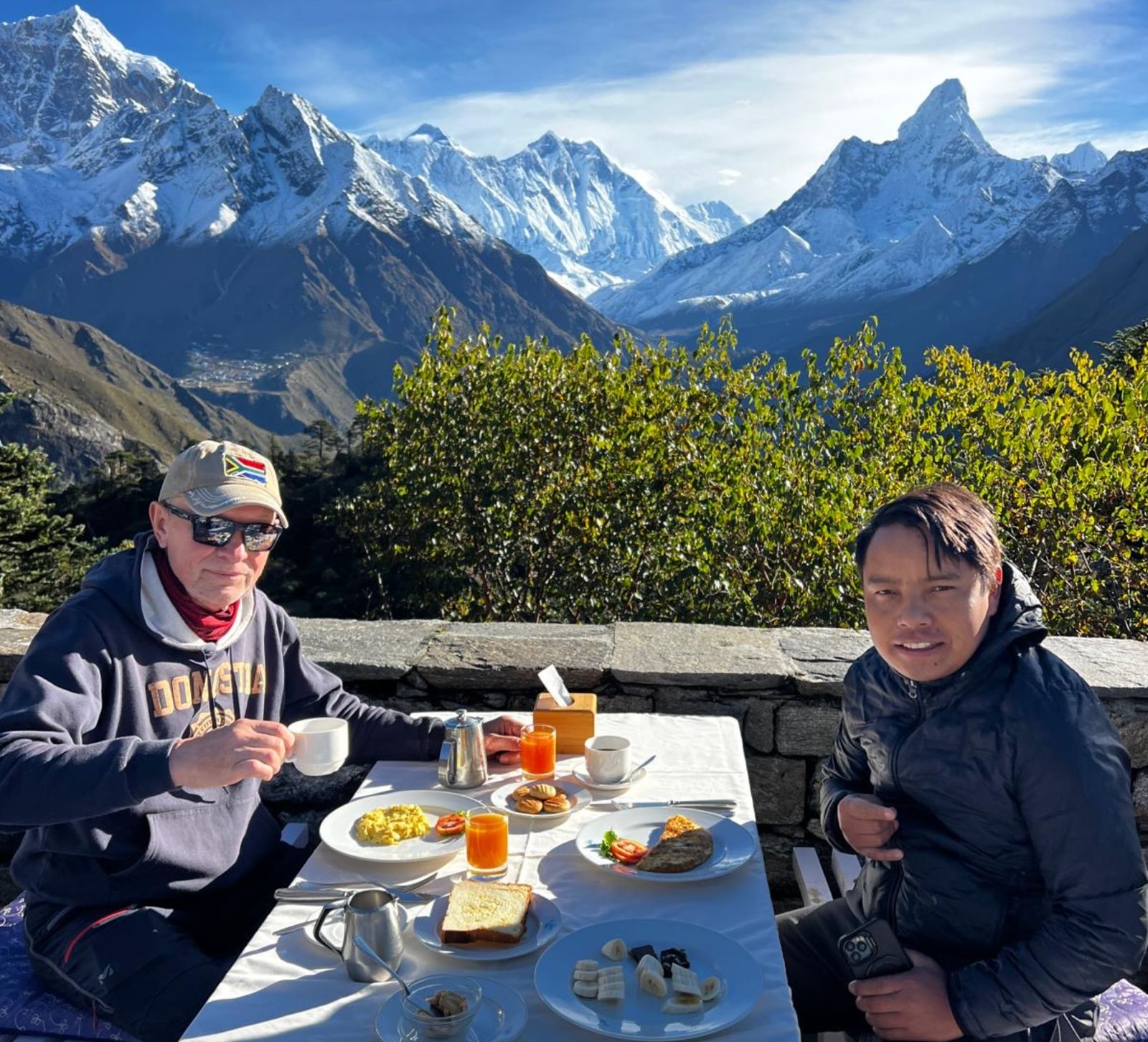
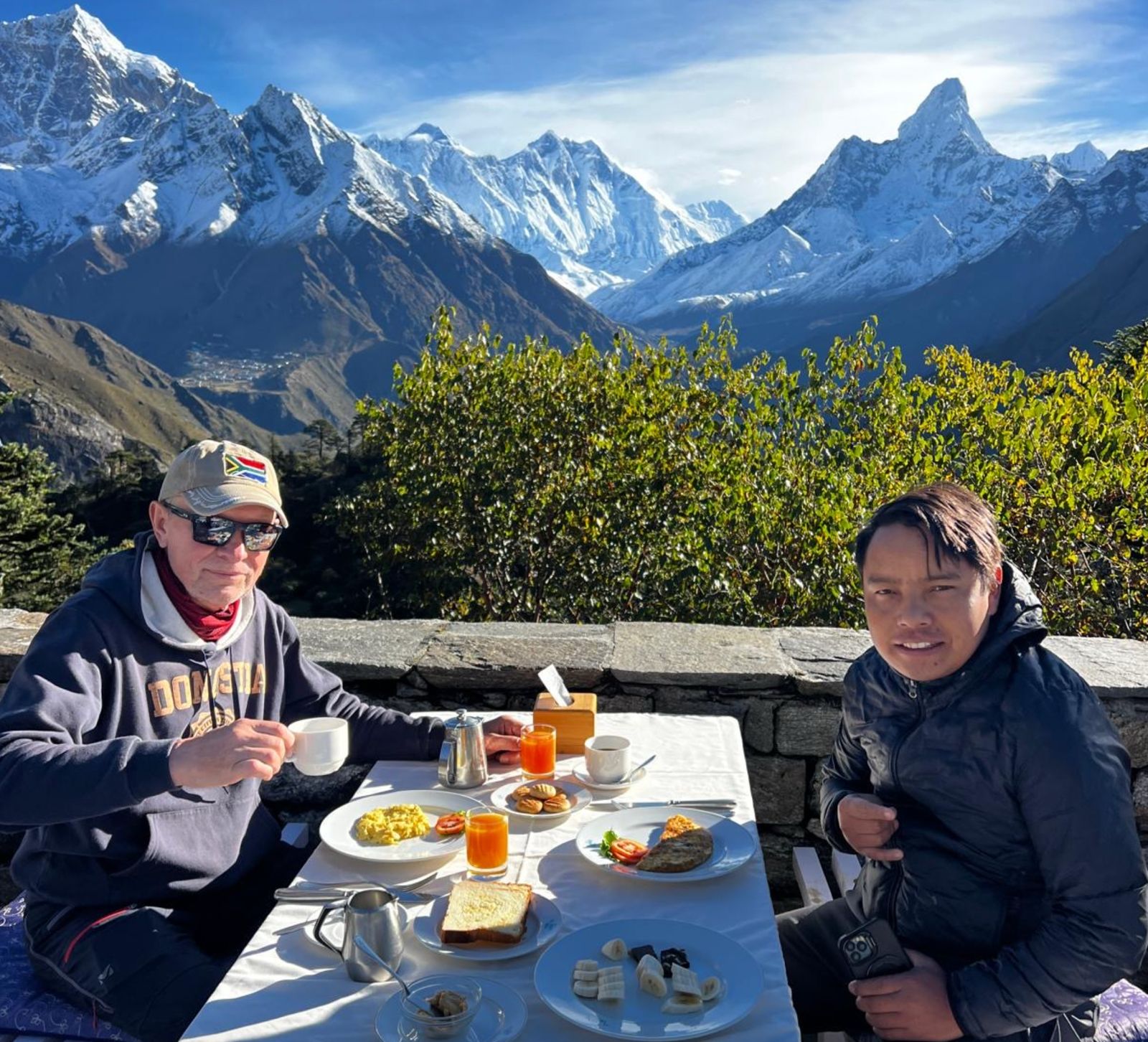
After exploring Khumjung, you will continue toward Syangboche and visit the famous Everest View Hotel, one of the best viewpoints of the Everest region. Here, you can enjoy a cup of tea or coffee while taking in panoramic views of Mount Everest, Ama Dablam, Lhotse, and Nuptse. It is also an excellent place to relax and take photographs.
After spending some time at the Everest View Hotel, you will continue downhill toward Namche Bazaar, where you will relax after the day’s trek.
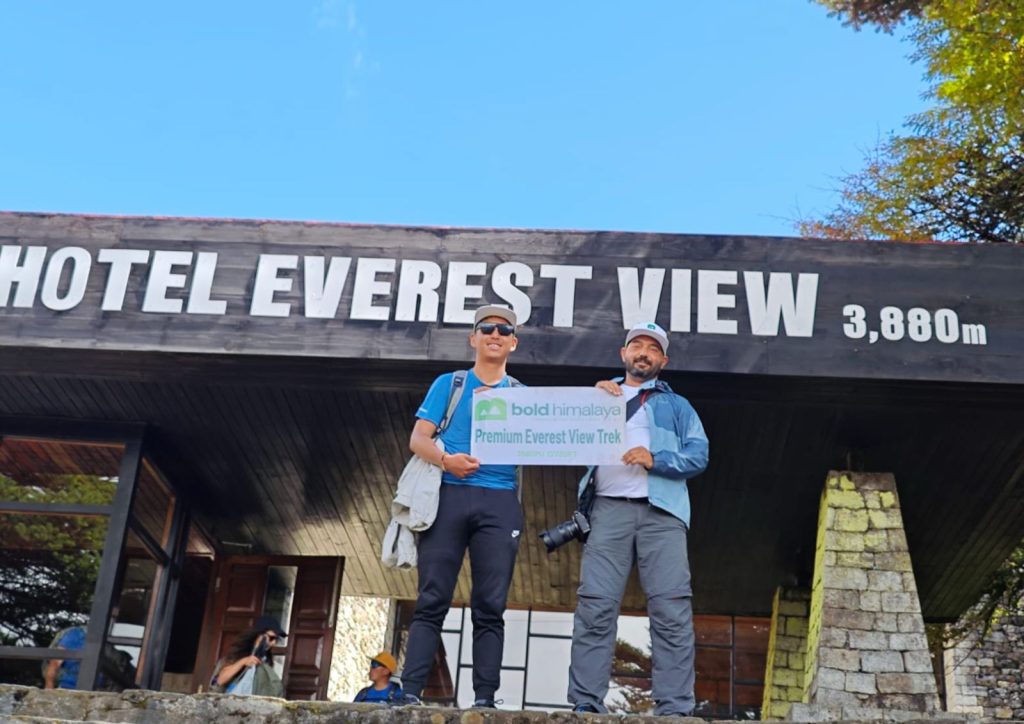
Everest View Hotel – World’s Highest Luxury Hotel
Everest View Hotel is one of the most iconic landmarks in Nepal’s Everest region, famous for being the ... Read More
Day 5: Trek Back to Lukla
2,860m/9,383ft
6-7 hours
Teahouse
Breakfast, Lunch, Dinner
After an early breakfast in Namche, you begin your final descent of the Everest View Trek, walking through pine forests and along the roaring Dudh Koshi River. The trail feels familiar now, with suspension bridges draped in prayer flags, mani walls carved with Buddhist mantras, and the friendly faces of Sherpa villagers wishing you ‘Namaste’ along the way.
As you pause on the trail for one last look back, the distant peak of Mount Everest shines in the morning light. Every step back carries the echo of the adventure, the laughter in teahouses, and the calm of the Himalayan wind.
After crossing the Hillary Suspension Bridge, you’ll pass Phakding and continue a gradual climb toward Lukla. Once you arrive, you can celebrate completing your journey through the Everest region. Overnight in Lukla.
Day 6: Fly back to Kathmandu
1,400m/4,600ft
30-35 mins
Breakfast
Today, you will have a thrilling flight from Lukla to Kathmandu. The flight from Lukla to Kathmandu is always in the morning. With the amazing view of the mountains, you arrive in Kathmandu after about 30-35 minutes and are transferred to the hotel by our representative.
Want to customize your trip?
We ensure every trip meets your expectations — customize your itinerary anytime to match your travel style and preferences.
Inclusions
What’s Covered in Your Adventure
- Ground Transportation: Pick up and drop off by private vehice within 4 km radius of Thamel
- Domestic flight: Kathmandu to Lukla and Back to Kathmandu
- Accommodation: Best available tea houses along the Everest View Trekking route
- Meals: Full meals during trekking as outlined in the itinerary (Breakfast, Lunch, Dinner with tea or coffee)
- Permits: Sagarmatha National Park entry permit, Khumbu Pasang Lhamu Rural Municipality entry permit
- Guides: Experienced, licensed trekking guide for up to five trekkers (includes salary, accommodation, meals, and insurance). An additional guide is provided for groups larger than five.
- Fruits: Seasonal fruits during trek
- Equipment: Essential trekking equipment, including sleeping bag and trekking poles (available if needed, to be returned after the trek)
- First-Aid: First-aid medicine items for emergency
- Extras: Duffle bag for trekking, T-shirt, or Warm cap or trip certificate
- Taxes and Official Expenses: Government/local taxes and official expenses
- International Airfare
- Travel Insurance
- Tips for Crew Members
- Snacks, soft drinks or alcoholic drinks
- Any other personal expenses not mentioned in inclusions

Packing List for Everest View Trek
The packing list can be varied according to season and weather. The Winter season needs more extra layers, and the rainy season needs warm clothes as well as rain gear.

Clothing
- Down Jacket
- Gore-Tex Jacket
- 2-3 moisture-wicking T-shirts
- Trekking shirts
- Trekking pants
- Thermal Base Layer
- Warm fleece or sweater
- Warm cap/Sun hat
- 3-4 pairs of trekking shocks
- Lightweight gloves and warm gloves

Footwear
- Trekking shoes with ankle support
- Light weight sandals or slippers

Trekking Gear
- Backpack around 20 litres
- Trekking Poles
- Reusable water bottle or hydration bladder
- Water purification tablets or filter
- Headlamp with spare batteries
- Sunglasses with UV protection

Personal Essentials
- Quick dry towels
- Sunscreen and Lip balm with SPF
- Personal medications
- Hand Sanitizer
- Toiletries
- Power Bank
- Camera
- Charging Cables
- Snacks and Energy bars

Fixed Departure
Fixed Departures, Guaranteed Hassle-Free Travel
Everest View Trek Map

Altitude Chart of Everest View Trek
Good to Know
Your Journey, Step by Step
Best Time for Everest View Trek
The best time for the Everest View Trek is during Spring and Autumn. These seasons generally offer stable weather, clear skies, comfortable daytime temperatures, and excellent visibility of the Himalayan peaks.
Autumn (September-November)
Autumn is considered the best overall season for the trek. After the monsoon, the atmosphere becomes clearer, providing excellent Himalayan visibility. October and November are particularly popular for their dry weather, clear skies, and comfortable trekking conditions.
Spring (March-May)
Spring is one of the most popular seasons for the Everest View Trek. The weather is generally stable, and the trails are enjoyable and full of colorful rhododendron flowers. March can still be chilly at higher elevations, while April and May usually provide warmer conditions and excellent mountain views.
Winter (December-February)
It is possible to trek during winter, who prefer less crowded and peaceful trails. However, the temperature will be very low in the high altitudes, and also snowfall can affect the trail to Namche and Tengboche.
Monsoon (June-August)
The monsoon season is generally less recommended because rain, clouds, and slippery trails can reduce mountain visibility. Flight delays or cancellations to Lukla can also occur due to poor weather. However, trekking may still be possible during periods of clear weather, particularly toward the end of the monsoon.
Luxury Everest View Trek
Trekkers can experience the Everest View Trek luxuriously while relishing lavish accommodations, diverse cuisine, and complete support from an experienced guide and porters. For a personalized Luxury Everest View Trek, reach out to us, and we’ll tailor the trip to meet your preferences.
Everest View Trek with Helicopter Return
If you do not want to trek back after reaching Tengboche, we can arrange a helicopter return upon your request.
If you have already trekked to this altitude and wish to see Everest Base Camp but do not want to continue walking, we can arrange a helicopter flight to the EBC/Kala Patthar area, subject to weather and flight conditions, and then return you by helicopter to Lukla or Kathmandu.
This is a convenient option for travelers who want to experience more of the Everest region without adding several days of trekking.
Accommodations during Everest View Trek
During the Everest View Trek, accommodation is provided mainly in comfortable local teahouses and lodges along the trekking route. Rooms are generally simple and clean, with twin-sharing beds, blankets, and basic facilities. Bathrooms may be shared in some places, especially at higher elevations.
If you prefer more comfortable or luxurious accommodation, we can arrange upgraded hotels or lodges upon your request.
Food on the Everest View trek
During the Everest View Trek, you can enjoy a variety of local and international dishes at the teahouses and lodges along the trail. They provide enough nutritious and energy-giving food required for the trek. Popular options include Dal Bhat, momos, noodles, soups, pasta, pizza, fried rice, sandwiches, pancakes, and other Western-style meals. Food choices can become more limited at higher elevations, but there are still enough options to keep you well-fed throughout the trek.
If you have any food allergies, dietary restrictions, or specific food preferences, please inform us in advance. We can communicate your requirements to the teahouses and help arrange suitable meals wherever possible.
Required Fitness level for Everest View Trek
The Everest View trek requires a moderate level of fitness who can comfortably walk for around 5-6 hours a day on varied mountain terrain. It doesn’t require special climbing or trekking experience, but you have to be in good shape to make this trek successful.
Before doing this trek, be sure you collect some experience hiking or walking at higher altitudes. Try to build your physical fitness by regular walking, hiking, or cardio exercise before the trek. This will help you handle the uphill and downhill trails more comfortably.
Everest View Trek Cost
The Everest View Trek costs $960, but the price depends on the group size, itinerary, and services included.
Our package is designed as an all-inclusive trekking package, covering the required permits, pick-up and drop-off, accommodation during the trek, three meals a day, a professional guide, and domestic flights between Kathmandu and Lukla.
Required Permits for Everest View Trek
For the Everest View Trek, you need the necessary permits to enter and trek through the Everest region. These generally include
- Sagarmatha National Park Entry Permit,
- Khumbu Pasang Lhamu Rural Municipality Permit
We arrange all the required permits for you as part of the trekking package, so you do not have to worry about the permit process yourself.
Travel Insurance
The journey on this trek will lead you to a high-altitude area with limited access to medical facilities or services.
If you have travel insurance, it will ensure you are protected financially in the case of emergency medical treatment, hospitalization, emergency evacuation, trip cancellation or interruption, and delays or lost baggage.
Make sure your insurance policy specifically covers trekking up to the maximum altitude of the Everest View Trek and helicopter evacuation if required.
Guide and Porters for Everest View Trek
A professional, experienced, and licensed guide will be with you during the entire duration of the Everest View Trek to help you on the path, make the arrangements, and also give you all the information regarding the local culture, villages, monasteries, and the mountain.
A porter is assigned for every two trekkers, whereas a guide is assigned for every five people. For groups larger than five trekkers, an additional guide will be provided.
Each porter generally carries up to around 15-20 kg of shared luggage, depending on the group arrangement and local regulations. Porters carry your main trekking bags between the lodges, allowing you to trek with only a light daypack containing essentials such as water, snacks, a camera, and personal items.
Expandable Trekking routes with Everest View Trek
Trekkers have the flexibility to tailor their journeys beyond the Everest View Trek based on their physical fitness, time availability, and interests.
Some expandable options include:
Weight Limits for Kathmandu-Lukla-Kathmandu Flight
Lukla Airport is located in the lap of the Himalayas. The runway is short, so only a small airplane with 15 to 18 seats can do the flight. There is a 15 kg weight limit, including your hand carry.
If the baggage weight exceeds 15 kg, an extra charge will be applied according to airline rules.
Tipping in Nepal
The tipping custom is ingrained in the trekking culture of Nepal and is used to express gratitude for the porters’ and guides’ tireless efforts. It is a common habit and is seen as a sign of gratitude for the assistance given during the walk.
Trekking guides are essential for leading hikers over difficult terrain, ensuring their safety, and offering insights into the local way of life and environment. An average tip for porters is between 10% and 15% of the entire cost of the hike. Trekkers may decide to tip more generously as a sign of appreciation if the guide has gone above and beyond in providing great service or guaranteeing the group’s safety.
FAQs of Everest View Trek
Your Questions, Answered
How hard is Everest View Trek?
Compared to altitude and difficulties, the Everest View Trek is an easy to moderately difficult trek. Every physically fit trekker can do this trek easily.
How many days of Everest Trek can you see Mount Everest?
If you start trekking from Lukla, on the second day of the Everest Trek, after crossing Hilary Bridge over Dudhkoshi River, there is one popular place called Topdanda ( First Everest View Point) on the way to Namche Bazar, where we can see the first Everest view.
Is Everest View Trek worth it?
Yes, the Everest View Trek is 100% worth it to experience the world’s highest mountain, Mount Everest, with some of the other Himalayan ranges, the landscape, and local culture.
What are the most popular places in the Everest View trek?
The most popular places during the Everest View trek are Lukla Airport, Namche Bazar, Sagarmatha National Park viewpoint, Hotel Everest View, Khumjung Village, and Tengboche Monastery.
How many hours will you walk per day?
The Everest View trek covers a distance of 34.2 kilometers from its starting point to its ending point, which is at Lukla Airport. You will have to walk around 5 to 6 hours per day.
What is the best time for the Everest View Trek?
The best seasons are spring (March-May) and autumn (September-November), when the weather is generally stable, skies are clearer, and mountain views are excellent.
How much does the Everest View Trek cost?
The Everest View Trek costs $960 per person. But the cost depends on the duration, group size, and level of services. Our Everest View Trek packages are designed to offer a competitive price that includes essential trekking services.
Do I have to acclimatize for a day in Everest View Trek?
Its highest point is Tengboche at 3,867 meters. Since it doesn’t go up at higher altitudes, the risk of altitude sickness is quite low. Therefore, trekkers don’t need to acclimatize during the Everest View Trek. But you can keep it optional and acclimatize for a day, visit local people, and explore their lifestyles and culture.
Can I extend the Everest View Trek to Everest Base Camp?
Yes, the trek can be extended to Everest Base Camp or combined with other routes such as the Gokyo Valley, depending on your available time and preferences.
What are the symptoms of altitude sickness during the trek?
The symptoms of altitude sickness might include dizziness, fatigue, loss of appetite, sleep problems, loss of energy, and shortness of breath.
Where am I sleeping at night?
At night, you will be sleeping at some of the best lodges or tea houses along the trekking route. Rooms are generally twin-shared with basic facilities, and bathrooms may be shared.
What mountains are seen from the Everest View Trek?
The Everest View trek also known as the quarter trek of Everest Base Camp provides an opportunity to witness spectacular views of Mt. Everest (8,848.86m/29,031.7ft), Ama Dablam (6,812m/22,349 ft), Lhotse (8,516m/27,939ft), Kongde Ri (6,187m/20,298 ft), and Kusum Kanguru (6,367m/20,889ft).
What meals are provided during the trek?
All meals are freshly prepared at the teahouses: breakfast, lunch, and dinner. Expect both local Nepali dishes like dal bhat and international options like pasta, noodles, or pancakes. Hot tea is available at every stop.
What permits are required for the Everest View Trek?
You’ll need two permits: Sagarmatha National Park Entry Permit and Khumbu Pasang Lhamu Rural Municipality Permit.
Is the Everest View Trek suitable for beginners?
Yes, the trek is suitable for beginners with reasonable fitness and proper preparation, provided you are comfortable walking for several hours a day at altitude.
Are Lukla flights affected by weather?
Yes, Lukla flights can be affected by poor visibility, strong winds, rain, or other unfavorable weather conditions, which may cause delays or cancellations; therefore, it is recommended to keep some flexibility in your itinerary.
Can I return from the Everest View Trek by helicopter?
Yes, a helicopter return can be arranged upon request, providing a faster and more comfortable way to return from the Everest region.
What should I pack for the Everest View Trek?
Bring comfortable trekking clothes, warm layers, a down jacket, good hiking boots, trekking poles, a hat, gloves, and a refillable water bottle. A sleeping bag and sunscreen are also must-haves.
Can I charge my phone and camera during the trek?
Yes, most teahouses offer charging facilities for a small fee (USD 2-5) per device. Carrying a power bank or solar charger is a smart backup.
Can I customize the Everest View Trek itinerary?
Yes! We customize the Everest View Trek based on your time and preferences.
View OurSimilar Packages
Discover our top tours, loved by thousands of travelers annually. Choose the adventure that inspires you and embark on a journey tailored to your desires.
View All Packages
Save 12%

Everest Base Camp Helicopter Tour
 Nepal Tour Packages
  1.0 Days
Save 24%
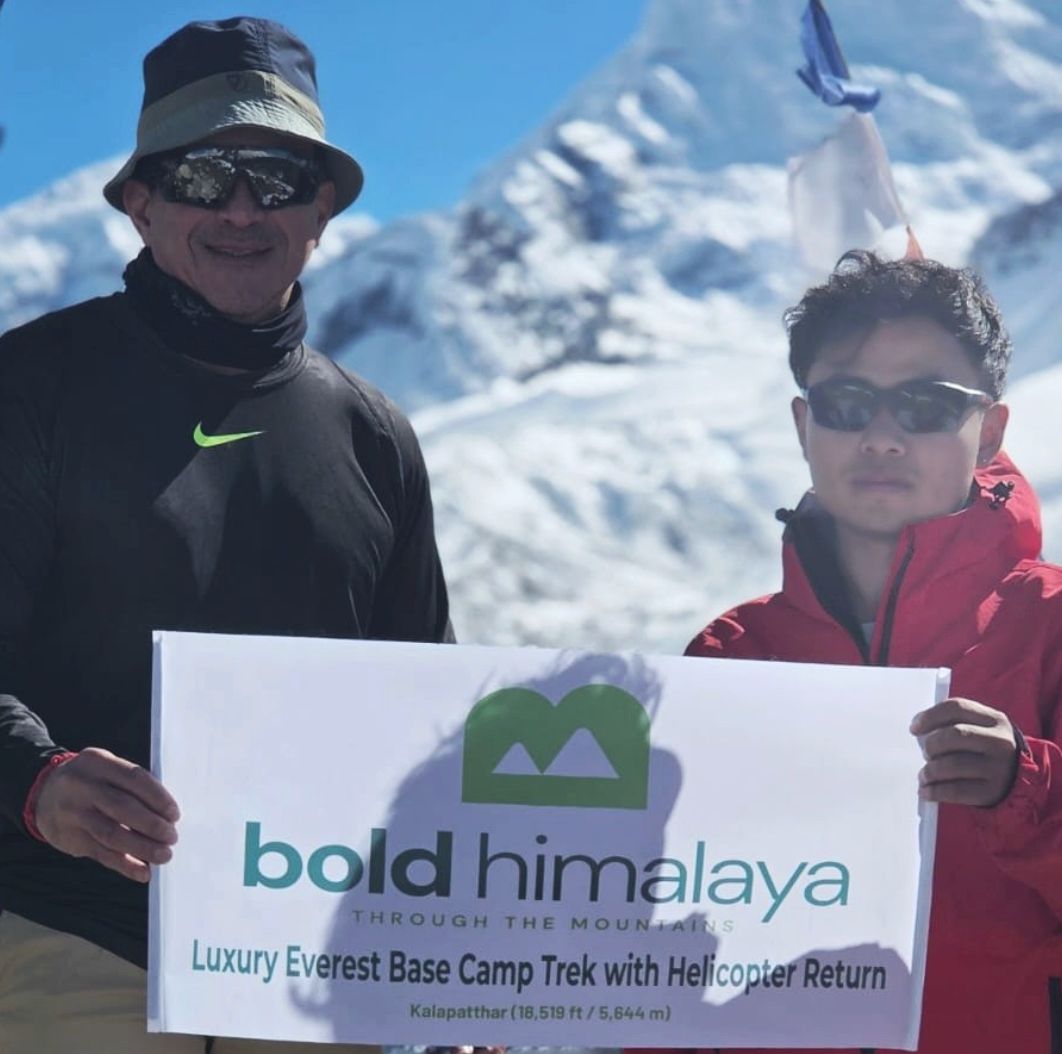
Luxury Everest Base Camp Trek with Helicopter Return
Nepal Tour Packages
11 Days
Save 34%
Luxury Everest View Trek
Nepal Tour Packages
10.0 Days
Luxury Everest View Trek with Helicopter Return
Nepal Tour Packages
6.0 Days

Everest View Hotel Helicopter Tour
Nepal Tour Packages
0.0 Days