



The Sherpas: Guardians of the Himalayas
-
 Bold Himalaya
 -
18 April, 2025
-
28 mins read
-
1764 Views
-
0 Comments


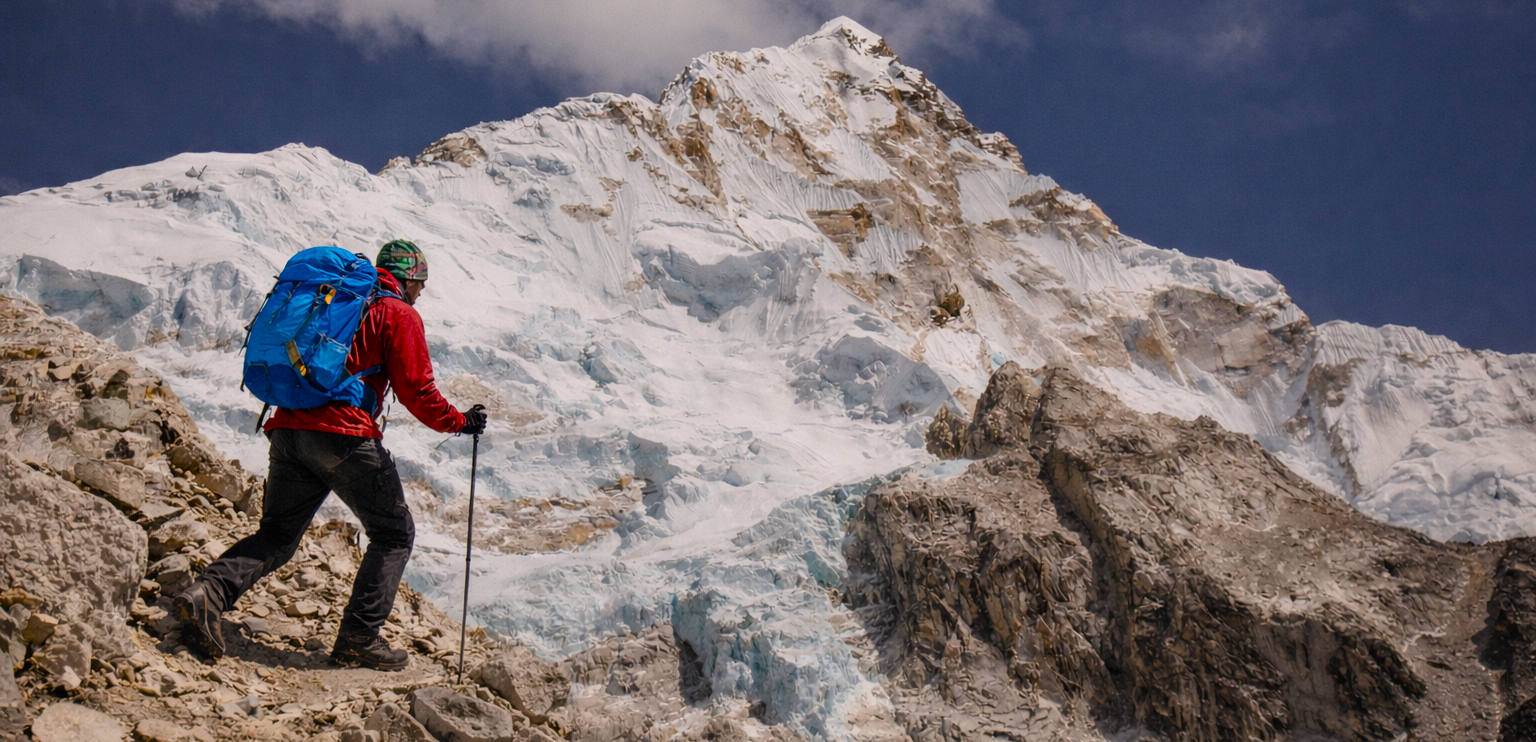
When we speak of Mount Everest and the Himalayas, the first word to come to mind is accompanied by tales of dizzying heights: The Sherpas. The Sherpas are one of the most respected and recognizable Himalayan communities in the world, renowned for their deep connection to the mountains and their unmatched expertise in high-altitude environments. Originating from the Tibetan plateau and settled mainly in Nepal’s Everest (Khumbu) region, the Sherpas have become globally famous for their vital role in mountaineering, especially on Mount Everest and other Himalayan peaks. Their endurance, skill, and intimate knowledge of the terrain have made them indispensable to climbers and trekkers from across the globe.
These delightful high-valley people of eastern Nepal are identified by mountaineering excellence, but their lovely culture is so much more than their mountaineering craft. Since they are an ethnic tribe that migrated from Tibet about 500 years ago, Sherpas also have certain physiological adaptations to enable them to survive where most of their visitors are gasping for breath.
Sherpa’s role in ascending the Himalayas is not being exaggerated. Sherpas have been the support base of virtually all serious expeditions since the early decades of the 20th century. From the first-ever ascent of Everest by Tenzing Norgay along with Edmund Hillary in 1953 to Kami Rita Sherpa’s record 28 times, Sherpa mountaineers have pushed the boundaries at and beyond 8,000 meters and willingly shared their experience, camaraderie, and existential connection with nature.
Behind such god-like climbs is a history of accommodation and resistance. Modern Sherpas grapple with conflicting realities-trying to balance traditional ways and accepting education, trying to balance well-rewarded but dangerous expedition work and domestic life, and trying to balance Buddhist basics and outsider visitor attraction. Sherpa history is one of people who fought, stayed the course on one of the Earth planet’s most demanding environments on the Earth planet.
Despite their fame, Sherpas are often misunderstood. A common misconception is that “Sherpa” refers to a job or a porter who carries heavy loads. In reality, Sherpa is an ethnic identity that has a rich cultural heritage, language, and spiritual tradition rooted in Tibetan Buddhism. While many Sherpas work as professional mountain guides and expedition leaders, they possess specialized skills that go far beyond load carrying, including route fixing, high-altitude rescue, and expedition safety management.
Who are Sherpas? (Origins and Ethnic Background)
The Sherpas are an ethnic group in the Himalayas, and they are best known for their rich culture in mountain environments and their high-altitude skills in mountain terrain. While they are globally associated with mountaineering and Everest expeditions, the Sherpa people are first and foremost a distinct ethnic community, with their own history, language, traditions, and spiritual beliefs.
1. Historical Migration from Tibet
The Sherpas’ origin was not in Nepal but in Tibet’s eastern part (province of Kham) around 500 years ago. Both traditional and historical accounts favor an early Sherpa migration of the initial Sherpas south of the Himalayas in the early 16th century, possibly in 1533. Whatever the motivations to leave, their migration was largely due to a mix of motives of religious persecution, political unrest, and new sources of commercial opportunities.
Through the most trying country on earth after one day’s travel, Tibetan refugees arrived at Nepal’s Solu-Khumbu valley, whose massive mountain loomed over the camp (a peak to which they would also refer as Chomolungma, or “Goddess Mother of the World“).
2. The Meaning Behind the Name
Their own family name, “Sherpa,” is noteworthy. “Shar” in Tibetan is “east,” and “Pa” is “people.” So “Sherpa” literally means “People of the east,” and it marks their eastern Tibetan origin. It distinguished them from other ethnic Tibetans whom they met along the way in their migration.
3. Genetic Adaptations to High Altitude
Of particular interest to scientists from the Sherpa story is their remarkable physiological acclimatization to life at high elevation. Living for thousands of years at high altitudes greater than 3,000 meters (9,800 feet), Sherpas have an adaptation in their genes that helps them cope in low-oxygen environments.
Scientists at top journals like Nature Genetics identified specific genes that help the Sherpas breathe. They include:
- Greater concentration of nitric oxide, which dilates arteries and provides a greater oxygen supply
- Greater cell-level efficiency of oxygen utilization
- Less hemoglobin content, especially, which prevents blood thickening at high altitude
- Greater metabolic efficiency, such that they can produce energy with reduced oxygen consumption
All these genetic blessings enable the Sherpas to climb record altitudes with much less effect of altitude stress than lowlanders.
4. Major Sherpa Settlements
There are about 150,000 Sherpas who reside mainly in eastern Nepal, the most populated settlements of the Solu-Khumbu district. Their principal settlements are:
- Khumbu: The highest-altitude Sherpa region, close to Mount Everest, containing well-known villages such as Namche Bazaar, Khumjung, and Thame
- Solu: Lower valleys to the south of Khumbu
- Pharak: Country between Solu and Khumbu
- Rolwaling: Isolated valley to the west of Khumbu
- Helambu: North of Kathmandu, residence of Hyolmo Sherpas
There are tiny Sherpa villages in India (Darjeeling, Sikkim), Bhutan, and increasing in Kathmandu and abroad locations to which Sherpas have migrated.
Language and Script of The Sherpas
1. Sherpa Language (Sherpa Bhasa)
Sherpa language, or “Sherpa Bhasa” or sometimes “Seke,” is a Tibeto-Burman language. It is a Tibetan language, but evolved independently after five centuries of isolation from its parent language. Scholars classify it as one of the South Tibetan languages.
Sherpa language is a tonally complex language with many tones and pitches for the conveyance of different meanings. Not comprehensible to contemporary Tibetan languages, though the latter shares the same vocabulary and structure, pointing to an origin from one source.
There is also technical vocabulary for mountain country, weather, and religious concepts, which provide the basis for Sherpa life. They have, for instance, several words for snow and ice in different states of being handy knowledge for people who live in the mountains.
2. Script and Written Form
Classical Tibetan script (Uchen) is traditionally employed by Sherpas for written work, which primarily remains confined to religious texts. The calligraphic and historical cursive script originated in the 7th century and continues from ancient Indian writing systems.
Tibetan script and Nepali Devanagari have been proven to work in writing Sherpa language text by modern literacy activity as well. Romanized transcription systems were also created during the past decades to aid in retaining the language and educating people about it.
3. Efforts in preserving the language
Like most of the world’s indigenous languages, Sherpa Bhasa is also facing the challenges of the modern world. As more and more Sherpas are gaining access to education and economic opportunities in the mainstream, Sherpas are learning Nepali as their mother tongue, with English as their second language.
Some attempts at preserving this linguistic heritage:
- The Sherpa Dictionary Project, documenting words and phrases
- Language teaching in Sherpa villages
- Production of school materials and children’s books in Sherpa
- Digital preservation, e.g., recording Sherpa language stories and songs
- Sherpa language content on community radio
All these activities recognize the significance of language preservation towards cultural identity and indigenous knowledge systems.
Geography and Sherpa Settlements
The Roof of the World: Sherpa Homeland
The Sherpa home is quite possibly the most stunning landmass in our world. Their home location places its fulcrum in the Solu-Khumbu nation in northeast Nepal under the influence of four ginormous valleys: Pharak, Arun, Khumbu, and Shorung (Solu).
This area is immensely varied in terms of land elevation. River gorges are falling as much as 2,000 meters (6,500 feet). And far up, climbing the Mahalangur Himalayas, like Mount Everest (8,848 meters/29,029 feet), Lhotse (8,516 meters/27,940 feet), and Makalu (8,485 meters/27,838 feet).
Ground is colored by dense cover of juniper, fir, and rhododendron at lower altitudes and then glacial and rough rocky terrain at higher altitudes.
Main Sherpa Villages
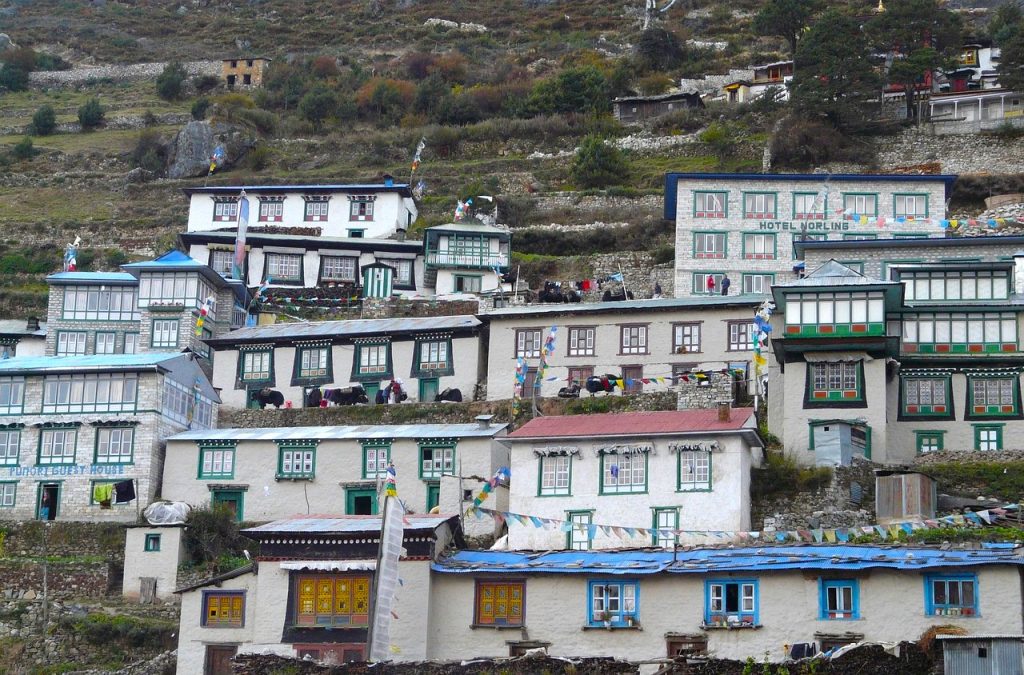
The heart and soul of Sherpa culture are in the Sherpas traditional villages, which are each distinctly:
Namche Bazaar (3,440m/11,286ft): Typically called the “Gateway to Everest,” it is the trade center of the Khumbu valley and a thriving Saturday market, which has long been an important trading center, with Sherpas and Tibetan merchants conducting their commerce over the border. Today, it features a combination of ancient traditional housing and trekkers’ accommodations of newer design.
Khumjung (3,790m/12,434ft): Where Sir Edmund Hillary constructed the first school (Hillary School), the main village is in a valley beneath the sacred peak of Khumbila. It has a “yeti scalp” in its monastery, and the village layout has typical Sherpa community planning.
Thame (3,820m/12,533ft): Arguably the most isolated of the trekkers’ standard trail villages, home to Tenzing Norgay and numerous famous climbing Sherpas. Its significant monastery is more than 325 years old.
Pangboche (3,985m/13,074ft): Residence of the oldest Sherpa monastery in the Khumbu (around 400 years old). Upper Pangboche contains houses dating back to ancient times, while Lower Pangboche contains recent tourist facilities.
Phortse (3,840m/12,598ft): An agricultural hill village said to retain more traditional ways of living than surrounding villages by popular trekking routes.
Kunde (3,800m/12,467ft): A village located under Khumjung, famed for its iconic Himalayan Trust hospital.
The Daily Struggle of Living High Up at Extremely High Elevations
Living at high altitudes at very high altitudes presents unique challenges, which have characterized Sherpa adaptations and ways of living:
- Oxygen Deficiency: Oxygen is 40% lower at the Sherpas settlement altitude compared to sea level, affecting everything from cooking time to athletic capability.
- Hostile Climate: Winter temperatures regularly dip to sub -20°C (-4°F) routinely. In Summer, monsoon rain and potential landslides are triggered by the heavy rain, while winter snow freezes villages for weeks.
- Limited Agriculture: Short season (April to September) and only hardy crops such as potatoes, barley, and vegetables can be cultivated. Previously, this limited agricultural output had to be supplemented by trade.
- Transportation Challenge: All traveled on human backs or yak caravans until recent decades. Today, even today, most commodities arrive in porter or pack animal, and helicopters are employed only in an emergency and for luxury supplies.
- Resource Scarcity: Beyond the treeline, firewood is a luxury. The Sherpas have developed high-efficiency heating technologies and stoves to conserve fuel, normally supplemented by dried yak dung as auxiliary fuel.
The Sherpas did not merely exist but thrived, having developed social systems, technologies, and cultural practices well adapted to their high-altitude environment.
Religion and Spirituality
1. Tibetan Buddhism in Sherpa Life
Not just is religion a component of Sherpa life, but indeed the basis on which they build their world, their worldly life, and social structure. Sherpas adhere to Nyingmapa Buddhism, the oldest of the four great Tibetan orders established by Padmasambhava (Guru Rinpoche) in the 8th century.
Sherpa religion is a syncretism between orthodox Buddhist orthodoxy and the pre-Buddhist religion of mountain animistic gods, wood gods, and guardian deities. Syncretism provides Sherpa society religiously rich and highly textured existence where the tops of mountains are divine residences and ceremonies abound with novel meanings.
Spiritual practice is ritual in such locations as monasteries but mundane otherwise, spinning prayer wheels, reciting mantras sotto voce on a stroll, offering juniper smoke to household spirits, or stringing prayer flags to send blessings on the wind.
2. Sacred Sites and Monasteries
Monasteries (gompas) pervade Sherpa village religious life. The most significant are:
Tengboche Monastery (3,867m/12,687ft):
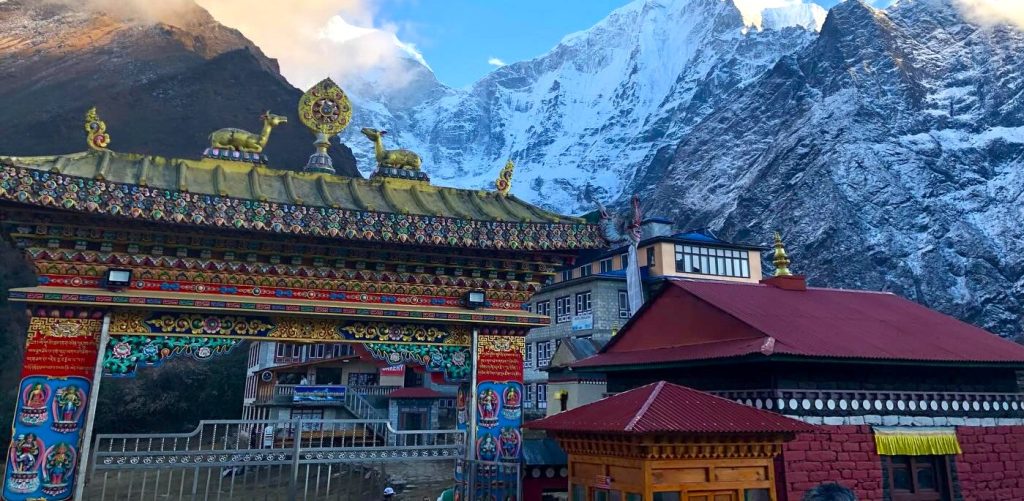
Tengboche is the spiritual heart of the Sherpa people and the main religious center of the Khumbu region. The region’s biggest and most touristy monastery was founded in 1916. Its stunning view over Ama Dablam is Nepal’s best-photographed viewpoint. It follows the Nyingma tradition of Tibetan Buddhism and is best known for hosting the colorful Mani Rimdu Festival, which attracts monks, Sherpa villagers, and trekkers from around the world. The monastery plays a crucial role in blessing Everest expeditions and preserving the Sherpas spiritual heritage.
Thame Monastery:
One of the earliest Sherpa monasteries belongs to Lama Sangwa Dorje, a deeply respected 16th-century spiritual master and Khumbu patron saint. Thame Monastery lies in the quiet and culturally rich Thame Valley, northwest of Namche Bazaar. Founded in the 16th century, it is among the oldest Sherpa monasteries in Nepal and follows the Nyingma sect of Tibetan Buddhism. Thame Monastery is known for its peaceful setting and strong ties to traditional Sherpa life.
The village of Thame is also famous as the birthplace of many legendary Sherpa mountaineers, including Apa Sherpa and Tenzing Norgay Sherpa. The monastery continues to play an important role in spiritual training, meditation, and community rituals.
Pangboche Monastery:
The museum has religious artifacts, such as (until stolen during the 1990s) a reputed yeti scalp and hand. The monastery dates back 400 years and is one of the oldest in the region. The monastery is closely associated with Guru Rinpoche (Padmasambhava), the founder of Tibetan Buddhism. Pangboche Monastery serves as a spiritual protector of the surrounding villages and farmlands, and it remains a place where Sherpas seek blessings for safety, harvests, and successful mountain journeys.
Khumjung Monastery:
Founded in the early 20th century, the monastery belongs to the Nyingma tradition of Tibetan Buddhism and plays a central role in preserving Sherpa spiritual life and Himalayan Buddhist practices. Famous for having another reputed yeti scalp, which fascinates travelers.
These monasteries are institutions where one learns, where rituals are performed, and where one lives communally. Earlier, one used to send only a son from every family to become a monk, thus keeping the individual family close to the monastic community.
Culture and Traditions
1. Coloured Clothing and Ornaments
The Sherpa traditional dress is practical and beautiful. The men wear a bakhu, an arm-length, robe-like upper garment wrapped around the waist using a cloth belt called a kara. The women own marital-status-indicating aprons, an apron-like tongkok, striped, and a plain-colored genji at the back.
Women Sherpas wear gorgeous ornaments, chiefly coral and turquoise necklaces, earrings, and armlets, that are yet more often tokens of family blessings transmitted from preceding generations. Fashion of the present times has made an entry in the general, but the obsolete costume remains radiant on the day of the ceremony and festival.
2. Family Life and Celebrations
Their Sherpa clan is the focus of their lives, and they have powerful clan (ru) structures that trace back as far as the Tibetan ancestors. Ritual festivals are used to celebrate the events of life:
A child-naming ceremony is performed days after birth, where lamas study astro charts for picking auspicious names. Traditional weddings are multi-day ceremonial affairs with procession, banquet, ceremonial scarves, and lots of chang (millet beer), in making wishes for happiness and prosperity for the newlywed couple.
Funeral rites are a reflection of reincarnation Buddhist theology, e.g, 49-day funerals and condolence and prayer festivals (ghewa) at months when there is chanting of monks and villager calling-at-condolence to the bereaved family to assist in steering the dead man’s soul.
3. Festivals That Unite People
Sherpa calendar brims with whole-hog celebrations that reflect its culturally vibrant:
- Mani Rimdu: The most vital Sherpa celebration performed at Tengboche Monastery during autumn involves masked “cham” dances by monks, breathtaking sand mandalas, and blessing ceremonies, which attract visitors from all over the world.
- Dumje: A one-week summer festival is a ritual to purify the society and bless the year’s harvest.
- Lhosar: Sherpa New Year (typically in February) is part of family cleaning, prior to the preparation of celebratory foods, and reunion of relatives to bring about a prosperous new year.
Festivals provide a glimpse into Sherpa philosophy, communal closeness, regard for the natural cycle, and carefree integration of religious gravity and holiday excess.
4. Traditional Knowledge and Livelihood
Before their economy was disturbed by the arrival of mountaineering, Sherpas possessed an advanced combination of pastoralism, trade, and highly advanced agriculture well adapted to their vertically mountainous homelands.
Straw crops of potato, barley, and buckwheat utilized the limited field to the fullest, and yaks and hybrids (dzopkyo) acted as beasts of burden, milk, meat, and wool. Transhumance between the field at one altitude and the pasture at another at different altitudes at various seasons reached maximum productivity under this unfavorable climate.
Sherpas themselves were trans-Himalayan traders, and the fiber of Tibet-Nepal was salt-for-grain barter. Nelles Bazaar, to take an example, prospered as a prosperous market town where the fruits of over a single ecological regime were being traded.
It was this intersection of ecological, agricultural, and commercial knowledge that opened the way for logistical skill, which eventually made the Sherpas part and parcel of mountaineering expeditions.
5. Cuisine – High Altitude Nutrition
The Sherpas’ food is rugged and utilitarian, sustenance for body and spirit in a harsh climate where calories are the gold standard.
Delicacies:
- Shakpa (or Shyakpa): Rich potato, dried meat, and vegetable stew warming body and spirit on a chilly mountain night
- Tsampa: Roasted barley flour with butter tea, the ultimate energy bar that sustained generations of trekkers
- Momos: Meat or vegetable dumplings, served typically with spicy chili sauce
- Butter Tea (Suja): Sherpas’ native beverage consisting of tea, yak butter, and salt, providing fats and calories needed to sustain energy at high elevation
Role in Mountaineering History
From Porters to Summit Partners
Sherpas’ mountaineering history starts early in the 20th century when British expeditions were looking for local assistance for their Everest plans. The Sherpas were initially employed as load carriers only, but soon they showed extraordinarily high-altitude abilities that amazed Western climbers.
Some factors made them perfect mountaineering companions:
- Their physiological adaptation to high altitude
- Intimate knowledge of the mountains
- Extraordinary strength and endurance
- Flexibility and sense of humour in adversity
What began as a collaborative relationship between employer and employee soon became something approaching a partnership, if frequently still marked by tremendous disparities.
Tenzing Norgay: The Name That Changed Everything
There have been no more enduring symbols of the Sherpa climber’s profession than Tenzing Norgay, who, with Edmund Hillary, reached the summit of Everest on 29 May 1953. A Tibetan by birth, he lived his life out in the Khumbu. He had attempted seven times prior to the successful ascent of Everest in 1953.
As the British expedition’s lead Sherpa, Tenzing organized the Sherpa team and teamed up with New Zealand climber Edmund Hillary to be an elite climbing couple. To stand at the summit was not merely an achievement of mountaineering but was a triumph of human potential and cooperation.
Tenzing’s victory reshaped the Sherpas’ role in the world overnight from anonymity as mere porters to prestige as professional climbers skilled at the sport’s apex. Tenzing used his celebrity to help further promote Sherpa rights and education, and his impact carries far beyond his mountaineering legend.
Sherpa Mountaineer Stars Today
Sherpa climbers today have most of the Himalaya’s most notable mountaineering achievements:
- Kami Rita Sherpa: Most ascents to Everest summits(31 Times) (May, 2025)
- Apa Sherpa: Set a world record by summiting Mount Everest 21 times between 1990 and 2011
- Pasang Lhamu Sherpa: The first Nepali woman climber to have reached Everest in 1993
- Mingma G and some other Sherpa climbers climbed K2 for the first time in winter in 2021
These stories of achievement have come far to re-profile the Sherpas from expedition support staff to mountaineering stars in their own right. Some have established their own guide companies, with industry standards, and increased dominance of the mountaineering economy on the basis of their skills.
The Secret Price of Mountain Dreams
Association with climbers incurs a cost for the Sherpas. Over 100 Sherpas have died on Everest alone, and the 2014 Khumbu Icefall avalanche took 16 Sherpas in one incident. These accidents finally brought much-needed controversy to risk sharing, pay, and Sherpa climber insurance.
Sherpa porters now live double lives, having traditional mores and still working within an internationalized adventure tourist economy. They have a story of vast opportunity, but a vast challenge as well, since economic gain must be balanced against physical risk and cultural safeguard.
Remarkable Physiological Adaptations
Sherpas’ secret to climbing success lies in their physiology. Having been exposed to high altitude for centuries, the Sherpas have developed genetic adaptations that render them physiological wonders.
Scientists found some genetic adaptations, like the EPAS1 gene (which they had inherited from their ancient Denisovan forebears), which is used to regulate red blood cell production at higher altitudes. Other adaptations include improved oxygen usage at the cellular level and improved metabolism.
These bodily adaptations appear in the form of remarkable performance; the Sherpas can transport heavy loads at heights where most travelers can hardly set their feet down, recuperate fairly well between tasks, and are considerably less vulnerable to acquiring altitude sickness.
Researchers studying these adaptations work towards hypoxic medical conditions treatment as well as gaining further understanding of human adaptation to aggressive environments.
Breaking Trail: Sherpa Women in Mountaineering
While the initial mountaineering history was male Sherpa-dominated, women Sherpas are also making their presence felt on the summits. Pasang Lhamu Sherpa had become a national hero after being the first Nepali woman to climb Everest in 1993, but sadly died on the way down.
Her legacy has opened doors for a new generation. People like Lhakpa Sherpa (nine-time Everest winner) and Dawa Yangzum Sherpa (Nepal’s very first foreign female mountain guide) are changing what people believe women can do for this once long-male-dominated sport.
Besides being earning members as trekkers and mountaineers, Sherpa women are entrepreneurial businesspersons with lodges, trekking agencies, and equipment stores. Others are professional career entrepreneurship businesses, besides practicing the Sherpa culture and educating the new generation in the art of weaving, farming, and religious practice that the Sherpa culture is so rich in.
This change is only one facet of deeper transformations within Sherpa society, as new opportunities for economic and educational advancement bring new options but also safeguard community values long protecting Sherpas.
Voices from the Mountains: Sherpa Perspectives
“The mountain is not a problem to be solved, it is our home, our provider, and our temple,” declares Mingma Sherpa, a 12-time Everest guide. “When foreigners see danger, we see familiar paths. When they see emptiness, we see spirits and tradition.”
For most Sherpas, climbing initially was a basic occupation but grew to become an enterprise of pride and identity. Lhakpa Sherpa, women’s record holder for summits on Everest, illustrates how climbing changed her life: “As a girl, I never dreamed that I would be able to stand on the summit of Chomolungma. Now my daughters know that Sherpa women can do anything: climb mountains, run businesses, support families.”
These individual paths reflect the larger transformation of the Sherpa people from solitary mountain dwellers to global citizens connected with the world by the same mountains that once kept them separate from it.
Tourism and Modern Issues
1. The transformation of Sherpa Life
The change in Sherpa life reflects this powerful journey from traditional Himalayan subsistence to global connectivity and modern opportunity. Traditionally, the Sherpas resided in the remote, high-altitude regions of Nepal, surviving on agriculture, yak herding, trans-Himalayan trade, and Tibetan Buddhist traditions that shaped daily life, values, and community structures.
The impact of tourism on Sherpa society has been profound. What was once a trickle of adventurous travelers in the 1960s has become a flood, with tens of thousands of trekkers and climbers passing through the Khumbu district annually before the COVID pandemic.
This visitors’ bonanza generated all sorts of economic opportunities, from guiding and lodge-keeping to transportation services and shops. The Sherpas who work on the ascent make very decent wages during climbing seasons, and those who have lodges along the principal trekking routes have established profitable businesses serving Western tourists.
The arrival of mountaineering and trekking tourism in the mid-20th century marked a major turning point for the Sherpa people, as their exceptional high-altitude skills made them central to Himalayan expeditions. Over time, tourism brought improved income, education, healthcare, infrastructure, and exposure to the outside world, transforming villages like Namche Bazaar into economic and cultural hubs.
These economic benefits have improved living standards in almost all Sherpa villages, funding education, better health care, and luxuries. Many kids are being sent to schools in Kathmandu or abroad, educating a new generation of well-educated Sherpas with opportunities their parents could not have imagined.
Today, the Sherpa people are not only climbers and guides but also entrepreneurs, lodge owners, conservation leaders, educators, and global citizens. While modernization, climate change, and tourism pressures have introduced new challenges, the Sherpas continue to preserve their language, festivals, monasteries, and spiritual connection to the mountains. This transformation shows how the Sherpas have successfully balanced tradition and modernity, creating a resilient identity rooted in heritage while adapting to a rapidly changing world.
2. Balancing Tradition and Modernity
The quick changes brought by globalization and tourism are both frightening and offer opportunities in equal measure. The majority of the Sherpas are attempting to harmonize economic growth and preservation of culture:
- Cultural centers documenting traditional knowledge and practice
- Traditional arts, festivals, and crafts revived
- Sustainable tourism practices that are respectful of local traditions
- Education programs teaching young Sherpas about their heritage
Environmental concerns are also pressing. Global warming is wreaking havoc in the Himalayas, with glacier melting and erratic weather conditions threatening traditional survival and the tourism economy as well. There is keen interest in conservation among some Sherpa communities with the long-term objective of preserving their delicate mountain ecosystem.
Education and Future Prospects
Educational revolution among the Sherpas is the most salient characteristic of their society. There was absolutely no education in any Sherpa village until Sir Edmund Hillary established the first school at Khumjung in 1961. Education is now highly regarded, and literacy has grown by leaps and bounds in the last few decades.
The Himalayan Trust and other groups have already built schools in the Khumbu, and scholarships allow talented students to study in Kathmandu and abroad. Foreign contact and exposure to potential in the contemporary world are counterbalanced by respect for tradition on the part of the majority of young Sherpas.
As Sherpas enter the 21st century, they must confront the world issue challenging indigenous people wherever they are: how to embrace aspects of modernization within their society without destroying cultural identity and traditional knowledge. The adaptability and flexibility that have allowed Sherpas to survive and even thrive in one of the planet’s most hostile climates can be their best asset in meeting this challenge.
Mountains Under Threat: Environmental Threats
The Sherpa region is experiencing unprecedented levels of environmental change. Millennium-old titans of the world in the form of glaciers are melting at unparallel pace to create glacial lakes that are susceptible to downstream flooding disasters for downstream people.
Warming has also altered the traditional weather patterns, affecting patterns of crops and increasing the variability of the mountain environment. For Sherpas who earn their living as guides, change introduces new risks: daily avalanches, more dubious ice, and unpredictable snowfalls.
“This generation taught us how to read mountains, but now the mountains are reading another language,” says Khumjung’s Pemba Sherpa, local environmentalist. “We are learning as always, but it is a test that the world must take together.”
Sherpa-led programs like the Sagarmatha Pollution Control Committee are actively engaged in preserving their home mountain by rubbish clean-up schemes, as well as ecotourism operations that shed light on the potential of local environmental ethics to solve today’s problems.
Visiting Sherpa Country: The Responsible Traveller’s Guide
To visitors in Sherpa country, responsible travel will ensure that your visit is a worthwhile experience for the host communities:
- Support Sherpa businesses: Stay in locally-owned hotels, engage local guides, and buy hand-made souvenirs directly from the producers
- Show respect for religious traditions: Circumambulate religious sites clockwise, seek permission first when photographing people or religious rituals, and dress conservatively for visiting monasteries
- Minimal environmental footprint: Bring only memories, leave only bubbles, tread on tracks, and attempt to think through the carbon footprints of your visit
- Learn a few common phrases: Learn some phrases of Nepali or Sherpa as a gesture of respect to the locals’ hospitality
- Time for planning: Traveling off-season reduces your footprint and increases chances for real cultural contact
Conclusion
Sherpa history is one of tremendous resilience to nature, to shifting economic fortunes, and to challenges and opportunities of the modern world. From their five-century mountaineering over the Himalayas to becoming world mountaineering legends, Sherpas have been amazingly versatile and resourceful.
The most sensational aspect of the Sherpa tale is how they have maintained cultural integrity in the face of global forces. Their Buddhist religion and community customs are a beacon to illuminate their evolving world, but their adaptability and entrepreneurial skills help them seize new opportunities.
For travelers to Nepal, Sherpa culture sensitivity adds depth to the mountain experience. Behind the stunning landscape lies a human drama waiting to be discovered, that of a small ethnic minority group whose contribution to global mountaineering and adventure tourism has been impossible to measure.
As modernization and climate change now threaten their mountain refuge in new ways, there is a great deal the world can learn from Sherpa models of resistance, collective survival, and interspecies coexistence with nature. From isolated mountain villages to worldwide renown, their journey is our common human trajectory of adaptation and survival in the face of adversity.
The second time you read or hear “Sherpa,” remember that they are not only excellent mountain guides, but also a whole culture full of tradition, fascinating history, and rigorous practicality developed over centuries on the highest mountains in the world.
FAQs of The Sherpas
1. Who are the Sherpas?
The Sherpas are an indigenous ethnic group of the Himalayan region of Nepal, mainly living in the Khumbu (Everest) region. They are known for their deep mountain culture, practice of Tibetan Buddhism, and exceptional adaptation to high altitude, making them world-famous in mountaineering.
2. Is ‘Sherpa’ a job or an ethnicity?
Sherpa is an ethnicity, not a job. While many Sherpas work as mountain guides and climbers, the term does not mean porter. Many Sherpas are farmers, monks, business owners, teachers, and lodge operators.
3. Where do the Sherpas live in Nepal?
Most Sherpa people live in the Solukhumbu district, particularly in the Khumbu region near Mount Everest. Major Sherpa villages include Namche Bazaar, Khumjung, Khunde, Thame, Pangboche, and Lukla.
4. What language do the Sherpas speak?
Sherpas speak the Sherpa language, a dialect closely related to Tibetan. Nepali is also widely spoken, and many Sherpas involved in tourism speak English.
5. What religion do the Sherpas follow?
The Sherpas practice Tibetan Buddhism, mainly the Nyingma tradition. Their spiritual life centers around monasteries, prayer flags, mani walls, and festivals such as Mani Rimdu.
6. Why are the Sherpas so good at high altitude?
Sherpas have developed genetic and physiological adaptations that allow their bodies to use oxygen more efficiently at high altitudes. Combined with lifelong exposure to mountainous terrain, this makes Sherpas exceptionally strong in extreme Himalayan conditions.
7. Are all Everest climbers assisted by Sherpas?
Most Everest expeditions rely heavily on Sherpa guides, who fix ropes, establish camps, carry loads, and manage safety. Many successful summits would not be possible without Sherpa expertise.
8. Who is the most famous Sherpa?
One of the most famous Sherpas is Tenzing Norgay Sherpa, who first summited Mount Everest in 1953 with Sir Edmund Hillary. Other renowned Sherpas include Apa Sherpa and Kami Rita Sherpa, who hold multiple Everest records.
9. Do the Sherpas climb Everest without oxygen?
Some of the Sherpas are capable of climbing Everest with or without supplemental oxygen, depending on the expedition and conditions. However, oxygen use is still common for safety, even among experienced Sherpa climbers.
10. What are the most important Sherpa monasteries?
Major Sherpa monasteries in the Everest region include Tengboche Monastery, Pangboche Monastery, Thame Monastery, and Khumjung Monastery, which serve as spiritual and cultural centers for the Sherpa community.
11. How has tourism affected the Sherpa community?
Tourism has improved education, income, and infrastructure in Sherpa regions, but it has also introduced challenges such as environmental pressure, cultural change, and increased mountaineering risks.
12. How can travelers support Sherpa communities responsibly?
Travelers can support the Sherpas by choosing ethical trekking companies, respecting local culture, paying fair wages, staying in locally owned lodges, and practicing responsible tourism in the Himalayas.
13. Are the Sherpas only found in Nepal?
While most Sherpas live in Nepal, Sherpa communities also exist in Tibet, India (Darjeeling and Sikkim), and Bhutan, due to historical migration and modern employment.
Comments (0)
Write a comment- Who are Sherpas? (Origins and Ethnic Background)
- Language and Script of The Sherpas
- Geography and Sherpa Settlements
- Religion and Spirituality
- Culture and Traditions
- Role in Mountaineering History
- Voices from the Mountains: Sherpa Perspectives
- Tourism and Modern Issues
- Education and Future Prospects
- Mountains Under Threat: Environmental Threats
- Visiting Sherpa Country: The Responsible Traveller’s Guide
- Conclusion
- FAQs of The Sherpas
- 1. Who are the Sherpas?
- 2. Is ‘Sherpa’ a job or an ethnicity?
- 3. Where do the Sherpas live in Nepal?
- 4. What language do the Sherpas speak?
- 5. What religion do the Sherpas follow?
- 6. Why are the Sherpas so good at high altitude?
- 7. Are all Everest climbers assisted by Sherpas?
- 8. Who is the most famous Sherpa?
- 9. Do the Sherpas climb Everest without oxygen?
- 10. What are the most important Sherpa monasteries?
- 11. How has tourism affected the Sherpa community?
- 12. How can travelers support Sherpa communities responsibly?
- 13. Are the Sherpas only found in Nepal?
Read the latest Blogs & Insights
Explore our collection of articles and insights to gain in-depth travel knowledge, expert advice, and stay updated on the latest trends and tips.
View All Articles
Broad Peak Avalanche: Nirmal Purja & the Team
10 Aug. 2026
Prayer Flags
10 Jul. 2026
Golf Tour in Nepal
24 Aug. 2026



No comments yet.