



Things to Know Before Going to the Everest Base Camp Helicopter Tour
-
 Bold Himalaya
 -
21 April, 2025
-
16 mins read
-
1527 Views
-
0 Comments


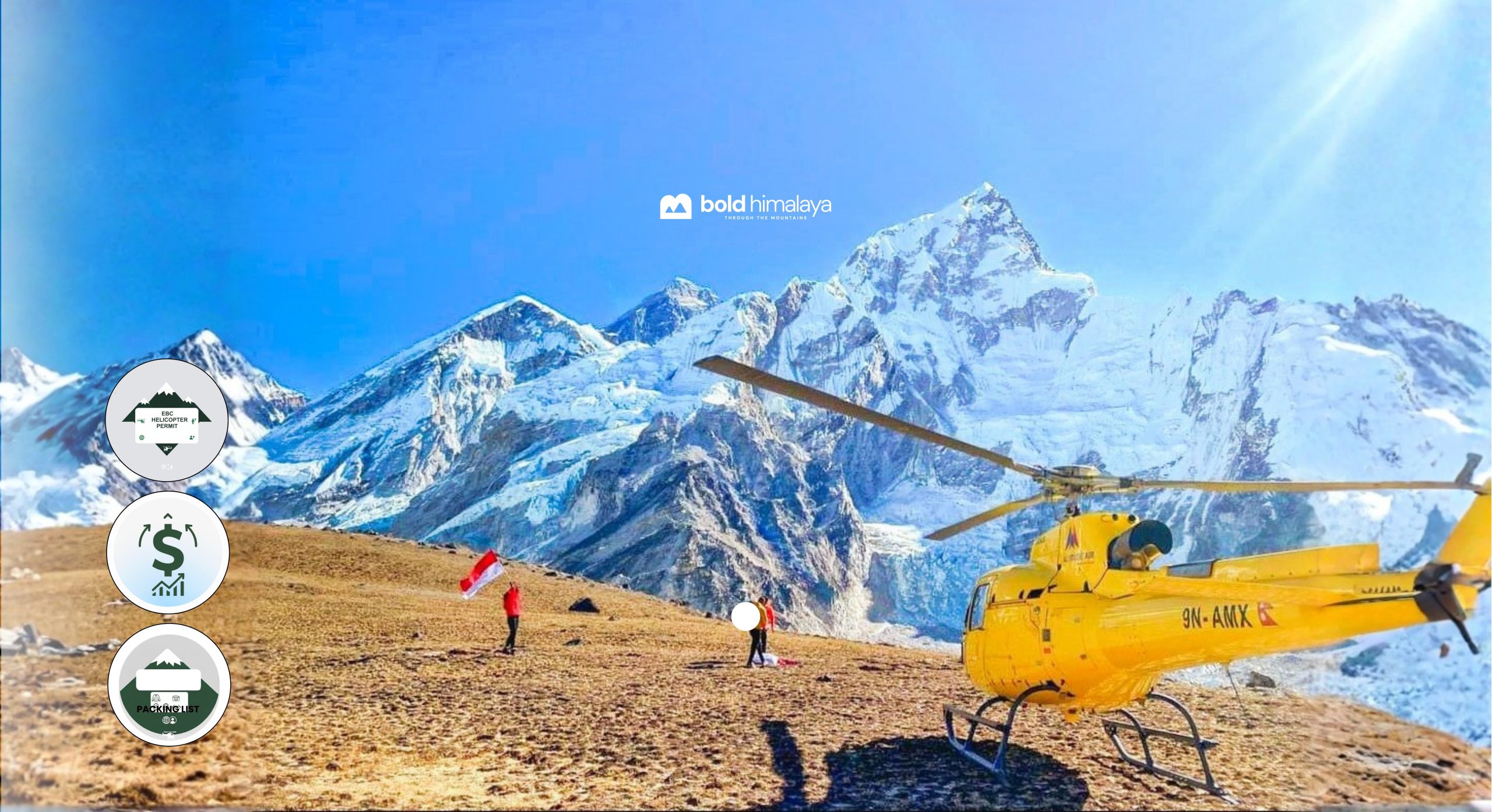
The Everest Base Camp Helicopter Tour is one of the most extraordinary travel adventures available to tourists visiting Nepal. It is a once-in-a-lifetime chance to see the highest peak in the world, Mount Everest, standing tall at 8,848.86 meters (29,031.7 feet), as well as the other Himalayas of the Everest Base Camp region, without the need to hike, as it takes place via a helicopter tour that takes merely a few hours to complete.
The Everest Base Camp Helicopter Tour is a thrilling experience that allows visitors to view the scenery of Mount Everest and the Himalayas’ summits without the physical burden of a multi-day trek. In contrast to traditional trekking, which requires brute muscle power, acclimatisation, and enormous effort and time, helicopter flights give access to nearly everyone. You will see beautiful landscapes, glaciers, and remote villages that have attracted tourists for centuries, without knowing even a bit of the unparalleled, overlooked view over the earth’s giant mountains, witnessed by very, very few people.
There are three main options for the Everest Base Camp Helicopter Tour:
- Helicopter tour with landing at Kalapathar
- Helicopter tour with landing at Kalapathar and Gokyo Lake
- Overfly with landing at the Everest View Hotel
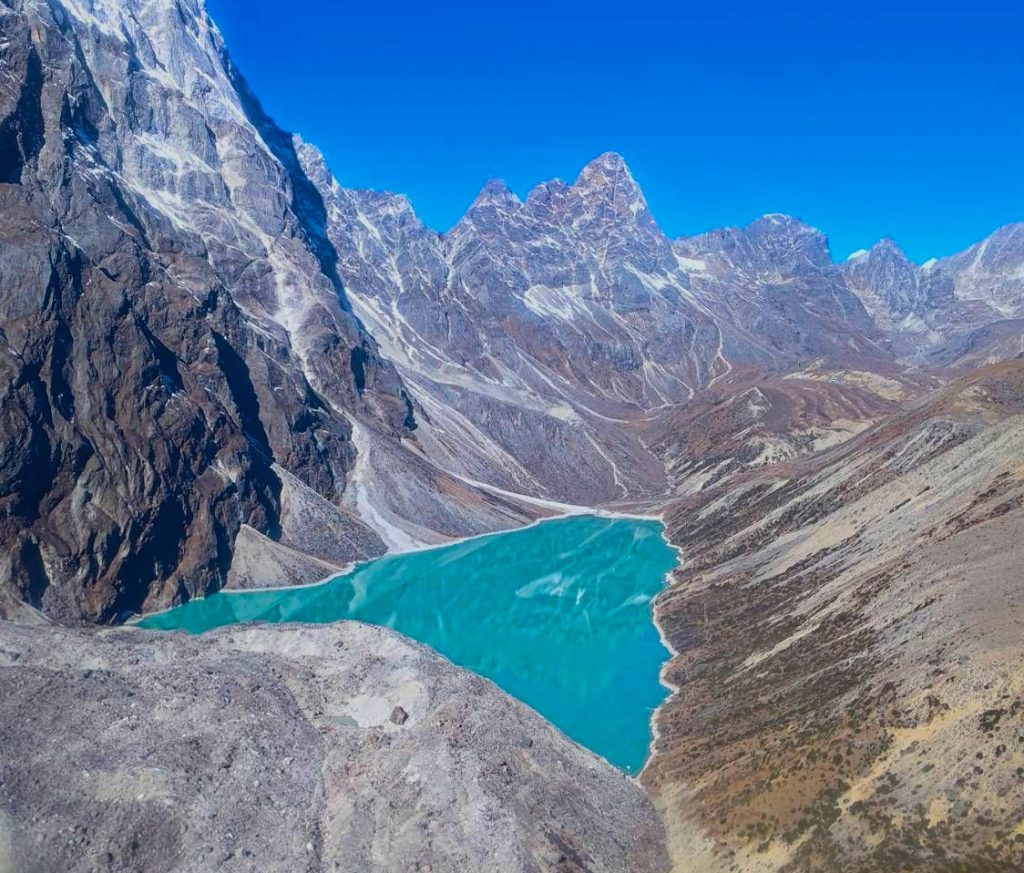
The most inexpensive “Overfly” choice is the bird’s-eye view without descending high, meant for people who are not willing to accommodate altitude sickness. The basic tour has the highly coveted Kalapatthar landing for eyeball-to-eyeball gazing at Everest. For the best experience, there are available optional add-ons that are the luxury of visiting the otherworldly, turquoise-blue Gokyo Lakes, one of Nepal’s best-kept secrets, which few travellers who reach the top tourist streams know.
What makes these excursions unique is their capacity to distil the Everest Base Camp experience into a day without having the capacity to present information in any other way on foot. You’ll fly across massive ice falls, walk along knife-edged ridge crests, and achieve a three-dimensional understanding of the terrain of the Everest region that few on foot ever experience.
The agility of the helicopter makes you observe a glimpse of Everest from varied angles, finding solace in its sheer bare height and proximity to mountains like Lhotse, Nuptse, and Ama Dablam. Adventure travellers have a good time, photographers take pictures, and mountaineer fans alike have the privilege of spending one day of the world’s most gorgeous peaks with memories that will last forever.
Reasons to Choose the Everest Base Camp Helicopter Tour
Time Efficiency: Experience the Himalayas of Everest Base Camp in a single day rather than the typical two-week trek.
Accessibility for All: No advanced physical conditioning or trekking experience required, so Everest is available to families with kids, seniors, and individuals with mobility problems.
Lower Altitude Sickness Risk: Brief exposure to high altitudes minimises the risk of severe altitude sickness that trekkers often face.
Unparalleled Aerial Perspective: See landscapes, glaciers, and mountain formations impossible to appreciate from the ground.
Comfort Factor: Avoid the basic teahouse accommodations, cold nights, and challenging trail conditions of trekking.
Photography Opportunities: Capture incredible aerial shots and panoramas impossible to achieve any other way.
Perfect for People with Tight Schedules: This tour is ideal for travellers who can’t dedicate two weeks to seeing Everest but don’t want to miss experiencing the world’s highest peaks.
Recovery Option: A perfect alternative for injured trekkers or those struggling with altitude who still want to complete their Everest experience.
Types of Everest Base Camp Helicopter Tour
Everest Base Camp Helicopter Tours come in different formats depending on time, budget, landing preferences, and level of exclusivity. Understanding all these options helps travellers choose the best experience for their needs.
Everest Base Camp Helicopter Tour Overfly Only
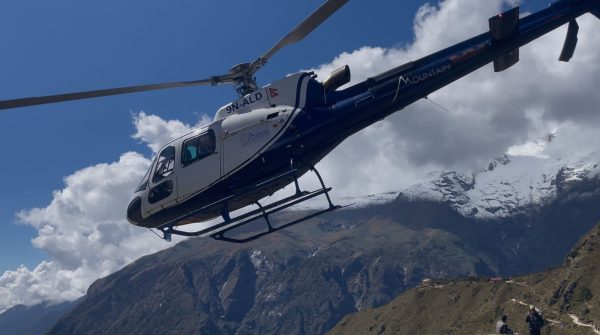
A scenic flight to Everest Base Camp is ideally done without landing at high altitude. You will fly from Kathmandu to Lukla as a brief refuelling stop, and deeper into the Khumbu Valley, looping over Everest Base Camp and the breathtaking summits. You will land in general at lower altitudes, such as the Everest View Hotel for breakfast with wide views, or at Pheriche, on the way back to Kathmandu. Suitable for those worried about altitude or constrained by time.
Everest Base Camp Helicopter Tour with Landing on Kalapatthar
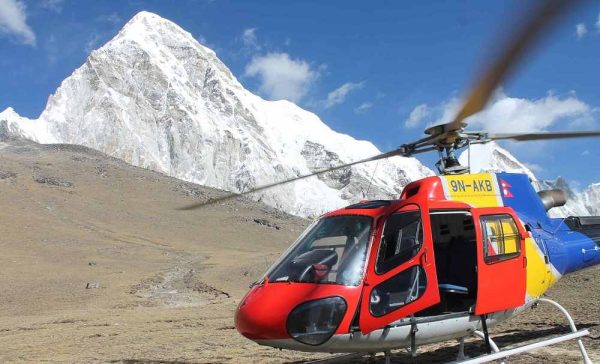
The most popular choice features all of the overfly tour plus the thrill of landing on Kalapatthar (5,545m), a rocky outcrop providing the finest view of Mount Everest. From Kathmandu, with refuelling at Lukla, you will take a flight to Kalapatthar for a 5-10 minute landing (time is limited because of altitude restrictions). Descend from here to the Everest View Hotel for breakfast and then return to Kathmandu. This tour offers the whole Everest experience with the bonus of being at high altitude.
Everest Base Camp Helicopter Tour with Kalapatthar and Gokyo Lakes Landing
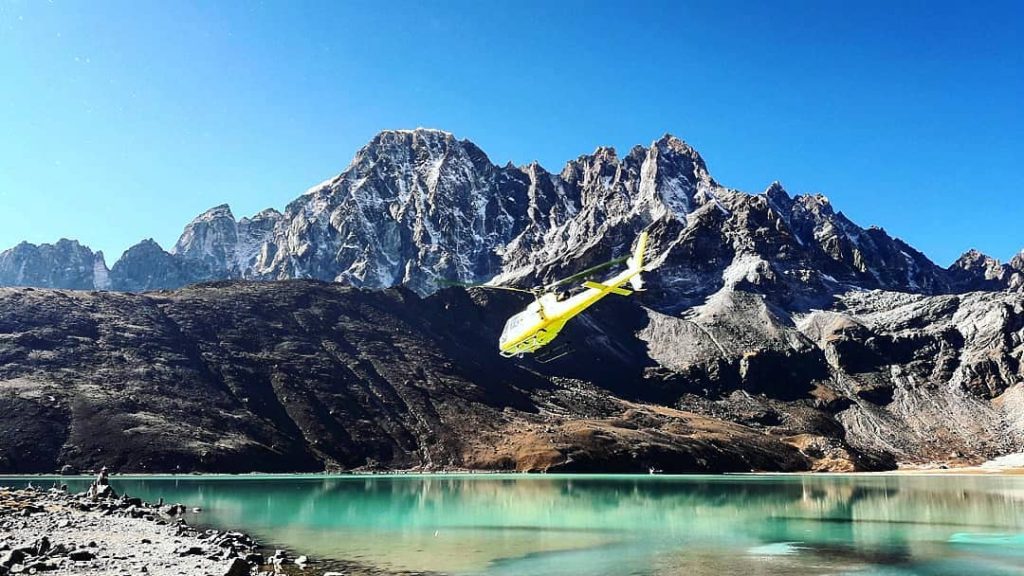
This luxury excursion involves the hike to enjoy the gorgeous turquoise Gokyo Lakes (4,790m), nestled between massive mountains. As a sequel to Kalapatthar’s adventure, your helicopter takes you to this remote and naturally picturesque region away from common trekkers. This private tour gives the most diverse Himalayan experience in one day, with sights of Everest Base Camp, other peaks and the stunning glacial lakes.
Starting Points of the Everest Base Camp Helicopter Tour
Kathmandu: Most of the tours begin from Kathmandu (1,400m), Nepal’s capital city. You’ll fly from Tribhuvan International Airport or the domestic airport at dawn when the weather conditions are optimal. It is the best reachable and most used starting point for foreigners.
Lukla: For those who already have the section of the Everest Base Camp trek done but do not wish to come back, or prefer to complete a short trek along with a helicopter ride, Lukla (2,860m) is an appropriate beginning. This mountain airstrip town is the gateway to the Everest region.
Pheriche or Everest View Hotel: Trekkers already on Pheriche (4,371m) along the way to EBC can return by helicopter rather than returning. Those already on the well-used Everest View Hotel (3,880m) can also arrange for a helicopter pickup to continue further up the mountain without trekking.
Midway Pickup Options: Another often-overlooked advantage is the ability to be helicopter-evacuated from much of the distance along the trekking route if you do contract altitude sickness, get hurt, or just find the trek beyond your limits. This safety net allows many trekkers to approach the adventure more courageously.
Tour Duration and Flight Details for Each Type
Overfly Tour
- Total flight time from Kathmandu: 4-5 hours
- Actual flight time: 5-3 hours
- Stops: Lukla (refuelling), Everest View Hotel (breakfast)
Kalapatthar Landing Tour
- Total flight time from Kathmandu: 5-6 hours
- Actual flight time: 3-3.5 hours
- Stops: Lukla (refuelling), Kalapatthar (5-10 minutes), Everest View Hotel (breakfast)
Kalapatthar and Gokyo Lakes Tour
- Total flight time from Kathmandu: 6-7 hours
- Actual flight time: 5-4 hours
- Stops: Lukla (refuel), Kalapatthar (5-10 minutes), Gokyo Lakes (5-10 minutes), Everest View Hotel (breakfast)
The helicopters operate at altitudes of 10,000-15,000 feet in transport mode, rising to 18,000-20,000 feet when flying over mountainous terrain. Supplemental oxygen would usually be brought on the high-altitude portion of the trip if necessary.
Helicopter Weight and Seating Capacity
Everest Base Camp Helicopter weight capacity needs to be known in these tours because helicopters are operating at performance limits at high altitude:
From Kathmandu to Lukla, the majority of tour helicopters (typically AS350 B3e models) have 4-5 passengers.
For the high-altitude section (Lukla to Kalapatthar/Gokyo), weight limits become extremely tight:
- Estimated max load is 220-250 kg, pilot + fuel
- This just fits normally, 2 passengers per shuttle flight
- Passengers above 90 kg can affect group allocation
This weight restriction will mean larger parties are split up for the high-altitude segment in shuttle flights. Some remain at Lukla, while others fly as far as Kalapatthar on a flight and back, riding in rotation until everyone has visited the high-altitude segment.
These are absolute safety regulations that take into consideration the reduced lifting capacity of the helicopter in thin mountain air. Tour operators weigh passengers before the flight to obtain the best load distribution.
Major Landing Locations of the Everest Base Camp Helicopter Tour
1. Kalapatthar (5,545m / 18,192 feet)
This mythical view presents the most breathtaking and unobstructed scenery of Mount Everest. To land here is the climax of most tours, as you can step out onto this rock outcropping and eyeball-to-eyeball confront the world’s highest mountain. Because of the extremely high elevation, landings are short (5-10 minutes) to avoid altitude sickness. These short moments are long enough for photos and to savour the breathtakingly gorgeous landscape.
2. Everest View Hotel (3,880m / 12,730 feet)
This iconic hotel is noted in the Guinness World Records as being the planet’s highest placed hotel. Breakfast is usually halted by most tours here with excellent views of the mountains via floor-to-ceiling glass. The elevation isn’t really that demanding, so you are able to enjoy a nice meal and process everything that you see. The rest is usually around 30-45 minutes.
3. Lukla (2,860m / 9,383 feet)
Famous for its rugged airstrip, Lukla is a fascinating place to observe the congested gateway to the Everest area as well as a technical refuelling stop. Refuelling (20-30 minutes) provides an opportunity for a short walk into the surrounding small town so that one can observe trekkers beginning or ending treks and enjoy mountain culture.
4. Gokyo Lakes (4,790m / 15,715 feet)
It’s one of Nepal’s best-photographed surroundings with a beautiful turquoise lake and lofty peaks. Deluxe tours will take a landing here for a minute or two, with unique scenery from the rocky terrain at Kalapatthar. Helicopters descend in the third lake, Gokyo Lake. It is possible to see here that there’s Cho Oyu, the sixth-highest peak in the world.
Mountains that can be seen during the Everest Base Camp Helicopter Tour
The landscape on this journey includes some of the most famous mountains in the world:
Mount Everest (8,848.86m/29,031.7ft): The highest mountain in the world, though from most viewpoints its pyramidal form is partially obscured by Nuptse
Lhotse (8,516m/27,940ft): The fourth-highest peak, connected to Everest by the South Col
Makalu (8,485m/27,838ft): The fifth-tallest mountain, seen east of Everest
Cho Oyu (8,188m/26,864ft): The sixth-highest mountain, as seen from Gokyo Lakes
Nuptse (7,861m/25,791ft): Includes a massive wall with Everest and Lhotse
Ama Dablam (6,812m/22,349ft): Commonly referred to as the “Matterhorn of the Himalayas” because of its odd shape
Thamserku (6,623m/21,729ft): A prominent peak seen for a great portion of the Khumbu district
Kalapatthar viewpoint will be the panoramic view of the Khumbu Icefall to Western Cwm, and the viewpoint of Gokyo will be the view of the massive Ngozumpa Glacier, the longest glacier in the Himalayas. The two lookouts offer alternative views of these massive mountains.
Table of Everest Base Camp Helicopter Tour
| Tour Type | Seat Availability | Best For / Who Can Do This Tour | Estimated Budget (USD) | Key Notes |
|---|---|---|---|---|
| Overfly Tour (Shared) | 1-5 passengers (shared) | Budget travellers, solo travellers, first-time visitors | 1,000 – 1,300 per person | Includes scenic flight over Everest Base Camp and Khumbu Icefall; no landing at high altitude; weather dependent |
| Overfly Tour (Private Charter) | Up to 5 passengers (private) | Travellers wanting close Everest views without trekking | 4,500 – 5,500 per flight | Flexible timing, exclusive helicopter, ideal for photography and comfort |
| Landing Tour (Kala Patthar or Nearby Ridge) | 2 passengers (shared or private) | Travellers with limited time | 1,200 – 1,500 per person | Short landing (5-10 minutes); strict altitude safety rules; weather permitting |
| Private Landing Tour | Only 2 passengers | VIP guests, honeymooners, photographers | 5,000 – 6,000 per flight | Customizable route; best comfort and privacy; limited landing time |
| Kala Patthar & Gokyo Lake Helicopter Tour (Private) | 2 passengers only | Adventure travellers, photographers | 6,000 – 7,500 per flight | Includes Kala Patthar landing and Gokyo Lake flyover; weather sensitive; longer flight duration |
| Kala Patthar & Gokyo Lake Tour (Shared – Limited Availability) | 2 passengers (shared) | People who aren’t fit for high-altitude trekking | 1,800 – 2,500 per person | Operates only in peak seasons; it depends on weight and weather conditions |
Impacts on Nature, Wildlife, and Local Economy
Environmental Considerations: While helicopters make noise and emissions, a one-day tour leaves a smaller ecological footprint than a two-week trek in that:
- No toilet waste along trails
- No firewood or fuel for heating several lodge nights
- Less damage to high-altitude sensitive flora from foot traffic
Local Economy Benefits: These tours make a substantial contribution to Nepal’s economy:
- Employment of pilots, ground crew, and tour operators
- Business for restaurants and hotels in Kathmandu
- Income for the Everest View Hotel
- Conservation through fees on permits
Wildlife Impact: Temporary disruption caused by short helicopter visits, but reduced longer-term stress on the area’s wildlife than by frequent trekkers. Flights follow designated corridors to minimise disturbance of wildlife.
Weather Conditions and Flight Schedule
Best Seasons
- October-November: Ideal season with crystal clear skies and ideal visibility
- March-May: Good weather season and rhododendron forest flowering
- December-February: Cold but generally clear; some days of excellent visibility
- June-September: Monsoon weather with many cancellations on account of cloud cover and rain
Patterns of Daily Weather: The weather in the mountains is notoriously variable, but follows certain rules:
- Optimum morning conditions
- Clouds tend to gather by late morning
- Daytime wind speeds rise
Flight Scheduling: Tours usually depart quite early (5:30-7:00 AM) in hopes of getting the best window of weather and having time for any delays, but still completing the tour within a day.
Cancellation Reality: Be mentally flexible regarding cancellations or postponements. Safety first, and aircraft do not fly in poor weather, high wind, or other undesirable conditions. Weather cancellations can be rearranged at most firms, so planning flexibility into Nepal travel is strongly recommended.
Safety Precautions and Emergency Procedures
Expert Captains: Mountaineering firms employ the top available mountain pilots with thousands of hours of experience in the Himalayas.
Oxygen Assistance: Supplementary oxygen is carried on board for passengers with altitude discomfort at high-landing altitudes.
Communication Network: Helicopters maintain constant radio communication with Lukla and Kathmandu bases, ensuring precise flight tracking.
Weather Monitoring: Advanced weather tracking facilitates real-time decision-making on flight trajectory and security.
Medical Preparation: Basic high-altitude medical treatment is prepared for the pilots, and the rapid descent of the helicopters is the ultimate answer to all altitude issues.
Aircraft Quality: Operators use specially crafted new-generation helicopters (typically Airbus AS350 B3e/H125) specially built for high-altitude operations, the same helicopter model that has already touched Everest’s summit.
Clothing and Gear Tips for Everest Base Camp
Don’t bring too much cold-weather gear. You’ll only be outside for a short while! As you’ll only be outside the helicopter a short time (5-10 minutes at Kalapatthar and other stopovers), you won’t require as much serious gear as the trekkers will.
A warm hat, gloves, and a jacket are all you actually need for those brief photo stops. The helicopter is heated, and you’ll spend the majority of the time there in warmth. There is indoor warmth at the Everest View Hotel, which is very comfortable.
Don’t forget good sunglasses (high-altitude sun is intense) and face cream sunscreen, as the UV light is far more intense at altitude. Bring a camera with spare batteries – cold kills batteries in a matter of seconds at high altitude, and you’ll be taking a lot of pictures of these once-in-a-lifetime vistas.
And don’t forget comfortable shoes with good grip for those short spells on possibly rough ground. Otherwise, just dress in comfortable layers that you can readily remove or add during the flight, and you’ll be fine for this easy excursion.
Inclusions
- All ground transportation in Kathmandu
- Breakfast at Everest View Hotel
- Necessary permits and fees
- Experienced English-speaking guide
- Supplemental oxygen if needed
- National park entry permits
Exclusions
- Travel insurance (required)
- Tips for staff
- Personal expenses
- Accommodation in Kathmandu
FAQs of Everest Base Camp Helicopter Tour
Can I do this tour alone?
You may, but you’d be with other tourists (least expensive) or charter for yourself (very costly).
Will I become sick at altitude?
Temporary exposure at high altitude diminishes but does not eliminate risk. Some people will experience mild symptoms of headache or dizziness from the 5-10 minutes Kalapatthar landing. The subsequent sharp descent generally does sufficient to dispel any distress.
May I land or overfly only?
Yes, different tour packages have different landing facilities. If you wish to remain below altitude, you have the option of overflying only.
What happens if the flight is cancelled?
Rescheduling on the following available day or refund if rescheduling is not possible is given by most of the operators. Please refer to the individual cancellation policy at the time of reservation.
Is breakfast available at Everest View Hotel?
Yes, breakfast with mountain views is part of most packages.
Can it be done along with trekking?
Yes! Most visitors trek one way and return by flight, or take the helicopter up to Lukla for the start of a trek.
How much time do we spend at each location?
- Kalapatthar and Gokyo: 5-10 minutes
- Everest View Hotel: 30-45 minutes
- Lukla: 20-30 minutes (on refuelling)
What are the age and health requirements?
No age limit, but those less than 2 are not recommended due to altitude concerns. Individuals with severe heart or lung problems, who have had surgery in the recent past, or pregnant women need to consult their doctor before booking a seat.
Conclusions
Everest Base Camp Helicopter Tour is one of the most value-for-money packages to visit – access to the highest mountain region on earth in the comfort of a leisurely day. While weeks over challenging terrain is spent by mountain trekkers walking upwards, helicopter tour visitors witness the very same scenic view from both ground as well as aerial levels in less than half a day. It has opened up to everyone what used to be an elitist pursuit for the physically more capable with lots of leisure time.
The true magic of this trek is the manner in which it unravels a string of one-time experiences in rapid succession. There is the stunning transition from the urban chaos of Kathmandu to that first sighting of the towering peaks on the horizon. And then, at Kalapatthar, with Everest close enough to touch it creates an emotional connection with these mountains that transcends sightseeing. Finally, breakfasting atop the mountains with panoramic views creates a sense of achievement and wonder that most travellers report is profound.
Although the cost might seem exorbitant on the surface, when one considers the experience provided – helicopter transport, guides, permits, breakfast, and scenery most never see up close other than in pictures – most find it well worth the cost. And consider the opportunity cost of the traditional two-week trek: the accommodations, meals, guide services, and most importantly, vacation time that could be spent seeing other parts of Nepal or neighbouring countries of interest.
Comments (0)
Write a comment- Reasons to Choose the Everest Base Camp Helicopter Tour
- Types of Everest Base Camp Helicopter Tour
- Starting Points of the Everest Base Camp Helicopter Tour
- Tour Duration and Flight Details for Each Type
- Helicopter Weight and Seating Capacity
- Major Landing Locations of the Everest Base Camp Helicopter Tour
- Mountains that can be seen during the Everest Base Camp Helicopter Tour
- Table of Everest Base Camp Helicopter Tour
- Impacts on Nature, Wildlife, and Local Economy
- Weather Conditions and Flight Schedule
- Safety Precautions and Emergency Procedures
- Clothing and Gear Tips for Everest Base Camp
- Inclusions
- Exclusions
- FAQs of Everest Base Camp Helicopter Tour
- Conclusions
Read the latest Blogs & Insights
Explore our collection of articles and insights to gain in-depth travel knowledge, expert advice, and stay updated on the latest trends and tips.
View All Articles
Broad Peak Avalanche: Nirmal Purja & the Team
10 Aug. 2026
Prayer Flags
10 Jul. 2026
Golf Tour in Nepal
30 Jun. 2026
Mera Peak vs Island Peak Climbing
12 Jun. 2026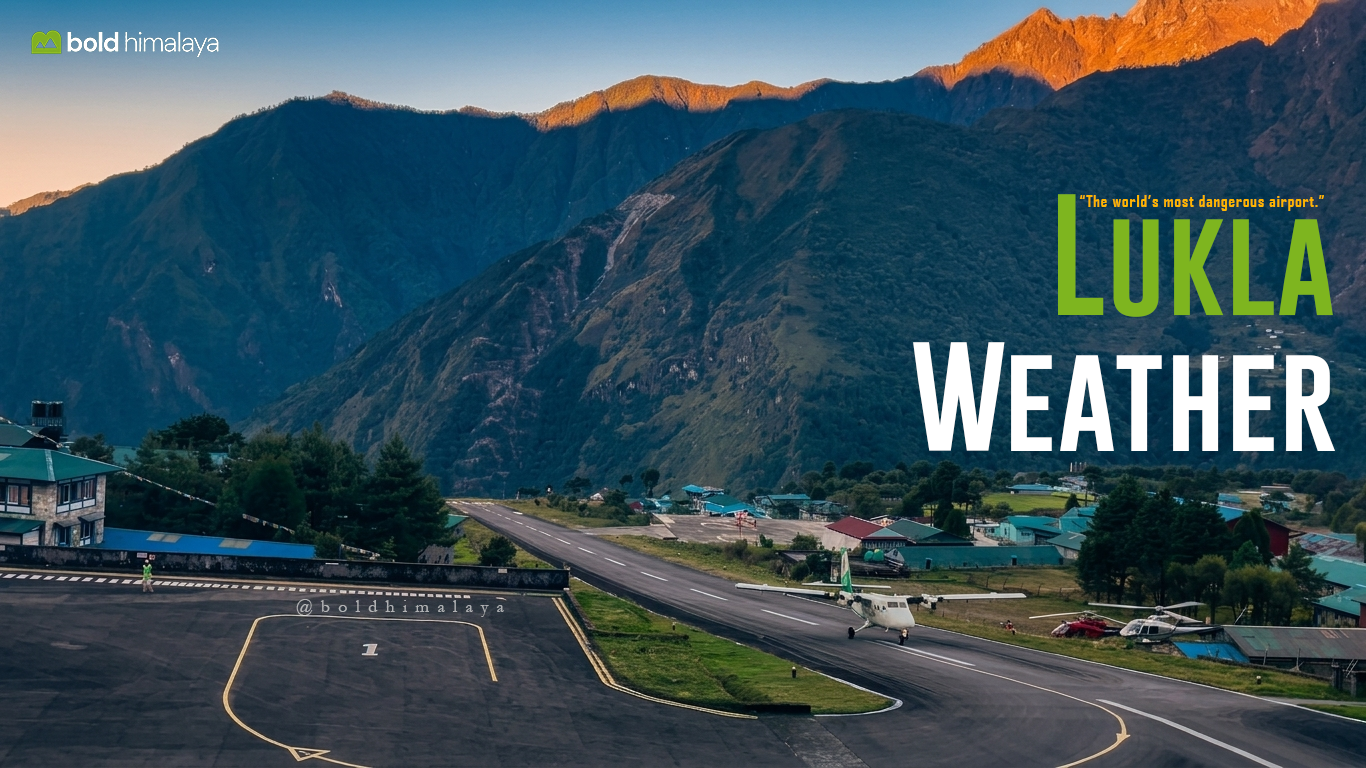



No comments yet.