



A Complete Manaslu Circuit Trek Guide
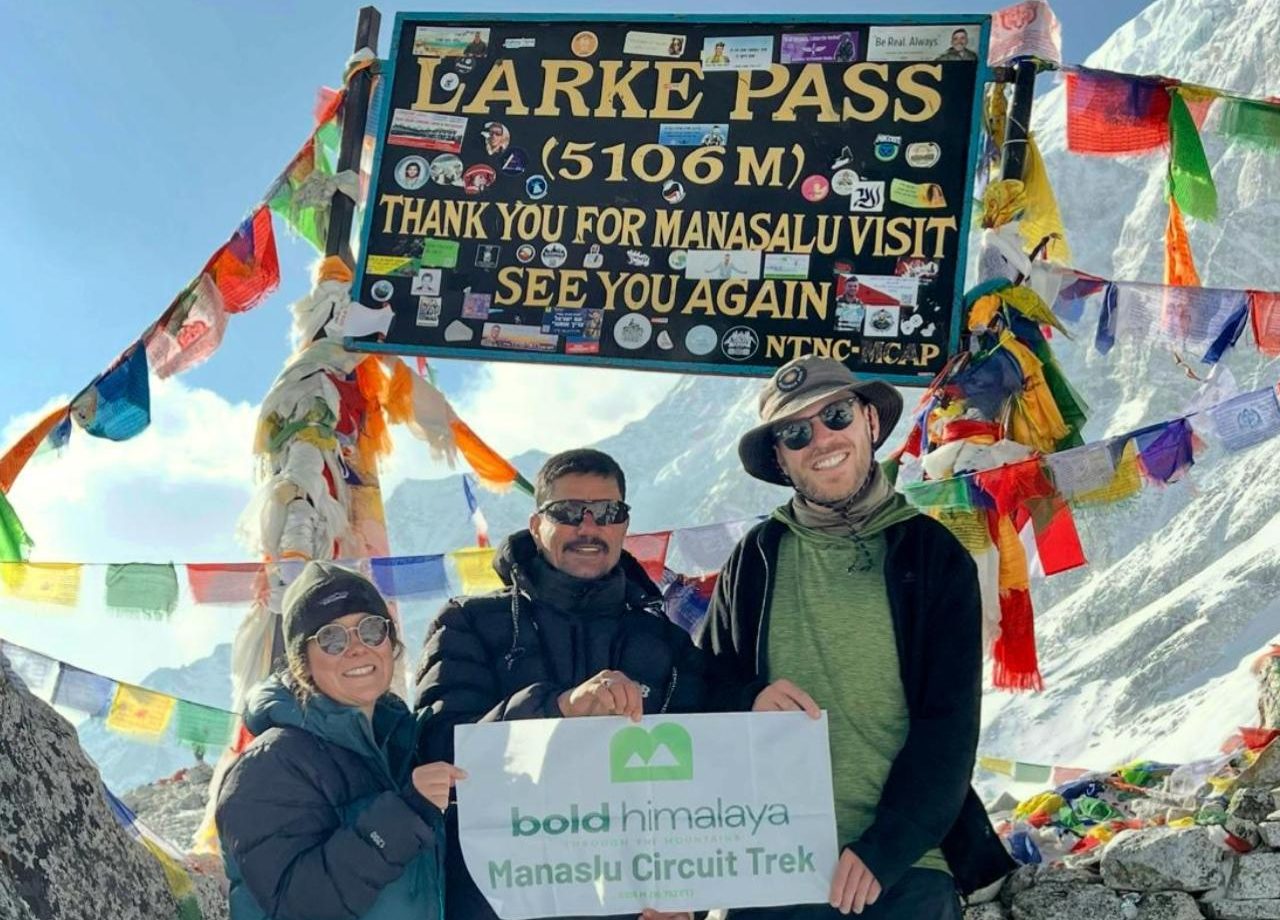
-
 Sobit Bhandari
 -
20 December, 2024
-
27 mins read
-
2071 Views
-
0 Comments


Ready for an adventure that’ll knock your socks off? Let me tell you, this two-week journey lives up to the hype. The Manaslu Circuit Trek is one of Nepal’s most spectacular and less-crowded Himalayan trekking routes, circling around the majestic Mount Manaslu (8,163m), the world’s eighth-highest peak. This remote trail offers an authentic adventure experience far from the busy commercial trekking routes, making it a true off-the-beaten-path journey for trekkers seeking raw nature and cultural depth.
The Manaslu Circuit Trek kicks off in the delightful town of Arughat. Imagine winding through quaint villages, lush forests, and incredible high-altitude passes, in particular, the jaw-dropping Larkya La Pass towering at a dizzying 5,106 meters (16,752 feet). What’s special here isn’t just the Insta-worthy views; it’s also the rich cultural experiences. As you hike along these scenic routes, you’ll get a taste of life in local communities, think bustling, colorful markets with friendly faces from Gurung and Tibetan Buddhist backgrounds. So are you ready to soak in some unique traditions?
One of the highlights of the Manaslu Circuit Trek is the opportunity to see a variety of wildlife, including blue sheep, Himalayan tahr, and even the occasional snow leopard. The trek can be physically demanding, as it involves long days of hiking and high-altitude acclimatization. However, the stunning views and cultural experiences make it well worth the effort.
Overall, this Manaslu Circuit Trek Guide showcases why the journey is considered one of Nepal’s most rewarding trekking adventures.
Full Manaslu Circuit Trek experience — watch the complete Himalayan journey.
Where is the Manaslu Circuit Trek located?
The Manaslu Circuit Trek is located in the northern Himalayan region of Nepal, within the remote and protected Manaslu Conservation Area. This region lies close to the northern border with Tibet, giving the trek a strong influence of Tibetan culture, especially in its villages and monasteries.
The trek circles around Mount Manaslu, the world’s eighth-highest mountain at 8,163m (26,781ft). Starting from lower hill regions such as Arughat or Machha Khola, the trail gradually ascends through lush forests, terraced farmlands, deep river gorges, and traditional Gurung and Tibetan-influenced villages before crossing the dramatic Larkya La Pass at 5,106 meters. This restricted trekking region is known for its untouched Himalayan landscapes, rich Buddhist culture, and spectacular mountain scenery.
Reasons to Do the Manaslu Circuit Trek
- Larkya La Pass: One of the best highlights of this trek is the Larkya La Pass. It is a challenging high-altitude pass that offers stunning views of the surrounding mountains and is a popular destination for trekkers.
- Off the beaten path: The Manaslu Circuit Trek is less crowded than some of the other popular trekking routes in Nepal, making it a good option for those who want to avoid crowds and experience a more remote and isolated region.
- Birendra Lake: Located at an altitude of around 4,660 meters (15,290 feet), Birendra Lake offers stunning views of the surrounding mountains and is a popular destination for day hikes.
- Tsum Valley: The Nepal Manaslu Circuit Trek also includes a side trip to the Tsum Valley, a remote and isolated region known for its ancient monasteries and cultural treasures.
- Scenic beauty: The Manaslu Circuit Trek offers stunning views of the Himalayan mountain range, including Manaslu, the eighth-highest mountain in the world. The trek also passes through various landscapes, including forests, alpine meadows, and traditional villages. The eighth-highest mountain in the world, Manaslu, offers stunning views and is a popular destination for mountaineers.
- Cultural experiences: The Manaslu Circuit Trek offers the opportunity to learn about and experience the culture of the local Gurung and Tamang communities. The trek passes through several traditional villages, and you will have the chance to interact with the locals and learn about their way of life.
- Physical challenge: The Manaslu Circuit Trek is a physically demanding trek, with long days of hiking and steep ascents and descents. It is an excellent opportunity for those who enjoy physical challenges and want to test their endurance and strength.
- Opportunities for wildlife viewing: The Manaslu Circuit Trek passes through the Manaslu Conservation Area, home to a variety of wildlife, including Himalayan tahr, musk deer, and snow leopards. The trek offers the opportunity to spot some animals in their natural habitat.
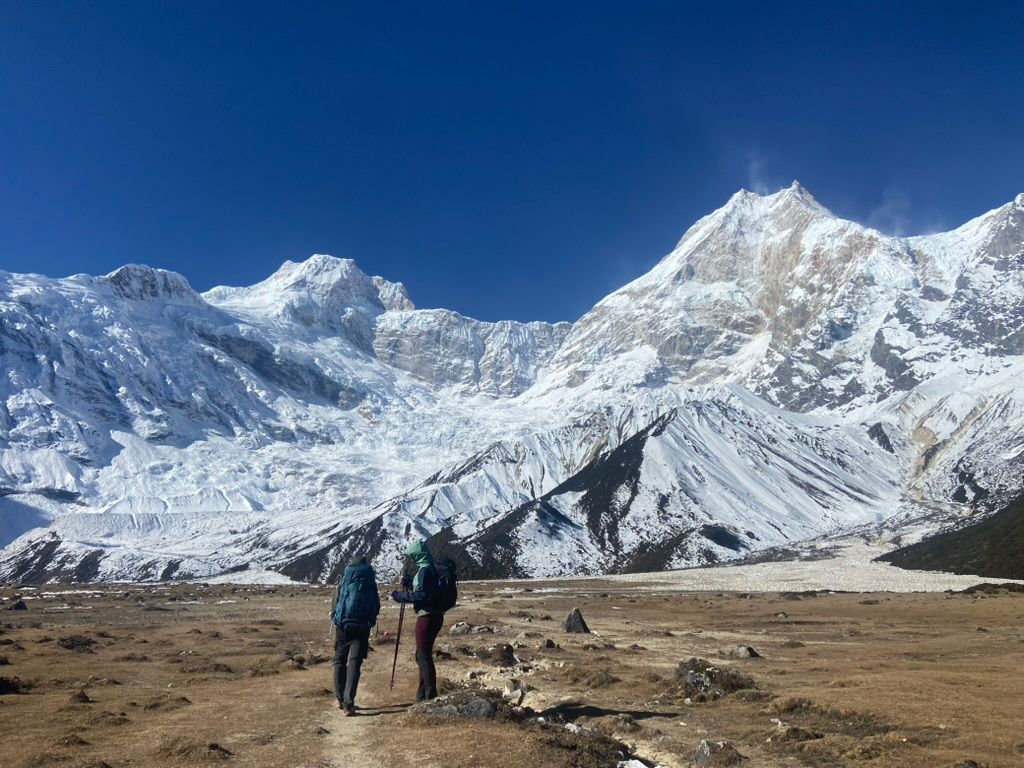
Best time for Manaslu Circuit Trek
The best time for the Manaslu Circuit Trek can be done in different seasons, but the experience varies greatly depending on the weather, visibility, and trail conditions. Here’s a clear breakdown of each season:
Autumn (September – November): Best Overall Season
Autumn is considered the peak trekking season for the Manaslu Circuit. After the monsoon rains, the air becomes clean and crisp, offering the clearest views of the Himalayas.
The weather is stable, the skies are deep blue, and visibility is excellent throughout the route. Temperatures are moderate, and trail conditions are ideal for long trekking days. This is also the busiest season on the route, though still quieter compared to Everest or Annapurna.
Spring (March – May): One of the Best Seasons
Spring is one of the most popular and favorable times for the trek. The weather is generally stable, with clear mornings and mild temperatures, making trekking conditions comfortable.
During this season, the trails come alive with blooming rhododendrons, lush green forests, and vibrant landscapes. Mountain views of Mount Manaslu and surrounding peaks are usually very clear, especially in the early part of the day. It’s also a great time for photography and wildlife sightings.
Winter (December – February): Challenging but Peaceful
Winter brings cold temperatures, especially at higher elevations like Larkya La Pass. Heavy snowfall can make some sections difficult or even inaccessible.
However, for experienced trekkers, winter offers a very peaceful experience with empty trails and stunning snow-covered landscapes. Proper gear and preparation are essential for this season.
Monsoon (June – August): Least Recommended
Monsoon season brings heavy rainfall, landslides, and slippery trails, especially in the lower regions of the trek. Cloud cover often blocks mountain views, and transportation delays are common.
However, the upper Manaslu region lies partly in a rain-shadow area, meaning some sections can still be trekked with fewer crowds and greener landscapes. Still, it is generally the least preferred season for this trek.
Preparation with a proper plan
There are a few key things that trekkers should consider when preparing for the Manaslu Circuit Trek:
- Physical Fitness: The Manaslu Circuit Trek is a physically demanding trek that requires a good level of physical fitness. The tour involves hiking for long distances at high altitudes, with some sections of the trail requiring trekkers to walk over rocky terrain and through steep valleys. To prepare for this, it is essential to start a training program several months in advance of the trek. This can include hiking, running, and cycling, as well as strength training and exercises, to build up the muscles in the legs and core. It is also a good idea to gradually increase the intensity and duration of your training as the trek approaches to ensure that you are adequately prepared.
- Mental preparation: Mental preparation is an essential aspect of preparing for the Manaslu Circuit Trek. Being in a remote, high-altitude environment can be challenging, and it is necessary to be mentally and emotionally ready for the demands of the trek. This includes preparing for long days of hiking with a heavy backpack and potentially basic living and sleeping conditions. It is essential to have realistic expectations and to be able to adapt to the needs of the trek. This can help prevent disappointment and ensure you have a positive and enjoyable experience on tour.
- Acclimatization: The Manaslu Circuit Trek involves significant altitude changes, with the highest point being the Larkya La Pass at 5,106 meters (16,752 feet). To prevent altitude sickness, it is essential to properly acclimatize to these altitude changes. This means taking rest days and gradually increasing your size during the trek. It is also necessary to listen to your body and take it easy if you start to feel any symptoms of altitude sickness, such as dizziness, headache, or shortness of breath.
Before you begin your journey on the Manaslu Circuit Trek, watch this quick guide covering everything you need to know.
Go through the best travel agency
Manaslu Trekking Circuit is restricted to our trek in Nepal, so you must go through the registered company of Nepal. Many companies organize hiking and climbing trips in the Manaslu region; however, we offer customized vacation packages for individuals, couples, families, and people of all ages.
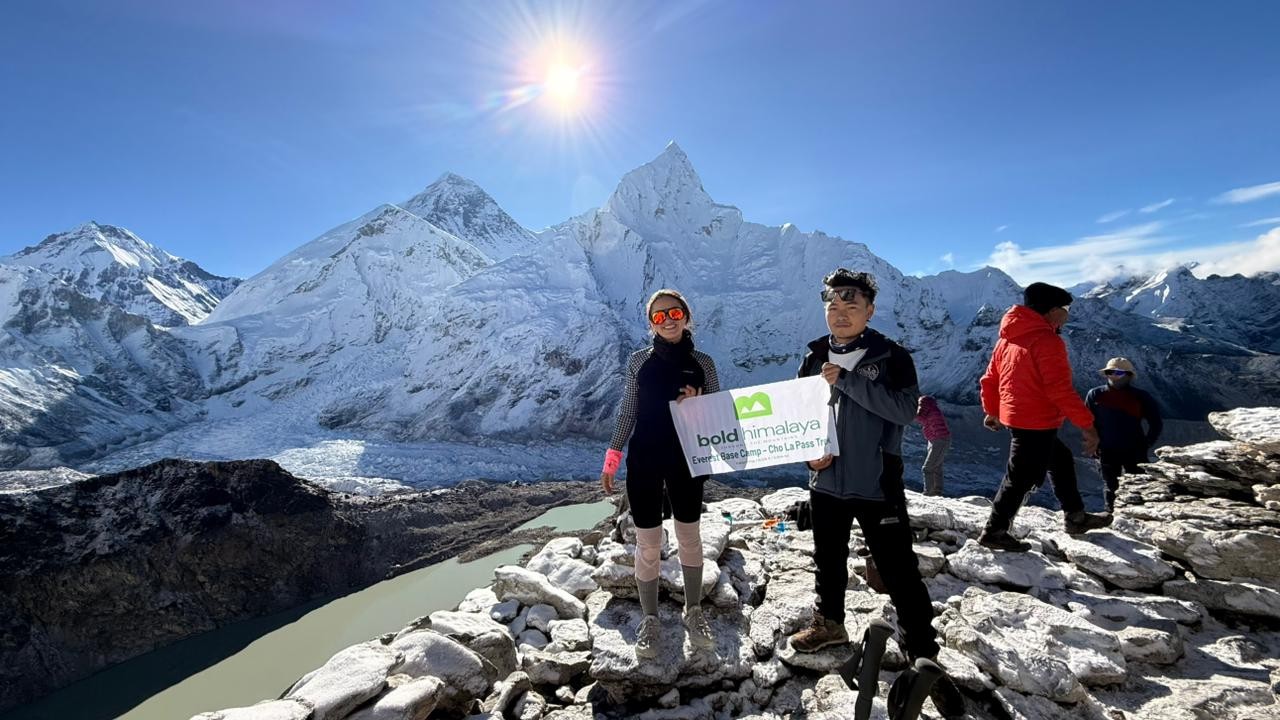
Bold Himalaya Team celebrating at Larkya La Pass (5,106 m / 16,752 ft) on the Manaslu Circuit Trek.
We pride ourselves on our ability to create an unforgettable and personalized experience for our clients. All packages and trips are guaranteed to depart on schedule unless extenuating circumstances such as epidemics, natural disasters, or political unrest occur. We have a team of specialists who have traveled widely in the region and thoroughly understood the local culture and landscape.
We are available to assist clients around the clock to ensure that you have a successful and enjoyable trip.
Insurance for the Manaslu Circuit Trek
Travel insurance has become a compulsory requirement for the Manaslu Circuit Trek, especially due to its remote, high-altitude terrain, as it can provide financial protection in unexpected events or emergencies. Some of the reasons why insurance is necessary for the Manaslu Circuit Trek include:
- Medical emergencies: The Manaslu Circuit Trek takes place in a remote, high-altitude region, and access to medical care can be limited. Insurance can help cover medical treatment costs in case of an emergency.
- Trip cancellations: In case of unforeseen circumstances, such as natural disasters or political unrest, you may need to cancel your trip. Insurance can help cover trip cancellation costs, including non-refundable deposits and flight costs.
- Lost or stolen gear: Insurance can help to cover the cost of replacing lost or stolen equipment, such as a backpack or camera, which can be expensive to replace.
- Evacuations: In a medical emergency or natural disaster, you may need to be evacuated from the region. Insurance can help to cover the cost of evacuations, which can be expensive.
By having insurance, you can have peace of mind knowing that you are financially protected in case of unexpected events or emergencies on the Manaslu Circuit Trek. It is a good idea to research and compare different insurance options before embarking on the trek to ensure you have the coverage you need.
Permits for the Manaslu Circuit Trek
Several permits are required for the Manaslu Circuit Trek. These permits are designed to help protect the environment and support the local communities in the region. Below are the main licenses that are required for the Manaslu Circuit Trek permit:
- Trekker’s Information Management System (TIMS) card: The TIMS card is a permit issued by the Nepal Tourism Board (NTB) and is required for all trekkers in Nepal. The card helps to regulate the number of trekkers in the region and ensure that they are correctly accounted for in case of an emergency.
- Manaslu Conservation Area Permit (MCAP): The MCAP is a permit that is required for trekking in the Manaslu Conservation Area. The permit helps support the region’s conservation efforts and ensures that the environment is protected.
- Restricted Area Permit (RAP): The RAP is a permit that is required for trekkers who wish to visit certain regional areas in Nepal. The Manaslu Circuit Trek includes a section through the local area of Tsum Valley, so trekkers will need to obtain a RAP to visit this region. Bold Himalayas arranges all these permits, so your trek is hassle-free.
Manaslu Circuit Trek Difficulty
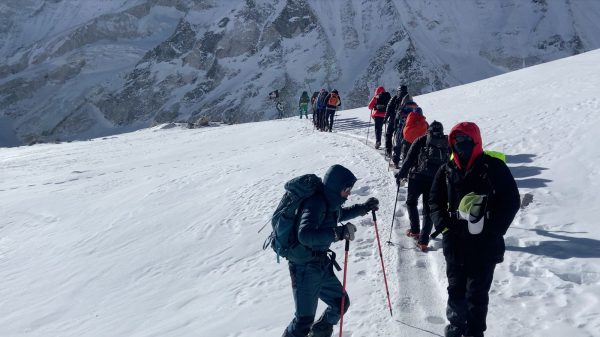
The Manaslu Circuit Trek is generally classified as moderate to challenging, making it suitable for trekkers who have a reasonable level of fitness and some prior hiking experience. The route involves long walking days, often ranging from 6 to 8 hours, with continuous ascents and descents through rugged Himalayan terrain.
One of the main challenges is the high altitude, especially when crossing the Larkya La Pass at 5,106 meters. At this elevation, the risk of altitude sickness increases, so proper acclimatization and a steady pace are very important throughout the journey.
The trek also demands good physical endurance, as trekkers must carry themselves through remote landscapes with limited facilities and changing weather conditions. Overall, while it is not the hardest trek in Nepal, it does require solid preparation, fitness, and mental determination to complete successfully.
Packing List for Manaslu Circuit Trek
It is essential to bring the necessary gear and equipment to ensure a comfortable and successful trek. Below is a list of items that you should consider getting on the Manaslu Circuit Trek:
- Hiking boots: A good pair of hiking boots is essential for the Manaslu Circuit Trek. Look for boots that are sturdy, waterproof, and provide good ankle support.
- Warm and waterproof clothing: The weather on the Manaslu Circuit Trek can be variable, with the possibility of rain, snow, and cold temperatures. It is essential to bring warm and waterproof clothing, such as a rain jacket, warm layers, a hat, and gloves.
- Backpack: A good-quality backpack is essential for carrying all of your gear and supplies on the trek. Look for a sturdy, comfortable bag that can hold all of your items.
- Sleeping bag: A sleeping bag is essential for staying warm and comfortable at night. Look for a bag rated for cold temperatures and that has a good level of insulation.
- First aid kit: A first aid kit is an essential item to have on the trek. It should include adhesive bandages, antiseptic wipes, pain relievers, and necessary medications.
- Water purification tablets: It is essential to have a way to purify water on the trek, as the water sources may not be safe to drink. Water purification tablets are a convenient and effective way to purify water.
- Headlamp: A headlamp is a valuable item on the trek, as it allows you to see in the dark and can be used for tasks such as setting up camp or finding your way to the bathroom at night.
- Sunscreen: The high altitudes of the Manaslu Circuit Trek can make you more susceptible to sunburn, so it is essential to bring sunscreen and use it regularly to protect your skin.
- Snacks: It is a good idea to bring some snacks on the trail, such as energy bars, nuts, and dried fruit. These can help boost your energy and keep you going during long days of hiking.
- Maps and guidebook: It is a good idea to bring maps and a guidebook to help you navigate the trail and learn about the local culture and history. By bringing these items and being prepared, you can ensure a comfortable and successful trek on the Manaslu Circuit.
Watch this complete Manaslu Circuit Trek packing list video to understand exactly what to carry for different seasons and altitudes.
Best Manaslu Circuit Trek Itinerary
The Manaslu Circuit Trek is a circular trek that begins and ends in the town of Arughat in Nepal. The trek covers a distance of around 180 kilometers (112 miles) and generally takes about 8-12 days to complete, depending on the route and the pace of the trekker. Here is a sample itinerary for the Manaslu Circuit Trek:
Day 1: Kathmandu (1,400 m / 4,593 ft) → Machha Khola (840 m / 2,756 ft)
Day 2: Machha Khola (840 m / 2,756 ft) → Jagat (1,300 m / 4,265 ft)
Day 3: Jagat (1,300 m / 4,265 ft) → Deng (1,860 m / 6,102 ft)
Day 4: Deng (1,860 m / 6,102 ft) → Namrung (2,630 m / 8,629 ft)
Day 5: Namrung (2,630 m / 8,629 ft) → Samagaun (3,530 m / 11,581 ft)
Day 6: Samagaun (3,530 m / 11,581 ft) → Rest/acclimatization
- Optional trek to Birendra Lake (4,100 m / 13,451 ft) or Manaslu Base Camp (4,500 m / 14,764 ft)
Day 7: Samagaun (3,530 m / 11,581 ft) → Samdo (3,860 m / 12,664 ft)
Day 8: Samdo (3,860 m / 12,664 ft) → Dharamsala / Larke Base Camp (4,460 m / 14,633 ft)
Day 9: Larke Base Camp (4,460 m / 14,633 ft) → Larkya La Pass (5,160 m / 16,929 ft) → Bimthang (3,720 m / 12,205 ft)
Day 10: Bimthang (3,720 m / 12,205 ft) → Tilije (1,500 m / 4,921 ft) Trek → Drive to Besisahar (760 m / 2,493 ft)
Day 11: Besisahar (760 m / 2,493 ft) → Kathmandu (1,400 m / 4,593 ft) This itinerary is just a sample and can be modified based on your needs and preferences.
It is important to take your time and allow plenty of rest during the trek to give your body time to acclimate to the higher altitudes.
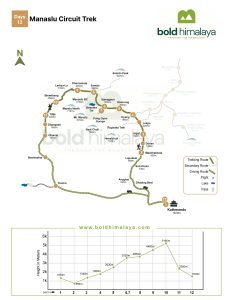
Navigate your adventure with this detailed map with an altitude chart of the Manaslu Circuit, highlighting key locations, elevation changes, and the location of Larkya La Pass
Acclimatization for Manaslu Circuit Trek
Acclimatization is an important consideration for the Manaslu Circuit Trek, as the trek involves significant changes in altitude and can be physically demanding. To properly acclimatize, it is recommended to follow the following tips:
- Take it slow: The key to successful acclimatization is to take it slow and allow your body time to adjust to the changes in altitude. This means taking rest days and not overexerting yourself during the early stages of the trek.
- Drink plenty of fluids: Staying hydrated is essential for acclimatization, as it helps to prevent altitude sickness. Make sure to drink plenty of fluids, including water and electrolyte-rich beverages, to stay hydrated.
- Eat a high-calorie diet: The high altitudes of the Manaslu Circuit Trek can increase your metabolism and energy needs. Make sure to eat a high-calorie diet to maintain energy levels and help your body acclimatize.
- Ascend slowly: Gradually increasing your altitude is an essential aspect of acclimatization. Avoid making rapid ascents; instead, take your time and allow your body to adjust to the changes in altitude. Listen to your body: Pay attention to your body and listen to any warning signs of altitude sickness, such as dizziness, headache, or shortness of breath. If you experience these symptoms, take it easy and consider descending to a lower altitude if necessary.
By following these tips and being aware of the importance of acclimatization, you can ensure that you have a safe and enjoyable experience on the Manaslu Circuit Trek.
Note: For trekkers who have limited time or prefer a more challenging pace, we offer a short Manaslu Circuit trek package. This tour is ideal for those who are physically fit and do not require additional acclimatization days. The shorter trek covers the main attractions of the Manaslu region, including Larkya La Pass, and can be completed in fewer days without compromising on the stunning mountain views and cultural experiences.
Facilities on Manaslu Circuit Trek
- Food: While on the trek, trekkers can expect to eat simple but nourishing meals prepared by local lodges and teahouses. These meals typically combine Nepali and Western dishes, such as dal Bhat (a traditional dish of lentils and rice), pasta, and soups. It is also possible to find snacks and drinks, such as tea and coffee, at the lodges and teahouses.
- Accommodation: Local lodges and teahouses provide accommodation on the Manaslu Circuit Trek Route. These facilities are simple but offer a comfortable place to rest after hiking. Rooms are typically shared and have basic amenities such as a bed, blankets, and a pillow. Some lodges and teahouses have shared bathrooms, while others have private bathrooms. Pitching a tent in designated areas is also possible if you prefer to camp.
- Electricity: Electricity is generally limited on the trek and may only be available in some villages or lodges. Bring a power bank or portable charger to ensure you can charge your electronic devices.
- Internet: Internet connectivity is also limited on the trek, and getting a reliable connection in some villages or lodges may only be possible. Some lodges or teahouses may offer WiFi, but the signal may need to be stronger or more intermittent. It is a good idea to be prepared for limited or no internet connectivity while on the trek.
- Water: It is a good idea to bring a water purification system, such as a water filter or purification tablets, to ensure that you have a reliable source of safe drinking water while on the trek. You can also purchase bottled water at some of the lodges or teahouses along the route, but it is a good idea to bring enough water for the trek, as it may only be possible to buy bottled water in some villages. It is essential to stay hydrated while on tour, as the high altitude and physical exertion can increase the risk of dehydration. Make sure to drink plenty of water and avoid drinking water from untreated sources.
- ATM and Banks: ATMs and banks are not readily available on the Manaslu trek in Nepal. The trek passes through remote and isolated regions, and it is essential to be prepared for limited amenities. It is a good idea to bring enough cash to last the entire trek, as it may only be possible to access ATMs or banks in some villages.
Our Recommendations for the Manaslu Circuit Trek
1. Start Trek from a lower elevation:
It is generally recommended to start the Manaslu Trekking Expedition in Nepal from a lower elevation and gradually work your way up to higher elevations. This is known as the “acclimatization process,” which is essential for helping your body adjust to the higher altitude and thinner air.
At high elevations, the air is thinner, which means less oxygen is available for the body to use. This can cause altitude sickness, a condition that occurs when the body cannot get enough oxygen from the air. Symptoms of altitude sickness can include headache, fatigue, dizziness, and shortness of breath. Starting the trek at a lower elevation and gradually increasing your altitude can help your body adjust to the higher altitudes and reduce the risk of altitude sickness.
It is a good idea to take your time and allow plenty of rest days during the trek to give your body time to acclimate. It is also essential to listen to your body, take breaks as needed, and be aware of the signs of altitude sickness. If you experience any symptoms, it is essential to descend to a lower altitude and seek medical attention if necessary.
2. Acclimatization and hike to Birendra Lake:
One way to allow for acclimatization on the Manaslu Trekking Expedition is to take a hike to Birendra Lake, which is located at an altitude of around 4,660 meters (15,290 feet). This hike can be an excellent opportunity to exercise and allow your body to adjust to the higher altitude. In addition to allowing for acclimatization, hiking to Birendra Lake can be a rewarding experience, as the lake offers stunning views of the surrounding mountains and a peaceful setting to relax and enjoy the region’s beauty.
3. Start an early morning trek for Larkey La Pass:
Starting an early morning trek for the Larkey La Pass on the Manaslu Mountain Circuit Trek in Nepal has several benefits. One reason to start early is to take advantage of cooler temperatures, especially during the warmer months. Another reason to start early is to allow enough time to complete the trek.
Starting early in the morning will give you plenty of time to reach the pass and return to your starting point before dark. It is also a good idea to be prepared for weather changes, as the mountains’ weather can be unpredictable. It can help you avoid potential storms or other adverse weather conditions that may occur later in the day. This also helps you take advantage of cooler temperatures, avoid crowds, and allow enough time to complete the trek safely.
4. Trek Anti-Clockwise:
It is generally recommended to do the Manaslu Circuit trek in Nepal in an anti-clockwise direction, as this allows for a gradual ascent and better acclimatization to higher altitudes.
5. The weight limit for porters:
While the Nepalese government sets the standard weight allowance for porters at 35 kgs (77 lbs), it is not an enforced restriction; most of Nepal’s more reputable trekking companies limit client trek loads to around 10 kgs per trekker (about 22 lbs), although the more dubious trekking agents expect porters to carry much more.
6. Extra days for the trip:
It is critical to realize how difficult trekking in the Himalayas is. Anytime the weather can change, flights may be canceled as a result. Or, in higher locations, acclimatization may require more time. Additionally, you should take extra time to explore an area. So, to account for these circumstances, it’s always a good idea to add more days to your travel schedule.
Side Trips for the Manaslu Circuit Trek
Thinking about squeezing in a bit more fun on your Manaslu Circuit Trek? If you’ve got some extra days to spare, why not take advantage of those juicy side trips? There’s a whole world out there just waiting for you, think stunning landscapes, enchanting cultural sites, and remote corners that’ll leave you speechless. Ready to explore beyond the trail? Let’s make it happen!
Manaslu Base Camp Hike (from Samagaon)
Are you ready for an adventure? Just a day’s hike from the charming village of Samagaon lies the breathtaking Manaslu Base Camp at an impressive 4,800 meters! As you hit the trail, get excited, the route offers stunning glacial lakes and sweeping alpine meadows. You’ll be jaw-to-jaw with magnificent views of Mount Manaslu.
Can it get any better than that? But wait, there’s more! This trek isn’t just about soaking in unbelievable sights; it’s also a smart move to help your body adjust before tackling the challenging Larkya La Pass. It mixes practicality with bucket-list moments perfectly! So, if you’re up for some unforgettable scenery and a fantastic way to acclimatize before crossing one of those high mountain passes, this hike is right up your alley.
Pungyen Gompa Visit
The Pungyen Gompa is a peaceful Buddhist monastery that is located close to Samagaon. The day-trip program will entail an average climb, which will allow enjoying panoramic views of the neighboring mountains, waving prayer flags, and a suitable atmosphere to reflect on.
It is an alternative to the traditional base-camp hike, and is a perfect example of a cultural exploration destination, given that it is not as congested as its more traditional counterpart.
Major Places of the Manaslu Circuit Trek
Dharmasala:
Dharmasala is a high-altitude campsite on the Manaslu Circuit Trek in Nepal, located at an altitude of around 4,460 meters (14,630 feet). It is situated near the Larkya La Pass and is a popular stopover for trekkers on the way to or from the past. Ice Dharmasala is known for its stunning mountain views and challenging, high-altitude environment. The campsite is located in a cold, exposed area, and it is essential to be prepared for the extreme weather conditions that can occur there.
Namrung:
Namrung is a village in the Manaslu region of Nepal, located at an altitude of around 2,630 meters (8,629 feet). It is known for its traditional Tibetan-influenced culture and views of the surrounding mountains, including Manaslu and Sringi Himal.
Samagaun:
It is a village in the Manaslu region of Nepal, located at an altitude of around 3,530 meters (11,581 feet). It is situated on the Manaslu Circuit Trek and is a popular destination for trekkers.
Samdo:
Samdo is known for its traditional Buddhist culture and views of the surrounding mountains. The village is home to several monasteries and chortens and offers the opportunity to learn about and experience the local culture.
Birendra Lake:
Located at an altitude of around 4,660 meters (15,290 feet), Birendra Lake offers stunning views of the surrounding mountains and is a popular destination for day hikes. The Manaslu Circuit Trek also includes a side trip to the Tsum Valley, a remote and isolated region known for its ancient monasteries and cultural treasures.
Expandable Trekking Routes with Manaslu Circuit Trek
Several expandable trekking routes can be taken on the Manaslu Mountain Circuit Trek in Nepal. These routes offer the opportunity to explore more of the region and experience different trek aspects. Here are a few options:
Tsum Valley:
Before joining the main route of the Manaslu Circuit Trek, many trekkers choose to first explore the hidden Tsum Valley, a remote and culturally rich Himalayan valley located in northern Nepal near the Tibetan border. This secluded region is often described as a ‘hidden Buddhist sanctuary,’ untouched by modern development and deeply rooted in ancient Tibetan traditions.
Tsum Valley offers a peaceful and spiritual trekking experience, where time seems to move slowly. The trail passes through traditional villages, ancient monasteries such as Mu Gompa and Rachen Gompa, sacred caves where monks once meditated, and wide landscapes surrounded by snow-capped peaks.
After completing this enriching side journey, trekkers gradually rejoin the main Manaslu trail, continuing toward the dramatic landscapes of the Mount Manaslu region.
Nar Phu Valley:
The Nar Phu Valley is a remote and rugged Himalayan region that can be joined as a separate high-altitude extension after completing the Manalsu Circuit Trek. After crossing the Manaslu Circuit Trek and descending to Dharapani, you continue your journey toward the Annapurna region, where you gradually ascend to Koto (near Chame) and begin the remote Nar Phu Valley Trek, entering one of Nepal’s most isolated and culturally rich Himalayan valleys.
From there, the trail leads deep into isolated valleys, passing ancient stone settlements, narrow gorges, and high mountain terrain that remains largely untouched by modern development. The valley is home to traditional Tibetan-influenced villages like Phu and Nar, where centuries-old monasteries, yak herding culture, and spiritual Himalayan traditions are still preserved. The landscape is stark and dramatic, offering a raw wilderness experience far more remote than most standard trekking routes.
Adding Nar Phu as an extension after the Manaslu Circuit Trek creates a powerful combination of two of Nepal’s most restricted regions
Annapurna Circuit Trek:
After completing the Manaslu Circuit Trek, trekkers can extend their journey into the famous Annapurna Circuit Trek by descending to Dharapani, which serves as a key connecting point between the Manaslu and Annapurna regions.
The combined trek covers a distance of around 600 kilometers (373 miles) and crosses several high-altitude passes, including the Thorong La Pass and the Larkya La Pass. You will need to add 2-3 weeks to your itinerary to combine the Annapurna Circuit Trek and the Manaslu Circuit Trek. The combined trek involves an additional 2,000 meters (6,562 feet) of ascent and descent, and it is essential to be in good physical condition and to have previous trekking experience.
Following local rules and regulations on the Manaslu Circuit Trek
It is important to follow local laws and regulations while on the Himalayan Manaslu Circuit Trek in Nepal to respect the local culture and environment and to ensure a safe and enjoyable trek. Here are a few guidelines to follow:
- Respect the local culture: The Manaslu base camp trek passes through several traditional Gurung and Tamang villages, and it is essential to respect the local culture and customs. This includes dressing modestly, removing shoes before entering homes or temples, and respecting local traditions and practices.
- Follow Leave No Trace principles: It is essential to follow Leave No Trace principles while trekking in the Manaslu region to minimize your impact on the environment. This includes packing out all trash, staying on established trails, and respecting wildlife.
Conclusion
The Manaslu Circuit Trek stands out as one of Nepal’s most rewarding Himalayan journeys, offering a perfect blend of raw natural beauty, rich cultural heritage, and high-altitude adventure. From lush green valleys and traditional mountain villages to the dramatic crossing of the Larkya La Pass (5,106m), every step of the trek feels both challenging and unforgettable.
This trek is ideal for those seeking a less-crowded alternative to popular routes like Everest and Annapurna, while still experiencing breathtaking mountain views and authentic local culture. With proper preparation, fitness, and the right guidance, the Manaslu Circuit Trek becomes not just a journey through the Himalayas but a deeply enriching adventure of a lifetime.
The Manaslu Circuit Trek is a life-changing journey combining Himalayan wilderness, rich culture, and high-altitude adventure. If you’re ready to explore Nepal’s hidden gem, contact Bold Himalaya for a safe and unforgettable trek.
Comments (0)
Write a comment- Where is the Manaslu Circuit Trek located?
- Reasons to Do the Manaslu Circuit Trek
- Best time for Manaslu Circuit Trek
- Preparation with a proper plan
- Go through the best travel agency
- Insurance for the Manaslu Circuit Trek
- Permits for the Manaslu Circuit Trek
- Manaslu Circuit Trek Difficulty
- Packing List for Manaslu Circuit Trek
- Best Manaslu Circuit Trek Itinerary
- Acclimatization for Manaslu Circuit Trek
- Facilities on Manaslu Circuit Trek
- Our Recommendations for the Manaslu Circuit Trek
- Side Trips for the Manaslu Circuit Trek
- Major Places of the Manaslu Circuit Trek
- Expandable Trekking Routes with Manaslu Circuit Trek
- Following local rules and regulations on the Manaslu Circuit Trek
- Conclusion
Read the latest Blogs & Insights
Explore our collection of articles and insights to gain in-depth travel knowledge, expert advice, and stay updated on the latest trends and tips.
View All Articles




No comments yet.