


Best Time to do Trek in Nepal
All the seasons are best for trekking in Nepal as each season contains its special features.

-
 Bold Himalaya
-
29 October, 2024
-
18 mins read
-
2375 Views
-
0 Comments


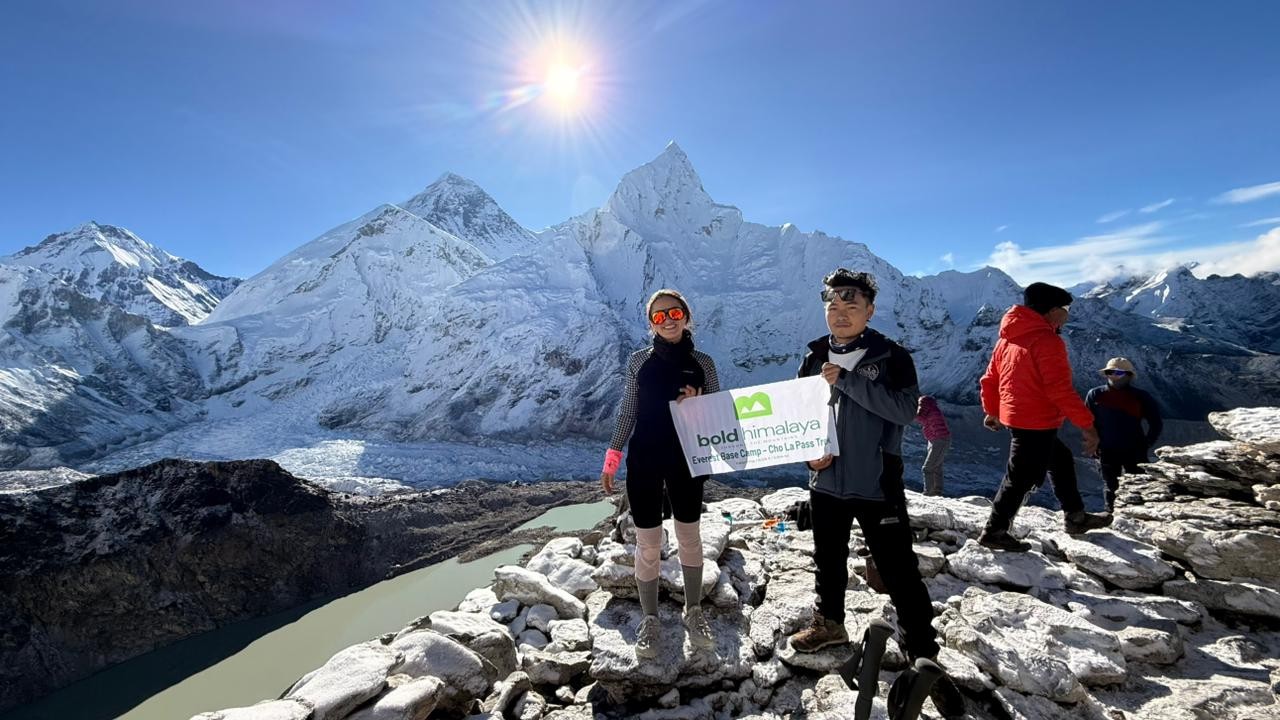
Trekking is the best adventurous trip to do in the Himalayas of Nepal to create a great lifetime experience. Imagine passing through different landscapes, rivers, waterfalls, lakes, glaciers, high hills, valleys, and remote villages with majestic views of gigantic mountains – how amazing would it be? One of the most common questions trekkers ask is: “When is the best time to do a trek in Nepal?” To get the best from trekking in Nepal, you need to know when to travel to Nepal. Normally, every season is good for trekking in Nepal; however, there is one best time that carries special key features throughout the trekking trails in Nepal. If you are trekking in the right place at the right time, you will get the pleasure moment to remember for your lifetime.
To get the best of Nepal by trekking, you must conduct your trek during the best time to Trek. In Nepal, there are four trekking seasons: summer, spring, autumn, and winter. Out of these 4 seasons, the two spring seasons and autumn seasons are considered the best trekking seasons in Nepal. The temperature is mild, the view is clear, and the high mountains are still cold, but lower elevations are warm during the daytime. Walking temperatures are almost pleasant. However, in other seasons, trekking can also be done. There are some exceptions to trekking routes that should be trekked during the time of summer and winter seasons as well.
Trekking in the Land of the Himalayas
One of the most thrilling activities on earth is trekking in Nepal. Imagine strolling through a gorgeousness, over rivers and waterfalls, through isolated towns, and finding yourself at the very feet of the tallest mountains in the world, and, at the same time, creating memories that will last you forever. There is one question that comes every time when I am about to go trekking in Nepal: When should the trek in Nepal be taken? Although it is possible to trek in Nepal at any time due to an impressive variation in geography and weather, certain seasons enjoy clearer skies, more predictable weather, and the most impressive mountain scenery. Knowing the seasons in Nepal would enable you to choose the appropriate time to go on the trek.
Best Time to do Trek in Nepal by Season
Generally, the autumn season (September, October, and November) and spring season (March, April, and May) are considered the best seasons for trekking in Nepal, except for Upper Mustang and Dolpo. When the weather is mild, the weather is relatively stable, and the atmosphere is clear, which makes the mountain views superb, the high mountains are still cold, and the lower altitudes are still warm, which makes the walking at a pleasant temperature.
These seasons offer excellent weather and crystal clear views of valleys, landscapes, skies, and mountains. Moreover, you can get the chance to celebrate two giant festivals of Nepal, Dashain and Tihar, by enjoying the different cuisines made during festivals if you are trekking in the autumn season, and you can trek through clear trekking routes by enjoying the views of the clear landscapes and wildly blooming rhododendron flowers throughout the trekking trails.
Four Seasons in Nepal
Nepal experiences four seasons: Autumn, Spring, Summer, and Winter. With every season, new experiences, weather, and scenery come. All year round trekking can be carried out, although Autumn and Spring are the best times since the sky is clear, the weather is quite temperate and the mountain is spectacular. We shall now examine each of these seasons in the following sections so that you can plan the best experience in trekking.
Autumn season
The autumn season is considered the best trekking season in Nepal, beginning in September, followed by October, and ending in November. The weather remains clear, the temperature is moderate, and it offers crystal clear views of the mountains. The trekking trails become very busy and crowded as most of the trekkers arrive during this season. The temperatures in the upper and lower mountain regions of Nepal reach about 15-24 degrees Celsius (59 to 75 degrees Fahrenheit).
All types of trekking in any region are possible during this season. Besides this, you will be charmed by the local environment during this season as Nepali people celebrate two of the biggest festivals, Dashain and Tihar, during this season. Trekking in the Annapurna region and the Everest region is highly recommended to trek during this season, where you can experience the best that these regions have to offer with majestic views of mountains and crystal clear skies.
Best for: Almost all treks — Everest Base Camp, Annapurna, Manaslu, Langtang, Kanchenjunga
Weather: Mild temperatures (15°C–24°C in lower regions) and stable conditions.
Highlights:
- Ideal visibility and dry trails
- Major festivals like Dashain and Tihar add cultural charm
- Perfect for both short and long treks
Spring season
The spring season is considered the second-best trekking season in Nepal and falls under March, April, and May. This is the perfect season when you can enjoy blooming flora such as the famous giant rhododendrons, clear skies, and mountain views throughout the trekking trail. The routes become clear and have moderate temperatures, making way for sunny, clear, and warm trekking conditions in the Himalayas of Nepal. Fewer trekkers are on trekking trails than in the autumn season, which means you will get more chances to experience remote places of the Himalayas. The temperatures in the upper and lower mountain regions of Nepal reach about 16 to 23 degrees Celsius (61 to 73 degrees Fahrenheit).
Annapurna region, including the ultimate Dhaulagiri trek and Everest region trekking, is a highly recommended trek during this season with the charm of blooming rhododendron forests, warm weather, and favorable trekking conditions.
Best for: Annapurna, Everest, Langtang, Ghorepani, Manaslu
Weather: Warm days (16°C–23°C) with clear mornings and occasional evening clouds.
Highlights:
- Clear mountain views
- Blooming rhododendron forests
- Moderate crowds and pleasant temperatures
Note: Treks in the Annapurna and Everest regions are particularly attractive at this time of the year. You’ll find bright green forests and lots of good places to take photos anywhere you go.
Summer Season
The summer season typically brings monsoon rains in Nepal. So this season, also called the monsoon season, starts in June and ends in August. Mountain regions are covered with clouds, and lower routes are generally muddy with a large number of leeches due to rainfall during this season. The weather is unfavorable and uncomfortable for trekking, and the trails become difficult, so trekking is not recommended during this time. However, trekking in mountain shadow areas such as Upper Dolpo and Upper Mustang, which lie on the high Tibetan plateau, is possible as the places are protected from the monsoon. You can enjoy the dry climate with clear skies, and stunning scenery of mountains and plateaus, as well as you can enjoy the Tibetan culture in Nepal. The trekking trails become less crowded, which means you can enjoy the beauty and solitude of the mountains.
Best for: Upper Mustang, Upper Dolpo, Nar Phu Valley
Weather: Warm (18°C–25°C) with frequent rain and cloudy skies.
Highlights:
- Lush green landscapes in the hilly regions
- Excellent time to visit rain-shadow areas like Mustang and Dolpo
- Fewer trekkers and more peaceful trails
Note: The traditional routes are challenging when it is raining. The experience of trekking in Mustang or Dolpo is quite a different experience, with not only dry ground and clear skies but also rich Tibetan culture.
Winter Season
The winter season in Nepal is a recommended time to trek throughout the Himalayas region of Nepal, as trekkers feel too cold to trek on higher altitudes. The season starts in December and ends in February. If the cold doesn’t interfere, then it is a great time to trek to popular high mountain regions such as Everest Base Camp. The trekking trails become less crowded, which means you get the best of the mountain regions without any disturbance. The sky remains clear and blue during the day, and monasteries' visits are great, as well as some fresh snow on the hills, which is a great view for photography. One thing to remember is that trekking during winter is no joke, as the temperatures can range between 9 to 12 degrees Celsius (48 to 54 degrees Fahrenheit) during the daytime, and evenings can drop to sub-zero degrees Celsius. Therefore, mostly lower altitudes are highly recommended during this season.
Best for: Lower altitude treks — Poon Hill, Helambu, Ghale Gaun, Lower Everest
Weather: Daytime 9°C–12°C, nights often below 0°C at high altitudes.
Highlights:
- Crisp air and snow-covered mountains
- Peaceful, less crowded trekking routes
- Great visibility for photography
Note: If you can handle the cold, winter treks reward you with empty trails, clear skies, and unique views of snow-covered peaks.
Six seasons in Nepal according to the Hindu Calendar
Nepal is a beautiful nation in the Himalayas, and it has a rich culture. It follows the Vikram Samvat (Bikram Sambat) calendar, a Hindu calendar that is 57 years behind the English (Gregorian) calendar. According to the Nepali Hindu calendar, it has six seasons, whereas the English calendar has only four seasons, i.e., Spring, Summer, Autumn, and Winter. Six seasons of Nepal have their own weather, scenery, and Himalayan trekking experience.
Here is a brief about Nepal's seasons based on trekking activities in the high Himalayas of Nepal.
Basanta Season (Spring) – Mid-March to Mid-May
Basanta season is the first season of Nepal that falls during the Nepali months of Chaitra and Baisakh (mid-March to mid-May). This is the season of blooming of nature, you can observe the greenery of Nepal, including dense rhododendron and oak forests. The trekking trail is clear, and you will get clear views of mountains, skies, landscapes, and different valleys.
- Nepali months: Chaitra – Baisakh
- Weather: Mild and pleasant with clear skies.
- Trekking highlights: Clear trails, spectacular mountain views, and comfortable temperatures.
- Best trekking regions: Annapurna Base Camp, Langtang Valley, Ghorepani Poon Hill, and Mardi Himal.
Note: This is considered the best time to trek in Nepal for first-timers and photographers alike.
Grishma Ritu (Summer) – Mid-May to Mid-July
Grishma season falls under the Nepali months of Jestha and Asadh (mid-May to mid-July). During this season, the weather becomes extremely hot and dry. It will be even more difficult to walk on the road without an Umbrella; however, trekking in this season becomes so much easier in the cold region after the hectic warm and hot temperatures at a lower altitude. Sometimes, there may be heavy rainfall during this season, which makes the trek difficult.
- Nepali months: Jestha – Asadh
- Weather: Hot, sunny days; occasional pre-monsoon showers.
- Trekking highlights: Quieter trails and early summer wildflowers.
- Best for: High-altitude treks like Manang, Mustang, or Dolpo before the monsoon arrives.
Note: Carry plenty of water and an umbrella or hat to handle the heat.
Barsha Ritu (Monsoon) – Mid-July to Mid-September
Barsha season is the season of heavy rainfall, which falls under the Nepali months of Shrawan and Bhadra (mid-July to mid-September). During this season, the scene becomes greenery everywhere, but the heavy rainfall makes traveling extremely difficult. You can see floods and landslides in different areas of Nepal that block the routes of traveling from one place to another. Sometimes, mountain area flight tickets might also get canceled during this season.
- Nepali months: Shrawan – Bhadra
- Weather: Frequent rain, cloudy skies, and humid air.
- Trekking highlights: Fewer tourists, vibrant greenery, and refreshing waterfalls.
- Best trekking regions: Upper Mustang, Dolpo, and Nar Phu Valley – these are rain-shadow regions that remain mostly dry even during the monsoon.
Note: Some domestic flights, especially to mountain regions, may be delayed or canceled due to weather.
Sharad Ritu (Autumn) – Mid-September to Mid-November
This is the most favorable and comfortable season to trek or travel in any part of the country. The season falls under the Nepali months of Ashwin and Kartika (mid-September to mid-November). The weather becomes mild, the temperature is moderate, which makes it the perfect season for trekking in the high Himalayas, and you will be rewarded with crystal clear mountain views. Besides this, you will get the chance to celebrate the biggest festivals of Nepal: Dashain and Tihar.
- Nepali months: Ashwin – Kartik
- Weather: Clear skies, comfortable days, cool nights.
- Trekking highlights: Panoramic mountain views, major cultural festivals like Dashain and Tihar, and vibrant village life.
- Best trekking regions: Everest Base Camp, Annapurna Circuit, and Manaslu Circuit.
- Why go: It’s the peak trekking season in Nepal, perfect for both beginners and experienced trekkers.
Hemanta Ritu (Pre-Winter) – Mid-November to Mid-January
Hemanta season falls under the Nepali months of Mangsir and Poush (mid-November to mid-January). This is also the most favorable condition for traveling at lower altitudes or trekking on higher altitudes. The temperatures start to get cold, but the land becomes dry. You can get the best of Nepal from different places in Nepal, and our trekking trip will also be adventurous. You get a chance to explore more remote corners in the Himalayas region of Nepal, as this season receives fewer trekkers than the Sharadh season.
- Nepali months: Mangsir – Poush
- Weather: Cool and dry; temperatures drop at higher altitudes.
- Trekking highlights: Crisp air, fewer trekkers, and quiet trails.
- Best trekking regions: Ghorepani, Langtang, Helambu, and the lower Annapurna areas.
Note: Ideal for those seeking peaceful trekking experiences without the autumn crowds.
Shishir Ritu (Winter) – Mid-January to Mid-March
Shishir season is the last season of Nepal that falls under the months of Magh and Falgun (mid-January to mid-March). This season is also favorable for trekking or travel activities. But there is a high possibility you will experience stormy nights during this season. In Nepal, this season is considered the season that makes the world naked. However, it offers the best view of lower elevations as well as higher elevations perfectly during the daytime. The weather is normally cold throughout this season, and you can observe the high hills covered with snow during this season.
- Nepali months: Magh – Falgun
- Weather: Cold, dry, and clear skies.
- Trekking highlights: Snowy landscapes, quiet lodges, and perfect photography conditions.
- Best trekking regions: Lower-elevation routes like Mardi Himal, Poon Hill, Kathmandu Valley hikes, and Chitwan for wildlife tours.
Fun fact: In Nepali culture, Shishir is called “the season that makes the world naked,” symbolizing the leafless trees and snow-covered mountains.
Nepal Weather and Temperature: Choosing the Best Time to Trek
Nepal is truly a land of contrasts — from the hot plains of the Terai to the snow-covered peaks of the Himalayas. Because of its dramatic landscape and altitude variation, the climate in Nepal changes from region to region and season to season. You can experience tropical heat, cool breezes, and icy mountain air — all within a few hundred kilometers.
Nepal consists of four seasons, namely Autumn (September to November), Winter (December to February), Spring (March to May), and Summer (June to August). The country consists of numerous hills and valleys, and hence there is a significant difference in the temperatures in each place. In the Terai plains in the south, such as Chitwan, Biratnagar, and Nepalgunj, the climate is hot and remains warm throughout most of the year. Such weather is witnessed in the hills, e.g., Kathmandu, Pokhara, and Bandipur, where the weather is moderate, warm during the day, and cooler during the night. All the high mountains, such as the Everest, Mount Annapurna, Mount Manang, Mount Dolpa, and more, are very high and thus cold throughout the year.
During the autumn season, nights are usually cold, but the bright sun makes the daytime temperatures pleasant. The temperature in the daytime ranges from 12 degrees Celsius to 20 degrees Celsius, and during the night, the temperature can drop to 3 to 8 degrees Celsius.
The Winter season brings heavy snowfalls at higher elevations above 2500m in Nepal, resulting in extremely cold temperatures at higher altitudes in Nepal. The lower land also experiences quite cold weather during the winter season. The temperature in the daytime can vary from 5 degrees Celsius to -7 degrees Celsius, and the temperature at night may drop from -15 degrees Celsius to -20 degrees Celsius.

The Spring season is a warm one, with green plants and rhododendrons blossoming all over the hills and mountains. The weather is very pleasant, and during the day the temperature ranged between 10 °C and 17 °C, and at night between -5 °C and -8 °C. Spaces such as Mardi Himal, Annapurna Base Camp, Langtang Valley, and Ghorepani Poon Hill are particularly beautiful during spring. Nevertheless, thunderstorms and windy evenings are typical, particularly in the Kathmandu valley and in the mid-hills.
The summer or Monsoon season (June to August) brings heavy rainfall, especially in central Nepal and the eastern part of Nepal. This season is difficult to travel since landslides and muddy trails are usual around Pokhara, Dhading, and Rasuwa. Nonetheless, preciously few areas like the Upper Mustang, Dolpa, and portions of Manang receive minimal rainfall due to the rain shadow of the Himalayas, and therefore they make good places to visit when it rains. The summer daytime temperature ranges between 15°C to 25°C, and the night temperatures range between 5°C and 9 °C.
Although these are the general temperature patterns, global warming has started to alter Nepal’s climate. The Himalayan region is heating at a higher rate than other regions in the country, 0.3 to 0.7°C per annum, causing a melting of glaciers and shrinking snow caps. The rain pattern is also uncertain, whereby the rainfall suddenly falls in months that are normally dry, and the period of rain is prolonged during the monsoon period. This has been felt particularly in the Everest and Annapurna areas, where glacial lakes are growing as a result of melting ice.
Where to go in each season
There are various options for trekking trails in Nepal, as it is a Himalayan country. There is a saying, to get the best out of any place, visit at the perfect time. Likewise, here is the information on where you can go in each season for trekking activities in Nepal.
Autumn and spring are the best seasons to do trekking activities in Nepal, where you can get the best of any trekking trails. You will be experiencing a trek in mild temperatures and clear skies that won’t bother you to enjoy the majestic views of the mountains. In these seasons, the weather is neither cold nor hot, so your walk will become easier on clear routes.
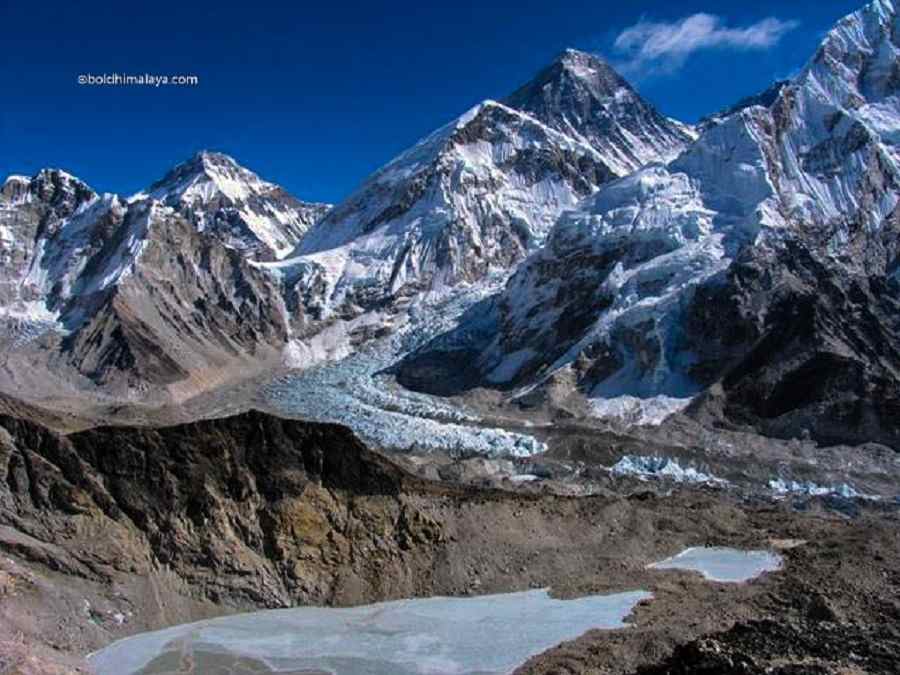
All the trekking routes are the best for ttrekking on Everest Base Camp, Everest Gokyo Trek, Everest view trek and Everest Three Passes trek of Everest Region, Annapurna Circuit trek, Annapurna Base Camp trek and Tilicho Lake Trek of Annapurna region, Kanchenjunga Base Camp trek of Kanchenjunga region, Manaslu Base Camp trek of Manaslu region and Lower Dolpo trek of Dolpo region as well as other treks like Rara Lake trek, Shey Phoksundo Trek, Rolwaling trek and Langtang trek is the best trekking routes in these seasons.
In the summer season, fewer trekking activities are not recommended due to rough and difficult trails caused by heavy rainfall and floods. However, mountain shadow areas like Upper Dolpo and Upper Mustang trek can be done as they receive very little rainfall throughout the year. At last, in the winter season, trekking is not done due to the very cold temperature in the high Himalayas of Nepal. If cold does not bother you, then it is the best time to trek the Everest region and Annapurna region to get the best view and walk through snow-covered hills on less crowded trails.
Temperature and Weather by Region
Nepal has a dramatic range of climates:
- Terai plains (Chitwan, Biratnagar): Hot and humid, mostly warm year-round
- Mid-hills (Kathmandu, Pokhara): Moderate, warm days, cool nights
- High mountains (Everest, Annapurna, Manang): Cold year-round, snow at higher altitudes
Seasonal Temperature Summary
| Season | Daytime Temp | Night Temp | Conditions |
|---|---|---|---|
| Autumn | 12–20°C | 3–8°C | Mild, clear skies |
| Winter | 5–12°C | -15–0°C | Cold, snow in high areas |
| Spring | 10–17°C | -5–8°C | Warm, blooming flora |
| Summer | 15–25°C | 5–9°C | Rainy, muddy trails (except rain-shadow areas) |
Packing list for all seasons
Trekking in the Himalayas of Nepal requires a specific set of clothing and equipment. The packing list may differ according to the season when you are interested in the best time to trek in Nepal. To trek in the high altitudes of Nepal, you must be well-prepared with all the accessories you will need in each season.
In summer seasons, clothing may include Thermal shirts, t-shirts, Waterproof down jackets, Thermal trousers, Trekking pants, Warm hats and gloves, trekking socks, and Hiking boots. Gears and Equipment include a Large Backpack, Raincoat, sleeping bag, water purifier, headlamps, and trek maps. Accessories items are a Hydration bladder, sunglasses, a towel, a portable charger, a camera, and lastly miscellaneous items which include toiletries and First aid kits with ibuprofen and paracetamol.

In the autumn and spring seasons, as the weather and temperatures are fairly the same in these seasons, you will require the same packing list for both seasons. Clothing items may include thermal shirts and t-shirts, waterproof and windcheater jackets, fabric jackets, thermal trousers, tracks, trekking pants, warm hats, gloves, goggles, trekking and fabric socks, and trekking boots. Gears and equipment include a large backpack, sleeping bags, a water purifier, headlamps, trekking sticks, and trek maps. Accessories items and miscellaneous items remain the same as of the summer season.
In the winter season, trekking is usually done with an extra layer of warm clothes, as it is much colder in higher mountain regions. Clothing items may include thick fabric jackets, thick shirts and t-shirts, waterproof jackets, thick fabric trekking pants, warm hats, and fabric gloves. Gears and Equipment, Accessories, and miscellaneous items may remain the same as in other seasons. Remember to pack thick items as you are trekking in very cold temperatures. Don’t forget to pack extra money, extra clothing items, extra boots and socks, extra memories for the camera, insurance papers, and all the permit cards while trekking in the Himalayas of Nepal.
Comments (0)
Write a comment- Trekking in the Land of the Himalayas
- Best Time to do Trek in Nepal by Season
- Four Seasons in Nepal
- Autumn season
- Spring season
- Summer Season
- Winter Season
- Six seasons in Nepal according to the Hindu Calendar
- Basanta Season (Spring) – Mid-March to Mid-May
- Grishma Ritu (Summer) – Mid-May to Mid-July
- Barsha Ritu (Monsoon) – Mid-July to Mid-September
- Sharad Ritu (Autumn) – Mid-September to Mid-November
- Hemanta Ritu (Pre-Winter) – Mid-November to Mid-January
- Shishir Ritu (Winter) – Mid-January to Mid-March
- Nepal Weather and Temperature: Choosing the Best Time to Trek
- Where to go in each season
- Temperature and Weather by Region
- Packing list for all seasons
Read the latest Blogs & Insights
Explore our collection of articles and insights to gain in-depth travel knowledge, expert advice, and stay updated on the latest trends and tips.


No comments yet.